

Kia Carnival vs Toyota Alphard: Which Premium MPV Is Better?

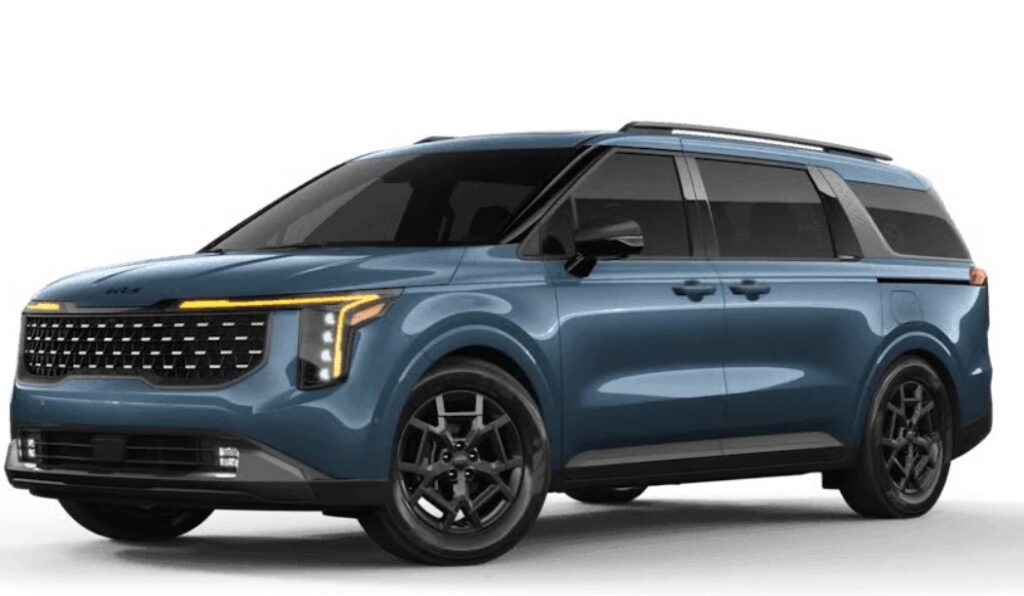
Put the Kia Carnival vs Toyota Alphard side by side and we immediately notice something interesting: both are big, comfortable people movers with sliding rear doors, premium cabins, and enough road presence to make an ordinary three-row SUV look slightly underdressed. Yet they approach the job from very different directions.
The Kia Carnival is the practical family specialist wearing SUV-inspired clothing. It gives us huge cargo capacity, flexible seating, modern technology, strong engines, and a cabin designed around the chaos of real family life.
The Toyota Alphard plays another game entirely. Toyota created it as a flagship luxury minivan, and the current generation places extraordinary emphasis on ride quality, quietness, second-row comfort, and what Toyota calls the joy of comfortable mobility. Toyota even describes the Alphard as suitable for families as well as chauffeured transport for important passengers.
So which approach makes more sense?
If we regularly carry children, luggage, sports equipment, groceries, and half the contents of the house, the Carnival immediately looks compelling. If we want passengers in the second row to feel as though they've walked into a private lounge rather than climbed into a minivan, the Alphard starts pulling us in the opposite direction.
Let's examine the differences properly.
Content in this publication
- Kia Carnival vs Toyota Alphard at a Glance
- Design: SUV Attitude vs Executive Lounge
- Interior Quality: Two Different Definitions of Premium
- Second-Row Comfort: The Alphard's Home Territory
- Third-Row Seating: Which Is Better for Larger Families?
- Cargo Space: Kia Carnival Takes the Lead
- Performance: Kia Carnival vs Toyota Alphard Engines
- Fuel Economy: Which One Uses Less Fuel?
- Ride Comfort: Toyota Strikes Back Hard
- Handling and Driver Experience
- Technology Comparison
- Safety: Both Take Family Protection Seriously
- Reliability: Kia Carnival vs Toyota Alphard
- Running Costs and Servicing
- Kia Carnival vs Toyota Alphard for Families
- Kia Carnival vs Toyota Alphard for Business Use
- Which Is Better for Road Trips?
- Size and Parking
- Which Has Better Value for Money?
- Kia Carnival vs Toyota Alphard: Pros and Cons
- So, Which One Should We Buy?
- Final Verdict: Kia Carnival vs Toyota Alphard
- Frequently Asked Questions
- 1. Is the Toyota Alphard better than the Kia Carnival?
- 2. Is the Kia Carnival bigger than the Toyota Alphard?
- 3. Which is more fuel-efficient, Kia Carnival or Toyota Alphard?
- 4. Which is better for a family, Toyota Alphard or Kia Carnival?
- 5. Is the Toyota Alphard more luxurious than the Kia Carnival?
Kia Carnival vs Toyota Alphard at a Glance
Before diving deeper, here's the basic personality of each vehicle.
| Category | Kia Carnival | Toyota Alphard |
|---|---|---|
| Main character | Premium family MPV | Luxury executive MPV |
| Typical seating | 7, 8, 9 or 11 depending on market | 6, 7 or 8 depending on version/market |
| Current hybrid option | 1.6L turbo hybrid in several markets | 2.5L hybrid; PHEV available in Japan |
| Gasoline option | 3.5L V6 in some markets | 2.5L four-cylinder in Japan |
| Length | Around 5,155 mm | Under 5,000 mm |
| Width | Around 1,995 mm | Under 1,850 mm |
| Best strength | Space and versatility | Passenger luxury and refinement |
| Better family workhorse | Carnival | — |
| Better chauffeur-style experience | — | Alphard |
The Carnival measures approximately 5,155 mm long and 1,995 mm wide, with a 3,090 mm wheelbase according to Kia's published specifications. Toyota deliberately kept the latest Alphard within approximately 5,000 mm in length and 1,850 mm in width to remain compatible with common automated parking systems in Japan.
That distinction tells us quite a lot already. Kia uses the footprint to maximize practical space. Toyota works within tighter dimensions while concentrating heavily on passenger comfort.
Design: SUV Attitude vs Executive Lounge
Kia Carnival Exterior
The Carnival doesn't desperately want us to call it a minivan.
Its long hood, upright grille, sculpted body sides, sharp lighting, and SUV-like stance disguise some of the classic minivan proportions. Look at it from the front three-quarter angle and it can almost pass for an oversized crossover.
That matters more than we might think.
Many buyers love minivan practicality but aren't thrilled about driving something that screams "school run." Kia's styling gives us the function without leaning too heavily into traditional van aesthetics.
The Carnival is also the broader vehicle. That width contributes to its commanding road presence and, more importantly, generous interior packaging.
Toyota Alphard Exterior
The Alphard is hardly shy either.
Toyota describes the fourth-generation design theme as "Forceful x IMPACT LUXURY." The huge front grille dominates the nose, while the tall sides and substantial proportions make it look more like a mobile VIP suite than an ordinary family van.
Some of us will find it extravagant.
Others will think that's precisely the point.
Pulling up outside a five-star hotel in an Alphard feels completely natural. The Carnival looks premium; the Alphard actively announces luxury.
Which One Looks Better?
For understated family style, we'd choose the Carnival.
For maximum visual drama and executive presence, the Alphard wins.
Design is subjective, of course, but these vehicles are speaking different visual languages. Kia whispers "premium SUV alternative." Toyota says "the passengers in the back are important."
Climb inside either vehicle and we're a long way from the bare-bones people movers of decades past.
Large screens, ambient lighting, sophisticated climate systems, premium audio, electric doors, quality upholstery, multiple charging points, and advanced driver assistance can all appear depending on specification.
But again, their priorities aren't identical.
Inside the Kia Carnival
The Carnival dashboard feels like the command center of a modern family vehicle.
Higher trims can combine large digital instruments and infotainment displays across the dashboard. The 2026 U.S.-market Carnival HEV, for example, offers available dual 12.3-inch panoramic displays, while upper versions add features such as a head-up display, digital rearview mirror, passenger-view camera, and Passenger Talk system.
That cabin camera is a perfect example of Kia's philosophy.
Instead of making us twist around at a traffic light to find out why the kids have suddenly become suspiciously quiet, the system can help us see what's happening behind us.
This is luxury through convenience.
Storage is another Carnival strength. Families generate astonishing amounts of small-object clutter, and practical compartments matter enormously during everyday ownership.
Inside the Toyota Alphard
The Alphard asks a different question:
What if the rear passengers matter more than the cargo?
Toyota specifically engineered the fourth generation to reduce vibration and noise, aiming for comfort comparable with a luxury sedan. It also increased passenger spacing while maintaining an exterior footprint appropriate for Japanese roads.
Upper versions reinforce the executive atmosphere with sophisticated captain's chairs, extensive power adjustment, premium materials, rear entertainment, and beautifully controlled cabin lighting.
Toyota's 2025 Japanese update also made available features such as a 14-inch rear entertainment system and 15-speaker JBL audio on selected Alphard grades.
Sit in one of the best second-row seats and the Alphard can feel less like transportation and more like an airline business-class pod that happens to travel on asphalt.
Second-Row Comfort: The Alphard's Home Territory
If our comparison revolves primarily around second-row comfort, the result becomes much easier.
The Toyota Alphard wins.
The Carnival's available VIP-style second-row seating can be genuinely impressive. Depending on trim and market, reclining relaxation seats, leg supports, heating, ventilation, and powered adjustment are available. Kia's Indonesian 2026 specification, for instance, lists premium relaxation second-row seating with electric adjustment and leg support on seven-seat versions.
But the Alphard has been designed around precisely this mission.
Toyota has spent generations refining the vehicle as high-end passenger transport, and the current model continues that philosophy with particular attention to reducing noise, vibration, body movement, and passenger fatigue.
In the Alphard PHEV, Toyota goes even further. The battery sits beneath the floor, lowering the center of gravity compared with the conventional hybrid, while dedicated Smooth Stop control is intended to reduce the unpleasant pitching passengers can experience during deceleration. Toyota also added further sound insulation to suppress road and engine noise.
That's obsessive.
And in a luxury MPV, obsessive is good.
Third-Row Seating: Which Is Better for Larger Families?
Here's where the Carnival starts fighting back.
A luxury second row is lovely, but families often need all three seating rows simultaneously.
The Carnival's larger overall dimensions make it particularly well suited to that mission. Depending on country, Kia sells configurations ranging from seven seats to eight, nine, or even eleven.
Toyota added an eight-seat Alphard X hybrid to the Japanese lineup for 2025, alongside seven-seat luxury versions and a six-seat PHEV Executive Lounge.
Still, the Alphard's identity remains more passenger-luxury-focused than maximum-occupancy-focused.
For Three Children, Which Makes More Sense?
We'd generally choose the Carnival.
Why?
Because family life isn't only about fitting three children into seats. We also need room for:
- Child seats
- Strollers
- School bags
- Sports equipment
- Grocery bags
- Holiday luggage
- Toys
- Bikes or outdoor gear
- The mysterious mountain of objects children apparently require for a two-hour journey
The Carnival simply embraces that reality better.
Cargo Space: Kia Carnival Takes the Lead
This may be the biggest functional difference in the Kia Carnival vs Toyota Alphard comparison.
Kia publishes substantial luggage figures for the Carnival. Depending on seating layout, official VDA figures list roughly 602-627 liters behind the third row and maximum volumes exceeding 2,600 liters, with some configurations reaching around 2,900 liters.
That's serious carrying capacity.
Drop, fold, or rearrange the appropriate seating and the Carnival transforms from passenger transporter into something resembling a small moving van.
The Alphard can carry luggage, obviously, and its third-row configuration provides useful flexibility. But cargo versatility is not the core mission in the same way.
If we're transporting seven people plus vacation luggage, the Carnival is the vehicle we'd rather have sitting in the driveway.
Carnival Cargo Advantage in Real Life
Numbers don't always tell the whole story.
The practical advantage emerges when we start loading awkward things.
A stroller never resembles the neat rectangular block imagined by cargo-volume calculations. Neither does a bicycle, large suitcase, camping chair, flat-pack box, or children's scooter.
This is where the Carnival's bigger body and practical packaging pay dividends.
Performance: Kia Carnival vs Toyota Alphard Engines
Powertrain comparisons become complicated because specifications vary dramatically by market.
The Carnival can be sold with gasoline V6, diesel, and turbo-hybrid engines depending on country. The Alphard currently offers conventional gasoline, hybrid, and—within Japan—a plug-in hybrid.
So we shouldn't pretend there is one universal engine comparison.
Kia Carnival 3.5 V6
Where available, Kia's 3.5-liter gasoline V6 provides the sort of effortless power that suits a large family vehicle.
A naturally aspirated V6 delivers smooth acceleration without the sensation that a heavily loaded van is begging for mercy every time we reach a motorway ramp.
Its downside is predictable: fuel consumption.
You may be interested in reading Kia Carnival or Similar: The Best Alternatives for Families
In Australian specifications, Kia lists combined fuel consumption around 9.6 L/100 km for the 3.5-liter petrol version.
Kia Carnival Hybrid
The hybrid fundamentally changes the equation.
Instead of a large V6, the Carnival HEV combines a 1.6-liter turbocharged gasoline engine with electrical assistance. Kia's U.S. 2026 literature quotes 271 lb-ft of torque and an estimated 32 mpg combined for the hybrid.
Australian figures provide another useful reference, with Kia listing 5.8 L/100 km combined for the hybrid under that market's test cycle.
Those values aren't directly interchangeable because testing procedures differ, but the conclusion is straightforward: the hybrid can dramatically reduce fuel use compared with the V6.
Toyota Alphard Hybrid
The current Alphard hybrid uses Toyota's 2.5-liter series-parallel hybrid system.
When the fourth generation launched, Toyota quoted maximum system output of 184 kW, equivalent to 250 PS, and Japanese-market economy of 17.5 km/L for the Executive Lounge 2WD or 16.5 km/L with E-Four.
Again, these are Japanese test figures, so we should never directly compare them with U.S., Australian, or European numbers as though the testing standards were identical.
What matters is character.
The Alphard hybrid is engineered around smoothness and efficiency rather than aggressive acceleration.
Toyota Alphard PHEV
Toyota introduced an Alphard plug-in hybrid in Japan in January 2025.
This six-seat Executive Lounge combines a 2.5-liter engine and electric drivetrain for a maximum system output of 225 kW, or 306 PS. Toyota quotes 73 km of battery-electric range under the Japanese WLTC method and 16.7 km/L hybrid-mode economy.
For chauffeured use, that's fascinating.
Short urban journeys can potentially be completed electrically, keeping the cabin quiet while reducing engine vibration.
Fuel Economy: Which One Uses Less Fuel?
If we're comparing gasoline-only examples, neither large MPV exists to set fuel-economy records.
Hybrid versions make considerably more sense for heavy city use.
Between the Carnival Hybrid and Alphard Hybrid, there's no responsible universal winner because local specifications and test standards differ.
However, both demonstrate a fundamental advantage of electrification in this type of vehicle.
A heavy MPV spends considerable time:
- Starting from rest
- Slowing down
- Sitting in traffic
- Crawling through city streets
Those conditions allow regenerative braking and electric assistance to work particularly well.
If most of our driving happens around town, we'd strongly consider a hybrid version of either vehicle.
Ride Comfort: Toyota Strikes Back Hard
Cargo space belongs to Kia.
Ride refinement belongs to Toyota.
Toyota specifically redesigned the current Alphard platform to improve basic dynamic performance, ride quality, noise suppression, and comfort. The manufacturer says it targeted luxury-sedan-like comfort while reducing unpleasant vibration and noise.
That's noticeable philosophically even before we drive one.
The Alphard isn't trying to make us forget its size by pretending to be a sports sedan. The priority is controlling body motion while keeping passengers relaxed.
It's the automotive equivalent of a hotel concierge: calm, smooth, and never in a hurry unless necessary.
How Does the Carnival Ride?
The Carnival remains comfortable, especially considering its size and carrying ability.
Its suspension strikes a useful balance between stability and compliance, and long highway trips are exactly the sort of task it handles well.
But if our definition of "best" is the vehicle we'd choose while reclining in the second row for a three-hour journey, we'd take the Alphard.
Handling and Driver Experience
Here's the amusing contradiction.
The Alphard may be the more luxurious vehicle, but many owners aren't buying one primarily for the driver.
The Carnival feels more oriented toward owner-drivers.
Its driving position, technology, visibility, and control layout are designed around someone who uses the vehicle daily rather than somebody whose main priority is transporting VIP passengers.
Neither is a sports car.
Physics doesn't negotiate.
A two-tonne-plus vehicle with a tall roof and three rows of seats isn't going to dance through a mountain road like a lightweight coupe.
What we want instead is predictable steering, stable motorway behavior, manageable body roll, good visibility, and enough performance to overtake confidently.
Both can deliver that, but the Carnival feels like the more natural choice when the buyer will personally spend most journeys behind the wheel.
Technology Comparison
Modern MPVs have become rolling electronics stores.
The Carnival's available equipment can include dual panoramic displays, digital instrumentation, surround-view cameras, rear-passenger monitoring, connected services, wireless smartphone functionality, head-up displays, and premium audio depending on trim and country.
The Alphard answers with Toyota's latest multimedia and driver-assistance technologies, sophisticated rear-passenger amenities, digital mirror technology, premium audio, and available large rear entertainment displays depending on grade.
Which Technology Is More Useful?
For family management, Kia's technology ecosystem has the edge.
Features designed to watch or communicate with rear occupants are genuinely useful when carrying young children.
For passenger pampering, Toyota takes a different route.
Its luxury equipment feels less like "family management" and more like creating a calm private cabin.
Different problems, different solutions.
Safety: Both Take Family Protection Seriously
Safety should matter enormously in a vehicle likely to carry several passengers.
The latest Alphard comes with Toyota Safety Sense, including an extensive collection of active safety and driver-support functions. Toyota described the fourth generation at launch as having its most comprehensive safety and driving-support package among Toyota minivans at the time.
Carnival specifications vary by market, but available systems can include forward collision avoidance, adaptive cruise control, lane-keeping assistance, lane-following assistance, blind-spot monitoring, surround-view cameras, and other ADAS technologies.
We wouldn't choose purely from a feature checklist, though.
Safety specifications can change substantially between countries and trims. Before purchasing, we should verify the exact airbags, autonomous braking capabilities, child-seat mounting points, lane assistance, blind-spot systems, and independent crash-test results applicable to the particular vehicle sold locally.
Reliability: Kia Carnival vs Toyota Alphard
Toyota has built an enormous global reputation around reliability, and the Alphard's hybrid technology draws from Toyota's long experience with electrified powertrains.
That naturally gives the Alphard considerable psychological appeal for long-term ownership.
The Carnival shouldn't automatically be dismissed, though.
Modern Kia vehicles have progressed substantially, and warranty coverage can be extremely competitive depending on the market.
Where this comparison becomes complicated is parallel importing.
The Alphard Import Question
In some countries, the Toyota Alphard is not officially sold through Toyota's local dealer network and reaches customers primarily through independent importers.
That can affect:
- Warranty coverage
- Infotainment language
- Navigation compatibility
- Replacement parts
- Software updates
- Insurance
- Resale
- Servicing expertise
A Carnival purchased directly from an established local Kia network can therefore be much easier to own even if we prefer the Alphard as a vehicle.
This factor should never be underestimated.
Luxury means very little if we're waiting weeks for a model-specific electronic component that nobody locally stocks.
Running Costs and Servicing
The Carnival is generally the more conventional family purchase.
Parts availability, dealer support, tyre sizes, insurance, and servicing are often easier to predict in countries where Kia officially sells it.
The Alphard can be straightforward to maintain where Toyota officially supports the model—particularly across Asian markets where it has a strong presence.
Elsewhere, things become less predictable.
Hybrid systems themselves shouldn't automatically scare us. Both Kia and Toyota have extensive electrified vehicle experience. The bigger financial questions are usually local support, battery warranty terms, labor rates, parts pricing, insurance, and the complexity of luxury equipment.
Power doors, electric ottomans, large infotainment screens, cameras, sensors, premium seats, climate controls, and electronic suspension-related components create more potential repair points than we'd find in a simple van.
That's the cost of turning a box on wheels into a lounge.
Kia Carnival vs Toyota Alphard for Families
For most families, we'd pick the Kia Carnival.
You may be interested in readingKia Carnival or Similar: The Best Alternatives for FamiliesYou may be interested in reading
Kia Carnival vs Ford Tourneo: Which Family MPV Is Better?That doesn't necessarily make it the superior vehicle.
It makes it the superior tool.
The Carnival offers the sort of flexibility family buyers actually use: plenty of seats, huge luggage capacity, useful cabin technology, broad doors, practical storage, and powertrains capable of covering long distances comfortably.
We can take it to school Monday morning, Costco Saturday afternoon, and the airport Sunday evening without ever wondering whether we're using the vehicle for the "wrong" purpose.
The Alphard can obviously perform family duty too.
But purchasing it purely as a utility-focused family transporter is almost like buying a luxury hotel suite because we need somewhere to store our suitcase.
It works.
We're just missing much of what makes it special.
Kia Carnival vs Toyota Alphard for Business Use
Now reverse the situation.
Suppose we're transporting executives, hotel guests, celebrities, wedding clients, premium-tour passengers, or business partners.
The Toyota Alphard suddenly becomes extremely difficult to beat.
Its second-row experience, quiet cabin, graceful ride, and executive image all make sense in that environment.
The sliding doors are another major advantage over large luxury SUVs. Passengers can enter easily in tight spaces without swinging enormous doors into neighboring vehicles.
It's one reason luxury MPVs have become so popular for premium transportation in many Asian cities.
Would We Choose an Alphard Over a Luxury SUV?
For rear passengers?
Very possibly.
A conventional luxury SUV may have more prestige in some markets, but an Alphard often delivers easier access and vastly more useful second-row space.
Once we stop judging the vehicle from the driver's seat and start judging it from the best chair in row two, the entire equation changes.
Which Is Better for Road Trips?
This one is closer.
Choose the Carnival if our road trip involves:
- Five or more people
- Lots of luggage
- Children's equipment
- Camping gear
- Frequent loading and unloading
- Maximum interior flexibility
Choose the Alphard if our road trip involves:
- Four to six passengers
- Long motorway journeys
- Adults who value rear-seat comfort
- Premium hotels rather than campsites
- Minimal cabin noise
- A strong preference for relaxation
Imagine two vacations.
One includes surfboards, children's bags, a stroller, six suitcases, snacks, and somebody asking "Are we there yet?" every nine minutes.
Carnival.
The other involves four adults traveling between luxury resorts while two passengers recline in the back.
Alphard.
Context is everything.
Size and Parking
The Carnival's extra size gives us benefits, but we pay for them every time we enter a tight parking garage.
At approximately 5,155 mm long and 1,995 mm wide, it is a substantial machine.
Toyota deliberately kept the latest Alphard to less than about five meters long and 1.85 meters wide, partly because those dimensions matter in Japanese parking infrastructure.
That makes the Alphard noticeably narrower.
Neither vehicle is tiny, obviously.
But if our daily environment contains narrow streets and small parking spaces, centimeters begin feeling like kilometers surprisingly quickly.
Which Has Better Value for Money?
Value isn't the same as price.
A vehicle provides good value when what we receive matches what we actually need.
The Carnival's formula is easy to appreciate: enormous interior utility combined with premium comfort and technology.
That can make it an excellent value against both traditional minivans and expensive three-row SUVs.
The Alphard's value proposition is more specialized.
We're paying heavily for things that don't appear in simple spec-sheet comparisons: serenity, ride quality, rear-seat experience, status, materials, noise isolation, and the sense of occasion.
A spreadsheet may tell us the Carnival carries more luggage.
It can't easily measure how relaxed someone feels after being driven across a city in an Alphard Executive Lounge.
That's precisely why both vehicles can make sense despite overlapping on paper.
Kia Carnival vs Toyota Alphard: Pros and Cons
Kia Carnival Pros
- Exceptional cargo capacity
- Flexible seating configurations
- Strong family practicality
- Available hybrid powertrain
- Available V6 or diesel in certain markets
- Modern infotainment technology
- Useful rear-passenger monitoring features
- SUV-inspired styling
- Excellent road-trip ability
- Often easier to purchase and service in markets where officially sold
Kia Carnival Cons
- Large exterior dimensions
- Less luxurious than the Alphard at the highest end
- V6 versions can consume substantial fuel
- Top trims can become expensive
- Front-wheel-drive emphasis may not suit every buyer
Toyota Alphard Pros
- Superb second-row comfort
- Excellent cabin refinement
- Quiet and smooth driving experience
- Strong luxury image
- Proven Toyota hybrid philosophy
- Hybrid, gasoline, and Japanese-market PHEV choices
- More compact width than Carnival
- Excellent chauffeur vehicle
- High-quality rear-passenger features
Toyota Alphard Cons
- Less cargo-focused than Carnival
- Can be considerably more expensive
- Availability is limited in some countries
- Grey-import ownership can complicate parts and warranty support
- Luxury seating can reduce ultimate versatility
- Styling may be too extravagant for some buyers
So, Which One Should We Buy?
The answer depends on what happens after we close the sliding door.
Choose the Kia Carnival If…
Our passengers are children, relatives, friends, teammates, and occasionally the family dog.
Choose it if we routinely carry both passengers and significant cargo.
Choose it if we're replacing a three-row SUV but have finally accepted that sliding doors and minivan packaging make an absurd amount of sense.
Choose it if practicality matters just as much as comfort.
In short, the Carnival is the better all-rounder.
Choose the Toyota Alphard If…
Our priority is passenger experience above everything else.
Choose it if the second row matters more than maximum luggage capacity.
Choose it if we run a chauffeur or premium transport operation.
Choose it if we appreciate near-limousine levels of comfort but want the space and accessibility of an MPV.
Choose it if arriving comfortably matters more than carrying half the garage with us.
The Alphard is the better luxury passenger vehicle.
Final Verdict: Kia Carnival vs Toyota Alphard
Trying to declare an absolute winner between the Kia Carnival and Toyota Alphard misses the most interesting part of this comparison.
They solve different versions of the same problem.
The Kia Carnival asks: How can we move a lot of people and their belongings comfortably without driving something that feels like a commercial van?
Its answer is enormous practicality, clever seating, family-focused technology, generous cargo space, and increasingly efficient hybrid power.
The Toyota Alphard asks: How luxurious can moving people in an MPV become?
Its answer is plush seating, exceptional refinement, quiet hybrid propulsion, carefully controlled ride quality, and a second-row experience approaching chauffeur-driven luxury-car territory.
If we had one vehicle for a growing family, we'd take the Carnival.
If we had one vehicle primarily for transporting adults in maximum comfort, we'd take the Alphard.
Think of them as two restaurants using similar ingredients.
The Kia gives us a massive table where everyone can eat.
The Toyota asks whether we'd prefer the private dining room.
Neither approach is wrong.
We simply have to decide which experience belongs in our driveway.
Frequently Asked Questions
1. Is the Toyota Alphard better than the Kia Carnival?
The Toyota Alphard is better if luxury, second-row comfort, quietness, and chauffeur-style transportation are our main priorities. The Kia Carnival is generally better for families requiring maximum cargo flexibility, practical seating, and everyday versatility.
2. Is the Kia Carnival bigger than the Toyota Alphard?
Yes. Current Carnival specifications list an overall length around 5,155 mm and width around 1,995 mm. Toyota designed the fourth-generation Alphard to stay within approximately 5,000 mm in length and 1,850 mm in width. The larger Carnival footprint contributes to its excellent passenger and cargo capacity.
3. Which is more fuel-efficient, Kia Carnival or Toyota Alphard?
Hybrid versions of both vehicles can deliver strong efficiency for their size, but published figures cannot always be compared directly because testing methods differ between countries. Kia offers a 1.6-liter turbo-hybrid Carnival in several markets, while the current Alphard uses a 2.5-liter Toyota hybrid system. Toyota also introduced a six-seat Alphard PHEV in Japan for 2025.
You may be interested in readingKia Carnival or Similar: The Best Alternatives for FamiliesYou may be interested in reading
Kia Carnival vs Ford Tourneo: Which Family MPV Is Better?You may be interested in reading
Kia Carnival and Toyota Vellfire: Which Premium MPV Is Better?4. Which is better for a family, Toyota Alphard or Kia Carnival?
For most large families, the Kia Carnival is our choice. Its larger cargo area, broad range of seating configurations, storage solutions, passenger-monitoring technology, and overall versatility make it exceptionally practical. The Alphard may be preferable for smaller families placing greater importance on luxury and rear-seat comfort.
5. Is the Toyota Alphard more luxurious than the Kia Carnival?
Generally, yes. High-spec Carnivals can be impressively luxurious, but luxury is central to the Alphard's identity. Toyota specifically developed the current generation around improved passenger comfort, quietness, reduced vibration, and premium rear-seat accommodation. The Carnival blends luxury with utility, while the Alphard pushes further toward executive transport.
If you want to know other articles similar to Kia Carnival vs Toyota Alphard: Which Premium MPV Is Better? you can visit the category Models.
Honda Passport vs Toyota 4Runner: Which SUV Is Better?
Honda Passport vs Ford Bronco: Which SUV Is Better?
Honda Passport vs Ford Explorer: Which SUV Is Better?
Honda Passport or Pilot: Which SUV Is Better?
Honda Passport vs Jeep Grand Cherokee: Which SUV Is Better?
Honda Passport vs Nissan Pathfinder: Which SUV Is Better?
Leave a Reply
More content of your interest