

Kia Carnival vs Ford Tourneo: Which Family MPV Is Better?

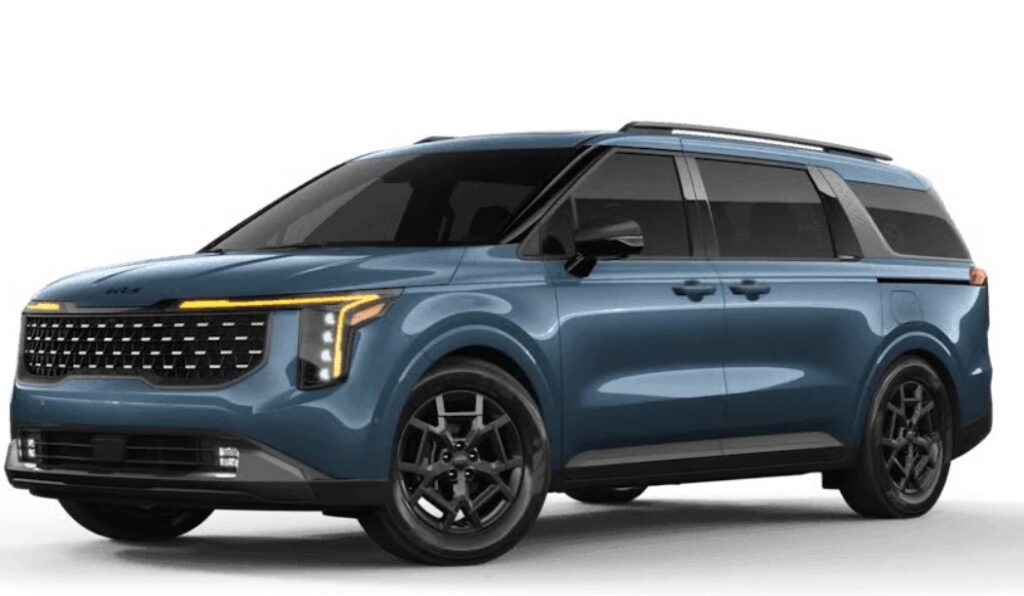
Choosing between the Kia Carnival vs Ford Tourneo is a little like choosing between a luxury family lounge and a highly adaptable people-moving tool. Both can swallow passengers, luggage, holiday gear, pushchairs, sports equipment, and the inevitable pile of things families somehow collect. Yet they approach the job from noticeably different directions.
The Kia Carnival feels more like an oversized premium car. It sits low enough to feel approachable, wears SUV-inspired styling, and puts comfort, refinement, and everyday family life near the top of its priorities. The Ford Tourneo Custom, meanwhile, comes from Ford's commercial-vehicle expertise. It offers a taller, boxier cabin, enormous flexibility, multiple powertrain choices in some markets, and the sort of practicality that makes you wonder whether somebody secretly designed a small room on wheels.
So, which one should we actually buy?
For this comparison, when we say Ford Tourneo, we're primarily referring to the Ford Tourneo Custom, the model that most closely overlaps with the Kia Carnival in passenger capacity, size, purpose, and price positioning. Specifications vary substantially by country, trim, wheelbase, engine, and model year, so we'll focus on the differences that matter most in the real world rather than pretending one specification sheet applies everywhere.
Content in this publication
- Kia Carnival vs Ford Tourneo at a Glance
- Exterior Design: SUV Style vs Van-Based Practicality
- Interior Quality and Cabin Atmosphere
- Passenger Space and Seating Capacity
- Cargo Space: Which One Swallows More Luggage?
- Engine Choices and Performance
- Kia Carnival vs Ford Tourneo Fuel Economy
- Driving Experience
- Ride Comfort
- Towing Capacity
- Technology and Infotainment
- Safety and Driver Assistance
- Family Friendliness
- Parking and Everyday Usability
- Long-Distance Touring
- Kia Carnival vs Ford Tourneo for Business Use
- Reliability and Ownership Considerations
- Running Costs
- Value for Money
- Who Should Buy the Kia Carnival?
- Who Should Buy the Ford Tourneo Custom?
- Kia Carnival vs Ford Tourneo: Pros and Cons
- Which Is Better for City Driving?
- Which Is Better for Road Trips?
- Which Is Better for Towing?
- Kia Carnival vs Ford Tourneo: Which One Should We Buy?
- Final Verdict
- Frequently Asked Questions
Kia Carnival vs Ford Tourneo at a Glance
The biggest difference becomes apparent before we even turn the key.
The Carnival is fundamentally designed around private passenger-car buyers. Kia calls it an MPV, but visually it borrows heavily from SUVs. The Tourneo Custom has a more upright van-based shape because space efficiency is one of its superpowers.
Current Carnival specifications show just how substantial it has become. Kia lists the vehicle at approximately 5,155 mm long, 1,995 mm wide, with a 3,090 mm wheelbase in several markets.
Ford's Tourneo Custom can be configured in different lengths and specifications, and some current UK versions offer nine-seat layouts, highlighting its stronger emphasis on high-capacity passenger transport.
Broadly speaking, the Carnival wins when we want something that drives and feels more like a conventional premium family vehicle. The Tourneo starts making more sense when maximum passenger room, seating versatility, towing capability, or commercial-style practicality sits higher on the shopping list.
Exterior Design: SUV Style vs Van-Based Practicality
Kia Carnival Looks More Like an SUV
Here's where Kia deserves some credit. The Carnival doesn't scream "minivan" from fifty metres away.
Its squared-off nose, substantial grille, sculpted bodywork, modern lighting, long bonnet, and relatively low roof create something halfway between a large crossover and a traditional people mover.
That's clever because many families genuinely need a minivan but don't particularly want to look like they're driving one.
The Carnival gives us sliding doors and a huge cabin without wrapping them in the stereotypical MPV silhouette.
And that matters more than specification sheets suggest. Cars are emotional purchases. We can spend three hours comparing cargo capacities and engine outputs, but if we walk into the garage each morning and dislike what we're looking at, those calculations don't mean much.
Ford Tourneo Custom Puts Function First
The Ford isn't unattractive, particularly in higher specifications. Modern versions have slim lighting, cleaner surfaces, large wheels, and enough visual detailing to distinguish them from an ordinary work van.
But let's not pretend the proportions disappear.
The tall roof, upright sides, enormous glasshouse, and squared rear end all tell us exactly what this vehicle wants to do: carry lots of people and lots of stuff.
And that's not necessarily a criticism.
The Tourneo's shape is essentially a victory for geometry. Less bodywork is wasted on dramatic rooflines or heavily angled tailgates. Almost every centimetre exists to give passengers or luggage more useful room.
Which Design Is Better?
If appearances matter heavily, we'd give the advantage to the Carnival.
If we're choosing purely according to what the body allows us to put inside it, the Tourneo is difficult to beat.
Interior Quality and Cabin Atmosphere
Open the doors and the philosophies become even clearer.
The Kia Carnival aims for something approaching a large premium SUV experience. Depending on trim and market, we're looking at large digital displays, extensive soft-touch materials, ambient touches, sophisticated seat designs, multiple charging options, and family-focused technology.
Some configurations are particularly plush.
Available second-row VIP-style seating in certain Carnival markets can create an experience closer to business-class airline seating than the traditional removable bench we associate with family vans. Kia's current US material, for example, advertises available VIP Lounge Seating on selected Carnival versions.
The Ford Tourneo Custom is much better finished than its commercial roots might make us expect, especially in premium trims. The dashboard is modern, storage is everywhere, and higher specifications can feel surprisingly upscale.
Still, its priorities remain different.
The Ford feels like somebody started with a hugely practical cabin and then made it luxurious. Kia feels like somebody started with a passenger vehicle and then stretched its usefulness as far as possible.
For many private buyers, that distinction gives the Kia Carnival an advantage in perceived quality and ambience.
Passenger Space and Seating Capacity
The Carnival Is Huge by Normal Family-Car Standards
Calling the Carnival spacious almost undersells it.
Depending on the region, Kia sells seven-, eight-, nine-, and even higher-capacity configurations. Its long 3,090 mm wheelbase provides plenty of room to work with, and three-row versions offer genuine adult-usable seating rather than treating the third row like a padded parcel shelf.
This is where the Carnival demolishes most conventional seven-seat SUVs.
In many SUVs, occupying the third row effectively destroys luggage capacity. In a Carnival, passengers and luggage coexist much more comfortably.
That distinction matters enormously on family holidays.
The Tourneo Custom Goes Even Further
The Ford's taller and more rectangular cabin gives it another level of interior flexibility.
Nine-seat versions are available in current Tourneo Custom ranges, depending on market and configuration.
It's particularly strong when adult passengers regularly occupy every row.
Headroom feels generous. The squared-off body gives shoulders and luggage fewer awkward surfaces to fight against. Getting passengers in and out is easy, and the overall space feels less like a car cabin and more like a compact shuttle.
This becomes important for large families, hotels, airport-transfer businesses, sports teams, schools, touring musicians, or anyone who regularly transports six, seven, or eight adults.
Which Is Better for Large Families?
For a typical family with two to four children, we'd lean toward the Carnival because it combines enormous room with a more car-like interior.
If the vehicle will frequently carry seven to nine people, especially adults, the Tourneo's sheer space efficiency becomes extremely compelling.
Cargo Space: Which One Swallows More Luggage?
Cargo comparisons can become messy because manufacturers use different measurement methods, markets receive different seat arrangements, and removable or folding seats dramatically change the numbers.
Still, the Carnival is no lightweight.
Kia documentation lists 627 litres behind the third row for certain seven- and eight-seat configurations and maximum luggage volumes exceeding 2,800 litres, depending on seating specification and measurement conditions.
For a family MPV, that's enormous.
But the Ford Tourneo Custom has a fundamental dimensional advantage: height.
Its more upright body lets us stack bulky objects more efficiently, particularly when seats are repositioned or removed where permitted. Large suitcases, bicycles, boxes, mobility equipment, camping supplies, and business gear simply make sense inside a vehicle shaped this way.
Think of the Carnival as a giant wardrobe with very clever drawers.
The Tourneo is more like a small storage room.
For ordinary family luggage, either should be sufficient. For genuinely bulky cargo, the Ford earns the edge.
Engine Choices and Performance
This category requires caution because Carnival and Tourneo powertrains vary dramatically by country.
That actually forms part of the comparison.
Kia Carnival Petrol Engines
In markets such as the United States, the Carnival remains available with a naturally aspirated 3.5-litre V6. Kia's 2026 US information lists 287 horsepower along with a towing capacity of up to 3,500 lb when properly equipped.
The V6 suits the Carnival's personality beautifully.
It's smooth, responsive enough for a large MPV, and simpler in character than a small turbocharged engine working hard to move a vehicle full of passengers.
Fuel consumption, naturally, is the compromise.
Kia Carnival Diesel
Some international markets offer the Carnival with a 2.2-litre diesel. Kia specifications in certain regions quote outputs around 200 hp and 440 Nm, although local specifications should always be checked because tuning and equipment differ.
For long-distance driving and heavy passenger loads, this engine makes considerable sense.
Diesel torque suits a large MPV, and motorway efficiency can be significantly more attractive than the petrol V6.
Kia Carnival Hybrid
The Carnival Hybrid has made the comparison more interesting.
Kia's Korean 2026 specifications list a 1.6-litre turbo hybrid powertrain and show substantially better official combined fuel economy than the 3.5-litre petrol model under Korea's testing system.
That's a big development because efficiency has traditionally been one of the weaknesses of very large petrol-powered people movers.
Ford Tourneo Custom Powertrains
Ford takes a broader approach.
Depending on market, the current Tourneo Custom family includes EcoBlue diesel, plug-in hybrid, and fully electric variants. Current UK documentation, for example, includes 2.0-litre EcoBlue diesel models, a 2.5-litre plug-in-hybrid configuration, and battery-electric Tourneo Custom versions.
That range gives Ford a major advantage for buyers who want to choose their vehicle around the way they actually drive.
A high-mileage motorway driver might prefer diesel.
Someone with home charging and short daily journeys may find the plug-in hybrid compelling.
A business operating in low-emission urban areas could prefer the electric Tourneo.
The Carnival offers good choices in selected markets, but Ford's powertrain diversity can be considerably wider.
Kia Carnival vs Ford Tourneo Fuel Economy
There isn't one universal winner here because engine selection completely changes the picture.
A large petrol V6 Carnival won't be our first choice if minimizing fuel bills is the priority. It's powerful and refined, but physics still sends the invoice.
The diesel Carnival should perform better for long-distance users, while the hybrid makes far more sense around cities and mixed driving.
Ford's diesels can be very economical for such a large vehicle. Current UK figures for some 136 PS Tourneo Custom diesels sit around 7.5–8.1 L/100 km, depending on transmission and specification, under the relevant official test cycle.
The PHEV complicates things further because official consumption figures can look spectacular when the battery is regularly charged, but real-world results depend heavily on how frequently we're actually plugging it in.
That's the golden rule with plug-in hybrids: charge them and they can be brilliant; never charge them and you're hauling around an expensive battery for surprisingly little benefit.
Driving Experience
Carnival Feels More Like a Car
This may be the single biggest reason we'd choose the Kia.
You may be interested in reading Kia Carnival and Toyota Vellfire: Which Premium MPV Is Better?
Despite its size, the Carnival drives much more like a conventional passenger vehicle than its dimensions suggest.
The seating position isn't excessively high, steering generally feels familiar, body movements are reasonably controlled, and the overall experience is closer to piloting a large crossover than managing a passenger van.
That matters every single day.
School runs, underground parking structures, supermarkets, narrow residential streets, and commuting make up far more of most owners' lives than once-a-year holiday journeys.
A vehicle that feels natural in those situations is worth a lot.
Tourneo Custom Feels Bigger but Commands the Road
Ford has invested considerable effort into making its latest passenger vans drive less like vans.
The Tourneo Custom can therefore be far more polished than newcomers expect.
Its high driving position gives us an excellent view ahead, steering is generally manageable, and motorway stability is one of its strengths.
But we remain aware of the Ford's height and body dimensions.
In tight urban environments, that awareness never completely disappears.
For someone stepping out of a normal hatchback, the Carnival tends to require less mental recalibration.
The Tourneo asks us to become comfortable driving something closer to a luxury shuttle.
Ride Comfort
Ride quality becomes especially important because these vehicles often spend their lives carrying children or long-distance passengers.
The Carnival's more passenger-car-focused suspension setup normally gives it the advantage when lightly loaded. It tends to absorb typical road imperfections in a way familiar to SUV drivers.
The Tourneo can be very comfortable too, particularly once passengers and luggage are aboard, but the underlying heavy-duty character may become more noticeable over sharper road imperfections depending on wheels, suspension specification, and load.
If our definition of comfort is "quiet and relaxed like a big SUV," Carnival wins.
If our definition is "nine people can stretch out without touching shoulders," Ford hits back immediately.
Towing Capacity
This category can swing decisively toward Ford.
The 2026 US Carnival is rated to tow up to 3,500 lb, equivalent to roughly 1,588 kg, when properly equipped.
That's perfectly useful for lightweight recreational towing.
Some current UK Tourneo Custom diesel configurations, however, are listed with maximum braked trailer ratings reaching 2,500 kg, depending on specification.
That's a substantial difference.
Ford therefore makes more sense for buyers regularly pulling heavier trailers, although we absolutely need to check the exact vehicle's plate, drivetrain, gross train mass, licensing requirements, and local towing regulations.
Not every Tourneo has the same tow rating. Electric and plug-in-hybrid versions may differ substantially from diesels.
Technology and Infotainment
Modern Carnivals have become impressively tech-heavy.
Depending on trim, we're talking about digital instrumentation, large infotainment screens, connected-car functionality, cameras, smartphone integration, rear-passenger features, driver-assistance systems, and enough charging options to prevent a back-seat civil war over the last USB port.
Kia's current US material also highlights features including available Passenger View cameras and a substantial suite of standard driver-assistance technologies.
Ford's latest Tourneo Custom similarly offers large-screen infotainment, connected functionality, smartphone integration, parking assistance, cameras, and modern safety systems depending on specification.
The difference is less about whether technology exists and more about presentation.
The Kia feels more consumer-electronics-inspired.
The Ford often feels more utility-oriented.
Neither necessarily lacks the features families want, but higher Carnival trims tend to create the stronger "premium car" impression.
Safety and Driver Assistance
Both vehicles can be equipped with extensive active-safety technology, though exact systems differ by market and trim.
Useful features may include automatic emergency braking, adaptive cruise control, lane assistance, blind-spot monitoring, parking sensors, surround-view cameras, rear cross-traffic assistance, and driver-attention systems.
When shopping, we'd resist simply counting systems.
Instead, we'd ask whether the exact trim includes the tools that make a vehicle of this size easier to operate.
A good 360-degree camera, for example, may matter more in daily Carnival or Tourneo ownership than a dozen rarely noticed menu options.
Family Friendliness
This is where the Carnival shines.
Sliding side doors are fantastic around children. They reduce the risk of doors being flung into neighbouring cars and create a wide entry point for child seats, bags, grandparents, and sleepy toddlers.
The Tourneo offers similar practical benefits but adds more vertical space and passenger flexibility.
For everyday family use, we'd rank the priorities this way:
- Choose the Carnival if comfort, design, easy driving, child-friendly access, and a premium cabin matter most.
- Choose the Tourneo Custom if maximum passenger capacity, bulky luggage, flexible seating, or frequent group transport dominates the decision.
- Choose a Carnival Hybrid where available if family use involves lots of mixed or urban driving and fuel efficiency matters.
- Consider a Tourneo diesel for repeated long-distance driving or heavier towing.
- Consider an electric Tourneo Custom only after checking real-world range, charging availability, payload needs, towing requirements, and the journeys the vehicle will actually make.
The important bit? Neither is universally better. They're optimized for different versions of family life.
Parking and Everyday Usability
A Carnival isn't exactly petite.
At roughly 5.15 metres long in current global specifications, it requires us to pay attention in older parking structures.
Yet its relatively conventional vehicle proportions and lower roof make everyday parking easier than we might expect.
The Tourneo can become more challenging.
Height restrictions deserve particular attention. So do multi-storey car parks, home garages, narrow lanes, underground entrances, and spaces designed when a "large car" meant something considerably smaller.
Cameras and parking sensors solve much of the intimidation, but they don't physically shrink the vehicle.
If we live in a dense city, the Kia has the edge.
Long-Distance Touring
For long motorway journeys, both are excellent in different ways.
The Kia excels when we're carrying a typical family. Its seats, cabin ambience, refinement, climate control, and passenger-car manners create a relaxing environment.
The Ford becomes incredibly difficult to dismiss when everyone brings luggage.
Four adults, three children, seven suitcases, backpacks, a pushchair, food, and holiday equipment?
That's where conventional SUVs begin surrendering.
The Tourneo just keeps swallowing things.
Its taller cabin also creates a psychological sense of spaciousness on long journeys. Nobody enjoys spending eight hours with their knees pressed into the seat ahead.
Kia Carnival vs Ford Tourneo for Business Use
Here's where the Ford moves onto home turf.
Airport transfers, hotel transport, executive shuttles, private tours, sports organisations, large-group transport, and dual personal/business use all play directly into the Tourneo Custom's strengths.
The Kia can absolutely perform those jobs, and premium Carnival versions may actually feel more luxurious for VIP transfers.
But Ford's commercial-vehicle DNA shows through in its payload, towing capability, seating configurations, and enormous rectangular interior.
For professional high-mileage use, those advantages can outweigh the Kia's more premium feel.
Reliability and Ownership Considerations
Reliability can't be reduced to one badge.
Powertrain complexity, service history, driving conditions, mileage, local dealer expertise, and maintenance matter enormously.
The Carnival has the advantage of feeling mechanically closer to a conventional passenger vehicle, particularly with established petrol and diesel engines.
Hybrid versions add electrification but may reduce certain stresses associated with stop-start urban driving.
The Tourneo's diesel engines are designed with high-mileage use in mind, but modern diesel emissions equipment can dislike repeated short urban journeys.
Its PHEV and electric versions introduce a different ownership equation involving battery systems, charging, software, and electrical components.
We'd therefore choose the drivetrain according to usage rather than chasing an abstract "most reliable" configuration.
A diesel bought for two-mile school runs is poor matchmaking.
An EV bought for 500-mile journeys without reliable charging can be equally frustrating.
Running Costs
Running costs depend heavily on country, engine, insurance, tax rules, electricity pricing, and annual mileage.
Still, we can identify some patterns.
The Carnival V6 can be relatively thirsty but mechanically straightforward in concept. Diesel Carnival versions often appeal to high-mileage drivers. Hybrid versions can reduce urban fuel usage.
Ford gives us more opportunity to optimize operating costs around a specific use case.
Businesses with depot charging may find an electric Tourneo attractive.
Private buyers able to charge a PHEV nightly could complete much of their local driving using electricity.
You may be interested in readingKia Carnival and Toyota Vellfire: Which Premium MPV Is Better?You may be interested in reading
Kia Carnival or Toyota Sienna: Which Family Van Is Better?High-mileage motorway drivers may still find diesel difficult to beat.
But don't forget tyres, servicing, insurance, brakes, depreciation, and financing.
Fuel is only one slice of the ownership pie.
Value for Money
The Carnival often looks exceptionally strong when we compare equipment rather than just sticker prices.
Kia tends to pack plenty of comfort, infotainment, safety, and convenience features into higher trims.
That's part of the Carnival formula: deliver something that feels more expensive than the badge historically suggested.
The Tourneo's value lies elsewhere.
We're paying for extreme flexibility, high passenger capacity, engineering designed around heavier-duty use, and—for some versions—powertrain options that the Carnival may not offer locally.
Therefore, value depends entirely on what we're buying.
Paying extra for nine-seat capability we never use isn't value.
Neither is buying a beautifully appointed Carnival and then discovering our weekly equipment load doesn't fit.
Who Should Buy the Kia Carnival?
The Carnival is the stronger fit for families who want SUV-like style without sacrificing true MPV practicality.
It especially suits households moving from a large crossover and worrying that a traditional van will feel too commercial.
It also makes enormous sense when comfort matters more than ultimate load volume.
We'd choose it for school runs, family holidays, multi-generational households, everyday commuting, weekend travel, and long motorway journeys with five to seven occupants.
Higher trims can even work as premium chauffeur vehicles.
Most importantly, the Carnival hides its practicality extremely well.
It gives us the space of a people mover without constantly reminding us that we're driving one.
Who Should Buy the Ford Tourneo Custom?
The Tourneo Custom is the logical choice when practicality stops being a preference and becomes the mission.
Regularly transporting seven, eight, or nine people?
Ford.
Need substantial room behind occupied seats?
Ford.
Transporting bulky equipment?
Ford.
Heavy towing with an appropriately rated diesel version?
Probably Ford.
Want diesel, plug-in hybrid, or electric power depending on local availability?
Again, Ford deserves serious consideration.
Its greatest strength is that it doesn't apologize for being enormous.
The Tourneo takes the basic idea of passenger transportation and optimizes almost everything around it.
Kia Carnival vs Ford Tourneo: Pros and Cons
Kia Carnival Strengths
The Carnival delivers the more stylish exterior, more car-like driving experience, premium-feeling interior, family-oriented technology, easy sliding-door access, substantial luggage room, and strong passenger comfort.
It's probably the vehicle we'd rather live with every day if we don't genuinely need the Ford's additional utility.
Kia Carnival Weaknesses
Its biggest disadvantages are size, fuel consumption with some petrol engines, lower maximum utility compared with the Tourneo, and powertrain availability that varies widely between countries.
Buyers requiring nine adult seats or heavier towing may quickly exceed what some Carnival versions are designed to do.
Ford Tourneo Custom Strengths
The Ford counters with exceptional space utilization, high passenger capacity, flexible configurations, potentially higher tow ratings, multiple powertrain options, and strong suitability for commercial or mixed personal-business use.
Few conventional family cars can compete with its ability to move people and equipment simultaneously.
Ford Tourneo Custom Weaknesses
The trade-off is that we never entirely escape its van origins.
It's taller, bulkier, harder to park, less SUV-like, and may feel more utilitarian than the Carnival.
Some buyers simply don't need that much vehicle.
Which Is Better for City Driving?
Carnival.
Neither model is ideal for squeezing through tiny medieval streets, but the Kia feels more manageable.
Its lower body, more car-like controls, and familiar driving position reduce the intimidation factor.
A hybrid Carnival, where offered, strengthens the case for urban families because electrification works particularly well in stop-and-go driving.
The Ford makes sense in cities when capacity is essential—hotel transfers being an obvious example—but for purely private family use, we'd rather navigate urban traffic in the Kia.
Which Is Better for Road Trips?
This one's close.
For five or six passengers, we'd take the Carnival.
It's comfortable, refined, well equipped, and relaxing over distance.
Once the passenger count rises toward eight or nine—or luggage becomes ridiculous—the Tourneo starts winning.
There is no substitute for physical space.
Which Is Better for Towing?
The Ford Tourneo Custom generally has the stronger potential here.
Some current diesel variants are rated for as much as 2,500 kg of braked trailer capacity, while Kia quotes 3,500 lb for the current US Carnival.
But towing ratings are exceptionally configuration-specific.
Never assume another engine, wheelbase, transmission, or electrified version carries the same rating.
Kia Carnival vs Ford Tourneo: Which One Should We Buy?
If we were choosing one purely as a private family vehicle, we'd select the Kia Carnival.
It gives us nearly everything people love about large MPVs—sliding doors, three usable rows, huge luggage capacity, flexible seating, and easy access—while behaving more like an upscale crossover.
That's a compelling combination.
The Ford Tourneo Custom, however, wins when the job becomes more demanding.
It can accommodate more passengers in certain configurations, handle exceptionally bulky cargo, offer impressive towing capability with selected versions, and provide diesel, plug-in-hybrid, or fully electric propulsion in markets such as the UK.
So our decision is surprisingly simple.
Choose the Carnival because we want a large family car.
Choose the Tourneo because we need a serious people mover.
That distinction captures the personalities of these vehicles better than any spreadsheet ever could.
Final Verdict
The Kia Carnival vs Ford Tourneo comparison isn't really about finding one absolute winner.
It's about deciding how far toward practicality we're willing—or required—to go.
The Carnival occupies the sweet spot for ordinary families. It's huge without feeling excessively commercial, comfortable without becoming cumbersome, stylish without sacrificing functionality, and sophisticated enough to replace a premium three-row SUV for many buyers.
The Tourneo Custom is the heavyweight alternative.
It asks us to accept a larger, more van-like vehicle in exchange for extraordinary interior usefulness. For very large families, regular nine-passenger journeys, business transport, bulky equipment, or serious touring, that trade makes perfect sense.
If our average journey involves four people and backpacks, we'd take the Kia.
If Saturday morning looks like eight passengers, suitcases, bicycles, sports bags, and a trailer waiting outside, hand us the Ford keys.
Sometimes the best vehicle isn't the one with the most features.
It's the one whose shape matches our life.
Frequently Asked Questions
Is the Kia Carnival bigger than the Ford Tourneo?
Not necessarily. The Kia Carnival is a very large MPV at roughly 5,155 mm long in current international specifications, but Tourneo Custom dimensions vary with wheelbase and configuration. The Ford's taller, boxier shape generally gives it an advantage when maximum usable interior volume matters.
Which has more seats, Kia Carnival or Ford Tourneo?
It depends on the market. Carnival configurations vary internationally and can include seven-, eight-, nine-, or other seating arrangements. The Ford Tourneo Custom is available in nine-seat configurations in markets such as the UK. Buyers should compare the exact versions sold locally rather than relying on global specifications.
Is the Kia Carnival better than the Ford Tourneo for families?
For most private families, we think so. The Carnival has a more car-like driving experience, upscale cabin, attractive styling, and excellent family practicality. The Tourneo becomes preferable when maximum passenger and luggage capacity outweigh those advantages.
Which is more economical, Ford Tourneo or Kia Carnival?
It depends heavily on drivetrain. Carnival petrol, diesel, and hybrid versions have very different consumption figures, while current Tourneo Custom ranges can include diesel, plug-in-hybrid, and battery-electric models. Frequent motorway drivers may prefer diesel, while urban users with charging access could benefit more from hybrid, PHEV, or EV configurations.
You may be interested in readingKia Carnival and Toyota Vellfire: Which Premium MPV Is Better?You may be interested in reading
Kia Carnival or Toyota Sienna: Which Family Van Is Better?You may be interested in reading
 Leapmotor C10 Models: Complete Guide to Versions, Trims, Range, and Features
Which is better for long trips, Kia Carnival or Ford Tourneo?
The Carnival is arguably better for normal-sized families because its cabin and driving characteristics feel more like a premium passenger car. The Tourneo Custom is better when long journeys involve very large groups or significant amounts of luggage because its taller, more rectangular passenger compartment makes better use of available space.
If you want to know other articles similar to Kia Carnival vs Ford Tourneo: Which Family MPV Is Better? you can visit the category Models.
Honda Passport vs Toyota 4Runner: Which SUV Is Better?
Honda Passport vs Ford Bronco: Which SUV Is Better?
Honda Passport vs Ford Explorer: Which SUV Is Better?
Honda Passport or Pilot: Which SUV Is Better?
Honda Passport vs Jeep Grand Cherokee: Which SUV Is Better?
Honda Passport vs Nissan Pathfinder: Which SUV Is Better?
Leave a Reply
More content of your interest