

Leapmotor C10 Models: Complete Guide to Versions, Trims, Range, and Features

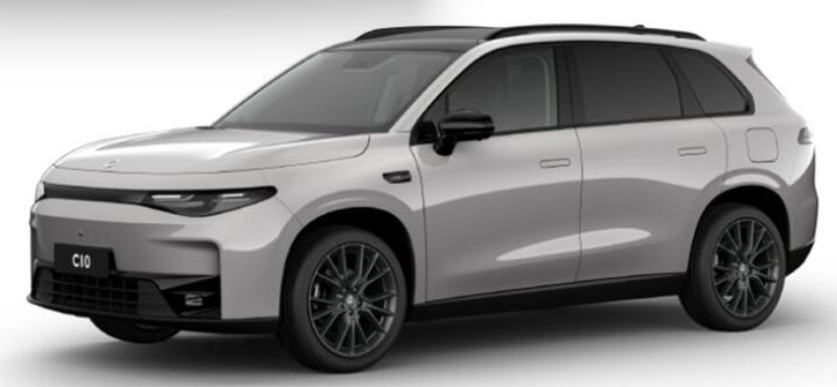
The Leapmotor C10 models lineup has become much more interesting than it first appeared. What began as a relatively straightforward electric family SUV has expanded into a range that can include fully electric rear-wheel-drive versions, a range-extender model, different equipment grades, and a considerably more powerful all-wheel-drive version.
That gives buyers a pleasant problem: which Leapmotor C10 should we actually choose?
The answer depends less on badge prestige and more on how we drive. Someone commuting around town with home charging has very different needs from a family regularly covering 500-mile road trips. Likewise, the buyer who wants maximum value probably does not need the same C10 as someone attracted by dual-motor acceleration and all-wheel-drive traction.
We also need to be careful when discussing the C10 range because Leapmotor C10 trim levels differ between countries. A version called Design in one European market may be packaged differently elsewhere, and some markets sell fewer configurations altogether.
So rather than mixing every regional brochure into one confusing soup, we are going to break down the major Leapmotor C10 models, explain their powertrains, compare their strengths, and help determine which configuration makes the most sense.
Content in this publication
- What Is the Leapmotor C10?
- How Many Leapmotor C10 Models Are There?
- Leapmotor C10 Models at a Glance
- Leapmotor C10 BEV: The Pure Electric Model
- Leapmotor C10 Design: What Does the Design Model Mean?
- Leapmotor C10 REEV: The Range-Extender Model
- C10 REEV Electric Range
- C10 REEV Total Driving Range
- C10 REEV Charging
- Leapmotor C10 REEV Design
- Leapmotor C10 AWD: The Performance Model
- The C10 AWD's 800-Volt Architecture
- C10 BEV vs C10 REEV
- C10 RWD vs C10 AWD
- Leapmotor C10 Interior Across the Models
- Space and Practicality
- Safety Across the C10 Range
- Which Leapmotor C10 Model Has the Best Range?
- Which Leapmotor C10 Model Is Fastest?
- Which C10 Is Best for City Driving?
- Which C10 Is Best for Long Trips?
- Which Leapmotor C10 Offers the Best Value?
- What to Check Before Buying a Leapmotor C10
- Are Leapmotor C10 Models Worth Considering?
- Our Leapmotor C10 Model Recommendations
- Final Thoughts on the Leapmotor C10 Models
- Frequently Asked Questions
What Is the Leapmotor C10?
The C10 is a mid-to-large family SUV developed by Chinese electric vehicle manufacturer Leapmotor.
It plays an important role internationally because it was one of the first Leapmotor products selected for broad overseas expansion through Leapmotor International, the joint venture involving Leapmotor and Stellantis.
The C10 measures approximately:
- 4,739 mm long
- 1,900 mm wide
- 1,680 mm tall
- 2,825 mm between the axles
Those dimensions place it firmly in family SUV territory rather than compact crossover territory.
Its long wheelbase also explains why the interior feels relatively spacious. Leapmotor has designed the C10 as a five-seat family vehicle rather than trying to squeeze a token third row into the back.
The original European electric C10 launched with a 69.9-kWh battery and a rear electric motor producing around 160 kW, or roughly 218 hp depending on how output is quoted. Early European specifications listed up to approximately 420 km of WLTP driving range.
But that was only the beginning.
How Many Leapmotor C10 Models Are There?
At a broad powertrain level, we can divide the modern Leapmotor C10 range into three major types:
- C10 BEV rear-wheel drive – the conventional battery-electric version.
- C10 REEV – an electric-drive vehicle using a petrol engine as a range-extending generator.
- C10 AWD – the high-performance dual-motor battery-electric model.
Within those categories, several markets also offer different specification grades such as standard/base and Design versions.
That distinction is important.
A trim level changes equipment. A powertrain changes how the car actually works.
For example, a C10 Design and a standard C10 may share essentially the same electric propulsion system, while the difference between a C10 BEV and C10 REEV fundamentally alters how energy is stored and replenished.
Leapmotor C10 Models at a Glance
Here is the simple version before we dive deeper.
| C10 version | Powertrain | Approx. battery | Drive | Best suited to |
|---|---|---|---|---|
| C10 BEV | Fully electric | 69.9 kWh* | RWD | Everyday EV users |
| C10 Design BEV | Fully electric | 69.9 kWh* | RWD | Buyers wanting more equipment |
| C10 REEV | Electric + petrol generator | 28.4 kWh | RWD | Long-distance flexibility |
| C10 REEV Design | Electric + petrol generator | 28.4 kWh | RWD | REEV with higher specification |
| C10 AWD | Fully electric, dual motor | 81.9 kWh | AWD | Performance and traction |
*Battery specifications can evolve with model year and market.
We should treat this table as a map rather than a universal price list because C10 models and trims vary regionally.
For example, Swiss Leapmotor documentation has listed both standard and Design grades for the 69.9-kWh BEV and REEV configurations.
Leapmotor C10 BEV: The Pure Electric Model
The standard electric C10 is arguably the easiest version to understand.
There is no petrol engine, fuel tank, generator, or complicated hybrid interaction. Charge the battery, drive the vehicle, then recharge it.
Simple.
The original European configuration paired a 69.9-kWh LFP battery with a rear-mounted electric motor producing around 160 kW.
Why the C10 BEV Makes Sense
For drivers who can regularly recharge at home, work, or reliable public charging stations, the BEV model may be the most logical C10.
It offers the pure EV advantages we expect:
- Quiet low-speed operation
- Instant electric torque
- No exhaust emissions while driving
- Fewer traditional engine maintenance requirements
- Smooth acceleration
- Home-charging convenience
If our normal commute is 30 miles and the car spends every night plugged into a wallbox, carrying a petrol generator around can feel a little like bringing camping equipment to the supermarket.
We may simply never need it.
Leapmotor C10 BEV Range
Early European C10 documentation quoted around 420 km WLTP, equivalent to roughly 261 miles, although real-world range varies according to temperature, speed, road conditions, heating or air-conditioning use, tyre pressure, driving style, and specification.
A WLTP figure should therefore be treated as a comparison tool rather than a promise carved into stone.
Motorway driving at high speed usually consumes considerably more energy than slower urban driving.
Leapmotor C10 Design: What Does the Design Model Mean?
This is where naming gets slightly confusing.
Design is primarily an equipment grade, not an entirely different C10 platform.
Depending on the market, Design models can receive additional comfort, styling, or interior equipment compared with a more basic C10 specification.
The exact package can change by country, so we should always check the local Leapmotor configurator before ordering.
Who Should Buy the C10 Design?
The Design grade makes the most sense for buyers who intend to keep the vehicle for several years and appreciate additional cabin luxuries.
The calculation is straightforward.
If an upgraded seat, better interior treatment, extra convenience equipment, or enhanced exterior appearance improves every journey for five years, paying somewhat more can be sensible.
But if we primarily care about electric range, space, and price, the regular version may provide better value.
Is the Design Trim Faster?
Not necessarily.
This is an important distinction.
Higher trim does not automatically mean higher power.
Where the standard and Design cars share the same motor and battery, their straight-line performance should be broadly similar.
Think of Design as changing the furniture rather than rebuilding the house.
Leapmotor C10 REEV: The Range-Extender Model
The C10 REEV is probably the most unusual model in the range.
REEV means Range Extender Electric Vehicle.
At first glance, we might call it a plug-in hybrid, but its operating concept is different from many conventional PHEVs.
The wheels are driven by the electric propulsion system. The 1.5-litre petrol engine primarily acts as an onboard generator, producing electricity when needed instead of functioning as the primary mechanical drive source.
Leapmotor specifies a 28.4-kWh battery, a 158-kW electric motor producing around 215 hp, and a 1.5-litre petrol range extender. The company originally quoted approximately 145 km of WLTP electric range and more than 950 km of combined range, with some later market material quoting as much as 974 km.
How the C10 REEV Works
Imagine an electric car carrying its own emergency charging station.
That is roughly the idea.
When sufficient battery charge is available, the vehicle behaves much like an EV.
As energy falls, the petrol engine can start and generate electricity.
So we receive some of the driving character associated with an electric vehicle while gaining much greater long-distance flexibility.
Does the Petrol Engine Drive the Wheels?
The key concept behind Leapmotor's REEV implementation is that propulsion remains electric.
The petrol engine serves as a generator rather than acting like the conventional engine in an ordinary petrol SUV.
That means acceleration can retain the smooth, immediate feel we associate with electric propulsion.
Leapmotor has explicitly described the C10 REEV's 1.5-litre combustion engine as generating electrical energy to support the battery rather than serving as the normal wheel-driving power source.
C10 REEV Electric Range
One of the REEV's biggest advantages over mild hybrids is that its battery is large enough to cover meaningful everyday distances electrically.
Leapmotor quotes approximately 145 km WLTP of battery-electric driving for the original European REEV specification.
That is around 90 miles.
For many drivers, that means an ordinary working day could potentially be completed without the petrol generator operating at all.
Suppose our round-trip commute is 35 miles.
We charge overnight.
We drive to work and back.
You may be interested in reading Which Mazda CX-9 Years to Avoid? A Used-Buyer’s Guide
We plug in again.
In that scenario, the petrol engine may remain dormant during normal weekdays yet still be available when Saturday suddenly turns into a 400-mile family road trip.
That is where the REEV concept becomes clever.
C10 REEV Total Driving Range
The REEV's party trick is not its electric range. It is what happens when we combine battery energy with petrol-generated electricity.
Leapmotor has quoted more than 950 km of total WLTP range, while specific European material has cited up to 974 km.
That makes it dramatically less dependent on fast-charging infrastructure than a conventional BEV.
When long-distance chargers are busy, broken, inconveniently located, or simply absent, refuelling the generator provides another option.
Who Is the C10 REEV For?
The REEV is particularly attractive if we:
- Can charge at home but occasionally travel very long distances
- Live in an area with inconsistent rapid-charging coverage
- Want electric commuting without depending entirely on public chargers
- Frequently take family road trips
- Feel uncomfortable moving directly from petrol to a full EV
- Need one vehicle to handle both short urban trips and occasional cross-country travel
It is essentially a bridge between two worlds.
C10 REEV Charging
The C10 REEV remains plug-in capable.
Leapmotor has specified both AC charging and DC fast charging up to 65 kW for the original European version. The company says DC charging can recover approximately half of its electric range in 18 minutes under suitable conditions.
That may sound modest compared with ultra-fast modern BEVs, but remember what we are charging: a relatively small 28.4-kWh battery.
The REEV also has the petrol generator as another energy source, so its charging priorities differ from those of a pure EV.
Leapmotor C10 REEV Design
In some markets, buyers can combine the REEV powertrain with the higher Design specification.
This may be the sweet spot for someone who wants maximum flexibility without accepting a basic cabin specification.
Mechanically, however, the underlying appeal remains the same: short journeys can be handled electrically while the onboard generator removes much of the anxiety surrounding long-distance charging.
Leapmotor C10 AWD: The Performance Model
Then the C10 decided to drink an espresso.
The C10 AWD moves the model away from being merely a sensible family EV and into genuinely rapid electric SUV territory.
Leapmotor announced the C10 Design 81.9kWh AWD with dual electric motors, an 800-volt electrical architecture, and roughly 585 hp.
More importantly, Leapmotor claims 0–100 km/h in just 4.0 seconds.
That is serious performance for a practical family SUV.
Dual-Motor All-Wheel Drive
Unlike the rear-wheel-drive C10 BEV, the AWD model uses a dual-motor system.
This provides traction at both axles and allows the electronic control system to distribute torque according to conditions.
That matters in:
- Heavy rain
- Snow
- Loose surfaces
- Fast acceleration
- Slippery junctions
- Mountain roads
Do we need nearly 600 hp to take children to school?
Probably not.
Will plenty of people want it anyway?
Absolutely.
The C10 AWD's 800-Volt Architecture
Horsepower grabs headlines, but the more meaningful advancement may be hiding underneath.
The C10 AWD uses an 800V electrical architecture.
Higher-voltage EV systems can support substantial charging power while reducing electrical current for a given power level, potentially improving efficiency and thermal management.
Leapmotor says the C10 AWD can charge from 30% to 80% in around 22 minutes under appropriate conditions.
That means the AWD version is not simply the old C10 with another motor bolted onto it.
It represents a meaningful technological evolution.
C10 AWD Battery
The model was announced as the C10 Design 81.9kWh AWD, giving it a larger nominal battery than the original European 69.9-kWh rear-drive BEV.
That additional capacity helps compensate for the greater performance potential of the dual-motor system.
Of course, enormous acceleration and maximum efficiency rarely travel hand in hand.
Use those 585 horses frequently and they will expect to be fed.
C10 BEV vs C10 REEV
This will probably be the most important decision for many buyers.
Choose the C10 BEV If…
The pure electric model makes sense when:
- We have dependable home charging
- Most trips are predictable
- Public charging is good in our region
- We want the simplest drivetrain
- We prefer zero tailpipe emissions during all driving
- Long road trips are relatively uncommon
The BEV rewards routine.
Charge overnight, drive during the day, repeat.
Choose the C10 REEV If…
The REEV becomes more compelling when:
- Long journeys are frequent
- Charging infrastructure is unreliable
- We cannot afford long charging delays
- We still want electric daily driving
- One vehicle needs to cover almost every conceivable use case
It sacrifices some of the mechanical simplicity of a BEV for a huge increase in energy flexibility.
C10 RWD vs C10 AWD
The question here is less complicated.
For most people, rear-wheel drive is enough.
It should be lighter, mechanically simpler, and plenty powerful for ordinary family use.
AWD is the enthusiast's option or the practical choice for drivers who regularly encounter conditions where extra traction genuinely helps.
Reasons to Choose AWD
The C10 AWD becomes appealing if we prioritize:
- Much stronger acceleration
- Dual-motor traction
- High-performance driving
- Mountainous or slippery roads
- Newer 800V charging technology
- A larger battery configuration
Reasons to Stay With RWD
Rear-wheel drive remains sensible when:
- Purchase cost matters
- Maximum performance is unnecessary
- We live in a mild climate
- Efficiency matters more than acceleration
- Most driving takes place in urban or suburban areas
More motors are not automatically better.
They are simply better at different things.
Leapmotor C10 Interior Across the Models
One of the reasons the C10 attracts attention is that it does not feel designed as a stripped-out budget EV.
The cabin is minimalist but technologically focused.
European launch specifications included a 10.25-inch digital instrument display and a large 14.6-inch central touchscreen.
The dashboard follows the now-familiar modern EV formula: very few conventional controls, large displays, broad horizontal surfaces, and substantial software integration.
Some drivers will love that.
Others may wish a few important functions still had proper physical buttons.
Space and Practicality
Regardless of motor configuration, the C10 remains fundamentally a family SUV.
The 2,825-mm wheelbase gives designers plenty of room to work with, particularly for second-row passenger space.
That may matter more in everyday ownership than another tenth of a second in the 0–100 km/h sprint.
When comparing models, we would therefore look beyond range and horsepower and ask more boring—but much more useful—questions:
Can everyone sit comfortably?
Does the child seat fit easily?
Is rear legroom good?
Can we load the weekly shopping without playing luggage Tetris?
You may be interested in readingWhich Mazda CX-9 Years to Avoid? A Used-Buyer’s GuideYou may be interested in reading
 BMW M2 Years to Avoid: Which Used M2 Should You Skip?
Those are the things we notice every day.
Safety Across the C10 Range
The C10 has also made a strong safety impression in Europe.
Leapmotor announced that the C10 achieved a five-star Euro NCAP rating, supporting its positioning as a family-focused vehicle.
Available driver-assistance features can depend on market and model year, so we should not assume every C10 sold globally contains an identical equipment package.
Always check the specification sheet for the actual car being purchased.
Which Leapmotor C10 Model Has the Best Range?
There are two ways to answer this.
If by range we mean total distance before needing either electricity or petrol, the C10 REEV wins easily thanks to its range-extender system and more than 950 km of quoted combined WLTP capability.
If we mean driving without consuming petrol, then we need to compare the battery-electric C10 configurations instead.
That distinction is essential.
A 970-km REEV range is not the same thing as a 970-km battery-electric range.
Which Leapmotor C10 Model Is Fastest?
The C10 AWD is comfortably the performance champion.
With around 585 hp and a claimed 0–100 km/h time of 4.0 seconds, it sits in a completely different performance category from the original rear-wheel-drive C10.
For context, four seconds to 100 km/h was once sports-car territory.
Now apparently the family dog can experience it on the way to the park.
Which C10 Is Best for City Driving?
For city use, we would lean toward the regular C10 BEV.
Why carry the additional complexity of the range extender or performance AWD system if our life revolves around relatively short trips?
Electric vehicles thrive in urban environments because regenerative braking, quiet propulsion, and efficient low-speed running all work in their favour.
If home charging is available, daily ownership can also be remarkably convenient.
Plug in at night.
Wake up with usable range.
No petrol station required.
Which C10 Is Best for Long Trips?
The C10 REEV wins this category for flexibility.
Its combination of meaningful battery-electric range and a petrol generator means we do not have to plan every motorway stop around a charging station.
For drivers who regularly cross large regions or travel through areas with poor charging coverage, that can be enormously valuable.
The C10 AWD may charge considerably faster under ideal circumstances, but it still fundamentally depends on charging infrastructure.
The REEV gives us another escape route.
Which Leapmotor C10 Offers the Best Value?
For pure value, we would start with the least expensive C10 BEV available in the local market.
The C10 already arrives as a generously equipped SUV in many regions, so upgrading simply because a more expensive trim exists may not be necessary.
However, value does not mean cheapest.
If we frequently drive 500-mile journeys, buying the cheapest BEV and then spending years frustrated by charging stops is false economy.
Likewise, paying extra for AWD performance that we use twice per year does not automatically represent value either.
The best-value C10 is the one whose expensive technology we actually use.
What to Check Before Buying a Leapmotor C10
Before signing anything, we would verify several items carefully because C10 specifications continue to evolve and vary among countries:
- Exact battery capacity
- WLTP or local-market range
- AC charging rate
- DC maximum charging rate
- Standard equipment
- Heat pump availability
- Wheel size
- Driver-assistance equipment
- Warranty coverage
- Battery warranty
- Connected-service availability
- Smartphone integration
- Local servicing network
- Whether the vehicle is BEV, REEV, RWD, or AWD
Do not rely entirely on a review published in another country.
The car may look identical while hiding meaningful specification differences underneath.
Are Leapmotor C10 Models Worth Considering?
We think the C10's biggest strength is choice.
The original electric model is relatively straightforward and family focused.
The REEV takes the same general idea and makes long-distance travel much easier for drivers who are not ready to depend completely on charging infrastructure.
Then the AWD model throws subtlety through the window and adds almost 600 hp, dual motors, and an advanced 800V system.
That is a remarkably broad spread for one model family.
Leapmotor is essentially saying: do you want sensible, flexible, or fast?
There is now a C10 for each answer.
Our Leapmotor C10 Model Recommendations
If we were choosing purely according to use case, we would break the range down like this:
Best Overall: C10 BEV
For the average driver with reliable home charging, the regular battery-electric C10 is the cleanest solution.
It offers the core C10 experience without unnecessary powertrain complexity.
Best for Long-Distance Drivers: C10 REEV
For frequent road trips, the REEV is difficult to ignore.
The ability to commute electrically while retaining a petrol-powered generator for long journeys gives it enormous versatility.
If our budget comfortably allows it, Design specifications may improve the sense of occasion and everyday comfort.
Just check what Design actually includes in your country.
Best Performance Model: C10 AWD
No contest.
The approximately 585-hp dual-motor C10 is the model for drivers who want serious acceleration, AWD traction, and newer high-voltage charging technology.
Final Thoughts on the Leapmotor C10 Models
The Leapmotor C10 models range demonstrates how quickly the electric vehicle market is evolving.
Only a few years ago, choosing an EV often meant choosing between different battery sizes of essentially the same car.
The C10 offers something more nuanced.
We can have a conventional rear-wheel-drive EV for everyday simplicity. We can choose a range-extender version that behaves like an electric vehicle while carrying its own petrol-powered electricity generator. Or we can step up to a dual-motor AWD version capable of accelerating like a performance car.
There is no universal winner.
For urban commuting and home charging, the BEV makes enormous sense.
For families covering long distances in regions where charging infrastructure remains inconsistent, the REEV may be the smartest model in the range.
And for buyers who want their practical family SUV to deliver almost comically strong acceleration, the C10 AWD sits at the top.
Our advice is simple: choose the powertrain before choosing the trim.
Decide how we actually drive first. Then decide how many luxury features we want.
That approach makes navigating the Leapmotor C10 lineup far easier—and greatly reduces the chance of paying for technology we never use.
Frequently Asked Questions
1. What Leapmotor C10 models are available?
The major C10 configurations include fully electric rear-wheel-drive models, the C10 REEV range-extender, and the newer dual-motor C10 AWD. Depending on the country, buyers may also find standard and Design equipment grades. Local availability varies, so the regional Leapmotor configurator should always be checked before purchase.
2. What is the difference between the Leapmotor C10 BEV and C10 REEV?
The C10 BEV relies entirely on its rechargeable battery for energy. The C10 REEV also drives using electric propulsion but adds a 1.5-litre petrol engine that acts as a generator when additional electrical energy is required. The REEV therefore offers dramatically greater total travelling range without relying exclusively on charging stations.
3. Which Leapmotor C10 has the longest range?
The C10 REEV provides the greatest combined travelling range, with Leapmotor quoting more than 950 km WLTP and up to roughly 974 km in some European material. However, part of that distance comes from electricity generated using petrol, so it should not be confused with pure battery-electric range.
4. Which Leapmotor C10 is the fastest?
The C10 AWD is the fastest major version. Its dual-motor electric powertrain produces around 585 hp, and Leapmotor claims it can accelerate from 0 to 100 km/h in approximately four seconds.
You may be interested in readingWhich Mazda CX-9 Years to Avoid? A Used-Buyer’s GuideYou may be interested in reading
BMW M2 Years to Avoid: Which Used M2 Should You Skip?You may be interested in reading
 Toyota Hilux Years to Avoid: The Models We’d Inspect Twice Before Buying
5. Should we buy the C10 BEV, REEV, or AWD?
Choose the C10 BEV if home charging and predictable daily driving make a pure EV practical. Choose the REEV if long-distance flexibility matters and charging availability is a concern. Choose the C10 AWD if performance, all-wheel-drive traction, faster high-voltage charging technology, and a larger battery are higher priorities than simply keeping costs down.
If you want to know other articles similar to Leapmotor C10 Models: Complete Guide to Versions, Trims, Range, and Features you can visit the category Models.
Honda Passport vs Toyota 4Runner: Which SUV Is Better?
Honda Passport vs Ford Bronco: Which SUV Is Better?
Honda Passport vs Ford Explorer: Which SUV Is Better?
Honda Passport or Pilot: Which SUV Is Better?
Honda Passport vs Jeep Grand Cherokee: Which SUV Is Better?
Honda Passport vs Nissan Pathfinder: Which SUV Is Better?
Leave a Reply
More content of your interest