

Toyota Hilux Years to Avoid: The Models We’d Inspect Twice Before Buying

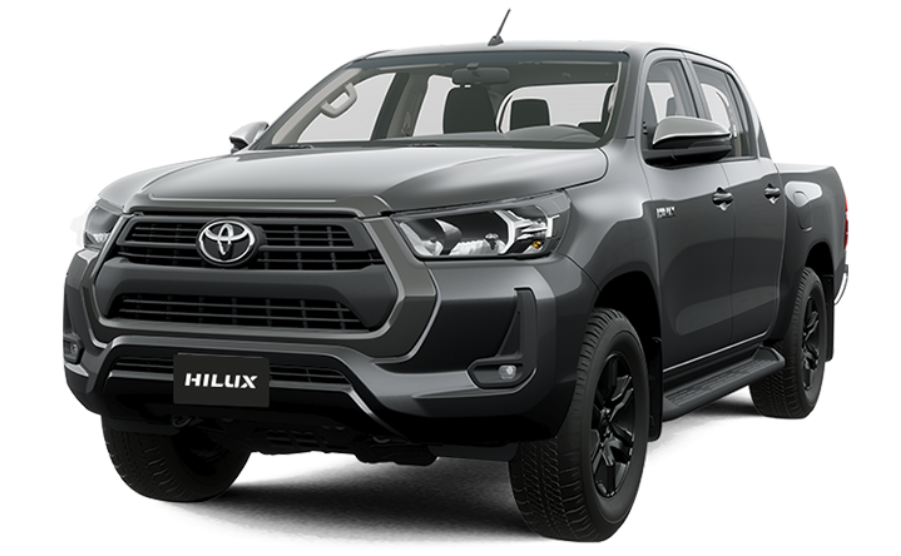
The Toyota Hilux has spent decades building the kind of reputation most pickup trucks can only dream about. Drop one onto a dusty worksite, send it across corrugated country roads, load the tray with equipment, and it usually seems happier than a city car crawling through rush-hour traffic.
That reputation is deserved. But it can also create a dangerous assumption: every Hilux is bulletproof.
It isn't.
Certain generations, engines, and production periods deserve substantially more scrutiny than others. Some older diesel Hilux models developed injector-seal problems that could have serious consequences when ignored. More recently, diesel particulate filter problems became particularly important on some eighth-generation 2.4- and 2.8-litre diesel models.
So, what are the Toyota Hilux years to avoid?
Rather than stamping a giant red "AVOID" label on an entire year, we think the smarter approach is identifying the combinations of year, engine, maintenance history, and operating conditions that present the greatest risk.
For used-car shoppers, our main caution periods are:
| Hilux period | Main concern | Our view |
|---|---|---|
| 2005–2011 diesel | Injector seals, injector condition, oil contamination | Buy only after careful inspection |
| 2012–2015 diesel | Aging 1KD diesel components and injector-related concerns | Not necessarily bad, but history matters |
| 2015–2020 2.4/2.8 diesel | DPF problems on affected vehicles | Most important modern Hilux period to investigate |
| 2021 onward | Fewer headline DPF concerns, but still check recalls and maintenance | Generally safer modern choice |
| Older pre-2005 Hilux | Age, rust, abuse and neglected maintenance | Condition matters more than model year |
That table tells only half the story. Let's dig underneath the bonnet.
Content in this publication
- Are There Really Bad Toyota Hilux Years?
- 2005–2011 Toyota Hilux: The Diesel Years We'd Check Carefully
- 2012–2015 Toyota Hilux: Better or Still Risky?
- 2015–2020 Toyota Hilux: The Most Important Years to Investigate
- Why Short Trips Can Be Hard on DPF-Equipped Diesels
- 2016 Toyota Hilux: A Year We'd Investigate Closely
- 2017 Toyota Hilux: Still Within the DPF Concern Period
- 2018 Toyota Hilux: Should We Avoid It?
- 2019 Toyota Hilux: Getting Better, But Don't Stop Checking
- 2020 Toyota Hilux: The Transition Point
- What About 2021 and Newer Toyota Hilux Models?
- Toyota Hilux Fuel Pump Recalls: Another VIN Check Worth Making
- What Are the Best Toyota Hilux Years to Buy?
- Petrol vs Diesel Hilux: Which Is Safer Used?
- Manual vs Automatic Hilux Reliability
- Four-Wheel-Drive Hilux Models Need Extra Inspection
- Rust Can Matter More Than the Model Year
- Watch Out for Modified Toyota Hilux Models
- Signs a Used Toyota Hilux Has Lived a Hard Life
- The Pre-Purchase Inspection Is Worth Every Dollar
- Service History Beats Toyota's Reliability Reputation
- So, Which Toyota Hilux Years Should We Avoid?
- Toyota Hilux Used-Buying Checklist
- Final Thoughts: Should We Still Buy a Toyota Hilux?
- FAQs About Toyota Hilux Years to Avoid
Are There Really Bad Toyota Hilux Years?
Not in quite the same way as some notoriously unreliable vehicles.
The Hilux has rarely had a generation where virtually every powertrain should be avoided. What we instead find are problem periods.
Think of it like buying a house in a good neighborhood. The street might have a great reputation, but we'd still inspect the roof, plumbing, and foundations before signing anything.
The Hilux deserves the same treatment.
A well-maintained 2010 diesel with comprehensive servicing can easily be a smarter purchase than a neglected 2018 truck with questionable modifications, incomplete records, and years of hard towing behind it.
That's why we prefer the phrase "Hilux years to be cautious about" rather than pretending every vehicle from a particular calendar year is defective.
2005–2011 Toyota Hilux: The Diesel Years We'd Check Carefully
The seventh-generation Hilux arrived in the mid-2000s and quickly became enormously popular in markets including Australia, Asia, Africa, Europe, and Latin America.
Many examples are still working today.
That's impressive.
However, diesel versions equipped with the 1KD-FTV turbo-diesel deserve additional attention when we're shopping second-hand.
The 1KD-FTV Injector Seal Problem
One of the more serious concerns associated with this diesel engine involves the seals around the fuel injectors.
When these seals deteriorate, combustion gases can escape past them. Carbon contamination can subsequently enter the engine oil.
CarsGuide's review of the 2005–2015 Hilux highlights this issue, noting that carbon contamination can ultimately restrict the oil pickup and, in severe cases, lead to oil starvation and engine damage.
That's not the kind of maintenance surprise anyone wants after purchasing a supposedly indestructible pickup.
Why Injector Seal Problems Matter So Much
A worn suspension bush might make a Hilux clunk.
An aging battery might leave us stranded one morning.
Restricted engine lubrication, however, operates on an entirely different level.
Oil is effectively an engine's bloodstream. Restrict the supply and expensive mechanical components suddenly lose the protection keeping metal surfaces apart.
For that reason, we wouldn't automatically reject a 2005–2011 diesel Hilux, but we'd want convincing evidence showing that injector condition, seals, lubrication, and servicing have received appropriate attention.
Should We Avoid Every 2005–2011 Hilux?
Absolutely not.
There are enormous numbers of these vehicles still operating reliably, and plenty have accumulated extraordinary mileages.
Instead, we'd classify this period as inspection-intensive.
Service records become far more valuable than shiny paint.
A truck showing 250,000 km with detailed maintenance records could be safer than one showing 150,000 km with gaps in its history.
2012–2015 Toyota Hilux: Better or Still Risky?
Late seventh-generation Hilux models can be appealing purchases.
Toyota had years to refine the platform, and these trucks maintain the simple, rugged character that many buyers actively seek.
However, age now becomes another factor.
Even a 2015 Hilux is more than a decade old in 2026.
Rubber seals deteriorate. Suspension components wear. Injectors age. Turbochargers accumulate operating hours. Cooling systems collect scars from years of work.
That doesn't make these models unreliable—it simply means we can't evaluate them like nearly new trucks.
High Mileage Isn't Automatically a Deal Breaker
Hilux buyers sometimes become obsessed with odometer readings.
We don't think mileage alone tells the full story.
A highway-driven Hilux serviced every scheduled interval can reach high mileage relatively gracefully. Meanwhile, a low-mileage example may have spent its life crawling through mines, farms, beaches, mud, or construction sites.
Hours and operating conditions matter.
Ask yourself: would we rather buy a 180,000 km vehicle that lived on highways or a 110,000 km truck that spent Saturdays submerged halfway up its doors?
Exactly.
2015–2020 Toyota Hilux: The Most Important Years to Investigate
If there's one section used Hilux shoppers shouldn't skip, it's this one.
The eighth-generation Hilux introduced newer 2.4-litre 2GD-FTV and 2.8-litre 1GD-FTV turbo-diesel engines in many markets.
These engines deliver strong torque and good efficiency.
But early versions also became associated with significant diesel particulate filter (DPF) problems, particularly in Australia.
Toyota Hilux DPF Problems Explained
A diesel particulate filter captures soot produced by the engine.
Rather than allowing that soot to accumulate forever, the vehicle periodically performs a process called regeneration, increasing exhaust temperatures sufficiently to burn the collected material.
That's great when everything works correctly.
When regeneration doesn't occur properly, soot builds up.
Problems may follow.
The Australian Competition and Consumer Commission documented complaints involving excessive white smoke, DPF soot accumulation, warning messages, and vehicles entering limp mode.
Toyota Australia subsequently implemented a customer service exercise dealing with potentially faulty DPF systems and extended DPF warranty coverage on affected vehicles.
Which Toyota Hilux Models Had the DPF Issue?
This is where precise dates matter.
Toyota Australia's current information regarding the DPF class action identifies relevant Hilux, Prado, and Fortuner vehicles equipped with 1GD-FTV or 2GD-FTV diesel engines acquired between October 1, 2015 and April 23, 2020. The notice states that relevant vehicles had a defective DPF system at initial supply and that an effective repair subsequently existed.
Therefore, if we're looking at a 2015–2020 diesel Hilux, we should investigate its DPF history rather than assuming everything is fine because the dashboard currently shows no warning lights.
Does That Mean We Should Avoid Every 2015–2020 Hilux?
No.
And that's an important distinction.
An affected truck may have received the appropriate repairs and could now operate perfectly well.
Consequently, the question isn't simply:
"Is it a 2017 Hilux?"
The better questions are:
- Is it equipped with the relevant diesel engine?
- Has the DPF repair or campaign work been completed?
- Does Toyota's VIN database show outstanding recalls or campaigns?
- Has the truck experienced repeated DPF warnings?
- Does it produce abnormal smoke during regeneration?
- Has it spent most of its life doing short urban journeys?
- Are dealership invoices available showing previous DPF work?
- Has the emissions system been illegally modified or deleted?
Those answers tell us far more than the registration year alone.
Why Short Trips Can Be Hard on DPF-Equipped Diesels
Modern diesel engines often enjoy long, sustained journeys.
Their emissions systems need sufficient operating temperature and time to perform regeneration correctly.
Imagine trying to clean an oven but switching it off every five minutes.
That's roughly the problem.
A diesel Hilux used exclusively for quick school runs, shopping trips, and low-speed suburban journeys may therefore experience a very different life from one regularly traveling long distances at highway speeds.
You may be interested in reading Leapmotor B10 vs C10: Which Electric SUV Should You Buy?
That doesn't mean city driving automatically destroys a DPF.
It does mean usage history belongs on our inspection checklist.
2016 Toyota Hilux: A Year We'd Investigate Closely
The 2016 Hilux represents an early year of the eighth generation in many markets.
Early-generation vehicles deserve additional caution because manufacturers are still ironing out production and calibration issues.
With the Hilux, DPF concerns make early 2.4- and 2.8-litre diesels especially relevant.
Would we purchase one?
Yes—but only when its maintenance and DPF history checked out.
We'd rather buy a thoroughly documented 2016 Hilux than an undocumented 2020 model simply because the latter is newer.
2017 Toyota Hilux: Still Within the DPF Concern Period
The same principle applies to 2017.
A good 2017 Hilux can be an excellent used truck. Plenty have performed years of demanding work without major mechanical drama.
But when buying a diesel example, we'd specifically ask about DPF repairs or replacement.
If the seller responds with something vague like, "They all smoke a little; that's normal," we'd investigate further.
Healthy regeneration can sometimes produce noticeable emissions behavior, but persistent excessive smoke, warning lights, or frequent forced regenerations deserve professional diagnosis.
2018 Toyota Hilux: Should We Avoid It?
2018 remains within the key Australian DPF concern period.
Toyota itself states that it launched a customer service exercise in October 2018 addressing potentially faulty filters on certain Hilux, Fortuner, and Prado models.
That doesn't make the 2018 Hilux a bad truck.
It makes documentation especially important.
When inspecting one, we'd look for evidence that any relevant campaign work was completed and confirm everything directly against the VIN.
Never rely exclusively on a seller saying, "Toyota sorted all that."
Trust paperwork, not assumptions.
2019 Toyota Hilux: Getting Better, But Don't Stop Checking
A 2019 Hilux can look appealing because it's modern enough to offer contemporary safety and equipment while being old enough for depreciation to soften its purchase price.
Still, some vehicles produced around this period remain relevant to known DPF concerns.
Toyota's Australian class-action information extends the relevant acquisition window into April 2020.
Therefore, we wouldn't give a 2019 diesel an automatic clean bill of health simply because it's later in the generation.
Check the VIN.
Check repair history.
Test drive it properly.
2020 Toyota Hilux: The Transition Point
The 2020 model year requires nuance because production dates, specification changes, and market differences complicate blanket statements.
Later eighth-generation Hilux models benefited from ongoing development, and Toyota stated that it had worked on design changes intended to prevent the earlier DPF problem from continuing in newer vehicles.
A later vehicle can therefore be preferable when everything else is equal.
Still, "2020" printed on the registration paperwork doesn't tell us the entire manufacturing history.
VIN-level verification remains the smarter approach.
What About 2021 and Newer Toyota Hilux Models?
We'd generally place post-2020 Hilux models higher on our modern used-buying shortlist.
That's not because they're immune to faults.
No vehicle is.
But they fall outside the principal 2015–2020 DPF period discussed above, and later versions benefited from Toyota's ongoing development of the eighth-generation platform.
There have still been individual recalls affecting certain Hilux vehicles. For example, Toyota Australia announced a compliance-label recall involving a limited number of Hilux vehicles produced between March and June 2021. That particular issue related to incorrect GVM information on a label rather than a fundamental mechanical reliability defect.
The distinction matters.
A recall doesn't automatically make a vehicle unreliable.
Some recalls involve serious mechanical components. Others address comparatively minor compliance matters.
Toyota Hilux Fuel Pump Recalls: Another VIN Check Worth Making
Certain Toyota vehicles, including some Hilux models, have also been included in fuel-pump recalls.
Toyota Australia reported a safety recall covering several Toyota models produced within specific periods because an affected fuel pump could stop operating, potentially causing rough running, stalling, or an inability to restart.
Again, that doesn't mean every Hilux built during the broad production ranges is affected.
It reinforces one simple rule:
Never buy a used Hilux without checking its VIN for outstanding recalls.
Toyota provides an online recall checker for vehicles sold through its authorized Australian network.
Other countries operate their own recall systems, so buyers outside Australia should check the appropriate Toyota distributor or national vehicle-safety authority.
What Are the Best Toyota Hilux Years to Buy?
If we want an eighth-generation Hilux but prefer to minimize exposure to the early DPF issue, later post-2020 examples are generally easier places to start looking.
For buyers interested in the seventh generation, late models with comprehensive maintenance can also be excellent purchases.
We'd prioritize condition in roughly this order:
service history → engine condition → chassis condition → previous use → recall/campaign status → mileage → cosmetic condition.
Notice where paintwork appears?
Almost at the bottom.
A scratched Hilux can work perfectly.
A beautifully detailed Hilux with contaminated oil, damaged injectors, a clogged DPF, and a bent chassis is simply an expensive ornament.
Petrol vs Diesel Hilux: Which Is Safer Used?
Diesel dominates Hilux discussions because diesel versions are so popular.
But petrol models shouldn't be forgotten.
Petrol engines generally avoid diesel-specific DPF and injector concerns, although they can consume more fuel and may not deliver the effortless low-end torque many Hilux owners want for towing and work.
For someone doing low annual mileage and lots of short journeys, a petrol Hilux can actually make considerable sense.
Diesel is brilliant when its advantages fit our use case.
Buying a diesel simply because "Hilux should be diesel" isn't always logical.
Manual vs Automatic Hilux Reliability
Both transmissions can provide long service when maintained properly.
With manuals, we'd pay attention to clutch condition—particularly on trucks used for towing, heavy loads, off-roading, or repeated hill starts.
With automatics, fluid condition, shift quality, hesitation, flare between gears, or harsh engagement deserve scrutiny.
A Hilux wearing a tow bar deserves additional investigation.
The tow bar itself isn't a problem.
But it whispers something about the truck's past.
Ask what it pulled.
A small garden trailer and a three-tonne caravan represent very different workloads.
Four-Wheel-Drive Hilux Models Need Extra Inspection
Buying a 4x4 means purchasing considerably more than an engine and four tires.
You may be interested in readingLeapmotor B10 vs C10: Which Electric SUV Should You Buy?You may be interested in reading
Leapmotor C10 vs Jaecoo 5: Which SUV Makes More Sense?We're also buying a transfer case, front drivetrain components, additional joints, actuators, differentials, and whatever punishment previous owners inflicted off-road.
During the inspection, we'd engage four-wheel drive properly.
Listen for abnormal noises.
Check underneath the vehicle.
Look for damaged protection plates, dents, leaking seals, bent components, mud packed into inaccessible areas, and corrosion.
Beach use is especially important because salt and steel mix about as happily as cats and bathwater.
Rust Can Matter More Than the Model Year
In dry climates, chassis corrosion may not be the first concern.
In coastal areas, snowy climates where roads are salted, or vehicles frequently launched into seawater, it can become critical.
Surface oxidation is one thing.
Structural corrosion is another.
Inspect chassis rails, suspension mounting points, crossmembers, tray mounts, brake lines, and hidden cavities.
A mechanically healthy engine can't compensate for a structurally compromised chassis.
Watch Out for Modified Toyota Hilux Models
Modification is practically a Hilux hobby.
Suspension lifts, oversized tires, bull bars, roof racks, winches, ECU tunes, snorkels, exhaust systems, canopies, GVM upgrades, and towing equipment are everywhere.
Some modifications are expertly engineered.
Others look like they were designed during a barbecue.
We'd be especially cautious with heavily tuned diesel engines.
Extra boost and fuel can increase performance, but they may also increase thermal and mechanical stress.
Ask who performed the work.
Ask whether supporting modifications were made.
Ask whether the vehicle remains road legal.
And ask whether the insurance company knows about it.
Signs a Used Toyota Hilux Has Lived a Hard Life
The Hilux is a work vehicle, so some scars are expected.
We're not searching for perfection.
We're searching for evidence of abuse.
Uneven tire wear can suggest alignment or suspension issues. A battered tow hitch suggests frequent trailer use. Worn driver's seat bolsters and pedals that don't match unusually low mileage deserve attention. Damage under the chassis can reveal serious off-road use.
Check the tray as well.
Deep dents around load points can reveal years of heavy cargo.
Then look at the rear suspension.
A truck that constantly carried excessive weight may sit differently from one that lived an easier life.
The Pre-Purchase Inspection Is Worth Every Dollar
A Hilux's reputation sometimes convinces buyers to skip professional inspections.
That's backwards.
Popular, high-value vehicles are exactly where inspections make sense.
A competent mechanic familiar with Toyota diesels should examine the vehicle before purchase.
For applicable diesel models, we'd specifically ask the technician to examine injector behavior, oil condition, DPF operation, turbocharger performance, cooling-system condition, fault codes, and evidence of abnormal combustion or contamination.
On older 1KD-powered vehicles, injector-seal and oil-pickup concerns deserve particular attention.
Service History Beats Toyota's Reliability Reputation
Here's the biggest lesson in this entire guide:
Don't buy a reputation. Buy the actual vehicle sitting in front of us.
Toyota built the Hilux well.
Toyota didn't control what the previous owner did with it every Saturday morning.
Maybe they serviced it perfectly.
Maybe they doubled every oil-change interval.
Maybe they towed beyond sensible limits.
Maybe they crossed rivers every weekend.
Maybe they installed bargain-bin suspension components.
Maybe they treated it better than their family car.
Records help us separate those possibilities.
So, Which Toyota Hilux Years Should We Avoid?
If we had to reduce everything into a simple buyer's answer, we'd say:
Be especially cautious with 2005–2011 1KD diesel Hilux models unless injector-seal and lubrication-system history is reassuring, and investigate 2015–2020 2.4/2.8 diesel Hilux models carefully because of the documented DPF issue affecting relevant vehicles.
But "cautious" isn't identical to "avoid."
That's the key.
A repaired, thoroughly serviced 2018 Hilux might be a much better buy than an abused 2022 example.
Likewise, a properly maintained 2009 diesel can continue working reliably for years.
We'd walk away from the individual truck—not automatically the number on its registration certificate.
Toyota Hilux Used-Buying Checklist
Before money changes hands, we'd check:
- VIN recall status — Verify outstanding recalls and campaigns directly with Toyota or the relevant national recall database.
- Full service history — Look beyond stamped books and request invoices whenever possible.
- DPF history on 2015–2020 diesels — Determine whether relevant corrective work has been completed.
- Injector condition on older diesels — Especially investigate 1KD-powered seventh-generation trucks.
- Engine oil condition — Contamination, incorrect level, or neglected servicing deserves attention.
- Cold start — Ask the seller not to warm the engine before we arrive.
- Exhaust smoke — Observe startup, acceleration, and normal operating conditions.
- Diagnostic scan — Historic or pending trouble codes can reveal problems hidden by a recently cleared dashboard.
- Cooling system — Check coolant condition, leaks, hoses, radiator, and evidence of overheating.
- Turbocharger — Listen for unusual noises and inspect performance and boost behavior.
- Transmission — Test every gear and operating mode.
- Four-wheel-drive system — Engage the transfer system instead of assuming it works.
- Chassis and underbody — Look for rust, impact damage, repairs, and off-road scars.
- Suspension and steering — Check bushings, ball joints, shocks, wheel bearings, and alignment.
- Towing history — Heavy towing can significantly change the mechanical life a truck has experienced.
- Aftermarket modifications — Verify quality, legality, calibration, and installation.
- Independent mechanical inspection — Make this non-negotiable when purchasing an expensive used Hilux.
Final Thoughts: Should We Still Buy a Toyota Hilux?
Yes.
The Toyota Hilux remains one of the strongest used pickup choices in many markets.
But its legendary reputation shouldn't become a blindfold.
The Toyota Hilux years to avoid aren't necessarily years we must eliminate from our search. They're years and configurations where we need to ask better questions.
Older 1KD diesel models deserve careful attention around injector seals and lubrication. Early eighth-generation 2.4- and 2.8-litre diesels deserve investigation into DPF history, particularly vehicles associated with the documented 2015–2020 problem period.
Later examples generally offer an easier starting point for buyers seeking a modern Hilux with fewer associations with those early DPF troubles.
Yet condition remains king.
A Toyota badge can't erase poor maintenance.
The smartest Hilux purchase is therefore rarely the newest truck or the lowest-mileage truck.
It's the one whose history makes sense, whose mechanical condition survives professional scrutiny, and whose previous owner appears to have treated it like machinery rather than a disposable hammer.
Find that Hilux, and the model's famous durability starts working in our favor again.
FAQs About Toyota Hilux Years to Avoid
1. What Toyota Hilux years should we avoid?
There isn't a universal model year that every buyer must avoid. However, we'd inspect 2005–2011 1KD diesel models particularly carefully for injector-seal and lubrication-related issues. We'd also investigate 2015–2020 2.4- and 2.8-litre diesel models for DPF history where relevant to the market and individual vehicle.
2. Are 2015–2020 Toyota Hilux models unreliable?
Not necessarily. Many are excellent vehicles. However, certain Hilux vehicles fitted with 1GD-FTV and 2GD-FTV diesel engines were affected by a documented DPF problem in Australia. A vehicle that received the appropriate remedy and has been properly maintained shouldn't automatically be rejected.
3. What is the most reliable Toyota Hilux year?
There isn't one universally "most reliable" year because engine specification, country, use, and maintenance vary enormously. For buyers wanting the eighth generation, later post-2020 examples are attractive because they fall outside the principal early DPF issue period discussed in this guide. Condition and service history remain more important than picking one magic year.
4. How many kilometres can a Toyota Hilux last?
Well-maintained Hilux trucks can achieve very high mileage, and examples exceeding several hundred thousand kilometres are common in commercial use. However, there is no guaranteed lifespan. Maintenance quality, towing, payload, climate, off-road use, engine type, and previous repairs strongly influence longevity.
You may be interested in readingLeapmotor B10 vs C10: Which Electric SUV Should You Buy?You may be interested in reading
Leapmotor C10 vs Jaecoo 5: Which SUV Makes More Sense?You may be interested in reading
Leapmotor C10 vs Jaecoo J7: Which SUV Should We Choose?5. Is an old Toyota Hilux worth buying?
It can be. Older Hilux models are simple, rugged, and often easier to work on than newer trucks. But age introduces its own risks, including corrosion, deteriorating rubber components, injector wear, suspension wear, cooling-system deterioration, and previous-owner abuse. We would always arrange a mechanical inspection before purchasing one.
If you want to know other articles similar to Toyota Hilux Years to Avoid: The Models We’d Inspect Twice Before Buying you can visit the category Models.
Honda Passport vs Toyota 4Runner: Which SUV Is Better?
Honda Passport vs Ford Bronco: Which SUV Is Better?
Honda Passport vs Ford Explorer: Which SUV Is Better?
Honda Passport or Pilot: Which SUV Is Better?
Honda Passport vs Jeep Grand Cherokee: Which SUV Is Better?
Honda Passport vs Nissan Pathfinder: Which SUV Is Better?
Leave a Reply
More content of your interest