

Leapmotor B10 vs C10: Which Electric SUV Should You Buy?

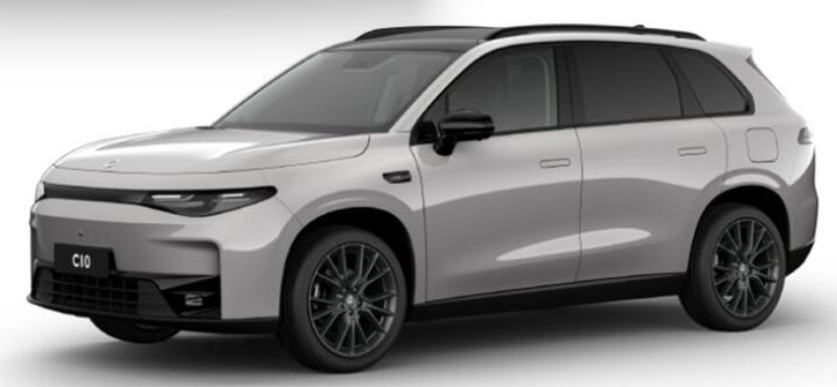
The Leapmotor B10 vs C10 comparison is more interesting than it first appears. At a glance, these two electric SUVs seem like siblings separated mainly by a tape measure. The B10 is the compact newcomer; the C10 is the larger, more family-oriented model. Look deeper, though, and the decision becomes far less predictable.
The smaller B10 rides on Leapmotor's newer LEAP3.5 architecture, offers impressively quick DC charging, weighs less, and—in some configurations—can actually travel farther per charge than certain versions of the bigger C10. The C10 responds with more cabin room, a longer wheelbase, greater torque in its rear-wheel-drive configuration, and an increasingly broad powertrain range that includes high-performance AWD derivatives.
So, which one should we put in our driveway?
For many buyers, we think the B10 is the smarter value-oriented choice, particularly when affordability, charging speed, manageable dimensions, and efficiency matter most. The C10 makes more sense for families and drivers who prioritise interior space, cruising comfort, towing capability, or stronger performance.
Let's dig into the differences rather than simply declaring the bigger car better.
Content in this publication
- Leapmotor B10 vs C10 at a Glance
- Leapmotor B10 Exterior: Compact Without Feeling Tiny
- Leapmotor C10 Exterior: More Road Presence
- Leapmotor B10 vs C10 Interior Space
- Leapmotor B10 vs C10 Boot Space
- Leapmotor B10 vs C10 Performance
- Leapmotor B10 vs C10 Range
- Leapmotor B10 vs C10 Charging Speed
- Leapmotor B10 vs C10 Driving Experience
- Technology and Infotainment
- Safety and Driver Assistance
- B10 vs C10 Practicality for Families
- Leapmotor B10 vs C10 for Towing
- Leapmotor B10 vs C10 Price and Value
- B10 vs C10 Running Costs
- Leapmotor B10 vs C10 Reliability
- Leapmotor B10 vs C10: Pros and Cons
- Which Is Better for City Driving?
- Which Is Better for Families?
- Which Is Better for Road Trips?
- Which Offers Better Value for Money?
- Our Leapmotor B10 vs C10 Verdict
- Frequently Asked Questions
Leapmotor B10 vs C10 at a Glance
The easiest way to understand the two cars is to think of the B10 as Leapmotor's mainstream compact electric SUV and the C10 as the company's larger family SUV.
| Specification | Leapmotor B10 | Leapmotor C10 RWD* |
|---|---|---|
| Length | 4,515 mm | 4,739 mm |
| Width | 1,885 mm | 1,900 mm |
| Height | 1,655 mm | 1,680 mm |
| Wheelbase | 2,735 mm | 2,825 mm |
| Power | 160 kW / 218 PS | 160 kW / roughly 218 PS |
| Torque | 240 Nm | 320 Nm |
| 0–100 km/h | 8.0 sec | 7.5 sec |
| Battery | 56.2 or 67.1 kWh | 69.9 kWh |
| Maximum WLTP range | 434 km | around 420–424 km |
| Maximum DC charging | 140–168 kW | roughly 83–84 kW |
| AC charging | 11 kW | 6.6 kW |
| Drivetrain | RWD | RWD |
| Seats | 5 | 5 |
*Specifications differ by market and C10 derivative. Leapmotor has subsequently expanded the C10 family, including an 81.9-kWh AWD model based on an 800V electrical architecture.
Those numbers already reveal something important: the C10 isn't simply a B10 with superior specifications everywhere.
The Core Difference Is Size and Positioning
The B10 measures 4,515 mm long with a 2,735 mm wheelbase, while the C10 stretches to approximately 4,739 mm with a 2,825 mm wheelbase. That makes the C10 roughly 224 mm longer, with 90 mm more distance between the axles.
On paper, 224 mm might sound insignificant.
In a tight parking garage? It can feel like a kilometre.
The B10 slots comfortably into compact-SUV territory, making it easier to manoeuvre around crowded urban streets. The C10 uses its additional footprint to create a more substantial family-car experience.
Leapmotor B10 Exterior: Compact Without Feeling Tiny
One thing Leapmotor has done cleverly with the B10 is avoiding the traditional small-EV problem: making the vehicle compact outside without turning the cabin into a shoebox.
At 4.515 metres long, the B10 remains comfortably manageable while being larger than many conventional small crossovers. Its 1,885-mm width and 2,735-mm wheelbase give it proportions that favour passenger space. Ground clearance is listed at 180 mm.
Visually, it also feels youthful and relatively clean rather than overloaded with fake vents and aggressive creases.
Who Will Prefer the B10's Dimensions?
City residents immediately come to mind.
The B10 should be easier to position in narrow streets, underground car parks, shopping-centre spaces, and older European neighbourhoods. We wouldn't call it tiny, but it occupies a sweet spot where a vehicle can still accommodate a family without requiring us to mentally prepare for every parallel-parking attempt.
Leapmotor C10 Exterior: More Road Presence
The C10 grows to 4,739 mm long, 1,900 mm wide, and 1,680 mm tall. Its 2,825-mm wheelbase is particularly noteworthy because wheelbase often matters more for passenger comfort than exterior length alone.
It therefore looks and feels like the more serious family SUV.
Park both cars side by side and the B10 resembles the agile younger sibling while the C10 looks like the one responsible for carrying everyone—and their luggage—to the airport.
That larger body can be an advantage on long journeys. It creates a calmer, more substantial sensation, but urban drivers should consider whether they genuinely need that extra metal every day.
Leapmotor B10 vs C10 Interior Space
Here's where buyers naturally expect the C10 to dominate.
And broadly, it does.
Its longer wheelbase creates more room to stretch out, particularly for passengers. The C10 was conceived as a family-focused D-segment SUV, while Leapmotor positions the B10 as a global C-segment electric SUV.
However, we wouldn't dismiss the B10.
Leapmotor quotes generous interior measurements for it, including around 1,400 mm of rear-seat width and substantial headroom. Clever EV packaging means a surprisingly large proportion of its exterior footprint becomes usable cabin space.
Rear-Seat Comfort
If we regularly carry adults in the second row, we'd lean toward the C10.
That additional 90 mm of wheelbase gives engineers more flexibility to provide spacious legroom without compromising front-seat placement. Families with older children will appreciate this more than couples who occasionally use the rear seats.
The B10 remains competitive, though, especially considering its smaller footprint.
Two adults or teenagers should fit comfortably. For everyday school runs, commuting and weekend trips, it doesn't feel like the "budget punishment" option.
Front Cabin Experience
Both vehicles lean heavily into Leapmotor's minimalist technology philosophy.
Large central displays dominate the dashboard rather than rows of conventional buttons. The B10, for example, uses a 14.6-inch central touchscreen and supports extensive over-the-air software functionality.
This approach looks slick, but there's a trade-off. Drivers who love physical climate controls may need some adjustment.
Touchscreens are brilliant when parked.
When we're travelling over a rough road and trying to hit a tiny digital icon? Suddenly an old-fashioned knob seems like humanity's greatest invention.
Leapmotor B10 vs C10 Boot Space
This category becomes surprisingly complicated because quoted cargo figures can vary depending on market methodology and seat positioning.
Official European technical information lists the B10 with around 430 litres behind the rear seats, expanding significantly with the seats folded. UK specifications quote up to 1,700 litres with the second row folded, plus a small 25-litre front storage compartment.
Published C10 figures vary between markets, so direct comparisons need care rather than mixing different measurement standards.
What matters in practice?
The C10's larger body gives us greater flexibility for passengers and bulky items, while the B10's boot is impressively useful given the car's shorter overall length.
For couples, small families and grocery-duty driving, we wouldn't upgrade to the C10 for the boot alone.
Leapmotor B10 vs C10 Performance
Performance provides one of the most unexpected twists.
The European B10 uses a rear-mounted electric motor delivering 160 kW, or about 218 PS, and 240 Nm. It reaches 100 km/h in approximately 8.0 seconds and has a claimed top speed of 170 km/h.
The original rear-drive C10 also produces around 160 kW, but torque rises to 320 Nm, helping it complete 0–100 km/h in roughly 7.5 seconds.
Is the C10 Noticeably Faster?
Technically, yes.
Transformative? Probably not.
A half-second difference to 100 km/h is noticeable if we're launching the cars back-to-back, but most owners won't spend their mornings performing drag-race starts outside the supermarket.
Both provide the instant response we expect from an EV.
The B10's performance feels entirely appropriate for a practical crossover. The C10's extra torque gives it a stronger shove when accelerating, especially with passengers aboard.
What About the C10 AWD?
Now things get serious.
Leapmotor expanded the C10 lineup with the C10 Design 81.9-kWh AWD, adopting an 800V architecture and dual-motor all-wheel drive. That moves the C10 beyond being merely the larger option and into genuinely performance-oriented territory.
That distinction matters when searching online because a statement such as "the B10 and C10 both have 218 horsepower" no longer tells the whole story.
C10 specifications depend heavily on which version and market we're discussing.
Leapmotor B10 vs C10 Range
Surely the larger and more expensive C10 travels farther?
Not necessarily.
The B10's smaller European battery has 56.2 kWh of capacity and up to 361 km WLTP range, while the larger 67.1-kWh ProMax battery reaches as much as 434 km WLTP.
You may be interested in reading Leapmotor C10 vs Jaecoo 5: Which SUV Makes More Sense?
The original 69.9-kWh rear-wheel-drive C10 achieves approximately 420–424 km WLTP, depending on the market specification.
That means the long-range B10 can actually edge past the standard C10 despite carrying a slightly smaller battery.
Why Can the B10 Go Farther?
Weight and efficiency matter.
The B10 long-range version weighs around 1,845 kg, whereas published figures put some C10 RWD configurations near 1,980 kg before differences in local measurement standards are considered.
A larger vehicle has to push more air, move more mass and generally consume more energy.
Think of it like running with a backpack. A stronger runner helps, but carrying less still makes every kilometre easier.
Real-World Range Will Differ
No WLTP figure is a promise.
High motorway speeds, winter weather, steep terrain, heavy HVAC use, passenger load and wheel choice can all reduce range.
If our typical daily journey is 30–80 km, either car provides ample headroom. Long-distance drivers should pay as much attention to charging speed as total battery capacity.
And this is where the B10 lands a major punch.
Leapmotor B10 vs C10 Charging Speed
If we had to identify one specification that makes the B10 especially attractive, this would be it.
The larger-battery B10 supports DC charging up to 168 kW, while the 56.2-kWh version can reach around 140 kW. Leapmotor quotes approximately 20 minutes for a 30–80% DC charge. AC capability is up to 11 kW.
The original C10 RWD's 69.9-kWh battery supports only around 83–84 kW DC charging, requiring approximately 30 minutes to go from 30% to 80%. Its AC onboard charger is rated at about 6.6 kW.
That makes the newer B10 architecture feel noticeably more modern.
Why Charging Matters More Than Many Buyers Think
Imagine two cars.
Car A travels 430 km but charges rapidly.
Car B travels 450 km but needs substantially longer every time we stop.
For frequent road trips, Car A can easily become the more convenient vehicle.
Maximum charging numbers don't tell the entire story—the charging curve is equally important—but the B10's higher peak and quoted charging time are substantial advantages over the original C10 RWD.
The Newer C10 AWD Changes the Equation
The upgraded C10 AWD adopts 800V architecture, specifically addressing demand for faster charging and higher performance.
Consequently, shoppers must compare exact versions.
A B10 versus an early 69.9-kWh C10 is one contest.
A B10 versus an 81.9-kWh C10 AWD is another entirely.
Leapmotor B10 vs C10 Driving Experience
Neither vehicle is pretending to be a lightweight sports car.
That's perfectly fine.
The B10 uses a MacPherson-strut front suspension and multi-link rear arrangement. Leapmotor also highlights a 50:50 weight distribution and chassis development carried out with input from Stellantis engineers.
Its smaller dimensions and lower mass should naturally make it feel slightly easier to thread through traffic.
The C10 emphasises comfort and maturity.
With more wheelbase beneath us, the C10 is conceptually better suited to relaxed motorway journeys and family cruising.
Which Is Better Around Town?
B10.
Its roughly 22-cm shorter body makes life easier without sacrificing five-seat practicality.
Which Is Better on Long Journeys?
We'd give the comfort advantage to the C10, particularly for four adults.
But the result isn't straightforward because the B10's faster DC charging can make motorway stops shorter.
That's the recurring theme of this comparison: every time the C10 appears ready to win through size, the B10 answers with efficiency or charging.
Technology and Infotainment
Leapmotor is positioning both cars as software-led vehicles.
The B10's LEAP3.5 platform integrates cockpit and vehicle controls within a highly centralised electrical architecture, while offering OTA updates and a large 14.6-inch touchscreen.
The C10 also features a 14.6-inch central display alongside a 10.25-inch instrument panel in documented European specifications.
Neither feels low-tech.
However, the B10's newer architecture gives it an important conceptual advantage. Unless we specifically need features restricted to higher C10 trims, the smaller car does not feel like Leapmotor's "old cheap model."
In some respects, it is actually the fresher product.
Safety and Driver Assistance
Both vehicles are designed around extensive modern driver-assistance systems.
The B10 has been promoted with a high-strength body structure, 360-degree camera system and a broad suite of ADAS functions.
The equipment can be useful, especially in urban environments where blind spots and parking accidents matter more than glamorous acceleration figures.
As always, we recommend testing assistance systems ourselves.
An impressive list of acronyms is less important than whether lane assistance, speed warnings and driver monitoring behave naturally enough that we don't immediately switch them off.
B10 vs C10 Practicality for Families
Let's imagine we're choosing one as our only household vehicle.
Our priorities might include:
- Choose the B10 if we mainly drive in cities, want lower purchase costs, value faster charging, need decent family space without a large footprint, and rarely tow.
- Choose the C10 if rear-seat room matters heavily, adults frequently travel in the back, we prefer a more substantial SUV, or towing and long-distance comfort matter.
- Consider the C10 AWD if performance and all-wheel-drive traction are priorities rather than pure affordability.
- Choose the long-range B10 over the smaller-battery version if motorway travel is frequent; its combination of 67.1 kWh, up to 434 km WLTP and 168-kW DC capability is arguably the sweet spot in the B10 range.
- Compare market-specific specifications carefully, because Leapmotor's batteries, equipment, pricing and even available C10 powertrains vary considerably by country.
There isn't a universal winner. There is, however, a clearer winner for different lifestyles.
Leapmotor B10 vs C10 for Towing
Here's an area where the C10 becomes more compelling.
In markets where rated accordingly, the C10 can offer meaningful towing capability; Leapmotor has quoted up to 1,500 kg for certain versions.
That matters enormously if we own a small caravan, trailer, jet ski or similar recreational equipment.
A buyer who never tows should barely care.
A buyer who tows several weekends each year should care a lot.
This is why comparisons based purely on range and touchscreen size can be misleading. Cars are tools, and the right tool depends on the job.
Leapmotor B10 vs C10 Price and Value
Pricing differs dramatically by country, subsidies, taxes and promotions, so using one global figure would be misleading.
What remains consistent is positioning.
You may be interested in readingLeapmotor C10 vs Jaecoo 5: Which SUV Makes More Sense?You may be interested in reading
Leapmotor C10 vs Jaecoo J7: Which SUV Should We Choose?The B10 sits below the C10. When it entered Europe, Leapmotor announced pricing from around €29,900 before market-specific incentives, deliberately positioning it as an accessible C-segment electric SUV.
The C10 occupies the larger and generally more expensive category.
And this may ultimately decide the comparison.
Is Paying More for the C10 Worth It?
Yes, when we use the additional space.
No, when we're paying simply because "bigger must be better."
If two people primarily commute around town, the C10's extra length may add cost and parking inconvenience without delivering meaningful daily benefits.
For a family carrying four adults, luggage and perhaps towing equipment, suddenly that extra size becomes money well spent.
B10 vs C10 Running Costs
The B10 should generally hold the efficiency advantage because it is smaller and lighter.
Official European B10 data quotes energy consumption around 17.2–17.3 kWh/100 km, depending on battery version, while the original European C10 RWD has been rated close to 19.8–19.9 kWh/100 km in certain specifications.
Actual electricity costs depend on where we charge.
Someone charging overnight at home on an inexpensive tariff may barely notice the difference.
Someone relying heavily on expensive public rapid chargers certainly might.
Tyres deserve attention too. Larger wheels generally cost more to replace, and some C10 variants wear larger rubber than the B10.
Over several years, small differences begin stacking up like coins in a jar.
Leapmotor B10 vs C10 Reliability
Both are relatively young products internationally, so we'd be cautious about anyone claiming to know their definitive 10-year reliability record.
That evidence simply requires time.
The B10's LFP battery and thermal-management technology are encouraging from an engineering perspective, while the C10 also uses an LFP pack in its common rear-wheel-drive version.
Still, reliability isn't only about batteries.
Software stability, suspension components, electronics, charging hardware, replacement-parts supply, dealer competence and after-sales support will determine the ownership experience too.
Because Leapmotor's international expansion is comparatively recent, we would place local dealer support high on our pre-purchase checklist.
Leapmotor B10 vs C10: Pros and Cons
Leapmotor B10 Advantages
The B10 is easier to park, potentially more efficient, considerably faster to DC charge than the original C10 RWD, and available with as much as 434 km of WLTP range.
It also benefits from Leapmotor's newer LEAP3.5 architecture while keeping a competitive entry price.
Leapmotor B10 Disadvantages
It can't match the C10's overall cabin scale, offers less torque than the standard 320-Nm C10 RWD, and buyers needing towing ability or AWD performance may find the C10 range more suitable.
Leapmotor C10 Advantages
The C10 gives us a longer wheelbase, larger family-SUV proportions, stronger torque in the RWD version and more flexibility at the upper end of the range thanks to AWD derivatives.
For frequent long-distance travel with several passengers, it simply feels like the more grown-up vehicle.
Leapmotor C10 Disadvantages
The original RWD model's charging hardware looks dated next to the B10's.
It is also larger, heavier, generally more expensive and not necessarily longer-legged than the B10 ProMax despite carrying a bigger battery.
Which Is Better for City Driving?
The Leapmotor B10 wins.
It offers enough range that most urban drivers won't think about charging daily, yet its shorter body makes it more convenient.
The B10 feels like the vehicle that asks fewer compromises during ordinary life.
We can fit the family inside, buy a week's groceries, commute comfortably and still squeeze into that frustrating parking space someone has apparently designed for a bicycle.
Which Is Better for Families?
The C10 wins if maximum passenger space is the priority.
Its longer wheelbase and larger body simply provide a stronger foundation for family comfort.
Yet families with one or two younger children shouldn't automatically dismiss the B10. Its packaging is good enough that many households may save money without sacrificing anything they genuinely use.
Which Is Better for Road Trips?
This one's almost a draw.
The C10 provides the more spacious cruising environment.
The B10 counters with excellent charging performance and up to 434 km WLTP range in the ProMax configuration.
If we're travelling with four adults and plenty of luggage, C10.
If we're travelling as a couple or small family and want shorter charging stops, B10.
Which Offers Better Value for Money?
For most value-focused buyers, we'd pick the B10.
It isn't merely cheaper because something important was removed.
Instead, it provides newer electrical architecture, strong equipment, a 218-PS motor, competitive range and substantially faster charging than the original rear-drive C10.
That's a persuasive package.
The C10 deserves its premium when we genuinely need what we're paying for: extra passenger room, torque, towing capability or access to higher-performance configurations.
Our Leapmotor B10 vs C10 Verdict
After comparing the two, we wouldn't describe the B10 as the "baby C10."
That undersells it.
The Leapmotor B10 is arguably the more rational electric SUV for a large percentage of buyers. It is smaller outside but surprisingly spacious inside. The long-range version reaches up to 434 km WLTP, offers 168-kW DC charging and produces enough power for effortless daily driving.
The Leapmotor C10 remains the stronger family choice. Its 2,825-mm wheelbase, larger dimensions and higher torque make it better suited to carrying adults comfortably, and its broader range—including AWD technology—extends its appeal beyond straightforward budget-EV territory.
So our verdict is simple.
Buy the B10 if you want maximum value, easier dimensions, strong range and fast charging. Buy the C10 if space, towing, comfort or higher-end performance matters more than keeping the vehicle compact and affordable.
Sometimes bigger is better.
But in the B10 vs C10 battle, smarter packaging makes the smaller Leapmotor surprisingly difficult to beat.
Frequently Asked Questions
1. Is the Leapmotor B10 smaller than the C10?
Yes. The B10 is approximately 4,515 mm long compared with about 4,739 mm for the C10. The C10 also has a longer wheelbase—2,825 mm versus 2,735 mm—giving it an advantage in overall passenger-space potential.
2. Does the Leapmotor B10 have more range than the C10?
It can. The 67.1-kWh B10 ProMax has an official WLTP range of up to 434 km, while the original rear-wheel-drive 69.9-kWh C10 is rated at roughly 420–424 km WLTP depending on market specification. Other newer C10 versions differ, so always compare exact variants.
3. Which charges faster, the Leapmotor B10 or C10?
Against the original C10 RWD, the B10 wins comfortably. The long-range B10 supports up to 168-kW DC charging and a quoted 30–80% charge in roughly 20 minutes. The 69.9-kWh C10 RWD supports around 83–84 kW and takes about 30 minutes for the same percentage window. Newer C10 AWD technology changes that comparison.
4. Is the Leapmotor C10 more powerful than the B10?
The standard RWD versions have broadly similar peak power at around 160 kW, but the C10 produces more torque—approximately 320 Nm versus 240 Nm in the B10. The C10 range now also includes much more powerful AWD configurations, so the answer depends on the exact version.
You may be interested in readingLeapmotor C10 vs Jaecoo 5: Which SUV Makes More Sense?You may be interested in reading
Leapmotor C10 vs Jaecoo J7: Which SUV Should We Choose?You may be interested in reading
Leapmotor C10 vs Geely EX5: Which Electric SUV Is Better?5. Should I buy a Leapmotor B10 or C10?
We'd choose the B10 for urban driving, value, efficiency and charging convenience. We'd choose the C10 for maximum passenger space, frequent family travel, towing requirements or access to more powerful AWD versions. Neither is objectively better for everybody—the best choice depends on whether compact efficiency or large-SUV versatility matters more.
If you want to know other articles similar to Leapmotor B10 vs C10: Which Electric SUV Should You Buy? you can visit the category Models.
Honda Passport vs Toyota 4Runner: Which SUV Is Better?
Honda Passport vs Ford Bronco: Which SUV Is Better?
Honda Passport vs Ford Explorer: Which SUV Is Better?
Honda Passport or Pilot: Which SUV Is Better?
Honda Passport vs Jeep Grand Cherokee: Which SUV Is Better?
Honda Passport vs Nissan Pathfinder: Which SUV Is Better?
Leave a Reply
More content of your interest