

Leapmotor C10 vs Geely EX5: Which Electric SUV Is Better?

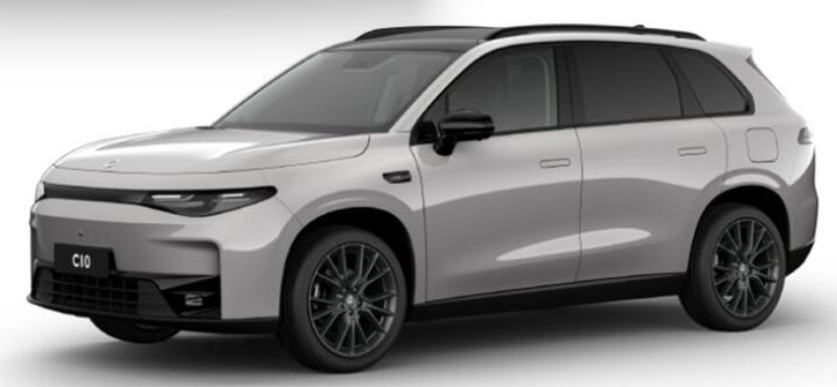
The Leapmotor C10 vs Geely EX5 battle perfectly captures what is happening in the electric-car market right now. A few years ago, shoppers searching for a roomy electric SUV usually had to choose between an expensive premium model and a relatively small mainstream EV. Today? Chinese manufacturers are crashing through that old price structure like a wrecking ball.
The Leapmotor C10 and Geely EX5 are two particularly interesting examples.
Both are five-seat electric SUVs aimed squarely at families. Both offer large touchscreens, extensive standard equipment, competitive driving ranges, and pricing intended to make established EV manufacturers uncomfortable. Yet underneath their similar missions are two noticeably different philosophies.
The Leapmotor C10 is the larger, roomier machine, with a long wheelbase and a relaxed, lounge-like personality. The Geely EX5 is slightly more compact, more efficiency-focused, and easier to manage around town.
So which would we actually choose?
For buyers who value maximum passenger space, rear-wheel-drive dynamics, and equipment for the money, the Leapmotor makes an extremely persuasive argument. Those who care more about efficiency, charging convenience, manoeuvrability, and a polished everyday package may find the Geely harder to ignore.
Let's dig into the details.
Content in this publication
- Leapmotor C10 vs Geely EX5 at a Glance
- Exterior Dimensions: The C10 Is Noticeably Longer
- Design: Minimalism Meets Minimalism
- Interior Quality and Cabin Design
- Passenger Space: Leapmotor C10 Strikes Back
- Boot Space and Everyday Practicality
- Performance: Two Different Approaches
- Leapmotor C10 vs Geely EX5 Range
- Charging: Geely EX5 Holds an Advantage
- Energy Consumption and Running Costs
- Ride Comfort: Which One Feels More Relaxed?
- Handling and Steering
- Technology and Infotainment
- Safety Equipment and Driver Assistance
- Warranty and Ownership Confidence
- Pricing and Value for Money
- Which One Is Cheaper to Own?
- Leapmotor C10 Advantages
- Geely EX5 Advantages
- Leapmotor C10 vs Geely EX5 for City Driving
- Leapmotor C10 vs Geely EX5 for Long Trips
- Leapmotor C10 vs Geely EX5 for Families
- Which Offers Better Value?
- Potential Drawbacks of the Leapmotor C10
- Potential Drawbacks of the Geely EX5
- The Bigger Picture: Chinese EV Competition Is Getting Serious
- Leapmotor C10 vs Geely EX5: Our Verdict
- Frequently Asked Questions
Leapmotor C10 vs Geely EX5 at a Glance
Before disappearing down the specification rabbit hole, here's the basic personality of each SUV.
| Category | Leapmotor C10 | Geely EX5 |
|---|---|---|
| Body style | Mid-size electric SUV | Mid-size electric SUV |
| Seats | 5 | 5 |
| Length | Around 4,739 mm | Around 4,615 mm |
| Width | Around 1,900 mm | Around 1,901 mm |
| Height | Around 1,680 mm | Around 1,670 mm |
| Standard drivetrain in many markets | Rear-wheel drive | Front-wheel drive |
| Primary strength | Cabin space and value | Efficiency and charging |
| Best suited to | Families prioritising room | Mixed urban/highway use |
Current UK comparison data puts the C10 at 4,739 mm long versus 4,615 mm for the EX5, making the Leapmotor roughly 124 mm longer while the two are essentially identical in width.
That difference sounds modest on paper.
It isn't insignificant in real life.
The C10 feels more like the SUV you choose when rear-seat passengers are constantly part of the equation. The EX5 feels like the SUV you choose when you want family practicality without carrying quite so much physical bulk through crowded streets.
Exterior Dimensions: The C10 Is Noticeably Longer
Park these vehicles beside each other and their proportions tell much of the story.
The Leapmotor C10 stretches farther from nose to tail, while the Geely EX5 packages its cabin into a shorter footprint. Width is virtually identical, so neither vehicle suddenly becomes dramatically easier to squeeze through a narrow garage.
Still, that 124 mm difference in length matters.
Why the C10's Extra Length Matters
Extra exterior length can translate into:
- More generous rear-seat accommodation
- A calmer, larger-SUV stance
- Greater longitudinal cabin space
- More flexibility when packaging passengers and luggage
The downside?
A longer car naturally requires a little more attention when parking.
The C10 isn't enormous, but anyone regularly navigating tight underground garages may appreciate the EX5's shorter body.
Why the EX5's Size Works Well in Cities
The Geely feels like the tidier package.
Think of it as packing nearly the same holiday wardrobe into a slightly smaller suitcase.
You still receive a genuine family SUV, but the vehicle occupies less road space from bumper to bumper. For school runs, shopping centres, apartment parking and dense urban environments, that can become surprisingly valuable.
Design: Minimalism Meets Minimalism
Neither manufacturer has attempted to design an electric Lamborghini.
That is probably a good thing.
Both SUVs use the familiar contemporary-EV formula: smooth bodywork, relatively restrained front ends, flush or aerodynamically optimised details, and clean lighting signatures.
The Leapmotor C10 looks substantial without appearing aggressive. Its rounded surfaces make it feel modern but approachable.
The Geely EX5 takes a similarly clean route but arguably looks slightly more compact and conventional.
Neither screams for attention.
Instead, both whisper, I'm an EV, but I still have children and groceries to carry.
Which One Looks Better?
Purely subjectively, we think the decision will come down to proportions.
Choose the C10 if you prefer:
- A broader visual presence
- Longer, more relaxed proportions
- A slightly more substantial SUV appearance
Choose the EX5 if you prefer:
- A tidier silhouette
- A more compact visual footprint
- Understated styling
There is no runaway winner here.
Interior Quality and Cabin Design
Step inside and both cars immediately remind us how dramatically Chinese manufacturers have changed expectations at relatively accessible price points.
Large displays? Of course.
Minimal physical buttons? Naturally.
Soft-touch materials and decorative trim designed to elevate the cabin? Absolutely.
The Leapmotor takes a particularly minimalist approach. The dashboard is dominated by digital interfaces, creating a clean environment that feels surprisingly sophisticated at first glance.
The Geely EX5 follows broadly similar principles but can feel a little more polished in certain areas of presentation and interface design.
And that introduces an increasingly important question in modern cars:
Can minimalism go too far?
Touchscreens Are Brilliant—Until They Aren't
Both models embrace software-heavy controls.
That gives the dashboards a clean appearance but also means functions that once required one physical button press may require navigating a menu.
We're all for modern technology.
We just don't want to perform a treasure hunt every time we need to adjust a setting.
Prospective owners should spend several minutes exploring the infotainment system before buying either vehicle. Interface preferences are deeply personal, and what feels futuristic during a ten-minute showroom demonstration can become irritating after six months.
Passenger Space: Leapmotor C10 Strikes Back
This is where the C10 makes one of its strongest arguments.
Its generous dimensions give the cabin a spacious atmosphere, particularly for rear passengers. A relatively flat floor and expansive legroom make it particularly appealing for families frequently carrying adults or growing teenagers.
Imagine two scenarios.
In the first, your rear seats normally carry small children.
Either SUV works.
In the second, you routinely carry three adults or two tall teenagers for two-hour trips.
Suddenly, those extra centimetres begin feeling like gold dust.
Rear-Seat Comfort
The Leapmotor's cabin architecture prioritises passengers heavily.
The second row benefits from:
- Strong legroom
- Good headroom
- Wide access
- A relatively airy atmosphere
- Family-friendly floor space
The Geely EX5 is hardly cramped, though. It uses its dimensions intelligently and remains entirely suitable for family duties.
Still, if rear-seat comfort sits at the very top of our shopping list, we would lean toward the C10.
Boot Space and Everyday Practicality
Cabin room isn't the only measure of practicality.
A family EV needs somewhere to put suitcases, shopping bags, sports equipment, pushchairs and that mysterious collection of objects that somehow accumulates in every family car.
Both SUVs provide useful cargo areas, although exact published boot-capacity measurements can vary depending on regional specification and measurement methodology.
The Geely is particularly clever with storage solutions and packaging, while the Leapmotor's larger overall body means it remains highly practical.
Which Is Better for Families?
Interestingly, the answer isn't as obvious as simply saying "the bigger car wins."
We would divide the contest like this:
Passenger-first families: Leapmotor C10.
Cargo-and-city flexibility: Geely EX5.
That distinction matters.
Practicality isn't just litres. It's how effectively the car fits into your life.
Performance: Two Different Approaches
Here's where things become interesting.
Depending on market and trim, Leapmotor offers different versions of the C10, including considerably more powerful configurations. The conventional single-motor versions are rear-wheel drive, while newer high-output derivatives can take performance much further.
Geely's mainstream EX5 configuration uses front-wheel drive, with current Australian specifications listing 160 kW and 320 Nm. Meanwhile, current Australian C10 variants include much more powerful versions, with a 220 kW rear-drive long-range model listed alongside a 440 kW all-wheel-drive Sports+ derivative.
That means trim-to-trim comparisons matter enormously.
Does More Power Actually Matter?
Perhaps less than the brochures suggest.
Most electric SUVs already feel brisk because an electric motor delivers torque immediately. Pull away from a traffic light and even an ordinary EV can feel like someone has tightened an invisible rope and yanked the car forward.
You may be interested in reading Leapmotor C10 vs BYD Sealion 7: Which Electric SUV Makes More Sense?
For everyday family driving, both vehicles offer sufficient performance.
The Leapmotor's more powerful derivatives simply raise the ceiling dramatically.
C10 Performance Advantages
Depending on version, the Leapmotor can offer:
- Rear-wheel drive
- Higher-output variants
- Strong immediate acceleration
- A more performance-oriented AWD option
EX5 Performance Advantages
The Geely counters with:
- Predictable front-wheel-drive behaviour
- Strong everyday acceleration
- Lower emphasis on unnecessary power
- Efficiency-focused engineering
If raw numbers excite us, the C10 lineup has greater potential.
If commuting efficiently matters more, the Geely's strategy makes perfect sense.
Leapmotor C10 vs Geely EX5 Range
Electric range is where comparisons become messy because battery sizes, homologation standards and trim availability differ considerably between countries.
WLTP, NEDC and other testing procedures cannot be compared blindly.
Neither can brochure range and actual motorway range.
Current independent UK comparison data nevertheless gives the Geely EX5 an advantage in motorway range and energy consumption, listing approximate consumption figures of 158 Wh/km for the Geely versus 197 Wh/km for the compared C10 versions.
That's an important difference.
Efficiency Is More Important Than Battery Size
Drivers often obsess over battery capacity.
We shouldn't.
A gigantic battery paired with mediocre efficiency can be less attractive than a smaller battery powering a highly efficient drivetrain.
It's like comparing two hikers.
One carries a larger water bottle but drinks constantly. The other starts with less water yet travels farther between stops.
Efficiency influences:
- Real-world range
- Charging costs
- Charging frequency
- Long-distance convenience
- Overall running expenses
The Geely performs particularly well here.
Charging: Geely EX5 Holds an Advantage
Range gets headlines.
Charging speed gets road trips completed.
If two cars can travel roughly similar distances but one replaces energy significantly faster, the faster-charging vehicle may be far more convenient in real-world ownership.
Independent comparisons currently place the EX5 ahead of the C10 for charging performance.
That makes the Geely especially appealing to drivers who frequently use public rapid chargers.
Home Charging Changes the Equation
If we charge overnight at home, however, peak DC charging capability becomes less critical.
Most owners wake up with enough energy for their normal day regardless of whether one vehicle can theoretically charge faster at a highway station.
So we would ask ourselves:
How often will we actually rapid-charge?
If the answer is "twice a year," don't let one specification dominate the purchase.
If the answer is "twice a week," pay attention.
Energy Consumption and Running Costs
Efficiency translates directly into money.
The more kilometres we extract from each kilowatt-hour, the less electricity we buy.
Current UK analysis estimates lower electricity consumption and therefore lower charging costs for the Geely EX5. At an assumed 8,000 miles per year on an inexpensive home tariff, the same analysis estimates approximately £176 annual charging cost for the EX5 versus £216 for the C10 versions compared.
Obviously, electricity prices vary enormously.
The useful takeaway isn't the exact £40 difference.
It's that the EX5 appears to be the more energy-efficient vehicle in comparable specifications.
Ride Comfort: Which One Feels More Relaxed?
Neither SUV is primarily aimed at driving enthusiasts.
That's fine.
A family crossover spends much more time crossing speed bumps than attacking hairpins.
The C10's personality tends toward comfort. Its spacious cabin and relaxed setup suit its role as an easygoing family EV.
The EX5 similarly prioritises comfort, although road tests have produced some criticism of chassis tuning and driver-assistance calibration in earlier versions.
For most buyers, tyre size and wheel choice may matter almost as much as the underlying suspension.
Large wheels look spectacular.
They can also turn broken pavement into percussion instruments.
Our Comfort Preference
For long trips with rear passengers, we'd give the C10 a slight conceptual advantage because of its extra cabin room.
For dense urban driving, we'd favour the Geely's more compact dimensions.
Handling and Steering
Nobody buys one of these cars expecting a Porsche Cayman.
Still, steering behaviour matters.
The Leapmotor's rear-wheel-drive layout is inherently interesting because propulsion comes from the rear axle in mainstream versions. That can create cleaner steering responses than asking the front tyres to steer and deliver power simultaneously.
The Geely EX5's front-wheel-drive setup is conventional and predictable.
For normal drivers, both approaches work.
If we enjoy driving, however, we'd probably be curious to spend more time in the C10.
Technology and Infotainment
This category could almost be renamed "how large would you like your screen?"
Both vehicles lean heavily into technology.
Expect extensive digital interfaces, smartphone functionality, connected features, driver-assistance systems and electronically controlled comfort functions depending on trim and region.
The question isn't whether they contain enough technology.
They do.
The question is whether the technology behaves naturally.
Software Matters More Than Screen Size
A 15-inch display isn't automatically better than a 12-inch display.
Response speed, menu layout, translations, shortcut access, wireless connectivity and over-the-air updates matter more.
During a test drive, we recommend checking:
- How quickly the system starts
- Whether climate functions are easy to reach
- Smartphone integration
- Navigation responsiveness
- Driver-assistance menus
- How easily annoying alerts can be adjusted
- Whether frequently used functions require too many taps
Those details determine whether advanced technology becomes helpful or exhausting.
Safety Equipment and Driver Assistance
Both manufacturers equip these SUVs with modern active-safety systems.
Depending on specification, that can include adaptive cruise control, lane assistance, autonomous emergency braking, blind-spot monitoring and other advanced driving aids.
Current Australian comparison listings show five-star safety credentials for applicable versions, although ratings and testing protocols should always be checked for the specific model year and market being purchased.
There is one complication.
ADAS Calibration Can Make or Break the Experience
A vehicle can contain a huge amount of safety hardware and still irritate us if the software intervenes too aggressively.
Reviews of both vehicles have criticised aspects of safety-system behaviour, particularly early calibrations.
This matters because an assistance system isn't truly helpful if owners disable it every time they start the car.
Manufacturers increasingly improve these systems through software updates, so test the exact vehicle you're considering rather than assuming an early review still represents current behaviour.
Warranty and Ownership Confidence
New brands face a particular challenge.
Buyers aren't just purchasing the car.
They're purchasing confidence that parts, service technicians and software support will still be easy to access several years later.
In Australia, current comparison data lists a seven-year warranty for the Geely EX5 versus six years for relevant Leapmotor C10 versions.
You may be interested in readingLeapmotor C10 vs BYD Sealion 7: Which Electric SUV Makes More Sense?You may be interested in reading
 Mazda CX-9 vs CX-5: Which Mazda SUV Is Better?
Warranty coverage differs between countries, so local terms matter.
But we should also investigate:
- Battery warranty
- Roadside assistance
- Service intervals
- Local dealer coverage
- Replacement-part availability
- Warranty exclusions
- Software support
- Resale prospects
A £500 or $1,000 saving at purchase can disappear very quickly if ownership support becomes inconvenient.
Pricing and Value for Money
This may decide the entire comparison.
Both vehicles are positioned aggressively against more established electric SUVs.
In the UK, currently verified comparison pricing has placed the entry C10 below the EX5, with the C10 Base around £32,750 and EX5 Pro around £33,990 in the data reviewed at the end of August 2026.
Australian pricing tells another story because trims and offers differ. Recent Australian reporting has positioned the EX5 sharply, including 2026 variants from around A$41,990 before on-road costs, while Leapmotor pricing varies significantly according to C10 powertrain and specification.
In other words:
Never compare international prices directly.
Compare the actual drive-away prices available where you live.
Which One Is Cheaper to Own?
We need to separate purchase price from running costs.
The C10 may offer a lower initial price in certain markets.
The EX5 can claw some of that difference back through superior energy efficiency.
Then come the unknowns:
- Depreciation
- Insurance
- Tyres
- Servicing
- Finance rates
- Repair costs
For most owners, depreciation will probably dwarf tiny annual electricity-cost differences.
Therefore, the smartest deal isn't necessarily the car with the lowest advertised price.
It's the one that combines a competitive purchase price with solid future resale demand.
Leapmotor C10 Advantages
So where does the Leapmotor clearly make sense?
We would put these strengths near the top:
- Larger overall footprint
- Excellent rear-passenger space
- Strong family practicality
- Rear-wheel-drive layout on mainstream EV versions
- Powerful higher-end derivatives
- Generous equipment
- Competitive pricing in several markets
- Strong value proposition
The C10 feels like the car designed by someone who asked, "How much SUV can we give buyers for this money?"
That's a compelling question.
Geely EX5 Advantages
The Geely answers a slightly different question:
"How efficiently can we package everything buyers actually need?"
Its major strengths include:
- More compact length
- Strong energy efficiency
- Competitive real-world range
- Better charging performance in comparable versions
- Easier urban usability
- Clever interior packaging
- Strong standard technology
- Attractive warranty coverage in some markets
For many everyday EV buyers, these advantages are arguably more useful than raw horsepower.
Leapmotor C10 vs Geely EX5 for City Driving
We'd choose the Geely EX5.
The shorter body gives it a natural advantage when manoeuvring and parking, while its efficiency also suits stop-start urban use.
The difference won't transform parking from difficult to effortless, because both vehicles are roughly 1.9 metres wide.
Still, every centimetre helps when the parking structure appears to have been designed for cars from 1987.
Leapmotor C10 vs Geely EX5 for Long Trips
This category is surprisingly close.
The C10 gives passengers more room to stretch out.
The Geely counters with better efficiency and faster charging in current comparable specifications.
So which matters more?
For us, the Geely narrowly wins long-distance EV travel, because charging efficiency and motorway range affect journey time directly.
But families carrying tall teenagers may happily trade a few minutes at the charger for more rear-seat space.
Leapmotor C10 vs Geely EX5 for Families
Here we'd swing back toward the Leapmotor C10.
Its size and passenger-friendly packaging are difficult to overlook.
Families with child seats, taller children or regular adult passengers should pay particularly close attention to rear-seat dimensions during test drives.
Don't just sit in the driver's seat.
Move it into your normal driving position, then climb into the back.
You'll learn more in thirty seconds than a brochure can tell you in ten pages.
Which Offers Better Value?
The answer depends heavily on local pricing.
When the C10 undercuts the EX5 significantly, its combination of size and equipment makes it extremely difficult to ignore.
When prices are similar, the Geely's efficiency and charging advantages become much more persuasive.
Our rough value equation looks like this:
Choose the Leapmotor C10 if:
- Passenger space is your priority
- You like rear-wheel drive
- The local price is considerably lower
- You value standard equipment heavily
- You want the physically larger SUV
Choose the Geely EX5 if:
- Efficiency matters
- You frequently use rapid chargers
- You drive regularly on motorways
- Urban manoeuvrability matters
- You prefer the smaller exterior footprint
Potential Drawbacks of the Leapmotor C10
No vehicle wins everywhere.
Our reservations about the C10 include:
- Energy efficiency isn't class-leading
- Some controls rely heavily on the touchscreen
- Driver-assistance behaviour deserves testing
- Longer body isn't ideal for tight parking
- Brand recognition and resale remain developing factors in many countries
The last point deserves attention.
Leapmotor's relationship with Stellantis gives the brand considerably more global industrial backing than an unfamiliar badge might initially suggest, but long-term residual values are still being established.
Potential Drawbacks of the Geely EX5
The EX5 isn't flawless either.
Things we'd investigate carefully include:
- Driver-assistance calibration
- Touchscreen dependence
- Front-wheel drive versus rivals offering rear-wheel drive
- Real-world service-network strength
- Resale value
- Regional equipment differences
Reviews have praised its packaging, efficiency and technology while also identifying room for improvement in chassis and safety-system calibration.
Software updates may change that picture rapidly.
The Bigger Picture: Chinese EV Competition Is Getting Serious
Perhaps the most fascinating part of this comparison isn't deciding who wins.
It's recognising how much buyers now receive for the money.
Large screens, advanced assistance systems, spacious cabins, electric drivetrains and increasingly sophisticated interiors are appearing at prices that would have seemed wildly optimistic only a few years ago.
The C10 and EX5 therefore aren't just competing against each other.
They're putting pressure on:
- BYD
- Tesla
- Kia
- Hyundai
- MG
- Volkswagen
- Nissan
- European mainstream manufacturers
And competition is exactly what the EV market needs.
Leapmotor C10 vs Geely EX5: Our Verdict
After comparing them category by category, the Geely EX5 is our narrow all-round winner, but the result is much closer than that sentence suggests.
Why the Geely?
Because efficiency, charging speed and easier urban dimensions influence everyday EV ownership constantly. Current independently verified comparison data also gives the EX5 the advantage in motorway range, charging and energy cost.
But the Leapmotor C10 fights back hard.
It offers more physical presence, superb passenger space and potentially greater performance depending on the version. When priced noticeably below the Geely, its value proposition becomes extremely difficult to dismiss.
So our final recommendation is wonderfully simple:
Buy the Geely EX5 if you want the more efficient and rounded EV experience.
Buy the Leapmotor C10 if space, equipment and value matter more than squeezing maximum kilometres from every kilowatt-hour.
There isn't a bad choice here.
And that's perhaps the biggest victory of all.
Frequently Asked Questions
1. Is the Leapmotor C10 bigger than the Geely EX5?
Yes. Current European comparison specifications list the Leapmotor C10 at approximately 4,739 mm long and the Geely EX5 at roughly 4,615 mm, making the C10 around 124 mm longer. Their widths are almost identical.
2. Which has better range, the Leapmotor C10 or Geely EX5?
It depends on the exact battery, trim and regional testing standard. However, current independent comparisons favour the Geely EX5 for motorway range and overall energy efficiency when equivalent versions are compared.
3. Which charges faster, the Geely EX5 or Leapmotor C10?
The Geely EX5 generally holds the advantage in current comparable versions. That can make it more convenient for drivers who frequently rely on public DC rapid charging.
4. Which is better for families, the Leapmotor C10 or Geely EX5?
We would lean toward the Leapmotor C10 for families prioritising passenger space. Its larger body gives rear passengers generous room. The Geely EX5 remains practical while offering a shorter exterior footprint that may be easier to live with in cities.
You may be interested in readingLeapmotor C10 vs BYD Sealion 7: Which Electric SUV Makes More Sense?You may be interested in reading
Mazda CX-9 vs CX-5: Which Mazda SUV Is Better?You may be interested in reading
Mazda CX-9 vs Honda Pilot: Which Three-Row SUV Is Better?5. Should I buy a Leapmotor C10 or Geely EX5?
Choose the Leapmotor C10 if you want maximum cabin space, strong equipment levels and compelling value. Choose the Geely EX5 if efficiency, charging performance, motorway usability and a slightly more manageable body size are higher priorities.
If you want to know other articles similar to Leapmotor C10 vs Geely EX5: Which Electric SUV Is Better? you can visit the category Models.
Honda Passport vs Toyota 4Runner: Which SUV Is Better?
Honda Passport vs Ford Bronco: Which SUV Is Better?
Honda Passport vs Ford Explorer: Which SUV Is Better?
Honda Passport or Pilot: Which SUV Is Better?
Honda Passport vs Jeep Grand Cherokee: Which SUV Is Better?
Honda Passport vs Nissan Pathfinder: Which SUV Is Better?
Leave a Reply
More content of your interest