
Leapmotor C10 vs BYD Sealion 7: Which Electric SUV Makes More Sense?

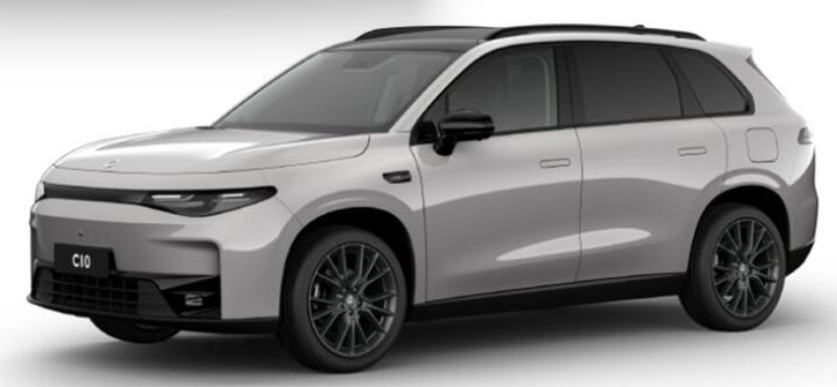
The electric SUV market has reached that wonderfully awkward stage where having too many good choices is becoming the problem. The Leapmotor C10 vs BYD Sealion 7 comparison illustrates this perfectly. Both are modern Chinese electric SUVs packed with technology, generous equipment, and enough screen space to make yesterday's family cars feel prehistoric. Yet they approach the EV formula from noticeably different angles.
The Leapmotor C10 feels like the value hunter's choice. It focuses on space, comfort, simplicity, and delivering plenty of car without turning the price tag into a horror story. The BYD Sealion 7, meanwhile, aims higher in performance, battery technology, design flair, and overall sophistication.
So, which one should we actually buy?
There isn't a universal winner. If we're looking for an affordable, comfortable family EV, the C10 can make remarkable sense. If performance, rapid charging, premium presentation, and a more polished driving experience matter more, the Sealion 7 becomes difficult to ignore.
Let's break down the differences that actually matter.
Content in this publication
- Leapmotor C10 vs BYD Sealion 7 at a Glance
- Exterior Design: Conservative C10 Meets Sportier Sealion 7
- Size and Road Presence
- Interior Comparison
- Passenger Space
- Boot Space and Everyday Practicality
- Performance: This Is Where BYD Pulls Away
- Battery Technology
- Driving Range
- Charging: BYD Holds an Important Advantage
- Leapmotor C10 vs BYD Sealion 7 Range Efficiency
- Ride Comfort
- Handling and Steering
- Technology and Infotainment
- Driver Assistance and Safety
- Build Quality
- Noise and Refinement
- Leapmotor C10 vs BYD Sealion 7 Price and Value
- Running Costs
- Warranty and Dealer Network
- Resale Value
- Which Is Better for Families?
- Which Is Better for Long Trips?
- Which Is Better for City Driving?
- Leapmotor C10 Pros and Cons
- BYD Sealion 7 Pros and Cons
- Leapmotor C10 vs BYD Sealion 7: Which Should We Buy?
- Is the BYD Sealion 7 Worth Paying More For?
- Could the Leapmotor C10 Be the Smarter Value Buy?
- Final Verdict
- Frequently Asked Questions
Leapmotor C10 vs BYD Sealion 7 at a Glance
Before diving into every detail, we can summarise the personalities of these two SUVs fairly easily.
| Category | Leapmotor C10 | BYD Sealion 7 |
|---|---|---|
| Positioning | Value-focused family SUV | Sportier premium-oriented SUV |
| Body style | Mid-size SUV | Mid-size coupe-style SUV |
| Powertrain | EV; range-extender versions in some markets | EV |
| Drivetrain | Primarily RWD depending on market | RWD or AWD depending on version |
| Character | Comfortable and practical | Faster and more dynamic |
| Interior approach | Minimalist | More elaborate |
| Performance | Adequate | Significantly stronger in higher trims |
| Best suited to | Value-conscious families | Buyers wanting performance and refinement |
Specifications and model availability vary between countries, so local figures should always take priority. More importantly, numbers don't tell us everything. These vehicles have distinct personalities.
The C10 says, "Why pay more than necessary?"
The Sealion 7 replies, "Because sometimes more is actually more."
Exterior Design: Conservative C10 Meets Sportier Sealion 7
Park these SUVs beside one another and the difference in philosophy becomes obvious.
Leapmotor C10 Design
The Leapmotor C10 adopts the smooth, minimalist aesthetic that has become increasingly common among modern EVs. There aren't many unnecessary creases or theatrical design elements. Instead, we get clean surfaces, flush-style details and a relatively upright SUV silhouette.
It looks modern without desperately shouting about being electric.
That restraint could age well. Fashion-forward vehicles can look spectacular today and strangely dated five years later. The C10's simpler approach potentially avoids that trap.
A Family SUV First
Its proportions also reveal its priorities. The C10 doesn't sacrifice much practicality for visual drama. The roof remains relatively conventional, helping preserve rear passenger space.
We could call it sensible, but sensible doesn't have to mean boring.
BYD Sealion 7 Design
The BYD Sealion 7 has considerably more visual attitude.
Its lower-looking stance, flowing roofline and muscular bodywork give it something closer to a sporty crossover appearance. There's a clear family connection with BYD's newer Ocean-series design language.
It looks faster even while parked.
That matters more than we sometimes admit. Cars are emotional purchases, and if we glance back at a vehicle after parking it, the designers have probably done something right.
Size and Road Presence
Neither vehicle is small. Both occupy the increasingly popular middle ground between compact electric crossovers and genuinely large SUVs.
The C10's dimensions translate into a substantial cabin and confident road presence without making it feel enormous.
The Sealion 7 is similarly substantial but uses its proportions differently. Its longer, sleeker visual profile makes it appear more performance-oriented.
Around narrow city streets, neither will feel like a tiny urban EV. Parking sensors and cameras therefore aren't decorative luxuries here; they're genuinely useful equipment.
Interior Comparison
Open the doors and we're greeted by two interpretations of the modern Chinese EV cabin.
Inside the Leapmotor C10
Minimalism dominates.
Physical controls are limited, screens handle many vehicle functions, and the dashboard looks clean and contemporary. The overall impression is surprisingly sophisticated considering the C10's value-oriented positioning.
Leapmotor clearly understands the modern EV recipe:
- Large central display
- Digital instrumentation
- Connected services
- Smartphone integration where supported
- Extensive driver-assistance technology
- Electrically operated comfort features on higher specifications
However, touchscreen-heavy cabins create an obvious trade-off.
They look fantastic in photographs.
They aren't always fantastic when we're trying to change a setting while bouncing along a rough road.
Inside the BYD Sealion 7
The Sealion 7 generally feels busier and more premium.
BYD uses more visual layers, shapes and decorative elements, while its large infotainment display naturally becomes the centrepiece of the cabin.
Depending on specification and market, equipment can be extensive. BYD has made generous standard equipment one of its strongest competitive weapons.
Which Cabin Feels More Premium?
We'd give the Sealion 7 the advantage.
The C10 punches above its price category, but the BYD generally delivers the richer first impression. Materials, presentation and small details make it feel closer to the premium territory it is chasing.
Still, the difference isn't necessarily large enough to justify the price gap for every buyer.
That's where the Leapmotor becomes interesting.
Passenger Space
Family buyers should pay close attention here because performance statistics quickly become irrelevant when somebody in the rear seat starts complaining about legroom.
Rear Space in the Leapmotor C10
The C10's EV architecture helps create a spacious passenger compartment.
Rear legroom is generous, the floor is relatively unobtrusive, and adults can travel comfortably. Families carrying teenagers rather than toddlers should particularly appreciate that space.
The relatively conventional roofline also helps.
Rear Space in the BYD Sealion 7
The Sealion 7 isn't exactly cramped either.
Its generous wheelbase provides substantial legroom, and passengers get the airy feeling we expect from a modern electric SUV. Depending on seating position and passenger height, however, its sportier roof treatment can make the rear feel slightly less open than the C10's more traditional SUV shape.
For pure family accommodation, the C10 makes a compelling argument.
Boot Space and Everyday Practicality
Boot capacity numbers are useful, but shape matters almost as much as litres.
A wide, square loading area can swallow suitcases far more effectively than a larger theoretical volume compromised by wheel arches or an aggressively sloping tailgate.
Both vehicles provide useful cargo areas for normal family duties.
The C10's conventional SUV proportions favour straightforward practicality, while the Sealion 7's sportier rear design trades a little visual simplicity for style.
If our weekends involve pushchairs, luggage, supermarket runs, sports equipment and the occasional flat-pack furniture adventure, we'd inspect both boots physically before buying.
Performance: This Is Where BYD Pulls Away
Here we reach one of the biggest differences in the Leapmotor C10 vs BYD Sealion 7 battle.
Leapmotor C10 Performance
The electric C10 isn't designed as a performance SUV.
Its rear-wheel-drive configuration delivers smooth, immediate acceleration and enough power for overtaking and motorway driving. Electric torque means it still feels responsive around town.
But nobody is likely to confuse it with an electric sports SUV.
And that's perfectly fine.
For ordinary family driving, huge power outputs are about as necessary as wearing racing shoes to walk through a supermarket.
BYD Sealion 7 Performance
The Sealion 7 plays a different game.
Rear-wheel-drive models already provide healthy performance, while higher-output AWD versions can deliver dramatically stronger acceleration.
Put your foot down and the BYD feels far more urgent.
AWD Changes the Equation
The availability of dual-motor all-wheel drive on certain Sealion 7 variants gives BYD another advantage for buyers wanting maximum traction and acceleration.
For enthusiastic drivers, this difference alone could settle the comparison.
Performance winner: BYD Sealion 7.
Battery Technology
Battery engineering is central to the identity of both vehicles.
Leapmotor C10 Battery
Electric versions of the C10 use lithium iron phosphate battery technology in many markets. LFP chemistry has become popular because of its durability, thermal stability and ability to avoid expensive nickel and cobalt-heavy formulations.
Leapmotor's strategy isn't necessarily about producing spectacular laboratory numbers. Instead, the company attempts to balance usable range, cost and everyday practicality.
BYD Blade Battery
BYD's Blade Battery is one of the company's biggest technological calling cards.
It uses LFP chemistry packaged in BYD's distinctive structural arrangement, designed around safety, durability and efficient use of space.
BYD isn't simply purchasing batteries and dropping them into cars either. Battery manufacturing is part of the company's DNA.
That vertical integration gives BYD a meaningful strategic advantage.
Driving Range
Range anxiety isn't disappearing completely, but modern EVs have made it considerably less dramatic.
Both SUVs can cover typical daily commuting duties without difficulty. The meaningful question is what happens during longer journeys.
The exact official ranges vary substantially according to trim, battery, wheel size, homologation cycle and market.
Rather than obsessing over a single advertised figure, we should examine:
- Real motorway range
- Cold-weather efficiency
- Urban consumption
- Wheel and tyre specification
- Charging speed
- Battery preconditioning
- Availability of reliable fast chargers
A vehicle with slightly less theoretical range but much faster charging can sometimes complete a long journey sooner.
You may be interested in reading Mazda CX-9 vs CX-5: Which Mazda SUV Is Better?
That's why range should never be judged in isolation.
Charging: BYD Holds an Important Advantage
Charging performance is one area where buyers should look beyond battery capacity.
Leapmotor C10 Charging
The C10 supports DC rapid charging, making longer journeys practical, but its peak charging capability on some versions isn't class-leading.
For drivers primarily charging overnight at home, that may barely matter.
We plug in, sleep, wake up and drive away.
Simple.
BYD Sealion 7 Charging
Depending on version and market, the Sealion 7 can offer substantially stronger DC charging performance.
That matters on motorway journeys.
Imagine two cars arriving at a charger with low batteries. Saving 10 or 15 minutes doesn't sound revolutionary until we're standing beside a charging station at night waiting to continue a five-hour journey.
Suddenly those minutes feel very expensive.
Charging advantage: BYD Sealion 7.
Leapmotor C10 vs BYD Sealion 7 Range Efficiency
Efficiency is where things become more nuanced.
The biggest battery doesn't automatically produce the most efficient vehicle. Weight, aerodynamics, tyres, drivetrain configuration and software all influence consumption.
The Sealion 7's performance-focused variants naturally have an appetite for electricity when driven aggressively.
The C10's comparatively modest power output can work in its favour.
Drive either gently and consumption improves. Drive an AWD Sealion 7 like you've stolen the electricity, and the battery percentage can disappear surprisingly quickly.
Ride Comfort
The C10's personality becomes clearer after a few kilometres.
Leapmotor C10 Comfort
Comfort is one of its strongest cards.
The suspension generally prioritises isolation rather than aggressive cornering. That's sensible for a family SUV, where passengers care more about potholes than Nürburgring lap times.
On imperfect roads, that relaxed tuning can be genuinely appealing.
The Trade-Off
Soft suspension can allow more body movement during quick directional changes.
So while the C10 may float pleasantly along ordinary roads, enthusiastic drivers might wish for tighter body control.
BYD Sealion 7 Ride Quality
The Sealion 7 feels more planted and performance-oriented.
Its chassis has more power to manage, particularly in AWD specification, so the overall setup naturally feels different.
We still get comfortable EV refinement, but the BYD tends to feel like the more sophisticated driver's machine.
Handling and Steering
Nobody buys a mid-size electric SUV expecting Lotus-like steering feedback, but chassis behaviour still matters.
The C10 feels predictable and approachable. Steering is light, making urban driving easy, while rear-wheel drive gives it balanced fundamentals.
The Sealion 7 feels more athletic.
Its lower-looking stance and stronger performance create a more engaging experience, particularly when accelerating out of bends.
If driving enjoyment ranks high on our shopping list, we'd choose the BYD.
Technology and Infotainment
Chinese manufacturers have dramatically changed expectations around standard technology.
Equipment that once belonged to luxury cars is becoming normal in mainstream EVs.
Leapmotor C10 Technology
The C10 embraces a highly digital interface. The infotainment display controls a substantial proportion of the vehicle's functionality.
Its presentation is clean and responsive, although software availability can vary between markets.
Leapmotor also uses over-the-air updates as part of its connected-car strategy.
BYD Sealion 7 Technology
BYD's infotainment experience is more established internationally.
The company's trademark rotating central screen remains an attention-grabbing feature where offered, switching orientation between portrait and landscape.
Is that essential?
Absolutely not.
Is it strangely satisfying?
Definitely.
Driver Assistance and Safety
Both manufacturers take advanced driver-assistance systems seriously.
Depending on specification, buyers can expect technologies such as:
- Adaptive cruise control
- Autonomous emergency braking
- Lane departure warning
- Lane-keeping assistance
- Blind-spot monitoring
- Rear cross-traffic assistance
- Parking sensors
- Surround-view cameras
- Driver attention monitoring
Calibration matters as much as the number of systems fitted.
An assistance system that constantly beeps, nags or intervenes unnecessarily can become irritating faster than a mosquito inside a bedroom.
We therefore recommend testing these systems during an actual test drive rather than simply counting features on a specification sheet.
Build Quality
This comparison also shows how rapidly Chinese manufacturers have improved.
Leapmotor C10 Quality
The C10's cabin feels impressively assembled considering its positioning.
Touch points generally look modern, panel alignment is respectable, and the minimalist architecture helps create an upscale atmosphere.
There may still be areas where harder plastics reveal the car's cost-conscious mission, but the overall package feels far removed from the stereotype of a "cheap Chinese car."
BYD Sealion 7 Quality
BYD has had more time to refine vehicles for global markets.
That experience shows.
The Sealion 7 generally feels more mature in material selection and cabin execution. It isn't necessarily German-premium territory everywhere, but the gap has become surprisingly narrow in some areas.
Noise and Refinement
Electric motors remove engine noise, which ironically makes every other sound more obvious.
Tyre roar, wind noise and suspension thumps suddenly step onto centre stage.
Both SUVs deliver the calm low-speed experience we expect from EVs. At motorway speeds, wheel and tyre choice can make a significant difference.
The Sealion 7 generally feels more polished, although the C10 remains impressively quiet for its price.
Leapmotor C10 vs BYD Sealion 7 Price and Value
Now we reach the C10's strongest weapon.
Price.
Leapmotor has built much of its strategy around delivering premium-style technology at aggressively competitive prices.
The C10 often undercuts similarly sized electric SUVs while retaining a long equipment list.
BYD has also built its reputation on value, but the Sealion 7 occupies a more ambitious position.
What Are We Actually Paying For?
With the BYD, additional money can buy:
- More performance
- AWD availability
- Faster charging on certain variants
- Greater drivetrain sophistication
- More established battery technology
- A more premium cabin
- Stronger brand recognition in many export markets
With the Leapmotor, we're essentially asking whether we need those advantages.
If the answer is "not really," the C10 becomes extremely persuasive.
Running Costs
EV ownership can reduce certain maintenance expenses because there are fewer traditional drivetrain components.
No engine oil changes.
No spark plugs.
No exhaust system.
No conventional multi-speed gearbox servicing in most cases.
But EVs aren't maintenance-free.
Tyres can be expensive, particularly because these vehicles are heavy and produce instant torque. Insurance can also vary dramatically between models and countries.
The Sealion 7's higher-performance variants may cost more to insure and could consume tyres faster if driven enthusiastically.
You may be interested in readingMazda CX-9 vs CX-5: Which Mazda SUV Is Better?You may be interested in reading
Mazda CX-9 vs Honda Pilot: Which Three-Row SUV Is Better?The C10's calmer personality may translate into slightly friendlier ownership expenses.
Warranty and Dealer Network
This category deserves more attention than it usually receives.
A brilliant car becomes considerably less brilliant if the nearest authorised repair centre is hundreds of kilometres away.
BYD has expanded rapidly across international markets and generally has the stronger established presence.
Leapmotor's partnership with Stellantis has the potential to strengthen distribution, servicing and parts support outside China.
That relationship is strategically important because it addresses one of the biggest questions surrounding younger Chinese brands: long-term support.
Before purchasing either SUV, we'd investigate local dealer coverage rather than assuming the international picture applies everywhere.
Resale Value
Predicting EV depreciation is difficult.
Battery technology is evolving rapidly, incentives change, manufacturers adjust prices and new competitors arrive constantly.
BYD currently enjoys stronger global brand awareness, which could support used-market demand.
Leapmotor remains newer to many export markets, creating greater uncertainty around residual values.
That doesn't automatically make the C10 a bad purchase. Its lower initial price can offset some depreciation risk.
Still, buyers planning to sell after three or four years should consider this carefully.
Which Is Better for Families?
The C10 makes a particularly strong case as a family vehicle.
It combines generous interior room, comfortable suspension, useful equipment and attractive pricing without adding unnecessary performance.
For many households, that's exactly the formula required.
The Sealion 7 remains family-friendly but adds something extra: desirability.
It's the SUV we'd choose if we wanted family practicality without feeling that we'd completely surrendered our inner driving enthusiast.
Which Is Better for Long Trips?
Here we'd lean toward the BYD Sealion 7.
Its combination of battery capacity, available charging performance, refinement and stronger overtaking capability makes it an attractive long-distance companion.
However, charging infrastructure matters enormously.
If both vehicles can comfortably cover our regular journeys and we mostly charge at home, the theoretical long-distance advantage becomes less important.
Which Is Better for City Driving?
The C10's relaxed power delivery and comfort-oriented nature suit urban driving beautifully.
Electric vehicles already excel in cities because they're smooth, quiet and responsive.
Add regenerative braking and daily commuting becomes pleasantly effortless.
The Sealion 7 works perfectly well in town, but its extra performance feels somewhat wasted there.
Using a powerful AWD EV exclusively in slow city traffic is a little like buying hiking boots to walk across the living room.
They work.
We're simply not using their talents.
Leapmotor C10 Pros and Cons
What We Like
- Competitive pricing
- Spacious interior
- Comfortable ride
- Strong standard equipment
- Clean cabin design
- Useful EV range
- Family-friendly packaging
- Impressive value proposition
What Could Be Better
- Charging performance may trail stronger rivals
- Less powerful than the Sealion 7
- Younger international brand
- Dealer coverage varies by country
- Resale values remain uncertain
- Touchscreen-heavy controls won't suit everyone
BYD Sealion 7 Pros and Cons
What We Like
- Strong performance
- AWD available on selected versions
- Sophisticated battery technology
- Fast-charging capability on suitable variants
- Premium-looking interior
- Extensive technology
- Strong passenger space
- More established global EV reputation
What Could Be Better
- More expensive than the C10 in many markets
- Performance variants consume more energy
- Heavy vehicle
- Coupe-like styling slightly compromises pure practicality
- Some driver-assistance alerts may require familiarisation
Leapmotor C10 vs BYD Sealion 7: Which Should We Buy?
The answer becomes easier when we stop asking which vehicle is "better" and instead ask what we're actually buying an electric SUV to do.
Choose the Leapmotor C10 if value, passenger space and comfort dominate your priorities.
It's the rational choice.
We get a large, modern electric SUV packed with technology without paying heavily for performance we're unlikely to use every day.
Choose the BYD Sealion 7 if we want something more ambitious.
It offers stronger performance, more sophisticated drivetrain choices, faster charging potential and a more polished premium experience.
It's the emotional choice—but one supported by plenty of rational arguments.
Our Quick Verdict
For value: Leapmotor C10.
For comfort: Leapmotor C10.
For performance: BYD Sealion 7.
For charging: BYD Sealion 7.
For premium feel: BYD Sealion 7.
For family practicality per dollar: Leapmotor C10.
For enthusiastic drivers: BYD Sealion 7.
For buyers wanting the stronger all-round package regardless of price: BYD Sealion 7.
Is the BYD Sealion 7 Worth Paying More For?
For some buyers, absolutely.
The extra money isn't disappearing into a shinier badge. The Sealion 7 can offer meaningful improvements in performance, charging, drivetrain capability and overall refinement.
But here's the important part.
Not everyone needs them.
Suppose our daily routine consists of a 30-mile commute, school runs, supermarket trips and occasional weekend journeys. The C10 could accomplish every one of those tasks comfortably.
Paying thousands more for faster acceleration may provide surprisingly little everyday benefit.
That's why the C10 is dangerous competition.
It forces us to separate what we want from what we actually need.
Could the Leapmotor C10 Be the Smarter Value Buy?
Very possibly.
There's something refreshing about a vehicle that doesn't pretend every family needs supercar acceleration.
The C10 concentrates on the fundamentals: space, comfort, technology, electric range and affordability.
Think of it like choosing a well-equipped business-class seat rather than paying extra to sit inside the cockpit.
We still arrive at the same destination.
And we may have considerably more money left in our bank account.
Final Verdict
The Leapmotor C10 vs BYD Sealion 7 comparison isn't really a battle between a good SUV and a bad one. It's a clash between two different interpretations of value.
Leapmotor asks how much electric SUV we can get for our money.
BYD asks how much technology and performance it can deliver before traditional premium manufacturers start getting uncomfortable.
The C10 is spacious, comfortable, technologically impressive and potentially excellent value. For families wanting an EV primarily as dependable everyday transportation, we'd have little hesitation putting it high on the shortlist.
The Sealion 7 is the more sophisticated machine. It offers stronger performance, greater drivetrain choice, impressive battery engineering and a cabin that generally feels more special.
If budget allows, we'd pick the BYD Sealion 7 as the stronger overall vehicle.
But if value matters heavily, we'd choose the Leapmotor C10 without feeling like we'd settled for second best.
And perhaps that's the biggest compliment we can give Leapmotor.
A few years ago, a relatively unknown manufacturer competing seriously against BYD would have sounded ambitious.
Today?
It's simply another Tuesday in the electric-car market.
Frequently Asked Questions
1. Is the Leapmotor C10 better than the BYD Sealion 7?
The Leapmotor C10 can be better for buyers prioritising affordability, passenger space and comfortable everyday driving. The BYD Sealion 7 is generally the stronger option for performance, charging capability and premium refinement. Neither wins every category, so the better choice depends largely on budget and priorities.
2. Which is faster, the Leapmotor C10 or BYD Sealion 7?
The BYD Sealion 7 is the clear performance winner, particularly when comparing higher-output dual-motor AWD versions with the rear-wheel-drive Leapmotor C10. The C10 still provides the immediate low-speed response associated with electric motors, but it isn't designed as a performance EV.
3. Which has better battery technology, Leapmotor C10 or BYD Sealion 7?
Both manufacturers use modern battery technology, including LFP chemistry on relevant versions. BYD has an advantage in vertical integration and extensive experience manufacturing its Blade Battery systems. Leapmotor's battery solution remains competitive, particularly when we consider the C10's value-oriented price positioning.
4. Is the Leapmotor C10 good for long-distance driving?
Yes. The electric C10 can handle long journeys provided suitable charging infrastructure is available along the route. However, drivers who frequently travel long motorway distances may prefer the Sealion 7 because selected versions offer stronger rapid-charging performance and additional power for effortless overtaking.
You may be interested in readingMazda CX-9 vs CX-5: Which Mazda SUV Is Better?You may be interested in reading
Mazda CX-9 vs Honda Pilot: Which Three-Row SUV Is Better?You may be interested in reading
Mazda CX-9 vs CX-8: Which Three-Row Mazda SUV Is Better?5. Should we buy the Leapmotor C10 or BYD Sealion 7?
Choose the Leapmotor C10 if we want maximum practicality and equipment for our money. Choose the BYD Sealion 7 if we're willing to spend more for stronger acceleration, potentially faster charging, AWD availability and a more premium overall experience. For pure value, we'd favour the C10; for the more complete package, we'd favour the Sealion 7.
If you want to know other articles similar to Leapmotor C10 vs BYD Sealion 7: Which Electric SUV Makes More Sense? you can visit the category Models.
Honda Passport vs Toyota 4Runner: Which SUV Is Better?
Honda Passport vs Ford Bronco: Which SUV Is Better?
Honda Passport vs Ford Explorer: Which SUV Is Better?
Honda Passport or Pilot: Which SUV Is Better?
Honda Passport vs Jeep Grand Cherokee: Which SUV Is Better?
Honda Passport vs Nissan Pathfinder: Which SUV Is Better?
Leave a Reply
More content of your interest