

Leapmotor C10 vs Jaecoo J7: Which SUV Should We Choose?

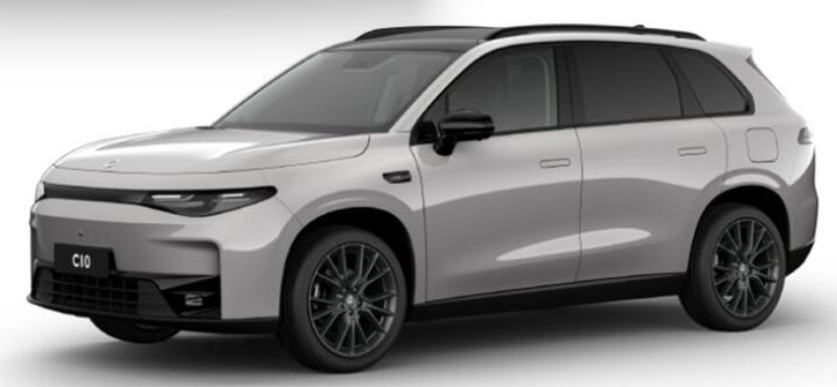
The Leapmotor C10 vs Jaecoo J7 comparison is more interesting than it first appears. Park these two SUVs next to each other and they seem to be chasing roughly the same buyer: someone who wants a spacious, technology-heavy family SUV without paying traditional premium-brand money.
Look beneath the metal, though, and their personalities split.
The Leapmotor C10 leans heavily toward electrification. Depending on market and specification, it can be bought as a fully electric SUV or as a range-extender hybrid. The Jaecoo J7 takes a broader approach, with petrol, conventional hybrid and plug-in hybrid choices available in some markets.
That changes almost everything.
Do we want the quiet, effortless character of an EV? Do we regularly drive hundreds of motorway miles? Are we able to charge at home? Do we care more about cabin space than rugged styling? And perhaps most importantly, do we want our new SUV to feel like a giant smartphone or a more traditional all-purpose vehicle?
Let's compare them properly.
Content in this publication
- Leapmotor C10 vs Jaecoo J7 at a Glance
- Design: Two Completely Different Interpretations of an SUV
- Interior Design and Cabin Quality
- Cabin Space: The C10 Plays a Strong Hand
- Boot Space and Everyday Practicality
- Leapmotor C10 Electric Performance
- Leapmotor C10 REEV: The Interesting Middle Ground
- Jaecoo J7 Petrol Performance
- Jaecoo J7 Hybrid
- Jaecoo J7 SHS-P Plug-In Hybrid
- C10 REEV vs J7 Plug-In Hybrid
- Electric Range and Long-Distance Travel
- Charging: Which One Fits Our Lifestyle?
- Driving Experience
- Performance: Does the Winner Really Matter?
- Ride Comfort and Family Use
- Technology and Infotainment
- Safety
- Towing Capability
- Running Costs
- Maintenance and Ownership
- Reliability: Is It Too Early to Know?
- Warranty and Dealer Network
- Which SUV Is Better for City Driving?
- Which SUV Is Better for Long Road Trips?
- Which One Is Better for Families?
- Leapmotor C10 Pros and Cons
- Jaecoo J7 Pros and Cons
- Leapmotor C10 vs Jaecoo J7: Which Is Better for Different Buyers?
- So, Should We Buy the C10 or J7?
- Our Verdict: Leapmotor C10 vs Jaecoo J7
- Frequently Asked Questions
Leapmotor C10 vs Jaecoo J7 at a Glance
Before diving into the details, here's the basic character of each SUV.
| Category | Leapmotor C10 | Jaecoo J7 |
|---|---|---|
| Main character | Spacious electrified family SUV | Rugged-looking multipurpose SUV |
| Powertrains | EV and REEV/range extender | Petrol, hybrid and plug-in hybrid, depending on market |
| Seats | 5 | 5 |
| Drive philosophy | Road-focused comfort | Road use with more adventurous styling |
| Best suited to | EV buyers, families, tech lovers | Buyers wanting flexibility and SUV character |
| Standout strength | Space and electrification | Powertrain choice and versatility |
| Main consideration | Charging infrastructure | Petrol/hybrid complexity and market-dependent specifications |
The important thing here is that specifications differ between countries and model years. We should therefore compare the exact trims offered locally before buying.
Design: Two Completely Different Interpretations of an SUV
Leapmotor C10 Exterior
The C10 looks clean, rounded and distinctly modern.
There isn't much visual aggression. Instead, Leapmotor has used smooth surfaces, a relatively uncluttered front end and flush-looking details to give the vehicle an almost minimalist appearance.
Think of it as the automotive equivalent of a modern apartment filled with glass, white walls and hidden storage.
The design isn't screaming for our attention.
It simply looks contemporary.
At approximately 4,739 mm long, 1,900 mm wide and 1,680 mm tall in an official C10 specification, with a 2,825 mm wheelbase, it is also a substantial vehicle.
That long wheelbase becomes particularly important once we climb inside.
Jaecoo J7 Exterior
The Jaecoo takes almost the opposite approach.
Its upright grille, squared-off proportions and chunkier styling attempt to communicate toughness.
Where the C10 whispers, the J7 raises its voice.
Its design borrows some of the visual language we've traditionally associated with more expensive premium SUVs: a tall nose, prominent grille, strong shoulders and comparatively upright body.
For buyers who want their SUV to actually look like an SUV, the Jaecoo may immediately have the advantage.
Which One Looks Better?
That is almost entirely subjective.
We'd summarise it this way:
- Pick the C10 if we like smooth, minimalist EV styling.
- Pick the J7 if we prefer bold, traditional SUV proportions.
Neither approach is wrong.
They're simply wearing different clothes to the same family gathering.
Interior Design and Cabin Quality
Open the doors and the philosophical differences continue.
Inside the Leapmotor C10
The C10 cabin focuses heavily on screens, technology and visual simplicity.
A large central display dominates the dashboard, while physical controls are deliberately kept to a minimum. Current versions feature a 14.6-inch central display, along with a 10.25-inch digital instrument panel on relevant specifications.
We also find features such as app connectivity, wireless charging, connected services and advanced driver-assistance technology depending on trim.
The result feels more like entering a piece of consumer electronics than a conventional car.
Some drivers will love that.
Others might miss having a physical button available immediately when they want to adjust a frequently used function.
Inside the Jaecoo J7
The J7 follows the same broad digital trend but adds a slightly more conventional SUV atmosphere.
The cabin aims to look premium without pushing the price into established luxury-brand territory.
Its upright dashboard design and robust exterior theme make the car feel more adventurous than the softer C10.
This is one area where personal preference matters enormously.
Spend ten minutes inside each car before making a decision. Screens look spectacular in brochures, but ergonomics matter far more during the thousandth journey than during the first five minutes in a showroom.
Cabin Space: The C10 Plays a Strong Hand
This is one of the Leapmotor's strongest areas.
Its 2,825 mm wheelbase gives designers considerable room to work with.
Rear passengers benefit particularly from the C10's EV-oriented packaging. Because an electric drivetrain does not need to accommodate the same conventional mechanical components as a traditional petrol SUV, cabin space can be used efficiently.
For families carrying adults or teenagers regularly, that matters.
A car might have seventeen ambient-lighting colours and enough computing power to operate a small office, but none of that helps when someone's knees are pressed into the front seat.
Rear Seat Comfort
The C10 feels engineered around passenger comfort rather than sporty packaging.
The J7 is also a practical five-seat SUV, but its appeal is slightly different. It combines useful passenger accommodation with the more upright, traditional driving environment expected from an SUV.
If rear-seat room is one of our top priorities, we'd give the C10 particularly serious consideration.
Boot Space and Everyday Practicality
An official Leapmotor C10 specification lists 581 litres behind the second row and up to 1,410 litres with the rear seats folded.
Those are useful numbers for a family SUV.
The J7 is competitive too. Jaecoo UK's current specification lists 500 litres with the seats in place and as much as 1,265 litres when expanded on listed versions.
On those particular official specifications, therefore, the Leapmotor has the numerical advantage.
But litres don't tell the entire story.
What Actually Matters in a Boot?
We should examine:
- opening width;
- loading height;
- space beneath the floor;
- wheel-arch intrusion;
- rear-seat folding arrangement;
- charging-cable storage;
- shape of the luggage area.
A perfectly square 500-litre boot can sometimes be more useful than a strangely shaped 550-litre one.
Still, the C10's combination of passenger room and luggage volume makes it particularly persuasive as a family vehicle.
Leapmotor C10 Electric Performance
Here's where the comparison gets complicated—in a good way.
The C10 range has expanded significantly.
Earlier rear-wheel-drive versions use a 69.9 kWh LFP battery and 160 kW/218 PS electric motor, with official WLTP range figures around 420–424 km depending on the specific market specification.
Newer versions take things considerably further.
C10 Long Range
The newer 81.9 kWh C10 Long Range combines a larger battery with a 299 HP motor and offers up to approximately 510 km WLTP according to Leapmotor's 2026 European material.
For many drivers, 500-plus kilometres of official range changes the conversation completely.
The C10 stops looking like an EV we'd choose mainly for city driving and starts becoming something we could realistically use as the family's primary vehicle.
C10 AWD
Then there's the properly quick version.
The 81.9 kWh AWD model uses dual electric motors producing approximately 598 HP while retaining an official WLTP range of around 437 km in Leapmotor's current European material.
That's serious output for what is fundamentally a family SUV.
Does anyone need almost 600 horsepower while carrying groceries?
Probably not.
Will some of us enjoy knowing it's there?
Absolutely.
Leapmotor C10 REEV: The Interesting Middle Ground
Not everyone is ready to rely entirely on public charging.
That's where the C10 REEV becomes fascinating.
REEV essentially means range-extended electric vehicle.
The wheels remain driven by the electric side of the powertrain, while a petrol engine can generate electricity when required.
Current European C10 material lists a 28.4 kWh battery, 215 HP electric motor, 1.5-litre petrol engine and up to roughly 970 km of combined WLTP range, including around 145 km of electric range in the latest specification.
That's an intriguing compromise.
We can complete many everyday journeys electrically but still have petrol as a long-distance safety net.
It's like carrying an umbrella on a sunny day. We may rarely need it, but its presence removes a lot of anxiety.
Jaecoo J7 Petrol Performance
The J7 gives buyers an entirely different menu.
In the UK, for example, its petrol configuration uses a 1.6-litre turbocharged engine producing 147 PS and 275 Nm, with an official 0–62 mph time of approximately 10.3 seconds on the currently listed configuration.
Nobody will confuse that version with a sports SUV.
But that's not really the point.
For a buyer who doesn't want to plug in, simply filling the tank and driving remains beautifully straightforward.
Sometimes familiar technology is convenient precisely because it is familiar.
You may be interested in reading Leapmotor C10 vs Geely EX5: Which Electric SUV Is Better?
Jaecoo J7 Hybrid
Jaecoo has also expanded the J7 range with its SHS-H self-charging hybrid technology.
The manufacturer describes the system as combining a fifth-generation 1.5-litre turbocharged engine, hybrid system and a relatively small 1.83 kWh battery in its listed UK configuration.
This option makes sense for drivers who want better efficiency without organising their lifestyle around charging.
We don't need a driveway.
We don't need a wallbox.
We don't need to think about plugging the car in every evening.
The car handles its hybrid energy management itself.
Jaecoo J7 SHS-P Plug-In Hybrid
The plug-in version is arguably the J7 we'd compare most closely with the electrified C10 range.
Jaecoo's current UK J7 SHS-P specification pairs a 1.5-litre turbo petrol engine with an electric motor and an 18.3 kWh battery, producing about 204 PS.
Official figures include:
- 0–62 mph in approximately 8.5 seconds;
- up to 56 miles of WLTP electric range;
- total WLTP range of up to approximately 745 miles;
- DC charging support;
- roughly 20 minutes for a 30–80% rapid charge under suitable conditions.
That electric range is enough to transform how many owners use the car.
Charge it every night and a large percentage of weekday journeys could potentially happen without the petrol engine doing much work at all.
C10 REEV vs J7 Plug-In Hybrid
This is perhaps the most intellectually interesting comparison.
Both cars attempt to answer the same question:
How do we get EV-like driving without making long journeys inconvenient?
But they answer it differently.
Leapmotor's Philosophy
The C10 REEV starts from the mindset of an electric vehicle.
Electric propulsion is central.
The petrol engine acts primarily as support.
Jaecoo's Philosophy
The J7 SHS-P approaches the problem as a sophisticated plug-in hybrid.
It combines meaningful electric capability with petrol-powered long-distance versatility.
Which Approach Is Better?
For drivers who want the experience to feel predominantly electric, the C10 REEV is especially compelling.
For drivers who want a more familiar hybrid experience and substantial total range, the J7 SHS-P makes tremendous sense.
There isn't a universal winner here.
Our driving pattern determines the answer.
Electric Range and Long-Distance Travel
For buyers choosing the C10 BEV, charging availability becomes part of ownership.
The newer 81.9 kWh Long Range model's 510 km WLTP figure substantially improves touring ability compared with the original 69.9 kWh model.
Still, official range and real-world range aren't identical.
Cold weather, motorway speeds, heavy loads, hills, heating, air conditioning and driving style all matter.
The Jaecoo J7 SHS-P sidesteps much of that anxiety because once its usable battery energy is reduced, petrol remains available.
Jaecoo quotes an overall WLTP driving range of approximately 745 miles for the SHS-P in its UK material.
If we're regularly crossing countries or driving through areas with unreliable charging infrastructure, that flexibility is hard to ignore.
Charging: Which One Fits Our Lifestyle?
Choose the C10 BEV If We Can Charge at Home
Home charging changes EV ownership dramatically.
We arrive home, plug in and wake up with usable range.
In that situation, visiting public chargers can become the exception rather than the rule.
For someone driving 30–60 km most days, a C10 Long Range could potentially require surprisingly little thought about charging during normal weekly use.
Choose a Hybrid J7 If Charging Is Difficult
Apartment residents face a very different reality.
If there's no dedicated parking space, no workplace charging and unreliable public infrastructure, owning a pure EV requires more planning.
That's where the J7 petrol, hybrid or SHS-P—or the C10 REEV—can become the more rational choice.
Driving Experience
These SUVs aren't sports cars.
That's important.
We're talking about relatively large five-seat family vehicles.
Leapmotor C10 on the Road
Electric motors deliver immediate torque.
That gives the C10 a smooth, almost effortless feel around town.
There are no conventional gear changes interrupting acceleration in the BEV version.
Press the accelerator and the car simply moves.
Quietly.
Quickly.
Cleanly.
The rear-wheel-drive layout of standard electric versions also differentiates it from many mainstream front-driven crossovers.
Jaecoo J7 on the Road
The Jaecoo feels more like a conventional SUV.
Its higher visual stance and rugged personality create a sense of substance.
The SHS-P improves refinement considerably because electric assistance allows smoother low-speed operation and immediate torque response.
If our idea of luxury is silence and effortless acceleration, the C10 is difficult to ignore.
If our idea of an SUV includes versatility, traditional controls and a little visual ruggedness, the J7 may feel more natural.
Performance: Does the Winner Really Matter?
On paper, newer high-output C10 versions easily dominate the horsepower contest.
The 598 HP C10 AWD is in another league compared with ordinary J7 versions.
But horsepower can become a distraction.
How often are we launching a family SUV from traffic lights?
What matters more is how easily it merges onto a motorway, overtakes slower traffic and climbs hills with passengers aboard.
Both electrified models should provide adequate everyday performance, while the high-powered Leapmotor is clearly the choice for buyers who also want serious straight-line acceleration.
Ride Comfort and Family Use
Comfort matters more than lap times here.
Both cars target everyday buyers, but the C10's long wheelbase and road-focused design give it a particularly relaxed personality.
The Jaecoo's rugged visual positioning suggests a more adventure-oriented lifestyle.
Before buying either, we'd test it over:
- broken urban roads;
- speed bumps;
- a motorway;
- tight parking areas;
- a road with several passengers aboard.
The showroom tells us whether we like the dashboard.
A bad road tells us whether we actually like the car.
Technology and Infotainment
Chinese manufacturers have moved astonishingly quickly in this area.
The C10 is particularly screen-centric.
Its large central interface controls a significant portion of vehicle functionality, while connected-car features make the experience feel highly digital. Current C10 specifications also list Level 2 driver-assistance technology using 12 high-precision sensors and 16 ADAS functions on relevant versions.
The J7 similarly leans heavily into infotainment, connectivity, cameras and driver assistance.
More Technology Isn't Automatically Better
This point deserves emphasis.
A large screen photographs beautifully.
But software needs to be:
- responsive;
- logically arranged;
- regularly updated;
- reliable;
- easy to operate while driving.
We'd therefore spend time actually navigating each vehicle's climate controls, navigation, phone menus and driver-assistance settings.
Tiny annoyances become giant ones when we repeat them every morning.
Safety
Modern SUVs in this class offer extensive active-safety technology.
Depending on specification, expect equipment such as autonomous emergency braking, blind-spot monitoring, adaptive cruise control, lane assistance and surround-view cameras.
Again, equipment varies across countries and trims.
We should compare the exact model's safety specification rather than assuming every feature is standard.
You may be interested in readingLeapmotor C10 vs Geely EX5: Which Electric SUV Is Better?You may be interested in reading
Leapmotor C10 vs BYD Sealion 7: Which Electric SUV Makes More Sense?A feature shown in an international launch video may not necessarily appear on the entry-level vehicle at our local dealer.
Towing Capability
The Leapmotor can be surprisingly practical here.
One official C10 specification lists a maximum 1,500 kg braked towing capacity and 750 kg unbraked capacity.
That's useful for trailers, small caravans and recreational equipment.
Jaecoo towing ratings vary depending on powertrain and market, so anyone purchasing specifically for towing should compare homologated local figures carefully.
Don't rely solely on engine power.
Vehicle mass, cooling systems, drivetrain calibration and legal approval matter just as much.
Running Costs
This is where our ownership pattern becomes decisive.
C10 BEV Running Costs
A pure-electric C10 removes several conventional maintenance items.
There's no engine oil.
No exhaust system.
No spark plugs.
No conventional petrol engine.
If home electricity is reasonably priced, energy costs can also be attractive.
But we must factor in:
- insurance;
- depreciation;
- tyre replacement;
- public rapid-charging prices;
- registration or EV taxation;
- finance costs.
Electric doesn't automatically mean cheap.
J7 Running Costs
The petrol J7 is simpler to understand but requires fuel and conventional engine servicing.
The hybrid models can reduce fuel consumption, while the SHS-P can become especially economical for owners who plug in frequently.
That's the secret of any plug-in hybrid.
We actually have to plug it in.
Driving a PHEV around permanently with an empty usable battery misses much of the point.
Maintenance and Ownership
Leapmotor operates internationally with Stellantis involvement in distribution and expansion, giving the relatively young Chinese automaker a larger global framework than its name recognition might initially suggest.
Jaecoo benefits from parent company Chery's substantial manufacturing scale.
Still, both brands are relatively new to many Western consumers.
That's why we'd investigate local ownership infrastructure carefully.
Before Buying Either Car, Check
- nearest authorised dealer;
- service-centre distance;
- replacement-part availability;
- warranty conditions;
- battery warranty;
- roadside assistance;
- repair lead times;
- software-update process.
We don't buy a specification sheet.
We buy an ownership experience.
Reliability: Is It Too Early to Know?
This is one area where we should resist easy conclusions.
Both brands are expanding rapidly into newer international markets, which means there isn't yet the same decades-long local reliability history available for something like a Toyota RAV4.
Long-term durability data takes time.
Instead of pretending we can predict fifteen-year reliability confidently, we'd focus on warranty coverage, dealer support and current owner feedback.
The J7's rapid growth does at least provide an expanding real-world customer base. Jaecoo reported that the J7 became the UK's best-selling new car in March 2026, with 10,064 registrations that month.
That doesn't prove long-term reliability, but it does mean there are increasingly many vehicles accumulating real-world mileage.
Warranty and Dealer Network
Warranty terms vary by country, but this category may strongly influence the decision.
Jaecoo UK, for example, currently advertises a seven-year vehicle warranty, while its UK retailer network has expanded significantly.
Leapmotor's support arrangement varies across markets.
We wouldn't compare warranties purely by years, however.
Read what is covered.
A long warranty with exclusions can sometimes be less useful than a shorter but comprehensive one.
Battery degradation thresholds are particularly important for electrified vehicles.
Which SUV Is Better for City Driving?
For predominantly urban driving, we'd favour the Leapmotor C10 EV if reliable charging is available.
Why?
Electric propulsion is almost perfectly suited to cities.
There's no idling fuel consumption, acceleration is smooth and regenerative braking can make stop-start driving surprisingly relaxed.
The J7 SHS-P is a close alternative because many urban journeys can also be completed electrically.
If charging isn't available at all, the J7 hybrid starts making more sense.
Which SUV Is Better for Long Road Trips?
This one flips.
For repeated long-distance journeys through regions where chargers are inconsistent, the Jaecoo J7 SHS-P has a compelling advantage.
Its petrol backup means filling the tank can take minutes rather than planning charging stops.
The C10 REEV offers similar freedom while maintaining a stronger electric-driving philosophy.
The Long Range C10 EV is perfectly capable of touring too, but long-distance convenience depends more heavily on charging infrastructure.
Which One Is Better for Families?
The C10 makes an exceptionally strong family argument.
It offers:
- generous rear-seat accommodation;
- a long wheelbase;
- a large boot;
- quiet operation;
- modern cabin technology;
- several electrified powertrain choices.
The J7 counters with:
- a practical five-seat cabin;
- rugged SUV styling;
- several powertrain options;
- excellent long-distance flexibility in SHS-P form;
- strong equipment levels.
For families prioritising interior space and quietness, we'd lean C10.
For families doing varied journeys and wanting minimum range anxiety, we'd lean J7 SHS-P.
Leapmotor C10 Pros and Cons
Pros
- Excellent cabin space.
- Large practical luggage area.
- Quiet EV driving experience.
- Multiple electrified powertrain options.
- Long Range model offers around 510 km WLTP.
- Powerful AWD model available.
- REEV offers substantial combined touring range.
- Modern technology-heavy interior.
Cons
- Pure EV version still depends on charging infrastructure.
- Touchscreen-heavy controls won't please everyone.
- Brand recognition remains relatively new in many countries.
- Long-term resale values are still developing.
- Exact configurations differ substantially between markets.
Jaecoo J7 Pros and Cons
Pros
- Bold, expensive-looking design.
- Petrol, hybrid and plug-in options in applicable markets.
- Useful 500-litre boot in current UK specifications.
- SHS-P offers substantial EV-only capability.
- Excellent overall touring range.
- Rapid DC charging available on the UK SHS-P.
- Increasing dealer presence in key markets.
- Traditional SUV character.
Cons
- Not as spacious on paper as the C10 in some measurements.
- Petrol versions cannot match an EV's refinement.
- PHEV economy depends heavily on regular charging.
- More mechanical complexity than a pure EV.
- Specifications and powertrain availability vary considerably by market.
Leapmotor C10 vs Jaecoo J7: Which Is Better for Different Buyers?
| Buyer | Our Pick |
|---|---|
| Home charger available | C10 EV |
| Maximum rear passenger space | C10 |
| Mostly city driving | C10 EV |
| Long-distance motorway driving | J7 SHS-P |
| No reliable charging | J7 Hybrid/Petrol |
| EV experience without range anxiety | C10 REEV |
| Rugged SUV styling | J7 |
| Maximum performance | C10 AWD |
| Large boot priority | C10 |
| Traditional ownership experience | J7 |
| Technology-focused buyer | C10 |
| Mixed urban and long-distance driving | J7 SHS-P or C10 REEV |
So, Should We Buy the C10 or J7?
Here's the simplest way of deciding.
Choose the Leapmotor C10 if we fundamentally want an electric-feeling vehicle.
The C10 is spacious, quiet, technologically ambitious and particularly compelling in newer Long Range specification. The range-extender version also solves one of the biggest objections to pure EV ownership without abandoning electric propulsion.
Choose the Jaecoo J7 if we want greater flexibility.
Its ability to offer petrol, self-charging hybrid and plug-in hybrid configurations makes it easier to match the vehicle to our existing lifestyle rather than changing our lifestyle around the vehicle.
That's a meaningful distinction.
The Leapmotor asks:
"Are we ready for an electrified future?"
The Jaecoo asks:
"How much electrification do we actually want?"
Our Verdict: Leapmotor C10 vs Jaecoo J7
There isn't one winner across every category, but the decision becomes surprisingly straightforward once we know our priorities.
For space, silence, technology and electric driving, we'd choose the Leapmotor C10.
Its generous dimensions, 581-litre luggage capacity on the referenced specification and increasingly impressive selection of BEV powertrains make it a serious alternative to far more established electric SUVs. The newer Long Range version offering up to 510 km WLTP is especially attractive.
For versatility, road-trip convenience and powertrain choice, we'd choose the Jaecoo J7.
The SHS-P stands out in particular. Its combination of approximately 56 miles of electric WLTP range and up to 745 miles of combined official range means short journeys can feel EV-like without turning cross-country travel into a charging exercise.
If we have a driveway and inexpensive home charging, the C10 becomes difficult to resist.
If we routinely travel long distances or don't fully trust the charging infrastructure around us, the J7 SHS-P—or potentially the C10 REEV—is arguably easier to live with.
Ultimately, these two SUVs demonstrate something important about today's car market.
The old choice was petrol or diesel.
Now we're deciding between EVs, hybrids, plug-in hybrids and range extenders—and the best one isn't defined by technology alone.
It's defined by how we actually drive.
Frequently Asked Questions
1. Is the Leapmotor C10 bigger than the Jaecoo J7?
The Leapmotor C10 is a fairly substantial SUV, measuring approximately 4,739 mm long with a 2,825 mm wheelbase in one official specification. Its generous wheelbase translates into particularly good passenger room. Buyers should compare current local specifications because dimensions and equipment documentation can vary by market.
2. Which has better range, Leapmotor C10 or Jaecoo J7?
It depends on what we mean by range. The newer C10 Long Range BEV offers up to roughly 510 km WLTP using an 81.9 kWh battery. The J7 SHS-P combines petrol and electric power and is quoted at up to approximately 745 miles total WLTP range in the UK, including 56 miles of EV-only driving. They therefore solve the range question in completely different ways.
3. Is the Leapmotor C10 fully electric?
Yes, the C10 is available as a fully electric vehicle, but that's no longer the whole story. Leapmotor also offers the C10 as a range-extender REEV in applicable markets. Current European material lists standard BEV, Long Range BEV, AWD BEV and Ultra Hybrid REEV configurations.
You may be interested in readingLeapmotor C10 vs Geely EX5: Which Electric SUV Is Better?You may be interested in reading
Leapmotor C10 vs BYD Sealion 7: Which Electric SUV Makes More Sense?You may be interested in reading
 Mazda CX-9 vs CX-5: Which Mazda SUV Is Better?
4. Is the Jaecoo J7 a plug-in hybrid?
It can be. Current J7 ranges in markets such as the UK include petrol, self-charging SHS-H hybrid and plug-in SHS-P versions. The SHS-P uses an 18.3 kWh battery in the currently listed UK specification and provides up to 56 miles of official electric range.
5. Which is better, Leapmotor C10 or Jaecoo J7?
We'd pick the Leapmotor C10 for spaciousness, EV refinement and technology, particularly when home charging is available. We'd choose the Jaecoo J7, especially the SHS-P, for long-distance flexibility and freedom from depending entirely on charging stations. The C10 REEV sits cleverly between those two positions.
If you want to know other articles similar to Leapmotor C10 vs Jaecoo J7: Which SUV Should We Choose? you can visit the category Models.
Honda Passport vs Toyota 4Runner: Which SUV Is Better?
Honda Passport vs Ford Bronco: Which SUV Is Better?
Honda Passport vs Ford Explorer: Which SUV Is Better?
Honda Passport or Pilot: Which SUV Is Better?
Honda Passport vs Jeep Grand Cherokee: Which SUV Is Better?
Honda Passport vs Nissan Pathfinder: Which SUV Is Better?
Leave a Reply
More content of your interest