

Kia Carnival or Toyota Sienna: Which Family Van Is Better?

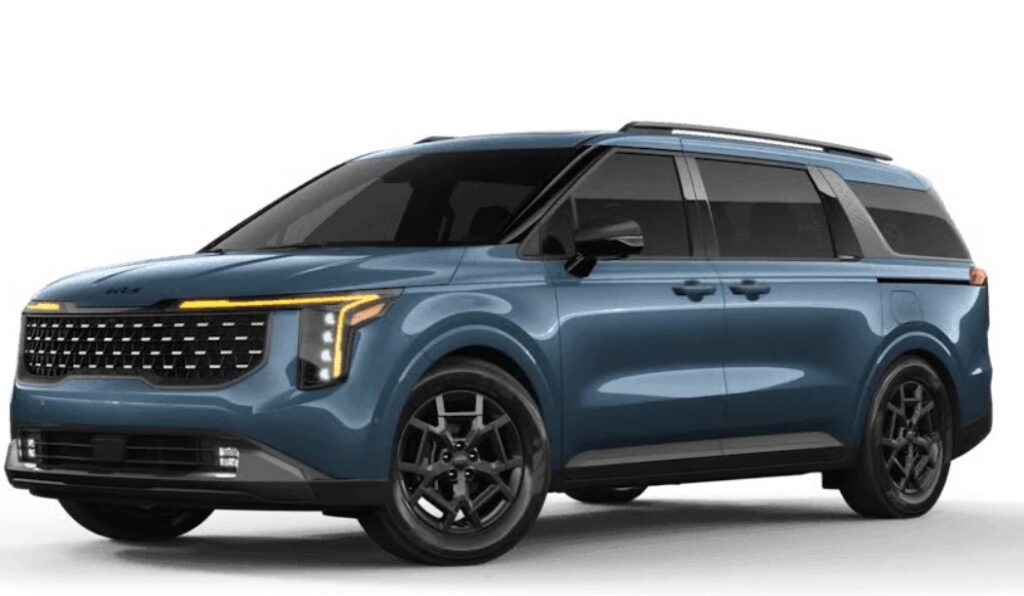
Choosing between the Kia Carnival or Toyota Sienna looks simple until we actually start comparing them. Both carry large families, both offer sliding doors, both swallow luggage with surprising ease, and both can turn a chaotic school run into something reasonably civilized. Yet they approach the family-vehicle formula from noticeably different directions.
The Toyota Sienna has become the fuel-economy specialist. Its standard hybrid powertrain, available all-wheel drive, and reputation for sensible family transportation make it an obvious choice for buyers who cover plenty of miles.
The Kia Carnival takes a different route. Kia calls it an MPV rather than a traditional minivan, and one glance explains why. The Carnival dresses like an SUV, packs a modern technology-heavy cabin, offers enormous versatility, and can be bought with either conventional gasoline power or a hybrid powertrain in the U.S. market.
So, should we buy a Kia Carnival or Toyota Sienna?
For many buyers, the answer comes down to this: choose the Sienna if efficiency and available AWD matter most; choose the Carnival if interior flexibility, stronger acceleration options, technology, styling, and value matter more.
But that is only the beginning.
Content in this publication
- Kia Carnival vs Toyota Sienna at a Glance
- Which Looks Better: Kia Carnival or Toyota Sienna?
- Kia Carnival or Toyota Sienna Interior: Which Feels Better?
- Seating and Passenger Space
- Cargo Space: Kia Carnival or Toyota Sienna?
- Performance: Carnival V6 vs Sienna Hybrid
- Kia Carnival Hybrid vs Toyota Sienna Hybrid
- Fuel Economy: Toyota Sienna Takes the Lead
- All-Wheel Drive: A Major Toyota Advantage
- Ride Comfort and Road-Trip Ability
- Technology and Infotainment
- Safety and Driver-Assistance Technology
- Towing Capacity
- Price and Value
- Reliability and Long-Term Ownership
- Kia Carnival or Toyota Sienna for a Large Family?
- Kia Carnival Gas or Toyota Sienna Hybrid?
- Kia Carnival Hybrid or Toyota Sienna: The Tougher Decision
- What Should We Test During a Test Drive?
- Kia Carnival or Toyota Sienna: Pros and Cons
- Which One Feels More Premium?
- Which One Is Better Than a Three-Row SUV?
- Final Verdict: Kia Carnival or Toyota Sienna?
- Frequently Asked Questions
- 1. Is a Kia Carnival better than a Toyota Sienna?
- 2. Which gets better gas mileage, Kia Carnival or Toyota Sienna?
- 3. Does the Kia Carnival have AWD like the Toyota Sienna?
- 4. Which has more power, the Kia Carnival or Toyota Sienna?
- 5. Which is better for a large family, Toyota Sienna or Kia Carnival?
Kia Carnival vs Toyota Sienna at a Glance
For 2026 in the United States, the Toyota Sienna remains exclusively hybrid. Its 2.5-liter four-cylinder hybrid system produces 245 total system horsepower, while Toyota estimates up to 36 mpg combined for front-wheel-drive versions and 35 mpg combined for AWD models.
The Carnival provides considerably more powertrain choice. The regular 2026 Carnival uses a 3.5-liter V6 producing 287 horsepower, while the Carnival Hybrid uses a turbocharged hybrid system with 271 lb-ft of torque and an estimated 32 mpg combined.
That distinction immediately tells us something about their personalities.
The Sienna says, “How far can we stretch every gallon?”
The Carnival asks, “How much comfort, equipment, luggage and family can we bring along?”
Neither philosophy is wrong. They simply appeal to slightly different buyers.
Quick Comparison Table
| Category | Kia Carnival | Toyota Sienna |
|---|---|---|
| Vehicle type | MPV/minivan | Minivan |
| Gas engine available | Yes | No |
| Hybrid available | Yes | Standard |
| Hybrid output | 242 hp* | 245 hp |
| Gas V6 output | 287 hp | Not offered |
| Hybrid combined efficiency | About 32 mpg* | Up to 36 mpg* |
| AWD | Not offered on current U.S. Carnival | Available |
| Seating | Up to 8 | Up to 8 |
| Sliding rear doors | Yes | Yes |
| Maximum towing capability | Up to 3,500 lb | Up to 3,500 lb on properly equipped versions |
| Best suited to | Space, tech, styling, value | Fuel economy, AWD, long-distance family use |
*Current U.S.-market figures; specifications can vary by model year and region. Toyota's current 2026 Sienna figures and Kia's Carnival figures confirm the efficiency and drivetrain differences above.
Which Looks Better: Kia Carnival or Toyota Sienna?
Looks should not decide a family-car purchase by themselves, but we cannot pretend they do not matter.
And this is probably the area where the two vehicles feel furthest apart.
The Carnival Tries Hard Not to Look Like a Minivan
Kia has deliberately styled the Carnival to blur the line between an SUV and a traditional people carrier.
Its upright front end, substantial grille, squared bodywork and relatively muscular proportions give it more road presence than the stereotypical minivan.
From certain angles, it almost looks like somebody stretched a large Kia SUV and quietly installed sliding doors.
That works brilliantly for buyers who need minivan practicality but have never really wanted to own something that screams minivan.
The Sienna Embraces Its Family-Van Identity
The Toyota Sienna is hardly boring, particularly in sportier trims, but it does not disguise what it is quite as convincingly.
Its longer, sleeker profile and sweeping character lines make it look more athletic than old-school family vans, while trims such as the XSE add sportier detailing.
Still, the Sienna's shape primarily serves practicality and aerodynamics.
Our Styling Verdict
If appearance carries substantial weight in the decision, we would give the Carnival the advantage.
The Sienna looks contemporary.
The Carnival looks contemporary and unexpectedly cool for an eight-passenger family vehicle.
Kia Carnival or Toyota Sienna Interior: Which Feels Better?
Open the doors and the philosophical differences continue.
Kia generally aims for that showroom “wow” moment. Toyota prioritizes usability and familiarity.
The Carnival's available panoramic-style dashboard displays, digital instrumentation and upscale trim make higher versions feel surprisingly premium. Kia currently offers dual 12.3-inch displays on upper Carnival Hybrid trims, creating 24.6 inches of combined panoramic display area.
The Sienna takes a more functional approach, although upper trims can still feel impressively luxurious. The 2026 Limited, for example, includes leather-trimmed seating, a 12.3-inch digital gauge cluster and premium JBL audio.
Carnival Cabin Strengths
The Carnival is especially appealing if we want technology to feel immediately visible.
Large screens dominate the dashboard on appropriately equipped trims, materials improve considerably as we move up the range, and features such as an available Passenger View cabin camera make sense in a vehicle where the driver may be several feet away from a child in the third row.
Higher Carnival configurations can even be fitted with VIP-style second-row seating.
It begins to feel less like a family shuttle and more like a small business-class lounge.
Sienna Cabin Strengths
The Sienna counters with thoughtful family practicality.
Its cabin includes plenty of usable storage, straightforward controls and available comfort equipment that becomes surprisingly indulgent in expensive trims.
Toyota also offers features such as an available integrated vacuum and FridgeBox on certain configurations, which sound gimmicky until we imagine carrying children, snacks and spilled cereal on a six-hour road trip.
Which Interior Wins?
For visual impact and premium ambience, we lean toward the Carnival.
For clever everyday family convenience, the Sienna makes an equally persuasive case.
Seating and Passenger Space
Both models can carry up to eight occupants, depending on trim and seating configuration.
That alone makes them considerably more useful for large families than most midsize SUVs.
The important difference is not merely how many people fit. It is how easily those people fit.
Three-row SUVs often advertise seven or eight seats on paper, but the third row can feel like emergency accommodation.
These vans are different.
Their long bodies and minivan-style architecture create genuinely useful passenger space.
Second-Row Comfort
The Carnival becomes particularly impressive in premium versions with available VIP Lounge Seating.
If we regularly drive grandparents, clients or teenagers who somehow believe every journey should resemble first class, those seats are a major attraction.
Toyota also offers comfortable second-row captain's-chair arrangements on selected Sienna versions, though different trims use different seating configurations.
Third-Row Usability
This is where both vehicles remind us why minivans still exist.
The third row is designed for actual human beings rather than occasional use.
Children obviously fit easily, but adults can survive meaningful journeys back there too.
That sounds like faint praise until we compare them with many three-row crossovers.
The Sliding-Door Advantage
Sliding doors may be the least glamorous feature ever invented, but once we have children, narrow parking spaces and shopping bags in both hands, they start looking like one of humanity's finest achievements.
Both vehicles provide them.
And after living with powered sliding doors, conventional rear doors can feel almost prehistoric.
Cargo Space: Kia Carnival or Toyota Sienna?
Cargo capacity can matter more than horsepower in this segment.
A family van needs to carry people on Monday, groceries on Tuesday, sports equipment on Wednesday and half the contents of the house when vacation begins on Friday.
The Carnival is exceptionally strong here. Kia lists 40.2 cubic feet of cargo space behind the third row for the 2026 gasoline Carnival in applicable configurations, which the company describes as class-leading.
That is significant because space behind the third row determines whether we can carry a full passenger load and luggage simultaneously.
Why Usable Shape Matters More Than Numbers
Cargo specifications never tell the whole story.
A wide, low and rectangular luggage area is often more practical than a larger volume filled with awkward wheel-arch intrusions.
Both vans benefit from their boxy proportions.
Suitcases stack naturally. Strollers fit without advanced geometry. Grocery bags do not need to be distributed around passengers like hand luggage on a budget airline.
Which Is Better for Maximum Cargo Flexibility?
We lean toward the Carnival when sheer family-hauling flexibility is the priority.
The Sienna remains extremely practical, but buyers should carefully investigate seat-removal and seat-folding arrangements on the exact trim they are considering. Hybrid hardware and seating designs influence how each cabin can be reconfigured.
Performance: Carnival V6 vs Sienna Hybrid
Now things become interesting.
Nobody buys an eight-seat minivan because they dream of attacking mountain roads at dawn.
Still, performance matters when the vehicle is carrying seven people, luggage and perhaps a trailer.
Kia Carnival V6 Performance
The standard 2026 U.S. Carnival uses a 3.5-liter V6 producing 287 horsepower.
That gives the Carnival a conventional, naturally aspirated character.
Press the accelerator and power builds predictably. Highway passing feels relatively effortless, and drivers accustomed to larger gasoline engines may prefer its familiar response.
It is the powertrain for buyers who value muscle more than maximum fuel economy.
Toyota Sienna Hybrid Performance
The Sienna combines a 2.5-liter four-cylinder gasoline engine with Toyota's hybrid system for 245 total system horsepower.
On paper, that makes it considerably less powerful than the Carnival V6.
Yet everyday driving is not a drag race.
Electric assistance gives the Sienna useful low-speed response, and its powertrain is designed around smooth efficiency rather than outright speed.
You may be interested in reading Leapmotor C10 Models: Complete Guide to Versions, Trims, Range, and Features
Around town, that approach makes enormous sense.
Which Is Faster?
The Carnival V6 is the natural choice if stronger conventional acceleration matters.
The Sienna is the smarter choice if we care more about how little fuel the vehicle consumes while transporting everyone.
Kia Carnival Hybrid vs Toyota Sienna Hybrid
This is arguably the comparison most modern buyers should make.
Once we compare hybrid with hybrid, the gap becomes much narrower.
The current Carnival Hybrid uses a turbocharged hybrid system producing 242 combined horsepower and 271 lb-ft of combined torque in current U.S. specification. It pairs that system with a six-speed automatic transmission.
The Sienna produces 245 total system horsepower and uses an electronically controlled continuously variable transmission.
So horsepower is almost identical.
The personalities are not.
Carnival Hybrid Character
The Kia feels more conventional because it uses a traditional geared automatic rather than an eCVT.
Its strong torque output also gives it a useful shove at everyday speeds.
That can make the Carnival Hybrid appealing to drivers who want hybrid efficiency without an especially obvious hybrid driving character.
Sienna Hybrid Character
Toyota has been refining this sort of hybrid system for decades.
The Sienna's system prioritizes efficiency, smooth transitions and simplicity from the driver's perspective.
There is no plugging in. We simply fuel it and drive.
Hybrid Winner
The Sienna wins on efficiency, while the Carnival Hybrid may appeal more to drivers who prefer stronger torque and conventional transmission behavior.
Fuel Economy: Toyota Sienna Takes the Lead
This is one of the clearest victories in the comparison.
Toyota says the 2026 Sienna achieves an estimated 36 mpg combined with front-wheel drive and 35 mpg combined with AWD.
The 2026 Carnival Hybrid is rated at approximately 32 mpg combined in current U.S. specification.
Four mpg may not sound dramatic during one trip.
Over years of ownership, however, it adds up.
If we cover 15,000 or 20,000 miles annually, efficiency becomes far more important than it looks during a ten-minute test drive.
Why the Sienna Makes Sense for High-Mileage Families
Think school commuting, football practice, weekend trips, grocery runs and summer vacations.
Large family vehicles accumulate mileage remarkably quickly.
Every trip becomes another small vote for efficiency.
That is why the Sienna's fuel consumption may ultimately be one of its strongest financial advantages.
All-Wheel Drive: A Major Toyota Advantage
Here we reach perhaps the single biggest practical difference.
The Toyota Sienna offers available AWD.
The current U.S.-market Carnival and Carnival Hybrid are front-wheel drive.
Toyota's system uses an independent electric motor to help power the rear wheels rather than relying on a conventional mechanical driveshaft arrangement. Toyota says AWD is standard on Woodland and Platinum versions and available on other applicable trims.
Who Actually Needs AWD?
Not everyone.
If we live somewhere warm, spend almost all our time on paved roads and rarely face snow, the absence of AWD may barely matter.
But for families living in snowy climates, mountainous regions or areas where winter traction is a regular concern, the Sienna's AWD availability can decide the comparison immediately.
AWD Verdict
Need AWD?
Choose the Sienna.
No debate required.
Ride Comfort and Road-Trip Ability
A family van earns its salary on long journeys.
After three hours on the highway, flashy exterior styling becomes irrelevant. Seat comfort, road noise, ride quality and cabin space suddenly become everything.
Both vehicles are naturally suited to this job because of their long wheelbases and family-oriented suspension tuning.
The Sienna Feels Calm and Efficient
The Toyota's character suits relaxed cruising.
Its hybrid system settles into an efficient rhythm on longer journeys, while available AWD adds another layer of reassurance in changing weather.
The Carnival Feels More Substantial
The Carnival can feel slightly more SUV-like from behind the wheel.
The V6 version, in particular, has generous power available for overtaking or climbing steep grades.
The hybrid model sacrifices some outright muscle but substantially improves efficiency.
Best Highway Companion
This is close.
For economical long-distance travel, we prefer the Sienna.
For a richer cabin experience and stronger gasoline performance, the Carnival has the edge.
Technology and Infotainment
Kia has become extremely competitive in cabin technology, and the Carnival demonstrates why.
Available dual 12.3-inch displays, an available head-up display, passenger monitoring technology and an available digital rearview mirror create a cabin that feels thoroughly modern.
Toyota is hardly living in the past. The Sienna offers contemporary multimedia technology, digital instrumentation on upper grades, premium audio options and a panoramic-view camera on Platinum.
Still, Kia's presentation tends to feel more dramatic.
Which Has Better Tech?
We would give the overall advantage to the Kia Carnival, particularly in upper trims.
Its technology feels like part of the vehicle's personality rather than simply equipment attached to the dashboard.
Safety and Driver-Assistance Technology
Modern family vehicles are expected to carry a long list of active safety features, and both manufacturers take that responsibility seriously.
The Carnival includes numerous driver-assistance systems, with Kia listing 18 standard advanced driver-assistance technologies on the 2026 gasoline model.
The Sienna includes Toyota Safety Sense technology as well as features such as Blind Spot Monitor with Rear Cross-Traffic Alert depending on current specification.
Do Not Choose Based on Feature Count Alone
Twenty features are not automatically better than eighteen.
What matters is whether the systems work naturally and whether the exact trim we are buying includes the equipment we expect.
We should compare adaptive cruise control, lane-centering functions, blind-spot monitoring, parking cameras and collision-mitigation systems trim by trim.
Towing Capacity
Both vehicles can reach a 3,500-pound towing capacity in appropriate configurations, making them capable of pulling a small camper, utility trailer or lightweight recreational equipment.
Kia lists a 3,500-lb towing capacity for the 2026 gasoline Carnival. Toyota lists a tow hitch with 3,500-lb capability on the 2026 Sienna Woodland Edition.
Naturally, towing limits depend on configuration, equipment, cargo and local specifications.
Which Would We Tow With?
If maximum engine power is important, the Carnival V6's 287 horsepower makes an appealing case.
If traction is more important, an AWD Sienna may be preferable in certain conditions.
Always check the exact owner's manual and tow-rating requirements before attaching a trailer.
Price and Value
Pricing changes every model year and varies significantly between markets, but the two models occupy overlapping territory.
For reference, Toyota lists a U.S. starting MSRP of $41,320 for the 2026 Sienna LE. Kia listed the 2026 Carnival Hybrid LXS from $41,390 when configured on its U.S. site.
That is fascinating because it places the hybrid versions remarkably close at entry level.
Carnival Value Proposition
Kia tends to attract buyers through equipment.
As we move through the Carnival range, the combination of displays, cameras, comfort equipment and premium cabin details can make it feel expensive in all the right ways without necessarily entering luxury-brand territory.
Sienna Value Proposition
Toyota's argument is longer-term.
Fuel economy could reduce running costs significantly, and the Sienna's hybrid-only philosophy means even the entry model delivers the powertrain many buyers would otherwise pay extra to obtain.
Which Offers Better Value?
If we measure value by equipment per dollar, the Carnival is extremely compelling.
If we measure value through efficiency and long-term family transportation, the Sienna becomes harder to dismiss.
Reliability and Long-Term Ownership
Toyota has built much of its global reputation around durability, and that reputation naturally gives the Sienna a psychological advantage among buyers planning to keep their vehicle for ten years or more.
You may be interested in readingLeapmotor C10 Models: Complete Guide to Versions, Trims, Range, and FeaturesYou may be interested in reading
 Which Mazda CX-9 Years to Avoid? A Used-Buyer’s Guide
However, brand reputation should never replace actual vehicle research.
A well-maintained Carnival can be a sensible long-term vehicle, while a neglected Sienna can become expensive.
Maintenance records, driving conditions, production year and individual mechanical condition matter enormously, particularly when buying used.
What About Hybrid Longevity?
Hybrid batteries make some buyers nervous, but hybrids are no longer experimental technology.
Toyota has been producing mass-market hybrids for decades, and Kia has also expanded hybrid technology throughout its lineup.
For new buyers, warranty coverage should be considered alongside predicted repair costs rather than assuming a hybrid will automatically be more troublesome.
Kia Carnival or Toyota Sienna for a Large Family?
Now we reach the question that actually matters.
Imagine two adults, three children, a stroller, football equipment, backpacks, groceries and one dog that somehow occupies more space than everyone else combined.
Which vehicle would we want?
Either can work brilliantly.
The Carnival feels like the better mobile living room.
The Sienna feels like the better long-distance family machine.
Choose the Kia Carnival If…
The Carnival makes the most sense when our priorities are:
- SUV-inspired styling rather than traditional minivan looks
- Maximum emphasis on interior technology
- Strong cargo practicality
- Available V6 performance
- An efficient hybrid alternative
- Premium second-row seating options
- A modern, upscale cabin atmosphere
- Strong feature-per-dollar value
Choose the Toyota Sienna If…
The Sienna becomes the stronger choice when we care most about fuel economy, available AWD, a proven hybrid-focused approach, frequent long-distance driving and minimizing fuel stops.
That is especially true in snowy climates.
Kia Carnival Gas or Toyota Sienna Hybrid?
This comparison is less balanced because the two powertrains pursue completely different goals.
The Carnival V6 offers 287 horsepower and conventional gasoline-engine behavior.
The Sienna hybrid produces 245 horsepower but can deliver around 36 mpg combined in FWD form.
If we drive relatively little and appreciate stronger acceleration, the Carnival V6 can make perfect sense.
If the odometer seems to spin like the score counter on a pinball machine, the Sienna's fuel savings become increasingly difficult to ignore.
Kia Carnival Hybrid or Toyota Sienna: The Tougher Decision
This is where we would spend the longest time with the calculator.
Both are hybrid family vans.
Both can seat large families.
Both have sliding doors.
Both provide huge practical advantages over comparable three-row SUVs.
The Toyota is more efficient and can be equipped with AWD.
The Kia counters with stronger torque, a conventional six-speed automatic and arguably more striking interior technology.
Our Choice for City Driving
Toyota Sienna.
Stop-and-go family use is exactly where an efficient hybrid makes sense, and the Sienna's outstanding mileage remains difficult to beat.
Our Choice for Snowy Areas
Toyota Sienna AWD.
This is probably the easiest decision in the entire article.
Our Choice for Technology Lovers
Kia Carnival.
The available digital hardware, cameras and premium interior presentation give it a more futuristic atmosphere.
Our Choice for Drivers Who Hate Minivan Styling
Kia Carnival.
It disguises its immense practicality under a surprisingly SUV-like suit.
What Should We Test During a Test Drive?
A specification sheet cannot tell us whether the driver's seat fits our body, whether our children can climb into the third row easily or whether our enormous stroller actually fits behind every occupied seat.
Before choosing, we should load both vehicles as realistically as possible.
Bring the child seats. Fold and move the second row. Sit in the third row. Connect a phone. Test the cameras. Drive on rough pavement. Accelerate onto a highway. Park somewhere tight. Check rear visibility.
The winner may become obvious within half an hour.
Kia Carnival or Toyota Sienna: Pros and Cons
The Carnival's biggest strengths are its handsome SUV-inspired design, generous passenger and cargo space, sophisticated technology, available hybrid powertrain and powerful V6 option.
Its biggest weakness against the Sienna is equally clear: no current U.S.-market AWD option, while its hybrid also cannot quite match Toyota's fuel economy.
The Sienna's greatest strengths are fuel efficiency, standard hybrid power, available AWD and an extremely family-friendly design.
Its compromises? Buyers who want a traditional V6 cannot get one, and some may prefer the Carnival's styling, stronger acceleration and more dramatic interior presentation.
In upper trims, both can become surprisingly luxurious.
Yet the Carnival often wins the first-impression contest.
VIP-style seating, broad digital displays and modern materials give it the sort of atmosphere we once associated primarily with luxury MPVs sold in Asia.
The Sienna feels expensive in upper grades too, but its luxury is more restrained.
It is less nightclub lounge, more extremely well-equipped family room.
Which One Is Better Than a Three-Row SUV?
For families that regularly use every seat?
Both.
A three-row SUV may provide higher ground clearance, stronger towing capability or rugged off-road styling, but it often loses in the areas families interact with every single day.
Sliding doors beat enormous hinged rear doors in narrow parking spaces.
A genuinely usable third row beats a cramped emergency bench.
Low step-in height makes life easier for young children and older relatives.
And deep luggage space behind the third row can prevent the familiar ritual of deciding whether the suitcase or one passenger stays home.
There is a reason minivans remain brilliant even when the market insists SUVs are cooler.
Final Verdict: Kia Carnival or Toyota Sienna?
So, Kia Carnival or Toyota Sienna—which should we buy?
There is no universal winner, but there is a clear winner for different priorities.
The Toyota Sienna is our pick for buyers focused on fuel economy, available all-wheel drive and efficient long-term family transportation. Its hybrid-only approach delivers remarkable mileage for such a large vehicle, and AWD gives it an advantage the Carnival simply cannot match in the current U.S. lineup.
The Kia Carnival is our pick for buyers who prioritize styling, cabin technology, cargo versatility, premium ambience and powertrain choice. The 287-hp V6 gives traditionalists plenty of muscle, while the Carnival Hybrid dramatically reduces the efficiency gap without sacrificing the vehicle's core appeal.
If we live somewhere snowy and need AWD, buy the Sienna.
If we drive huge annual mileage and care about every gallon, buy the Sienna.
If we want the family vehicle that looks least like a conventional minivan, buy the Carnival.
If sophisticated screens, second-row comfort and a luxurious cabin make every journey more enjoyable, the Carnival deserves serious attention.
And if we are stuck between a Sienna Hybrid and Carnival Hybrid?
Drive both.
At that point, the decision becomes less about which van is objectively better and more about which philosophy suits our family.
The Sienna is the clever efficiency expert.
The Carnival is the stylish, tech-heavy all-rounder.
Either way, we are choosing one of the most rational types of family vehicle ever created—and perhaps admitting that sliding doors are cooler than we once thought.
Frequently Asked Questions
1. Is a Kia Carnival better than a Toyota Sienna?
The Kia Carnival may be better for buyers who prioritize interior technology, SUV-inspired styling, cargo flexibility and available V6 power. The Toyota Sienna is generally the stronger choice for fuel economy and buyers who need available AWD.
2. Which gets better gas mileage, Kia Carnival or Toyota Sienna?
The Toyota Sienna wins. Toyota estimates up to 36 mpg combined for the 2026 front-wheel-drive Sienna, while the 2026 Carnival Hybrid is rated around 32 mpg combined in U.S. specification.
3. Does the Kia Carnival have AWD like the Toyota Sienna?
No. The current U.S.-market Kia Carnival is front-wheel drive, while the Toyota Sienna offers electronic on-demand AWD. That makes the Sienna particularly attractive for families living in snowy or slippery climates.
4. Which has more power, the Kia Carnival or Toyota Sienna?
The gasoline Kia Carnival has considerably more horsepower. Its 3.5-liter V6 produces 287 hp, compared with 245 total system horsepower from the 2026 Sienna hybrid. The Carnival Hybrid is much closer, producing 242 combined horsepower in current specification.
5. Which is better for a large family, Toyota Sienna or Kia Carnival?
Both are excellent choices. We would favor the Sienna for a high-mileage family or one that needs AWD, while the Carnival is especially appealing when maximum emphasis is placed on cabin technology, styling, passenger comfort and flexible cargo space.
You may be interested in readingLeapmotor C10 Models: Complete Guide to Versions, Trims, Range, and FeaturesYou may be interested in reading
Which Mazda CX-9 Years to Avoid? A Used-Buyer’s GuideYou may be interested in reading
 BMW M2 Years to Avoid: Which Used M2 Should You Skip?
If you want to know other articles similar to Kia Carnival or Toyota Sienna: Which Family Van Is Better? you can visit the category Models.
Honda Passport vs Toyota 4Runner: Which SUV Is Better?
Honda Passport vs Ford Bronco: Which SUV Is Better?
Honda Passport vs Ford Explorer: Which SUV Is Better?
Honda Passport or Pilot: Which SUV Is Better?
Honda Passport vs Jeep Grand Cherokee: Which SUV Is Better?
Honda Passport vs Nissan Pathfinder: Which SUV Is Better?
Leave a Reply
More content of your interest