
Is Vauxhall Agila a Good Car? Reliability, Problems and Buying Guide

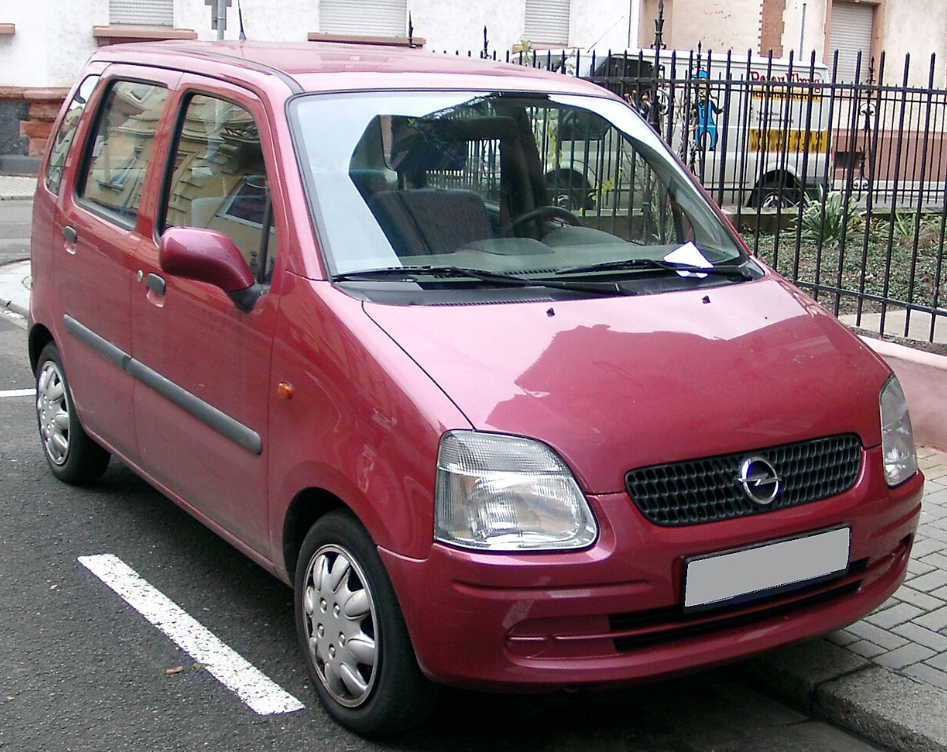
The Vauxhall Agila may not be the first small car that comes to mind when we think about affordable used cars, but that does not mean we should ignore it. In fact, for drivers looking for something compact, economical, easy to park and surprisingly spacious, the Agila can still make a lot of sense.
So, is the Vauxhall Agila a good car? Generally, yes. A well-maintained Vauxhall Agila can be a dependable and inexpensive small car, particularly if we choose the 1.2-litre petrol version. Its Suzuki-based engineering, simple mechanical design, excellent visibility and low running costs are some of its biggest advantages.
However, age now matters enormously. Even the newest Agilas are more than a decade old, so suspension wear, brakes, ABS components, clutch condition and maintenance history need to be checked carefully before buying.
In this guide, we’ll look at Vauxhall Agila reliability, common problems, engines, fuel economy, practicality, motorway performance and what to check before buying one.
Content in this publication
- Is the Vauxhall Agila a Good Car Overall?
- Vauxhall Agila Pros and Cons
- How Reliable Is the Vauxhall Agila?
- Is the Vauxhall Agila Engine Reliable?
- What Are the Most Common Vauxhall Agila Problems?
- Vauxhall Agila Suspension Problems
- Vauxhall Agila ABS Problems
- Vauxhall Agila Gearbox and Clutch Problems
- Are Vauxhall Agilas Economical?
- Is the Vauxhall Agila Cheap to Maintain?
- Is the Vauxhall Agila Good for City Driving?
- Is the Vauxhall Agila Good on the Motorway?
- Is the Vauxhall Agila Comfortable?
- How Practical Is a Vauxhall Agila?
- Is the Vauxhall Agila a Good First Car?
- Vauxhall Agila vs Suzuki Splash
- Which Vauxhall Agila Is Best to Buy?
- What Should We Check Before Buying a Used Vauxhall Agila?
- How Long Can a Vauxhall Agila Last?
- Is an Old Vauxhall Agila Still Worth Buying?
- Is the Vauxhall Agila Better Than a Corsa?
- Who Should Buy a Vauxhall Agila?
- Is the Vauxhall Agila a Good Used Car?
- Frequently Asked Questions
- Conclusion: Is Vauxhall Agila a Good Car?
Is the Vauxhall Agila a Good Car Overall?
For the right type of driver, the Vauxhall Agila is a surprisingly sensible used car.
It was designed primarily as an urban runabout rather than a motorway cruiser or sporty hatchback. Its compact dimensions make parking simple, while the tall body provides much more passenger space than we might expect from such a small vehicle.
The second-generation Agila was developed alongside the Suzuki Splash, and this Suzuki connection is important. The Agila shares much of its engineering with the Splash, and RAC notes that Suzuki's reputation for building simple, durable small cars is a positive point when considering the Agila as a used purchase.
The main attractions are low fuel costs, inexpensive servicing, easy manoeuvrability and a practical five-door body.
Its biggest weaknesses are refinement, performance from the smallest engine and the fact that many examples are now old enough to require suspension and other age-related repairs.
Vauxhall Agila Pros and Cons
The Agila works particularly well if our priorities are affordability and practicality rather than luxury or performance.
| Strengths | Weaknesses |
|---|---|
| Spacious interior for its size | 1.0 engine can feel slow |
| Five doors as standard | Cabin materials feel inexpensive |
| Easy to park | Noticeable road and engine noise |
| Good visibility | Suspension wear can occur |
| Economical petrol engines | Not ideal for frequent motorway driving |
| Generally simple mechanical design | Automatic versions are less common |
| Affordable used prices | Safety technology is dated by modern standards |
That combination explains why an Agila can make sense as a first car, second household car or inexpensive city vehicle.
How Reliable Is the Vauxhall Agila?
Vauxhall Agila reliability is generally one of the car's stronger points, especially when we compare it with more complicated modern vehicles.
The mechanical layout is relatively straightforward, and the Suzuki connection gives the second-generation car a solid foundation. Historical Warranty Direct information reported by Honest John even identified the Agila as particularly reliable among European cars over three years old at the time of the survey.
That does not mean every Agila will be trouble-free.
At this stage in the car's life, maintenance history is far more important than its original reputation. A poorly maintained low-mileage Agila can easily be a worse purchase than a higher-mileage car that has been properly serviced.
We would therefore pay more attention to invoices, MOT history and evidence of routine maintenance than simply looking for the lowest mileage available.
Is the Vauxhall Agila Engine Reliable?
Most petrol Agila engines are relatively simple and can last well when serviced correctly.
The second generation was initially available with 1.0- and 1.2-litre petrol engines alongside a 1.3 CDTi diesel. RAC confirms these were the three main engine choices when the second-generation model arrived.
For most used buyers today, we think the petrol engines make considerably more sense.
Vauxhall Agila 1.0 Petrol
The 1.0-litre petrol engine is economical and well suited to short urban journeys.
It is not particularly powerful, however. Auto Express described the smaller three-cylinder engine as feeling breathless when pushed hard, while RAC similarly notes that it can struggle more on steep hills and motorway journeys.
For someone driving mostly around town, that may not matter at all.
If we regularly carry several passengers or frequently use motorways, though, the extra performance of the 1.2 is worthwhile.
Vauxhall Agila 1.2 Petrol
The 1.2-litre petrol is probably the best all-round Vauxhall Agila engine.
It provides noticeably stronger acceleration without dramatically increasing fuel costs. Auto Express also preferred the 1.2, highlighting its stronger performance and suitability compared with the smaller engine.
It is still not a fast car, but we do not have to work the engine as hard when joining faster roads or climbing hills.
If we were searching for an Agila for mixed town and occasional motorway use, a well-maintained 1.2 manual would be one of the versions we would concentrate on.
Vauxhall Agila 1.3 CDTi Diesel
The 1.3 CDTi offers stronger low-speed pulling power and potentially excellent economy.
However, buying an old diesel for short urban journeys rarely makes much sense today.
Age-related diesel problems can also become considerably more expensive than issues with a simple naturally aspirated petrol engine.
Unless we intend to cover substantial annual mileage and find an exceptionally well-maintained example, the petrol models are normally the easier Agilas to own.
What Are the Most Common Vauxhall Agila Problems?
The Agila does not have an enormous list of catastrophic design weaknesses, but there are several areas worth checking.
Suspension is perhaps the most important.
Historical MOT data for different model years shows suspension components appearing prominently among Agila failures. For example, 2012 cars in Honest John's MOT data recorded suspension-arm problems, particularly ball joints, while older 2008 and 2009 examples also showed relatively high rates of suspension-related failures.
Because these vehicles are now old, we should also expect ordinary wear items to become increasingly important.
Vauxhall Agila Suspension Problems
Listen carefully for knocking or clunking noises when driving over potholes or speed bumps.
Potential areas include ball joints, suspension bushes, anti-roll-bar components, springs and other front suspension parts.
Honest John's historical fault information also identified axles and suspension as a notable source of warranty claims on the Agila.
Fortunately, suspension components on a small car such as the Agila are not necessarily prohibitively expensive.
The concern is buying a cheap example that requires several suspension components, tyres and brakes immediately after purchase. Those costs can quickly represent a significant percentage of the car's value.
Vauxhall Agila ABS Problems
ABS-related problems have also been reported.
Honest John documented reports involving ABS pump failures and ABS/ESP brake-pressure sensor problems on some Agilas.
When test-driving one, check that all dashboard warning lights illuminate correctly when starting the car and then go out as expected.
An ABS warning light should not simply be dismissed as an inexpensive sensor until the fault has been properly diagnosed.
Brake-fluid replacement history can also be worth checking.
Vauxhall Agila Gearbox and Clutch Problems
The five-speed manual gearbox is generally straightforward, but any older manual car can develop clutch or transmission problems.
During the test drive, make sure every gear engages easily and listen for whining, grinding or unusual transmission noises.
Honest John records at least one report of manual transmission failure on a second-generation 1.2 Agila, although individual reports should not be interpreted as proof that gearbox failure is universal.
You may be interested in reading Toyota Corolla AE86 Engine Swap – The Ultimate Guide
We should also test the clutch carefully.
A high biting point, clutch slip under hard acceleration or difficulty selecting gears could indicate upcoming expenditure.
Are Vauxhall Agilas Economical?
Yes. Low running costs are one of the strongest arguments for owning an Agila.
Auto Express quoted official figures of approximately 60.1 mpg for one version of the 1.0 petrol and 55.4 mpg for the 1.2 petrol under the testing standards used at the time. Real-world economy will depend on driving style, condition and journey type, and older official figures should not be treated as guaranteed real-world consumption.
Even so, an Agila driven gently should be relatively inexpensive to fuel compared with larger cars.
Tyres are small, routine service items are generally affordable, and there is little complicated technology compared with many newer vehicles.
Is the Vauxhall Agila Cheap to Maintain?
Usually, yes.
One benefit of buying a relatively simple small car is that routine repairs tend to be easier than on complicated premium vehicles.
Servicing should be straightforward for most independent garages, and there are still plenty of Vauxhall specialists in the UK.
The Agila's relationship with the Suzuki Splash can also be useful because many mechanical components are shared or closely related.
Nevertheless, we should not buy purely because the purchase price is low.
A £1,500 car requiring four tyres, brakes, suspension work, a clutch and an MOT could quickly become more expensive than buying a better £2,500 example from the beginning.
Is the Vauxhall Agila Good for City Driving?
This is where the Agila performs best.
Its upright driving position, excellent visibility and compact dimensions make it particularly comfortable in busy towns.
Parking is easy, and the high seating position gives us a better view than we normally get in a very small hatchback.
RAC specifically highlights the Agila's strong urban usability, including easy parking and good visibility.
The five-door layout also makes it much more convenient for passengers than many older city cars that were commonly sold with only three doors.
If our daily driving involves supermarkets, school runs, narrow streets and short commutes, the Agila fits the job extremely well.
Is the Vauxhall Agila Good on the Motorway?
It can handle motorway driving, but this is not where it shines.
The 1.0 is capable of motorway speeds but requires more effort when accelerating onto faster roads or overtaking.
The 1.2 feels noticeably more relaxed.
Wind and road noise are also more noticeable than in larger modern cars, and the tall body means the Agila does not feel quite as planted as a heavier hatchback.
Occasional motorway trips should not be a problem in a healthy Agila.
If we drive hundreds of motorway miles every week, however, we would probably choose something larger and more refined.
Is the Vauxhall Agila Comfortable?
Comfort is reasonable rather than exceptional.
The high roof and upright seats make getting in and out easy, which can be particularly appealing to drivers who dislike lowering themselves into small conventional hatchbacks.
The suspension also handles typical urban roads reasonably well when it is in good condition.
Where the Agila begins to show its age is refinement.
We get more road, tyre and engine noise than in modern small cars. Interior plastics also feel functional rather than luxurious.
That said, comfort was never really the Agila's selling point. Practicality and simplicity were.
How Practical Is a Vauxhall Agila?
Surprisingly practical.
This is one of the areas where the Agila exceeds expectations.
Its exterior dimensions are small, yet the tall body creates plenty of usable cabin space. Auto Express specifically praised its roomy interior and practical five-door design.
RAC reported that the second-generation Agila could provide up to approximately 1,150 litres of load capacity with the rear seats folded.
Four adults can fit reasonably comfortably for such a small car, although we would not describe it as a genuine five-adult long-distance vehicle.
For shopping, children, pets and everyday errands, however, it is far more useful than its footprint suggests.
Is the Vauxhall Agila a Good First Car?
It can be an excellent first car.
Visibility is good, controls are simple and performance is manageable for an inexperienced driver.
Its small size also removes much of the stress associated with parking.
Insurance costs depend on the individual driver and specific model, but small-engine Agilas were historically positioned in low insurance groups.
There is one important consideration: safety technology has advanced considerably since the Agila was designed.
A newer city car may provide more sophisticated driver-assistance technology and more modern crash protection. We should therefore balance the Agila's low purchase price against what we could afford in a newer alternative.
Vauxhall Agila vs Suzuki Splash
These two cars are extremely closely related.
The second-generation Vauxhall Agila was effectively Vauxhall's version of the Suzuki Splash, sharing its underlying engineering.
That means buying one should often come down to condition rather than badge.
If we find a well-maintained Splash with a better service history than a similarly priced Agila, there is little reason to insist on the Vauxhall.
The reverse is equally true.
When shopping at this age and price level, mechanical condition is usually much more important than whether the badge on the bonnet says Suzuki or Vauxhall.
You may be interested in readingToyota Corolla AE86 Engine Swap – The Ultimate GuideYou may be interested in reading
 Does the Toyota Camry Have CVT Transmission?
Which Vauxhall Agila Is Best to Buy?
For most buyers, the 1.2-litre petrol manual is arguably the most useful combination.
It has enough power to cope with faster roads while remaining economical and relatively simple.
The 1.0 makes sense if nearly all our driving takes place around town.
The diesel is harder to recommend unless the vehicle has exceptional maintenance history and our driving genuinely suits an older diesel.
Later examples may also be preferable simply because they are younger, but age alone should never replace a proper mechanical inspection.
A carefully maintained older Agila is better than a neglected newer one.
What Should We Check Before Buying a Used Vauxhall Agila?
Condition should determine whether an Agila is worth buying.
Pay particular attention to suspension noises, uneven tyre wear, clutch operation, gearbox behaviour, ABS warning lights, brakes, exhaust condition, engine temperature and evidence of regular servicing.
Check the MOT history carefully as well. Repeated advisories for suspension components, tyres, corrosion or brakes can reveal whether a car has received minimum-cost maintenance.
We would also verify whether any outstanding safety recalls apply to the particular vehicle. GOV.UK provides a vehicle-recall checking service, and safety recall repairs are normally performed without charging the owner.
A professional inspection can be worthwhile if we are unfamiliar with cars.
How Long Can a Vauxhall Agila Last?
There is no fixed lifespan.
A properly maintained Agila can comfortably remain usable at relatively high mileage, while a neglected one may become uneconomical to repair much earlier.
Service history matters more than the odometer alone.
For example, we would generally prefer an 80,000-mile Agila with documented oil changes, recent brakes and suspension work over a 45,000-mile example that has barely been serviced.
Cars deteriorate through age as well as mileage.
Rubber bushes, tyres, seals, batteries, suspension components and exhaust systems can all deteriorate even when a vehicle covers relatively few miles.
Is an Old Vauxhall Agila Still Worth Buying?
Yes, provided the price reflects its age and condition.
The Agila's simplicity is actually becoming one of its biggest attractions.
Modern vehicles offer more comfort, safety technology and performance, but they are also much more complicated.
An Agila gives us basic petrol engines, conventional controls and relatively simple mechanical components.
For someone who simply wants inexpensive transportation, that can be refreshing.
The key is avoiding the cheapest neglected examples.
Buying on condition rather than price is particularly important with inexpensive older vehicles.
Is the Vauxhall Agila Better Than a Corsa?
They serve slightly different purposes.
A Vauxhall Corsa generally feels more substantial, refined and stable on faster roads. Depending on generation, it can also offer more engine choices and equipment.
The Agila counters with easier parking, excellent visibility and a surprisingly useful upright interior.
For predominantly urban driving, we might actually find the Agila more convenient.
For regular motorway driving, a Corsa is usually the more comfortable type of vehicle.
Who Should Buy a Vauxhall Agila?
The Agila suits buyers who value practicality, low costs and simplicity.
It makes particular sense as a city car, inexpensive first car, second household vehicle or runabout for someone covering relatively short distances.
Drivers wanting strong acceleration, sophisticated technology or premium refinement will probably find it too basic.
But that simplicity is precisely why other buyers may appreciate it.
Is the Vauxhall Agila a Good Used Car?
Overall, yes.
A Vauxhall Agila in good condition can be a very sensible used purchase. Its Suzuki-derived platform, straightforward petrol engines, spacious cabin and compact dimensions create a combination that is difficult to dislike.
The 1.2 petrol is our preferred all-round version because it provides more useful performance than the 1.0 without turning the Agila into an expensive car to run.
We would pay particular attention to suspension condition, brakes, ABS-related warning lights, clutch operation and service history.
More than anything, remember that we are no longer judging a new Vauxhall Agila. We are judging an individual car that may be 12, 15 or even more than 20 years old.
Maintenance history can therefore make the difference between a brilliant cheap runabout and an endless list of small repairs.
Frequently Asked Questions
Is the Vauxhall Agila reliable?
Generally, yes. The second-generation Vauxhall Agila shares much of its engineering with the Suzuki Splash and developed a decent reputation for durability. However, suspension wear, ABS-related faults and other age-related problems should be checked carefully when buying one today.
Which Vauxhall Agila engine is best?
For most drivers, the 1.2-litre petrol is the best choice. It offers noticeably better performance than the 1.0 while remaining economical. The 1.0 is suitable for predominantly urban driving.
Is a Vauxhall Agila expensive to repair?
Routine maintenance is usually relatively affordable because the Agila is mechanically simple and uses small-car components. Major ABS, gearbox or neglected suspension problems can still become expensive relative to the vehicle's low market value.
Is a Vauxhall Agila good for motorway driving?
An Agila can handle motorway journeys, particularly with the 1.2-litre petrol engine, but it is primarily a city car. Noise levels and refinement are noticeably behind larger and newer vehicles, while the 1.0 can feel underpowered at higher speeds.
Should I buy a used Vauxhall Agila?
A used Vauxhall Agila can be worth buying if it has been properly maintained and passes a thorough inspection. We would prioritise a strong service and MOT history over exceptionally low mileage and generally favour a well-maintained 1.2 petrol manual.
Conclusion: Is Vauxhall Agila a Good Car?
So, is Vauxhall Agila a good car? Yes, it can be.
The Agila is not exciting, luxurious or especially powerful, but it gets the fundamentals right. It is compact outside, spacious inside, inexpensive to run and easy to drive.
Its Suzuki-based engineering also gives us good reason to consider a properly maintained example rather than dismissing it simply because it is an old and inexpensive Vauxhall.
The 1.2 petrol manual is probably the sweet spot, while the 1.0 remains a perfectly reasonable choice for drivers who rarely leave town.
You may be interested in readingToyota Corolla AE86 Engine Swap – The Ultimate GuideYou may be interested in reading
Does the Toyota Camry Have CVT Transmission?You may be interested in reading
 Toyota Camry Trim Levels 2014: A Detailed Guide to Choosing the Best
The most important factor is condition. Check the suspension carefully, make sure there are no unexplained ABS or engine warning lights, test the clutch and gearbox and study the MOT and service history.
Find a clean example that has been looked after, and the Vauxhall Agila can still be one of those inexpensive little cars that simply does what we need it to do without costing a fortune.
If you want to know other articles similar to Is Vauxhall Agila a Good Car? Reliability, Problems and Buying Guide you can visit the category Blog.
Honda Passport Life Expectancy: How Many Miles Can It Last?
Honda Passport Depreciation: How Well Does It Hold Its Value?

Nissan Rogue Reliability Rating: How Reliable Is the Rogue?
Nissan Rogue Life Expectancy: How Long Does It Last?
Vauxhall Agila Reliability: Common Problems, Best Engines and What to Check
Vauxhall Agila Insurance Group UK: Complete Guide to Insurance Costs
Leave a Reply
More content of your interest