
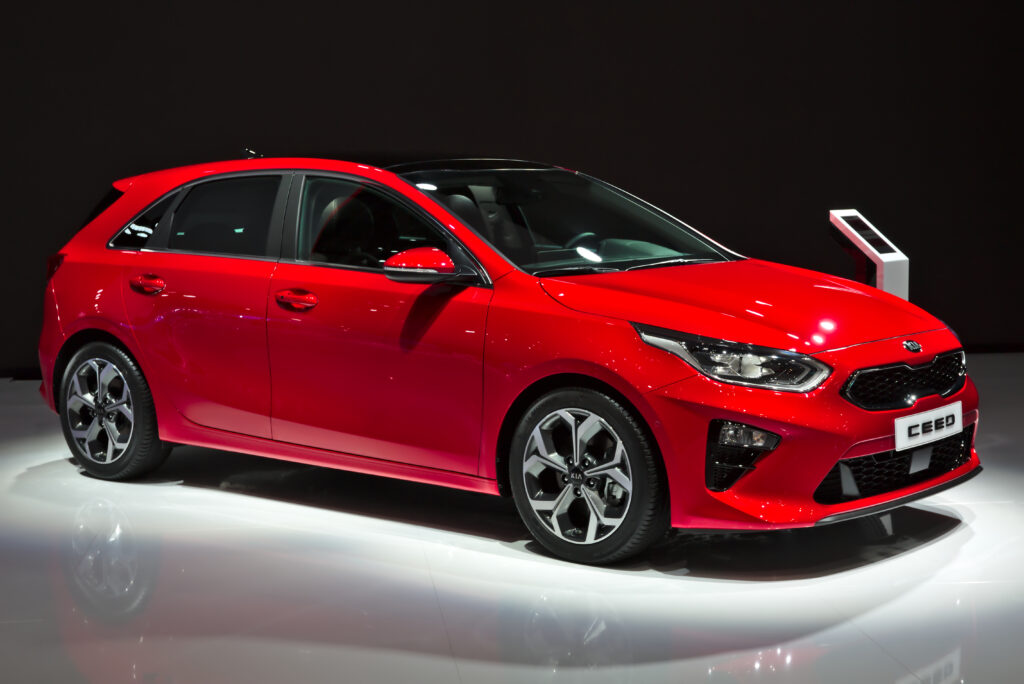
Kia Ceed Reliability: The Complete Long-Term Ownership Guide

Content in this publication
- Understanding Why Reliability Matters More Than Ever
- How the Kia Ceed Developed Its Reputation for Reliability
- The Generations of the Kia Ceed and Their Reliability Profiles
- What Real Owners Say About Kia Ceed Reliability
- Engine Reliability: Which Kia Ceed Engines Are the Best?
- Gearbox Robustness: Manual, Automatic, and DCT Reliability
- Suspension and Chassis Durability
- Electrical Reliability: A Major Improvement Over the Years
- Kia Ceed Reliability vs Rivals
- Is the Kia Ceed Reliable After 100,000 Miles?
- The Role of Maintenance in Long-Term Reliability
- Common Problems with the Kia Ceed (Across All Generations)
- How the 7-Year Warranty Shapes Reliability Perception
- The Kia Ceed as a Used Car: Is It Still a Safe Bet?
- What Makes the Kia Ceed So Reliable?
- Is the Kia Ceed Reliable? Our Final Verdict
- FAQs
Understanding Why Reliability Matters More Than Ever
Reliability isn’t just another buzzword in the automotive world—it shapes the way we drive, maintain our budgets, and trust the machine under us. When we talk about the Kia Ceed, we’re stepping into a space where practicality meets durability, and where the decades-old narrative of “Asian cars are reliable” actually plays out in real life.
We’ve seen the Ceed change, improve, and evolve, and it has now positioned itself as one of the most dependable hatchbacks in the European market. But does it really hold up over the years? Is it genuinely as solid as owners claim? And does it stay trouble-free when the odometer starts climbing into six-digit territory?
Let’s break it down thoughtfully and honestly, exploring real-world reliability, common problems, maintenance insights, engine longevity, electrical durability, and what ownership actually feels like.
How the Kia Ceed Developed Its Reputation for Reliability
The Ceed wasn’t created as a global car—it was designed specifically for Europe, built in Slovakia, and engineered with European roads, weather, and expectations in mind. That alone gives it a head start.
Key reliability foundations baked into the Ceed
- European-focused engineering
- High manufacturing consistency at Kia’s Žilina plant
- Simple, proven engines for early generations
- Quality improvements in electronics across newer models
- Industry-leading 7-year warranty inspiring confidence
The Ceed was never meant to be flashy. Instead, it was designed to be the quiet hero in your driveway—the car that simply works.
The Generations of the Kia Ceed and Their Reliability Profiles
Every generation has its own strengths and quirks. Understanding them helps us appreciate the broader reliability story.
1st Generation (2006–2012): The Foundation of a Reputation
The first Ceed arrived with a straightforward mechanical setup. This simplicity meant fewer things to go wrong, and that has definitely aged well.
Most reliable traits
- Durable 1.6 CRDi engines
- Basic, trouble-free electronics
- Sturdy suspension components
Typical issues
- Clutch wear on higher-mileage petrol models
- Occasional electrical gremlins in early production years
- DPF clogging in poorly maintained diesels
2nd Generation (2012–2018): Refinement and Improved Electrical Reliability
The second generation stepped up its game with better materials, more tech, and cleaner engines. Kia also tightened quality control, which shows in owner reports.
Strengths
- Better-built interior that ages gracefully
- Strong reliability across both diesel and petrol models
- Improved gearbox feel and durability
Common weaknesses
- Turbo wastegate rattle on 1.0 T-GDi
- Infotainment glitches in earlier software versions
- Suspension bush wear on high-mileage units
3rd Generation (2018–Present): Modern Reliability Meets Technology
The latest Ceed is packed with safety systems, driver aids, and connectivity features. Surprisingly, reliability didn’t take a hit—Kia improved its electronics architecture to reduce faults.
Best points
- Superb reliability in 1.4 T-GDi and 1.5 T-GDi engines
- Very stable dual-clutch (DCT) transmission
- High-quality build and minimal cabin rattles
Rare but reported issues
- Sensor-related warnings (lane assist, parking sensors)
- Occasional mild-hybrid battery management faults
- Software updates required for infotainment and ADAS
What Real Owners Say About Kia Ceed Reliability
We can read charts and statistics all day, but nothing beats the voice of people who live with the car daily.
Patterns from owner feedback
- Most owners keep the Ceed longer than they originally expected
- Major failures are extremely rare
- Routine costs are low compared to European rivals
- Engines handle high mileage with minimal deterioration
- Electrical faults tend to be minor rather than catastrophic
Owners of 8–10-year-old Ceeds repeatedly praise its consistency: “It just doesn’t break. Even when it’s older, it still feels predictable.”
Engine Reliability: Which Kia Ceed Engines Are the Best?
The Ceed has been offered with a wide range of engines, from simple MPI petrol units to turbocharged GDi engines and robust diesels.
Let’s rank them by reliability.
Most reliable Kia Ceed engines (overall winner → strong)
- 1.6 CRDi diesel (all versions) – Built to survive massive mileage
- 1.4 MPI petrol – Simple, under-stressed, very long-lasting
- 1.5 T-GDi petrol (new) – Efficient, modern, and proving to be extremely solid
- 1.4 T-GDi petrol – Strong reputation and smooth performance
- 1.0 T-GDi petrol – Good reliability, but slightly sensitive to maintenance
Engines requiring the most care
- Early 1.6 GDi petrol (occasionally noisy injectors)
- 1.0 T-GDi (oil level monitoring is essential)
- Diesel models with neglected DPFs
Gearbox Robustness: Manual, Automatic, and DCT Reliability
Gearbox reliability is often the Achilles heel of modern cars. Not so with the Ceed.
Manual gearboxes
- Very robust
- Clutch lifespan typically 80,000–120,000 miles
- Affordable to repair
Automatic torque-converter (older models)
- Simple and dependable
- Long service life with routine fluid changes
DCT transmission (newer models)
- Surprisingly reliable for a dual-clutch
- Minimal reports of overheating or shudder
- Software updates recommended for best performance
Kia’s DCT often outperforms DSG boxes from Volkswagen in terms of long-term durability.
You may be interested in reading Renault Megane Reliability: Real-World Longevity, Problems, and Ownership Truths
Suspension and Chassis Durability
Hatchbacks in Europe get punished by potholes, speed bumps, and rough winter roads. The Ceed holds up well.
What usually lasts
- Rear torsion beam (extremely reliable)
- Springs rarely fail
- Brake discs and pads wear slowly compared to rivals
What owners report as wear items
- Front lower arm bushings
- Drop links
- Rear shock absorbers on high-mileage cars
These are inexpensive and easy to replace—good news for long-term ownership.
Electrical Reliability: A Major Improvement Over the Years
If a modern car fails, the culprit is almost always electronics. That makes the Ceed’s track record especially meaningful.
High-reliability aspects
- Wiring looms rarely fail
- ECU issues are extremely uncommon
- Dashboard components are stable
Minor yet common issues
- Parking sensor moisture
- Reversing camera fogging
- Infotainment lag (fixed via software updates)
- TPMS sensors losing calibration over time
Nothing here is catastrophic—just occasional annoyances.
Kia Ceed Reliability vs Rivals
Let’s see how the Ceed stacks up against its biggest competitors.
Ceed vs Volkswagen Golf
- Golf has more advanced technology but also more failures
- Ceed is cheaper to run and more reliable year-to-year
- Golf DSG boxes fail more frequently than Kia’s DCT
Ceed vs Ford Focus
- Focus has excellent driving dynamics but more recurring electrical issues
- Ceed is more predictable long-term
Ceed vs Hyundai i30
- Essentially reliability equals—they share engines
- Kia offers stronger design and slightly better cabin durability
Ceed vs Toyota Corolla
- Corolla is more reliable overall
- Ceed is cheaper, more engaging to drive, and has better interior storage
Is the Kia Ceed Reliable After 100,000 Miles?
Yes—and impressively so.
Many Ceeds pass 140,000–200,000 miles with no major component failures when serviced properly.
What typically needs attention at high mileage
- Suspension refresh
- Timing belt or chain (depending on engine)
- Alternator or battery replacement
- Clutch (manual cars)
But these are expected for any well-used vehicle—not specific weaknesses.
The Role of Maintenance in Long-Term Reliability
Even the most reliable car will struggle if neglected. Luckily, the Ceed’s maintenance demands are simple and inexpensive.
Ceed servicing checklist
- Oil + filter every 10k–12k miles
- Brake fluid every 2 years
- Cabin filter annually
- Spark plugs 40k–60k miles (petrol)
- Timing belt around 60k–100k miles (depending on spec)
- DCT software updates at major services
Why maintenance matters more on turbo engines
Turbocharged units generate extra heat. “Fresh oil equals a happy turbo” is a mantra worth repeating.
Common Problems with the Kia Ceed (Across All Generations)
Even reliable cars have weak spots. Here are the Ceed’s most known ones.
1. DPF Issues
Strictly due to improper driving patterns. Regular motorway runs prevent clogging.
2. Turbo Wastegate Noise
Mostly on the 1.0 T-GDi and usually harmless.
3. Infotainment Freezing
Mostly solved with updates.
4. AC Condenser Leaks
More common on older models.
5. Parking Sensor Faults
Moisture inside sensors or wiring.
You may be interested in readingRenault Megane Reliability: Real-World Longevity, Problems, and Ownership TruthsYou may be interested in reading
 Is Renault Megane a Good Car? An Honest, Real-World Verdict
Should these scare you?
Not at all—they are predictable, well-documented, and inexpensive to resolve.
How the 7-Year Warranty Shapes Reliability Perception
Kia’s legendary warranty is both a marketing masterstroke and a real-world reassurance. It keeps owners returning to dealerships for proper servicing and ensures any manufacturing faults are caught early.
Why this improves reliability
- Better maintenance records
- Higher-quality repairs
- Confidence for second-hand buyers
- Stronger resale value
The warranty acts like reliability insurance—and Kia knows it.
The Kia Ceed as a Used Car: Is It Still a Safe Bet?
Absolutely.
The Ceed is one of the best used-car buys in the segment thanks to its:
- stable engines
- predictable wear patterns
- low repair costs
- excellent depreciation curve
- remaining warranty on newer models
If you're buying second-hand, the Ceed is one of the easiest cars to recommend without hesitation.
What Makes the Kia Ceed So Reliable?
Let’s get philosophical for a moment.
Reliability isn’t magic—it’s engineering discipline. Kia focused on:
Core reliability principles
- Keeping components simple
- Prioritizing durability over aggressiveness
- Avoiding risky experimental tech
- Improving electronics generation by generation
- Stress-testing components for European conditions
The result? A car that behaves like a well-trained pet: predictable, loyal, and rarely misbehaving.
Is the Kia Ceed Reliable? Our Final Verdict
After looking at numbers, owner feedback, engineering facts, and real-world experiences, the answer is clear: yes, the Kia Ceed is highly reliable.
Why we say so
- Major failures are rare
- Engines withstand huge mileage
- Gearboxes hold up beautifully
- Maintenance is cheap
- Electronics are stable
- The warranty is unmatched
The Ceed might not shout for attention, but it wins in silence. It's the friend who always shows up, the tool that always works, the car that doesn’t make your wallet tremble.
If reliability defines your buying decision, the Ceed is one of the smartest choices in the hatchback market.
FAQs
1. Is the Kia Ceed a long-lasting car?
Yes. With proper servicing, many Ceeds exceed 150,000–200,000 miles without major repairs.
2. What is the most reliable engine in the Kia Ceed?
The 1.6 CRDi diesel is widely considered the longest-lasting, while the 1.4 MPI and 1.5 T-GDi are the best petrol options.
3. Are Kia Ceed electrical problems common?
Minor issues are reported (sensors, infotainment), but major electrical failures are rare.
4. Does the Ceed’s DCT gearbox have problems?
No widespread issues. Kia’s DCT is more reliable than many rival dual-clutch systems.
You may be interested in readingRenault Megane Reliability: Real-World Longevity, Problems, and Ownership TruthsYou may be interested in reading
Is Renault Megane a Good Car? An Honest, Real-World VerdictYou may be interested in reading
 Cupra Born Reliability: Real-World Ownership, Truths, and What to Expect
5. Is the Kia Ceed a good used-car purchase?
Definitely—low running costs, durable engines, and slow depreciation make it a top choice.
If you want to know other articles similar to Kia Ceed Reliability: The Complete Long-Term Ownership Guide you can visit the category Blog.
Is Vauxhall Agila a Good Car? Reliability, Problems and Buying Guide

Honda Passport Life Expectancy: How Many Miles Can It Last?
Honda Passport Depreciation: How Well Does It Hold Its Value?

Nissan Rogue Reliability Rating: How Reliable Is the Rogue?
Nissan Rogue Life Expectancy: How Long Does It Last?
Vauxhall Agila Reliability: Common Problems, Best Engines and What to Check
Leave a Reply
More content of your interest