

Dacia Duster and Renault Duster: Same Soul, Different Worlds

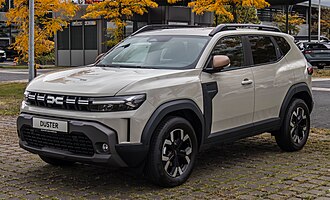
There’s a funny moment that happens the first time we realize the Dacia Duster and the Renault Duster are basically twins wearing different outfits. You see one in Europe with a budget-brand badge, then another in Latin America or India with a Renault diamond — and suddenly the automotive world feels like a multiverse.
So what’s going on here?
Are they identical?
Is one better?
Or are we dealing with two completely different SUVs sharing a name?
Today we’re not just comparing specs. We’re unpacking identity — engineering, markets, ownership experience, reliability, and even psychology — because these two SUVs tell a bigger story about how automakers design cars for different cultures.
Let’s dive in.
Content in this publication
- Origins: Why Two Names Exist
- Design Differences: Subtle But Intentional
- Platform and Engineering
- Engines: The Biggest Regional Differences
- Driving Experience
- Off-Road Capability
- Technology and Features
- Safety Evolution
- Reliability and Ownership
- Maintenance Cost Comparison
- Fuel Economy
- Trims and Positioning
- Which One Feels Better Built?
- Market Perception
- Who Should Buy Each Version
- The Psychological Factor
- Future Generations
- Final Thoughts: One Car, Two Philosophies
- FAQs
Origins: Why Two Names Exist
The Birth of a Global Budget Hero
The Duster was created with a radical idea:
Build a real SUV… at hatchback money.
Instead of designing a cheap crossover, engineers built a genuine rugged platform and removed luxury — not capability.
The result:
- Tall ground clearance
- Simple mechanical AWD
- Durable suspension
- Minimal electronics
Why Renault Exists in Some Countries
Dacia is Renault’s low-cost subsidiary.
But here’s the twist:
In many markets, Dacia as a brand does not exist.
So Renault sells the exact same car under its own badge.
Markets split:
- Europe → Dacia Duster
- Latin America → Renault Duster
- India → Renault Duster
- Middle East → Mostly Renault
- UK → Dacia
Same DNA, different branding strategy.
Design Differences: Subtle But Intentional
Exterior Personality
At a glance, they look identical. But they’re not.
Dacia Duster styling philosophy:
- Rugged honesty
- Utility-first appearance
- Minimal chrome
- Industrial plastic cladding
Renault Duster styling philosophy:
- Slightly more urban appeal
- Chrome accents
- Softer grille
- Market-specific bumpers
The Renault version tries to feel aspirational.
The Dacia version embraces practicality.
Interior Materials
Here’s where regional expectations matter.
| Feature | Dacia Duster | Renault Duster |
|---|---|---|
| Dashboard | Hard plastic | Softer trims (in some markets) |
| Upholstery | Durable fabric | More decorative stitching |
| Infotainment | Simple | Often upgraded |
| Insulation | Basic | Improved NVH in newer versions |
Same structure, different finishing philosophy.
Platform and Engineering
The B0 Platform: The Secret Weapon
Both cars use the legendary Renault-Nissan B0 platform.
Why it matters:
- Built for emerging markets
- Tolerates bad roads
- Cheap to repair
- Long suspension travel
This platform also underpins:
- Logan
- Sandero
- Oroch pickup
- Captur (first gen in some markets)
So the Duster wasn’t engineered as cheap — it was engineered as durable.
Suspension Setup
Front:
MacPherson strut
Rear:
- 4x2 → torsion beam
- 4x4 → independent multi-link
That alone explains why the AWD Duster feels shockingly capable off-road.
Engines: The Biggest Regional Differences
Here’s where the twins diverge the most.
European Dacia Duster Engines
- 1.0 TCe turbo petrol
- 1.3 TCe turbo petrol
- 1.5 dCi diesel
- Hybrid (new generation)
Focus: efficiency + emissions compliance
Renault Duster Engines (Emerging Markets)
- 1.6 naturally aspirated
- 2.0 naturally aspirated
- 1.3 turbo petrol
- 1.5 diesel (in some countries)
Focus: simplicity + reliability + fuel quality tolerance
You may be interested in reading Dacia Duster vs Suzuki Vitara: The Honest Real-World SUV Showdown
Philosophy Difference
| Region | Engineering Goal |
|---|---|
| Europe | Emissions & economy |
| Latin America/India | Durability & fuel tolerance |
That’s why a Renault Duster may feel slower but lasts longer in harsh conditions.
Driving Experience
City Driving
Dacia:
- Lighter steering
- Better efficiency
- More refined transmission mapping
Renault:
- More torque at low RPM
- Softer suspension
- Designed for potholes
The Renault version feels calmer on broken roads.
The Dacia feels sharper on paved ones.
Highway Stability
Dacia excels at:
- Fuel economy
- Reduced body roll
- Better aerodynamics in newer gen
Renault excels at:
- Ride comfort
- Shock absorption
- Long distance fatigue reduction
Off-Road Capability
People underestimate the Duster.
It’s not pretending to be an SUV — it actually is one.
Off-road numbers (typical AWD):
- Ground clearance: ~210 mm
- Approach angle: ~30°
- Departure angle: ~33°
- Low first gear ratio
That’s better than many expensive crossovers.
Why It Works
Instead of electronic gimmicks, it uses:
- Mechanical AWD coupling
- Light weight
- Short overhangs
- Soft suspension articulation
The Renault version often handles rough terrain better due to softer calibration.
Technology and Features
Infotainment Differences
European Dacia models now feature:
- Digital cluster
- Wireless Apple CarPlay
- Advanced driver assists
Renault versions may lag slightly depending on country.
But they often include:
- 360 cameras (in newer markets)
- Better air conditioning systems
- Reinforced cooling systems
Because hot climates demand different priorities.
Safety Evolution
Early Generations
Safety was basic:
- 2 airbags
- ABS
- Stability control
Modern Generations
Now includes:
- Lane assist
- Blind spot monitoring
- Hill descent control
- Curtain airbags
The Dacia version evolves faster due to EU regulations.
Reliability and Ownership
Why the Duster Became Legendary
Mechanically simple + overbuilt suspension.
Owners report:
- Cheap repairs
- Parts everywhere
- Easy DIY maintenance
Common Issues (Both Versions)
- Window regulators
- Engine mounts
- Bushings wear on rough roads
- AC compressor in hot climates
- Steering column noises
But none are catastrophic.
Maintenance Cost Comparison
| Aspect | Dacia | Renault |
|---|---|---|
| Parts cost | Cheaper in Europe | Cheaper in developing markets |
| Labor | Simple | Simple |
| Electronics | Slightly more complex new gen | Simpler older gens |
Ownership cost remains one of the lowest in SUV category worldwide.
Fuel Economy
Dacia:
Better MPG due to smaller turbo engines.
Renault:
Better reliability under poor fuel quality.
Efficiency vs tolerance — that’s the trade-off.
Trims and Positioning
Dacia Trim Philosophy
- Essential
- Expression
- Journey
- Extreme
Utility focused progression.
You may be interested in readingDacia Duster vs Suzuki Vitara: The Honest Real-World SUV ShowdownYou may be interested in reading
 Dacia Duster vs Kia Sportage — The Honest SUV Showdown
Renault Trim Philosophy
- Life
- Zen
- Intens
- Outsider/Iconic
Lifestyle positioning.
Same car, different marketing psychology.
Which One Feels Better Built?
Surprisingly…
Neither.
They feel equally solid — but differently tuned.
Dacia = engineered precision
Renault = engineered resilience
Market Perception
Europe:
Budget hero
Latin America/India:
Aspirational family SUV
That single difference changes how owners emotionally connect with the car.
Who Should Buy Each Version
Choose Dacia Duster if:
- You drive highways
- You want best MPG
- You live in Europe
- You value updated safety tech
Choose Renault Duster if:
- Roads are rough
- Fuel quality varies
- You want durability
- You prioritize comfort over economy
The Psychological Factor
We don’t just buy vehicles.
We buy context.
The Dacia feels like a smart purchase.
The Renault feels like a proud purchase.
Same metal — different emotion.
Future Generations
The newest Duster generation moves toward:
- Hybrid powertrains
- Improved interior quality
- Modular platform (CMF-B)
But one promise remains:
Affordable capability stays untouched.
Final Thoughts: One Car, Two Philosophies
The Dacia Duster and Renault Duster are proof that engineering is universal but expectations are cultural.
One isn’t better.
They’re adapted.
The Dacia represents efficiency in developed markets.
The Renault represents endurance in developing markets.
And that adaptability is exactly why the Duster became one of the most globally successful SUVs ever built.
FAQs
1. Are Dacia Duster and Renault Duster mechanically identical?
Mostly yes, but engine options, suspension tuning, and features vary by market.
2. Which one is more reliable?
Both are reliable, but Renault versions handle poor roads and fuel slightly better.
3. Is the AWD system real 4x4?
Yes — it uses a mechanical coupling, not just electronic traction control.
4. Why is Dacia cheaper in Europe?
Because it’s positioned as Renault’s budget brand there.
5. Can parts be interchanged between them?
In many cases yes, but engine components may differ depending on region.
You may be interested in readingDacia Duster vs Suzuki Vitara: The Honest Real-World SUV ShowdownYou may be interested in reading
Dacia Duster vs Kia Sportage — The Honest SUV ShowdownYou may be interested in reading
Dacia Duster vs Jeep Renegade: The Honest SUV ShowdownIf you want to know other articles similar to Dacia Duster and Renault Duster: Same Soul, Different Worlds you can visit the category Models.
Nissan Rogue Dark Armor vs Platinum: Which Trim Is Better?

Kia Sorento Models: Complete Guide to Trims, Engines and Versions
BYD Shark 6 vs Ranger vs HiLux: Which Ute Makes the Most Sense in 2026?
BYD Shark 6 vs MG U9: Which Ute Makes More Sense in 2026?
BYD Shark 6 vs Ford Ranger Raptor: Which Performance Ute Is Better in 2026?
BYD Shark 6 vs Kia Tasman: Which Ute Is Better?
Leave a Reply
More content of your interest