

Is Kia EV6 Fully Electric? The Complete, No-Nonsense Guide

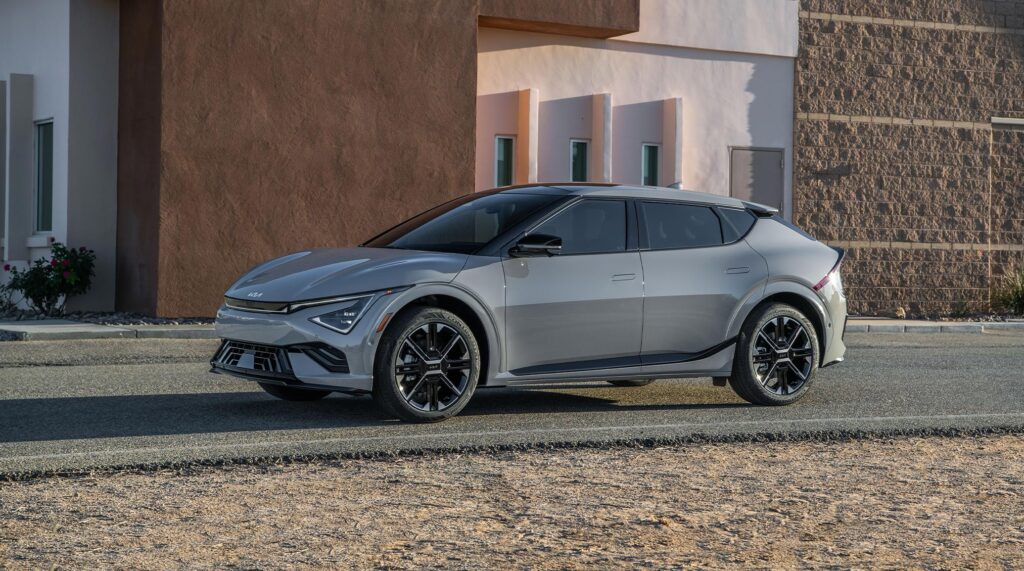
Let’s clear the air immediately — because this question pops up everywhere:
Is the Kia EV6 a hybrid? A plug-in? A mild hybrid?
Or is it genuinely an electric car?
Short answer: yes — the Kia EV6 is fully electric.
Long answer: buckle up, because the truth is more interesting than a simple yes or no.
We’re going to explore not just what powers it, but how it works, why it exists, and what it actually feels like to live with one. By the end, you won’t just know the answer — you’ll understand why the EV6 matters in the electric revolution.
Content in this publication
- What “Fully Electric” Actually Means
- The Power Source: Pure Electricity Only
- Inside the Electric Platform
- How the Electric Motors Work
- Acceleration: The Electric Party Trick
- Charging Instead of Refueling
- 800-Volt Architecture Explained
- Driving Experience: What Fully Electric Feels Like
- Regenerative Braking: Energy Recycling
- Range: How Far Can It Go?
- Maintenance: A Completely Different World
- Is It Really Eco-Friendly?
- Common Myths About the EV6 Being “Not Fully Electric”
- Ownership Lifestyle Shift
- Comparing With Hybrids and Plug-Ins
- Why Manufacturers Built It This Way
- Who the EV6 Is Perfect For
- Who Might Struggle With It
- The Psychological Shift
- Future-Proofing
- Final Thoughts
- FAQs
What “Fully Electric” Actually Means
Before we even talk about the EV6, we need to define the term. Manufacturers love blurring lines.
Not All Electrified Cars Are Electric Cars
There are four different categories people often confuse:
- Mild Hybrid (MHEV) — electric assists engine
- Hybrid (HEV) — electric + petrol working together
- Plug-in Hybrid (PHEV) — small battery + petrol backup
- Battery Electric Vehicle (BEV) — no engine at all
Where the EV6 Fits
The EV6 belongs to the last category:
BEV — Battery Electric Vehicle
There is:
- No petrol tank
- No exhaust pipe
- No engine oil
- No gearbox in the traditional sense
If you opened the hood expecting a combustion engine, you'd feel like you opened a laptop and expected a typewriter.
The Power Source: Pure Electricity Only
No Combustion Backup
Many vehicles advertise electric driving but secretly rely on fuel.
The EV6 doesn’t.
If the battery hits 0%:
The car stops. Period.
There’s no hidden generator, no emergency petrol reserve, no backup mode.
What Powers the EV6 Instead
Under the floor sits a high-voltage lithium-ion battery pack connected to electric motors.
Think of it like a giant power bank on wheels — except it can power a house.
Inside the Electric Platform
Dedicated EV Architecture
The EV6 isn’t a converted petrol car.
It was designed electric from day one.
That changes everything.
Benefits of Dedicated Electric Design
- Flat floor interior
- More cabin space
- No transmission tunnel
- Better weight balance
- Lower center of gravity
- Higher efficiency
This is why sitting inside feels more like a lounge than a cockpit.
How the Electric Motors Work
Single Motor Versions (RWD)
These models send power to the rear wheels.
They are:
- More efficient
- Longer range
- Smoothest driving experience
Perfect for commuting and road trips.
Dual Motor Versions (AWD)
Two motors: one front, one rear.
Result:
- Faster acceleration
- More grip
- Sports-car feel
It’s like the car is being pushed and pulled at the same time.
Acceleration: The Electric Party Trick
Electric cars don’t “build power.”
They release it instantly.
When we press the accelerator:
There is no gear change
No turbo lag
No engine noise
Just immediate motion — like a silent slingshot.
You may be interested in reading Skoda Superb Reliability — The Honest Long-Term Ownership Guide
0-60 Feeling
Instead of roaring forward, the EV6 surges.
It feels less mechanical and more magnetic.
Charging Instead of Refueling
A fully electric car lives on charging — not refueling.
Three Ways to Charge
Home Charging
- Overnight
- Slow but convenient
- Like charging your phone while sleeping
Public AC Charging
- Parking lots, offices
- 4–8 hours typical
Ultra-Fast DC Charging
- Highway stations
- 10% to 80% in under 20 minutes (conditions depending)
That last one is where the EV6 really stands out.
800-Volt Architecture Explained
Most EVs use 400-volt systems.
The EV6 uses 800 volts.
Why This Matters
Higher voltage means:
- Less heat
- Faster charging
- Better efficiency
- More consistent performance
It’s the difference between filling a glass with a straw versus a fire hose.
Driving Experience: What Fully Electric Feels Like
Silence
At first, it’s unsettling.
You move — but nothing vibrates.
You accelerate — but nothing roars.
Then suddenly you realize:
Driving becomes relaxing instead of stimulating.
One-Pedal Driving
Lift off the accelerator, and the car slows down using regenerative braking.
You rarely touch the brake pedal.
It feels like controlling speed with thought alone.
Regenerative Braking: Energy Recycling
Instead of wasting momentum as heat, the EV6 converts it back into electricity.
When slowing down:
- Motors act like generators
- Battery recharges slightly
- Efficiency increases
City driving becomes surprisingly efficient — the opposite of petrol cars.
Range: How Far Can It Go?
Range depends on battery size and driving style.
Typical Real-World Range
- Urban: longer due to regen braking
- Highway: shorter due to constant speed
- Cold weather: reduced range
- Warm weather: optimal range
Electric cars behave like smartphones — temperature affects battery performance.
Maintenance: A Completely Different World
Because it’s fully electric, many traditional services disappear.
Things You Don’t Replace
- Engine oil
- Spark plugs
- Timing belt
- Clutch
- Exhaust system
- Fuel pump
Things You Still Maintain
- Tires
- Brake fluid
- Cabin filter
- Coolant for battery system
Owning one feels less like mechanical care and more like device maintenance.
Is It Really Eco-Friendly?
Fully electric doesn’t mean zero impact — but it changes where emissions happen.
Driving Emissions
While driving: zero tailpipe emissions
Energy Source Matters
Cleaner electricity = cleaner driving
Even with fossil electricity, EVs remain more efficient than combustion engines due to energy conversion losses in fuel burning.
Common Myths About the EV6 Being “Not Fully Electric”
False — no engine exists.
Myth 2: It Uses Fuel in Cold Weather
False — range drops, but no fuel is burned.
Myth 3: Fast Charging Damages Battery Quickly
Modern thermal management prevents rapid degradation.
You may be interested in readingSkoda Superb Reliability — The Honest Long-Term Ownership GuideYou may be interested in reading
 Skoda Superb Years to Avoid — The Honest Ownership Guide
Myth 4: You Can’t Take Road Trips
You can — planning replaces refueling spontaneity.
Ownership Lifestyle Shift
Owning a fully electric car changes habits more than expectations.
You stop thinking:
“Where is the nearest gas station?”
You start thinking:
“Where do I park overnight?”
Charging becomes passive — refueling used to be active.
Comparing With Hybrids and Plug-Ins
| Feature | Hybrid | Plug-in Hybrid | EV6 |
|---|---|---|---|
| Engine | Yes | Yes | No |
| Fuel Tank | Yes | Yes | No |
| Exhaust | Yes | Yes | No |
| Charging Required | No | Optional | Essential |
| Silent Driving | Limited | Partial | Full |
The EV6 isn’t partially electric.
It’s committed electric.
Why Manufacturers Built It This Way
The EV6 represents a turning point:
Cars designed around batteries rather than engines.
Instead of adapting electric into old engineering — engineers rebuilt the idea of a car entirely.
Who the EV6 Is Perfect For
- Daily commuters
- Tech enthusiasts
- Quiet driving lovers
- Low-maintenance seekers
- Early adopters of future mobility
Who Might Struggle With It
- People without home charging
- Extremely remote drivers
- Those unwilling to plan long trips
- Drivers who love engine noise
It’s less about ability and more about mindset.
The Psychological Shift
The first week feels strange.
The second week feels normal.
The third week makes petrol cars feel outdated.
Electric driving isn’t louder or faster — it’s calmer.
Future-Proofing
Fully electric cars like the EV6 are not transitional products.
They are destination products.
Not a stepping stone — a replacement.
Final Thoughts
So, is the Kia EV6 fully electric?
Absolutely — not partially, not assistive, not hybridized.
It doesn’t mix old and new technology.
It abandons one for the other.
Driving it feels less like operating machinery and more like interacting with energy itself — smooth, silent, immediate.
We don’t adapt to it.
We adapt around it.
And that’s the real difference.
FAQs
1. Does the Kia EV6 use any gasoline at all?
No. It has no engine, fuel tank, or exhaust system.
2. What happens if the battery runs out?
The vehicle stops — it must be charged before driving again.
3. Can you drive the EV6 without charging at home?
Yes, but public charging access becomes essential.
You may be interested in readingSkoda Superb Reliability — The Honest Long-Term Ownership GuideYou may be interested in reading
Skoda Superb Years to Avoid — The Honest Ownership GuideYou may be interested in reading
Skoda Superb Insurance Group: The Real Cost Behind the Comfort4. Is the EV6 considered a hybrid legally?
No — it is classified as a pure battery electric vehicle.
5. Is maintenance cheaper than a petrol car?
Typically yes, because many mechanical components don’t exist.
If you want to know other articles similar to Is Kia EV6 Fully Electric? The Complete, No-Nonsense Guide you can visit the category Blog.
Subaru Impreza Insurance Cost: What Should You Expect to Pay?
Subaru Impreza Models by Year: Complete Generation Guide
BMW M5 Qualities: What Makes the M5 So Special?
BMW M5 Insurance Cost: What Owners Should Expect
BMW M5 Depreciation: How Fast Does an M5 Lose Value?
Ford Edge Reliability: How Dependable Is This SUV?
Leave a Reply
More content of your interest