

Mazda CX-30 Years to Avoid — Buyer’s Deep Dive Guide

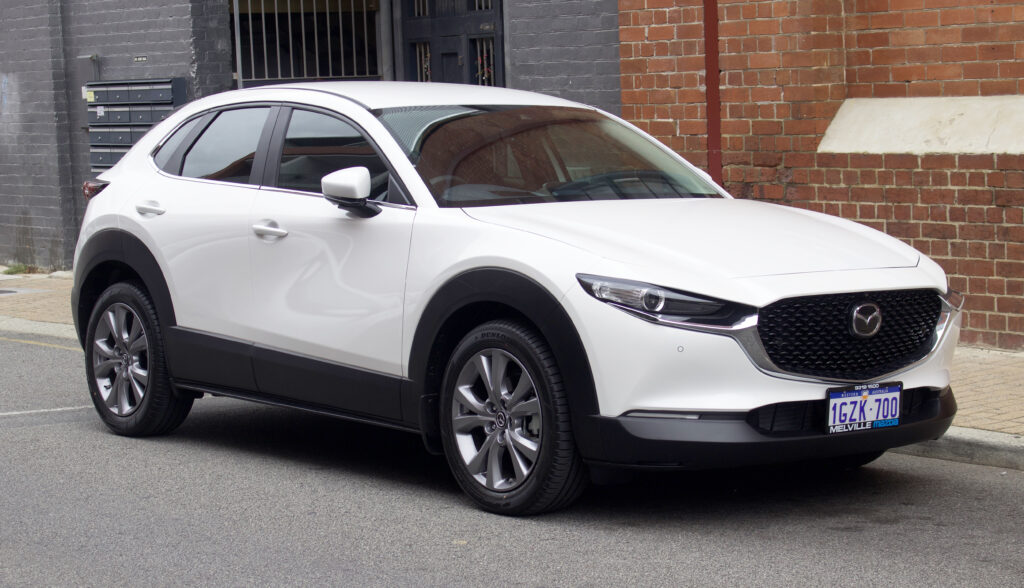
We love crossovers because they promise everything: hatchback agility, SUV practicality, and sedan-like efficiency. The Mazda CX-30 delivers that promise better than most — crisp steering, classy interior, and just enough premium feel to make competitors sweat.
But here’s the truth every smart buyer knows:
Even great cars have weak years.
The CX-30 is no exception. Some model years are rock-solid daily drivers. Others? Minor annoyances at best… ownership headaches at worst.
So let’s walk through it together — not as spec-sheet robots, but as real drivers who want reliability, low repair costs, and peace of mind.
Content in this publication
- What Makes the Mazda CX-30 Popular in the First Place?
- Generations and Production Timeline
- Mazda CX-30 Years to Avoid
- Why the 2020 Model Is Problematic
- Interior Rattles and Fit Issues
- Transmission Behavior Complaints
- Engine Reliability — Surprisingly Strong
- 2021 Mazda CX-30 — A Transition Year
- 2022 and Newer — The Sweet Spot
- Common Issues Across All Years (But Minor)
- Turbo vs Non-Turbo Reliability
- Maintenance Costs Compared to Rivals
- Used Buyer Inspection Checklist
- Mileage vs Reliability
- Why Early Model Years Have Problems
- Should You Completely Avoid the 2020 Model?
- Best Mazda CX-30 Year to Buy Used
- Ownership Experience Over Time
- Closing Thoughts — The Real Story Behind CX-30 Reliability
- FAQs
What Makes the Mazda CX-30 Popular in the First Place?
Before calling out problem years, we need context.
The CX-30 sits between the Mazda3 hatchback and the CX-5. It’s essentially a lifted Mazda3 with AWD availability — and that matters because many issues come directly from early platform carryover components.
Why Buyers Choose It
- Premium interior materials for the price
- Excellent steering feel
- Strong safety ratings
- Naturally aspirated engine reliability
- Available turbo power without huge fuel penalty
- Low depreciation compared to rivals
It’s one of the few compact crossovers that feels designed for people who enjoy driving — not just commuting.
Generations and Production Timeline
First Generation (2019–Present)
| Model Year | Notes |
|---|---|
| 2020 | First release year |
| 2021 | Early fixes applied |
| 2022 | Improved electronics reliability |
| 2023 | Minor refinement |
| 2024+ | Mature production stage |
The good news: there’s only one generation so far.
The bad news: that means early production issues matter more.
Mazda CX-30 Years to Avoid
Let’s go straight to the key takeaway.
Worst Year: 2020 Mazda CX-30
The launch model year had the most complaints — not catastrophic failures, but a long list of irritating electronic and hardware issues.
Think of it like a smartphone on version 1.0 software.
It works… but it constantly reminds you it’s new.
Why the 2020 Model Is Problematic
Infotainment System Freezing
Owners reported:
- Random restarts
- Screen blackouts
- Navigation lag
- Bluetooth disconnecting mid-call
This wasn’t hardware failure — it was unstable early firmware.
Automatic Emergency Braking Errors
Some vehicles triggered:
- Phantom braking
- Collision warnings on empty roads
Scary? Yes.
Dangerous? Sometimes.
Usually fixed with updates, but early owners lived with it.
Battery Drain Problems
One of the most common complaints.
Symptoms:
- Car won’t start after sitting overnight
- Weak crank
- Dead battery within weeks
Cause:
The telematics module failed to sleep properly.
Interior Rattles and Fit Issues
Dashboard Creaking
Cold mornings made the dashboard sound like:
A plastic water bottle being twisted slowly.
Not a reliability issue — but incredibly annoying in a “premium-feeling” cabin.
Door Panel Vibrations
Especially noticeable with music bass.
You may be interested in reading Mazda CX-30 Insurance Group: Real Costs, Groups & What You’ll Actually Pay
Early production clip tolerances were slightly off.
Transmission Behavior Complaints
Mazda uses a traditional automatic — generally reliable — but early calibration wasn’t perfect.
Common Driving Symptoms
- Jerky low-speed shifts
- Hesitation when accelerating
- Sudden downshift at roundabouts
Later software updates improved this significantly.
Engine Reliability — Surprisingly Strong
Here’s the twist:
Despite electronic annoyances, the engine itself is excellent.
2.5L Skyactiv-G (Non-Turbo)
Extremely durable design:
- No turbo stress
- No timing chain failures
- No oil dilution epidemic
2.5 Turbo
Few early oil consumption complaints, mostly resolved by 2022.
So mechanically? The CX-30 is strong.
Electronically? Early years struggled.
2021 Mazda CX-30 — A Transition Year
Not a year to avoid… but not the best either.
Mazda fixed many software problems, yet some early-build vehicles still had:
- Infotainment bugs
- Battery drain (rare)
- Minor sensor glitches
If buying used, production date matters more than model year here.
Late-2021 cars are dramatically better than early-2021.
2022 and Newer — The Sweet Spot
By 2022 the car matured.
Major Improvements
- Stable infotainment software
- Refined transmission tuning
- Fewer warning light complaints
- Improved fit and finish
This is where the CX-30 becomes the car Mazda intended from day one.
Common Issues Across All Years (But Minor)
Even good years share a few quirks.
Thin Paint
Mazda paint looks beautiful but chips easily.
Highway driving = inevitable rock marks.
Small Fuel Tank
Frequent fuel stops surprise new owners.
Rear Visibility
Stylish design sacrifices glass area.
Not broken — just a design compromise.
Turbo vs Non-Turbo Reliability
Non-Turbo
Best long-term choice.
Lower maintenance cost.
Ideal for ownership beyond 150k miles.
Turbo
More fun.
Still reliable — but higher wear risk after 100k miles.
Maintenance Costs Compared to Rivals
The CX-30 stays affordable because of mechanical simplicity.
Typical annual maintenance:
- Oil change
- Filters
- Brake pads
No dual-clutch complexity.
No CVT belt wear.
No hybrid battery worries.
Used Buyer Inspection Checklist
When inspecting a CX-30, focus less on engine and more on electronics.
You may be interested in readingMazda CX-30 Insurance Group: Real Costs, Groups & What You’ll Actually PayYou may be interested in reading
 Mazda CX-30 Owner Reviews: Real Drivers, Real Life
Always Check
- Infotainment responsiveness
- Battery health
- Warning lights
- Software update history
- Reverse camera clarity
- Parking sensor behavior
Mileage vs Reliability
This car ages well.
| Mileage | What to Expect |
|---|---|
| 0–40k | Like new |
| 40–80k | Minimal wear |
| 80–120k | Suspension bushings |
| 120k+ | Still dependable |
Most problems appear early — not late.
That’s a good sign.
Why Early Model Years Have Problems
It wasn’t poor engineering.
It was integration complexity.
Mazda introduced:
- New safety suite
- New electrical architecture
- New connectivity modules
Hardware was solid.
Software needed refinement.
Should You Completely Avoid the 2020 Model?
Not necessarily.
If the car:
- Has updated software
- Has strong battery
- Shows no warning lights
Then it can be a bargain buy.
But without proof of updates, it’s risky.
Best Mazda CX-30 Year to Buy Used
Top Choice: 2022
Perfect balance:
- Depreciated price
- Refined electronics
- Proven reliability
Budget Choice: Late 2021
If verified updated, it’s excellent value.
Ownership Experience Over Time
Owners consistently report:
First year: small frustrations
Second year: smooth operation
Later years: dependable commuter
That pattern tells us something important — early fixes matter more than long-term durability.
Closing Thoughts — The Real Story Behind CX-30 Reliability
The Mazda CX-30 isn’t unreliable.
It’s immature in its first year.
Once past the 2020 model — or once updated — it becomes one of the most dependable compact crossovers in its class.
If you want worry-free ownership:
Choose refinement over launch excitement.
Skip early production examples unless documented fixes exist, and you’ll likely enjoy years of comfortable, engaging driving.
FAQs
1. Is the 2020 Mazda CX-30 unreliable?
Not mechanically — but it had many electronic glitches that required updates.
2. What is the most reliable CX-30 year?
2022 and newer models show the fewest complaints.
3. Do CX-30 engines last long?
Yes, the non-turbo 2.5L is known to exceed 200,000 miles with maintenance.
4. Is the turbo engine risky?
No, but it has higher long-term wear potential compared to the naturally aspirated engine.
You may be interested in readingMazda CX-30 Insurance Group: Real Costs, Groups & What You’ll Actually PayYou may be interested in reading
Mazda CX-30 Owner Reviews: Real Drivers, Real LifeYou may be interested in reading
 Mazda CX-30 Long Term Review: Living With It Every Day
5. Should I avoid high-mileage CX-30 models?
No — mileage matters less than maintenance and software updates.
If you want to know other articles similar to Mazda CX-30 Years to Avoid — Buyer’s Deep Dive Guide you can visit the category Blog.
Volvo S90 Reliability: Problems, Costs & Best Years
Is Haval Jolion a Good Car? Honest Review, Reliability, Pros and Cons
How to Start Haval Jolion With Spare Key: Complete Guide
How to Calculate Per Diem on an Auto Loan

How to Calculate the Residual Value of a Car

Is the Honda Passport Selling Well? Sales Numbers Tell the Story
Leave a Reply
More content of your interest