Toyota Prius dashboard lights help us understand what the hybrid system, brakes and driver assistance features are doing. Some symbols warn of a fault. Others simply confirm that the car is ready to move, the headlights are on or a driving mode is selected. The important distinction is whether the display asks us to take action.
This guide explains common Prius warning lights with pictures, meanings and practical next steps. We cover urgent warnings, hybrid-specific messages, everyday indicators and the differences that matter on Prius Prime and Prius Plug-in models.
Match the guide to your car: symbols and equipment vary by generation and market. Most illustrations below come from Toyota Prius handbooks; the master triangle and tyre-pressure picture are representative symbols. Older dashboards may use words or a screen message instead of the illustrated lamp. Read the exact message and follow your own vehicle’s handbook, particularly if it tells you to stop.
Colour helps us judge priority, but it is only one part of the warning. A red seat belt reminder does not mean the same thing as a red oil-pressure warning, while a flashing stability-control light can indicate normal intervention.
Indication
Typical meaning
Recommended response
Red warning and fault message
A potentially serious mechanical or safety problem
Stop safely when instructed and obtain assistance.
Amber or yellow
A malfunction, unavailable feature or condition needing attention
Read the message and arrange the required action promptly.
Green
A system is operating or ready
Confirm that the status is expected.
Blue
Usually high-beam headlights
Avoid dazzling other road users.
White or grey
Status or standby information
Check the associated feature rather than assuming a fault.
Flashing
Intervention, a reminder or a specific malfunction
Identify the symbol and read its message.
Several lamps appear during the startup self-check. A symbol that remains after startup, appears while driving or fails its expected self-check deserves attention. In a Prius, we must also check READY: the petrol engine does not have to run continuously for the vehicle to be operational.
Essential Hybrid Indicators and Warning Messages
READY Indicator
Normal: the hybrid system is on and the car can move.READY is one of the most important Prius indicators. When it is steadily illuminated, the vehicle can be driven even if the petrol engine is silent. Engine noise is therefore not a reliable way to decide whether the car is switched on.Keep the brake applied when selecting a driving position. Before leaving, select P, apply the parking brake and switch the power off using the correct sequence. If READY does not appear, the car may only be in accessory or ignition-on mode. Check the starting instructions and messages instead of repeatedly pressing the power button.
Master Warning Triangle
Read the accompanying message; the triangle alone is not a diagnosis.The master warning draws attention to information on the display. Depending on the Prius generation, its appearance and colour differ. Older cars are often associated with a red triangle, but that symbol does not by itself prove the traction battery has failed.Record the full message, any other lights and the car’s behaviour. A stop instruction needs an immediate safe response, while another message may identify a correctable operating condition. Clearing the screen or disconnecting the 12-volt battery does not establish that the original fault is repaired.
“Check Hybrid System” or “Hybrid System Malfunction”
These messages identify a problem requiring attention to the hybrid powertrain or associated controls. They are not a component-level diagnosis. The cause needs to be established with suitable diagnostic equipment, including access to hybrid-system codes.
Follow the exact instruction. If it tells you to stop, or the car loses substantial power, stop in a safe place and request assistance. Do not attempt to continue using “electric only” as a workaround. Never inspect orange high-voltage cables or remove hybrid battery covers as a roadside troubleshooting step.
Hybrid System Overheat Warning
Stop safely and follow the cooling instructions for your model.This warning concerns excessive temperature in the hybrid system. It is distinct from the engine-coolant thermometer. The car may reduce power, and the display may explain what to do next.Stop demanding heavy acceleration and move to safety. Follow the handbook’s particular cooling or shutdown instructions; do not assume that every Prius overheating message uses the same procedure. Keep cooling air inlets unobstructed, but do not dismantle high-voltage equipment. A warning that returns or fails to clear needs professional attention before continuing the journey.
Hybrid Battery Cooling and Low Charge Messages
Some Prius models use cabin air to help cool the traction battery. Luggage, covers, dust or pet hair can obstruct an intake. If a message requests cooling-system maintenance, inspect accessible areas only as described in the handbook and have persistent warnings investigated.
The hybrid battery cannot charge normally while the transmission is left in N. Avoid extended waiting in Neutral, particularly with electrical loads operating. A low-charge warning in that situation is different from proof of a failed battery. Follow the display’s request to select an appropriate position and never attempt a driving manoeuvre simply to force charging.
Urgent Toyota Prius Warning Lights
Red Brake System Warning Light
Check parking-brake status; stop if the fault warning remains.The red brake warning can indicate low brake fluid or a brake-system malfunction. On older Prius versions it can also illuminate when the parking brake is applied. If it goes out after a normal release and no fault message remains, that may be an ordinary status indication.A persistent red warning, unusual pedal feel or reduced stopping ability requires a safe stop and assistance. Do not continue simply because the car still slows down. A fluid top-up does not explain why the level fell, and a red brake warning together with ABS needs particular caution.
Low Engine Oil Pressure Warning
Stop safely and switch off the hybrid system.An oil-can warning or low-pressure message indicates a possible lubrication problem. It is not an oil-change reminder, and it does not measure how many miles remain until servicing. The petrol engine may restart automatically while the hybrid system is on, so leaving the car in READY is not a safe way to keep the engine stopped during this check.After shutdown, check the oil level using the handbook procedure. Add the correct oil if needed, but a normal level does not guarantee correct pressure. If the warning remains or returns, leave the vehicle off and arrange assistance rather than repeatedly restarting it.
High Engine Coolant Temperature Warning
Stop safely and allow the system to cool.The thermometer above waves concerns excessive engine coolant temperature. It may be accompanied by a message or warning buzzer. Continuing with an overheating engine risks damage, even if the Prius can still move under light acceleration.Follow the model-specific overheating instructions. Never remove a hot reservoir or radiator cap. Once the system has cooled, check only the items described in the handbook. Repeated coolant loss, visible leakage or a returning temperature warning requires diagnosis. The engine and hybrid-system cooling circuits should not be treated as interchangeable reservoirs.
Charging System or 12-Volt Supply Warning
Stop safely and have the electrical supply checked.The battery-shaped lamp concerns the vehicle’s charging or electrical supply system. It does not automatically mean that the high-voltage traction battery needs replacement. The Prius uses a hybrid electrical architecture, so conventional advice to replace an alternator is not an appropriate diagnosis.A failing supply can produce several secondary warnings. Move to safety, follow any stop instruction and arrange inspection. Turning off unnecessary electrical loads may help while reaching a safe place, but preserve headlights and essential visibility. A successful jump start alone does not prove the underlying charging fault is fixed.
Electric Power Steering Warning
Expect heavier steering and follow the warning message.The steering-wheel warning indicates a problem with electric power assistance. Some versions distinguish red and amber states. Hold the wheel firmly and be prepared for greater effort, especially at low speed.Stop safely if steering control is compromised or the display requests it. Even if assistance seems normal again after restarting, a recurring warning needs inspection. Do not assume a low 12-volt battery is the cause without checking the system, and do not drive a car that is difficult to control merely because the warning is amber.
Engine, Braking and Tyre Warning Symbols
Check Engine or Malfunction Indicator Light
Arrange prompt diagnosis and note any change in performance.On a Prius, the engine-shaped lamp can identify faults involving engine control, throttle control, emissions or the hybrid system. It is not limited to one sensor, and the same lamp can appear for problems with different levels of urgency.If the car runs normally and there is no stop instruction, seek prompt advice about the appropriate journey for diagnosis. If it flashes, the engine runs roughly, power drops significantly or another serious warning appears, ease off and stop safely if symptoms persist. Avoid hard acceleration and preserve fault codes before clearing them.
Yellow Brake System Warning
Have the braking system inspected promptly.The yellow brake indicator can identify a fault involving regenerative braking or electronically controlled braking. Regeneration normally recovers energy during deceleration, but a warning is not simply a message that the hybrid battery is full.Do not judge the condition only by whether the car feels normal in gentle traffic. Braking assistance or response may differ when more stopping force is needed. If there is a red brake warning, abnormal pedal feel or reduced braking power, stop safely and request help. Treat the combination of lamps and messages as more useful than a single icon alone.
ABS and Brake Assist Warning
Allow more stopping distance and arrange inspection.An ABS warning indicates a malfunction affecting anti-lock braking or a related brake-assist function. Basic braking may remain, but the wheels can lock during hard braking if anti-lock control is unavailable.Avoid sudden manoeuvres and slippery-road risks while arranging the required check. If ABS appears alongside a red brake warning, do not treat it as an ordinary amber-only fault. Stop safely, especially if braking performance changes. Several brake-related lights can share one cause, but that still requires diagnosis.
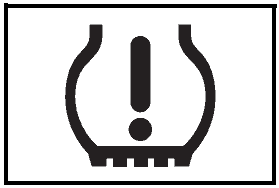
Tyre Pressure Warning Light
Slow down smoothly, stop safely and check all tyres.The tyre-shaped symbol with an exclamation mark generally warns of low pressure on equipped cars. Inspect for punctures or other damage and use a gauge; a tyre can be underinflated without looking flat. If the vehicle pulls or a tyre is visibly deflated, avoid driving further on it.Set cold pressures to the vehicle label for the tyre size and load. A lamp that flashes for about a minute and then stays on can identify a monitoring-system malfunction on applicable versions. Repair leaks and correct pressures before any initialization. A reset cannot repair a puncture or a faulty sensor.
Slip, Traction Control or Stability Indicator
Flashing commonly means intervention; a persistent light needs attention.The skidding-car symbol can flash while traction or stability systems are helping maintain grip. Ease off and adapt to the surface. Frequent flashing during acceleration tells us that available traction is limited.A steady warning can indicate a malfunction in stability, traction or related control systems. Check whether another warning or intentional setting explains it. Have a persistent fault investigated, and do not rely on electronic intervention to overcome worn tyres, excessive speed or standing water.
VSC OFF Indicator
Check whether stability control was intentionally switched off.An OFF indication differs from normal flashing intervention. It tells us that a stability-control function has been disabled on an equipped vehicle. The exact relationship between traction-control settings and VSC varies by generation.Restore the normal setting for ordinary road use unless the handbook calls for another setting in a specific situation. An unexpected OFF indicator together with fault warnings may require diagnosis rather than repeated attempts to toggle the switch.
Parking Brake Indicator
Normal when applied; investigate persistent flashing or fault messages.On newer Prius models with an electronic parking brake, this symbol shows its status. Older cars may use a foot-operated parking brake and a different reminder arrangement. Confirm the brake has released before moving.If it will not release, do not force the vehicle to drive against it. If it cannot apply, make sure the vehicle can be parked securely and seek help. Flashing or an accompanying malfunction message needs the handbook’s specific procedure, rather than assuming it is a normal applied indication.
Brake Hold Standby and Operating Indicators
Distinguish readiness from active holding.On equipped versions, one indication shows that brake hold is available and another shows it is holding the vehicle stationary. A warning buzzer or abnormal flashing may indicate a problem, so read the message.Brake hold is a driving convenience and does not replace the correct parking procedure before leaving the car. Keep control of the brake pedal if the function becomes unavailable. Do not assume the vehicle will remain held indefinitely because an indicator was on a moment earlier.
Safety Reminders and Driver Assistance Lights
SRS Airbag and Pretensioner Warning
Arrange an immediate restraint-system inspection.This light concerns the supplemental restraint system, including airbags and seat belt pretensioners. If it stays on or fails its expected startup check, the protection available in a collision may be affected.Avoid probing connectors or moving under-seat wiring in an attempt to extinguish the lamp. Tell the technician about recent seat work, collision repairs or electrical problems. A separate passenger-airbag status indicator is not the same thing as an SRS malfunction warning.
Seat Belt Reminder Lights
Check every occupied seat before moving.The driver, front passenger and rear-seat displays can use different graphics. Ensure each occupied-seat belt is correctly routed and fully latched. Depending on the system, a rear-seat display may identify an unfastened belt rather than a component fault.Secure heavy items instead of leaving them on a passenger seat where they may affect reminders. If a warning continues with correctly fastened belts, have the buckle or occupancy system inspected. Do not use buckle substitutes to silence a safety reminder.
PCS or Pre-Collision System Warning
Separate an immediate collision alert from system unavailability.PCS warnings can reflect disabled operation, temporary unavailability or a malfunction, depending on the version and message. An active collision alert requires attention to the road and appropriate braking or steering, rather than menu adjustments.If the system reports an obstruction, inspect accessible camera or radar areas when safely parked. Weather and sensor visibility can affect performance. Persistent faults need checking. Never test the system by driving towards an obstacle, and keep a safe following distance even when no warning is present.
Lane Tracing Assist and Lane Departure Alert
Read the colour, lane graphics and steering instructions.LTA and LDA provide related but different assistance. Their indicators can identify standby, active assistance, a lane-departure alert or a malfunction. An amber graphic does not have the same meaning as a normal green operating indication.Keep your hands on the wheel and remain responsible for steering. Respond promptly to takeover requests. Poor markings, sharp bends, weather or camera obstruction can limit operation. If a fault remains under suitable conditions, arrange inspection instead of relying on the system to recover unexpectedly.
Proactive Driving Assist Indicator
Check the status or warning on equipped newer models.PDA is fitted to some newer Prius versions. Its indicator can show operating status, while an amber warning with a buzzer can identify a problem requiring attention. It is not a universal symbol on older cars.Read the display and continue controlling speed and steering yourself. Assistance has operating limits and does not guarantee detection of every situation. A persistent malfunction needs inspection, particularly if other assistance systems are also unavailable.
Cruise Control and Dynamic Radar Cruise Warnings
Take over speed control when a fault is reported.The pictured amber symbols relate to warning states on applicable newer models. Other colours can show standby or active cruise operation. Conventional cruise control and radar cruise do not provide identical functions.If a warning appears, control speed and braking yourself and follow the message. A blocked sensor can temporarily affect radar-based operation, but a persistent malfunction needs diagnosis. Even when radar cruise is working, remain prepared to brake for hazards the system may not handle.
Parking Sensor OFF Indicator
Check whether parking assistance is disabled or unavailable.This indicator concerns the parking-distance sensing system on equipped versions. It can illuminate because the function has been switched off; flashing or a message can identify another condition. Snow, dirt or other obstruction can affect detection.Inspect the sensors when parked and clean them gently as directed. During manoeuvres, use direct observation and mirrors, because the system may miss obstacles. Parking sensors are different from automatic parking-brake intervention and should not be treated as a promise that the car will stop itself.
Driving Assistance Information Indicator
Read which assistance feature needs attention.Some newer Prius displays use a shared information indicator for assistance functions. It can accompany messages involving particular safety or parking features. The symbol alone cannot tell us which sensor or component is responsible.Read the full message before changing settings. If a feature is disabled, verify whether that was intentional. If it is temporarily unavailable, continue without relying on it. Recurring faults after clearing an obvious obstruction need professional checking.
Inappropriate Pedal Operation Warning
Check your pedal input and respond to the display.This warning can relate to an operating condition such as inappropriate accelerator or brake input, depending on the equipped system. Read the message, release an unintended accelerator input and keep control of the vehicle.It is not a reason to press both pedals to see what happens. If a warning appears despite normal operation, or the car reports a related system fault, arrange inspection. Always keep the footwell clear and use correctly secured floor mats.
Normal Toyota Prius Indicators
Low Fuel Warning
Refuel soon; the hybrid battery is not a substitute for fuel.The fuel-pump symbol means the fuel reserve is low. Remaining-range estimates vary with driving conditions and should not be treated as a guarantee. Do not deliberately run a conventional Prius dry expecting to finish the journey on its traction battery. If it has run out, use the handbook’s restart procedure.
EV Indicator and EV Drive Mode
Normal electric-operation information, not a battery-fault warning.The EV indicator can show that the vehicle is operating with the petrol engine stopped. An EV drive-mode indicator relates to a selected mode where available. These are different from a warning that the hybrid system has failed.Battery charge, temperature, speed and power demand affect electric operation. The engine starting during a journey can be normal. A conventional Prius EV mode does not offer the same capability as a Prius Prime or Plug-in model’s larger externally rechargeable battery.
ECO and Sport Mode Indicators
Normal confirmation of the selected driving mode.Mode indicators show that a particular response setting has been selected on equipped models. Older Prius versions may use POWER instead of Sport or provide different choices. A mode label is not a warning about engine damage.Choose the mode appropriate to the journey. ECO does not eliminate the need for careful acceleration, and Sport does not increase tyre grip. Neither setting should be used as a workaround for a malfunction or reduced-power warning.
Turn Signals and Exterior Light Indicator
Normal lighting status.The arrows flash with indicators or hazard lights. The exterior-light symbol confirms the relevant lighting selection. If the indicator flashing rate changes unexpectedly, check the outside lamps when parked.Dashboard illumination alone does not prove the exterior lights are correctly selected. Check lighting conditions and confirm the necessary headlamps and rear lamps are on, especially in rain, tunnels or at dusk.
High Beam and Automatic High Beam
Different indicators for actual full beam and automatic assistance.The blue headlamp symbol means high beam is on. The A-marked headlamp relates to automatic high-beam assistance. It does not necessarily mean full beam is illuminated at that moment.Monitor other traffic and dip manually whenever needed. Camera visibility and lighting conditions can affect automatic operation. A dirty windscreen or difficult road scene can reduce the system’s ability to judge when high beam is appropriate.
Rear Fog Light Indicator
Normal when selected on equipped models.The rear fog lamp makes the vehicle more visible in seriously reduced visibility. Switch it off when conditions improve to avoid dazzling following traffic. Availability and operating rules vary by market, so not every Prius has this lamp or dashboard indication.
Security Indicator
Flashing while parked can be normal.A security light can indicate that the immobilizer or security system is armed. Its normal flashing pattern with the vehicle switched off is different from a starting fault.If READY will not appear, check the key-related message and the prescribed starting procedure. Avoid assuming that a flashing parked security light means the hybrid battery or engine has failed.
Low Outside Temperature Indicator
Watch for possible ice.The snowflake warns about low outside temperature. It is unrelated to coolant overheating. Ice can form even when the displayed temperature is above freezing, especially on bridges and shaded roads. Increase following distance and avoid abrupt braking or steering when conditions may be slippery.
Prius Prime and Plug-In Charging Messages
Plug-in versions add charging status, cable and scheduling information. A charging indicator, remaining EV range or scheduled-charge display is not by itself a malfunction. A conventional Prius does not use an external charging cable, so these instructions do not apply to every car carrying the Prius name.
If a plug-in does not charge, read the displayed reason first. Confirm the selected schedule and check the connector and supply only as the handbook allows. Never use damaged charging equipment or assume repeatedly reconnecting it will fix an electrical fault. A high-voltage warning needs qualified assistance.
What to Do When Several Prius Lights Come On Together
Multiple lights can share a cause, including electrical-supply or communication problems. However, that does not justify assuming that every warning is harmless or that a replacement 12-volt battery will solve everything.
Move to a safe place and follow the highest-priority warning.
Record the complete messages and whether READY is on.
Note any change in braking, steering, temperature or power.
Avoid repeated restarts if a serious fault or stop instruction is present.
Have the relevant systems scanned before codes are erased.
A basic reader may not retrieve all hybrid, braking or restraint-system faults. Proper diagnosis should consider stored codes and operating conditions together. Maintenance reminders can be reset after the work is completed; active safety and powertrain faults require investigation.
Conclusion
Understanding Toyota Prius dashboard lights starts with separating normal hybrid operation from a warning that needs action. READY, EV and driving-mode indicators usually describe what the car is doing. Brake, oil-pressure, charging and overheating warnings require a more urgent response.
Use the pictures to identify the system, read the exact message and follow the handbook for your Prius generation. That approach helps us avoid unnecessary resets while giving serious faults the attention they need.
Frequently Asked Questions
1. What does the red triangle mean on a Toyota Prius?
It is a master warning on applicable generations and directs attention to the display. It does not diagnose a failed hybrid battery by itself. Read the complete message and respond immediately if it tells you to stop.
2. Why is READY on when the engine is silent?
READY means the hybrid system is operational and the car can move. The petrol engine may stop and restart automatically. Select P, apply the parking brake and switch the vehicle off properly before leaving it.
3. Can I drive with a Check Hybrid System warning?
Follow the exact message. A stop instruction, significant power loss or other serious warning calls for a safe stop and assistance. The message alone does not identify the failed part, so arrange hybrid-capable diagnosis rather than repeatedly resetting it.
4. Does the battery-shaped light mean the hybrid battery is bad?
Not necessarily. It commonly concerns the charging or low-voltage electrical supply system. It is different from the traction battery’s charge display. Have the warning diagnosed before deciding which component needs repair.
5. How do I reset the Prius tyre pressure light?
First inspect the tyres, repair damage and set the correct cold pressures. Then follow the initialization procedure for your year and system, if needed. A flashing-then-steady warning may indicate a monitoring fault that resetting will not repair.
If you want to know other articles similar to Toyota Prius Dashboard Lights you can visit the category Service and Parts.
Auto Guide
I show you the best reviews of all car brands, the information we collect and show is verified by our mechanics, we hope that everything you read here is useful to buy the car of your dreams















More content of your interest