

Mazda CX-30 Engine Size: Complete Guide to Every Engine Option

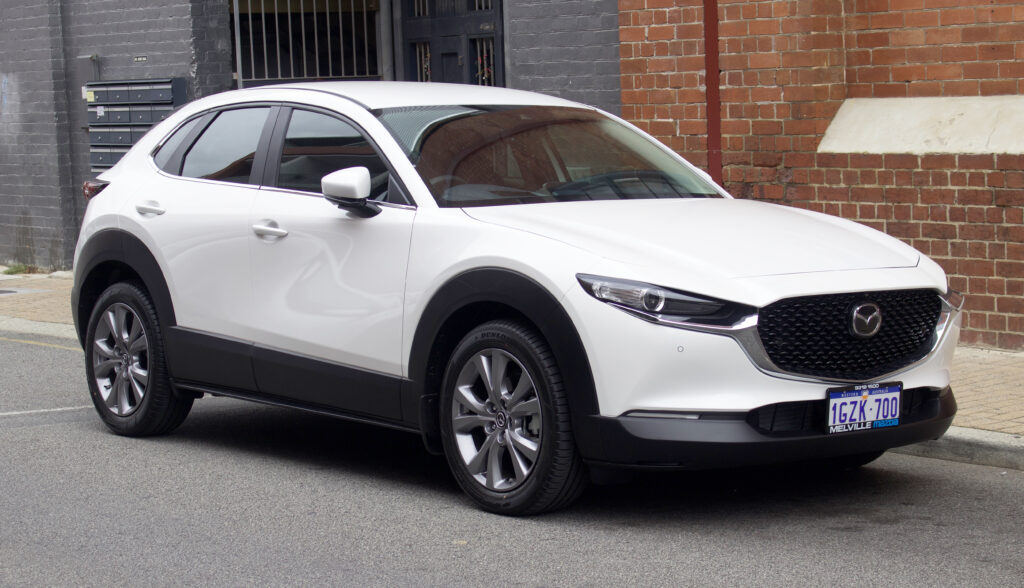
We often look at a crossover and think about space, tech, or design first. Yet the real personality of any car lives under the bonnet. The Mazda CX-30 is a perfect example — elegant outside, but mechanically fascinating once you dig deeper.
So today we’re not just listing engine sizes. We’re understanding how each engine feels, who it suits, and why Mazda chose such unusual engineering paths compared with rivals.
Because here’s the truth: the CX-30 isn’t built around horsepower numbers… it’s built around driving sensation.
Content in this publication
- Why Engine Size Matters More Than You Think
- Mazda’s Philosophy: Bigger Engines, Less Stress
- Global Mazda CX-30 Engine Sizes Overview
- The 2.0L Skyactiv-G Engine (The Balanced Choice)
- The e-Skyactiv-G Mild Hybrid Version
- The 2.0L Skyactiv-X Engine (Mazda’s Masterpiece)
- The e-Skyactiv-X Mild Hybrid Version
- The 2.5L Skyactiv-G Engine (North America Favorite)
- Turbo Engine? Surprisingly No (In Most Markets)
- Real-World Fuel Consumption Comparison
- Acceleration and Performance Feel
- Reliability: Why Bigger Can Be Safer
- Maintenance Differences Between Engines
- Which Engine Feels Most Premium?
- Choosing the Right CX-30 Engine Size
- Why Mazda Didn’t Downsize Like Everyone Else
- Long-Term Ownership Expectations
- The Driving Experience Explained Simply
- Final Thoughts: The Real Meaning of CX-30 Engine Size
- Conclusion
- FAQs
Why Engine Size Matters More Than You Think
Modern cars blur the lines between engines. Turbocharged 1.0s can match old 2.0s. Hybrids can outperform bigger petrol engines. So why still care about displacement?
Because engine size affects:
- Power delivery character
- Long-term reliability
- Maintenance costs
- Real-world fuel economy
- Driving smoothness
- Towing capability
Two cars can have identical horsepower — yet feel completely different to live with every day.
The CX-30 proves this better than almost any competitor.
Mazda’s Philosophy: Bigger Engines, Less Stress
Most manufacturers downsized engines:
Small turbo engines + high pressure + high temperature = efficiency
Mazda went the opposite direction:
Larger naturally aspirated engines + low stress = longevity
It’s a bit like jogging vs sprinting.
Both get you to the finish line… but one keeps your heart happier long-term.
Global Mazda CX-30 Engine Sizes Overview
Available Displacements Worldwide
| Engine | Size | Fuel | Key Feature |
|---|---|---|---|
| Skyactiv-G | 2.0L | Petrol | Smooth and efficient |
| Skyactiv-X | 2.0L | Petrol (SPCCI) | Diesel-like combustion |
| Skyactiv-G | 2.5L | Petrol | Strong torque |
| e-Skyactiv-G | 2.0L | Mild Hybrid | Lower consumption |
| e-Skyactiv-X | 2.0L | Mild Hybrid | Ultra efficient performance |
Now let’s explore each one in detail.
The 2.0L Skyactiv-G Engine (The Balanced Choice)
Core Specifications
- Displacement: 1998 cc
- Cylinders: 4 inline
- Aspiration: Naturally aspirated
- Power: ~122–165 hp (market dependent)
- Torque: ~213 Nm
This is the “default” CX-30 engine in many countries.
And honestly? It’s surprisingly satisfying.
How It Feels to Drive
Instead of turbo punch, you get:
- Linear acceleration
- Predictable throttle
- No lag
- Quiet cruising
It’s like a manual coffee grinder vs a pod machine — slower maybe, but smoother and oddly satisfying.
Best For
- City + highway mix
- Reliability seekers
- Manual gearbox lovers
- Long ownership periods
The e-Skyactiv-G Mild Hybrid Version
Mazda added a 24V mild hybrid system to the same 2.0 engine.
What Actually Changes
Not power — behavior.
The motor assists:
- Starting from stop
- Gear changes
- Low-RPM acceleration
Real-World Benefit
You won’t feel electric driving — but you’ll notice:
- Smoother launches
- Lower fuel consumption
- Less engine vibration
Think of it as a subtle push, not an electric takeover.
The 2.0L Skyactiv-X Engine (Mazda’s Masterpiece)
This engine deserves its own spotlight.
What Makes It Special
It uses SPCCI — Spark Controlled Compression Ignition.
In simple words:
It burns petrol like a diesel… but without diesel drawbacks.
Technical Breakdown
- Size: 1998 cc
- Power: ~180–186 hp
- Torque: ~240 Nm
- Compression ratio: extremely high
- Combustion: hybrid petrol-diesel
Driving Character
This engine is unique:
You may be interested in reading Mazda CX-30 Dashboard Warning Lights Explained (2020-2024 Complete Guide)
| RPM Range | Behavior |
|---|---|
| Low RPM | Diesel-like torque |
| Mid RPM | Smooth petrol response |
| High RPM | Free-revving engine feel |
It feels like three engines in one.
Why It Exists
Mazda wanted:
- Diesel efficiency
- Petrol refinement
- No turbo complexity
And surprisingly… they actually pulled it off.
The e-Skyactiv-X Mild Hybrid Version
Adding mild hybrid tech turns this engine into the most efficient CX-30 variant globally.
What You Notice Daily
- Seamless stop-start
- Strong uphill torque
- Quiet motorway cruising
- Excellent real MPG
This is the “long distance commuter” setup.
The 2.5L Skyactiv-G Engine (North America Favorite)
In some markets, Mazda skipped complexity and simply enlarged the engine.
Specifications
- Displacement: 2488 cc
- Power: ~186 hp
- Torque: ~252 Nm
- Naturally aspirated
No turbo. No tricks. Just more capacity.
Driving Feel
If the 2.0 is balanced and the X is clever…
The 2.5 is effortless.
You press the pedal and the car moves without thinking about gears.
Perfect for relaxed driving.
Best For
- Automatic gearbox users
- Heavy traffic commuting
- Loaded family trips
- Mountain driving
Turbo Engine? Surprisingly No (In Most Markets)
Many rivals offer 1.3T, 1.4T, or 1.5T engines.
Mazda avoids them because:
- Turbos create heat
- Heat accelerates wear
- Small engines work harder
Mazda prefers durability over marketing numbers.
Real-World Fuel Consumption Comparison
| Engine | City MPG | Highway MPG | Character |
|---|---|---|---|
| 2.0 Skyactiv-G | Good | Very Good | Smooth |
| e-Skyactiv-G | Better | Excellent | Efficient |
| Skyactiv-X | Excellent | Outstanding | Balanced |
| 2.5 Skyactiv-G | Average | Good | Powerful |
Interestingly, the Skyactiv-X often matches small turbo engines while being larger.
Acceleration and Performance Feel
0-100 km/h Approximation
- 2.0 Skyactiv-G: ~10 sec
- e-Skyactiv-G: ~9.8 sec
- Skyactiv-X: ~8.5 sec
- 2.5 Skyactiv-G: ~8.0 sec
Numbers don’t tell the whole story though.
Mazda engines prioritize consistency, not drama.
Reliability: Why Bigger Can Be Safer
Smaller turbo engines operate under:
- High pressure
- High temperature
- High boost
Mazda engines operate under:
- Lower stress
- Lower boost (none)
- Lower wear rate
Result:
Long-term ownership confidence.
Maintenance Differences Between Engines
Oil Requirements
All engines typically use:
- 0W-20 synthetic oil
Service Complexity Ranking
- 2.5 Skyactiv-G – simplest
- 2.0 Skyactiv-G – simple
- e-Skyactiv-G – moderate
- Skyactiv-X – advanced but reliable
The X engine sounds complex but rarely troublesome because it avoids turbo strain.
Interestingly, not the biggest one.
The smoothest:
Skyactiv-X
The most relaxed:
2.5 Skyactiv-G
The most economical:
You may be interested in readingMazda CX-30 Dashboard Warning Lights Explained (2020-2024 Complete Guide)You may be interested in reading
 Mazda CX-30 Key Fob Battery Replacement — The Complete Owner’s Guide
e-Skyactiv-G
The simplest:
2.0 Skyactiv-G
Choosing the Right CX-30 Engine Size
Choose 2.0 Skyactiv-G if:
- You keep cars 10+ years
- You prefer manuals
- You want predictable maintenance
Choose e-Skyactiv-G if:
- You drive daily in traffic
- You want lower fuel bills
Choose Skyactiv-X if:
- You commute long distances
- You enjoy refined engineering
- You want best balance
Choose 2.5 Skyactiv-G if:
- You carry passengers often
- You prefer effortless acceleration
Why Mazda Didn’t Downsize Like Everyone Else
Mazda believes:
Real efficiency = low friction + stable combustion
Not extreme pressure.
So instead of tiny engines working hard… they built medium engines working comfortably.
It’s engineering philosophy rather than marketing trend.
Long-Term Ownership Expectations
Over years, owners typically notice:
- Consistent fuel economy
- Minimal carbon buildup
- Smooth ageing engines
- Fewer turbo-related failures
The car doesn’t feel fast on day one — but feels identical on year eight.
The Driving Experience Explained Simply
If turbo cars feel like a sudden push…
Mazda feels like a rising wave.
You don’t get kicked forward — you glide forward.
And after living with it, many drivers prefer that.
Final Thoughts: The Real Meaning of CX-30 Engine Size
Mazda didn’t design engines to win spec sheets.
They designed engines to feel natural.
Every option follows the same philosophy:
Comfort through mechanical harmony.
So the question isn’t “which engine is biggest?”
It’s:
Which personality matches your life?
Conclusion
The Mazda CX-30 offers one of the most unusual engine lineups in the crossover market. Instead of chasing smaller turbocharged units, it embraces medium-displacement engines with advanced combustion technology. The result is a range of engines that prioritize smoothness, durability, and real-world efficiency over headline power figures.
Whether choosing the balanced 2.0 Skyactiv-G, the clever Skyactiv-X, or the relaxed 2.5-litre version, every CX-30 engine shares the same core identity: effortless daily driving.
And sometimes… effortless is exactly what we want from a car.
FAQs
1. What is the most common Mazda CX-30 engine size?
The 2.0-litre Skyactiv-G is the most widely available engine globally.
2. Is the Skyactiv-X engine reliable?
Yes. Despite its advanced technology, it avoids turbo stress and is designed for longevity.
3. Which engine is most fuel efficient?
The e-Skyactiv-X mild hybrid version generally delivers the best real-world fuel economy.
4. Does the CX-30 have a turbo engine?
In most markets, no. Mazda prefers naturally aspirated engines for reliability and smoothness.
You may be interested in readingMazda CX-30 Dashboard Warning Lights Explained (2020-2024 Complete Guide)You may be interested in reading
Mazda CX-30 Key Fob Battery Replacement — The Complete Owner’s GuideYou may be interested in reading
 Mazda CX-30 Tyre Size — The Complete Real-World Guide
5. Which engine is best for long motorway trips?
The Skyactiv-X offers the best combination of efficiency, torque, and quiet cruising.
If you want to know other articles similar to Mazda CX-30 Engine Size: Complete Guide to Every Engine Option you can visit the category Service and Parts.
How to Reset Volvo XC60 Infotainment System: The Complete Practical Guide
Volvo XC60 Gearbox Oil Change: The Complete Expert Guide
Volvo XC60 Engine Management Light: Causes, Fixes, and What It Really Means

Skoda Kamiq Size Comparison: Dimensions, Space & Real-World Practicality
Volvo XC60 Headlight Adjustment for Europe: The Complete Practical Guide
Volvo XC60 City Safety Service Required: What It Means, Causes, and Fixes
Leave a Reply
More content of your interest