

Nissan Micra Engine Oil Guide – Complete Specifications, Maintenance & Model Insights

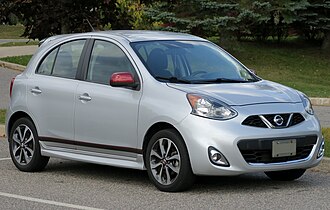
The Nissan Micra has earned its place as one of the most recognizable superminis in Europe. Over more than thirty years, it has transformed from a purely practical city hatchback into a stylish, technology-packed vehicle suitable for urban commuting and longer journeys alike.
We have prepared this in-depth guide to help owners and prospective buyers understand everything about the Micra—especially the crucial topic of engine oil selection and maintenance, which directly influences reliability, fuel economy, and longevity.
Content in this publication
- Evolution of the Nissan Micra – From Humble Hatch to Modern Supermini
- Why Engine Oil Matters More Than Most Owners Realize
- Understanding Oil Viscosity – What Do 5W-30 and 5W-40 Mean?
- Choosing the Correct Oil for Your Nissan Micra
- How Often Should We Change Micra Engine Oil?
- Checking Oil Level – A Simple Habit That Saves Engines
- Synthetic vs Semi-Synthetic – Which Is Better?
- Common Micra Engine Issues Linked to Poor Oil
- Step-by-Step Oil Change Guide
- Infotainment & Modern Features of the New Micra
- City Car or Family Hatch?
- Fuel Economy and Oil Choice Connection
- Warning Signs Your Micra Needs an Oil Change
- Selecting the Best Oil Brand
- Final Thoughts – Protecting Your Nissan Micra
- Frequently Asked Questions
Evolution of the Nissan Micra – From Humble Hatch to Modern Supermini
The Micra story is one of reinvention. Early generations focused on simplicity and low running costs. Later models introduced playful “bubble” styling, while the newest generation—launched in 2017—completely redefined the car’s character.
Key Changes in the Fifth Generation
- Striking V-motion front grille
- Lower, sportier roofline
- Sculpted side profile and bold rear lights
- Length increased to 3.99 meters
- Boot capacity expanded to 300 liters
- Modern infotainment with Apple CarPlay and Android Auto
- Advanced driver assistance systems
We see the latest Micra positioned closer to the VW Polo, Ford Fiesta, and Vauxhall Corsa rather than tiny city cars like the VW up! or Toyota Aygo.
Why Engine Oil Matters More Than Most Owners Realize
Engine oil is not just a lubricant—it is the lifeblood of the Nissan Micra. Without it, the engine would seize within minutes. We always emphasize three core functions:
- Lubrication – reduces friction between moving parts
- Cooling – carries heat away from critical components
- Cleaning – traps combustion contaminants and prevents sludge
Over time, oil collects microscopic particles from combustion. That is why it gradually turns black and loses efficiency. Regular oil changes are essential to prevent:
- Increased engine wear
- Loss of performance
- Poor fuel economy
- Turbocharger damage
- Expensive internal repairs
Understanding Oil Viscosity – What Do 5W-30 and 5W-40 Mean?
Every oil bottle shows a code such as 0W-20, 5W-30, or 10W-40. We can decode it simply:
- The number before W = performance in cold temperatures
- The number after W = thickness at operating temperature
- Lower numbers = thinner, more fuel-efficient oil
- Higher numbers = thicker, better for older engines
For most modern Micra models, 5W-30 is the factory recommendation.
Choosing the Correct Oil for Your Nissan Micra
Using the wrong grade can lead to:
- Turbo lubrication issues
- Timing chain wear
- Increased fuel consumption
- Voided warranty
We always advise matching the oil exactly to your engine type and model year.
You may be interested in reading Nissan Micra Boot Space – Real-World Room Explained
Recommended Oil Grades by Generation
2017–2022 Petrol & Diesel Models
- 0.9 Petrol → 5W-30
- 1.0 Petrol → 5W-30
- 1.0 DiG-T → 5W-30
- 1.0 iG-T → 5W-30
- 1.5 dCi Diesel → 5W-30
2010–2017 Earlier Engines
- 1.2 Petrol & DIG-S →
- 5W-30 (preferred)
- Alternatives: 5W-40, 10W-40, 15W-40 depending on climate
How Often Should We Change Micra Engine Oil?
We recommend:
- Every 10,000 miles / 12 months for normal use
- Every 6,000 miles for:
- Short city trips
- Cold climates
- Heavy traffic
- Turbocharged engines
Skipping services is the number one cause of Micra engine problems.
Checking Oil Level – A Simple Habit That Saves Engines
- Park on level ground
- Wait 5 minutes after driving
- Pull dipstick, wipe, reinsert
- Ensure oil sits between MIN and MAX
If the level drops frequently, we suggest checking for:
- Leaks around sump and filter
- Turbo oil consumption
- PCV valve issues
Synthetic vs Semi-Synthetic – Which Is Better?
We strongly recommend fully synthetic 5W-30 because it offers:
- Better cold starts
- Improved turbo protection
- Longer service intervals
- Lower internal friction
Semi-synthetic oils should only be used on older non-turbo models.
Common Micra Engine Issues Linked to Poor Oil
- Timing chain rattle on 1.2 engines
- Turbo failure on DiG-T units
- Sludge build-up from missed services
- Excess oil consumption
Good oil maintenance prevents most of these nightmares.
Step-by-Step Oil Change Guide
Tools Required
- 5W-30 oil (3.5–4.0 L)
- New oil filter
- 14mm sump key
- Drain pan
Process
- Warm engine slightly
- Remove sump plug
- Replace filter
- Refill to correct level
- Reset service indicator
Infotainment & Modern Features of the New Micra
While we focus on oil, the modern Micra also impresses with:
- 7-inch touchscreen
- Bose Personal audio
- Lane departure warning
- Emergency braking
- Rear camera
A well-maintained engine complements this technology with smooth performance.
City Car or Family Hatch?
With 300-liter boot and improved cabin space, we find the Micra:
You may be interested in readingNissan Micra Boot Space – Real-World Room ExplainedYou may be interested in reading
 Nissan Micra Dashboard Symbols and Warning Lights – Complete Expert Guide (2001–2024)
- Perfect for daily commuting
- Capable on motorway trips
- Suitable as a second family car
- Surprisingly refined for its class
Fuel Economy and Oil Choice Connection
Using the correct 5W-30 oil can improve fuel economy by up to 3–4% thanks to lower friction. Thick incorrect oil does the opposite.
Warning Signs Your Micra Needs an Oil Change
- Louder engine noise
- Sluggish acceleration
- Dark thick oil
- Oil warning light
- Reduced MPG
Never ignore these signals.
Selecting the Best Oil Brand
We recommend oils meeting:
- ACEA C3 or A5/B5
- Nissan approval
- API SN or higher
Trusted brands: Castrol, Mobil, Shell, Total.
Final Thoughts – Protecting Your Nissan Micra
We believe the Micra is a dependable, characterful hatchback—but only when cared for properly. Correct engine oil is the single most important maintenance item. Treat it well, and it will serve faithfully for years.
Frequently Asked Questions
1. Can I use 5W-40 instead of 5W-30 in a Nissan Micra?
We advise sticking to 5W-30 for modern models. 5W-40 may be acceptable for older 1.2 engines in hot climates but can reduce fuel efficiency.
2. How much oil does a Micra engine take?
Most petrol engines require 3.5–3.8 liters, while the 1.5 dCi diesel needs around 4.0 liters.
3. What happens if I use the wrong oil?
You may experience poor lubrication, turbo damage, higher consumption, and potential warranty issues.
4. Does the Micra have an oil change warning light?
Yes—newer models feature a service indicator that should be reset after each oil change.
You may be interested in readingNissan Micra Boot Space – Real-World Room ExplainedYou may be interested in reading
Nissan Micra Dashboard Symbols and Warning Lights – Complete Expert Guide (2001–2024)You may be interested in reading
 Nissan Micra Tyre Size – The Complete Guide We Wish Every Owner Read
5. Is the Nissan Micra good for long journeys?
We find the latest generation comfortable on motorways, especially with turbo petrol or diesel engines and fresh quality oil.
If you want to know other articles similar to Nissan Micra Engine Oil Guide – Complete Specifications, Maintenance & Model Insights you can visit the category Service and Parts.
How to Reset Volvo XC60 Infotainment System: The Complete Practical Guide
Volvo XC60 Gearbox Oil Change: The Complete Expert Guide
Volvo XC60 Engine Management Light: Causes, Fixes, and What It Really Means

Skoda Kamiq Size Comparison: Dimensions, Space & Real-World Practicality
Volvo XC60 Headlight Adjustment for Europe: The Complete Practical Guide
Volvo XC60 City Safety Service Required: What It Means, Causes, and Fixes
Leave a Reply
More content of your interest