

SEAT Leon Tyre Pressure: The Complete Expert Guide for Optimal Performance


Content in this publication
- Why Tyre Pressure Matters More Than You Think
- Understanding SEAT Leon Tyre Pressure Basics
- PSI vs Bar: What Do These Numbers Mean?
- Why Correct Tyre Pressure Is Critical
- How to Check SEAT Leon Tyre Pressure Properly
- When Should You Check Tyre Pressure?
- SEAT Leon Tyre Pressure Warning Light Explained
- Tyre Pressure for Different Driving Conditions
- Common Mistakes to Avoid
- How Tyre Size Affects Pressure
- Eco Driving and Tyre Pressure
- Performance vs Comfort: Finding the Balance
- Seasonal Tyre Pressure Tips
- How Temperature Affects Tyre Pressure
- Signs Your Tyre Pressure Is Wrong
- Should You Use Nitrogen Instead of Air?
- Closing Thoughts: Keep It Simple, Stay Safe
- FAQs About SEAT Leon Tyre Pressure
Why Tyre Pressure Matters More Than You Think
Let’s be honest—how often do we actually check our tyre pressure? If you’re like most drivers of the SEAT Leon, it’s probably only when that little warning light suddenly decides to ruin your day.
But here’s the truth: tyre pressure isn’t just a minor maintenance detail—it’s the invisible force that shapes your car’s safety, performance, fuel economy, and even tyre lifespan.
Think of it like this: your tyres are the only part of your car touching the road. If they’re not properly inflated, it’s like trying to run a marathon in worn-out shoes. You’ll get there… but not efficiently—and definitely not safely.
Understanding SEAT Leon Tyre Pressure Basics
What Is the Correct Tyre Pressure for a SEAT Leon?
The recommended tyre pressure for a SEAT Leon typically falls within:
- Front tyres: 32–36 PSI (2.2–2.5 bar)
- Rear tyres: 30–34 PSI (2.1–2.3 bar)
However—and this is crucial—these numbers can vary depending on:
- Engine size (1.0 TSI vs 2.0 TDI)
- Load (passengers + luggage)
- Wheel size (16", 17", 18")
- Driving conditions
👉 The most accurate place to check?
Inside the driver’s door frame or in the owner’s manual.
PSI vs Bar: What Do These Numbers Mean?
Breaking Down the Units
Tyre pressure is usually measured in:
- PSI (Pounds per Square Inch) – common in the UK and US
- Bar – widely used in Europe
Quick conversion:
- 1 bar = 14.5 PSI
So if your tyre needs 2.3 bar, that’s roughly 33 PSI.
Why Correct Tyre Pressure Is Critical
1. Safety Comes First
Underinflated tyres can:
- Increase braking distance
- Cause poor handling
- Lead to tyre blowouts
Overinflated tyres, on the other hand:
- Reduce grip
- Make the ride harsher
- Increase risk of uneven wear
2. Fuel Efficiency Gains
Driving with low tyre pressure increases rolling resistance—meaning your engine has to work harder.
👉 Result? More fuel consumption.
Keeping your tyres properly inflated can improve fuel economy by up to 3–5%.
3. Tyre Longevity
Incorrect pressure = uneven wear.
- Low pressure → worn edges
- High pressure → worn centre
This means you’ll be replacing tyres sooner than necessary.
How to Check SEAT Leon Tyre Pressure Properly
Step-by-Step Guide
Let’s keep it simple:
You may be interested in reading SEAT Leon Boot Space: The Ultimate Practicality Guide We Didn’t Know We Needed
- Check when tyres are cold
- Remove the valve cap
- Attach a pressure gauge
- Read the PSI/bar value
- Adjust if needed
- Replace the cap
Best Tools to Use
- Digital tyre pressure gauge (most accurate)
- Petrol station air pump
- Portable compressor
When Should You Check Tyre Pressure?
Recommended Frequency
- At least once a month
- Before long journeys
- During seasonal changes
Temperature drops can reduce pressure—so don’t skip winter checks.
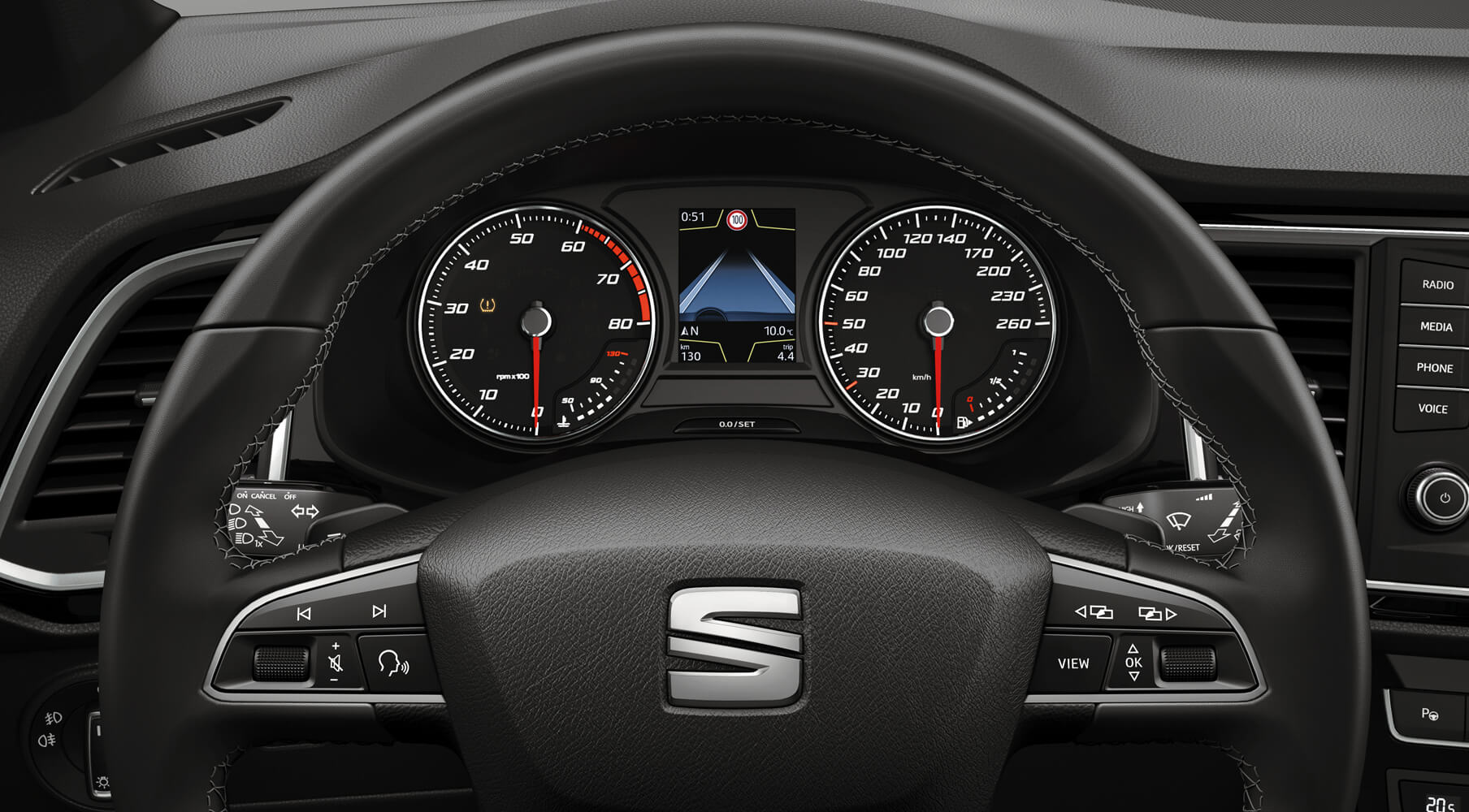
SEAT Leon Tyre Pressure Warning Light Explained

4
That glowing symbol on your dashboard? That’s your car’s TPMS (Tyre Pressure Monitoring System).
What It Means
- One or more tyres are underinflated
- There may be a puncture
- System needs recalibration
How to Reset the TPMS
In most SEAT Leon models:
- Adjust tyres to correct pressure
- Go to vehicle settings
- Select “Tyre Pressure Monitoring”
- Press “Set” or “Reset”
Tyre Pressure for Different Driving Conditions
Normal Driving
Stick to manufacturer recommendations.
Fully Loaded Car
Increase pressure slightly (usually +2–4 PSI).
High-Speed Driving
Higher pressure improves stability—but don’t exceed limits.
Winter vs Summer Adjustments
Cold air reduces pressure.
👉 Rule of thumb:
For every 10°C drop, pressure decreases by ~1–2 PSI.
Common Mistakes to Avoid
1. Checking Pressure When Tyres Are Hot
This gives inaccurate readings.
2. Ignoring Slow Leaks
Even small leaks can cause long-term issues.
3. Overinflating “Just in Case”
More air ≠ better performance.
4. Forgetting the Spare Tyre
Yes—it needs air too!
How Tyre Size Affects Pressure
Different tyre sizes on the SEAT Leon require slightly different pressures.
Examples
- 205/55 R16 → ~32 PSI
- 225/40 R18 → ~36 PSI
Always follow the exact specification for your tyre size.
Eco Driving and Tyre Pressure
Want to save money on fuel?
Keeping your tyre pressure optimized is one of the easiest “set-and-forget” strategies.
You may be interested in readingSEAT Leon Boot Space: The Ultimate Practicality Guide We Didn’t Know We NeededYou may be interested in reading
SEAT Leon Insurance Group: Costs, Ratings, and How to Save BigCombine it with:
- Smooth acceleration
- Proper gear shifts
- Reduced idling
Performance vs Comfort: Finding the Balance
Higher pressure:
- Better fuel economy
- Sharper handling
Lower pressure:
- More comfort
- Better grip on rough roads
The sweet spot? Manufacturer recommendation.
Seasonal Tyre Pressure Tips
Winter Driving
- Check more frequently
- Expect pressure drops
Summer Driving
- Heat increases pressure
- Avoid overinflation
How Temperature Affects Tyre Pressure
Air expands when warm and contracts when cold.
That’s why your tyres might look fine in the afternoon but low in the morning.
Signs Your Tyre Pressure Is Wrong
Watch out for:
- Uneven tyre wear
- Poor fuel economy
- Steering feels off
- Car pulls to one side
Should You Use Nitrogen Instead of Air?
Nitrogen-filled tyres:
- Maintain pressure longer
- Less affected by temperature
But for most drivers, regular air works perfectly fine.
Closing Thoughts: Keep It Simple, Stay Safe
Maintaining the right tyre pressure in your SEAT Leon isn’t complicated—but it’s one of the most powerful habits you can build as a driver.
A quick monthly check can save you:
- Money
- Fuel
- Tyres
- And potentially your safety
Think of it as a 5-minute investment with long-term returns.
FAQs About SEAT Leon Tyre Pressure
1. What is the ideal tyre pressure for a SEAT Leon?
Typically between 30–36 PSI, depending on model and load.
2. Can I drive with low tyre pressure?
It’s not recommended. It affects safety, fuel economy, and tyre wear.
3. Why does my tyre pressure warning light stay on?
It may need resetting after adjusting pressure or indicate a slow leak.
4. Does tyre pressure change overnight?
Yes—especially with temperature changes.
5. How do I know if my tyres are overinflated?
Look for a harsh ride and excessive wear in the centre of the tyre.
You may be interested in readingSEAT Leon Boot Space: The Ultimate Practicality Guide We Didn’t Know We NeededYou may be interested in reading
SEAT Leon Insurance Group: Costs, Ratings, and How to Save BigYou may be interested in reading
SEAT Leon Key Battery Replacement: The Complete Expert GuideIf you want to know other articles similar to SEAT Leon Tyre Pressure: The Complete Expert Guide for Optimal Performance you can visit the category Service and Parts.
SEAT Leon Warning Lights: Complete Guide to Dashboard Symbols and Meanings
SEAT Leon Key Battery Replacement: The Complete Expert Guide
SEAT Leon Insurance Group: Costs, Ratings, and How to Save Big
SEAT Leon Boot Space: The Ultimate Practicality Guide We Didn’t Know We Needed

Ford Mondeo Key Fob Not Working: Complete Troubleshooting & Fix Guide
Ford Mondeo Gearbox Replacement Cost: What You Really Need to Know
Leave a Reply
More content of your interest