

Vauxhall Antara Tyre Pressure: PSI, Bar and Practical Guide

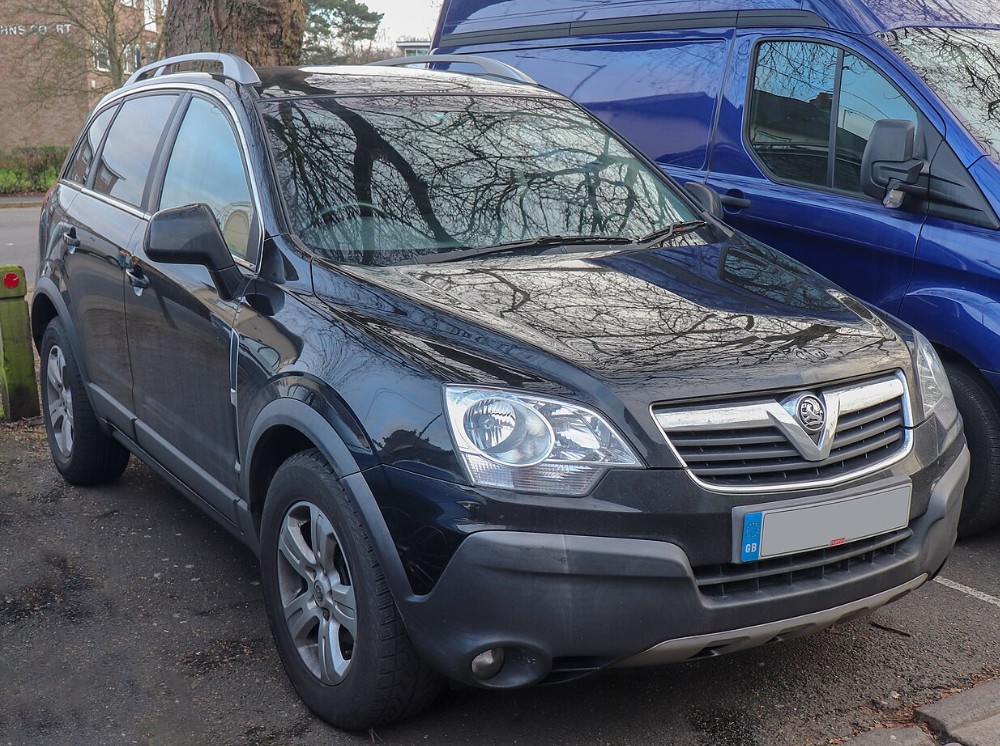
Getting the Vauxhall Antara tyre pressure right may seem like a tiny maintenance task, but those few pounds of air influence almost everything the SUV does. Steering response, braking stability, fuel consumption, ride comfort and tyre wear all depend on four relatively small contact patches meeting the road correctly.
Yet there is no single pressure figure that suits every Antara ever produced. Recommended settings can change according to the model year, engine, wheel size, tyre specification and vehicle load. A pressure that works for an Antara running 16-inch wheels may not match one fitted with 18- or 19-inch tyres.
That is why we should treat online charts as useful starting points rather than unquestionable instructions. The pressure label fitted to the vehicle—and the corresponding owner’s manual—should always take priority.
In this guide, we will explain the common Antara tyre-pressure figures, where to find the official setting, how to check the tyres correctly and what to do when the tyre-pressure warning refuses to disappear.
Content in this publication
- What Is the Correct Vauxhall Antara Tyre Pressure?
- Where to Find the Official Pressure for Your Antara
- PSI, Bar and kPa Explained
- Why Tyre Pressure Matters on the Vauxhall Antara
- Cold Tyre Pressure Versus Hot Tyre Pressure
- How to Check Vauxhall Antara Tyre Pressure
- Front and Rear Tyre Pressure Differences
- Vauxhall Antara Tyre Pressure When Fully Loaded
- Vauxhall Antara Tyre Pressure for Towing
- Seasonal Changes and Cold Weather
- Understanding the Antara Tyre-Pressure Monitoring System
- How to Reset the Vauxhall Antara Tyre-Pressure Warning
- Why One Tyre Keeps Losing Pressure
- Tyre Pressure and Uneven Wear Patterns
- Does Tyre Pressure Affect Fuel Economy?
- Can We Use the Maximum Pressure Printed on the Tyre?
- When Should Antara Tyre Pressure Be Checked?
- Common Vauxhall Antara Tyre-Pressure Mistakes
- A Practical Antara Pressure Checklist
- Final Thoughts on Vauxhall Antara Tyre Pressure
- Frequently Asked Questions
What Is the Correct Vauxhall Antara Tyre Pressure?
Many Vauxhall Antara models use recommended cold pressures somewhere between approximately 2.1 and 2.4 bar, equivalent to roughly 30 to 35 PSI, during ordinary driving.
Some versions may require higher settings when carrying several passengers, heavy luggage or a trailer. Depending on the specific configuration, fully loaded pressures can rise to around 2.3–2.6 bar, or approximately 33–38 PSI.
However, these are broad reference figures rather than universal specifications.
The correct pressure for your own Antara depends on:
- Model year
- Engine and drivetrain
- Original wheel diameter
- Tyre size and load index
- Normal or fully loaded use
- Whether the vehicle has manufacturer-approved alternative wheels
The official Vauxhall manual instructs owners to check tyre pressures when the tyres are cold, at least every 14 days and before long journeys. It also advises checking the spare wheel where applicable.
Common Antara Tyre-Pressure Reference Table
The following table presents commonly published reference figures for popular Antara tyre sizes. They should help us understand the usual range, but the vehicle’s own pressure label remains the final authority.
| Tyre size | Approximate front pressure | Approximate rear pressure | Possible loaded setting |
|---|---|---|---|
| 215/70 R16 | 2.1 bar / 30 PSI | 2.1–2.3 bar / 30–33 PSI | About 2.3–2.4 bar |
| 235/60 R17 | 2.1–2.4 bar / 30–35 PSI | 2.3–2.4 bar / 33–35 PSI | Up to about 2.6 bar |
| 235/55 R18 | 2.1–2.4 bar / 30–35 PSI | 2.3–2.4 bar / 33–35 PSI | Up to about 2.6 bar |
| 235/50 R19 | 2.1–2.4 bar / 30–35 PSI | 2.3–2.4 bar / 33–35 PSI | Up to about 2.6 bar |
| 245/45 R19 | Around 2.1 bar / 30 PSI | Around 2.1 bar / 30 PSI | Check vehicle label |
Published databases differ because Antara specifications varied across production years and markets. For example, Michelin lists several Antara sizes at approximately 2.1 bar at the front and 2.3 bar at the rear, while other databases list later 235/60 R17 versions at 2.4 bar on both axles.
That difference is exactly why guessing from wheel diameter alone can lead us astray.
Why Online Figures Sometimes Conflict
Contradictory pressure recommendations do not necessarily mean one website is completely wrong. The same model name can cover vehicles with different:
- Engines
- Kerb weights
- Suspension specifications
- Tyre load ratings
- Homologation requirements
- Production dates
- Regional configurations
A 2007 Antara may carry a different recommendation from a later facelift model, even when both vehicles appear similar from a distance. Two tyres that share the same diameter may also have different load indices or construction characteristics.
Think of “Vauxhall Antara” as the family surname, not the full identity card.
Where to Find the Official Pressure for Your Antara
The safest pressure figure is the one Vauxhall specified for the exact vehicle and its approved tyres.
Depending on the year and market, the information may be found:
- Inside the driver’s door opening
- On the driver’s-side door pillar
- Inside the fuel-filler flap
- In the vehicle owner’s manual
- In the tyre-pressure section of the handbook
Vauxhall continues to provide downloadable owner’s manuals through its official website, including manuals for older models such as the Antara.
How to Read the Tyre-Pressure Label
A pressure label usually separates recommendations by:
- Tyre size
- Front and rear axle
- Normal load
- Full load
- Measurement unit
You may see values written in kPa, bar or PSI.
For example:
- 210 kPa equals 2.1 bar
- 230 kPa equals 2.3 bar
- 240 kPa equals 2.4 bar
- 260 kPa equals 2.6 bar
Do not automatically choose the highest number on the sticker. That figure may be reserved for a fully loaded vehicle rather than ordinary commuting.
Check That the Wheels Match the Label
Used Antaras do not always retain their factory wheels. A previous owner may have fitted:
- Larger alloy wheels
- Different-profile tyres
- Aftermarket wheels
- Winter tyres
- A non-standard load index
Before applying the sticker values, compare the tyre size printed on the sidewall with the size shown on the label.
A code such as 235/55 R18 100H tells us:
- 235: tyre width in millimetres
- 55: sidewall height as a percentage of width
- R: radial construction
- 18: wheel diameter in inches
- 100: load index
- H: speed rating
The Antara was offered with several tyre sizes, including 215/70 R16, 235/60 R17, 235/55 R18 and 235/50 R19 on certain versions.
PSI, Bar and kPa Explained
Tyre-pressure units often create more confusion than the inflation process itself.
In Britain, we frequently speak in PSI, while European manuals and compressors may display bar or kilopascals.
Useful Tyre-Pressure Conversions
| Bar | Approximate PSI | kPa |
|---|---|---|
| 2.0 | 29 PSI | 200 kPa |
| 2.1 | 30 PSI | 210 kPa |
| 2.2 | 32 PSI | 220 kPa |
| 2.3 | 33 PSI | 230 kPa |
| 2.4 | 35 PSI | 240 kPa |
| 2.5 | 36 PSI | 250 kPa |
| 2.6 | 38 PSI | 260 kPa |
As a quick mental rule, one bar equals approximately 14.5 PSI.
Should We Round the Pressure?
Small gauge differences are normal. A digital inflator may show 34.8 PSI while another displays 35 PSI.
There is no need to chase microscopic decimal changes. What matters is that:
- We use a dependable gauge.
- Both tyres on the same axle are balanced.
- The pressure closely matches the official cold recommendation.
- We check the tyres consistently with the same device where possible.
Why Tyre Pressure Matters on the Vauxhall Antara
The Antara is a relatively substantial SUV. Its weight places considerable demands on the tyres, especially during braking, cornering and motorway travel.
Incorrect inflation is therefore more than a comfort issue.
How Low Pressure Affects the Antara
An underinflated tyre flexes more as it rolls. That extra movement creates heat and resistance, rather like trying to jog through wet sand.
Possible symptoms include:
- Heavy or vague steering
- Increased fuel consumption
- Slower steering response
- Excessive wear on both tyre shoulders
- Greater heat buildup
- Reduced stability under load
- A tyre-pressure warning
- Increased risk of tyre damage
A tyre can be dangerously low before it looks obviously flat. Visual inspection alone is not enough.
How High Pressure Affects the Antara
Overinflation brings a different set of problems:
- Harsher ride quality
- Reduced ability to absorb bumps
- Increased wear through the tread centre
- Less predictable grip on rough roads
- Greater sensitivity to potholes
- Nervous or skittish steering
More pressure is not automatically safer. A tyre should carry the manufacturer’s recommended pressure, not the largest number we can force into it.
Cold Tyre Pressure Versus Hot Tyre Pressure
The recommended values normally refer to cold tyres.
A tyre is generally considered cold when the vehicle:
- Has been parked for several hours
- Has not recently completed a long journey
- Has travelled only a very short distance at low speed
As the tyre rolls, flexing and road friction produce heat. The air inside expands, so the measured pressure rises.
Why We Should Not Deflate a Hot Tyre
Suppose the sticker recommends 35 PSI and we measure 39 PSI after motorway driving. Releasing air immediately may leave the tyre underinflated after it cools.
The higher hot reading may be normal.
The better approach is to:
- Record the reading.
- Allow the vehicle to cool.
- Recheck it later.
- Adjust it according to the cold specification.
The Best Time to Check
Early morning is often ideal, especially when the Antara has been parked overnight.
We should also avoid checking one side after it has sat in strong sunlight while the other side remains shaded. Solar heating can create a small but noticeable difference between tyres.
How to Check Vauxhall Antara Tyre Pressure
Checking the pressure takes only a few minutes, but doing it methodically produces more reliable results.
What We Need
Use:
- A digital or analogue tyre-pressure gauge
- A compressor or foot pump
- The correct vehicle pressure figure
- Valve caps in good condition
- A cloth if the valves are dirty
Step-by-Step Inflation Process
- Park on level ground.
- Switch off the engine and allow the tyres to cool.
- Confirm the recommended pressure on the vehicle label.
- Remove the valve cap from the first tyre.
- Press the gauge firmly onto the valve.
- Read the pressure without allowing air to leak around the connection.
- Add air when the reading is low.
- Release a small amount when it is too high.
- Measure again.
- Refit the valve cap.
- Repeat the process on all four tyres.
- Check the spare wheel if the vehicle carries one.
The official Antara manual recommends checking cold tyre pressures at least every two weeks and before long journeys.
Why Valve Caps Matter
The valve core creates the primary air seal, but the cap still performs an important supporting role. It helps keep moisture, road salt and dirt away from the valve mechanism.
A missing cap costs very little to replace, yet leaving the valve exposed can eventually make inflation more troublesome.
Front and Rear Tyre Pressure Differences
Some Antara configurations use equal pressures front and rear. Others specify a higher rear pressure, particularly because the rear axle must support passengers, luggage or towing loads.
We should never assume that all four tyres require identical inflation.
Why Rear Pressures May Be Higher
Higher rear pressure can help the tyre:
- Carry additional load
- Maintain its intended shape
- Control heat buildup
- Support stable cornering
- Improve towing behaviour
- Reduce excessive sidewall movement
This does not mean the rear tyres should always be inflated to the fully loaded setting. Use that value when the vehicle’s load matches the condition shown on the sticker.
Vauxhall Antara Tyre Pressure When Fully Loaded
A family holiday can transform the Antara’s operating conditions. Five occupants, a full boot, roof-mounted equipment and a trailer place much greater stress on the tyres than a solo commute.
When to Use the Full-Load Setting
Consider the loaded recommendation when carrying:
- Several adult passengers
- Heavy luggage
- Camping equipment
- Substantial boot cargo
- A trailer or caravan
- Equipment close to the vehicle’s permitted payload
Certain published Antara charts show normal settings near 2.4 bar and loaded settings around 2.6 bar for some 2.2 CDTi tyre configurations. Other versions use lower figures, so the exact sticker must still guide the adjustment.
Remember to Reduce Pressure Afterwards
Once the trip is over and the vehicle returns to light everyday use, restore the normal cold setting if the label distinguishes between normal and loaded pressures.
Leaving the tyres permanently at the loaded figure may make the Antara feel unnecessarily firm and could alter the wear pattern.
Vauxhall Antara Tyre Pressure for Towing
Towing introduces downward nose weight at the towbar and greater stability demands at motorway speeds.
Before towing, we should check:
- Front tyre pressure
- Rear tyre pressure
- Trailer tyre pressure
- Tyre condition and age
- Tread depth
- Load and speed ratings
- Trailer nose weight
- Vehicle and trailer weight limits
Should Rear Pressure Be Increased for Towing?
Often, yes—but only to the approved full-load figure shown for the vehicle.
Do not invent an additional pressure beyond the manufacturer’s recommendation simply because a caravan feels heavy. Excess inflation can reduce compliance and grip.
Tyre pressure is one part of towing safety, not a magic cure for incorrect loading.
Trailer Tyres Need Their Own Specification
Never copy the Antara’s pressure into the caravan or trailer tyres.
Trailer pressures depend on:
- Trailer manufacturer guidance
- Tyre construction
- Load index
- Axle weight
- Maximum authorised mass
The car and trailer form one combination, but their tyres operate under different requirements.
Seasonal Changes and Cold Weather
Tyre pressure naturally changes with ambient temperature.
When temperatures fall, the air contracts and pressure drops. During warmer weather, it expands.
Why the Warning Light Appears in Winter
A tyre correctly inflated during a mild autumn afternoon may trigger the warning after the first cold night.
This does not automatically indicate a puncture. However, we still need to inspect the tyre and confirm the pressure rather than dismissing the warning as “just the weather.”
Do Not Inflate to a Seasonal Guess
We should continue using the vehicle’s cold-pressure specification. Check more frequently during sharp temperature changes, especially before motorway driving.
The sticker already assumes that the reading is taken with cold tyres. There is no need to create a homemade winter setting unless official guidance specifies one.
Understanding the Antara Tyre-Pressure Monitoring System
Depending on specification, the Vauxhall Antara may have a tyre-pressure monitoring system, commonly called TPMS.
The system is designed to warn the driver when it detects pressure loss or a sensor-related issue.
What the TPMS Can and Cannot Do
TPMS can help identify:
- Significant underinflation
- A rapidly losing tyre
- Pressure differences
- Sensor malfunctions
However, it does not replace manual checks.
A tyre may be below its ideal pressure without triggering an immediate warning. The system also cannot assess tread depth, sidewall cracks or embedded objects.
What to Do When the Warning Light Appears
- Reduce speed safely.
- Avoid sudden steering or hard braking.
- Stop somewhere secure.
- Inspect all four tyres.
- Use a pressure gauge.
- Inflate to the official cold setting when appropriate.
- Look for nails, cuts, bulges or valve damage.
- Seek professional help if pressure falls again.
Steady Light Versus Flashing Light
A steady warning commonly suggests that one or more tyres may be underinflated.
A flashing warning followed by a steady light may point to a TPMS fault, depending on the model and system behaviour.
Possible causes include:
- A failed sensor battery
- A damaged valve-mounted sensor
- Incorrectly programmed replacement sensors
- Wheels without compatible sensors
- A relearn procedure that has not been completed
- Electrical or receiver problems
How to Reset the Vauxhall Antara Tyre-Pressure Warning
There is no single reset procedure that applies to every model year.
On some Antara versions, the warning may disappear after:
- Correcting all four tyre pressures
- Switching the ignition off and on
- Driving for a short period
- Allowing the system to update the readings
Other versions may require sensor relearning after wheel rotation, sensor replacement or fitting another wheel set.
Do Not Reset Before Checking the Tyres
A reset should never be used to silence a genuine low-pressure warning.
Before attempting any relearn or reset:
- Measure every tyre manually.
- Repair punctures.
- Confirm the correct wheel and tyre sizes.
- Check that compatible sensors are fitted.
- Read the model-specific manual.
When Professional Relearning May Be Needed
A tyre workshop may need diagnostic or activation equipment when:
- A sensor has been replaced.
- The wheels have been rotated.
- Winter wheels have been fitted.
- Sensor positions are displayed incorrectly.
- The warning continues despite correct pressure.
- The TPMS malfunction indication remains active.
Why One Tyre Keeps Losing Pressure
A repeated pressure drop means the air is escaping somewhere. Continually topping it up treats the symptom, not the cause.
Common Sources of Slow Air Loss
Possible causes include:
- Nail or screw in the tread
- Leaking valve core
- Cracked valve stem
- Corroded alloy-wheel bead seat
- Bent wheel
- Damaged tyre bead
- Age-related rubber cracking
- Faulty previous puncture repair
- TPMS valve seal failure
Alloy-Wheel Corrosion on Older Antaras
Older SUVs can develop corrosion where the tyre bead meets the alloy wheel. The leak may be so slow that the tyre loses only a few PSI over several weeks.
A tyre specialist can remove the tyre, clean the sealing surface and assess whether the wheel can be restored safely.
Tyre Pressure and Uneven Wear Patterns
Tyre wear often tells a story. It acts like a diary written across the tread.
Wear on Both Outer Shoulders
This pattern can suggest:
- Prolonged underinflation
- Heavy loads
- Aggressive cornering
- A combination of these factors
Wear Through the Tread Centre
Possible causes include:
- Persistent overinflation
- Unsuitable pressure for the load
- Tyre or wheel mismatch
Wear on One Edge
One-sided wear more commonly points toward:
- Incorrect wheel alignment
- Worn suspension components
- Damaged steering parts
- Excessive camber or toe
Pressure Cannot Fix Mechanical Wear
Inflating a tyre differently will not correct worn track-rod ends, damaged bushes or poor alignment.
When wear is uneven, the Antara should be inspected rather than merely reinflated.
Does Tyre Pressure Affect Fuel Economy?
Yes. Underinflated tyres increase rolling resistance, meaning the engine must work harder to move the vehicle.
The effect may seem modest during a single trip, but over thousands of miles it can contribute to:
- Higher fuel consumption
- Increased emissions
- Faster tyre wear
- Additional heat generation
Why Extra Pressure Is Not a Fuel-Saving Shortcut
The owner’s manual may mention an ECO pressure for certain configurations, but that does not justify inflating beyond approved values. The Antara manual notes that ECO pressure is intended to reduce fuel consumption, while warning that incorrect pressures impair safety, handling, comfort and tyre life.
Efficiency should never come at the expense of braking and grip.
Can We Use the Maximum Pressure Printed on the Tyre?
No—not as the everyday operating target.
The number moulded into the sidewall is generally related to the tyre’s maximum permitted load and pressure under defined conditions. It is not the vehicle manufacturer’s recommended inflation setting.
Vehicle Sticker Versus Tyre Sidewall
Use:
- Vehicle label: for normal operating pressure
- Owner’s manual: for approved sizes and load conditions
- Tyre sidewall: for tyre identity and maximum limits
Inflating every tyre to its sidewall maximum would be like wearing hiking boots tightened as far as the laces allow. Technically possible, perhaps, but hardly the correct fit.
When Should Antara Tyre Pressure Be Checked?
A sensible routine is:
- At least every two weeks
- Before a long journey
- Before towing
- Before carrying a heavy load
- After a major temperature change
- After hitting a pothole
- When steering feels different
- When the TPMS light appears
- After tyre replacement or repair
A Simple Monthly Routine
Although Vauxhall’s manual recommends a two-week interval, we can combine pressure checks with a broader inspection:
- Measure all four tyres cold.
- Inspect tread depth.
- Look for cracking and bulges.
- Check for embedded objects.
- Confirm valve caps are fitted.
- Examine the spare or repair kit.
- Note repeated pressure losses.
This routine takes less time than buying a coffee, yet it may prevent an expensive tyre failure.
Common Vauxhall Antara Tyre-Pressure Mistakes
Even experienced drivers fall into a few predictable traps.
Using a Random Internet Number
A figure found for another year, engine or tyre size may not match your vehicle.
Checking Immediately After Driving
Hot readings are higher and cannot be compared directly with cold recommendations.
Trusting the Forecourt Gauge Completely
Public inflators are convenient but can suffer from wear or calibration differences. Keeping a personal gauge provides a useful cross-check.
Ignoring the Rear Axle Setting
Some configurations specify different front and rear pressures.
Inflating All Tyres to the Sidewall Maximum
The maximum tyre marking is not the standard vehicle recommendation.
Assuming TPMS Replaces Manual Checks
The warning system is a safety aid, not a maintenance schedule.
Forgetting the Spare Wheel
A spare tyre is no help when it has been sitting underinflated for three years. Check it periodically and use the spare-wheel setting specified by the manual.
A Practical Antara Pressure Checklist
Before driving, ask:
- Does the tyre size match the pressure label?
- Were the pressures checked cold?
- Are front and rear values correct?
- Is the vehicle heavily loaded?
- Are we towing?
- Does one tyre repeatedly lose air?
- Is the TPMS warning active?
- Are there visible cuts, bulges or cracks?
- Are the tyres wearing evenly?
- Has the vehicle recently hit a pothole?
When every answer is clear, we can set off with much greater confidence.
Final Thoughts on Vauxhall Antara Tyre Pressure
The correct Vauxhall Antara tyre pressure is not one universal number carved in stone. Common settings often fall between 30 and 35 PSI, or roughly 2.1 to 2.4 bar, while some fully loaded configurations may require around 2.6 bar.
The only reliable way to choose the right figure is to match the recommendation to the exact tyre size and loading condition shown on the vehicle’s pressure label or in its owner’s manual.
Check the tyres cold, inspect them at least every two weeks, adjust them before long journeys and investigate any tyre that repeatedly loses air. Those few minutes of attention help the Antara steer more predictably, brake more confidently and use its tyres more evenly.
Air may be invisible, but behind the wheel, its effects are anything but.
Frequently Asked Questions
1. What PSI should Vauxhall Antara tyres be?
Many Antara versions use approximately 30–35 PSI during normal driving. However, the exact front and rear settings depend on the tyre size, model year and load. Always confirm the figures on the vehicle pressure label.
2. Is 35 PSI suitable for a Vauxhall Antara?
Thirty-five PSI, equivalent to approximately 2.4 bar, is listed for some Antara configurations, including certain later models with 235/60 R17 tyres. It is not correct for every version, so check the label before using it.
3. Should front and rear Antara tyres have the same pressure?
Not always. Some versions use equal pressure on both axles, while others specify higher rear pressure. The difference may become greater when the vehicle is fully loaded or towing.
4. Why does my Antara tyre-pressure light stay on?
The tyre may still be low, have a slow puncture or require time for the system to update. A faulty sensor, damaged TPMS valve or incomplete relearn procedure may also keep the warning active.
5. Should I check Antara tyre pressure when the tyres are hot or cold?
Check them cold, ideally after the vehicle has been parked for several hours. Pressure rises during driving, so releasing air from a hot tyre can leave it underinflated once it cools.
If you want to know other articles similar to Vauxhall Antara Tyre Pressure: PSI, Bar and Practical Guide you can visit the category Service and Parts.
MG HS Tyre Pressure Guide: Correct PSI and TPMS
Toyota Yaris Cross Dashboard Symbols

BMW 3 Series Warning Lights: The Complete Guide to Understanding Every Dashboard Symbol
Nissan Qashqai Fuel Tank Capacity: Complete Guide

Suzuki Swift Fuel Tank Capacity: Complete Guide

Mazda CX-5 Weight (2013–2026): Complete Guide in Pounds and KG
Leave a Reply
More content of your interest