
Vauxhall Antara Towing Capacity: Complete UK Guide

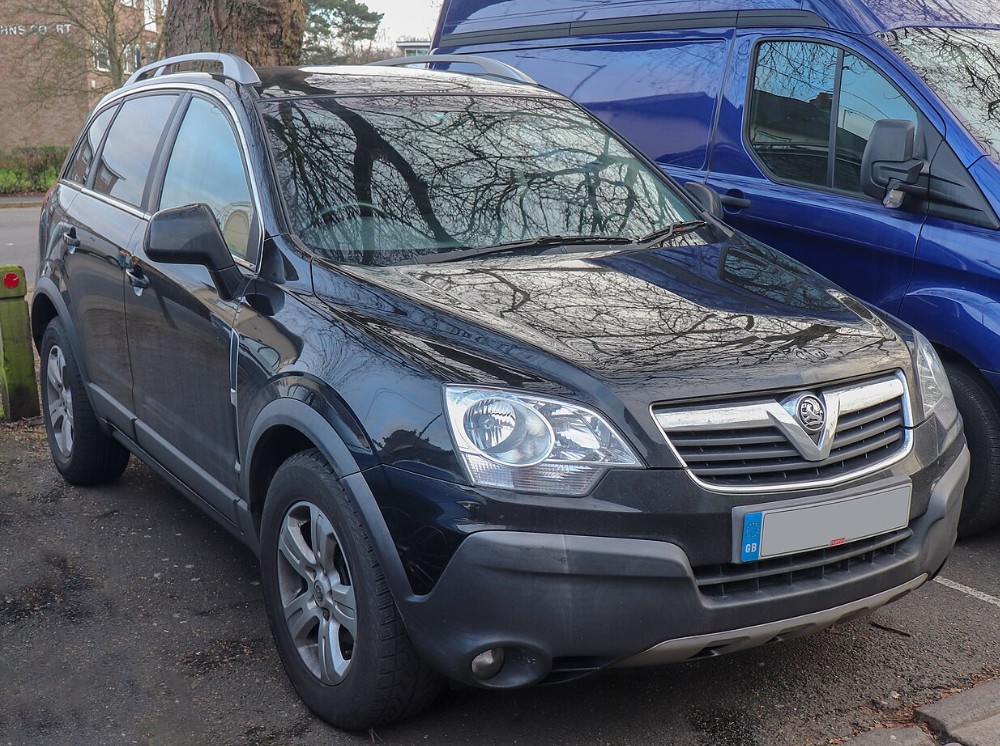
The Vauxhall Antara towing capacity ranges from 1,500 kg to 2,000 kg for a braked trailer, depending on the engine, drivetrain, and transmission. Most Antara models can also pull an unbraked trailer weighing up to 750 kg.
That sounds simple enough, doesn’t it? Unfortunately, the Antara range contains several versions with noticeably different limits. A diesel manual may legally tow 2,000 kg, while a visually similar diesel automatic may be restricted to 1,700 kg. Choose the wrong figure, and you could overload the vehicle without realising it.
According to Vauxhall’s December 2013 specification guide, the official limits were:
| Vauxhall Antara version | Maximum braked towing capacity | Maximum unbraked towing capacity |
|---|---|---|
| Front-wheel-drive petrol | 1,500 kg | 750 kg |
| Front-wheel-drive diesel | 2,000 kg | 750 kg |
| Manual 4x4 | 2,000 kg | 750 kg |
| Automatic 4x4 | 1,700 kg | 750 kg |
These figures came directly from Vauxhall, but they should be treated as a model guide rather than a substitute for checking an individual vehicle. The VIN plate, handbook, registration documents, and exact derivative remain the final references for your Antara.
In this guide, we’ll explain how much each Antara can tow, which version makes the strongest tow car, how to match it with a caravan, and what to inspect before buying a used example.
Content in this publication
- What Is the Maximum Vauxhall Antara Towing Capacity?
- Vauxhall Antara Towing Capacity by Version
- Which Vauxhall Antara Is Best for Towing?
- Can a Vauxhall Antara Tow a Caravan?
- Vauxhall Antara Nose-Weight Limit
- How Vauxhall Calculated the Antara’s Towing Limit
- How to Find Your Antara’s Exact Towing Capacity
- What Can a Vauxhall Antara Tow?
- How the Vauxhall Antara Feels While Towing
- Fuel Economy While Towing
- Common Antara Towing Problems to Check
- Safe Towing Checklist for the Vauxhall Antara
- Is the Vauxhall Antara a Good Tow Car?
- Conclusion: How Much Can a Vauxhall Antara Tow?
- Frequently Asked Questions
What Is the Maximum Vauxhall Antara Towing Capacity?
The highest official Vauxhall Antara towing capacity is 2,000 kg for a trailer fitted with its own braking system.
That upper limit generally applies to:
- Front-wheel-drive diesel models
- Manual four-wheel-drive models
- Several 2.0 CDTi and 2.2 CDTi derivatives
- Both lower- and higher-powered manual diesel versions, depending on specification
The automatic 4x4 Antara is typically limited to 1,700 kg, despite being heavier and having four-wheel drive. This is one of the most important details to understand when shopping for an Antara.
Many drivers naturally assume that the automatic 4x4 must be the strongest towing version. On paper, it looks like the heavyweight of the family. In reality, its approved trailer limit is lower than that of the manual diesel. The transmission, cooling requirements, homologation figures, and vehicle design all contribute to the manufacturer’s limit.
The petrol Antara sits at the other end of the scale. Vauxhall listed front-wheel-drive petrol models with a 1,500 kg braked limit, making them more suitable for small caravans, lightweight trailers, and occasional towing than large touring outfits.
Braked and Unbraked Towing Limits Explained
A braked trailer has its own braking system. When the tow car slows down, the trailer brakes help control the combined outfit.
An unbraked trailer relies almost entirely on the vehicle’s brakes. Because the car has to stop both itself and the trailer, the permitted trailer weight is much lower.
For the Antara, the typical limits are:
- Braked trailer: 1,500–2,000 kg, depending on version
- Unbraked trailer: up to 750 kg
A trailer weighing more than 750 kg will normally need an effective braking system under UK rules. However, the vehicle’s own unbraked limit still applies even when a general legal threshold permits a certain weight. The lowest applicable limit always wins.
Why the Trailer’s Actual Weight Matters
A trailer’s plated maximum mass and its current loaded weight are not always the same.
Imagine a trailer with:
- An empty weight of 500 kg
- A maximum authorised mass of 750 kg
- An actual loaded weight of 680 kg
The Antara is pulling 680 kg in practical terms. However, licence rules, trailer regulations, matching recommendations, and enforcement considerations may also involve the plated figures. That is why both numbers deserve attention.
Never guess based on the trailer’s appearance. A modest box trailer packed with paving slabs can weigh more than a much larger trailer carrying lightweight furniture.
Vauxhall Antara Towing Capacity by Version
Antara specifications changed during its production life, and not every engine or transmission combination carried the same rating. The following sections explain the most common UK versions.
Vauxhall Antara 2.0 CDTi Towing Capacity
Early Antara diesel models used a 2.0-litre CDTi engine, commonly offered with outputs around 127PS or 150PS.
Several 2.0 CDTi derivatives were rated to tow up to 2,000 kg with brakes, particularly manual versions. Published towing data for the 2.0 CDTi also lists a 750 kg unbraked limit and a kerb weight close to 1,795 kg for certain derivatives.
The engine produces the low-speed pulling power that towing drivers generally want. It may feel agricultural compared with newer diesel SUVs, but it does not need to be revved like a small petrol engine when climbing a hill.
Still, age matters. Early Antaras are now firmly in used-car territory, so service history is just as important as the original brochure figure. A 2,000 kg rating does not magically restore a tired clutch, blocked diesel particulate filter, or neglected cooling system.
Vauxhall Antara 2.2 CDTi Towing Capacity
The later 2.2 CDTi is usually the most attractive engine for towing. It was sold in different power outputs, including approximately 163PS and 184PS, with either manual or automatic transmission.
The 2014 owner’s manual lists the two 2.2 CDTi engines with outputs of 120 kW and 135 kW. Their torque figures were 350 Nm and 400 Nm respectively, both produced at 2,000 rpm. That low-rev torque helps explain why the diesel feels much more comfortable under load than the petrol version.
2.2 CDTi Manual Towing Capacity
Manual diesel Antaras can commonly tow up to 2,000 kg braked.
This includes front-wheel-drive diesel and manual 4x4 configurations covered by the later Vauxhall specification guide. A 2.2 CDTi 184PS manual tested by the Tow Car Awards also carried a quoted maximum towing weight of 2,000 kg and an 80 kg towball limit.
For drivers buying specifically to tow a caravan, the 2.2 CDTi manual is generally the version we would place at the top of the list. It offers:
- The highest approved trailer limit
- Strong diesel torque
- A heavy, stable-feeling platform
- Available four-wheel drive
- Better control over gear selection on hills
The compromise is that the clutch and dual-mass flywheel can face a hard life, particularly if previous owners frequently manoeuvred heavy caravans or horseboxes.
2.2 CDTi Automatic Towing Capacity
The automatic 4x4 is generally rated to tow 1,700 kg braked and 750 kg unbraked.
Published specifications for the 184 bhp SE automatic show a kerb weight of around 1,921 kg, a 1,700 kg braked limit, and a 750 kg unbraked limit.
Why does the automatic tow less than the manual? The vehicle is not necessarily weak. Rather, the lower figure reflects the approved limit for that powertrain. Heat generation, transmission durability, cooling capacity, hill-start testing, and manufacturer certification can all influence the number.
The automatic may still be the more relaxing choice for a medium-sized caravan. It removes clutch work during hill starts and slow manoeuvres, and it delivers smoother progress in traffic. Just remember that convenience does not increase the legal limit.
Vauxhall Antara 2.4 Petrol Towing Capacity
The 2.4-litre petrol Antara is generally limited to 1,500 kg with a braked trailer and 750 kg without brakes in the front-wheel-drive specification covered by Vauxhall’s guide.
This may be sufficient for:
- Small two-berth caravans
- Lightweight camping trailers
- Jet-ski trailers
- Small boats
- Domestic utility trailers
- Compact car transporters carrying very light vehicles
The drawback is not merely the lower rating. A naturally aspirated petrol engine usually needs more revs to maintain speed under load, while fuel consumption can rise dramatically when towing.
The petrol model makes sense for occasional light towing and drivers who mostly complete short journeys. For regular caravan touring, the diesel is normally the more natural fit.
Which Vauxhall Antara Is Best for Towing?
The 2.2 CDTi manual 4x4 is arguably the strongest all-round Antara for towing.
It combines a 2,000 kg maximum braked rating with four-wheel-drive traction and up to 400 Nm of torque in the higher-powered version. That does not make it a modern Land Rover in disguise, but it gives the Antara a useful blend of weight, traction, and pulling power.
Our practical ranking would look like this:
- 2.2 CDTi 184PS manual 4x4 – strongest performance and 2,000 kg limit
- 2.2 CDTi 163PS manual 4x4 – slightly less powerful but still capable
- 2.2 CDTi front-wheel-drive manual – high limit without 4x4 complexity
- 2.2 CDTi automatic 4x4 – easier to drive but limited to around 1,700 kg
- 2.0 CDTi manual – capable, although older and increasingly condition-dependent
- 2.4 petrol – adequate for lighter trailers rather than serious touring
Is Four-Wheel Drive Necessary?
Four-wheel drive does not increase every Antara’s towing limit. The automatic 4x4, for example, is approved for less trailer weight than the manual diesel.
What 4x4 can improve is traction. That matters when:
- Pulling away on wet grass
- Leaving a muddy campsite
- Launching a boat from a slippery ramp
- Starting on a steep incline
- Driving on loose gravel
- Towing in winter conditions
On a dry motorway, four-wheel drive offers fewer obvious advantages. Stability depends on far more than driven wheels: tyre condition, loading, trailer balance, suspension health, speed, and crosswinds all play a role.
Think of 4x4 as a pair of sturdy hiking boots. It helps you find grip, but it does not make you invincible.
Can a Vauxhall Antara Tow a Caravan?
Yes, the Antara can tow many small, medium, and large caravans, provided the chosen caravan fits the specific vehicle’s legal limit and forms a sensible weight match.
A manual diesel with a 2,000 kg rating can legally pull a fairly substantial caravan. However, towing right at the absolute maximum is not automatically wise.
The manufacturer’s figure answers one question:
What is the heaviest braked trailer this model is approved to tow under specified conditions?
It does not necessarily answer:
What caravan weight will feel relaxed, stable, and manageable for this particular driver?
Understanding the 85% Caravan-Matching Guideline
A traditional recommendation for drivers with limited towing experience is to keep the caravan’s maximum laden weight at or below roughly 85% of the tow car’s kerb weight.
This is a guideline, not the Antara’s official towing limit.
For example, suppose an Antara has a kerb weight of 1,900 kg:
1,900 kg × 0.85 = 1,615 kg
That would produce an 85% matching figure of approximately 1,615 kg.
The car might legally be approved to tow 2,000 kg, but a caravan around 1,600 kg may provide a more reassuring match, especially for a less experienced driver.
A used Antara 2.0 CDTi with a stated kerb weight of 1,795 kg produces an 85% figure of about 1,526 kg, even though some versions have a 2,000 kg manufacturer limit.
Does the 85% Rule Apply to Every Trailer?
Not in the same way.
It is mainly associated with caravan matching because caravans have large side areas, relatively high centres of gravity, and greater sensitivity to crosswinds and loading.
A low, twin-axle plant trailer behaves differently from a tall touring caravan, even when both weigh the same. Nevertheless, the driver must still respect the Antara’s legal limits, the trailer’s axle ratings, and the gross train weight.
Vauxhall Antara Nose-Weight Limit
Nose weight is the downward force the trailer applies to the towball.
Vauxhall’s 2013 specification guide states that the maximum nose weight should not exceed 80 kg when the trailer is fully loaded. The Tow Car Awards also lists an 80 kg towball limit for the 184PS manual model it tested.
The correct figure for an individual car may also be restricted by:
- The towbar manufacturer’s limit
- The trailer coupling’s limit
- The trailer manufacturer’s specification
- Accessories mounted on the towbar
Use the lowest applicable rating.
Why Nose Weight Is So Important
Too little nose weight can make the trailer unstable. It may begin to sway, particularly at speed or when a large vehicle passes.
Too much nose weight can:
- Overload the towbar
- Place excessive load on the rear axle
- Lift weight from the front wheels
- Affect steering and braking
- Cause the headlights to point upward
- Reduce suspension travel
The goal is not to push every limit to the edge. The goal is a correctly balanced outfit that stays within all relevant ratings.
A dedicated nose-weight gauge is much better than relying on guesswork. Loading a caravan by intuition alone is like baking without measuring ingredients: sometimes it works, but the failures can be memorable.
How Vauxhall Calculated the Antara’s Towing Limit
Vauxhall stated that its maximum towing weights were based on the car, carrying two occupants of 75 kg each, being able to restart on a 12% gradient at sea level.
The company also warned that engine output and towing capability may fall above 1,500 metres. Additional passengers or luggage may need to be deducted from the maximum towing weight.
That small paragraph is easy to overlook, yet it carries a big message: the headline limit assumes specific test conditions.
Passengers and Luggage Can Change the Calculation
Load the Antara with five adults, camping equipment, bicycles, a full boot, and a roof box, and the vehicle is working under very different conditions from an almost-empty test car.
The following weights all matter:
- Driver and passengers
- Luggage
- Roof-mounted equipment
- Towbar and accessories
- Trailer nose weight
- Fuel
- Aftermarket equipment
- The trailer and everything inside it
You must remain within both the gross vehicle weight and gross train weight.
The 2013 guide lists gross vehicle weights of 2,183 kg for front-wheel-drive petrol versions, 2,270 kg for front-wheel-drive diesels, 2,345 kg for manual 4x4 models, and 2,370 kg for automatic 4x4 models.
How to Find Your Antara’s Exact Towing Capacity
Because specifications vary, we should never rely solely on an online advert or a generic towing table.
Use the following process.
1. Check the VIN Plate
The vehicle identification plate normally displays several weight figures.
Commonly, these include:
- Maximum authorised vehicle mass
- Maximum authorised train mass
- Maximum front-axle load
- Maximum rear-axle load
Subtracting the maximum vehicle mass from the train mass can indicate the maximum trailer allowance:
Gross train weight − gross vehicle weight = potential towing limit
For example:
4,345 kg − 2,345 kg = 2,000 kg
This calculation must agree with the manufacturer’s documentation for the derivative. Do not invent a higher capacity simply because the vehicle is lightly loaded.
2. Read the Owner’s Manual
The handbook explains operating requirements and towing precautions, although derivative-specific weight details may appear on the vehicle plate or in separate specification material.
Vauxhall’s manual also warns that equipment and descriptions can differ by model variant, country specification, and optional features. That is another reason to verify the exact vehicle rather than applying one figure to every Antara.
3. Identify the Transmission and Drivetrain
This is essential.
Two 2.2 CDTi Antaras may have different limits because one is manual and the other automatic. Similarly, a front-wheel-drive model should not be assumed to share every figure with a 4x4.
Confirm:
- Engine size
- Power output
- Manual or automatic transmission
- Front-wheel drive or four-wheel drive
- Model year
- Exact trim and derivative
4. Check the Towbar Rating
A towbar has its own maximum towing and vertical-load figures.
Even when the Antara can tow 2,000 kg, a towbar rated for only 1,800 kg restricts the outfit to 1,800 kg. The weakest component sets the ceiling.
Vauxhall recommended using towing attachments designed specifically for its vehicles.
5. Weigh the Loaded Outfit
A public weighbridge removes much of the uncertainty.
You can measure:
- Car weight
- Combined car-and-trailer weight
- Individual axle loads
- Actual trailer weight, using the correct weighing procedure
This is especially valuable before a long caravan holiday. Water containers, gas bottles, awnings, food, tools, clothes, and leisure batteries add weight with surprising speed.
What Can a Vauxhall Antara Tow?
The answer depends on the derivative and actual loaded mass, but typical possibilities include:
| Trailer type | Typical suitability |
|---|---|
| Small camping trailer | Suitable for most Antaras |
| Domestic box trailer | Usually suitable when correctly loaded |
| Small boat trailer | Often suitable |
| Medium touring caravan | Well suited to many diesel versions |
| Large caravan | Possible with selected manual diesels |
| Horse trailer | Requires careful weight calculations |
| Car transporter | Possible only when total loaded weight stays within limits |
| Large plant trailer | Must be assessed carefully |
Can a Vauxhall Antara Tow a Horse Trailer?
Potentially, yes—but horse-trailer calculations leave little room for optimistic guesses.
Consider:
- Empty trailer weight
- Horse weight
- Tack and equipment
- Hay and water
- Additional passengers
- Nose weight
- Gross train weight
- Trailer axle capacity
A trailer weighing 950 kg empty with a 650 kg horse already reaches 1,600 kg before equipment is added. That could fit within a 1,700 kg automatic limit, but the margin would be uncomfortably narrow. The 2,000 kg manual diesel offers more room, although every official limit must still be checked.
Can an Antara Tow a Car Trailer?
A lightweight trailer carrying a small car may fit within the Antara’s limit.
For example:
- Trailer: 500 kg
- Small car: 1,100 kg
- Straps and equipment: 30 kg
- Total: 1,630 kg
That may be possible with a properly rated Antara and trailer.
A heavier trailer carrying a family SUV could easily exceed 2,000 kg. The Antara is capable, but it is not a commercial recovery truck.
How the Vauxhall Antara Feels While Towing
The Antara’s substantial kerb weight gives it a planted character. With a sensibly matched caravan, it can feel reassuring on open roads.
The diesel engine’s torque helps it pull away without excessive revs, while the available four-wheel-drive system can improve traction on poor surfaces. The rear suspension also used an automatic self-levelling arrangement integrated into the dampers, according to Vauxhall’s specification material.
Still, age and maintenance can transform the experience. A well-kept Antara may feel solid and composed. A neglected one with tired dampers, cheap tyres, worn rear bushes, or dragging brakes can feel like a shopping trolley wrestling with a sail.
Towing Performance on Hills
The 184PS diesel’s 400 Nm of torque makes it the more confident climber. The 163PS unit produces 350 Nm, which remains respectable for a vehicle of this period.
When climbing:
- Select a lower gear early
- Avoid labouring the engine
- Monitor coolant temperature
- Leave extra space
- Expect slower acceleration
- Do not chase solo-driving speeds
With an automatic, allow the transmission to downshift, but avoid repeated hunting between gears. On a manual, choose a gear that keeps the engine comfortably within its useful torque range.
Fuel Economy While Towing
Official solo fuel-consumption figures do not predict towing economy accurately. The trailer introduces weight and aerodynamic drag, while hills, speed, wind, and traffic create further variation.
A large caravan can act like a parachute tied to the rear bumper. Even a torquey diesel must burn more fuel to push that shape through the air.
We should expect:
- A noticeable drop in miles per gallon
- Greater consumption at motorway speeds
- Worse economy in headwinds
- Higher fuel use on hilly routes
- Further losses with roof boxes or bicycles
Smooth driving helps. Accelerate progressively, anticipate traffic, and maintain a steady pace rather than repeatedly gaining and losing speed.
Common Antara Towing Problems to Check
The Antara’s approved capacity tells us what it could do when properly maintained. A used vehicle’s condition tells us what it should do today.
Clutch and Dual-Mass Flywheel Wear
Manual cars used for heavy towing may suffer clutch and flywheel wear.
Warning signs include:
- Clutch slip under acceleration
- A high biting point
- Judder when moving away
- Rattling at idle
- Vibration through the pedal
- Difficulty starting on hills
A test drive without a trailer may not reveal early clutch slip. Accelerating firmly in a higher gear can expose it, although this should be done safely and without abusing the vehicle.
Automatic Gearbox Condition
For an automatic Antara, look for:
- Delayed engagement
- Jerky shifts
- Fluctuating engine revs
- Harsh downshifts
- Fluid leaks
- Overheating warnings
- Poor maintenance history
An automatic that behaves perfectly when cold may become rough after a long drive. A thorough test should allow the transmission to reach operating temperature.
Cooling-System Health
Towing produces more heat, so inspect:
- Coolant level and condition
- Radiator
- Hoses
- Cooling fans
- Water pump
- Thermostat
- Evidence of leaks
- Previous overheating repairs
The temperature gauge should remain stable. Any unexplained coolant loss deserves investigation before attaching a caravan.
Suspension and Tyres
Check for:
- Uneven tyre wear
- Cracked or aged tyres
- Weak rear dampers
- Broken springs
- Worn suspension bushes
- Wheel-bearing noise
- Incorrect tyre pressures
Tyres should have suitable load and speed ratings. Their condition matters more than their brand reputation or remaining tread alone.
Towbar and Electrical Equipment
Inspect the towbar for:
- Corrosion
- Loose fixings
- Damage
- Missing identification plate
- Excessive wear on the towball
- Poorly installed wiring
- Faulty trailer lights
A badly fitted towbar can compromise both safety and vehicle electronics.
Safe Towing Checklist for the Vauxhall Antara
Before leaving, confirm that:
- The trailer’s loaded weight is within the Antara’s limit
- Gross vehicle and train weights are not exceeded
- Nose weight is correctly measured
- Tyre pressures follow the appropriate loaded guidance
- Car and trailer tyres are undamaged
- Wheel nuts are secure
- Breakaway cable is attached correctly
- Coupling is fully locked
- Jockey wheel is raised and secured
- Lights and indicators work
- Mirrors provide a clear rearward view
- Loads are secured and distributed properly
- Number plate is visible and correct
- Doors, lockers, and windows are closed
- The trailer handbrake is released
A Final Stability Check
After a few miles, stop somewhere safe and check the coupling, load straps, tyre appearance, and trailer lights again.
Loads can settle once the outfit starts moving. Five minutes of inspection can prevent hours of trouble.
Is the Vauxhall Antara a Good Tow Car?
Yes, a well-maintained diesel Antara can be a capable and affordable used tow car.
Its strongest qualities are:
- Up to 2,000 kg braked towing capacity
- Strong low-speed diesel torque
- Substantial kerb weight
- Available four-wheel drive
- Reasonable used prices
- Comfortable motorway character
Its weaknesses include:
- Lower 1,700 kg limit for automatic 4x4 models
- Age-related mechanical risks
- Potentially high running costs
- Heavy fuel consumption while towing
- Older safety and infotainment technology
- The need to inspect drivetrain and suspension condition carefully
The Antara is not the last word in refinement. It feels more like a sturdy work boot than a polished dress shoe. Yet that straightforward, weighty nature is precisely what some towing drivers appreciate.
Conclusion: How Much Can a Vauxhall Antara Tow?
The Vauxhall Antara towing capacity is generally between 1,500 kg and 2,000 kg for a braked trailer, while the unbraked limit is normally 750 kg.
The key figures are:
- FWD petrol: 1,500 kg braked
- FWD diesel: 2,000 kg braked
- Manual 4x4: 2,000 kg braked
- Automatic 4x4: 1,700 kg braked
- Most versions: 750 kg unbraked
For serious caravan towing, the 2.2 CDTi manual 4x4 is usually the best version. It combines the maximum approved trailer weight with strong torque and useful traction.
However, a brochure figure is only the beginning. Check the individual car’s VIN plate, exact derivative, handbook, towbar rating, nose-weight limit, loaded trailer mass, axle weights, and gross train weight.
A carefully matched Antara can tow with confidence. An overloaded or poorly maintained one is a different animal entirely. Respect the numbers, keep the mechanical components healthy, and the Antara can remain a dependable companion for caravans, boats, and trailers.
Frequently Asked Questions
1. What is the maximum Vauxhall Antara towing capacity?
The highest official braked towing capacity is 2,000 kg, generally available on front-wheel-drive diesel and manual 4x4 versions. Automatic 4x4 models are commonly limited to 1,700 kg, while front-wheel-drive petrol models are listed at 1,500 kg.
2. How much can a Vauxhall Antara automatic tow?
A later diesel automatic 4x4 can typically tow 1,700 kg with brakes and 750 kg without brakes. Always confirm the precise limit using the vehicle’s identification plate and model-specific documents.
3. Can a Vauxhall Antara tow a large caravan?
A manual diesel Antara rated at 2,000 kg can legally tow many large caravans. Nevertheless, the caravan should form a sensible match with the car’s kerb weight, and the complete outfit must remain within all vehicle, trailer, axle, towbar, and licence limits.
4. What is the Antara’s maximum nose weight?
Vauxhall’s 2013 specification guide lists a maximum loaded-trailer nose weight of 80 kg. The towbar or trailer coupling may impose a lower limit, in which case the lower figure applies.
5. Is the Vauxhall Antara 2.2 CDTi good for towing?
Yes. The 2.2 CDTi is the preferred Antara engine for towing because it offers 350 Nm or 400 Nm of torque, depending on version. Manual models can also have a 2,000 kg braked trailer limit. Condition and service history remain crucial when buying one used.
If you want to know other articles similar to Vauxhall Antara Towing Capacity: Complete UK Guide you can visit the category Service and Parts.
MG HS Tyre Pressure Guide: Correct PSI and TPMS
Toyota Yaris Cross Dashboard Symbols

BMW 3 Series Warning Lights: The Complete Guide to Understanding Every Dashboard Symbol
Nissan Qashqai Fuel Tank Capacity: Complete Guide

Suzuki Swift Fuel Tank Capacity: Complete Guide
Mazda CX-5 Weight (2013–2026): Complete Guide in Pounds and KG
Leave a Reply
More content of your interest