

GMC Sierra Oil Type: Complete Guide for Every Engine

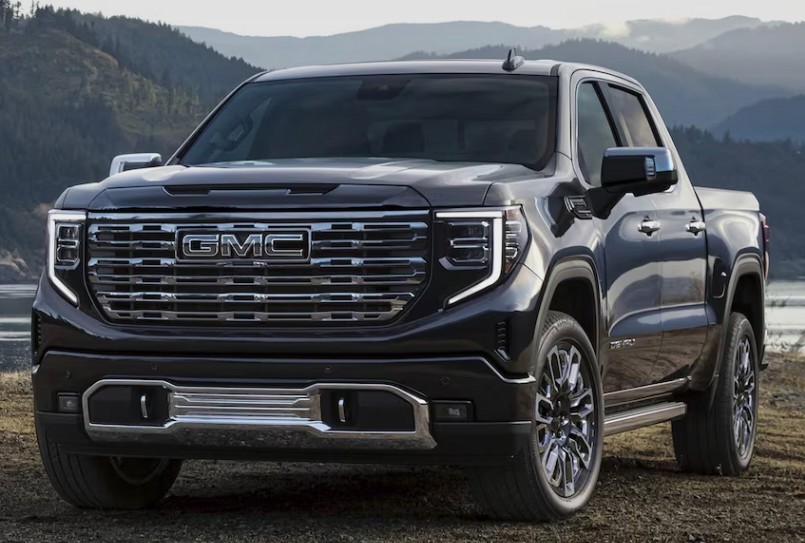
Choosing the correct GMC Sierra oil type sounds simple until we stand in front of a shelf packed with bottles marked 0W-20, 5W-30, 10W-30, synthetic blend, full synthetic, dexos, diesel, high mileage, and heavy duty.
Suddenly, buying engine oil feels like reading a restaurant menu in a language we only half understand.
The reason is straightforward: the GMC Sierra has been sold across several generations with numerous gasoline and diesel engines. A modern Sierra 1500 with a 3.0-liter Duramax does not use the same oil as an older truck with a 5.7-liter gasoline V8. Likewise, a Sierra 2500HD diesel has different lubrication requirements from a light-duty Sierra equipped with a 2.7-liter turbocharged gasoline engine.
So, what oil should we actually pour into a GMC Sierra?
For many modern gasoline-powered Sierra models, the answer is a dexos-approved synthetic oil in either 0W-20 or 5W-30, depending on the engine and model year. The modern 3.0-liter Duramax generally calls for dexosD 0W-20, while the 6.6-liter Duramax diesel typically requires a heavier diesel-engine oil that meets the specification listed in its diesel supplement.
Older trucks often use 5W-30 or 10W-30, but we should never select oil from the truck’s age alone.
This guide explains the major Sierra engines, oil viscosities, GM specifications, synthetic-oil requirements, change intervals, warning signs, and common mistakes. Because GMC publishes model-specific manuals and diesel supplements, we should always verify the final selection against the manual matched to the truck’s year, engine and market. GMC provides downloadable manuals and maintenance information through its official vehicle-support resources.
Content in this publication
- Quick GMC Sierra Oil Type Overview
- Why the Correct Oil Matters
- Understanding GMC Oil Viscosity Numbers
- What Is dexos Oil?
- GMC Sierra 1500 Oil Type by Engine
- GMC Sierra 2500HD and 3500HD Oil Types
- GMC Sierra Oil Types by Generation
- Does a GMC Sierra Require Full Synthetic Oil?
- GMC Sierra Oil Capacity
- How Often Should We Change Sierra Engine Oil?
- How to Check GMC Sierra Oil Level Correctly
- Common GMC Sierra Oil Mistakes
- Signs the Sierra May Have an Oil Problem
- Can We Mix Different Oil Brands or Viscosities?
- Best Oil for a High-Mileage GMC Sierra
- How to Find the Exact Oil for Any Sierra
- Final Thoughts on GMC Sierra Oil Type
- Frequently Asked Questions
Quick GMC Sierra Oil Type Overview
Before we dig into each generation, here is a practical overview of the oil grades commonly associated with GMC Sierra engines.
| Sierra engine or application | Commonly specified oil |
|---|---|
| Modern 2.7L TurboMax gasoline engine | SAE 5W-30 dexos-approved oil |
| Modern 5.3L gasoline V8 | SAE 0W-20 dexos-approved oil |
| Modern 6.2L gasoline V8 | SAE 0W-20 dexos-approved oil |
| Some earlier 4.3L, 5.3L and 6.2L engines | SAE 5W-30 or 0W-20, depending on year |
| 3.0L Duramax diesel | SAE 0W-20 dexosD |
| Current 6.6L gasoline HD V8 | Commonly SAE 5W-30 dexos-approved oil |
| 6.6L Duramax diesel | Heavy-duty diesel oil specified by model year and temperature |
| Many older gasoline Sierra engines | SAE 5W-30 |
| Some older HD engines and warm-climate applications | SAE 10W-30 where permitted |
This table is a starting point rather than a substitute for the manual. Even engines with the same displacement can receive revised oil requirements after redesigns.
For example, GM documentation identifies dexosD 0W-20 for the current LZ0 3.0-liter Duramax. Meanwhile, GM’s licensed-oil information explains that dexosD now replaces dexos2 in light-duty diesel applications and must still be used in the viscosity required by the owner’s manual.
Why the Correct Oil Matters
Engine oil is more than slippery liquid moving around inside a metal box. It is the engine’s bloodstream, cleaning crew, cooling assistant and protective cushion rolled into one.
The proper oil must:
- Create a protective film between moving parts
- Flow quickly during cold starts
- Resist thinning when the engine becomes hot
- Carry contaminants toward the oil filter
- Help control deposits and sludge
- Protect turbocharger bearings where applicable
- Support fuel-economy and emissions systems
- Remain stable during towing and heavy-load operation
Using an incorrect viscosity can affect lubrication speed, oil pressure, fuel consumption and wear protection. Using an oil with the wrong performance specification can also undermine deposit control or compatibility with modern emissions equipment.
A Sierra used for gentle highway commuting has an easier life than one that pulls a large trailer through mountain heat. However, that does not mean we should automatically pour thicker oil into the towing truck. We should begin with the approved viscosity and specification, then follow any severe-service guidance provided by GMC.
Understanding GMC Oil Viscosity Numbers
Oil grades such as 0W-20 and 5W-30 can look cryptic, but the idea is fairly simple.
What the First Number Means
The number before the “W” indicates how the oil behaves when cold. The “W” refers to winter performance.
A 0W oil generally flows more readily at very low temperatures than a 5W or 10W oil. Faster cold circulation matters because a large share of engine wear can occur shortly after startup, before oil has completely reached critical components.
What the Second Number Means
The second number describes the oil’s viscosity at normal operating temperature.
For example:
- 0W-20 behaves as a 20-grade oil when hot
- 5W-30 behaves as a 30-grade oil when hot
- 10W-30 also behaves as a 30-grade oil when hot
The second number does not directly tell us that one oil is “better.” It tells us that it belongs to a different viscosity range.
Is Thicker Oil Always More Protective?
No. That idea has lingered around garages for decades, but a modern engine is engineered around specific bearing clearances, oil passages, pumps, variable-valve-timing systems and emissions targets.
Oil that is too thick may circulate more slowly during startup. Oil that is too thin for an engine not designed around it may not provide the intended protection under heat and load.
The smartest approach is not to choose the thickest bottle. It is to use the viscosity GMC specified for the exact engine.
What Is dexos Oil?
Dexos is a General Motors engine-oil performance specification. It is not simply a brand, and it is not the same thing as viscosity.
A bottle can be labelled 0W-20 without being licensed to the relevant GM specification. Likewise, several oil brands can carry the same dexos approval.
GM’s current system includes specifications such as:
- dexos1 for many gasoline engines
- dexosD for light-duty diesel engines
- dexosR for certain gasoline and performance applications
GM states that dexosD supersedes dexos2 for light-duty diesel engines. It also states that dexosR oils meet or exceed earlier dexos2 and dexos1 Gen 2 and Gen 3 performance requirements, provided we still choose the correct viscosity grade from the vehicle manual.
Viscosity and Specification Are Different
Imagine ordering shoes. Viscosity is the size, while the performance specification describes what the shoes were built to do.
A size-ten hiking boot and a size-ten dress shoe are not interchangeable simply because their sizes match. In the same way, two 5W-30 oils may be formulated for different applications.
We should check both:
- The SAE viscosity, such as 0W-20
- The required performance specification, such as dexos1 or dexosD
How to Identify an Approved Oil
Look at the front and back of the bottle for the applicable dexos mark or licence information. Marketing phrases such as “recommended for GM vehicles” are less meaningful than an actual approval.
GM maintains official lists of licensed oils, which can help confirm whether a particular product holds the relevant approval.
GMC Sierra 1500 Oil Type by Engine
The Sierra 1500 has used a wide range of engines, from naturally aspirated V6 units to turbocharged gasoline fours, traditional V8s and inline-six diesels.
Let us break down the major modern applications.
2.7-Liter Turbo and TurboMax Oil Type
Modern Sierra 1500 trucks equipped with the 2.7-liter turbocharged gasoline engine commonly call for SAE 5W-30 oil meeting the required GM dexos gasoline specification.
This engine works hard. Turbocharging forces more air into a relatively small displacement, producing the torque expected from a full-size pickup. That also means the oil must handle high temperatures around the turbocharger while resisting deposits.
Full synthetic oil is the sensible choice because it generally offers stronger high-temperature stability and low-temperature flow than conventional oil.
Do not assume that the 2.7-liter engine uses 0W-20 simply because several Sierra V8s do. The required grade can differ even when the engines sit in the same showroom.
4.3-Liter V6 Oil Type
The 4.3-liter EcoTec3 V6 found in earlier recent-generation Sierra 1500 trucks commonly used dexos-approved oil. Depending on the model year and configuration, SAE 5W-30 is a frequent recommendation.
Earlier 4.3-liter V6 engines from older generations also commonly used 5W-30, with some manuals allowing another viscosity under specific temperature conditions.
Because the 4.3-liter name spans different engine families and decades, we should never treat every 4.3-liter Sierra as mechanically identical.
5.3-Liter V8 Oil Type
The 5.3-liter V8 is one of the most familiar engines in Sierra history, but its recommended oil has not remained frozen in time.
Many current and recent 5.3-liter EcoTec3 engines use:
SAE 0W-20 full synthetic oil meeting the applicable dexos gasoline specification.
Older 5.3-liter engines frequently used:
SAE 5W-30 oil meeting the specification listed in the manual.
This difference is important. A driver who owned a 2005 Sierra and later buys a much newer 5.3-liter truck should not automatically carry the old oil habit forward.
The engine displacement may look familiar, but internal design, cylinder-deactivation technology, oil pumps and lubrication strategies have evolved.
6.2-Liter V8 Oil Type
Many late-model Sierra 1500 trucks with the 6.2-liter gasoline V8 specify:
SAE 0W-20 dexos-approved full synthetic engine oil.
The 6.2-liter engine delivers substantial power and may spend its life towing, climbing or accelerating a heavy Denali or AT4 configuration. Proper oil quality matters because heat and load can punish a marginal lubricant like waves repeatedly striking a seawall.
Some earlier 6.2-liter applications used 5W-30, so the model year must be checked before service.
3.0-Liter Duramax Diesel Oil Type
The current 3.0-liter inline-six Duramax requires a different oil family from the gasoline engines.
GM identifies:
SAE 0W-20 oil meeting the dexosD specification
for the LZ0 3.0-liter Duramax. Official GM material also explains that dexosD is the current light-duty diesel specification and is backward-compatible for diesel applications that previously called for dexos2, as long as the correct viscosity is selected.
The earlier LM2 3.0-liter Duramax should be serviced according to its model-year diesel supplement. GMC published dedicated supplements for these engines because diesel maintenance requirements cannot always be captured accurately in a gasoline-focused chart.
Why Diesel Oil Is Different
Diesel engines place distinctive demands on oil. Their lubricants must manage soot, turbocharger heat, higher cylinder pressures and sensitive exhaust-aftertreatment equipment.
Using ordinary gasoline-engine oil merely because the viscosity matches can be a costly mistake. The front label might say 0W-20, yet the formulation may lack the required diesel approval.
GMC Sierra 2500HD and 3500HD Oil Types
Heavy-duty Sierras live in a different mechanical world. They tow larger loads, operate at greater combined weights and often idle or work for long periods.
The two major modern choices are the 6.6-liter gasoline V8 and 6.6-liter Duramax turbo-diesel. GMC continues to offer both engines in the Sierra HD range.
6.6-Liter Gasoline V8 Oil Type
The modern 6.6-liter gasoline V8 commonly uses:
SAE 5W-30 dexos-approved gasoline-engine oil
Full synthetic oil is particularly attractive for an HD truck because towing, commercial operation and extended idling can expose the lubricant to sustained heat.
The 6.6-liter gasoline engine should not be confused with the 6.6-liter Duramax diesel. They share a displacement number, but their oil requirements are completely different.
6.6-Liter Duramax Diesel Oil Type
The 6.6-liter Duramax has appeared in multiple generations, including LB7, LLY, LBZ, LMM, LML, L5P and updated versions of the L5P.
Commonly specified heavy-duty diesel viscosities have included:
- SAE 15W-40 for many operating conditions
- SAE 5W-40 full synthetic for colder temperatures or broader seasonal protection
- Other grades only where the applicable diesel supplement permits them
The oil must also satisfy the diesel performance category and GM requirements stated for that model year.
A 6.6-liter Duramax should not automatically receive dexosD 0W-20. DexosD is associated with GM’s light-duty diesel requirements, including the 3.0-liter Duramax. The HD Duramax uses its own manual guidance.
Cold-Climate Duramax Considerations
Cold weather changes how quickly oil moves after startup. A full-synthetic 5W-40 diesel oil may be recommended or preferred in climates where a conventional 15W-40 becomes sluggish.
The final selection should reflect:
- The truck’s model year
- The diesel-engine generation
- Expected ambient temperature
- Required diesel specification
- Owner-manual or diesel-supplement instructions
GMC Sierra Oil Types by Generation
Exact engine-by-engine requirements are always preferable, but generational patterns help us understand how Sierra lubrication has evolved.
First-Generation Sierra: 1999–2006
First-generation Sierra trucks commonly used gasoline engines such as the 4.3-liter V6 and 4.8-, 5.3-, 6.0- and 8.1-liter V8s. Many of these engines were designed around SAE 5W-30.
Some manuals permitted 10W-30 under appropriate temperature conditions, but 5W-30 generally offered better cold-start performance.
The HD range also introduced the 6.6-liter Duramax diesel. Those engines require diesel-rated oil rather than standard gasoline-engine oil.
Second-Generation Sierra: 2007–2013
The second generation continued using several familiar gasoline displacements, and 5W-30 remained common across much of the range.
This era also expanded technologies such as Active Fuel Management. Oil condition became increasingly relevant because small oil passages and hydraulically controlled components dislike sludge.
Owners of these trucks often consider high-mileage oil today. That can be appropriate, but the product should still match the required viscosity and performance category.
Third-Generation Sierra: 2014–2018
The 2014 redesign brought the EcoTec3 engine family. Oil recommendations began shifting depending on engine configuration, with 0W-20 becoming common in certain engines while others retained 5W-30.
The official 2014 Sierra manual specifically calls for oil carrying the dexos1 approval mark, demonstrating how GM’s proprietary performance specification had become central to gasoline-engine lubrication.
This generation teaches us an important lesson: looking only at the badge or displacement is no longer enough.
Fourth-Generation Sierra: 2019–Present
The current generation introduced or expanded:
- The 2.7-liter turbocharged gasoline engine
- Updated 5.3- and 6.2-liter V8 engines
- The 3.0-liter inline-six Duramax
- Advanced cylinder-management systems
- More sophisticated turbocharging and emissions controls
Common oil grades include 5W-30 for the turbocharged gasoline four, 0W-20 for several V8 applications and dexosD 0W-20 for the current 3.0-liter Duramax.
The range of requirements is now broad enough that guessing based on truck size is especially risky.
Does a GMC Sierra Require Full Synthetic Oil?
Many modern Sierra engines are best serviced with full synthetic oil, and certain applications effectively require an oil capable of meeting specifications generally associated with synthetic formulations.
Synthetic oil offers several useful characteristics:
- Better flow in freezing temperatures
- Greater resistance to thermal breakdown
- Stronger turbocharger protection
- Improved deposit control
- Better stability during towing
- Longer-lasting viscosity performance
However, the word “synthetic” alone is not a guarantee of suitability. A full-synthetic oil with the wrong viscosity or approval remains the wrong oil.
Can We Use a Synthetic Blend?
A synthetic blend may be acceptable in some older engines when it meets every requirement in the manual. For a modern turbocharged, diesel or heavily worked Sierra, full synthetic is generally the more reassuring option.
The price difference between a blend and full synthetic is modest compared with the cost of internal engine or turbocharger repairs.
Can We Switch from Conventional to Synthetic?
Yes, in most mechanically sound engines we can switch from conventional oil to synthetic without performing an engine flush.
An older engine may begin showing leaks after a switch, but synthetic oil does not magically create holes in seals. More often, the new oil cleans deposits that were masking an existing weak seal.
A high-mileage synthetic formula can be a useful middle path for an older Sierra with minor seepage.
GMC Sierra Oil Capacity
Oil capacity varies by engine, oil pan, drivetrain configuration and whether the filter is replaced.
That final detail matters. An oil change normally includes a new filter, and published service capacities typically assume the filter is changed.
Approximate capacities across Sierra engines can range from around six quarts in some older gasoline applications to roughly ten quarts or more in certain modern diesel and HD engines.
Because an incorrect capacity can lead to overfilling or underfilling, we should not rely on a universal number.
The Safest Filling Method
Use this procedure:
- Confirm the published capacity for the VIN, model year and engine.
- Install the correct filter and drain-plug seal where required.
- Add slightly less than the full listed capacity.
- Start the engine briefly and check for leaks.
- Shut the engine off and let the oil settle.
- Check the dipstick on level ground.
- Add small amounts until the level reaches the proper range.
- Never deliberately fill above the maximum mark.
Overfilling can aerate the oil or increase crankcase pressure. Underfilling can starve components during acceleration, cornering or towing.
How Often Should We Change Sierra Engine Oil?
Modern Sierra trucks use an oil-life monitoring system that estimates remaining oil life based on operating conditions rather than mileage alone.
GMC directs owners to model-specific maintenance schedules and manuals for routine service requirements.
For many owners, the practical rule is:
- Follow the oil-life monitor
- Check the level regularly
- Change the oil at least as often as the manual requires
- Do not exceed the time limit even when mileage is low
What Counts as Severe Service?
Oil degrades faster when a Sierra regularly experiences:
- Heavy trailer towing
- Frequent short trips
- Extended idling
- Dusty roads
- Repeated low-speed work
- Extreme heat or cold
- Commercial use
- Snow-plough operation
- Stop-and-go traffic
- Off-road driving
A truck can cover relatively few miles yet work extremely hard. Engine hours and operating conditions may tell a more honest story than the odometer.
Should We Change Oil Every 3,000 Miles?
The traditional 3,000-mile rule is unnecessarily frequent for many modern Sierras using approved synthetic oil. Still, blindly stretching intervals is not wise either.
The oil-life system and owner’s manual provide a better foundation. Owners who tow heavily, idle for long periods or drive in severe conditions may choose a conservative interval without returning to an automatic 3,000-mile schedule.
How to Check GMC Sierra Oil Level Correctly
Checking oil takes only a few minutes and can reveal leaks or consumption before they become serious.
Step-by-Step Oil Check
- Park the Sierra on level ground.
- Switch off the engine.
- Allow several minutes for oil to drain into the pan.
- Remove the dipstick.
- Wipe it clean.
- Reinsert it fully.
- Remove it again and read the level.
- Add only the approved oil if the level is low.
Some engines may have model-specific checking instructions, particularly after extended operation. Follow the manual if it specifies a particular temperature or waiting period.
How Often Should We Check It?
Check at least monthly and before:
- Long road trips
- Towing
- Off-road travel
- Remote journeys
- Extended high-speed driving
An oil-life monitor estimates oil condition; it does not replace the dipstick. A truck can display plenty of remaining oil life while its physical oil level is dangerously low.
Common GMC Sierra Oil Mistakes
Even experienced owners can make simple mistakes.
Choosing Oil by Brand Alone
Brand matters less than viscosity, specification and authenticity. A premium brand’s wrong product is still wrong.
Assuming Every 5.3-Liter V8 Uses the Same Oil
Older 5.3-liter engines often used 5W-30, while many newer versions use 0W-20. Always include the model year when searching.
Using Gasoline Oil in a Diesel
Matching viscosity does not make gasoline and diesel oils interchangeable. Diesel engines need the correct performance formulation.
Adding Oil Without Checking the Dipstick
Topping up by guesswork can create an overfill. Add small amounts and recheck.
Ignoring the Oil Filter
A low-quality or incorrect filter can restrict flow, bypass filtration improperly or fail to maintain the intended oil pressure. Use a filter listed for the exact engine.
Resetting the Oil Monitor Without Changing the Oil
The system does not test the oil directly. Resetting it merely starts a new calculation. Reset it only after completing the service.
Signs the Sierra May Have an Oil Problem
Watch for:
- Low-oil-pressure warning
- Oil-pressure gauge behaving abnormally
- Ticking or knocking noises
- Burning-oil smell
- Blue exhaust smoke
- Oil spots beneath the truck
- Sudden increase in consumption
- Metallic particles in drained oil
- Milky oil indicating possible coolant contamination
- Turbocharger whine accompanied by oil loss
A red oil-pressure warning requires immediate attention. Safely stop the engine as soon as possible. Continuing to drive without adequate pressure can turn a manageable repair into complete engine failure.
Can We Mix Different Oil Brands or Viscosities?
Mixing reputable oils of the same viscosity and specification is generally preferable to operating with a dangerously low oil level.
For example, topping up dexos-approved 0W-20 with another licensed 0W-20 brand is normally less concerning than driving with the dipstick below its safe range.
Mixing viscosities should be reserved for emergencies unless the manual permits an alternative grade. At the next service, return to the correct product.
Best Oil for a High-Mileage GMC Sierra
High-mileage oil can be helpful once a truck has accumulated substantial use, especially if it shows minor seal seepage or increased consumption.
These formulations may include additives designed to:
- Condition aging seals
- Reduce evaporation
- Improve deposit control
- Support protection in worn engines
However, high mileage does not give us permission to ignore the required viscosity.
A 0W-20 engine does not automatically need 10W-40 simply because the odometer has passed 150,000 miles. Changing viscosity to disguise a mechanical problem can delay diagnosis while creating new lubrication concerns.
How to Find the Exact Oil for Any Sierra
When uncertainty remains, use this order:
- Read the engine-oil section of the owner’s manual.
- Check the diesel supplement when applicable.
- Confirm the engine code or VIN.
- Verify both viscosity and specification.
- Check the oil-cap marking as supporting information.
- Use GM’s licensed-oil lists to confirm approval.
- Ask a GMC service department to verify the VIN when specifications remain unclear.
GMC’s manual portal is especially useful because it allows owners to locate documentation for specific vehicles rather than relying on a generic internet chart.
Final Thoughts on GMC Sierra Oil Type
The correct GMC Sierra oil type depends on three things: model year, engine and required GM specification.
Many modern gasoline V8 Sierras use dexos-approved 0W-20. The 2.7-liter turbo commonly uses 5W-30. The current 3.0-liter Duramax calls for dexosD 0W-20, while the 6.6-liter Duramax HD requires the heavy-duty diesel oil specified in its model-year supplement.
Older gasoline Sierras frequently use 5W-30, but even that familiar guideline has exceptions.
The big lesson is simple: do not choose oil from displacement, bottle colour or an old habit. Read the exact specification as carefully as we would read a prescription label. The correct oil quietly protects the engine every mile, while the wrong one may not reveal its damage until the repair bill arrives.
Frequently Asked Questions
1. What oil does a GMC Sierra 1500 take?
It depends on the engine and year. Many recent 5.3-liter and 6.2-liter V8 models use dexos-approved 0W-20. The 2.7-liter turbo commonly uses 5W-30, while the current 3.0-liter Duramax uses dexosD 0W-20. Older engines frequently use 5W-30.
2. Does the GMC Sierra require synthetic oil?
Many modern Sierra engines should use full synthetic oil meeting the required dexos specification. Synthetic oil is especially beneficial for turbocharged engines, diesel engines, cold starts and towing. Always prioritize the specification stated in the manual.
3. Can we put 5W-30 in a Sierra that requires 0W-20?
Not as a routine substitution unless GMC permits it for that engine and operating condition. The two grades behave differently at operating temperature. Use the specified 0W-20 and reserve alternatives for situations explicitly covered by the manual.
4. What oil does the 3.0 Duramax Sierra use?
The current LZ0 3.0-liter Duramax uses SAE 0W-20 meeting the GM dexosD specification. Earlier LM2 applications should be checked against their model-year diesel supplement, although dexosD has replaced dexos2 for GM light-duty diesel use.
5. Is dexos oil mandatory for a GMC Sierra?
When the manual requires a dexos specification, we should use oil carrying the applicable approval. Viscosity alone is not enough. The dexos designation verifies that the oil has met GM’s relevant performance standard.
If you want to know other articles similar to GMC Sierra Oil Type: Complete Guide for Every Engine you can visit the category Service and Parts.
Toyota Yaris Cross Dashboard Symbols

BMW 3 Series Warning Lights: The Complete Guide to Understanding Every Dashboard Symbol

Nissan Qashqai Fuel Tank Capacity: Complete Guide

Suzuki Swift Fuel Tank Capacity: Complete Guide

Mazda CX-5 Weight (2013–2026): Complete Guide in Pounds and KG

Kia Sportage Dashboard Symbols and Warning Lights
Leave a Reply
More content of your interest