
Ford Ranger and Everest: Same DNA, Different Adventures

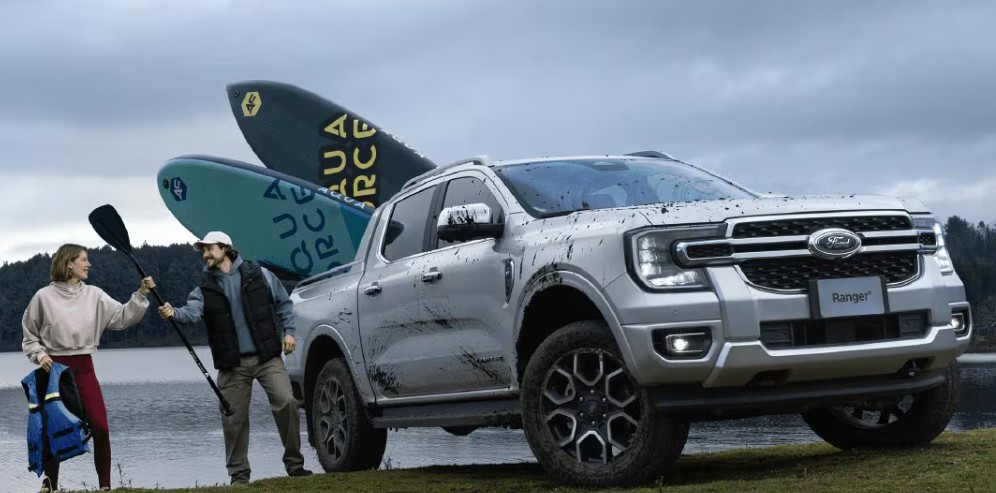
The Ford Ranger and Everest often appear together in conversations about capable vehicles, and for good reason. One is a tough, practical pickup built to carry tools, equipment, camping gear, and almost anything else we can squeeze into its tray. The other is a refined, family-friendly SUV that combines seven-seat practicality with genuine off-road ability.
At first glance, choosing between them seems simple. Need an open cargo bed? Buy the Ranger. Need extra passenger seats? Pick the Everest.
Yet the real decision goes much deeper.
These two vehicles share engineering ideas, powertrain options, technology, and a rugged personality, but they deliver noticeably different ownership experiences. The Ranger feels like a hardworking pair of boots: durable, adaptable, and ready to get dirty. The Everest is more like a quality hiking jacket: still designed for rough conditions, but warmer, quieter, and easier to live with every day.
So, which one belongs in our driveway? Let’s compare the Ford Ranger and Everest from every practical angle.
Content in this publication
- Are the Ford Ranger and Everest the Same Vehicle?
- How Closely Related Are the Ford Ranger and Everest?
- Ford Ranger vs Everest at a Glance
- Exterior Design: Utility Meets Sophistication
- Interior Design and Cabin Quality
- Cargo Space: Tray Versus Enclosed Boot
- Engine Choices and Performance
- Transmission and Four-Wheel-Drive Systems
- Towing: Ranger or Everest?
- Payload and Working Ability
- Ride Comfort and Road Manners
- Off-Road Performance
- Fuel Consumption and Running Costs
- Technology and Safety
- Family Practicality
- Business and Commercial Use
- Parking and Urban Maneuverability
- Customization and Accessories
- Which Is More Comfortable: Ranger or Everest?
- Which Is Better for Camping?
- Which Is Better for Towing a Caravan?
- Which Is Likely to Hold Its Value Better?
- Potential Disadvantages of the Ford Ranger
- Potential Disadvantages of the Ford Everest
- Should We Buy the Ford Ranger or Everest?
- Ford Ranger and Everest: Final Verdict
- Frequently Asked Questions
Are the Ford Ranger and Everest the Same Vehicle?
No, the Ford Ranger and Everest are not the same vehicle, although they are closely related.
The Ranger is a pickup truck, sometimes called a ute in markets such as Australia and New Zealand. It is available in different cab and cargo configurations, depending on the country and model grade.
The Everest is a body-on-frame SUV designed around passenger comfort, enclosed luggage space, and up to seven seats. It takes the tough foundations associated with the Ranger family and wraps them in a more sophisticated, family-oriented body.
In simple terms:
- The Ranger prioritizes payload, cargo flexibility, and commercial usefulness.
- The Everest prioritizes passenger space, comfort, security, and family travel.
- Both can offer diesel power, four-wheel drive, towing capability, and off-road technology.
- Exact engines, trim levels, drivetrains, and capacities vary by market.
That last point matters. Ford sells these vehicles across numerous regions, and the specifications offered in Thailand may not match those available in Australia, New Zealand, South Africa, Colombia, or another market.
The relationship is close enough that many drivers describe the Everest as the SUV relative of the Ranger. They share a broad family resemblance in their underlying engineering, dashboard design, technology, powertrain availability, and off-road philosophy.
Ford also markets both vehicles around work, towing, adventure, and four-wheel-drive capability. Current Everest ranges in markets such as New Zealand include 2.0-litre turbo-diesel and 3.0-litre V6 turbo-diesel choices, while Ford’s Ranger range offers multiple work-focused, lifestyle, luxury, and high-performance grades.
Still, calling them identical underneath would oversimplify the story.
Their bodies, suspension tuning, load requirements, weight distribution, interiors, rear structures, and intended uses differ. Ford must make the Ranger behave properly with an empty tray, a heavy payload, or a trailer attached. The Everest, meanwhile, must remain composed with children in the rear seats, luggage behind them, and perhaps a caravan following close behind.
They may come from the same family, but they have different jobs.
Ford Ranger vs Everest at a Glance
| Category | Ford Ranger | Ford Everest |
|---|---|---|
| Vehicle type | Pickup truck | Body-on-frame SUV |
| Typical seating | Two to five seats | Five or seven seats |
| Cargo area | Open or covered rear tray | Enclosed luggage compartment |
| Best for | Work, equipment, bulky loads | Families, passengers, secure luggage |
| Ride character | Firmer and more utility-focused | Smoother and more refined |
| Towing | Strong, grade-dependent | Up to 3,500 kg in certain markets and configurations |
| Off-road ability | Excellent, especially specialist grades | Strong, with better passenger comfort |
| Urban convenience | Long but highly practical | Easier for everyday family use |
| Cargo security | Requires a cover or canopy | Naturally enclosed and lockable |
| Interior atmosphere | Functional to premium | More SUV-like and luxurious |
This table gives us the broad picture, but the differences become clearer once we examine how each vehicle behaves in real life.
Exterior Design: Utility Meets Sophistication
Park a Ranger beside an Everest and the family connection becomes obvious. Both can feature Ford’s bold grille treatment, C-shaped lighting signatures, muscular wheel arches, upright proportions, and a squared-off stance.
The Ranger looks more industrial. Its separate cargo tray, exposed rear chassis section, and practical body design make it appear ready for work before we even start the engine.
The Everest looks more complete and cohesive. Its roof continues toward the rear, the luggage area blends into the passenger cabin, and the overall shape feels more polished. It still looks rugged, but its toughness wears a tailored jacket.
The Ranger Makes a Stronger Work Statement
A Ranger parked outside a construction site, farm, workshop, or outdoor equipment store looks completely at home. Even premium Ranger variants retain that unmistakable working-vehicle silhouette.
The tray also opens the door to extensive customization. Owners can add:
- Toolboxes
- Canopies
- Roller shutters
- Sports bars
- Roof tents
- Drawer systems
- Fridge slides
- Bike racks
- Trade service bodies
- Camping kitchens
That flexibility is one of the Ranger’s greatest strengths.
The Everest trades the Ranger’s exposed tray for an enclosed rear body. This creates a cleaner appearance and makes it feel more suitable for school runs, business meetings, restaurants, hotels, and long family trips.
Higher Everest trims can include large alloy wheels, leather-accented seating, digital displays, substantial infotainment screens, ambient lighting, and premium exterior details. The current Everest Platinum in New Zealand, for example, is presented with a 12.4-inch digital instrument cluster and a 12-inch central touchscreen.
The result is ruggedness without the visual rough edges of a conventional work pickup.
Interior Design and Cabin Quality
The modern Ranger is no longer a bare-bones workhorse unless we deliberately choose an entry-level commercial specification. Many versions offer large touchscreens, digital displays, wireless phone integration, multiple storage spaces, supportive seats, and a cabin that would have seemed unusually luxurious in a pickup not long ago.
However, the Everest generally feels more refined.
Ford can use softer suspension tuning, additional sound insulation, enclosed rear bodywork, passenger-focused seating, and more decorative finishes to create a calmer environment. The difference is especially noticeable when traveling on coarse roads or carrying passengers in the second and third rows.
Front-Seat Experience
From the front seats, Ranger and Everest can feel surprisingly similar. Their dashboard architecture, controls, screen layouts, steering-wheel design, and driving positions may be closely related within the same generation and market.
Both provide the high seating position many drivers love. We sit above ordinary traffic, enjoy a wide view of the road, and feel as though the vehicle is prepared to climb over whatever appears ahead.
The Everest usually adds a little more polish. Its cabin is aimed primarily at private buyers rather than commercial fleets, so even ordinary versions often feel less utilitarian.
Second-Row Comfort
The Everest begins to pull away in the second row.
A Ranger double cab can carry adults in the rear, but its upright seating position and limited under-thigh support may become noticeable during long journeys. The rear cabin must fit ahead of the cargo tray, so packaging compromises are unavoidable.
The Everest’s second row is designed around regular passenger use. It is usually easier to access, more comfortable over distance, and better suited to child seats, teenagers, and adult travelers.
Third-Row Seating
The Ranger does not offer a third row. The Everest can be configured with up to seven seats, depending on the market and variant.
That instantly makes the Everest the stronger option for larger households. The third row may not provide limousine space, but it can transform a difficult transport problem into a manageable one.
Need to carry two adults, three children, and a pair of visiting relatives? The Everest can handle the assignment. The Ranger cannot do so without leaving someone behind.
Cargo Space: Tray Versus Enclosed Boot
This may be the most important difference between the Ford Ranger and Everest.
The Ranger gives us an open cargo tray. The Everest gives us an enclosed luggage compartment.
Neither solution is universally better. The right one depends on what we carry.
Why the Ranger Tray Wins for Bulky Loads
The Ranger’s tray is ideal for items that are dirty, tall, awkwardly shaped, or unpleasant to carry inside a cabin.
Think of:
- Building materials
- Gardening supplies
- Muddy bicycles
- Camping equipment
- Fuel containers
- Animal feed
- Machinery
- Firewood
- Wet sports equipment
- Large household appliances
We can wash the tray, fit protective liners, add tie-down points, and load items that would never pass through an SUV’s tailgate.
A pickup bed is like a movable outdoor room. It does not care whether our cargo smells of soil, seawater, engine oil, or last night’s campfire.
Why the Everest Boot Wins for Everyday Life
The Everest’s enclosed cargo area is better for groceries, suitcases, laptops, shopping bags, baby equipment, and valuables.
Everything remains protected from:
- Rain
- Dust
- Wind
- Road grime
- Casual theft
- Extreme sunlight
With the rear seats folded, the Everest can still carry substantial loads. Its interior may not accept the same oversized objects as a Ranger tray, but it is easier to use for the things most families transport every week.
Cargo Security Is a Deciding Factor
A Ranger owner can add a hard lid, roller shutter, or canopy, but each solution introduces cost and compromise.
A hard lid improves security but limits load height. A canopy creates enclosed space but may reduce the flexibility that attracted us to a pickup in the first place. A roller shutter is convenient, though the housing can consume some tray space.
The Everest requires no such conversion. Close the tailgate, lock the vehicle, and the luggage is concealed.
Engine Choices and Performance
Ford Ranger and Everest engine ranges vary considerably between countries, model years, and trim levels. Common offerings across global markets have included four-cylinder turbo-diesel engines and a 3.0-litre V6 turbo-diesel, while selected Ranger versions may use petrol engines or performance-focused powertrains.
For example, Ford New Zealand currently advertises Everest choices including a 2.0-litre turbo-diesel and a 3.0-litre V6 turbo-diesel. The Everest Active’s listed 2.0-litre diesel produces 125 kW and 405 Nm and is paired with a 10-speed automatic transmission.
We should always check the official local specification sheet rather than assuming two similarly named versions have identical outputs.
Four-Cylinder Diesel Engines
A four-cylinder diesel is often the sensible choice.
It may offer:
- Lower purchase costs
- Reasonable fuel consumption
- Strong low-speed torque
- Adequate towing performance
- Lower weight over the front axle
- More affordable servicing in some markets
For commuting, moderate towing, family trips, and ordinary off-road driving, a well-matched four-cylinder diesel can feel perfectly capable.
V6 Turbo-Diesel Engines
The V6 turbo-diesel is the more effortless option where available.
You may be interested in reading Ford Ranger Versus Hilux: Which Pickup Is Better?
It generally provides stronger torque delivery, smoother acceleration under load, and greater confidence when overtaking or towing. Rather than feeling dramatically fast, it makes heavy work feel lighter.
Imagine two people carrying the same suitcase. The four-cylinder lifts it successfully; the V6 lifts it without changing expression.
The V6 makes particular sense for drivers who frequently tow heavy caravans, travel with a full passenger load, cross steep terrain, or simply prefer relaxed performance.
Does the Ranger Feel Faster Than the Everest?
A similarly powered Ranger may feel slightly more immediate depending on its weight, configuration, gearing, tyres, and payload. However, performance differences cannot be generalized across every variant.
A basic Ranger, luxury Ranger, Ranger Raptor, four-cylinder Everest, and V6 Everest are completely different propositions.
The better question is not simply, “Which is faster?” It is, “Which powertrain suits the work we actually do?”
Transmission and Four-Wheel-Drive Systems
Many current Ranger and Everest variants use automatic transmissions, including Ford’s 10-speed automatic in several markets. Manual Ranger versions may still exist in certain regions, especially in work-focused grades.
Four-wheel-drive systems also vary.
Some versions use selectable part-time four-wheel drive, while certain higher-grade or V6 Everest models offer full-time four-wheel-drive capability. Ford New Zealand notes that full-time four-wheel drive is available on V6 Everest models in its range.
Part-Time Four-Wheel Drive
A traditional part-time system usually allows us to select:
- Rear-wheel drive for normal sealed-road driving
- High-range four-wheel drive for loose surfaces
- Low-range four-wheel drive for demanding terrain
This arrangement is simple, proven, and highly effective off road.
Full-Time Four-Wheel Drive
Full-time four-wheel drive can provide additional reassurance on wet roads, mixed surfaces, gravel, or rapidly changing conditions. We do not have to wait for the road to become difficult before involving all four wheels.
For family drivers who want everyday security as much as trail capability, the Everest’s available full-time system may be especially appealing.
Towing: Ranger or Everest?
Both vehicles can be excellent tow vehicles, but we must examine the complete weight picture rather than focusing on a headline number.
In Australia and New Zealand, Ford advertises a maximum braked towing capacity of up to 3,500 kg for properly equipped Everest models.
Many Ranger configurations also offer substantial towing capability, but limits depend on the engine, body style, drivetrain, tow package, vehicle mass, gross combination mass, payload, and local regulations.
Why the Ranger Can Be Better for Work Towing
The Ranger may be preferable when we need to carry tools or equipment in the tray while towing a trailer. Its cargo system is easier to organize for trade work, farm use, recovery equipment, and outdoor projects.
However, payload calculations matter. A heavy tow-ball load, passengers, accessories, fuel, and tray cargo all consume the vehicle’s available capacity.
Why the Everest Can Be Better for Family Towing
The Everest is often the more comfortable choice for towing a caravan or boat on long family journeys.
Its advantages include:
- Better rear-passenger accommodation
- Enclosed luggage storage
- A quieter cabin
- More refined suspension behavior
- Easier access to travel essentials
- Up to seven seats in suitable variants
Some current Everest models also offer towing aids such as trailer-focused camera technology and Pro-Trailer Backup Assist, depending on specification.
Never Judge Towing by One Number
A vehicle may be rated to tow a particular trailer but still exceed another legal or mechanical limit once loaded.
Before towing, check:
- Maximum braked towing capacity
- Tow-ball download limit
- Gross vehicle mass
- Gross combination mass
- Front and rear axle limits
- Actual passenger and luggage weight
- Accessory weight
- Trailer payload
- Local licensing and speed rules
The badge on the tailgate cannot do the arithmetic for us.
Payload and Working Ability
The Ranger is the clear winner when payload and commercial utility dominate the decision.
Its entire design revolves around carrying things separately from passengers. Depending on the variant, the tray can accept heavy equipment, custom bodies, racks, tool storage, and commercial conversions.
The Everest is capable of carrying people and luggage, but it is not a substitute for a work pickup. Loading bags of cement, greasy machinery, or loose landscaping material into a carpeted SUV is a quick way to turn a pleasant cabin into a rolling storage shed.
For business use, the Ranger also offers more specialization. Ford sells versions ranging from basic work trucks to luxurious lifestyle pickups and extreme off-road models. In Australia, the Ranger range spans work-oriented XL and XLS grades through XLT, Wildtrak, Platinum, Raptor, and other market-dependent editions.
Ride Comfort and Road Manners
An unloaded pickup can feel firm or slightly restless because its rear suspension must be capable of supporting significant cargo. The rear end may bounce over sharp imperfections, particularly when the tray is empty.
Add some weight and the ride can settle noticeably.
The Everest is tuned around passengers rather than tray payload. It therefore tends to feel more controlled and comfortable in ordinary use. The suspension still communicates that we are driving a substantial body-on-frame vehicle, but the edges are smoother.
On City Streets
The Everest usually wins for daily urban driving.
Its enclosed body makes parking distance easier to judge, and passengers can place bags directly in the cabin or boot. The ride is generally calmer, and there is no need to secure every shopping trip beneath a tray cover.
The Ranger remains manageable, but it can feel more like a tool we are using than a room we are occupying.
On Highways
Both are confident long-distance vehicles, especially with stronger engines and modern driver-assistance systems.
The Everest, however, has the advantage in refinement. Less noise enters from the rear, luggage is enclosed, and the suspension is more passenger-oriented.
For a 1,000-kilometre family journey, we would usually rather sit in the Everest.
Off-Road Performance
Neither vehicle is merely pretending to be rugged.
Depending on the version, Ranger and Everest models can offer low-range gearing, locking differentials, terrain modes, hill-descent control, underbody protection, off-road camera views, substantial ground clearance, and meaningful water-wading capability.
Ford New Zealand lists a maximum water-wading figure of 800 mm for certain Everest configurations when driven under the specified conditions, while exact figures vary by model and market.
Why the Ranger Has the Off-Road Edge
The Ranger has several potential advantages:
- Greater range of specialist off-road variants
- Better cargo separation
- Easier transport of muddy recovery gear
- More accessory options
- Better suitability for tray-mounted camping setups
- Availability of high-performance versions such as the Raptor
The Ranger Raptor is designed as an extreme off-road performance model with specialized suspension and terrain systems rather than simply a conventional work truck wearing larger tyres.
Why the Everest May Be Better for Overlanding
For long-distance exploration, the Everest makes a compelling argument.
Its passengers travel in greater comfort, luggage stays protected, and the rear seats can be folded to create sleeping or storage space. We can cross rough terrain without accepting pickup-like compromises during the hundreds of road kilometres required to reach it.
The Ranger may be the better machine for the obstacle. The Everest may be the better vehicle for the entire journey.
Fuel Consumption and Running Costs
Fuel economy depends on the engine, drivetrain, tyre choice, body style, traffic, weather, accessories, payload, towing load, and driving behavior.
A lighter or simpler Ranger variant may use less fuel than a heavily equipped Everest. On the other hand, an empty pickup fitted with aggressive tyres, a canopy, a roof rack, and lifted suspension may consume more than expected.
The Everest carries the permanent weight of its enclosed body, third-row seating, interior trim, and additional comfort equipment. That can affect consumption, particularly in urban driving.
Accessories Can Change Everything
A vehicle’s official fuel figure is only the beginning.
Common additions that can increase consumption include:
- Bull bars
- Winches
- Roof racks
- Roof tents
- Oversized all-terrain tyres
- Suspension lifts
- Canopies
- Drawer systems
- Underbody protection
- Towing mirrors
Individually, each modification may seem harmless. Together, they can make the vehicle cut through the air like a brick wearing a backpack.
Technology and Safety
Modern Ranger and Everest models can offer impressive technology, although availability varies by grade.
Possible features include:
- Large portrait-oriented touchscreens
- Digital instrument clusters
- Apple CarPlay and Android Auto
- 360-degree cameras
- Adaptive cruise control
- Blind-spot monitoring
- Lane-keeping assistance
- Autonomous emergency braking
- Trailer coverage for blind-spot systems
- Parking assistance
- Multiple drive modes
- Off-road information screens
Ford has emphasized advanced driver-assistance technology in both the current Ranger and Everest families, including systems developed and tested for complex driving scenarios.
The Everest may offer more premium cabin features at equivalent or higher grades, while the Ranger often provides technology aimed specifically at towing, cargo, off-road use, and work.
Family Practicality
For most families, the Everest is the easier answer.
It offers more passenger seats, better second-row comfort, enclosed storage, quieter road manners, and an interior designed for daily life.
You may be interested in readingFord Ranger Versus Hilux: Which Pickup Is Better?You may be interested in reading
Ford Ranger vs Mitsubishi Triton: The Complete Pickup ComparisonParents will appreciate not having to place school bags, groceries, and pushchairs in an exposed tray. Children will appreciate easier access and a more comfortable rear cabin. Everyone will appreciate being able to retrieve a jacket without stopping beside the road and opening a canopy.
When the Ranger Still Works for Families
The Ranger can still be an excellent family vehicle when the household regularly carries:
- Mountain bikes
- Surfboards
- Camping equipment
- Dogs
- Motorcycles
- Fishing gear
- Dirty sports equipment
- Building supplies
A well-equipped double-cab Ranger can combine weekday commuting with weekend adventure remarkably well. Add a secure canopy or roller cover, and it becomes more versatile.
The compromise is that rear-seat comfort and enclosed storage will rarely equal the Everest.
Business and Commercial Use
The Ranger wins decisively for commercial applications.
Its tray, payload capability, accessory ecosystem, cab choices, and work-focused variants make it suitable for tradespeople, agricultural businesses, utility services, delivery work, and remote operations.
The Everest can tow equipment and travel to difficult locations, but its carpeted interior and passenger-focused body are poorly suited to daily punishment.
Buying an Everest for serious trade use would be like taking a leather briefcase to carry wet cement. Technically possible, perhaps—but fundamentally misguided.
Parking and Urban Maneuverability
Both vehicles are large, and neither turns a cramped parking garage into a relaxing experience.
The Ranger’s overall length can make parallel parking and tight underground spaces challenging. Its rear tray may also extend beyond what we can see from the driver’s seat, although cameras and parking sensors help enormously.
The Everest is also wide and substantial, but its SUV body can feel easier to place. The rear window, enclosed tailgate, and passenger-car-style packaging make it more intuitive for some drivers.
Before buying either vehicle, check:
- Garage length
- Garage door width
- Height restrictions
- Turning space
- Shopping-centre parking dimensions
- Roof-rack clearance
- Tow-bar projection
A vehicle that conquers mountains is less impressive when it cannot fit beneath our apartment building.
Customization and Accessories
The Ranger is one of the most customizable vehicles in its class.
We can build it into a work truck, touring vehicle, off-road machine, mobile workshop, family adventure pickup, or campsite on wheels.
The Everest also supports accessories such as roof platforms, tow bars, cargo barriers, all-weather mats, snorkels, underbody protection, and camping equipment. However, its customization usually enhances an existing SUV package rather than transforming the vehicle’s fundamental purpose.
Best Ranger Accessories
Popular practical additions include:
- Tray liner
- Secure tonneau cover
- Roller shutter
- Canopy
- Cargo drawers
- Tub lighting
- Tow package
- All-terrain tyres
- Recovery points
- Underbody protection
Best Everest Accessories
Useful Everest additions include:
- Cargo barrier
- Boot liner
- Roof platform
- Tow package
- All-weather floor mats
- Rear-seat protection
- Portable fridge
- Recovery equipment
- Underbody protection
- Side steps
Modify Carefully
Large wheels, suspension lifts, heavy bumpers, and roof-mounted loads can affect handling, fuel economy, braking, warranty coverage, legal compliance, and payload.
The most impressive accessory is not always the smartest one.
Which Is More Comfortable: Ranger or Everest?
The Everest is generally more comfortable.
Its suspension, seating, noise insulation, body structure, and rear-passenger layout are designed around family transport. The Ranger can be very comfortable in premium trims, but it still carries the compromises of a pickup.
For front-seat occupants traveling on smooth roads, the difference may seem small. Move to the second row, cross a broken rural road, and continue for four hours—the Everest’s advantage becomes much clearer.
Which Is Better for Camping?
This depends on our camping style.
Choose the Ranger when we want:
- A rooftop tent over the tray
- A slide-out kitchen
- Large water tanks
- Dirty equipment stored outside the cabin
- Motorbikes or bicycles in the rear
- A heavily customized touring setup
Choose the Everest when we want:
- Better passenger comfort
- Enclosed sleeping space
- Secure luggage
- Easier climate control
- A quieter road trip
- Occasional rather than permanent camping modifications
The Ranger is the stronger blank canvas. The Everest is the more complete starting point.
Which Is Better for Towing a Caravan?
For family caravan touring, the Everest may be the more pleasant option because it provides comfortable seating and enclosed luggage storage. Properly equipped versions are advertised with up to 3,500 kg of braked towing capacity in markets such as Australia and New Zealand.
The Ranger may be better when we need to carry generators, fuel containers, firewood, tools, or dirty outdoor equipment separately from passengers.
The final decision should be based on actual weights—not brochure confidence.
Which Is Likely to Hold Its Value Better?
Resale values depend on location, trim level, mileage, condition, engine, service history, demand, and supply.
The Ranger often benefits from demand among both commercial and private buyers. Popular double-cab grades can appeal to a wide audience, although heavily modified vehicles may discourage cautious buyers.
The Everest attracts families, caravan owners, and SUV buyers seeking serious towing and off-road ability. Desirable engines and well-equipped trims may retain strong demand.
Whichever one we choose, a complete service record, sensible modifications, good tyres, clean bodywork, and evidence of careful towing or off-road use will matter.
Potential Disadvantages of the Ford Ranger
Before choosing the Ranger, consider these compromises:
- Rear seats may feel less comfortable on long trips.
- An empty tray can contribute to a firmer ride.
- Cargo needs protection from weather and theft.
- A canopy or roller cover increases cost.
- Long dimensions can make parking difficult.
- Work use can leave the tray and body looking tired.
- Lifestyle accessories can consume payload.
- The cabin cannot match the Everest’s seven-seat flexibility.
None of these flaws makes the Ranger a poor vehicle. They simply reflect what it was designed to do.
Potential Disadvantages of the Ford Everest
The Everest has its own trade-offs:
- It usually costs more than an equivalent work-focused Ranger.
- Its interior is vulnerable to dirty or sharp cargo.
- It cannot carry tall, oversized items as easily.
- Seven-seat use reduces available luggage space.
- It may be heavier than comparable Ranger variants.
- Large premium wheels can reduce ride comfort and off-road resilience.
- Third-row seats may be best suited to children or occasional adult use.
- It lacks the Ranger’s commercial flexibility.
The Everest is more versatile for passengers but less adaptable for cargo.
Should We Buy the Ford Ranger or Everest?
Choose the Ford Ranger when our priorities include:
- Carrying bulky or dirty equipment
- Commercial work
- Maximum accessory flexibility
- Tray-based camping
- Transporting bikes, tools, or machinery
- Specialist off-road performance
- Keeping work cargo separate from passengers
Choose the Ford Everest when our priorities include:
- Carrying five to seven people
- Family road trips
- Passenger comfort
- Secure luggage storage
- Caravan touring
- Daily urban use
- SUV refinement with serious capability
The Best Choice for Most Families
For a household that does not need a pickup tray, the Everest is usually the better all-round vehicle.
It delivers most of the rugged capability people admire in the Ranger while adding a quieter cabin, enclosed storage, more passenger seats, and better long-distance comfort.
The Best Choice for Workers and Adventurers
For tradespeople, farmers, outdoor enthusiasts, and drivers who regularly carry awkward equipment, the Ranger is difficult to beat.
Its tray changes everything. It allows the vehicle to work hard during the week and transform into an adventure platform at the weekend.
The Best Choice for Heavy Lifestyle Use
Drivers who tow frequently but also carry a family face the closest decision.
The Everest provides the better passenger experience. The Ranger provides the better equipment solution.
Ask one simple question: do we need more space for people or more freedom for cargo?
That answer usually reveals the right vehicle.
Ford Ranger and Everest: Final Verdict
The Ford Ranger and Everest share a rugged spirit, recognizable styling, capable engines, towing strength, and genuine off-road credentials. Yet they solve different problems.
The Ranger is the practical extrovert. It carries equipment, accepts extensive modifications, and welcomes jobs that would leave an SUV’s interior begging for mercy. It is ideal when cargo is unpredictable, dirty, bulky, or part of our working life.
The Everest is the composed adventurer. It keeps passengers comfortable, luggage secure, and family life organized while remaining capable of towing, touring, and exploring difficult terrain.
Neither vehicle is automatically superior.
The Ranger is better when the tray is essential. The Everest is better when passengers are the priority. Choosing correctly is less about horsepower, screen size, or grille design and more about honestly examining how we live.
After all, the best adventure vehicle is not the one that looks toughest outside the café. It is the one that fits our people, our equipment, and the journeys we genuinely take.
Frequently Asked Questions
1. Are the Ford Ranger and Everest built on the same platform?
The Ranger and Everest are closely related body-on-frame vehicles and share significant engineering, technology, and powertrain concepts. However, they use different body structures, rear layouts, suspension tuning, and packaging because the Ranger is a pickup while the Everest is a passenger-focused SUV.
2. Is the Ford Everest more comfortable than the Ranger?
Yes, the Everest is generally more comfortable, especially for rear-seat passengers. Its suspension, enclosed body, insulation, seating arrangement, and interior design are optimized for family travel rather than tray payload.
3. Can the Ford Everest tow as much as the Ranger?
Certain Everest models can tow up to 3,500 kg braked when properly equipped, but Ranger capacities vary by version and market. Always compare the exact vehicle’s towing capacity, gross vehicle mass, gross combination mass, axle limits, and payload before towing.
You may be interested in readingFord Ranger Versus Hilux: Which Pickup Is Better?You may be interested in reading
Ford Ranger vs Mitsubishi Triton: The Complete Pickup ComparisonYou may be interested in reading
Ford Ranger vs D-Max: Which Pickup Is Better?4. Is the Ranger or Everest better off road?
The Ranger may offer the advantage for extreme off-road use, particularly in specialized variants such as the Raptor. The Everest remains highly capable and may be better for long-distance overlanding because it carries passengers and luggage more comfortably.
5. Which is better for a family, the Ford Ranger or Everest?
The Everest is usually better for families because it provides up to seven seats, a secure luggage area, improved rear-passenger comfort, and more refined road manners. The Ranger becomes the stronger choice when the family regularly carries bicycles, camping gear, work equipment, or other bulky and dirty cargo.
If you want to know other articles similar to Ford Ranger and Everest: Same DNA, Different Adventures you can visit the category Models.
Peugeot RCZ vs VW Scirocco: Which Coupe Makes More Sense?
Peugeot RCZ vs Toyota 86: Which Sports Coupe Makes More Sense?
Peugeot RCZ vs 308 CC: Which Used Peugeot Is the Better Choice?
Peugeot RCZ vs Audi TT: Which Stylish Sports Coupe Makes More Sense?
BYD Shark 6 2025 vs 2026: What Actually Changed?
BMW i7 vs Porsche Taycan: Luxury EVs With Very Different Personalities
Leave a Reply
More content of your interest