

Is Mitsubishi Outlander a Midsize SUV? Size, Class, and Practicality Explained

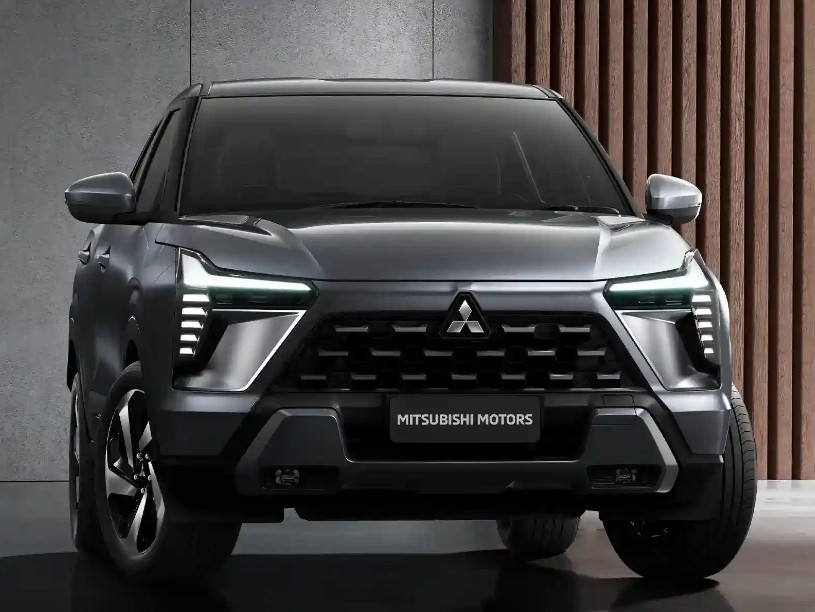
If you have been comparing family SUVs, you may have wondered: is Mitsubishi Outlander a midsize SUV, or does it actually belong to the compact SUV category? It is a fair question. The Outlander looks substantial, offers three rows of seating, and can carry as many as seven passengers. Park one beside a smaller crossover, and it certainly does not look tiny.
Yet the answer is slightly more complicated than appearance alone.
The Mitsubishi Outlander is generally classified as a compact SUV, not a traditional midsize SUV, particularly in the North American market. Car and Driver places the current Outlander in the compact SUV category, while its technical specifications describe it as an EPA “Small SUV.”
That sounds straightforward, but there is an interesting twist. The Outlander offers characteristics normally associated with larger vehicles, most notably seven-passenger seating and a third row. Mitsubishi itself confirms seven-passenger capacity on current Outlander models.
So, what exactly is going on?
Think of the Outlander as a compact SUV that likes wearing a midsize jacket. It stretches the boundaries of its segment without completely crossing into the traditional midsize category.
In this guide, we will break down its dimensions, seating capacity, cabin practicality, rivals, and overall positioning to determine where the Outlander genuinely fits.
Content in this publication
- Is Mitsubishi Outlander a Midsize SUV or Compact SUV?
- How Big Is the Mitsubishi Outlander?
- Is the Outlander Bigger Than a Compact SUV?
- Is Mitsubishi Outlander a 7-Seater SUV?
- How Does the Outlander Compare With True Midsize SUVs?
- Why SUV Categories Are So Confusing
- Does the Mitsubishi Outlander Feel Like a Midsize SUV Inside?
- Is the Mitsubishi Outlander Good for Families?
- Is the Mitsubishi Outlander Considered a Small SUV by the EPA?
- Does the Outlander PHEV Change the Classification?
- Is Mitsubishi Outlander Bigger Than Mitsubishi Outlander Sport?
- What Class of SUV Is Best for You?
- Is the Mitsubishi Outlander Easy to Park?
- Does the Outlander Offer Enough Cargo Space?
- Is Mitsubishi Outlander Too Big for City Driving?
- Is Mitsubishi Outlander Too Small for a Family?
- Why the Outlander's Size Can Be an Advantage
- So, Is Mitsubishi Outlander a Midsize SUV?
- Final Thoughts
- Frequently Asked Questions
Is Mitsubishi Outlander a Midsize SUV or Compact SUV?
The simplest answer is that the Mitsubishi Outlander is usually considered a compact crossover SUV.
Automotive classifications are not governed by one universal worldwide rule. Different manufacturers, publications, government agencies, and markets may use slightly different terminology. Consequently, one website might describe the Outlander as a small SUV, another as a compact crossover, and occasionally a dealer may market it more loosely as a midsize family SUV.
However, when we look at its direct competitors and physical dimensions, compact SUV is the more accurate description.
For example, Car and Driver currently ranks the Outlander alongside vehicles such as the:
- Honda CR-V
- Toyota RAV4
- Volkswagen Tiguan
- Hyundai Tucson
- Kia Sportage
- Mazda CX-50
Those are widely recognized as compact SUVs.
The Outlander therefore sits comfortably within that competitive neighborhood.
Why Some People Think the Outlander Is Midsize
There are several understandable reasons.
First, the Outlander has three rows of seats. We usually associate third-row seating with midsize SUVs such as the Kia Telluride, Hyundai Palisade, Ford Explorer, or Toyota Highlander.
Second, the Outlander is fairly long for a compact crossover.
The current model measures approximately 185.8 inches in length, with a wheelbase of around 106.5 inches.
That makes it noticeably larger than certain smaller crossovers.
Third, its styling creates visual bulk. The tall nose, broad grille, upright body, and relatively squared-off rear make it appear bigger than the tape measure suggests.
It is a bit like someone wearing a structured winter coat. The silhouette appears larger even though the underlying dimensions remain relatively modest.
The Third Row Creates Most of the Confusion
The third row is arguably the biggest reason people ask whether the Mitsubishi Outlander is midsize.
Most mainstream compact SUVs have two rows and seat five passengers.
The Outlander breaks that pattern.
Current models provide seven-passenger seating, something Mitsubishi prominently advertises.
That immediately makes the vehicle feel more family-oriented than a typical compact crossover.
However, having seven seats does not automatically transform an SUV into a midsize model.
Packaging matters.
How Big Is the Mitsubishi Outlander?
Dimensions provide a much clearer picture than marketing labels.
Current Outlander specifications list a length of roughly 185.8 inches, a wheelbase of approximately 106.5 inches, and a height close to 68.7 inches.
Those measurements place it near the larger end of the compact crossover category.
It is not tiny.
But it is also noticeably shorter than many conventional three-row midsize SUVs, which frequently stretch toward or beyond 195 inches.
That 10-inch difference can dramatically affect interior packaging, third-row comfort, cargo capacity, and maneuverability.
Outlander Size in Everyday Driving
Numbers rarely tell the full story.
When we drive or park an SUV, dimensions become something physical.
The Outlander feels large enough to provide a confident driving position and respectable passenger space without becoming cumbersome in urban environments.
That balance is one of its strongest characteristics.
You get something that feels reasonably substantial on the highway but remains manageable when squeezing into a supermarket parking space.
Anyone moving from a sedan or subcompact crossover will probably consider the Outlander fairly large.
Someone coming from a Toyota Highlander, Ford Explorer, or Chevrolet Traverse may consider it relatively compact.
Perspective changes everything.
Is the Outlander Bigger Than a Compact SUV?
Not technically, but it sits toward the roomy end of the category.
The compact SUV class has expanded substantially over the years.
Modern vehicles such as the Volkswagen Tiguan, Honda CR-V, Nissan Rogue, and Mitsubishi Outlander would have looked surprisingly large compared with compact SUVs from twenty years ago.
Today's compact SUVs have grown because buyers want more.
We want rear legroom.
We want cargo space.
We want bigger screens.
We want higher seating positions.
And somehow, we still want a vehicle that fits easily into a normal parking spot.
Manufacturers have responded by stretching compact crossovers right up to the edge of midsize territory.
The Outlander is a perfect example.
Compact SUV Does Not Mean Small Anymore
The word “compact” can be misleading.
Nobody climbs into an Outlander and thinks they are sitting inside a tiny city crossover.
Compact simply describes its market class relative to larger SUVs.
Below it, you will find genuinely smaller subcompact crossovers.
Above it, you will encounter midsize SUVs offering greater passenger room, larger cargo areas, stronger towing capacity in many cases, and more powerful engines.
The Outlander occupies the middle ground.
Is Mitsubishi Outlander a 7-Seater SUV?
Yes.
The current Mitsubishi Outlander offers seating for up to seven passengers.
That is unusual within the compact SUV class and one of the vehicle's strongest selling points.
But we should emphasize two words: up to.
Those rear seats are not necessarily equivalent to the third row in a larger midsize SUV.
How Practical Is the Third Row?
The Outlander's third row is best viewed as an occasional-use seating area.
Children will generally appreciate it more than adults.
Adults may fit for shorter journeys, particularly when the second-row occupants adjust their seats forward, but long road trips could become uncomfortable.
Imagine the third row as an emergency chair at a crowded family dinner.
You are glad it exists.
You probably would not volunteer to sit there for five hours.
That does not make it useless.
For families who occasionally need to transport extra children, classmates, relatives, or friends, those additional seats can be incredibly convenient.
Who Benefits Most From Seven Seats?
The Outlander makes particular sense for households that normally travel with four or five people but occasionally require additional seats.
That is different from families regularly carrying six or seven adults.
If seven-seat transportation is an everyday necessity, a proper midsize three-row SUV will usually provide considerably more comfort.
If seven seats are only needed occasionally, the Outlander offers an appealing compromise.
How Does the Outlander Compare With True Midsize SUVs?
This comparison reveals the distinction clearly.
Traditional midsize SUVs usually provide:
- Greater overall length
- Longer wheelbases
- More powerful engine options
- More spacious third rows
- Larger cargo areas behind the third row
- Higher towing capacities on many models
- More comfortable accommodation for six or seven adults
The Outlander generally prioritizes efficiency, maneuverability, affordability, and clever packaging instead.
That is exactly what a compact SUV is supposed to do.
Mitsubishi Outlander vs Toyota Highlander
The Toyota Highlander is traditionally considered a midsize three-row crossover.
Its cabin and exterior dimensions reflect that positioning.
When we compare the philosophy behind both vehicles, the difference becomes obvious.
You may be interested in reading Renault Koleos Options: Engines, Trims and Which One to Buy
The Highlander is designed around being a three-row family SUV.
The Outlander is essentially a compact family crossover that happens to include a third row.
That distinction matters.
Someone shopping primarily for seven-passenger space will probably appreciate the larger footprint of the Highlander.
Someone who only occasionally uses the third row may prefer the easier-to-manage Outlander.
Mitsubishi Outlander vs Honda CR-V
This comparison makes the Outlander's compact classification clearer.
The CR-V is one of the best-known compact SUVs on the market.
Car and Driver places both vehicles in its compact SUV rankings.
Yet the Outlander provides one distinctive advantage: the availability of that small third row.
The CR-V focuses heavily on five-passenger comfort and cargo capacity.
The Outlander sacrifices some packaging simplicity to squeeze in additional seating.
Neither strategy is inherently better.
They simply target slightly different buyers.
Mitsubishi Outlander vs Nissan Rogue
The Outlander and Nissan Rogue share more conceptual territory than many people realize.
Both compete in the compact crossover category and target families wanting comfortable daily transportation.
Yet the Mitsubishi distinguishes itself with seven-seat capability.
That makes the Outlander feel like the more versatile option on paper, although anyone considering one should physically test the third row rather than assuming it offers full-size adult accommodation.
Why SUV Categories Are So Confusing
SUV classification used to be easier.
Small SUVs were genuinely small.
Midsize SUVs were obviously bigger.
Large SUVs resembled rolling apartment buildings.
Today, categories overlap.
A large compact SUV may be only a few inches shorter than a small midsize SUV.
Some compact SUVs offer third rows.
Some midsize SUVs only offer two rows.
Electric SUVs introduce completely different packaging possibilities because they do not require conventional drivetrains.
Suddenly, the neat little boxes become fuzzy.
Manufacturers Use Different Marketing Language
Marketing departments naturally prefer descriptions that make vehicles sound spacious and capable.
“Family SUV” sounds better than “EPA small SUV,” doesn't it?
Likewise, the word midsize may occasionally appear informally because consumers searching for roomy family vehicles understand it immediately.
That is why we should examine physical dimensions and direct competitors instead of relying solely on advertising terminology.
Regional Differences Matter Too
SUV classification can also vary by country.
A vehicle considered compact in the United States may feel midsize in Europe or parts of Asia, where average vehicle dimensions are smaller.
Likewise, Australian and New Zealand buyers may use different segment terminology than American shoppers.
So when someone asks, “Is Mitsubishi Outlander a midsize SUV?”, the answer may depend partly on where they live.
Globally, though, it is safest to describe the Outlander as a compact crossover SUV with unusually versatile passenger capacity.
Does the Mitsubishi Outlander Feel Like a Midsize SUV Inside?
From the first two rows, sometimes it does.
The interior is one of the reasons the Outlander can feel more substantial than its classification suggests.
Its relatively upright body provides decent headroom, while the broad dashboard and center console produce a more premium atmosphere than older generations of the model.
Car and Driver notes the current model's upscale interior among its stronger qualities.
That can psychologically influence our perception of size.
A spacious, well-designed cabin often makes a vehicle feel bigger than it really is.
First-Row Comfort
Front-seat passengers generally receive the kind of accommodation we expect from a modern compact crossover.
There is adequate shoulder room, a commanding seating position, and good everyday visibility.
This is where the Outlander feels mature rather than miniature.
Second-Row Space
The second row is arguably more important for family buyers.
Children, teenagers, and adults can use it comfortably in typical driving situations.
Again, this reinforces the impression that the Outlander is approaching midsize territory.
But once we move behind the second row, the size limitations become more obvious.
Third-Row Space
The rear-most seats reveal the Outlander's compact roots.
A true midsize three-row SUV generally gives designers more wheelbase and body length to work with.
The Outlander has less physical space available.
That means compromises.
Legroom becomes tighter.
Cargo volume behind the third row becomes more limited.
Getting in and out may require more effort.
This is where exterior dimensions eventually win the argument.
You cannot cheat physics forever.
Is the Mitsubishi Outlander Good for Families?
For many families, absolutely.
In fact, its slightly unusual position between conventional compact SUVs and larger three-row crossovers may be exactly what some households need.
Imagine a family of four.
Most days, parents occupy the front seats while two children sit comfortably behind them.
Then grandparents visit.
Instead of taking two vehicles, the third row suddenly becomes useful.
That is the Outlander's sweet spot.
When the Outlander Makes Sense
The Outlander deserves serious consideration when we want:
- A compact SUV footprint
- Optional or available all-wheel-drive capability depending on specification
- Seating for up to seven
- A relatively upscale cabin
- Better maneuverability than many larger three-row SUVs
- Occasional extra passenger capacity
- Family-friendly everyday usability
That combination is surprisingly rare.
When a Midsize SUV Makes More Sense
A larger midsize SUV may be preferable if we regularly:
- Carry six or seven passengers
- Transport adults in the third row
- Take long family road trips
- Need significant cargo space with all seats occupied
- Tow heavier trailers
- Want larger or more powerful engine options
Those needs quickly expose the limitations of a compact three-row crossover.
Is the Mitsubishi Outlander Considered a Small SUV by the EPA?
Technical specifications for the current Outlander list its EPA classification as a Small SUV 2WD in front-wheel-drive form.
That provides strong evidence regarding its official size category in the United States.
Nevertheless, government classifications and consumer marketing categories are not always identical.
EPA categories often rely on specific measurements rather than the conversational language buyers use at dealerships.
This explains why one person may call the Outlander compact while another casually describes it as midsize.
Neither necessarily misunderstands the vehicle's physical presence.
They are simply using different classification systems.
Does the Outlander PHEV Change the Classification?
Not fundamentally.
The Mitsubishi Outlander Plug-in Hybrid uses a different powertrain, but it retains essentially the same overall vehicle concept.
It remains a compact crossover rather than suddenly becoming a midsize SUV because batteries and electric motors are involved.
Car and Driver also places the Outlander PHEV within the compact three-row SUV space.
What changes is how the vehicle delivers power and how efficiently certain journeys can be completed.
The underlying size class remains broadly the same.
You may be interested in readingRenault Koleos Options: Engines, Trims and Which One to BuyYou may be interested in reading
 Ford Ka Reliability: Is This Tiny Ford Actually Dependable?
Is Mitsubishi Outlander Bigger Than Mitsubishi Outlander Sport?
Yes.
This is another source of confusion.
The Outlander Sport is a separate, smaller crossover positioned below the regular Outlander.
Despite sharing the Outlander name, the vehicles occupy different physical and practical spaces.
Think of them as relatives rather than twins.
The Outlander Sport is aimed at buyers wanting something smaller and simpler.
The standard Outlander targets families requiring more passenger and cargo flexibility.
If someone sees “Outlander Sport” and “Outlander” in listings, they should not assume the Sport is merely an appearance package.
They are different vehicles.
What Class of SUV Is Best for You?
Classification only matters when it helps us make a buying decision.
Nobody receives a prize for correctly identifying whether their vehicle belongs to segment C or segment D.
What matters is whether the SUV fits our life.
Ask yourself how often you really use every seat.
Consider where you park.
Think about fuel costs.
Measure your garage.
Look at the luggage you carry.
Imagine your longest normal journey.
Those questions reveal more than a marketing category ever will.
Choose the Outlander If You Want Flexibility
The Outlander shines when we need something bigger than a basic five-seat crossover in functionality but do not want the bulk of a traditional midsize three-row SUV.
That is its identity.
It is compact enough to remain convenient and spacious enough to occasionally behave like something larger.
Choose a Midsize SUV If Space Comes First
If passenger and cargo capacity dominate your priorities, moving up a class could be worthwhile.
A proper midsize SUV provides breathing room the Outlander cannot manufacture out of thin air.
There is simply more metal surrounding the occupants.
More wheelbase creates more legroom.
More rear overhang creates more cargo space.
Sometimes bigger really does mean bigger.
Is the Mitsubishi Outlander Easy to Park?
Compared with most midsize three-row SUVs, generally yes.
Its approximately 185.8-inch body length keeps it relatively manageable.
That matters more than many buyers initially realize.
Big vehicles feel wonderful on open highways.
Then we arrive at an underground parking garage.
Suddenly every concrete pillar seems to move closer.
A compact crossover such as the Outlander can provide family practicality without forcing us to maneuver something the size of a small yacht through downtown streets.
Does the Outlander Offer Enough Cargo Space?
Cargo requirements should be evaluated alongside passenger needs.
With the third row folded, the Outlander becomes substantially more useful for everyday luggage, groceries, sports equipment, or holiday bags.
With all three rows occupied, available cargo room becomes considerably tighter.
Again, that is common among smaller three-row vehicles.
If we need seven passengers and seven people's luggage simultaneously, a larger SUV or minivan is usually the better tool.
For normal five-passenger use, however, the Outlander's folding rear seats provide useful flexibility.
Is Mitsubishi Outlander Too Big for City Driving?
For most drivers accustomed to modern crossovers, probably not.
Its size actually represents a sensible compromise.
It provides the elevated seating position and visual presence SUV buyers enjoy while remaining noticeably easier to place on narrow roads than many larger family SUVs.
Of course, someone moving from a Mitsubishi Mirage may initially think the Outlander feels enormous.
Someone moving from a full-size SUV may think it feels almost nimble.
Vehicle size is wonderfully relative.
Is Mitsubishi Outlander Too Small for a Family?
Not necessarily.
A family of four or five should generally find the Outlander practical enough for everyday use.
The third row then acts as bonus capacity.
A family of six or seven using every seat daily may experience the vehicle very differently.
That distinction is crucial.
Capacity on paper is not the same as comfort in reality.
Technically fitting seven people into an SUV is one thing.
Keeping seven people happy during a four-hour journey is another.
Why the Outlander's Size Can Be an Advantage
Being difficult to classify is not necessarily a weakness.
In fact, the Outlander's borderline dimensions are arguably part of its appeal.
It takes the compact crossover formula and stretches it just enough to create something unusual.
You receive additional seating without jumping immediately into a substantially larger vehicle.
That can mean easier parking, potentially lower running costs than some bigger SUVs, and less intimidating dimensions for urban driving.
It is a Swiss Army knife approach to family transportation.
Maybe every tool is not enormous, but having extra tools available can be incredibly useful.
So, Is Mitsubishi Outlander a Midsize SUV?
Strictly speaking, no—the Mitsubishi Outlander is generally classified as a compact SUV or small SUV rather than a midsize SUV.
Current automotive rankings place it among compact crossovers, and technical specifications identify it within the EPA small-SUV category.
However, calling it simply “compact” does not tell the whole story.
The Outlander offers seven-passenger seating, a relatively substantial body, and family-oriented practicality that blur the traditional boundaries between compact and midsize SUVs.
That is exactly why the question keeps appearing.
The Outlander lives near the upper edge of the compact SUV world.
It behaves like a compact vehicle when we park it.
It behaves somewhat like a midsize SUV when we need extra seats.
And depending on our needs, that combination may be more useful than belonging neatly to either category.
Final Thoughts
So, is Mitsubishi Outlander a midsize SUV? In conventional North American classification, no. It is better described as a compact three-row crossover SUV.
Yet that label should not discourage shoppers looking for practical family transportation.
The Outlander is larger and more versatile than the word “compact” might suggest. Its seven-seat arrangement gives it a rare advantage among mainstream compact SUVs, while its manageable exterior dimensions help keep daily driving relatively convenient.
Rather than asking whether the Outlander technically qualifies as midsize, we might ask a better question:
Does it provide enough space for the way we actually live?
For families who normally need five seats but occasionally want seven, the answer could easily be yes.
For households regularly carrying seven adults plus luggage, moving to a genuine midsize three-row SUV will probably make more sense.
The Outlander sits in that fascinating territory between categories—and that may be precisely where its value lies.
Frequently Asked Questions
Is Mitsubishi Outlander compact or midsize?
The Mitsubishi Outlander is generally classified as a compact crossover SUV. Car and Driver places the current model in the compact SUV segment, while technical specifications identify it as an EPA small SUV.
Is Mitsubishi Outlander a full-size SUV?
No. The Outlander is significantly smaller than full-size SUVs such as the Chevrolet Tahoe, Ford Expedition, or GMC Yukon. It belongs much closer to the compact crossover category.
Does the Mitsubishi Outlander have three rows?
Yes. Current Mitsubishi Outlander models provide seating for up to seven passengers across three rows. The third row is relatively small and is generally best suited to children or occasional passenger use.
You may be interested in readingRenault Koleos Options: Engines, Trims and Which One to BuyYou may be interested in reading
Ford Ka Reliability: Is This Tiny Ford Actually Dependable?You may be interested in reading
 Is BMW 8 Series a Good Car? A Complete Buyer’s Guide
Is the Mitsubishi Outlander good for a family of five?
Yes. A family of five can make good use of the first and second rows while keeping the third row folded for additional cargo space. The extra seats can then be used when additional passengers need a ride.
Is the Mitsubishi Outlander bigger than a typical compact SUV?
It sits toward the larger and more versatile end of the compact crossover segment. Its roughly 185.8-inch length and seven-seat layout give it a stronger family-SUV feel than many conventional five-seat compact crossovers.
If you want to know other articles similar to Is Mitsubishi Outlander a Midsize SUV? Size, Class, and Practicality Explained you can visit the category Blog.
Is Nissan Rogue a Good Car? Reliability, Pros, Cons & What to Know
Nissan Rogue Not Starting? Common Causes and How to Fix It
Is Vauxhall Agila a Good Car? Reliability, Problems and Buying Guide

Honda Passport Life Expectancy: How Many Miles Can It Last?
Honda Passport Depreciation: How Well Does It Hold Its Value?
Nissan Rogue Reliability Rating: How Reliable Is the Rogue?
Leave a Reply
More content of your interest