

Renault Koleos Options: Engines, Trims and Which One to Buy

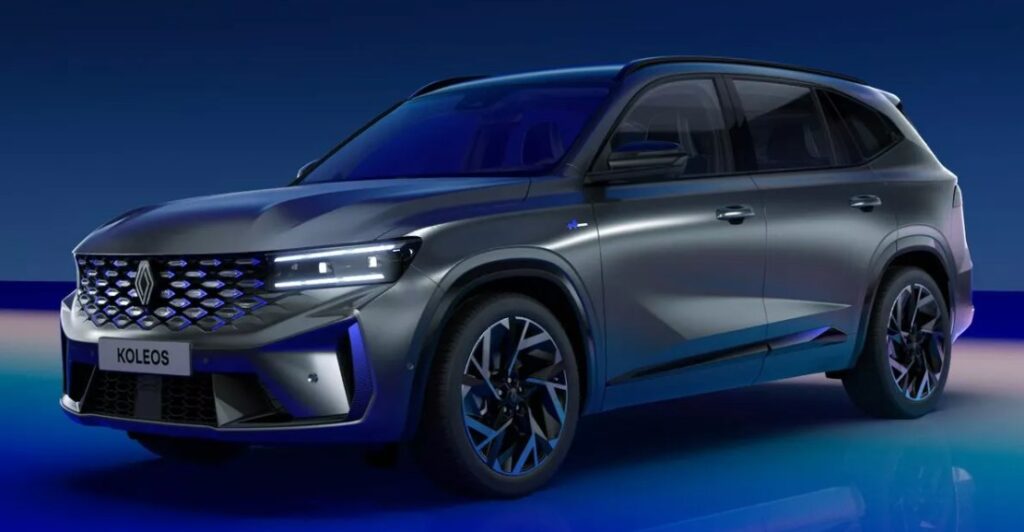
Choosing between the many Renault Koleos options can feel surprisingly complicated. On the surface, every Koleos follows roughly the same formula: a roomy five-seat SUV with a comfortable cabin, substantial road presence, and a stronger focus on relaxed cruising than outright sportiness. Dig deeper, though, and we find several very different vehicles wearing the same badge.
That is particularly important when shopping globally.
The original Koleos offered petrol and diesel engines, manual transmissions, automatic gearboxes, and both front-wheel-drive and four-wheel-drive configurations. The second generation shifted toward smoother CVT automatics and more sophisticated diesel choices, while newer versions of the Koleos name have introduced turbocharged petrol and full-hybrid power.
So which Koleos option actually makes sense?
That depends less on leather seats and touchscreen size than on how we intend to drive it. Someone covering huge highway distances has different priorities from a buyer commuting through congested streets. Likewise, drivers regularly dealing with snow, gravel, mountains, or slippery roads may appreciate four-wheel drive far more than someone spending 99% of their time in suburbia.
Let's sort through the choices.
Content in this publication
- What Renault Koleos Options Are Available?
- First-Generation Renault Koleos Options
- 2.0 dCi Diesel Koleos Options
- Manual vs Automatic First-Generation Koleos
- First-Generation 4x2 vs 4x4
- Second-Generation Renault Koleos Options
- 2.5 Petrol X-Tronic
- Second-Generation Diesel Koleos Options
- Understanding Renault All Mode 4x4-i
- Renault Koleos Trim Options
- Which Second-Generation Koleos Drives Best?
- Wheel Size Matters More Than We Think
- The Newest Renault Koleos Options
- Koleos Full Hybrid E-Tech
- Koleos 2.0 Turbo 4x4
- Hybrid vs Turbo: Which Drives Better?
- Best Koleos Option for City Driving
- Best Koleos Option for Highway Driving
- Best Renault Koleos Option for Performance
- Best Renault Koleos Option for Snow
- Best Koleos for Rural Roads
- Best Koleos Option for Used Buyers
- Should You Buy a CVT Koleos?
- Should You Choose Front-Wheel Drive or 4x4?
- Which Renault Koleos Options Should We Avoid?
- Renault Koleos Options Compared
- Which Koleos Would We Buy?
- Conclusion: Finding the Right Renault Koleos Option
- Frequently Asked Questions
What Renault Koleos Options Are Available?
Globally, the Koleos has appeared in several generations and market-specific configurations. That means there is no single definitive Koleos trim list covering every country.
Instead, buyers may encounter combinations involving:
- Petrol engines
- Turbo-diesel engines
- Turbocharged petrol engines
- Full-hybrid power
- Six-speed manual transmissions
- Conventional automatic transmissions
- X-Tronic continuously variable transmissions
- Front-wheel drive
- Four-wheel drive
- Entry-level, mid-range, luxury, and sport-themed trim packages
The safest approach is therefore to choose the powertrain and drivetrain first, then decide how much equipment we actually want.
First-Generation Renault Koleos Options
The first-generation Koleos arrived around 2008 and represented Renault's early move into the crossover-SUV market. It shared important engineering foundations with Nissan products of the period, giving it a somewhat different personality from traditional Renault passenger cars.
Two of the most important engine families were a naturally aspirated 2.5-liter petrol and a 2.0 dCi turbo-diesel.
Depending on market and specification, the 2.0 dCi appeared with outputs around 150 hp and 175 hp, while the petrol produced roughly 170 hp. Four-wheel drive was widely available, although some front-drive versions were also offered.
2.5-Liter Petrol Koleos
The 2.5-liter petrol engine is perhaps the simplest first-generation choice to understand.
It is not especially sophisticated by modern standards, but that simplicity can actually be appealing in a used SUV.
Acceleration is adequate rather than dramatic. The engine likes revs more than the diesels, meaning we occasionally need to push it harder when overtaking or climbing steep gradients.
The result is an SUV that feels easygoing.
It works especially well for drivers covering moderate annual mileage who do not need diesel torque or exceptional fuel economy.
Who Should Choose the 2.5 Petrol?
Consider it if we want:
- Smooth everyday driving
- Primarily urban or suburban use
- Lower annual mileage
- A petrol engine without modern diesel emissions hardware
- Predictable naturally aspirated power delivery
Its biggest disadvantage is fuel consumption.
A 2.5-liter petrol SUV weighing well over 1.5 tonnes was never going to sip fuel like a small hatchback.
2.0 dCi Diesel Koleos Options
The first-generation 2.0 dCi gives the Koleos a noticeably different character.
Instead of building performance through engine revs, the diesel delivers stronger low-rpm torque. Depending on output, official specifications put torque around 320-360 Nm.
That extra pulling strength makes a difference.
Imagine two people pulling a heavy suitcase: the petrol engine feels like someone accelerating into the job, while the diesel feels as though it simply grabs the suitcase and walks away with it.
That is why diesel Koleos models can feel better suited to long-distance travel, hills, passengers, and towing.
150 hp vs 175 hp Diesel
The approximately 150 hp diesel should satisfy most owners.
It offers the low-speed flexibility we expect from a larger turbo-diesel without chasing outright performance.
The higher-output 175 hp version provides stronger acceleration and generally feels less strained when the vehicle is fully loaded.
For buyers prioritizing driving performance within the first-generation range, the more powerful diesel is arguably the sweet spot.
Manual vs Automatic First-Generation Koleos
Here is where used-car buyers should think about lifestyle.
A manual Koleos gives us more direct control and may appeal to drivers who regularly travel on rural roads or simply prefer traditional gear changes.
An automatic is usually more relaxing.
For city traffic, there is little debate. Continually operating a clutch pedal in stop-and-go traffic becomes tiring. An automatic turns the Koleos into what it arguably wants to be: a comfortable family cruiser.
However, transmission condition matters far more than transmission type when buying an older example.
A well-maintained automatic can be a far better purchase than a neglected manual, and vice versa.
First-Generation 4x2 vs 4x4
The Koleos was designed with more off-pavement capability than some purely road-oriented crossovers.
Four-wheel-drive models are particularly interesting because they give the vehicle genuine versatility.
But do we actually need one?
If our typical journey involves dry paved roads, school runs, shopping centers, and highways, probably not.
Four-wheel drive becomes worthwhile when we regularly encounter:
- Snow
- Mud
- Loose gravel
- Steep rural roads
- Wet grass
- Mountain conditions
- Unsealed access roads
Otherwise, front-wheel drive tends to be simpler and potentially cheaper to operate.
Second-Generation Renault Koleos Options
The second-generation Koleos, introduced in 2016, moved the model noticeably upmarket.
It became larger, sleeker, and more refined, sharing underlying architecture with the Nissan X-Trail/Rogue family while offering Renault-specific styling and interior treatment.
This generation is where the Koleos arguably found its strongest identity.
Instead of trying to feel sporty, it concentrated on comfort, space, refinement, and long-distance cruising.
2.5 Petrol X-Tronic
In several international markets, including Australia, the second-generation Koleos was heavily associated with a 2.5-liter naturally aspirated petrol engine paired with an X-Tronic CVT.
Australian specifications list this engine at 126 kW and 226 Nm.
This combination is not about neck-snapping acceleration.
Press the accelerator gently and the Koleos feels smooth and composed. Push much harder and the CVT allows engine revs to rise significantly while vehicle speed catches up.
Some drivers love that seamless delivery.
Others prefer the more traditional sensation of individual gears changing.
How Does the 2.5 CVT Drive?
Around town, rather well.
There are no conventional gearshifts interrupting acceleration, and the naturally aspirated petrol engine responds progressively.
Cruising is also comfortable.
The compromise appears when we ask for maximum performance. Flooring the accelerator can produce plenty of engine noise before the SUV gathers serious speed.
Think of it less like changing gears on a bicycle and more like an electric mixer finding exactly the speed it needs.
For calm drivers, that is rarely a problem.
For enthusiastic drivers, it may feel less engaging.
Second-Generation Diesel Koleos Options
European buyers received some particularly interesting diesel alternatives.
Later versions included a 1.7-liter Blue dCi producing around 150 PS and a 2.0-liter Blue dCi developing about 190 PS. Both could be paired with Renault's X-Tronic transmission, while the more powerful engine was offered with All Mode 4x4-i. Renault listed 340 Nm for the 150 PS engine and 380 Nm for the 190 PS unit.
For long-distance driving, these engines fundamentally change the personality of the Koleos.
Blue dCi 150
The 150 version is the efficiency-focused option.
It offers enough torque for confident everyday progress without pretending to be a performance SUV.
Renault quoted 0-100 km/h in approximately 11.8 seconds for one Blue dCi 150 X-Tronic specification.
That figure tells us exactly what kind of vehicle this is.
Comfortable? Yes.
Fast? Not really.
But speed is not everything.
The engine makes much more sense when we consider relaxed motorway cruising and diesel economy.
Blue dCi 190 4x4
Now things become more interesting.
The Blue dCi 190 develops stronger torque and came with All Mode 4x4-i.
Renault listed approximately 10.1 seconds for 0-100 km/h in this configuration.
Again, nobody will mistake it for a hot hatch.
Yet the extra torque makes the vehicle feel more muscular in normal driving.
That matters when overtaking.
It matters when climbing.
And it matters when we load four adults, luggage, and perhaps a trailer behind the vehicle.
Understanding Renault All Mode 4x4-i
Second-generation four-wheel-drive versions could provide selectable driving configurations including 4x2, Auto, and 4x4 Lock modes. Renault describes these modes as part of its All Mode 4x4-i system.
You may be interested in reading Ford Ka Reliability: Is This Tiny Ford Actually Dependable?
For everyday driving, Auto is arguably the easiest approach.
The system manages power distribution without asking the driver to constantly think about traction.
4x2 can make sense on good roads.
4x4 Lock is aimed toward situations where additional traction is necessary.
The important point is that this does not magically turn the Koleos into a hardcore rock-crawling off-roader.
It remains a crossover SUV.
Nevertheless, if our weekend involves ski roads, muddy campsites, gravel tracks, or rural property access, four-wheel drive adds a useful safety net.
Renault Koleos Trim Options
Trim names vary enormously between countries.
Over the years we have seen names such as:
Expression, Dynamique, Bose, Zen, Intens, Life, Initiale Paris, Evolution, Techno, Iconic Edition, and others.
Trying to establish a global trim hierarchy therefore becomes messy.
Instead, we can broadly divide Koleos equipment into three groups.
Entry-Level Koleos
Base models tend to provide the essentials without luxury extras.
That can actually be desirable on an older used vehicle.
Why?
Because every power seat motor, panoramic roof mechanism, camera, electronic tailgate, and sophisticated multimedia feature represents another component that can eventually fail.
If our priority is dependable transport, simpler may be smarter.
Mid-Range Koleos
For most buyers, the middle specification delivers the best value.
This is usually where we begin seeing desirable items such as:
- Larger infotainment displays
- Navigation
- Better upholstery
- Keyless entry
- Heated seats
- Parking sensors
- Reversing cameras
- Larger alloy wheels
- Additional driver-assistance systems
We gain the features we interact with daily without paying excessively for cosmetic upgrades.
Luxury Koleos Options
High-spec Koleos versions can be surprisingly luxurious.
For example, Australia's limited 2023 Iconic Edition added Nappa leather, electric front seats, driver memory and massage functionality, heated and ventilated front seats, a panoramic roof, hands-free tailgate and parking assistance.
This equipment transforms the Koleos from an ordinary family SUV into something resembling a cut-price premium vehicle.
Whether that is worth buying used depends on condition.
A fully functioning top-spec Koleos is lovely.
One with a broken panoramic roof, malfunctioning electric seat, and temperamental infotainment system may quickly lose its charm.
Which Second-Generation Koleos Drives Best?
There is no universal answer.
For petrol markets, we would choose the 2.5 CVT if comfort and simplicity matter more than acceleration.
For diesel markets, the stronger 2.0 dCi variants are arguably more satisfying for drivers covering long distances.
For difficult road conditions, a 4x4 model adds another layer of capability.
But here is the trick: bigger wheels and higher trim levels do not always make the car drive better.
Wheel Size Matters More Than We Think
Many buyers automatically chase the largest available wheels because they look fantastic.
That can be a mistake.
Large wheels generally mean lower-profile tyres.
And lower-profile tyres provide less rubber between the road and the wheel.
On smooth asphalt, that can improve steering sharpness.
On potholes, broken roads, gravel, and expansion joints, smaller wheels with taller tyre sidewalls can deliver noticeably better comfort.
The Koleos is not a sports car.
We would therefore prioritize ride quality over visual aggression unless appearance is especially important.
The Newest Renault Koleos Options
The Koleos name has evolved again.
In current markets where Renault offers the newest Koleos, powertrain choices can be dramatically different from those of the previous Nissan-related generations.
For example, Renault's current Colombian specification offers two headline configurations: a 1.5-liter full-hybrid E-Tech version rated at 241 hp and a 2.0-liter turbocharged petrol 4x4 version producing up to 235 hp and 350 Nm.
This marks an enormous mechanical shift.
We are no longer simply choosing between naturally aspirated petrol and diesel.
Now we are choosing between electrified efficiency and turbocharged 4x4 performance.
Koleos Full Hybrid E-Tech
The modern full-hybrid option is probably the most interesting Koleos for urban drivers.
Renault says the battery recuperates energy during braking and deceleration rather than requiring external charging. The current system combines a 1.5-liter petrol engine with electric assistance and delivers a system output quoted at 241 hp in the Colombian market.
That changes the experience considerably.
At low speeds, electric assistance can make acceleration feel immediate and smooth.
In traffic, the benefit becomes even clearer.
Traditional combustion engines are least elegant when constantly stopping and starting. Hybrid systems can mask that weakness.
The resulting Koleos feels far more appropriate for dense cities than earlier diesel versions.
Who Should Buy the Hybrid?
The hybrid makes sense for drivers who:
- Spend substantial time in urban traffic
- Want smoother low-speed response
- Prefer petrol over diesel
- Cannot or do not want to plug in a vehicle
- Value efficiency
- Mostly drive on paved roads
The important limitation is drivetrain.
The current full-hybrid configuration referenced by Renault is front-wheel drive rather than 4x4.
If maximum all-weather traction is our priority, the turbo version deserves closer attention.
Koleos 2.0 Turbo 4x4
The turbocharged petrol Koleos attacks the problem from the opposite direction.
Instead of prioritizing hybrid efficiency, it combines a 2.0-liter turbo engine with four-wheel drive and an eight-speed automatic transmission.
Renault quotes up to 235 hp and 350 Nm.
This is arguably the driver's choice in the current lineup.
Torque arrives strongly, conventional gears provide a more familiar acceleration sensation, and 4x4 traction makes it better suited to variable terrain.
Renault also offers several drive modes, including settings identified as AI, Snow, Eco, Sport, and Comfort in the Colombian specification.
That gives the vehicle considerably more flexibility than old Koleos models ever offered.
Hybrid vs Turbo: Which Drives Better?
This is where buyer priorities matter.
Choose the hybrid if we spend more time in cities.
Choose the turbo 4x4 if we prioritize stronger highway performance, varied terrain, or a more conventional powertrain sensation.
The hybrid should feel particularly natural during stop-and-go driving because electric assistance fills the gaps where combustion engines feel least efficient.
The turbo should feel more consistent when sustained power is required.
Neither is universally better.
They simply solve different problems.
Best Koleos Option for City Driving
Our pick would generally be:
Newer full hybrid, where available.
For older generations:
2.5 petrol front-wheel drive can be an appealing alternative.
Why avoid diesel for mostly short urban journeys?
Modern diesel systems are designed around sustained operating temperatures and longer drives. Constant short journeys can be less suited to emissions-control systems such as diesel particulate filters.
A petrol or hybrid Koleos usually fits city use more naturally.
Best Koleos Option for Highway Driving
This depends on generation.
You may be interested in readingFord Ka Reliability: Is This Tiny Ford Actually Dependable?You may be interested in reading
 Is BMW 8 Series a Good Car? A Complete Buyer’s Guide
For second-generation European models, we particularly like the stronger 2.0 dCi.
Its substantial torque gives the vehicle an effortless long-distance character.
The cabin, seats, relaxed steering and SUV dimensions complement that engine beautifully.
For the newest generation, the 2.0 turbo becomes an attractive alternative.
Best Renault Koleos Option for Performance
Across the traditional first and second generations, the higher-powered diesel versions offer some of the most convincing real-world acceleration.
But the newest Koleos changes the equation.
With roughly 235-241 hp available depending on powertrain, modern versions possess substantially more headline power than many earlier Koleos configurations.
Still, we need realistic expectations.
The Koleos has never been designed as a corner-carving performance SUV.
Its strengths are comfort, stability, space, and effortless progress.
Trying to turn one into a sports car is rather like putting racing shoes on a sofa.
Possible?
Sure.
Necessary?
Probably not.
Best Renault Koleos Option for Snow
We would prioritize a 4x4 Koleos with appropriate tyres.
Tyres remain crucial.
Four-wheel drive can help us accelerate, but it does not rewrite physics when braking or turning.
A front-wheel-drive Koleos wearing excellent winter tyres may be far more secure than a four-wheel-drive Koleos running unsuitable rubber.
If snow is routine rather than occasional, combine proper seasonal tyres with 4x4.
That is the ideal combination.
Best Koleos for Rural Roads
A 4x4 version again wins.
However, we would resist the temptation to choose enormous alloy wheels.
Smaller wheels with taller tyres usually make more sense on rough surfaces.
They cushion impacts better and potentially reduce the risk of wheel damage.
A mid-spec 4x4 Koleos can therefore be a smarter rural vehicle than the most expensive luxury trim.
Best Koleos Option for Used Buyers
For used-car buyers, condition beats specification.
Every time.
A meticulously serviced lower-trim Koleos with sensible mileage is preferable to a neglected flagship model with every conceivable option.
Before buying, we would check:
- Service history.
- Transmission behavior.
- Engine cold-start condition.
- Suspension noises.
- Tyre wear.
- Four-wheel-drive operation where fitted.
- Infotainment electronics.
- Air conditioning.
- Parking cameras and sensors.
- Panoramic roof operation and water leaks.
- Diesel emissions-system condition where applicable.
- Evidence of accident or flood damage.
The prettiest Koleos in the advertisement is not necessarily the best Koleos in the driveway.
Should You Buy a CVT Koleos?
The CVT deserves special discussion because some buyers immediately reject continuously variable transmissions.
That reaction is often based on driving feel rather than actual ownership experience.
A CVT behaves differently from a conventional automatic.
Instead of moving through fixed gear ratios in the traditional sense, it can continuously adjust its effective ratio.
Under hard acceleration this sometimes creates the familiar "high revs first, acceleration second" sensation.
If we enjoy feeling each individual gear change, we might dislike it.
If we want smooth commuting, a CVT can suit the Koleos very well.
When buying used, service history remains crucial.
Do not judge one based solely on internet horror stories or praise.
Drive the actual vehicle.
Should You Choose Front-Wheel Drive or 4x4?
For most buyers:
Front-wheel drive is enough.
It is typically lighter, simpler, and perfectly adequate on normal roads.
Choose 4x4 when our lifestyle genuinely benefits from extra traction.
That includes drivers living in mountainous areas, snowy climates, rural environments, or places where unsealed roads are unavoidable.
Renault's second-generation All Mode system allows drivers to choose between 4x2, Auto, and 4x4 Lock depending on conditions.
The newest turbo Koleos takes this flexibility further with multiple terrain and driving modes.
Which Renault Koleos Options Should We Avoid?
We would not automatically blacklist a particular engine or trim globally.
The Koleos has been sold in too many countries, with too many specifications, for such a simplistic conclusion.
Instead, avoid the wrong configuration for our usage.
A high-mileage diesel is unnecessary for someone driving five-minute urban journeys.
A fuel-hungry petrol 4x4 may be wasteful for someone doing 30,000 highway kilometers annually.
A luxury trim with huge wheels may frustrate someone living beside crater-sized potholes.
And a front-drive version may disappoint a driver regularly travelling through snow.
The "bad" Koleos is often simply the wrong Koleos.
Renault Koleos Options Compared
| Koleos option | Driving character | Best for | Main compromise |
|---|---|---|---|
| 2.5 petrol | Smooth, relaxed | City/general use | Fuel consumption |
| 2.0 dCi | Strong low-end torque | Highway driving | Diesel complexity |
| Lower-power diesel | Economical, steady | High-mileage users | Modest acceleration |
| High-power diesel | Stronger, effortless | Touring/towing | Higher complexity |
| 2WD | Lighter, simpler | Normal paved roads | Less poor-surface traction |
| 4x4 | Confident, versatile | Snow/rural roads | Added weight/complexity |
| X-Tronic CVT | Very smooth | Relaxed driving | Less engaging under hard acceleration |
| Full Hybrid | Responsive in traffic | Urban use | Usually 4x2 |
| 2.0 turbo 4x4 | Strong, versatile | Performance/adventure | Potentially higher fuel use |
Which Koleos Would We Buy?
For someone shopping the older first-generation model, we would look closely at a well-maintained 2.0 dCi if annual mileage is high, or a 2.5 petrol if usage is lighter and mostly urban.
Among second-generation vehicles, the answer changes by market.
Where diesel is available and we regularly travel long distances, the 2.0 dCi/Blue dCi versions are extremely appealing.
In petrol-focused markets, the 2.5 X-Tronic remains a comfortable, uncomplicated cruiser. Australia continued offering this combination across multiple Koleos specifications, including both front- and four-wheel-drive variants.
Among the newest models, we would choose the full hybrid for city life and the 2.0 turbo 4x4 for drivers prioritizing road performance and broader capability.
Simple.
Match the machine to the mission.
Conclusion: Finding the Right Renault Koleos Option
There is no single "best" Renault Koleos.
There is only the one that best fits how we drive.
The first-generation Koleos offers relatively straightforward petrol and diesel choices, with 4x4 versions giving it genuine versatility.
The second generation is arguably the classic Koleos sweet spot: spacious, refined, comfortable and available with everything from a smooth petrol CVT to strong turbo-diesel 4x4 powertrains.
The newest interpretation moves the nameplate into a different era entirely, introducing sophisticated full-hybrid technology alongside a powerful turbocharged 4x4 configuration. Current Renault specifications in markets offering the new model quote as much as 241 hp for the full hybrid and 235 hp for the 2.0 turbo 4x4.
Our recommendation?
Do not begin with trim level.
Begin with engine, transmission, and drivetrain.
Ask where we drive, how far we travel, whether we encounter difficult terrain, and how much performance we actually need.
Once those questions are answered, choosing between the Renault Koleos options becomes considerably easier.
Frequently Asked Questions
1. What is the best Renault Koleos engine?
There is no universal best engine. The 2.5 petrol suits moderate-mileage drivers wanting smooth and straightforward performance, while the stronger 2.0 diesel versions are particularly attractive for highway driving. In newer markets, the full hybrid is compelling for urban use and the 2.0 turbo 4x4 for buyers prioritizing performance and traction.
2. Is the Renault Koleos better with 2WD or 4WD?
For normal paved-road driving, 2WD is usually sufficient and keeps the drivetrain simpler. Four-wheel drive makes more sense for snow, gravel, muddy roads, mountains, rural properties, and drivers who regularly encounter poor traction.
3. Is the Renault Koleos CVT good for driving?
It depends on what we enjoy. The X-Tronic CVT provides smooth and relaxed acceleration, making it well suited to commuting and cruising. Drivers who enjoy pronounced gear changes or sporty acceleration may prefer a conventional stepped automatic.
4. Which Renault Koleos is best for performance?
Among older generations, higher-output 2.0 dCi versions provide strong real-world torque. New-generation versions raise performance considerably, with current market specifications offering roughly 235 hp from a 2.0 turbo 4x4 and 241 hp from the full-hybrid system.
5. Which Renault Koleos should I buy used?
Buy the vehicle with the strongest maintenance history rather than automatically chasing the highest trim. For mainly urban driving, consider a petrol version. For long highway distances, a well-maintained diesel can make sense. Choose 4x4 only when its additional traction genuinely benefits your driving conditions.
You may be interested in readingFord Ka Reliability: Is This Tiny Ford Actually Dependable?You may be interested in reading
Is BMW 8 Series a Good Car? A Complete Buyer’s GuideYou may be interested in reading
Why Do BMW 8 Series Depreciate So Much? The Real Reasons Behind the DropIf you want to know other articles similar to Renault Koleos Options: Engines, Trims and Which One to Buy you can visit the category Blog.
Volvo S90 Reliability: Problems, Costs & Best Years
Is Haval Jolion a Good Car? Honest Review, Reliability, Pros and Cons
How to Start Haval Jolion With Spare Key: Complete Guide
How to Calculate Per Diem on an Auto Loan

How to Calculate the Residual Value of a Car

Is the Honda Passport Selling Well? Sales Numbers Tell the Story
Leave a Reply
More content of your interest