
Is BMW 8 Series a Good Car? A Complete Buyer’s Guide

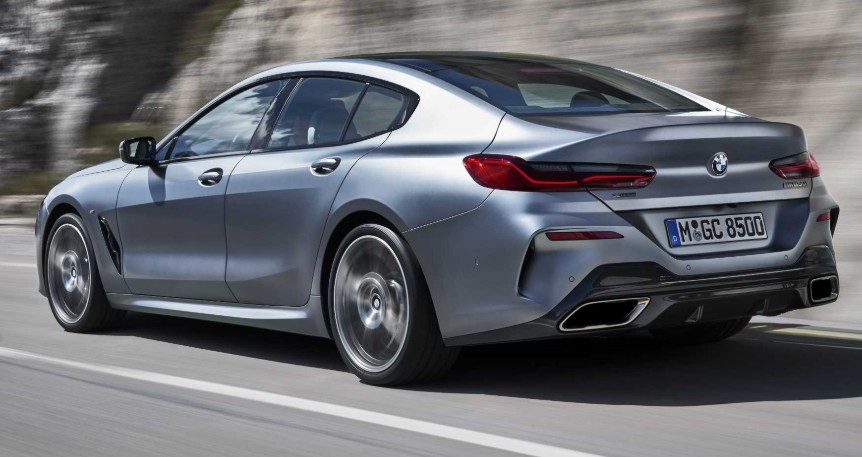
Yes, the BMW 8 Series is a good car—and in several areas, it is an exceptional one. It combines sports-car pace, grand-touring comfort, impressive build quality, powerful engines, and the kind of road presence that can still make us glance back after parking it.
But there is a catch.
The 8 Series isn't the sort of car we should buy simply because we found an attractive used example at a surprisingly affordable price. The purchase price tells only half the story. This is a sophisticated luxury BMW packed with expensive components, big wheels, powerful engines, complex electronics, and premium running costs.
Think of it like buying a luxury yacht at half price. The discount is wonderful, but the marina still charges luxury-yacht money.
So, is BMW 8 Series a good car for the average buyer? That depends on what we expect from it.
For someone who wants an elegant long-distance cruiser with genuine performance, the answer is a convincing yes. For someone primarily concerned about inexpensive maintenance and maximum practicality, there are smarter choices.
Let's dig deeper.
Content in this publication
- What Is the BMW 8 Series?
- Is BMW 8 Series a Good Car Overall?
- Why the BMW 8 Series Feels Special
- BMW 8 Series Performance: Is It Fast?
- Is the BMW 8 Series Comfortable?
- Is the BMW 8 Series Interior Good?
- How Practical Is the BMW 8 Series?
- Is the BMW 8 Series Reliable?
- Common BMW 8 Series Ownership Concerns
- Is BMW 8 Series Expensive to Maintain?
- BMW 840i vs M850i: Which Is the Better Buy?
- BMW 8 Series Gran Coupe: The One We'd Choose
- Is the BMW 8 Series Good for Daily Driving?
- Is the BMW 8 Series Fuel Efficient?
- Is the BMW 8 Series Safe?
- What Is the BMW 8 Series Like on Long Trips?
- How Does the BMW 8 Series Compare With Rivals?
- Should You Buy a Used BMW 8 Series?
- Is a BMW 8 Series Worth the Money?
- Who Should Buy a BMW 8 Series?
- Who Should Avoid the BMW 8 Series?
- What About the End of BMW 8 Series Production?
- Pros and Cons of the BMW 8 Series
- So, Is BMW 8 Series a Good Car?
- Conclusion: Is the BMW 8 Series Worth Buying?
- Frequently Asked Questions
What Is the BMW 8 Series?
The modern BMW 8 Series sits near the top of BMW's passenger-car range. Instead of being a conventional luxury sedan, it was created primarily as a grand tourer—a car designed to cross huge distances quickly while keeping its occupants comfortable.
BMW revived the famous 8 Series name for the second modern generation beginning with the 2019 model year.
Depending on model year and market, buyers have been able to choose among Coupe, Convertible, and four-door Gran Coupe body styles.
That variety gives the 8 Series an unusual personality.
The Coupe is dramatic and sporty.
The Convertible adds open-air cruising.
The Gran Coupe introduces proper rear doors and noticeably greater everyday usefulness.
Underneath them all, however, sits the same basic philosophy: luxury mixed with serious performance.
Is BMW 8 Series a Good Car Overall?
We would rate it as a very good luxury grand tourer, but not necessarily the best luxury car for every type of owner.
Its biggest strengths are refinement, performance, highway comfort, styling, cabin quality, and engine choices. Its weaknesses mostly concern price, depreciation, operating expenses, rear-seat packaging in some versions, and complexity.
Interestingly, reliability data isn't nearly as alarming as some BMW stereotypes suggest. J.D. Power gives the 2026 BMW 8 Series an 85/100 Quality & Reliability score, although its overall consumer rating sits at 78/100.
That doesn't suddenly make an 8 Series cheap to own. Reliability and maintenance cost are two different things.
A car can rarely break down yet still demand expensive tires, brakes, servicing, insurance, and consumables.
And that distinction matters enormously here.
Why the BMW 8 Series Feels Special
Some luxury cars impress us with equipment. Others impress us with speed.
The 8 Series combines both, yet perhaps its greatest strength is atmosphere.
Climb inside, shut the heavy door, settle into the low driving position, and the car feels substantial. There is a sense that we are sitting inside something considerably more serious than an ordinary executive sedan.
Drive onto a highway and that impression gets stronger.
The cabin settles down. The engine barely seems awake. The car feels planted, stable, and relaxed.
Then we press the accelerator.
Suddenly, that calm luxury cruiser becomes very quick indeed.
That's essentially the 8 Series party trick.
It Is More Grand Tourer Than Pure Sports Car
Anyone expecting something that behaves exactly like a lightweight Porsche sports car may come away confused.
The 8 Series is large.
It is luxurious.
It carries plenty of technology and sound insulation.
And it feels like it.
BMW has engineered impressive agility into the chassis, but we are still driving a luxury GT rather than a tiny weekend toy.
That's not criticism. It's the point.
The 8 Series is built for someone who wants to cover 500 miles and climb out feeling fresh—not someone who wants every pothole transmitted directly through the steering wheel.
BMW 8 Series Performance: Is It Fast?
Absolutely.
Even the less extreme versions provide more performance than most owners realistically need on public roads.
Depending on year and configuration, the range has included turbocharged six-cylinder 840i models and muscular V8-powered M850i variants, along with the even more extreme BMW M8.
The 840i is arguably the sweet spot for many buyers.
Why?
Because BMW's turbocharged inline-six provides smooth, effortless acceleration without the additional complexity and thirst associated with the V8.
The M850i is different.
It brings the drama.
Its twin-turbocharged V8 turns the 8 Series from merely quick into the kind of machine that can make motorway slip roads disappear alarmingly fast. The 2026 M850i xDrive uses a 4.4-liter twin-turbo V8, and the limited Edition M Heritage version retained 523 horsepower.
Then there is the M8, which pushes the formula much further toward high-performance territory.
Which Engine Is Best?
For most people shopping used, we would lean toward the 840i.
It gives us plenty of speed, lower fuel consumption, and generally less financial exposure than the V8 cars.
The M850i makes sense when the engine itself is part of the reason we're buying the vehicle.
That V8 soundtrack and effortless thrust are difficult to replicate.
The M8, meanwhile, is best understood as the enthusiast's choice. It's astonishingly capable, but paying extra for M-level performance makes little sense if our daily driving consists mostly of urban traffic and relaxed highway journeys.
The 840i May Be the Smarter Long-Term Choice
Sometimes the fastest model isn't the best model.
The 840i demonstrates that nicely.
Its inline-six suits the personality of a grand tourer beautifully. It is smooth, refined, powerful, and comparatively efficient.
For a second-hand purchase, that balance can be more valuable than chasing the highest horsepower figure on the brochure.
Is the BMW 8 Series Comfortable?
This is one of the car's strongest areas.
Long journeys suit the 8 Series beautifully. Supportive seats, excellent high-speed stability, effective climate control, strong noise insulation, and a sophisticated suspension setup create the sort of environment where three-hour journeys can feel considerably shorter.
Yet wheel size matters.
Large wheels look fantastic but introduce another layer of firmness, particularly on broken urban roads. Tire choice and specification can therefore influence ride quality more than buyers might expect.
We wouldn't judge an 8 Series after a five-minute drive around a dealership.
Take it over rough pavement.
Drive it at highway speed.
Try the exact wheel-and-tire combination fitted to the car.
That's when its real personality emerges.
Is the BMW 8 Series Interior Good?
Very.
BMW interiors from this era generally favor functionality over theatrical minimalism, and that's something many owners may actually appreciate.
The 8 Series gives us physical controls for important functions alongside its digital interface rather than forcing every action through one enormous touchscreen.
Materials are suitably premium. Leather, metal detailing, ambient lighting, substantial switchgear, and BMW's familiar driver-focused layout create a cabin that feels expensive without becoming overwhelming.
Does it produce the same visual theater as certain Mercedes interiors?
Perhaps not.
But the restrained approach may age better.
Technology Still Feels Modern
One advantage of buying a relatively recent 8 Series is that its technology doesn't immediately feel ancient.
BMW's infotainment interface is logically organized once we're familiar with it, and many cars come generously equipped.
Depending on trim, year, and optional specification, equipment can include advanced navigation, premium audio, head-up display technology, sophisticated driver assistance, heated and ventilated seating, surround-view cameras, smartphone connectivity, and numerous comfort features.
That leads us to an important used-car rule, however: verify equipment individually.
BMW option lists can be labyrinths.
Two visually identical cars may contain very different equipment.
How Practical Is the BMW 8 Series?
Practicality depends heavily on body style.
The Coupe looks spectacular, but rear-seat access and passenger space naturally take second place to styling.
The Convertible sacrifices additional practicality in exchange for the roof-down experience.
For most people who genuinely intend to use an 8 Series every day, the Gran Coupe makes the strongest argument.
Four doors transform the ownership experience.
Suddenly carrying friends, family members, bags, or work equipment becomes much easier.
We still aren't dealing with an SUV, of course, but that's exactly why some buyers love it. The Gran Coupe offers much of the usability of a large executive sedan without looking like one.
Edmunds lists 12.4 cubic feet of trunk space for the 2026 8 Series configuration it reviews, highlighting that cargo room is useful rather than class-leading.
Is the BMW 8 Series Reliable?
This question deserves a more nuanced answer than simply “yes” or “no.”
The current-generation BMW 8 Series doesn't deserve to be automatically labeled unreliable simply because it is a complex German luxury car.
As noted earlier, J.D. Power currently rates the 2026 model at 85/100 for Quality & Reliability, which it classifies as “Great.”
That's encouraging.
Still, complexity creates exposure.
An 8 Series contains far more expensive hardware than a basic economy hatchback. Adaptive suspension components, extensive electronic systems, large brakes, luxury seats, power accessories, turbocharged engines, and advanced driver-assistance equipment all cost money when age eventually catches up with them.
Reliability therefore needs to be viewed alongside repair cost.
A minor issue on an inexpensive compact car may cost hundreds.
You may be interested in reading Why Do BMW 8 Series Depreciate So Much? The Real Reasons Behind the Drop
An apparently minor issue on a flagship-class luxury BMW can cost considerably more.
Common BMW 8 Series Ownership Concerns
There isn't one catastrophic defect that automatically makes the modern 8 Series something we should avoid. Instead, buyers should focus on the broader realities of owning a powerful, technologically complicated luxury car.
Areas deserving careful inspection include:
- Electronic systems, cameras, sensors, displays, and driver-assistance functions
- Cooling-system condition and evidence of leaks
- Oil leaks or unusual fluid consumption
- Suspension noises or adaptive-damper problems
- Uneven tire wear and wheel damage
- Brake-disc and pad condition
- Convertible-roof operation on open-top models
- Battery health, particularly on cars used infrequently
- Complete servicing documentation
- Evidence of accident repairs or poor-quality modifications
None of these automatically means the 8 Series is problematic.
They mean buying one casually is a bad idea.
A thorough pre-purchase inspection from a BMW specialist can easily be worth its price.
Is BMW 8 Series Expensive to Maintain?
Yes.
There's little point pretending otherwise.
Even if the car behaves perfectly, routine ownership isn't cheap.
We're dealing with premium synthetic fluids, large performance tires, sizeable brakes, complicated mechanical components, expensive body panels, powerful engines, and specialist labor.
An 8 Series that's inexpensive to buy doesn't suddenly become an inexpensive car.
Edmunds' ownership estimates illustrate the point. Its five-year estimate for a 2026 M850i xDrive Convertible totals roughly $149,336 including depreciation, financing, fuel, insurance, taxes, maintenance, and repairs under its assumptions. Depreciation alone represents $74,100 of that estimate.
The exact numbers will differ enormously depending on purchase price, country, mileage, financing, insurance, and how long we keep the vehicle.
The broader lesson remains useful: depreciation can cost more than mechanical repairs.
Depreciation Can Actually Help Used Buyers
Here we reach one of the most interesting reasons to consider an 8 Series.
Luxury cars can shed value quickly.
Terrible for the first owner.
Potentially wonderful for the third.
Edmunds' 2025 projections similarly estimate substantial five-year depreciation across 840i and M850i versions.
That creates the possibility of buying a remarkably sophisticated car for far less than its original price.
The trick is not confusing a reduced purchase price with reduced operating costs.
Imagine buying a previously $100,000-class vehicle for $50,000.
Its tires haven't suddenly become half as wide.
Its brakes haven't become half as large.
Its components don't know what we paid.
That's the mental adjustment every used luxury buyer should make.
BMW 840i vs M850i: Which Is the Better Buy?
For rational buyers, the 840i.
For emotional buyers, the M850i.
And sometimes emotion wins.
The 840i gives us most of what makes the 8 Series appealing: handsome styling, excellent comfort, premium materials, effortless high-speed cruising, and meaningful performance.
The M850i adds something harder to quantify.
Occasion.
Start the V8 and the car immediately feels more exotic.
Acceleration becomes ferocious rather than merely strong.
The experience feels closer to the flagship fantasy buyers imagine when they hear “BMW 8 Series.”
But fuel, tires, brakes, insurance, and potential mechanical expenditure deserve greater attention.
Neither answer is wrong.
We simply need to know whether we're shopping with a calculator or our heartbeat.
BMW 8 Series Gran Coupe: The One We'd Choose
If we could own only one 8 Series and needed to use it regularly, we'd strongly consider the Gran Coupe.
Its proportions still look striking, but four proper doors remove much of the compromise associated with traditional grand tourers.
We can take colleagues to lunch.
We can carry family.
We can use the rear seats without performing gymnastics.
We can still enjoy the low roofline, premium cabin, and excellent driving experience.
That makes the Gran Coupe the most complete interpretation of the formula.
The Coupe is arguably prettier.
The Convertible creates more drama.
But the Gran Coupe is easier to live with.
Is the BMW 8 Series Good for Daily Driving?
Surprisingly, yes.
Despite its size and performance, an 8 Series can be remarkably docile.
Automatic transmissions, parking cameras, driver aids, refined engines, comfortable seats, and light controls make normal driving much easier than the car's appearance might suggest.
The biggest daily challenges are its dimensions, visibility, expensive wheels, and our emotional reaction whenever someone parks too close to it.
Urban parking lots weren't exactly designed around wide luxury GTs.
A smaller BMW will be easier.
An SUV will offer more cargo room.
But if we genuinely want to experience something special every morning rather than merely commute, the 8 Series has a persuasive argument.
Is the BMW 8 Series Fuel Efficient?
“Efficient” needs context here.
Nobody should expect economy-car fuel consumption from a large premium grand tourer.
The six-cylinder 840i is the sensible option, particularly for owners covering significant annual mileage.
The V8 versions inevitably drink more fuel, especially when driven enthusiastically.
Official and real-world consumption will also vary with body style, drivetrain, traffic, climate, tires, driving habits, and market-specific testing procedures.
Our advice is simple: if fuel expenditure causes serious concern before buying an M850i, buy the 840i.
The M850i is a car we choose partly because of its V8.
Trying to enjoy that engine while constantly staring nervously at the fuel gauge defeats the point.
Is the BMW 8 Series Safe?
The 8 Series incorporates an extensive range of modern safety and assistance technology, though exact equipment depends on model year and configuration.
Available systems across the generation can include forward-collision mitigation, lane-related assistance, parking cameras and sensors, stability control, blind-spot monitoring, and more sophisticated semi-automated driving aids depending on specification.
Edmunds lists technology such as lane-departure warning, a pre-collision safety system, stability control, reversing camera, and tire-pressure monitoring among the safety equipment associated with the 2026 model.
Still, driver-assistance equipment should never replace basic judgment.
The 8 Series is powerful.
Very powerful in certain specifications.
Technology doesn't repeal physics.
What Is the BMW 8 Series Like on Long Trips?
This may be where the car makes the most sense.
Imagine an empty highway stretching toward the horizon.
The cabin is quiet.
The seats hold us comfortably.
There's huge overtaking power waiting beneath our right foot.
The suspension smothers most road imperfections.
The car tracks straight and feels composed.
That's the environment where the 8 Series stops feeling extravagant and starts feeling purpose-built.
It's a true GT.
A Porsche 911 may feel more alive on a winding Sunday road, and a BMW 7 Series may offer greater rear-seat luxury, but the 8 Series occupies the territory between them.
Fast without being frantic.
Luxurious without feeling like a chauffeur's car.
How Does the BMW 8 Series Compare With Rivals?
The luxury grand-touring market contains some fascinating alternatives.
Depending on budget and body style, shoppers may also consider cars from Mercedes-Benz, Porsche, Lexus, Audi, Bentley, and other premium manufacturers.
There isn't one obvious winner because priorities differ dramatically.
Want maximum sporting involvement? A Porsche may make more sense.
Want traditional luxury? Certain Mercedes models may fit better.
Want lower ownership anxiety? A Lexus could have appeal.
Want a stylish combination of BMW handling, strong engines, luxury equipment, and long-distance ability?
That's where the 8 Series becomes compelling.
The BMW doesn't need to dominate every category.
It works because the mixture is so satisfying.
Should You Buy a Used BMW 8 Series?
A used 8 Series can be much more tempting than a new one.
You may be interested in readingWhy Do BMW 8 Series Depreciate So Much? The Real Reasons Behind the DropYou may be interested in reading
 Is Ford Ka a Good Car? A Complete Used Buyer’s Guide
Early depreciation has potentially removed a large chunk of the original price, yet the basic engineering, performance, styling, and luxury remain.
This can create tremendous value.
But we should shop by condition rather than simply by price.
A slightly more expensive car with documented servicing, excellent tires, healthy brakes, a clean history, and careful previous ownership can easily become the cheaper car over several years.
A neglected bargain can turn into a financial trap.
Service records matter.
Inspection matters.
Previous ownership matters.
Specification matters.
And warranty coverage can matter enormously.
What Should We Check Before Buying One?
Start with history.
Has it been maintained consistently?
Then inspect expensive consumables. Tires and brakes can rapidly erase the apparent savings of a cheaper example.
Test every electronic feature rather than assuming it works.
Listen carefully during a cold start.
Drive the car over different road surfaces.
Check that the transmission shifts smoothly.
Watch for warnings.
Look underneath for leaks.
Inspect wheels for cracks, bends, or curb damage.
And if we're spending serious money, obtain an independent specialist inspection.
A beautiful paint job can hide an ugly ownership history.
Avoid Buying Solely on Mileage
Low mileage sounds wonderful, but it isn't the whole story.
A higher-mileage 8 Series that has traveled mostly long highway journeys and received meticulous servicing could be preferable to a low-mileage example that has spent years performing short journeys, sitting unused, or missing maintenance.
Condition beats a single number on the dashboard.
Is a BMW 8 Series Worth the Money?
When new, that's a difficult question.
Cars in this price bracket compete with extraordinary machines, and personal preference becomes increasingly important.
Used?
The argument gets much stronger.
Depreciation can place an 8 Series within reach of buyers who might otherwise be considering newer but considerably less special vehicles.
Would we rather own a brand-new mainstream premium crossover or a well-maintained used 840i Gran Coupe?
That's where things become interesting.
The 8 Series offers an experience difficult to replicate with something ordinary.
But we need enough financial breathing room to maintain it properly.
Buying the car and then postponing maintenance because every service hurts isn't a recipe for enjoyable ownership.
Who Should Buy a BMW 8 Series?
The ideal owner values experience as much as practicality.
They want a car that feels special.
They enjoy strong acceleration but don't necessarily want an uncomfortable hardcore sports car.
They frequently take long journeys.
They appreciate high-quality interiors.
And crucially, they can afford premium maintenance without treating every repair as a financial emergency.
For this buyer, the 8 Series can be magnificent.
Who Should Avoid the BMW 8 Series?
Budget-focused motorists should probably look elsewhere.
So should anyone wanting maximum rear-seat space, cheap insurance, small-car maneuverability, inexpensive tires, or Toyota-like running expenses.
The 8 Series also makes little sense if we merely want a BMW badge.
There are cheaper BMWs that provide excellent driving experiences.
Buy the 8 Series because we specifically want what the 8 Series does.
Not because depreciation made one look suspiciously affordable.
What About the End of BMW 8 Series Production?
This question has become more relevant.
The current-generation 8 Series reached the end of its production cycle around 2025–2026, with BMWBLOG reporting that regular U.S.-market production was set to continue until April 2026 after earlier variants had already wound down. BMW's U.S. site was still promoting offers on remaining 2026 cars with delivery deadlines in 2026.
For buyers, discontinuation isn't necessarily negative.
It doesn't suddenly make existing cars obsolete.
If anything, it may increase interest in well-preserved examples over time, especially unusual specifications and V8 variants.
We wouldn't buy one purely as an investment, however.
Cars are unpredictable assets.
Buy it because we want to drive it.
Any future collectability should be considered a bonus.
Pros and Cons of the BMW 8 Series
Strip away the badges and emotions, and the ownership proposition becomes fairly clear.
The biggest positives are gorgeous grand-tourer styling, excellent engines, very strong performance, refined long-distance comfort, high-quality interiors, modern technology, strong high-speed stability, and the added practicality offered by the Gran Coupe.
On the other side of the equation, purchase and running expenses remain significant. Large tires and brakes cost real money, some versions have limited rear-seat practicality, depreciation can be severe from new, complicated electronics increase potential repair exposure, and V8 cars aren't exactly gentle with fuel.
None of these drawbacks should automatically stop us buying one.
They simply determine whether the car fits our life.
So, Is BMW 8 Series a Good Car?
Yes. The BMW 8 Series is a very good car and, for the right person, an outstanding one.
It succeeds because it doesn't behave like a one-dimensional performance machine.
We can cruise quietly.
We can travel comfortably.
We can carry luggage.
In Gran Coupe form, we can take passengers without much compromise.
And when the road opens up, we have serious performance waiting underneath us.
The 840i may be the smartest version because its turbocharged inline-six provides an excellent blend of speed, smoothness, and relative efficiency.
The M850i is the version our hearts may want.
And the M8 exists for buyers who believe “enough horsepower” is merely a theoretical concept.
The main warning isn't reliability.
It's affordability.
Can we comfortably maintain a car that originally occupied the upper reaches of BMW's lineup?
If yes, a properly inspected used 8 Series can offer astonishing amounts of car for the money.
That's precisely what makes it so tempting.
Conclusion: Is the BMW 8 Series Worth Buying?
If we're searching for an inexpensive luxury car, probably not.
If we're searching for a genuinely special grand tourer and understand the cost of keeping one healthy, absolutely.
The BMW 8 Series blends luxury and speed like few ordinary executive cars can. It is comfortable enough for long journeys, powerful enough to entertain serious enthusiasts, luxurious enough to feel special every time we climb aboard, and—particularly as a used purchase—potentially far more attainable than its original price suggests.
The 8 Series isn't perfect.
But perfection is rarely what makes an interesting car.
Character does.
And the 8 Series has plenty of it.
The strongest recommendation is therefore a well-maintained 840i or 840i xDrive Gran Coupe for buyers seeking the best all-round ownership proposition, while an M850i makes sense for those willing to spend more for the unmistakable character of a V8.
Buy on condition.
Inspect before purchasing.
Budget beyond the monthly payment.
Do those three things, and the BMW 8 Series can be a genuinely rewarding car to own.
Frequently Asked Questions
Is the BMW 8 Series reliable?
The modern BMW 8 Series can provide good reliability when maintained correctly. J.D. Power currently gives the 2026 model an 85/100 Quality & Reliability score. However, sophisticated electronics, suspension components, powerful engines, and expensive consumables mean repair bills can still be considerable when something does require attention.
Is the BMW 8 Series expensive to maintain?
Yes. Maintenance is considerably more expensive than on an ordinary car. Tires, brakes, servicing, insurance, premium fuel, and specialist repairs all need to be included in the ownership budget. A heavily depreciated used 8 Series may be inexpensive to purchase relative to its original price, but it remains an expensive luxury vehicle mechanically.
Which BMW 8 Series is the best to buy?
For most buyers, the 840i or 840i xDrive Gran Coupe offers the strongest balance. Its turbocharged inline-six provides excellent performance without the additional running costs associated with the M850i's V8. Buyers prioritizing performance and character may prefer the M850i, while the M8 is aimed at enthusiasts wanting maximum performance.
Is a used BMW 8 Series worth buying?
Yes, provided the car has a strong maintenance history and passes a comprehensive pre-purchase inspection. Depreciation can make used examples significantly more attractive than new ones. We should prioritize condition, service records, tires, brakes, electronics, and previous ownership rather than simply choosing the cheapest advertised car.
Is the BMW 8 Series good for everyday driving?
Yes. Despite its dimensions and performance, the 8 Series is refined, comfortable, automatic, and packed with technology that makes normal driving relatively easy. The Gran Coupe is especially suitable for daily use because its four-door layout provides better passenger access and practicality than the Coupe or Convertible.
You may be interested in readingWhy Do BMW 8 Series Depreciate So Much? The Real Reasons Behind the DropYou may be interested in reading
Is Ford Ka a Good Car? A Complete Used Buyer’s GuideYou may be interested in reading
Is Ford Ka a Good First Car? A Complete Beginner’s GuideIf you want to know other articles similar to Is BMW 8 Series a Good Car? A Complete Buyer’s Guide you can visit the category Blog.
Is Vauxhall Agila a Good Car? Reliability, Problems and Buying Guide

Honda Passport Life Expectancy: How Many Miles Can It Last?
Honda Passport Depreciation: How Well Does It Hold Its Value?

Nissan Rogue Reliability Rating: How Reliable Is the Rogue?
Nissan Rogue Life Expectancy: How Long Does It Last?
Vauxhall Agila Reliability: Common Problems, Best Engines and What to Check
Leave a Reply
More content of your interest