
Why Do BMW 8 Series Depreciate So Much? The Real Reasons Behind the Drop

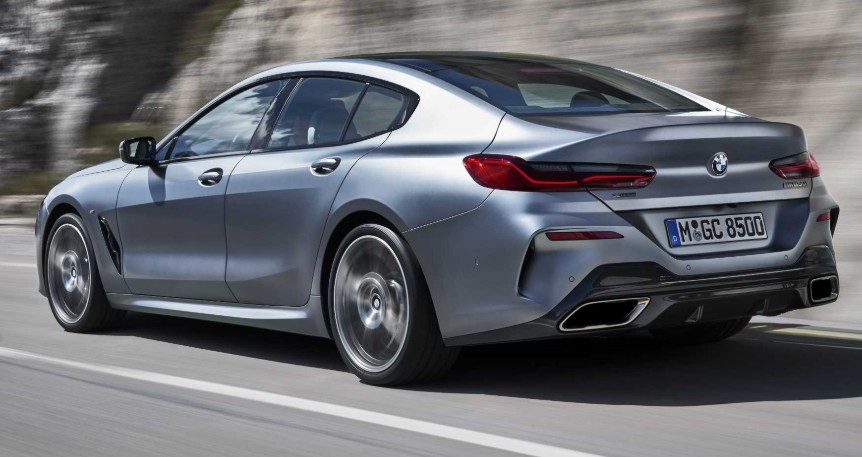
The BMW 8 Series looks like a million dollars even when it does not cost anywhere close to that much. Long hood, low roofline, serious engines, beautifully finished interiors—it is the sort of car that can make us glance backward after parking it.
Unfortunately, its resale value often moves in the opposite direction.
So, why do BMW 8 Series depreciate so much?
There is no single mechanical flaw, disastrous reliability secret, or mysterious BMW curse behind it. Instead, the 8 Series sits at the intersection of several characteristics that usually create heavy depreciation: a high initial price, expensive technology, costly repairs, limited used-market demand, steep luxury-car discounts, rapid model evolution, and buyers who are often happier leasing than owning.
That combination can make depreciation brutal for the first owner.
For the second owner, however, it creates something entirely different: opportunity.
A lightly used BMW 8 Series can deliver six-figure-car refinement for dramatically less money than its original owner paid. Before rushing toward what looks like the bargain of the century, though, we need to understand why those bargains exist.
Content in this publication
- How Much Does a BMW 8 Series Depreciate?
- Why Do BMW 8 Series Depreciate So Much?
- 1. The BMW 8 Series Starts Expensive
- 2. Large Luxury Cars Typically Depreciate Quickly
- 3. New BMW Buyers Frequently Lease
- 4. Used Buyers Worry About Repair Costs
- 5. The 8 Series Has a Small Used-Car Audience
- 6. Luxury Coupes Are No Longer the Default Status Cars
- 7. Technology Ages Quickly
- 8. BMW Discounts Can Hurt Resale Values
- 9. The Warranty Expiration Creates a Psychological Cliff
- 10. The M850i Can Depreciate Harder in Dollar Terms
- 11. The BMW M8 Faces an Even Smaller Market
- 12. Mileage Matters More on Expensive Performance Cars
- 13. Maintenance History Can Make or Break Resale Value
- 14. Why the BMW 8 Series Can Be a Fantastic Used Buy
- 15. When Does BMW 8 Series Depreciation Slow Down?
- 16. Is Leasing a BMW 8 Series Smarter Than Buying New?
- 17. Should We Buy a Used BMW 8 Series Because It Is Cheap?
- 18. Does the BMW 8 Series Hold Its Value Better Than Some Luxury Cars?
- 19. Could the BMW 8 Series Become Collectible?
- 20. How Can We Reduce BMW 8 Series Depreciation?
- 21. Is BMW 8 Series Depreciation Actually a Bad Thing?
- 22. Why BMW 8 Series Depreciation Should Not Scare Enthusiasts
- 23. So, Why Do BMW 8 Series Depreciate So Much?
- Conclusion: The 8 Series Loses Money but Gains Value
- Frequently Asked Questions
How Much Does a BMW 8 Series Depreciate?
Depreciation simply measures how much value a vehicle loses after it is purchased.
All cars depreciate to some degree, but luxury vehicles tend to lose considerably more money in absolute terms because they begin with much higher prices.
The BMW 8 Series illustrates that beautifully.
Kelley Blue Book currently estimates that a 2023 BMW 8 Series has depreciated approximately 41% over three years, leaving it with roughly 59% of its previous value. KBB also places that model among the heavier-depreciating coupes from its model year.
The numbers become even more striking when we look forward.
Kelley Blue Book's current five-year ownership estimate for a 2026 BMW 8 Series priced around $96,000 projects approximately $57,700 of depreciation over five years.
That means depreciation can easily become the largest single cost associated with owning the car.
And yet those numbers are not especially shocking once we understand the segment.
Why Do BMW 8 Series Depreciate So Much?
The short answer is that the BMW 8 Series is an expensive luxury GT competing in a relatively small market.
The longer answer is more interesting.
People buying brand-new luxury cars care intensely about having the newest design, technology, warranty coverage, financing incentives, and status associated with a new vehicle. Used-car shoppers tend to care considerably more about price, reliability, maintenance costs, and practicality.
The 8 Series sits between those two worlds.
A new buyer might comfortably spend close to or above six figures. A typical used-car buyer might hesitate once they imagine maintaining a complicated BMW that originally cost that much.
That creates a shrinking buyer pool as the car ages.
When demand shrinks faster than supply, prices fall.
Simple economics does much of the damage.
1. The BMW 8 Series Starts Expensive
Depreciation hurts more when we start high.
Think about two cars.
One costs $30,000 and loses 40% of its value. That represents $12,000.
Another costs $100,000 and loses the same percentage. Suddenly the owner has lost $40,000.
The percentage may be identical, but the financial pain certainly is not.
The modern 8 Series entered the market as BMW's flagship grand tourer, with configurations ranging from relatively restrained six-cylinder versions to powerful V8-powered M models.
Options can push transaction prices significantly higher.
Leather upgrades, premium audio, driver-assistance systems, special wheels, performance packages, individual paint colors, and other extras inflate the original purchase price.
Unfortunately, used-car buyers rarely repay the first owner dollar-for-dollar for those options.
A $5,000 option package might contribute only a fraction of that amount to the vehicle's resale value several years later.
The first owner therefore absorbs most of the cost.
Luxury Options Depreciate Especially Fast
Options are emotional purchases when a car is new.
Maybe we want the expensive paint because it looks spectacular under showroom lights. Maybe upgraded leather makes the cabin feel special. Perhaps larger wheels complete the design.
When that same car appears on the used market, buyers generally compare complete vehicles rather than reconstructing their original invoices.
A used shopper sees two similar 840i models and asks, "Which one costs less and has better mileage?"
They may appreciate the $4,000 option fitted to one of them.
They probably will not pay $4,000 extra for it.
That difference disappears into depreciation.
2. Large Luxury Cars Typically Depreciate Quickly
The BMW 8 Series is not alone.
Expensive luxury sedans, coupes, convertibles, and grand tourers have historically suffered substantial depreciation.
Why?
Because luxury is strongly connected to novelty.
Someone shopping for a premium flagship vehicle often wants modern technology, the latest styling, current safety systems, current infotainment, warranty coverage, and that unmistakable feeling of driving something new.
After five or six years, yesterday's flagship becomes today's used luxury car.
It might still be fast.
It might still look fantastic.
It might still have leather covering practically everything.
But the market no longer treats it as the latest object of desire.
Luxury ages differently from transportation.
A basic commuter car primarily needs to remain useful. A flagship luxury car must remain desirable.
That is a much tougher assignment.
3. New BMW Buyers Frequently Lease
Leasing plays another important role.
Premium cars are particularly attractive lease vehicles because owners can enjoy them during their newest years while avoiding longer-term repair uncertainty.
When leases expire, large numbers of relatively young cars can return to dealerships.
That increases used inventory.
More supply can pressure prices, especially when demand for used luxury coupes is limited.
We can think of it like an exclusive restaurant suddenly adding twice as many tables. The experience may remain excellent, but scarcity disappears.
Used 8 Series models compete not only with other used 8 Series cars but also with certified BMWs, dealer demonstrators, former leases, discounted new inventory, and competing luxury models.
That competition pushes sellers toward lower prices.
4. Used Buyers Worry About Repair Costs
Here we reach one of the biggest reasons behind BMW 8 Series depreciation.
A five-year-old BMW 8 Series might cost as much as a brand-new mainstream SUV.
But those two vehicles do not have the same maintenance DNA.
The used BMW may have become dramatically cheaper to buy, yet its components remain components designed for an expensive luxury car.
Brakes do not magically become economy-car brakes because the vehicle depreciated.
Neither do adaptive suspension components, sophisticated lighting systems, high-performance tires, electronic modules, turbochargers, cooling-system parts, sensors, cameras, premium interior electronics, or complicated drivetrain hardware.
That scares potential buyers.
And fear has a price.
The market compensates buyers for future uncertainty by reducing what the vehicle is worth today.
Depreciation Does Not Reduce Repair Prices
This distinction is incredibly important.
Imagine an 8 Series that originally cost around $100,000 but eventually sells used for $45,000.
It may now have the purchase price of an ordinary premium crossover.
That does not mean BMW suddenly engineered it like a $45,000 car.
We are still buying the maintenance requirements of the expensive machine it originally was.
This is one of the oldest traps in used luxury-car ownership.
The purchase price depreciates.
The complexity does not.
5. The 8 Series Has a Small Used-Car Audience
The BMW 8 Series is gorgeous, but practicality was never its greatest selling point.
Most buyers simply do not need a massive luxury coupe.
Families might prefer an X5.
Executives might prefer a 5 Series or 7 Series.
Performance enthusiasts might choose an M3 or M4.
People seeking something cheaper could purchase a 4 Series.
SUV buyers have an enormous selection.
Suddenly our potential 8 Series buyer occupies a fairly narrow niche.
They must want luxury, performance and style while accepting relatively high ownership costs.
The Gran Coupe broadens the audience thanks to its additional doors and more usable cabin, but even that model lives in an increasingly SUV-dominated market.
Limited demand means sellers sometimes need aggressive pricing to attract buyers.
6. Luxury Coupes Are No Longer the Default Status Cars
Twenty years ago, a large coupe represented the classic expression of expensive personal transportation.
Today?
Luxury SUVs dominate many premium markets.
Consumers who might once have purchased a big coupe increasingly choose vehicles such as the BMW X5, X6, X7, Porsche Cayenne, Mercedes-Benz GLE, or Range Rover.
SUVs offer the commanding driving position, passenger room, luggage space, all-weather image, and prestige many buyers want.
The 8 Series offers something different.
It is lower, sleeker, more dramatic and often more enjoyable.
Yet being beautiful does not guarantee broad market demand.
A yacht is more glamorous than a fishing boat, but considerably fewer people need one.
The same principle affects the 8 Series.
7. Technology Ages Quickly
Technology makes new luxury cars impressive.
It can also make older luxury cars feel outdated surprisingly fast.
You may be interested in reading Is Ford Ka a Good Car? A Complete Used Buyer’s Guide
BMW regularly updates infotainment systems, digital displays, driver-assistance technology, smartphone integration, lighting, software, interfaces and electronic features.
A premium system that felt futuristic six years ago may seem ordinary today.
Meanwhile, newer mainstream cars increasingly offer technology that once belonged exclusively to luxury flagships.
Large touchscreens, wireless smartphone connectivity, adaptive cruise control, 360-degree cameras, digital dashboards and sophisticated safety technology have moved rapidly downmarket.
That erodes one of the used 8 Series' advantages.
Yesterday's Luxury Becomes Tomorrow's Standard Equipment
This phenomenon is ruthless.
Features that helped justify an enormous new-car price eventually become normal.
Consider navigation.
Built-in navigation was once an expensive luxury feature.
Today almost anyone can connect a smartphone and access superior maps.
Digital displays followed a similar path.
So did parking cameras.
So did LED lighting.
The 8 Series therefore competes not merely against newer luxury vehicles but against technological progress itself.
And technology rarely depreciates gracefully.
8. BMW Discounts Can Hurt Resale Values
Manufacturer incentives and dealer discounts on new cars can indirectly damage used values.
Suppose a car carries a theoretical sticker price of $100,000 but dealerships regularly transact closer to $90,000.
Used-car shoppers know this.
The car does not really begin depreciating from its window sticker in the eyes of the market.
It begins from what people were actually willing to pay.
Large incentives can therefore make apparent depreciation look even worse.
This phenomenon is particularly important in expensive luxury segments, where relatively small changes in demand can encourage substantial incentives.
A $10,000 discount sounds enormous.
On a $100,000 luxury vehicle, however, it may simply represent the market finding the price required to move inventory.
9. The Warranty Expiration Creates a Psychological Cliff
There is something comforting about driving a complicated luxury vehicle while the manufacturer stands behind it.
Once warranty coverage starts disappearing, the emotional equation changes.
Suddenly every warning message looks slightly more threatening.
Is that simply a sensor?
Or the beginning of a four-figure repair?
Used-car shoppers know this.
Vehicles approaching the end of warranty coverage often enter a less attractive stage of ownership where buyers begin calculating potential repair exposure.
Certified pre-owned coverage can soften the concern.
Excellent service history helps.
A pre-purchase inspection helps even more.
But none completely eliminates the fear surrounding an aging high-end vehicle.
The market discounts that uncertainty.
10. The M850i Can Depreciate Harder in Dollar Terms
The V8-powered M850i is arguably one of the most appealing versions of the modern 8 Series.
It is brutally quick without becoming as uncompromising as a full M8.
The engine delivers effortless performance.
The cabin remains luxurious.
It may represent the sweet spot of the lineup emotionally.
Financially, however, expensive trims have more dollars available to lose.
An M850i generally starts significantly higher than an 840i, meaning even similar percentage depreciation produces a larger monetary loss.
Buyers also recognize that a V8 performance luxury car can bring higher fuel, tire, insurance, maintenance, and repair expenses.
That narrows the used audience further.
11. The BMW M8 Faces an Even Smaller Market
Now turn everything up.
More power.
More expensive hardware.
Higher original pricing.
More expensive consumables.
Potentially higher insurance costs.
A smaller buyer pool.
That is roughly the depreciation equation for the BMW M8.
The M8 is an extraordinary performance machine, but the number of used-car shoppers willing to purchase and maintain one is understandably smaller than the number shopping for a regular 3 Series.
Enthusiasts may desperately want the car.
Wanting and buying are different activities.
Once prices fall far enough, however, the M8 can become astonishingly tempting.
That is precisely how severe depreciation creates future enthusiast favorites.
12. Mileage Matters More on Expensive Performance Cars
Add 50,000 miles to an economy car and many shoppers shrug.
Add substantial mileage to a powerful luxury GT and buyers start wondering about every expensive component underneath it.
How were those miles accumulated?
Was the car serviced correctly?
Were oil changes performed consistently?
Has the cooling system been maintained?
How much life remains in the brakes?
When were the tires replaced?
Has suspension work been necessary?
Has the car been modified?
Those questions translate directly into price.
Low-mileage, well-documented examples can command meaningful premiums compared with neglected cars.
13. Maintenance History Can Make or Break Resale Value
A complete maintenance history is disproportionately important with vehicles like the BMW 8 Series.
Imagine two identical cars.
Same year.
Same color.
Same mileage.
One has extensive dealer or specialist records demonstrating careful servicing.
The other comes with little more than a key and a vague assurance that "the previous owner looked after it."
Which would we choose?
Exactly.
Documentation reduces uncertainty.
And uncertainty is one of the biggest forces driving depreciation in luxury vehicles.
Anyone planning to own an 8 Series for several years should therefore treat maintenance records almost like financial assets.
14. Why the BMW 8 Series Can Be a Fantastic Used Buy
Now depreciation becomes interesting.
Everything painful for the original owner becomes advantageous for the second or third owner.
Consider what a used 8 Series can offer:
- Flagship-level interior materials and refinement
- Powerful turbocharged six-cylinder or V8 engines
- Excellent high-speed stability and long-distance comfort
- Dramatic coupe, convertible, or Gran Coupe styling
- Modern safety and convenience technology
- Serious performance without sacrificing everyday usability
- A purchase price potentially far below the original sticker
Few cars demonstrate the phrase "someone else's depreciation is your discount" quite as effectively.
A carefully selected three- or four-year-old example may have already experienced a substantial portion of its steepest depreciation while remaining thoroughly modern.
That does not automatically make it cheap to own.
But it can make it excellent value.
15. When Does BMW 8 Series Depreciation Slow Down?
Depreciation rarely follows a straight line.
The steepest drop usually occurs during the vehicle's early years.
Eventually, the curve begins flattening because the car cannot continue losing enormous dollar amounts indefinitely.
Once an 8 Series becomes sufficiently inexpensive, another buyer segment enters the market.
Enthusiasts.
Independent BMW specialists become more relevant.
Cash buyers begin considering the car.
People who could never justify a brand-new flagship suddenly see a attainable dream car.
This new demand can place something of a floor beneath values.
That is why buying after the steepest initial depreciation may significantly reduce our exposure compared with ordering one brand new.
The Sweet Spot May Be Several Years Old
There is no universal perfect age because mileage, specification, condition, market, interest rates, accident history and maintenance records all matter.
Still, the general principle makes sense.
Buying very new means paying for remaining novelty.
You may be interested in readingIs Ford Ka a Good Car? A Complete Used Buyer’s GuideYou may be interested in reading
Is Ford Ka a Good First Car? A Complete Beginner’s GuideBuying very old means accepting greater repair risk.
Somewhere in between sits the sweet spot.
For many luxury cars, that means finding an example that has already surrendered a large portion of its original value but remains modern enough to provide reliable daily use.
16. Is Leasing a BMW 8 Series Smarter Than Buying New?
For certain owners, yes.
Leasing converts unpredictable resale value into a predetermined arrangement.
We enjoy the vehicle during its newest years and return it when the term ends, assuming mileage and condition requirements are satisfied.
That can be attractive when depreciation is severe.
Buying becomes more compelling when we intend to keep the car long enough that the initial depreciation becomes less important.
Someone who buys an 8 Series new and sells it after two or three years may absorb a painful amount of depreciation.
Someone who keeps it for ten years spreads that loss across a much longer ownership period.
Neither choice is universally correct.
The important variable is how long we intend to stay.
17. Should We Buy a Used BMW 8 Series Because It Is Cheap?
Not simply because it is cheap.
Price is not the same thing as affordability.
A depreciated 8 Series should ideally be purchased with a realistic maintenance budget, proper inspection, solid service records, and enough financial breathing room to handle unexpected repairs.
We should especially evaluate:
Service Records
Regular maintenance demonstrates responsible previous ownership and helps us understand what may need attention next.
Tires and Brakes
Performance-oriented components can be expensive, and a car needing all four tires plus brake work immediately after purchase can destroy the apparent bargain.
Electronics
Check every major convenience feature, camera, sensor, display, seat function and driver-assistance system.
Accident History
High-end bodywork, sensors and paint can be costly to repair properly. Poor previous repairs can become expensive headaches.
Pre-Purchase Inspection
A BMW specialist can identify problems invisible during a quick test drive.
Spending money before purchasing may feel annoying.
Spending considerably more afterward feels worse.
18. Does the BMW 8 Series Hold Its Value Better Than Some Luxury Cars?
Comparisons depend heavily on model, trim, age and market.
The 8 Series generally does not behave like vehicles famous for unusually strong resale values.
That does not mean it is uniquely bad.
Large luxury sedans, high-end GTs, expensive convertibles, and complex performance cars frequently depreciate aggressively.
Cars with stronger resale performance usually combine broad demand, desirable brand perception, limited supply, reliability, practicality, or enthusiast collectability.
The 8 Series has strong brand recognition and plenty of desirability, but broad demand and low ownership costs are not its defining characteristics.
That limits resale strength.
19. Could the BMW 8 Series Become Collectible?
Certain versions might.
Collectability, however, is unpredictable.
Rare specifications, desirable engines, limited-production variants, exceptional condition, unusual colors and high-performance models tend to offer better long-term prospects than ordinary configurations.
An immaculate M8 Competition with an attractive specification could eventually become desirable to collectors.
That does not mean we should treat one as an investment.
Cars consume money.
Maintenance, storage, insurance and opportunity costs continue regardless of future collector interest.
Buy an 8 Series because we want an 8 Series.
Any future appreciation should be considered a pleasant surprise rather than the business plan.
20. How Can We Reduce BMW 8 Series Depreciation?
We cannot stop depreciation, but we can avoid making it worse.
Buying after the initial steep decline is probably the most powerful strategy.
Beyond that, condition matters enormously.
Keep maintenance documentation.
Avoid questionable modifications.
Repair cosmetic damage properly.
Choose attractive specifications.
Keep mileage reasonable when practical.
Protect the interior.
Use proper tires.
Address mechanical problems rather than allowing them to accumulate.
And perhaps most importantly, buy at the correct price.
Our eventual resale loss begins the moment we purchase the car.
Paying $5,000 too much today means starting $5,000 behind tomorrow.
21. Is BMW 8 Series Depreciation Actually a Bad Thing?
That depends entirely on which side of the transaction we occupy.
For the person purchasing new and changing cars every two years, heavy depreciation can be painful.
For the used buyer?
It can be wonderful.
Imagine walking into a luxury hotel after someone else has already paid the entrance fee.
That is essentially what happens when we purchase a heavily depreciated premium car.
The previous owner funded the expensive part of the depreciation curve.
We get access to much of the engineering, design, performance and prestige for substantially less money.
The trick is making sure maintenance costs do not quietly reclaim the discount.
22. Why BMW 8 Series Depreciation Should Not Scare Enthusiasts
Depreciation numbers can make the 8 Series look financially terrifying.
But cars are not spreadsheets alone.
The real question is value received.
A used 840i can be an exceptionally refined long-distance car.
An M850i combines serious V8 performance with genuine grand-touring comfort.
An M8 delivers near-supercar acceleration while remaining capable of carrying luggage and surviving ordinary traffic.
Once depreciation lowers entry prices, those experiences become accessible to buyers who could never justify the original MSRP.
That is why rapid depreciation can make used luxury cars simultaneously dangerous and brilliant.
They are dangerous if we mistake "cheap to buy" for "cheap to own."
They are brilliant when purchased carefully, maintained properly and enjoyed for what they are.
23. So, Why Do BMW 8 Series Depreciate So Much?
Bring everything together and the explanation becomes surprisingly logical.
The BMW 8 Series begins life as an expensive flagship luxury vehicle. Its original customers often value newness and may lease rather than own long term. After several years, large numbers of used examples face a smaller audience that worries about maintenance costs, outdated technology, warranty expiration, fuel consumption, insurance and expensive repairs.
Meanwhile, luxury SUVs and less expensive BMW models compete for many of those same buyers.
The result?
Supply exceeds the number of people willing to pay strong money.
Prices fall until buyers appear.
That is depreciation in its purest form.
There is no conspiracy.
No hidden flaw required.
Just economics.
Conclusion: The 8 Series Loses Money but Gains Value
So, why do BMW 8 Series depreciate so much?
Because expensive luxury GTs occupy one of the toughest areas of the used-car market.
They cost a fortune when new, lose their novelty quickly, attract relatively few secondhand buyers, and carry maintenance costs that remain stubbornly premium even as their purchase prices collapse.
That sounds terrible if we are selling one.
It sounds considerably better if we are shopping for one.
Current valuation data reinforces the pattern. Kelley Blue Book estimates a 2023 8 Series has lost roughly 41% of its value over three years, while its projections for newer models show depreciation potentially consuming tens of thousands of dollars over five years.
The lesson is not that the BMW 8 Series is a bad car.
Quite the opposite.
Its depreciation partly reflects what it is: an extravagant, complicated, high-performance luxury machine designed for buyers who value experience more than resale percentages.
For used buyers who understand maintenance costs, that weakness can become its greatest advantage.
Someone else buys the expensive new car.
Someone else absorbs the steepest depreciation.
Then we arrive a few years later and buy the same beautifully engineered grand tourer for a fraction of what it originally cost.
Sometimes losing value creates value.
And the BMW 8 Series proves it better than almost anything.
Frequently Asked Questions
Why does the BMW 8 Series lose value so quickly?
The BMW 8 Series depreciates quickly because of its high original price, limited used-car audience, luxury-car maintenance costs, heavy leasing, rapid technology changes and strong competition from luxury SUVs and newer BMW models. Buyers also become more cautious as warranty coverage expires, which reduces demand and pushes resale prices lower.
How much does a BMW 8 Series depreciate in three years?
Depreciation varies according to model year, trim, mileage, condition and location. As a current real-world reference, Kelley Blue Book estimates that a 2023 BMW 8 Series has lost approximately 41% of its value over three years. Individual vehicles can perform significantly better or worse depending on their specification and history.
Is a used BMW 8 Series worth buying?
A used BMW 8 Series can represent excellent value because substantial early depreciation allows buyers to access flagship BMW engineering for much less than the original price. However, maintenance, tires, brakes, insurance and repairs can remain expensive. A thorough pre-purchase inspection and complete maintenance history are particularly important.
Which BMW 8 Series depreciates the most?
Higher-priced models such as the M850i and M8 can lose especially large amounts of money in absolute terms because their original prices are substantially higher. Exact depreciation percentages vary, but expensive performance variants also face smaller used-buyer pools because potential owners anticipate greater operating and maintenance costs.
When is the best time to buy a depreciated BMW 8 Series?
There is no perfect age for every buyer, but several-year-old examples can offer a compelling balance because much of the sharp initial depreciation may already have occurred while the vehicle remains relatively modern. Condition and maintenance history matter more than simply buying the cheapest or oldest example available.
You may be interested in readingIs Ford Ka a Good Car? A Complete Used Buyer’s GuideYou may be interested in reading
Is Ford Ka a Good First Car? A Complete Beginner’s GuideYou may be interested in reading
Which Ford Ka Is the Best? The Complete Used-Car GuideIf you want to know other articles similar to Why Do BMW 8 Series Depreciate So Much? The Real Reasons Behind the Drop you can visit the category Blog.
How to Reset the Oil Light on a Kia Sportage
Volvo S90 Reliability: Problems, Costs & Best Years
Is Haval Jolion a Good Car? Honest Review, Reliability, Pros and Cons
How to Start Haval Jolion With Spare Key: Complete Guide
How to Calculate Per Diem on an Auto Loan

How to Calculate the Residual Value of a Car
Leave a Reply
More content of your interest