
Which Ford Ka Is the Best? The Complete Used-Car Guide

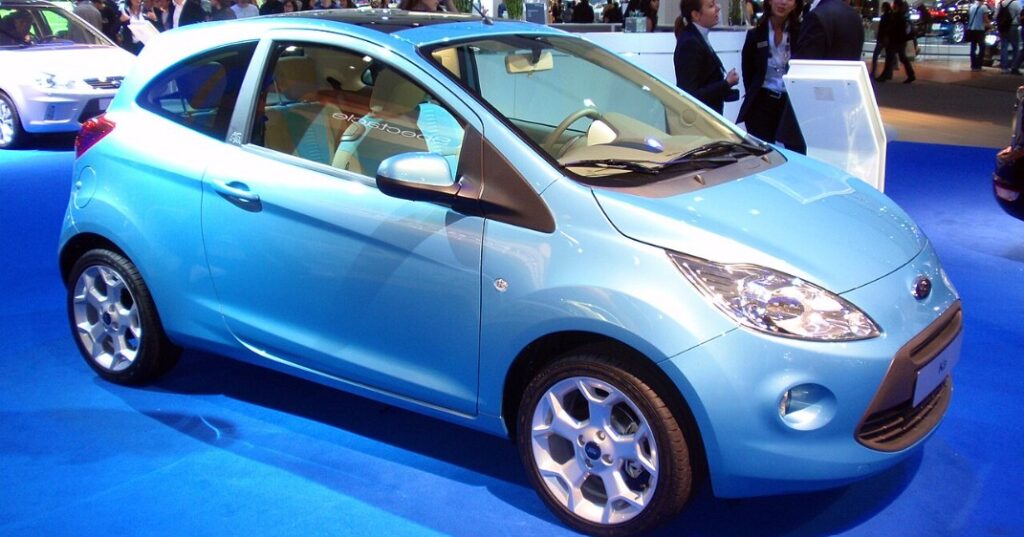
The Ford Ka has always been a little car with a surprisingly big personality. It arrived as an inexpensive urban runabout, became something of a style icon, and eventually evolved into the more conventional and practical Ka+. But if we are shopping for one today, a simple question quickly appears: which Ford Ka is the best?
For most buyers, the sweet spot is a late second-generation Ford Ka with the 1.2-litre petrol engine, particularly a well-maintained example from roughly 2013 to 2016. It combines low running costs, compact dimensions, simple mechanicals, and a more modern driving experience than the original Ka.
However, that does not automatically make it the best version for everyone.
If we want character and retro appeal, the first-generation Ka deserves attention. If practicality, five doors, and passenger space matter more, the Ford Ka+ makes considerably more sense. And if we want something entertaining rather than merely economical, the rare SportKa sits in a category of its own.
So, instead of declaring one universal winner and walking away, let’s look at the different generations, engines, trims, and ownership considerations that determine which Ford Ka is the best for you.
Content in this publication
- Ford Ka Generations at a Glance
- Which Ford Ka Is Best Overall?
- First-Generation Ford Ka: Best for Character
- Is the SportKa the Best Ford Ka?
- Second-Generation Ford Ka: The Best Balance
- Best Ford Ka Engine: 1.2 Petrol
- What About the 1.3 TDCi Diesel?
- Ford Ka+ 1.2: Best for Practicality
- Is the Ford Ka+ Better Than the Ford Ka?
- Best Ford Ka for a First Car
- Best Ford Ka for Motorway Driving
- Best Ford Ka for City Driving
- Best Ford Ka for Economy
- Best Ford Ka Trim Level
- Ford Ka+ Active: Is It the Best Ka+?
- Ford Ka Reliability: Which Version Ages Best?
- What Should We Check Before Buying a Ford Ka?
- Which Ford Ka Should We Avoid?
- Mk1 vs Mk2 vs Ka+: Which One Wins?
- So, Which Ford Ka Is the Best to Buy?
- How Much Should We Care About Mileage?
- Is a Ford Ka Still Worth Buying Today?
- Conclusion: Our Pick Is the Late Ford Ka 1.2 Petrol
- Frequently Asked Questions
Ford Ka Generations at a Glance
Ford launched the original Ka in 1996. Its striking New Edge styling immediately separated it from conventional small hatchbacks of the era. A second generation followed in 2008, developed alongside Fiat and closely related mechanically to the Fiat 500 and Panda architecture. The larger five-door Ka+ arrived in Europe in 2016 and transformed the concept into something closer to a traditional small family hatchback.
Broadly speaking, we can divide the family into three eras:
- First-generation Ford Ka: 1996-2008
- Second-generation Ford Ka: 2008-2016
- Ford Ka+: introduced in Europe in 2016, with production continuing until around 2020 in relevant markets
Each approaches the idea of inexpensive motoring differently.
The original Ka is tiny, playful, and charismatic. The second-generation car feels more refined and polished while remaining genuinely compact. The Ka+ is larger and more useful but arguably loses some of the distinctive personality that made the early Ka memorable.
Which Ford Ka Is Best Overall?
If we had to recommend one version to the widest possible group of used-car buyers, we would choose:
2013-2016 Ford Ka 1.2 Petrol
Why this particular combination?
Because it sits in a useful middle ground.
The second-generation 1.2 petrol produces roughly 69 PS from its 1,242cc naturally aspirated engine, depending on specification. That does not sound exciting, and frankly it isn't. But this is a lightweight city car rather than a motorway missile.
Its strengths are more relevant in everyday life:
- Simple naturally aspirated petrol engine
- Small exterior dimensions
- Light controls
- Relatively inexpensive consumables
- Good urban manoeuvrability
- More modern cabin than the Mk1 Ka
- Less complicated ownership than the diesel for many low-mileage drivers
- Plenty of younger examples compared with the original Ka
Think of it as the sensible pair of trainers in the Ford Ka wardrobe. It might not attract the most attention, but we can wear it almost anywhere.
Why Later Second-Generation Cars Make Sense
With almost any older used car, age matters nearly as much as specification.
A 2015 Ka with careful ownership, proper servicing, good tyres, and a clean body is generally more attractive than an early example that has spent years bouncing between owners.
Late cars also allow us to obtain the distinctive Ka shape without buying something that is now approaching three decades old.
That matters because the cheapest car on an advertisement page is rarely the cheapest car to own.
First-Generation Ford Ka: Best for Character
There is something charming about the original Ford Ka that its successors never completely recreated.
Its curved silhouette, oversized bumpers, short wheelbase, and playful appearance made it instantly recognizable. Ford launched this first generation in 1996 using underpinnings related to the contemporary Fiesta.
What Makes the Original Ka Special?
Driving one today can feel refreshingly uncomplicated.
There are no enormous touchscreens trying to organize our lives. The car is small enough to place easily on narrow roads, the steering feels communicative, and its low weight contributes to an agile personality.
We could compare it to an old pair of canvas shoes: basic, lightweight, slightly crude, yet oddly enjoyable.
For enthusiasts who appreciate simple cars, that matters.
Which Mk1 Ford Ka Is Best?
Among ordinary first-generation models, we would generally favour one of the later petrol cars in excellent structural condition rather than focusing obsessively on trim.
Condition is everything here.
A beautifully preserved basic Ka can be a far smarter purchase than a badly neglected high-specification example.
Rust Matters More Than the Badge
This is particularly important when shopping for an original Ka.
Older cars may suffer corrosion, and once structural repairs become extensive, the attractive purchase price can disappear quickly.
Inspect areas such as:
- Sills
- Wheel arches
- Floorpan
- Suspension mounting areas
- Areas around the fuel filler
- Lower door and body sections
- Previous repair patches
Professional inspection is worthwhile if we are seriously considering one.
Is the SportKa the Best Ford Ka?
For driving enthusiasts, arguably yes.
The SportKa took the original Ka formula and injected significantly more attitude into it. With a larger engine, sportier suspension tuning, wider visual stance, and distinctive styling, it became one of the genuinely interesting small performance cars of its period.
But there is an important distinction between best to drive and best to own every day.
The SportKa is now an older specialist version. Finding an untouched, corrosion-free, properly maintained example can be considerably harder than finding an ordinary Ka.
Who Should Buy a SportKa?
We would choose one if:
- Driving enjoyment matters more than absolute economy.
- We specifically want an unusual small enthusiast car.
- We are prepared to inspect carefully for age-related deterioration.
- We understand that condition matters enormously.
- We intend to preserve the car rather than simply use it as disposable transportation.
For a first-time driver looking for basic commuting, however, the ordinary 1.2-litre second-generation Ka is usually easier to recommend.
Second-Generation Ford Ka: The Best Balance
Here is where the Ford Ka arguably became easiest to live with.
The second generation arrived in 2008 and shared development and architecture with Fiat's small-car platform rather than simply evolving the original Ka mechanically.
It retained the three-door layout and funky styling but looked more polished inside and out.
Why the Mk2 Ka Is Our Favourite
The Mk2 manages to maintain enough personality to feel like a Ka while improving the things everyday owners actually notice.
Parking is easy.
Fuel consumption is reasonable.
Controls are straightforward.
Parts and servicing are generally less intimidating than on complicated premium city cars.
And crucially, later examples are still young enough that we can find cars that have not completely surrendered to age.
That combination makes the Mk2 the strongest all-rounder.
Best Ford Ka Engine: 1.2 Petrol
For most buyers asking which Ford Ka engine is best, we would keep things simple and choose the 1.2 petrol.
The second-generation 1.2 is a naturally aspirated 1,242cc four-cylinder producing around 69 PS.
No, it will not pin us into the seat.
But city cars do not need to.
Why We Prefer Petrol
Small petrol engines suit the Ka's purpose.
Most examples spend their lives doing:
- School runs
- Short commutes
- Supermarket trips
- Urban driving
- Occasional motorway journeys
A naturally aspirated petrol engine fits that pattern nicely.
There is also something reassuring about mechanical simplicity. When buying a cheap used car, we generally want fewer expensive systems standing between us and inexpensive motoring.
Performance Is Modest but Adequate
Acceleration requires patience, particularly with passengers onboard, but the Ka feels happier in cities and on slower country roads anyway.
The trick is not to drive it like a miniature hot hatch.
Keep the engine working, plan overtakes carefully, and accept its limitations.
Once we do that, the little Ka makes sense.
What About the 1.3 TDCi Diesel?
The second-generation Ka was also offered with a 1.3-litre diesel in some markets.
Published specification data for the 1.3 TDCi version lists around 75 hp and notably low official-era fuel consumption figures.
On paper, that sounds excellent.
But do we really need diesel in a tiny city car?
When the Diesel Makes Sense
A diesel Ka becomes more logical if we regularly cover longer distances where fuel economy can offset its added mechanical complexity.
Someone doing lengthy commuting every week may appreciate it.
For predominantly short journeys, however, we would rather have the petrol.
Used-car buying is about choosing the engine that fits the journey, not the one with the most impressive fuel-economy number on paper.
Ford Ka+ 1.2: Best for Practicality
Now we come to the Ka+.
The name suggests another tiny Ka, but the philosophy changed considerably.
You may be interested in reading Are Ford Ka Cheap to Insure? A Complete UK Guide
The Ka+ grew into a five-door hatchback designed to provide more passenger and luggage space. Compared with the three-door second-generation Ka, it feels closer to a conventional supermini.
The European Ka+ was offered with 1.2-litre petrol engines producing approximately 70 or 85 hp in earlier specifications.
Which Ka+ Engine Is Best?
We would pick the 85 hp 1.2 when both versions are available in similar condition.
Why?
Because the extra power makes everyday driving slightly easier without changing the basic character of the car.
The 85 hp Ka+ was quoted with 112 Nm of torque and a 0-100 km/h time of roughly 13.3 seconds, while retaining the straightforward five-door hatchback formula.
That still is not quick.
But when climbing hills, joining faster roads, or carrying several passengers, every little bit helps.
Ka+ 70 vs 85 hp
The 70 hp version can be perfectly satisfactory if our priority is inexpensive local transport.
The 85 hp model is simply the more flexible choice.
If two cars cost roughly the same and both have similarly good histories, we would take the 85.
Is the Ford Ka+ Better Than the Ford Ka?
It depends entirely on how we define better.
The Ka+ is more practical.
The Mk2 Ka is more compact and distinctive.
The original Ka has more personality.
That is why choosing solely by generation number misses the point.
Choose the Ka+ If You Need Space
The Ka+ has five doors and five-seat accommodation, making it much easier to use with children or frequent rear-seat passengers.
Used-car assessments have also highlighted its larger body and substantially more practical interior compared with the preceding Ka.
If we regularly carry passengers, the difference is enormous.
Getting someone into the rear seat of a three-door city car can feel like helping them climb into a sleeping bag.
Five doors solve that problem immediately.
Choose the Ka If You Mostly Drive Alone
On the other hand, why carry around a bigger body if we rarely use the extra space?
For one or two people living in a busy town, the smaller Mk2 Ka remains appealing.
It is easy to park, inexpensive in spirit, and feels purpose-built for crowded streets.
Best Ford Ka for a First Car
For a new driver, our preferred choice would again be a later 1.2 petrol Mk2.
It delivers many of the qualities we want from a beginner's car:
- Compact proportions
- Predictable performance
- Easy parking
- Straightforward controls
- Modest engine output
- Generally uncomplicated everyday use
Insurance cost will depend heavily on the driver's age, postcode, driving history, exact trim, and local market, so we should always obtain quotes before purchasing rather than assuming every Ka will automatically be cheap to insure.
Why Not Buy the Cheapest Mk1?
Because purchase price tells only the first chapter of the story.
An extremely cheap old Ka might immediately need tyres, brakes, suspension components, exhaust work, rust repair, servicing, or other age-related attention.
Spending slightly more on a much cleaner Mk2 can be less painful financially.
A £1,000 car needing £1,500 of work is not really a £1,000 car.
Best Ford Ka for Motorway Driving
None of the Ka generations was created primarily for long-distance motorway cruising.
Nevertheless, if regular high-speed journeys are unavoidable, we would lean toward the Ka+ 1.2 85 hp.
Its larger body, longer-wheelbase feel, five-door practicality, and slightly stronger engine make it a better companion for mixed driving.
Still, expectations matter.
If we drive 20,000 motorway miles a year, perhaps the smarter question is not “which Ka?” but whether we should buy something larger and quieter altogether.
Best Ford Ka for City Driving
Here the Mk2 1.2 petrol shines.
A small turning footprint, compact body, light controls, and modest running costs fit city life beautifully.
Parallel parking becomes less of a geometry exam.
Tight multistorey car parks become less intimidating.
Narrow residential streets stop feeling like an obstacle course.
That is exactly what a Ka is supposed to do.
Best Ford Ka for Economy
This category is more complicated.
The 1.3 TDCi can produce impressive consumption figures on longer journeys, with period official data showing combined figures around 4.2 litres per 100 km for some versions.
But fuel economy alone does not equal lowest ownership cost.
Total Cost Matters More Than MPG
We need to consider:
- Purchase price
- Insurance
- Servicing
- Tyres
- Repairs
- Fuel
- Vehicle taxes where applicable
- Depreciation
A petrol Ka using slightly more fuel but requiring fewer expensive repairs could ultimately cost less.
For ordinary low-mileage city driving, we would therefore still choose the 1.2 petrol.
Best Ford Ka Trim Level
Trim names changed by year and market, making it dangerous to recommend one badge universally.
Instead, we recommend shopping by equipment actually fitted to the car.
Features Worth Looking For
Depending on generation and market, useful equipment may include:
- Air conditioning
- Electric windows
- Remote central locking
- Bluetooth or upgraded audio
- Heated windscreen
- Alloy wheels
- Parking sensors
- Heated seats
We would prioritize air conditioning and basic convenience features over oversized wheels or cosmetic packages.
Why?
Because sitting in traffic on a hot afternoon teaches us very quickly which options actually matter.
Ford Ka+ Active: Is It the Best Ka+?
Ford also offered a Ka+ Active with crossover-inspired styling and a slightly more adventurous appearance.
Specification references for the 1.2 Ti-VCT Active show an 85 hp engine, five-door body, and five seats.
It looks more rugged than the normal Ka+, though we should not confuse styling with genuine off-road capability.
Who Should Choose the Active?
Buy it because we like:
- The crossover-style design
- The slightly different stance
- Its extra visual personality
- The equipment included on a particular car
Do not pay a huge premium simply because it resembles a tiny SUV.
Underneath the costume, it remains a modest front-wheel-drive small car.
Ford Ka Reliability: Which Version Ages Best?
Reliability depends heavily on how individual cars have been treated.
That sounds obvious, but in inexpensive used cars it becomes critical.
A neglected “reliable” model can be far worse than a meticulously maintained example of a supposedly weaker version.
The Ka+ has received generally encouraging used-car assessments, although items involving steering and lighting have been identified among areas worth checking.
Service History Beats Low Mileage
Suppose we have two cars:
One has 45,000 miles but almost no maintenance records.
The other has 70,000 miles with documented servicing, recent brakes, quality tyres, and evidence of careful ownership.
We would inspect the second one first.
Mileage is important, but maintenance tells us how those miles were accumulated.
What Should We Check Before Buying a Ford Ka?
A careful pre-purchase inspection can save far more money than aggressive negotiation.
You may be interested in readingAre Ford Ka Cheap to Insure? A Complete UK GuideYou may be interested in reading
How Much Is a Ford Ka Worth? Complete Used Value GuideStart with the basics.
Exterior and Structure
Look for corrosion, accident repairs, mismatched paint, damaged wheels, ageing tyres, and evidence of poor previous repairs.
Older first-generation cars deserve especially close attention underneath.
Engine
Start the engine from cold whenever possible.
Listen for abnormal noises.
Check for warning lights.
Watch the exhaust.
Confirm that temperature remains stable during the test drive.
Clutch and Gearbox
The clutch should engage smoothly without obvious slipping.
The gearbox should change cleanly through every gear.
A tired clutch can quickly turn a bargain into an expensive weekend.
Suspension and Steering
Drive over rough surfaces at low speed.
Listen for knocks or rattles.
Check that the car tracks straight and that the steering feels consistent.
Electrical Equipment
Test absolutely everything.
Windows.
Lights.
Wipers.
Air conditioning.
Radio.
Central locking.
Dashboard displays.
A two-minute inspection can identify faults that advertisements conveniently forget to mention.
Which Ford Ka Should We Avoid?
Rather than condemning an entire model year, we would avoid individual cars showing obvious warning signs.
Walk away from a Ka with:
- Significant structural corrosion
- Poorly repaired accident damage
- Overheating
- Persistent dashboard warning lights
- Heavy clutch slip
- Questionable engine noises
- Incomplete identification or ownership paperwork
- Suspiciously inconsistent mileage history
- Numerous neglected maintenance items
- No believable service history combined with obvious mechanical wear
The badge on the boot cannot rescue a bad car.
Mk1 vs Mk2 vs Ka+: Which One Wins?
Here is the simplest comparison.
Best for Personality: Mk1 Ka
Choose the original if we love distinctive styling, simple old-school motoring, and the idea of owning something increasingly uncommon.
But condition must be excellent.
Best All-Rounder: Mk2 Ka 1.2
This is our winner.
It balances compact dimensions, modern enough usability, modest mechanical complexity, and easygoing petrol performance.
Best for Practicality: Ka+ 1.2 85 hp
The Ka+ sacrifices some cheekiness but gains five doors and noticeably more usable space.
For a young family or anyone carrying passengers regularly, that trade makes sense.
Best for Enthusiasts: SportKa
The SportKa is the emotional choice.
It is less about spreadsheets and more about smiling on a twisting road.
Find a genuinely good one, though, because age can make neglected examples expensive projects.
So, Which Ford Ka Is the Best to Buy?
For most people, our ranking looks like this:
- 2013-2016 Ford Ka 1.2 petrol — best overall
- Ford Ka+ 1.2 85 hp — best practical choice
- Late Mk1 Ford Ka — best inexpensive classic-style option
- SportKa — best enthusiast version
- Ka 1.3 TDCi — best mainly for frequent longer-distance drivers
There is one important caveat.
Condition can completely reverse that ranking.
A flawless 2011 car with comprehensive service history is a better purchase than a neglected 2016 car simply because the newer registration looks attractive.
Buy the car, not just the year.
How Much Should We Care About Mileage?
Mileage should influence our decision, but not control it.
These are inexpensive small cars, and many have lived tough lives involving countless cold starts, potholes, kerbs, short journeys, and urban parking scrapes.
That means 50,000 city miles can sometimes be harder than 80,000 relaxed motorway miles.
Look at the complete picture:
Service records, MOT or inspection history where available, tyre condition, interior wear, clutch behaviour, suspension noise, and the seller's attitude all tell part of the story.
If the steering wheel looks exhausted but the odometer claims extremely low mileage, ask questions.
Is a Ford Ka Still Worth Buying Today?
Yes, provided we approach it realistically.
The Ka's appeal lies in simplicity.
We are not buying sophisticated driver-assistance technology, huge infotainment displays, enormous luggage capacity, or luxury refinement.
We are buying a small car designed to move people around without demanding much space.
And sometimes that is precisely what we need.
A good used Ka can still work well as:
- A first car
- A second household vehicle
- A commuter
- A university car
- A cheap urban runabout
- A station car
- A compact vehicle for crowded cities
The newest Ka-family cars are no longer new, however, and Ford discontinued the model line after the Ka+ era. That makes mechanical condition increasingly important as the entire fleet ages.
Conclusion: Our Pick Is the Late Ford Ka 1.2 Petrol
So, which Ford Ka is the best?
For the average used-car buyer, we would search first for a 2013-2016 second-generation Ford Ka with the 1.2 petrol engine, good service history, clean bodywork, healthy suspension, and no obvious mechanical problems.
It represents the Ka formula at its most balanced.
It is small without feeling ancient, simple without being painfully primitive, and economical without relying on a diesel engine that may not suit short-distance driving.
Need more space? Buy the Ka+ 1.2 85 hp.
Want something memorable? Find an excellent Mk1 Ka.
Want something fun? Hunt for a good SportKa.
But whatever version we choose, remember the golden rule of affordable used cars: condition beats specification.
The best Ford Ka is not necessarily the newest one, the highest trim, or the one with the lowest mileage.
It is the one that has been properly maintained.
And when we find that combination, this little Ford can still make everyday driving remarkably uncomplicated.
Frequently Asked Questions
1. Which Ford Ka engine is the best?
For most drivers, the 1.2-litre petrol engine in the second-generation Ka is the best choice. It offers straightforward naturally aspirated performance and suits the short urban journeys for which the Ka was primarily designed. Buyers covering substantial longer-distance mileage may consider the 1.3 TDCi diesel, but petrol is generally the more natural fit for city use.
2. Which year Ford Ka is best?
We would focus on later second-generation cars from approximately 2013 to 2016. They retain the small dimensions and distinctive personality of the Ka while being younger than early Mk2 models. Individual condition and service history remain more important than choosing one exact model year.
3. Is the Ford Ka+ better than the Ford Ka?
The Ka+ is better for practicality, particularly because of its five-door layout and larger cabin. The regular second-generation Ka is better when compact size, easy parking, and distinctive styling matter more. Neither is universally superior; they solve different problems.
4. Is the Ford Ka a good first car?
A well-maintained Ford Ka can make a good first car thanks to its compact size, manageable performance, simple controls, and urban-friendly nature. We would particularly consider a later 1.2 petrol Mk2. Insurance quotations and a mechanical inspection should always be obtained before purchase.
5. Is the Ford Ka reliable?
A properly maintained Ka can provide dependable inexpensive transport, but age now plays a major role. Service history, corrosion, suspension condition, clutch operation, electrical equipment, and previous repairs should all be checked carefully. A maintained higher-mileage car can easily be a safer purchase than a neglected low-mileage example.
You may be interested in readingAre Ford Ka Cheap to Insure? A Complete UK GuideYou may be interested in reading
How Much Is a Ford Ka Worth? Complete Used Value GuideYou may be interested in reading
 Hyundai Santa Fe Reliability: Is It a Dependable SUV?
If you want to know other articles similar to Which Ford Ka Is the Best? The Complete Used-Car Guide you can visit the category Blog.
Volvo S90 Reliability: Problems, Costs & Best Years
Is Haval Jolion a Good Car? Honest Review, Reliability, Pros and Cons
How to Start Haval Jolion With Spare Key: Complete Guide
How to Calculate Per Diem on an Auto Loan

How to Calculate the Residual Value of a Car

Is the Honda Passport Selling Well? Sales Numbers Tell the Story
Leave a Reply
More content of your interest