

Mitsubishi Outlander vs Chevy Equinox: Which SUV Should You Buy?

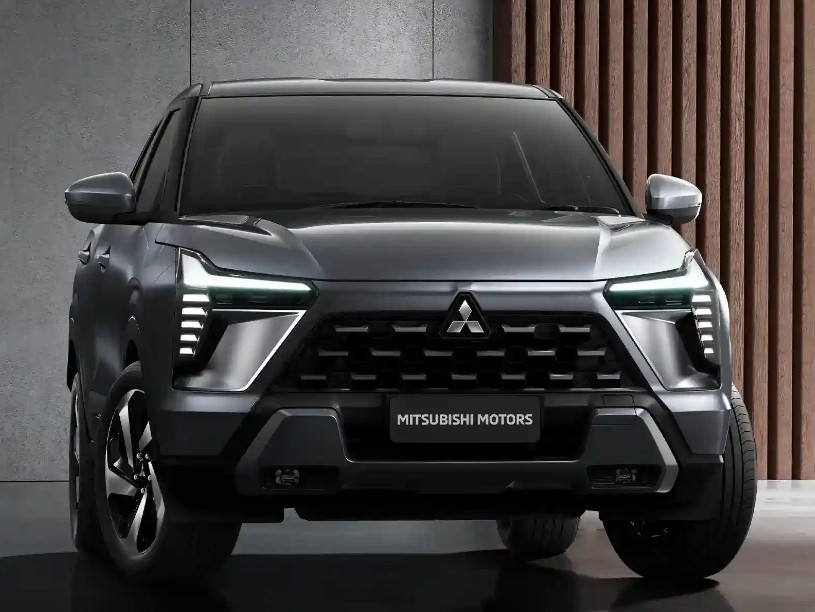
Shopping for a compact or midsize crossover can feel like walking into a restaurant with a 14-page menu. Everything looks reasonably good, every manufacturer promises comfort and efficiency, and suddenly choosing an SUV becomes harder than expected. The Mitsubishi Outlander vs Chevy Equinox comparison is a perfect example.
Both vehicles target practical buyers, but they approach the job differently.
The Chevrolet Equinox has traditionally been a straightforward five-seat crossover designed around everyday usability, comfortable commuting, and relatively simple ownership. The Mitsubishi Outlander takes a slightly different route. Depending on the generation and market, it can provide three-row seating, sophisticated all-wheel-drive systems, and even plug-in-hybrid technology.
So which should we park in our driveway?
For many buyers, the answer comes down to a surprisingly simple distinction: the Equinox tends to make more sense when we want an uncomplicated five-seat crossover, while the Outlander becomes more compelling when versatility, available electrification, or occasional seven-seat capacity matters.
But that's only the beginning.
Content in this publication
- Mitsubishi Outlander vs Chevy Equinox at a Glance
- Understanding the Mitsubishi Outlander
- Understanding the Chevrolet Equinox
- Mitsubishi Outlander vs Chevy Equinox: Size Comparison
- Cargo Space: Which One Carries More?
- Exterior Design: Conservative or Adventurous?
- Interior Quality and Cabin Design
- Technology Comparison
- Engine Options Across the Generations
- Outlander PHEV Changes the Entire Comparison
- Fuel Economy
- Driving Experience
- AWD and Bad-Weather Performance
- Mitsubishi Outlander vs Chevy Equinox Reliability
- Maintenance Costs
- Safety
- Towing Capability
- Mitsubishi Outlander vs Chevy Equinox for Families
- Which SUV Is Better for City Driving?
- Which Is Better for Road Trips?
- Used Mitsubishi Outlander vs Used Chevy Equinox
- Which Outlander Generation Is Best?
- Which Chevy Equinox Generation Is Best?
- Outlander vs Equinox: Resale Value
- Chevy Equinox Advantages
- Mitsubishi Outlander Advantages
- Mitsubishi Outlander Disadvantages
- Chevy Equinox Disadvantages
- Who Should Buy a Mitsubishi Outlander?
- Who Should Buy a Chevy Equinox?
- Mitsubishi Outlander vs Chevy Equinox: Which Is Better?
- Final Verdict: Outlander or Equinox?
- Frequently Asked Questions
- 1. Is a Mitsubishi Outlander better than a Chevy Equinox?
- 2. Which is bigger, Mitsubishi Outlander or Chevy Equinox?
- 3. Which is more reliable, Chevy Equinox or Mitsubishi Outlander?
- 4. Is the Mitsubishi Outlander PHEV worth buying instead of an Equinox?
- 5. Which should I buy used: Outlander or Equinox?
Mitsubishi Outlander vs Chevy Equinox at a Glance
Before digging into generations, engines, reliability, interior space, and driving characteristics, here's the basic personality of each SUV.
| Category | Mitsubishi Outlander | Chevrolet Equinox |
|---|---|---|
| Vehicle type | Compact/midsize crossover SUV | Compact crossover SUV |
| Typical seating | 5 or 7 depending on generation/market | 5 |
| Gasoline models | Yes | Yes |
| Plug-in hybrid | Available on Outlander PHEV | Not on conventional Equinox |
| AWD availability | Yes | Yes |
| Best suited to | Families wanting versatility | Everyday five-seat SUV buyers |
| Third row | Available on many newer models | No |
| General personality | Flexible, family-oriented | Simple, comfortable, practical |
| Used-market appeal | Strong when carefully selected | Broad availability in North America |
Neither SUV automatically wins every category. They're more like two different tools sitting next to each other in the garage.
Let's figure out which one fits our job.
Understanding the Mitsubishi Outlander
The Mitsubishi Outlander has evolved dramatically since its early generations.
Older Outlanders were relatively straightforward compact crossovers. As the model matured, Mitsubishi gradually pushed it toward a more family-oriented position with larger cabins, available three-row seating, improved technology, and increasingly sophisticated electrified powertrains.
The biggest turning point was arguably the arrival of the Outlander PHEV.
Mitsubishi introduced the Outlander plug-in hybrid in the 2010s, combining a gasoline engine, battery, electric motors, and all-wheel-drive capability. That made the Outlander unusual at a time when plug-in SUVs were still relatively rare.
Modern Outlanders have become more polished again.
In the North American market, for example, Mitsubishi announced a new mild-hybrid powertrain for the 2026 gasoline Outlander, while the updated Outlander PHEV received a larger battery and further refinements. Availability differs substantially by country, so global shoppers should always check their local Mitsubishi lineup rather than assuming one country's specifications apply everywhere.
What the Outlander Does Best
The Outlander's greatest strength is versatility.
Depending on the generation, we can find:
- Gasoline engines
- Diesel engines in some older markets
- Front-wheel drive
- Four-wheel or all-wheel drive
- Plug-in-hybrid power
- Five-seat configurations
- Seven-seat configurations
That's quite a toolbox.
It means an Outlander purchased in Australia may look mechanically quite different from one sold in the United States, Europe, Japan, or New Zealand.
Understanding the Chevrolet Equinox
The Chevrolet Equinox has generally followed a simpler recipe.
Chevrolet introduced it for the 2005 model year, initially positioning it as a relatively roomy crossover. Over successive generations, the Equinox became smaller, lighter, and increasingly aligned with the mainstream compact-SUV segment.
Unlike the Outlander, the conventional Equinox has remained fundamentally focused on five-passenger transportation.
That's not necessarily a weakness.
Sometimes we don't need a Swiss Army knife. We need a comfortable hammer.
The Equinox generally emphasizes straightforward controls, a roomy second row, useful cargo space, widespread dealership support in its strongest markets, and conventional gasoline powertrains.
Its strongest presence has historically been in North America, meaning buyers elsewhere may find the Outlander much easier to purchase, service, and resell.
What the Equinox Does Best
The Equinox tends to appeal to drivers who prioritize:
- Comfortable everyday driving
- A spacious five-seat cabin
- Straightforward gasoline ownership
- Mainstream technology
- Good urban usability
- Easy access to parts and service in North America
Recent Equinox generations have also leaned harder into technology and stronger exterior styling, moving away from the somewhat anonymous appearance of some older versions.
Mitsubishi Outlander vs Chevy Equinox: Size Comparison
Put these SUVs next to each other and their missions become clearer.
The Equinox is fundamentally a five-seat crossover.
The Outlander, particularly in newer generations, tries to squeeze more family flexibility from roughly the same general category.
That's why dimensions alone don't tell the whole story.
Which SUV Feels Bigger Inside?
The Outlander generally feels more vertically oriented and family-focused.
Its available third row is the obvious difference.
However, we shouldn't interpret "seven seats" as meaning "seven adults will happily cross a continent."
The Outlander's third row works better as occasional seating for children or shorter passengers. Think emergency umbrella rather than permanent roof: extremely useful when needed, but not necessarily something we'll use every day.
The Equinox skips that compromise.
Instead of squeezing in additional seats, it concentrates on providing room for five occupants.
Second-Row Comfort
If our family consists of four or five people and never needs additional seating, the Equinox can make plenty of sense.
Its rear seat has historically been one of the practical parts of the package.
The Outlander counters with impressive flexibility, particularly in newer generations. Families carrying child seats, luggage, pets, or grandparents may appreciate its adaptable cabin.
Third-Row Advantage: Outlander
This category is simple.
If we occasionally need six or seven seats, the Outlander wins automatically because the Equinox isn't designed to provide a third row.
Just remember that Outlander specifications vary by market and generation.
Cargo Space: Which One Carries More?
Cargo comparisons become tricky because seating configuration changes everything.
With an Outlander's third row raised, luggage capacity naturally shrinks.
Fold those seats down and the picture improves dramatically.
The Equinox doesn't have this problem because its cargo compartment always sits behind the second row.
For routine grocery runs, suitcases, sports equipment, and strollers, both SUVs can work comfortably.
For maximum flexibility, however, we'd lean toward the Outlander.
Why?
Because its cabin can transform according to what we're doing.
One afternoon it can carry several passengers. The next morning, with seats folded, it becomes a practical cargo hauler.
Exterior Design: Conservative or Adventurous?
Design is subjective, but these vehicles have followed different visual paths.
Older Equinox generations were fairly conservative. Chevrolet clearly wasn't trying to make the neighbors drop their coffee when one drove past.
Newer versions have become considerably sharper.
The latest design direction gives the Equinox a broader stance, stronger grille, squarer proportions, and trims aimed at buyers wanting either sporty or rugged styling.
The Outlander has gone through an even bigger transformation.
Recent models use Mitsubishi's bold front-end styling with distinctive lighting and a more substantial road presence.
Which One Looks Better?
We'd call this a draw because styling depends heavily on generation.
A modern Outlander arguably looks more upscale than its price position suggests, while newer Equinox models have become much more distinctive than previous generations.
Used buyers should judge the specific generation instead of the badge.
Interior Quality and Cabin Design
This category has changed dramatically over time.
Older examples of both vehicles can feel noticeably dated today.
Hard plastics, smaller displays, basic instrument panels, and older infotainment systems were normal when those models launched.
That's why comparing a 2012 Outlander with a 2026 Equinox—or vice versa—doesn't tell us much.
Newer Mitsubishi Outlander Interior
The newest Outlander generations represent a significant leap.
Materials became more attractive, displays grew larger, seats became more supportive, and the overall dashboard design moved substantially upmarket.
Recent updates have continued that approach, with Mitsubishi emphasizing cabin refinement, noise reduction, improved materials, and upgraded multimedia systems.
Newer Chevrolet Equinox Interior
Modern Equinox models also emphasize large screens and stronger technology integration.
Chevrolet has pushed the dashboard toward a more digital layout, making the newest Equinox feel dramatically more contemporary than models from only a generation or two ago.
If buying new, neither cabin should immediately eliminate the vehicle from consideration.
If buying used, condition and trim level matter enormously.
Technology Comparison
Technology ages faster than almost anything else in a vehicle.
A ten-year-old SUV can still drive beautifully while its infotainment system feels like an archaeological exhibit.
Recent versions of both vehicles offer the features most buyers expect, depending on trim and market:
- Smartphone integration
- Touchscreen infotainment
- Digital instrumentation
- Bluetooth
- USB connectivity
- Driver-assistance systems
- Rear cameras
- Available surround-view cameras
- Adaptive cruise control on selected models
The exact equipment varies tremendously across years and countries.
Infotainment Winner
For current vehicles, we'd call it close.
Rather than choosing based purely on screen size, spend several minutes actually using each system.
Menus matter.
Button placement matters.
Wireless connectivity matters.
A fancy touchscreen that requires three menus just to adjust something simple can become irritating remarkably quickly.
Engine Options Across the Generations
Now things get interesting.
Because we're comparing all generations globally, no single engine specification represents either SUV accurately.
Mitsubishi Outlander Engines
Depending on year and region, Outlanders have used various four-cylinder gasoline engines, larger gasoline engines, diesel engines, conventional drivetrains, and plug-in-hybrid systems.
The PHEV is the standout.
Instead of simply attaching a small electric motor to a gasoline drivetrain, Mitsubishi built the Outlander PHEV around significant electric propulsion capability.
The latest versions continue that philosophy. Mitsubishi's updated 2026 PHEV, for example, received a larger battery, while the conventional North American 2026 Outlander moved to a turbocharged mild-hybrid gasoline setup.
You may be interested in reading Mitsubishi Outlander vs Hyundai Palisade: Which SUV Performs Better?
Chevrolet Equinox Engines
Equinox powertrains have also changed substantially.
Earlier generations offered larger naturally aspirated gasoline engines, including V6 options in certain markets and model years.
Later generations embraced smaller turbocharged four-cylinder engines as Chevrolet pursued lower consumption and lighter packaging.
The modern Equinox continues this smaller turbo-engine philosophy.
Performance Philosophy
Neither SUV should be mistaken for a performance vehicle.
We're shopping for school-run superheroes, not Nürburgring lap records.
For ordinary acceleration, highway merging, and urban driving, properly functioning examples of either SUV provide adequate performance.
Drivers who value effortless acceleration should pay particular attention to engine choice when shopping older models because performance can vary meaningfully between versions.
Outlander PHEV Changes the Entire Comparison
This deserves its own section.
Why?
Because a Mitsubishi Outlander PHEV vs Chevy Equinox comparison isn't merely one gasoline crossover versus another.
Plugging in the Outlander can fundamentally change how we use fuel.
If most weekday journeys are short and we're able to charge regularly, a PHEV can complete a substantial portion of everyday driving using electricity.
Then when we're taking a long road trip, the gasoline engine removes much of the charging anxiety associated with a pure EV.
That's a clever compromise.
The updated Outlander PHEV's battery has continued growing; Mitsubishi stated that the 2026 Canadian update increased battery capacity to 22.7 kWh and rated electric driving range to 72 km under Canada's testing methodology. Other markets use different testing procedures, so range figures shouldn't be compared directly across countries.
When the PHEV Makes Sense
An Outlander PHEV becomes especially attractive when we:
- Can charge at home
- Make frequent short journeys
- Want AWD
- Occasionally take long trips
- Want to reduce gasoline use without switching fully to an EV
But there's another side.
If we can't charge regularly, we're carrying around an expensive battery system without exploiting its biggest advantage.
In that scenario, a conventional Equinox or gasoline Outlander may make more financial sense.
Fuel Economy
This category can't have one universal winner because powertrain, generation, drivetrain, test cycle, and driving conditions change the numbers dramatically.
Broadly speaking, modern versions are much more efficient than older large-engine variants.
But the PHEV introduces another variable: how often we charge.
A driver charging nightly and commuting short distances may consume remarkably little gasoline.
Someone traveling hundreds of highway miles without charging will see a completely different result.
So rather than asking, "Which gets better MPG?" we should ask:
How will we actually drive it?
That's the more useful buying question.
Driving Experience
The Equinox has traditionally prioritized comfort and predictability.
Steering is generally approachable, controls are easy to understand, and the vehicle behaves exactly as most crossover buyers expect.
That's valuable.
Not every family SUV needs steering that communicates every pebble touching the front tires.
How the Outlander Drives
The Outlander's character depends heavily on generation.
Modern versions generally feel more substantial and composed than older Outlanders.
Models fitted with Mitsubishi's S-AWC system also bring an extra layer of confidence in slippery conditions.
The PHEV feels particularly different because electric motors can deliver smooth initial acceleration and quiet low-speed operation.
Which Is More Comfortable?
For cruising and normal commuting, they're closely matched when comparing equivalent generations.
Wheel size can make a surprisingly large difference.
Large wheels look fantastic in dealership photos, but smaller wheels with taller tire sidewalls often absorb broken pavement more gracefully.
If ride quality matters, don't automatically buy the biggest wheels available.
AWD and Bad-Weather Performance
Both SUVs are available with all-wheel-drive systems depending on year and specification.
Mitsubishi deserves particular attention here because all-wheel control has long been an important part of the brand's engineering identity.
The Outlander PHEV uses front and rear electric propulsion as part of its AWD strategy, while conventional Outlanders offer different drivetrain arrangements depending on market.
Chevrolet's AWD Equinox models provide the traction benefits most mainstream crossover shoppers expect.
Which One for Snow and Rain?
We'd slightly favor a properly equipped Outlander with S-AWC.
But tires matter enormously.
An AWD crossover on poor tires can be less reassuring than a front-wheel-drive crossover wearing excellent tires.
Never confuse AWD with immunity from physics.
Mitsubishi Outlander vs Chevy Equinox Reliability
Here's the part used buyers care about most.
Neither nameplate has identical reliability across every generation.
That's important.
Someone saying "the Equinox is unreliable" or "the Outlander is bulletproof" is oversimplifying decades of engines, transmissions, suppliers, electronics, and manufacturing changes into one sentence.
Outlander Reliability Considerations
Used Outlanders deserve inspection for:
- Transmission condition
- Proper fluid servicing
- Suspension wear
- Electrical equipment
- AWD operation
- Cooling-system condition
- Battery health on PHEV models
- Evidence of regular maintenance
CVT-equipped vehicles especially reward owners who followed the correct maintenance schedule.
Skipping transmission maintenance because somebody claimed the fluid lasts forever is rarely a clever used-car strategy.
Equinox Reliability Considerations
On used Equinox models, we'd investigate:
- Oil consumption on relevant older engines
- Timing-related engine issues where applicable
- Turbocharger condition on turbo models
- Cooling-system leaks
- Transmission behavior
- Electronics
- Maintenance records
Again, generation matters more than the badge.
The Best Used-SUV Rule
Buy the best-maintained example, not simply the newest vehicle your budget allows.
A meticulously serviced eight-year-old SUV can be a smarter purchase than a neglected five-year-old vehicle wearing shiny tires and dealership polish.
Maintenance Costs
The answer depends heavily on location.
In the United States and Canada, Chevrolet's enormous dealer and independent-repair ecosystem can be a meaningful advantage.
Parts availability is generally broad.
In Australia, New Zealand, Japan, and some Asian markets, Mitsubishi may have the stronger footprint.
That's why our global verdict can't simply crown one brand as cheaper to maintain.
Outlander PHEV Maintenance
The PHEV introduces additional components:
Battery.
Electric motors.
Power electronics.
Charging equipment.
But electrification also reduces reliance on the gasoline engine during electric operation.
Used PHEV buyers should therefore look beyond mileage.
Battery condition and charging history matter.
A low-mileage PHEV with a severely degraded battery isn't automatically superior to a higher-mileage example in excellent condition.
Safety
Safety technology has improved enormously across both model lines.
Newer generations may include equipment such as:
- Automatic emergency braking
- Blind-spot monitoring
- Rear cross-traffic alerts
- Lane assistance
- Adaptive cruise control
- Surround-view cameras
- Parking sensors
However, standard equipment differs by year, trim, and country.
A feature listed as standard in Canada might be optional somewhere else.
This is one area where buyers should check the exact VIN and equipment list rather than relying on generic online specifications.
Towing Capability
Neither SUV is primarily designed as a heavy-duty towing machine.
If we're pulling large caravans, heavy boats, or substantial trailers regularly, there are better vehicles for the job.
For lighter trailers, capability depends on engine, drivetrain, cooling package, market, and model year.
Never assume an online towing figure applies to our particular vehicle.
Check the owner's manual.
Then check the tow-bar rating.
Then consider payload.
That's less exciting than reading marketing numbers, but considerably cheaper than damaging a transmission.
Mitsubishi Outlander vs Chevy Equinox for Families
This is where the Outlander begins pulling ahead.
Families aren't static.
One year we're carrying two adults and one child. A few years later there are friends, grandparents, sports bags, school projects, bicycles, and enough snacks to provision a small expedition.
You may be interested in readingMitsubishi Outlander vs Hyundai Palisade: Which SUV Performs Better?You may be interested in reading
 BMW 8 Series vs Porsche Panamera: Which Luxury GT Wins?
The Outlander's extra seating flexibility becomes valuable.
Choose the Outlander for a Growing Family If…
We occasionally need more than five seats, want PHEV availability, prefer Mitsubishi's AWD technology, or value flexible cabin configurations.
Choose the Equinox for a Smaller Family If…
We know five seats are enough, want straightforward cargo access, and prefer the simplicity of a conventional compact crossover.
Which SUV Is Better for City Driving?
The Equinox has a strong argument here.
Five-seat packaging keeps things straightforward, while modern versions remain manageable in parking lots and urban traffic.
The Outlander isn't difficult to drive around town, either.
In fact, a PHEV can be particularly pleasant in cities because electric driving is smooth and quiet.
Where the Outlander loses slightly is packaging complexity. If we never use its additional capabilities, we're potentially carrying features we don't need.
Which Is Better for Road Trips?
Now we'd lean toward the Outlander.
Additional seating flexibility, family-focused packaging, AWD availability, and PHEV versatility make it an appealing long-distance companion.
However, the Equinox remains a comfortable cruiser.
For four adults with luggage, its five-seat configuration may actually be preferable to pretending the Outlander's small third row is a limousine.
Used Mitsubishi Outlander vs Used Chevy Equinox
This might be the most interesting comparison of all.
Depreciation can make both vehicles significantly cheaper than headline-grabbing competitors from Toyota and Honda.
That creates opportunity.
But buying used requires research.
What We Would Check Before Buying Either SUV
- Service history.
- Cold-start behavior.
- Transmission operation.
- Warning lights.
- Tire wear.
- Suspension noises.
- Fluid leaks.
- Accident history.
- Recall completion.
- Diagnostic trouble codes.
For an Outlander PHEV, we'd add battery-condition testing.
For an older Equinox, we'd research the specific engine fitted to that model year before paying anything.
Don't Shop by Mileage Alone
Mileage is only one chapter of the story.
Maintenance tells the rest.
A highway-driven SUV with 120,000 km and meticulous servicing may be healthier than a 70,000-km vehicle that spent years making short cold trips while its owner ignored oil changes.
Which Outlander Generation Is Best?
For buyers wanting the most modern experience, the fourth-generation Outlander represents a major upgrade in cabin quality, technology, styling, and overall refinement.
Earlier models can still provide tremendous value.
Third-generation Outlanders in particular can be affordable used family SUVs, and the PHEV version offers a relatively inexpensive doorway into electrified driving.
Older first- and second-generation models now need to be evaluated primarily on individual condition.
At that age, maintenance history matters much more than theoretical reliability rankings.
Which Chevy Equinox Generation Is Best?
The same logic applies.
Newer Equinox generations deliver significantly better technology, safety equipment, efficiency, and overall polish.
Older models can be inexpensive, but buyers need to investigate engine-specific problems and service history carefully.
The newest generation also pushes the Equinox toward a more rugged, squared-off visual identity while keeping its fundamental five-seat crossover mission.
Outlander vs Equinox: Resale Value
Neither traditionally enjoys the almost gravity-defying resale values sometimes associated with Toyota's most popular SUVs.
That can hurt the original owner.
But it can help us enormously when shopping used.
Depreciation is frustrating when we're selling a car.
It's fantastic when we're buying one.
A lightly used Outlander or Equinox may therefore deliver significantly more equipment for our money than a comparably priced vehicle carrying a stronger resale badge.
Actual depreciation varies by market.
Mitsubishi can perform differently in Australia or New Zealand than it does in North America, while Chevrolet's resale performance is heavily influenced by its much stronger North American presence.
Chevy Equinox Advantages
The Equinox makes the stronger case when we value simplicity.
Its main advantages include:
- Comfortable five-passenger layout
- Straightforward everyday driving
- Good North American parts availability
- Broad used inventory in the U.S. and Canada
- Modern infotainment in recent generations
- No unnecessary third row for buyers who don't need one
There's a pleasant honesty about that formula.
The Equinox isn't trying to become everything.
Mitsubishi Outlander Advantages
The Outlander counters with versatility.
Its strongest arguments include:
- Available seven-seat layout
- Outlander PHEV option
- Strong AWD heritage
- Flexible family packaging
- Competitive used pricing
- Increasingly premium-feeling modern interiors
- Broad international presence
It covers more bases.
And that ultimately becomes the central theme of this entire comparison.
Mitsubishi Outlander Disadvantages
Versatility isn't free.
The third row is small, so buyers expecting genuine full-time seven-passenger accommodation may be disappointed.
Some older interiors feel inexpensive.
Certain powertrains aren't particularly quick.
And depending on location, Mitsubishi's dealer network may be smaller than Chevrolet's.
PHEV buyers also need access to charging to unlock the powertrain's real advantage.
Chevy Equinox Disadvantages
The Equinox has limitations of its own.
There is no third row.
Its conventional lineup doesn't provide the Outlander PHEV's gasoline-electric flexibility.
Some older generations have engine-specific reliability concerns that deserve careful research.
And outside Chevrolet's core markets, finding vehicles, parts, or specialized support may be more difficult.
Who Should Buy a Mitsubishi Outlander?
We'd recommend putting the Outlander near the top of the shopping list when:
- We sometimes need seven seats
- We want a plug-in hybrid
- AWD matters
- Family flexibility matters
- We want lots of equipment for the money
- Mitsubishi has good local dealer support
The PHEV deserves particular attention from homeowners able to charge regularly.
Its combination of electric commuting and gasoline-backed long-distance driving remains unusually practical.
Who Should Buy a Chevy Equinox?
The Equinox makes more sense when:
- Five seats are enough
- We want simple gasoline ownership
- We live somewhere with extensive Chevrolet support
- Rear-seat comfort matters more than a third row
- We want a mainstream compact crossover
- We're finding attractive Equinox deals in the used market
There's nothing wrong with choosing the simpler solution.
Sometimes that's precisely the smart solution.
Mitsubishi Outlander vs Chevy Equinox: Which Is Better?
After comparing all generations rather than cherry-picking one model year, we'd give the overall advantage to the Mitsubishi Outlander for versatility.
It can simply do more.
Available third-row seating expands its family usefulness. The PHEV opens an entirely different ownership path. S-AWC gives AWD shoppers another reason to investigate it. And newer generations have become far more polished than the utilitarian Outlanders of the past.
The Chevrolet Equinox fights back with simplicity.
For a driver wanting five seats, conventional gasoline power, comfortable commuting, and strong support—particularly in North America—the Equinox can be exactly the right vehicle.
So our decision looks like this:
Choose the Mitsubishi Outlander if versatility is the priority.
Choose the Chevy Equinox if simplicity is the priority.
That's a much more meaningful distinction than obsessing over one horsepower figure.
Final Verdict: Outlander or Equinox?
Imagine we're packing for a weekend away.
If we're carrying two children, their friends, bags, charging cables, sports equipment, and plans that could change three times before breakfast, we'd rather have the Mitsubishi Outlander.
Its broader range of capabilities makes it the stronger all-rounder.
If our life is simpler—four or five passengers, ordinary commuting, weekend shopping, highway trips, and no interest in plugging in—we'd happily consider the Chevrolet Equinox.
It doesn't need to win every specification battle.
It just needs to perform its intended job well.
For most buyers choosing purely on flexibility, the Outlander gets our vote. Its available third row, PHEV technology, AWD capability, and family-oriented packaging create more possibilities.
But used buyers should never choose solely by model name.
A well-maintained Equinox with complete records is a much smarter purchase than a neglected Outlander—and the opposite is equally true.
Cars aren't spreadsheets.
Condition, price, maintenance history, local support, and how the vehicle fits our actual life matter more than declaring an abstract winner.
And that's ultimately how we should approach Mitsubishi Outlander vs Chevy Equinox: not by asking which SUV is universally better, but which one is better for us.
Frequently Asked Questions
1. Is a Mitsubishi Outlander better than a Chevy Equinox?
The Mitsubishi Outlander is generally the more versatile choice because many newer versions offer seven seats, AWD, and an available plug-in-hybrid powertrain. The Chevrolet Equinox may be preferable for buyers who only need five seats and want a straightforward conventional crossover, especially in markets where Chevrolet has extensive dealer support.
2. Which is bigger, Mitsubishi Outlander or Chevy Equinox?
Their exact dimensions vary by generation, but the Outlander generally offers the more flexible passenger arrangement because newer versions can accommodate up to seven occupants. The Equinox remains a five-passenger SUV. Actual exterior dimensions should always be compared for the specific model years being considered.
3. Which is more reliable, Chevy Equinox or Mitsubishi Outlander?
Reliability depends heavily on generation, engine, transmission, maintenance, and previous ownership. Neither model has an identical reliability record across every generation. When shopping used, researching the exact engine and model year—and obtaining a professional pre-purchase inspection—is more useful than relying on a blanket brand reputation.
4. Is the Mitsubishi Outlander PHEV worth buying instead of an Equinox?
It can be, particularly when we have reliable access to home or workplace charging. Regular charging allows the Outlander PHEV to complete many shorter journeys using substantial electric propulsion while retaining gasoline power for longer trips. Without regular charging, the financial advantage becomes less compelling.
5. Which should I buy used: Outlander or Equinox?
For maximum seating and drivetrain flexibility, we'd look first at the Outlander. For a simple five-seat SUV—especially in the United States or Canada—the Equinox deserves serious consideration. Whichever we choose, service records, mechanical condition, accident history, transmission behavior, and a professional inspection should influence the decision more than mileage alone.
You may be interested in readingMitsubishi Outlander vs Hyundai Palisade: Which SUV Performs Better?You may be interested in reading
BMW 8 Series vs Porsche Panamera: Which Luxury GT Wins?You may be interested in reading
BMW 8 Series vs Audi A7: Which Luxury Car Is Better?If you want to know other articles similar to Mitsubishi Outlander vs Chevy Equinox: Which SUV Should You Buy? you can visit the category Models.
Nissan Rogue Dark Armor vs Platinum: Which Trim Is Better?

Kia Sorento Models: Complete Guide to Trims, Engines and Versions
BYD Shark 6 vs Ranger vs HiLux: Which Ute Makes the Most Sense in 2026?
BYD Shark 6 vs MG U9: Which Ute Makes More Sense in 2026?
BYD Shark 6 vs Ford Ranger Raptor: Which Performance Ute Is Better in 2026?
BYD Shark 6 vs Kia Tasman: Which Ute Is Better?
Leave a Reply
More content of your interest