
Mitsubishi Outlander vs Hyundai Palisade: Which SUV Performs Better?

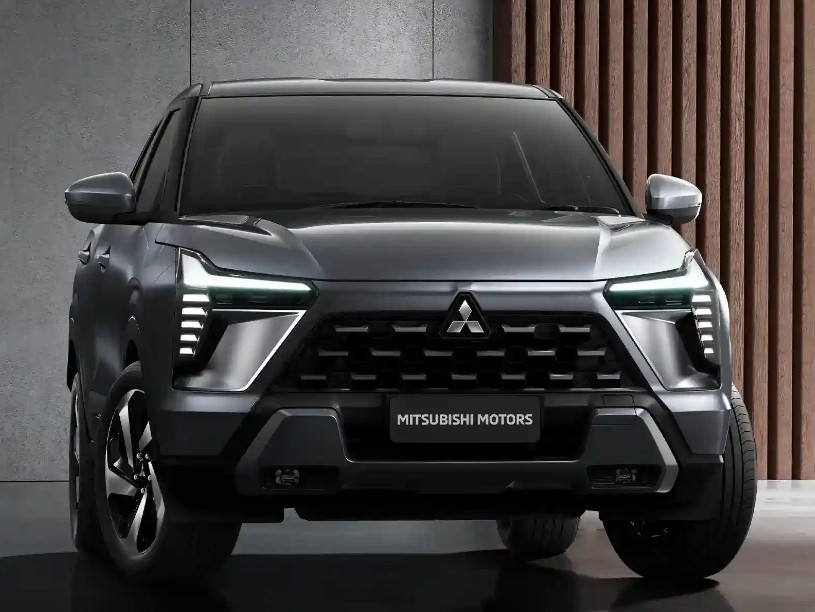
Choosing between the Mitsubishi Outlander vs Hyundai Palisade is a little like choosing between a versatile hiking shoe and a comfortable touring boot. Both can take a family a long way, both offer three-row capability in many markets, and both sit firmly in the SUV world—but their priorities are noticeably different.
The Outlander is the smaller, lighter, more efficiency-conscious option, particularly when we bring the Outlander PHEV into the conversation. The Palisade, meanwhile, plays in a larger class. It offers substantially more muscle, more passenger room, and the relaxed performance we expect from a full-size family-oriented crossover.
So which performs better?
If we're simply chasing horsepower, the Palisade wins easily. But performance isn't only about the biggest number on a specification sheet. Acceleration response, traction, handling, efficiency, maneuverability, power delivery, and driving conditions all matter.
Let's break down the Mitsubishi Outlander vs Hyundai Palisade performance battle and determine which SUV makes more sense for different buyers.
Content in this publication
- Mitsubishi Outlander vs Hyundai Palisade at a Glance
- Engine Performance: Palisade Brings the Bigger Punch
- Outlander PHEV Changes the Conversation
- Hyundai Palisade Hybrid: The New Performance Heavyweight
- Acceleration: Which Feels Quicker?
- Highway Performance: Palisade Takes Control
- City Driving: Outlander Strikes Back
- AWD Performance: S-AWC vs HTRAC
- Handling: Smaller Doesn't Mean Lesser
- Ride Comfort Is Part of Performance Too
- Fuel Efficiency and Performance
- Towing and Loaded Performance
- Interior Space Affects Performance More Than We Think
- Seven-Seat Performance: A Major Difference
- Outlander vs Palisade for Mountain Driving
- Outlander vs Palisade in Snow and Rain
- Which One Feels More Premium to Drive?
- Which Is More Fun to Drive?
- Mitsubishi Outlander vs Hyundai Palisade: Performance Winner by Category
- Who Should Buy the Mitsubishi Outlander?
- Who Should Buy the Hyundai Palisade?
- Which Offers the Better Performance Value?
- Mitsubishi Outlander vs Hyundai Palisade: Which Should We Buy?
- Conclusion
- Frequently Asked Questions
- 1. Is the Mitsubishi Outlander faster than the Hyundai Palisade?
- 2. Is the Outlander PHEV better than the Palisade Hybrid?
- 3. Which is better for a large family, Outlander or Palisade?
- 4. Which SUV is better in snow, Mitsubishi Outlander or Hyundai Palisade?
- 5. Should I buy an Outlander or Palisade for highway driving?
Mitsubishi Outlander vs Hyundai Palisade at a Glance
Before getting deep into engines and handling, we need to recognize one fundamental difference: these SUVs aren't direct twins.
The Hyundai Palisade is considerably larger. Hyundai's current global-generation Palisade measures around 5.06 meters long with a 2.97-meter wheelbase, depending on specification. The Mitsubishi Outlander sits below it in overall size and is generally positioned as a compact-to-midsize crossover depending on the market and comparison set.
That affects virtually everything.
The Palisade has room for bigger engines, more passengers, and more cargo. The Outlander counters with easier maneuverability and electrified powertrain options that can make it far more appealing for everyday urban driving.
A simplified comparison looks like this:
| Category | Mitsubishi Outlander | Hyundai Palisade |
|---|---|---|
| SUV character | Compact/midsize family crossover | Large three-row family SUV |
| Performance focus | Efficiency, traction, agility | Power, refinement, effortless cruising |
| Electrification | Strong PHEV offering | Hybrid available in newer generation |
| AWD technology | S-AWC available | HTRAC AWD available |
| Urban maneuverability | Better | More cumbersome |
| Highway performance | Good | Stronger |
| Passenger capacity | Up to seven in selected markets | Typically seven or eight |
| Best for | Smaller families, efficiency-minded buyers | Larger families, road-trip buyers |
And that's really the theme of this comparison: the Outlander works smarter, while the Palisade works bigger.
Engine Performance: Palisade Brings the Bigger Punch
Performance-minded buyers will naturally start under the hood.
Mitsubishi Outlander Gasoline Performance
The exact Outlander engine lineup changes significantly by country.
For example, the 2026 Canadian Outlander uses a turbocharged 1.5-liter four-cylinder engine with a 48-volt belt starter-generator mild-hybrid system. Mitsubishi lists it at 174 horsepower and 206 lb-ft of torque, paired with a continuously variable transmission and S-AWC all-wheel drive.
Those numbers aren't going to pin us into the seat.
That's not really the point.
The regular Outlander aims for smooth everyday performance, manageable fuel consumption, and predictable power delivery rather than outright speed. Around town, that's enough for grocery runs, school trips, commuting, and normal highway driving.
Load the cabin with passengers and luggage, however, and we begin to understand why a larger SUV like the Palisade feels more relaxed.
Hyundai Palisade Turbo Performance
The newer-generation Palisade moves into another league.
Global Hyundai specifications show a 2.5-liter turbocharged gasoline engine producing around 281 PS, with approximately 43.0 kgf·m of torque, although figures vary slightly depending on regional measurement standards and regulations. Some markets quote approximately 277 hp.
That's a major difference.
When merging onto a motorway or overtaking at highway speeds, the Hyundai doesn't have to work as hard. Press the accelerator and the additional torque gives the Palisade the sort of effortless surge we'd expect from a larger premium-oriented SUV.
Which Gasoline SUV Feels Faster?
The Hyundai Palisade.
No drama there.
Even though it's heavier, its substantially stronger turbocharged engine gives it a major advantage when accelerating with passengers or tackling long highway climbs.
For buyers who define performance primarily as power and acceleration, Palisade takes the first round.
Outlander PHEV Changes the Conversation
Now things become far more interesting.
Comparing only the regular gasoline Outlander with the Palisade doesn't show the full Mitsubishi story because the Outlander PHEV is arguably the model's performance centerpiece.
The updated 2026 Canadian Outlander PHEV combines a 2.4-liter gasoline engine with front and rear electric motors. Mitsubishi quotes motor output of 114 hp at the front and 134 hp at the rear, with 248 hp of maximum motor output in Power mode. The setup also uses a 22.7-kWh lithium-ion battery.
Electric motors fundamentally change how the SUV feels.
They produce torque instantly.
That means the Outlander PHEV can feel surprisingly energetic from low speeds even if its ultimate horsepower numbers don't dominate the comparison.
Press the accelerator leaving an intersection and there's no long wait for an engine to climb through the rev range. Power arrives quickly and smoothly.
Mitsubishi itself emphasizes the model's quiet, strong acceleration and twin-motor four-wheel-drive system, and its latest updates have focused on additional battery capacity, improved ride quality, and greater stability.
Why Electric Torque Matters
Horsepower gets the headlines. Torque response shapes the experience.
Electric motors deliver immediate propulsion, so the Outlander PHEV can feel stronger than expected during ordinary driving.
That's especially noticeable:
- pulling away from traffic lights;
- entering roundabouts;
- maneuvering on hills;
- accelerating from low speeds;
- driving quietly around residential areas;
- moving through stop-and-go traffic.
The Palisade remains more powerful overall, but the Outlander PHEV has an immediacy that gives it a distinctive character.
Hyundai Palisade Hybrid: The New Performance Heavyweight
Hyundai isn't leaving electrification to Mitsubishi.
The latest Palisade is available in some markets with a 2.5-liter turbocharged hybrid system. Hyundai's global specification lists 334 PS of combined system output, making the hybrid Palisade considerably more powerful than earlier generations and putting clear daylight between it and the Outlander in raw output.
That's impressive for a family SUV.
The electric motor also helps fill gaps in engine response, which means the Palisade Hybrid doesn't merely have a big peak horsepower figure. It benefits from smoother low-speed response and strong midrange acceleration.
Hyundai additionally describes technologies such as e-Dynamic Drive and e-Comfort Drive, which use the hybrid motor to influence vehicle movement during cornering, lane changes, acceleration, and uneven-road situations.
In other words, Hyundai is using electrification for more than saving fuel.
It's also using it to make a large SUV feel more controlled.
Outlander PHEV vs Palisade Hybrid Performance
This is perhaps the most interesting comparison.
The Outlander PHEV feels more EV-like during short daily trips and offers plug-in capability. The Palisade Hybrid delivers substantially greater overall system power and does so without requiring drivers to plug in.
The Mitsubishi prioritizes electric driving.
The Hyundai prioritizes effortless combined performance.
For outright acceleration and highway strength, we'd choose the Palisade Hybrid.
For electric-first urban driving, the Outlander PHEV has a stronger argument.
Acceleration: Which Feels Quicker?
Official acceleration figures aren't universally published for every engine and market, so direct 0–100 km/h comparisons can become misleading.
Nevertheless, the powertrain hierarchy is fairly clear.
A gasoline Outlander is built primarily for efficiency and everyday usability. A Palisade turbo has much greater power and torque reserves. The Outlander PHEV responds more sharply than the regular model from a standstill, while the Palisade Hybrid sits at the top of the power hierarchy.
So, broadly speaking:
Gasoline Palisade > gasoline Outlander
and
Palisade Hybrid > Outlander PHEV in outright power
Yet there's an important distinction.
The Outlander PHEV can feel deceptively quick around town because electric torque is instantaneous. The Palisade's advantage becomes more obvious as speeds increase.
Think of the Mitsubishi as a sprinter jumping quickly off the blocks. The Palisade is the larger athlete that keeps pulling once the race opens up.
Highway Performance: Palisade Takes Control
If we spend a lot of time on highways, motorways, or long-distance routes, the Hyundai starts making considerable sense.
Why?
Power reserve.
A strong engine doesn't only make an SUV faster. It makes routine highway maneuvers easier.
Imagine cruising with six passengers, suitcases, and a roof box. We approach a steep incline and need to overtake a truck.
The Palisade has more muscle in reserve.
Instead of forcing the powertrain to dig deeply into its available output, the Hyundai can accelerate with less apparent effort.
That usually creates a calmer driving experience.
The Outlander can absolutely handle highway travel, but the smaller gasoline powertrain has less excess power. The PHEV improves responsiveness substantially, yet the Palisade remains the more relaxed high-speed cruiser.
Best Highway Performer: Hyundai Palisade
For long-distance performance, the Palisade wins.
It's especially convincing when:
- carrying a full passenger load;
- climbing mountain highways;
- overtaking regularly;
- traveling with significant luggage;
- covering long distances at sustained speeds.
The Outlander is capable.
The Palisade feels built for it.
City Driving: Outlander Strikes Back
Big power doesn't automatically create a better urban SUV.
Drive through a crowded city center and suddenly the Palisade's size becomes something we have to manage.
Parking garages become narrower. Parallel parking requires more attention. Tight streets seem tighter.
The Outlander is the easier companion.
Its smaller footprint makes maneuvering less stressful, and the PHEV version is particularly suited to urban driving because it can complete many shorter journeys using electric power.
The updated Outlander PHEV launched in Canada uses a 22.7-kWh battery and has an NRCan-rated EV range of 72 km there, while European-market versions have been quoted at more than 80 km on the WLTP cycle. Exact range differs by testing standard and market.
That changes how we think about performance.
For someone driving 20 or 30 kilometers each day, performance isn't simply about how rapidly a vehicle reaches highway speed.
It's about how smoothly, quietly, and efficiently it handles everyday movement.
And in that environment, the Outlander PHEV is excellent.
AWD Performance: S-AWC vs HTRAC
Both manufacturers bring serious all-wheel-drive technology to the table.
Mitsubishi S-AWC
Mitsubishi calls its system Super-All Wheel Control, or S-AWC.
It's particularly important in the Outlander PHEV, where front and rear electric motors can contribute to controlling power distribution.
You may be interested in reading BMW 8 Series vs Porsche Panamera: Which Luxury GT Wins?
Mitsubishi positions twin-motor 4WD and S-AWC as major elements of the Outlander PHEV's stability and all-weather performance.
The system isn't designed to transform the Outlander into a rock crawler.
Instead, it's about keeping the vehicle composed when conditions become unpredictable.
Rain?
Snow?
Loose gravel?
Slippery intersections?
That's where S-AWC earns its keep.
Hyundai HTRAC AWD
The Palisade can be equipped with Hyundai's HTRAC all-wheel-drive system.
Hyundai describes it as actively distributing driving force between the front and rear wheels according to driving conditions.
Again, this is primarily a road-oriented system.
It helps the Palisade maintain stability on slippery roads and provides extra confidence when conditions deteriorate.
Which AWD System Is Better?
This one is much closer.
Mitsubishi has long made all-wheel control part of the Outlander's identity, and the twin-motor PHEV configuration offers particularly interesting control possibilities.
The Palisade's HTRAC system, meanwhile, complements a larger, more powerful vehicle extremely well.
For slippery-road agility and electronically controlled traction, we'd give a slight conceptual edge to Outlander PHEV S-AWC.
For combining AWD with substantial power and large-SUV stability, the Palisade HTRAC is excellent.
Handling: Smaller Doesn't Mean Lesser
Here's where physics helps Mitsubishi.
The Palisade is larger and heavier. There's no software setting that completely erases mass.
The Outlander feels easier to place on narrow roads and generally requires less effort when changing direction.
It's not a sports SUV, but it feels more manageable.
The Palisade favors stability and comfort.
Hyundai uses MacPherson-strut front suspension and a multi-link rear arrangement on the current Palisade. Mitsubishi likewise uses MacPherson-strut front and multi-link rear suspension on current versions of the Outlander.
Similar suspension architecture doesn't create identical behavior, though.
Vehicle dimensions, weight, spring rates, dampers, tires, steering calibration, and center of gravity all influence the final result.
Outlander on Twisty Roads
The Outlander is easier to thread along narrower roads.
Its lighter-feeling dimensions help it change direction without constantly reminding us that we're piloting a large family vehicle.
The PHEV's battery adds weight, but Mitsubishi's S-AWC technology helps control how power reaches the road.
Palisade on Sweeping Roads
The Palisade prefers flowing curves over tight bends.
It's more like a luxury express train than a hot hatch.
Once settled into a fast, sweeping road, its wide stance and long wheelbase help it feel planted.
That's a different type of performance—and for family travel, arguably a more relevant one.
Ride Comfort Is Part of Performance Too
Performance discussions sometimes become obsessed with horsepower.
We shouldn't ignore suspension performance.
A family SUV that produces 300 horsepower but makes everyone bounce around over potholes hasn't necessarily won anything.
The Palisade prioritizes comfort heavily.
Its long wheelbase works in its favor over larger road undulations, while the substantial body helps create a planted feeling during highway cruising.
The updated Outlander PHEV has also received suspension and tire revisions aimed at improving both ride comfort and stability.
The Mitsubishi feels tidier and more compact.
The Hyundai feels more substantial.
For long-distance passenger comfort, the Palisade has the advantage.
For combining comfort with urban maneuverability, we'd prefer the Outlander.
Fuel Efficiency and Performance
Performance always has a price.
Historically, that price was fuel.
Electrification has changed the equation.
Why the Outlander PHEV Makes Sense
Plug the Outlander PHEV in regularly and many daily trips may barely require the gasoline engine.
This can dramatically change real-world fuel consumption for drivers with predictable commuting patterns.
Mitsubishi describes the philosophy neatly: EV use for daily driving, hybrid operation for longer journeys.
That's arguably the Outlander's greatest technical advantage.
You're not carrying enormous power simply for the rare occasion when you need it. You're using electricity efficiently for normal travel while keeping a combustion engine available when distance demands it.
Palisade Hybrid Efficiency
The latest Palisade Hybrid approaches the problem differently.
There's no need to plug it in. The hybrid system manages electricity automatically while delivering a combined output of up to 334 PS in global specification.
Hyundai also promotes a driving range of up to approximately 1,015 km in certain market testing conditions, though real-world results and official ratings vary substantially by country, specification, climate, and driving style.
That's an attractive formula for road-trip buyers.
No charging routine.
Lots of power.
Reduced fuel consumption compared with relying entirely on a large conventional engine.
Towing and Loaded Performance
Buyers interested in towing should check specifications for their exact country because tow ratings can vary significantly between engines, drivetrains, regulations, and homologation standards.
Still, we can talk about performance under load.
The Palisade's greater engine output makes it the more natural choice when we frequently carry lots of passengers and cargo.
A powerful turbocharged engine has more reserve torque, which helps maintain speed on gradients and reduces the sense that the powertrain is constantly working at maximum effort.
The Outlander's advantage is different.
Its electrified AWD system provides immediate torque and excellent low-speed control, attributes that can make the PHEV feel confident when pulling away or maneuvering.
But if maximum hauling performance is the priority, the larger Hyundai is generally the more suitable starting point.
Interior Space Affects Performance More Than We Think
What does cabin space have to do with performance?
Plenty.
Imagine two SUVs carrying seven people.
If the smaller one is packed to its limits while the larger vehicle still has breathing room, the larger SUV will often feel more comfortable and less compromised.
The newest Palisade offers up to around 2,098 liters of cargo capacity behind the first row in certain gasoline specifications, around 729 liters behind the second row, and 317 liters behind the third. Hybrid figures are slightly lower in Hyundai's global brochure.
That's proper three-row SUV space.
The Outlander's optional third row is useful, but we'd regard it more as occasional seating than the Palisade's more serious family accommodation.
If adults regularly occupy the third row, Hyundai is the obvious choice.
Seven-Seat Performance: A Major Difference
Here's a practical question:
How often will all those seats actually be occupied?
If the answer is “occasionally,” the Outlander makes considerable sense.
We get a relatively manageable SUV with the flexibility of extra seats when necessary.
If the answer is “almost every weekend,” the Palisade is playing a different game.
With seven or eight occupants, a vehicle needs:
- stronger acceleration under load;
- more third-row space;
- better luggage capacity;
- stronger climate control performance;
- greater highway stability;
- easier passenger access.
That's Palisade territory.
Outlander vs Palisade for Mountain Driving
Mountain roads expose weaknesses quickly.
Long gradients punish underpowered engines. Tight switchbacks punish oversized vehicles.
So which wins?
Interestingly, neither dominates every part.
The Palisade's stronger engines make uphill acceleration easier.
The Outlander's smaller size makes tight corners easier.
The Outlander PHEV adds instant electric torque and sophisticated AWD control.
The Palisade Hybrid adds an even more powerful electrified drivetrain.
You may be interested in readingBMW 8 Series vs Porsche Panamera: Which Luxury GT Wins?You may be interested in reading
BMW 8 Series vs Audi A7: Which Luxury Car Is Better?For wide mountain highways, we'd take the Palisade.
For tighter mountain roads, especially where parking and maneuverability matter at the destination, the Outlander becomes appealing.
Outlander vs Palisade in Snow and Rain
Both SUVs can work very well in poor weather when fitted with appropriate tires.
And that's worth emphasizing: good tires matter enormously.
AWD can't magically compensate for unsuitable rubber.
With proper tires, Mitsubishi's S-AWC system gives the Outlander particularly confidence-inspiring traction characteristics. Mitsubishi specifically highlights the PHEV's twin-motor AWD and S-AWC for driving in severe weather and varied road conditions.
The Palisade's HTRAC system likewise actively varies front-to-rear power distribution to suit changing conditions.
The Hyundai's longer wheelbase can make it feel reassuringly planted.
The Mitsubishi's smaller footprint makes it easier to maneuver in confined snowy streets.
For outright poor-weather maneuverability, we'd lean slightly toward the Outlander PHEV.
The Palisade.
That's one of its central selling points.
Hyundai designed it as a flagship SUV, and the combination of size, strong powertrains, smooth cruising behavior, and spacious accommodation gives it a more upscale driving personality.
The Outlander has become notably more sophisticated too, particularly in PHEV form.
But its premium feeling comes from technology and refinement rather than sheer scale.
The Palisade enters a highway like a large business-class lounge.
The Outlander feels more like a well-equipped, technically clever crossover.
Neither approach is wrong.
They're simply aimed at different buyers.
Which Is More Fun to Drive?
“Fun” is subjective.
If we enjoy effortless acceleration, the Palisade Hybrid is more exciting.
If we enjoy instant electric response and the ability to glide through town quietly, the Outlander PHEV is arguably more interesting.
If we enjoy threading an SUV through narrow roads, the smaller Mitsubishi feels less cumbersome.
Neither is trying to be a performance SUV in the traditional sense.
These are family machines first.
Their job is to make everyday driving easier, not chase lap records.
Mitsubishi Outlander vs Hyundai Palisade: Performance Winner by Category
Here's how we'd score the matchup:
| Performance Category | Winner |
| Raw horsepower | Hyundai Palisade |
| Highway acceleration | Hyundai Palisade |
| Full-load performance | Hyundai Palisade |
| Urban maneuverability | Mitsubishi Outlander |
| Electric-first driving | Mitsubishi Outlander PHEV |
| Plug-in capability | Mitsubishi Outlander PHEV |
| Hybrid power | Hyundai Palisade Hybrid |
| Tight-road agility | Mitsubishi Outlander |
| Long-distance refinement | Hyundai Palisade |
| Third-row performance | Hyundai Palisade |
| AWD sophistication | Very close |
| Everyday efficiency potential | Mitsubishi Outlander PHEV |
| Large-family usability | Hyundai Palisade |
The interesting part?
This isn't a landslide.
The Hyundai wins more traditional performance categories.
The Mitsubishi wins several categories that matter enormously in everyday life.
Who Should Buy the Mitsubishi Outlander?
We'd choose the Outlander if we want a three-row SUV without moving into a genuinely large vehicle.
It's especially attractive for buyers who:
- drive primarily in cities or suburbs;
- need seven seats only occasionally;
- value easier parking and maneuverability;
- want plug-in hybrid capability;
- experience snow or wet weather regularly;
- value AWD technology;
- want lower everyday energy consumption;
- don't need huge horsepower.
The Outlander PHEV is the most compelling version from a performance perspective.
It doesn't beat the Palisade in a drag race, but that isn't its purpose.
It blends electric response, AWD traction, family practicality, and long-distance flexibility remarkably well.
Who Should Buy the Hyundai Palisade?
We'd pick the Palisade if performance means effortless movement regardless of how many people are aboard.
It's particularly well suited to buyers who:
- regularly carry six to eight occupants;
- take frequent road trips;
- need generous cargo space;
- want strong highway acceleration;
- prefer a large, substantial SUV;
- prioritize passenger comfort;
- want a premium driving experience;
- prefer a conventional hybrid over plugging in.
The Palisade simply has more vehicle to work with.
More room.
More power.
More road presence.
More ability to carry people comfortably.
For large families, those advantages become difficult to ignore.
Which Offers the Better Performance Value?
Here's where pricing complicates the answer.
Prices vary enormously worldwide because the Outlander and Palisade don't compete at exactly the same level in every market.
In some countries, an upper-spec Outlander PHEV can approach the price territory of larger SUVs.
In others, taxation or incentives dramatically improve its value.
The best approach is to compare equivalent local trims rather than relying on international MSRP conversions.
If the Palisade costs substantially more, we need to ask ourselves whether we're actually going to use its extra performance and space.
A family of four might not.
A family of seven probably will.
Buying an SUV solely because it's larger is like buying a five-bedroom house when we only use two rooms.
Capability has value only when we use it.
Mitsubishi Outlander vs Hyundai Palisade: Which Should We Buy?
If performance is our main criterion, the Hyundai Palisade is the overall winner.
Its available turbocharged and hybrid powertrains give it far greater muscle, particularly at highway speeds and when carrying passengers. The latest Palisade Hybrid's global combined output of around 334 PS puts it comfortably ahead in outright performance.
But that doesn't automatically make it the smarter purchase.
The Outlander PHEV offers something the Hyundai doesn't replicate in exactly the same way: a relatively compact three-row SUV capable of meaningful plug-in electric driving combined with twin-motor AWD.
That's an excellent combination for commuters who occasionally make long journeys.
So we'd simplify the choice this way:
Choose the Hyundai Palisade if you need space, power, and relaxed highway performance.
Choose the Mitsubishi Outlander if you value maneuverability, efficiency, AWD capability, and especially plug-in hybrid driving.
Our Performance Verdict
For raw performance: Hyundai Palisade.
For urban performance: Mitsubishi Outlander.
For long-distance family performance: Hyundai Palisade.
For electrified everyday driving: Mitsubishi Outlander PHEV.
For large families: Hyundai Palisade.
For smaller families that still want occasional seven-seat flexibility: Mitsubishi Outlander.
That's why comparing these SUVs purely by horsepower misses the point.
Performance should make our life easier.
Sometimes that means 334 PS and effortless overtaking.
Sometimes it means silently driving to work on electricity and squeezing into a parking space without performing a 12-point turn.
The better SUV is the one whose strengths match the roads we actually drive.
Conclusion
The Mitsubishi Outlander vs Hyundai Palisade comparison reveals two different interpretations of what a modern family SUV should be.
The Palisade is the heavyweight. It brings stronger acceleration, greater passenger capacity, more confident loaded performance, and a relaxed highway personality. The newest hybrid version adds serious electrified power without asking owners to adopt a charging routine.
The Outlander is the more nimble strategist. Its smaller dimensions make daily driving easier, while the PHEV adds instant electric torque, meaningful EV range, twin-motor AWD, and the flexibility of a gasoline engine when longer journeys call.
If we prioritize performance above everything else, we'd choose the Hyundai Palisade, especially the latest hybrid where available.
If we define performance more broadly—efficiency, traction, responsiveness, maneuverability, and everyday usability—the Outlander PHEV makes a remarkably strong case.
Neither SUV is universally better.
The Palisade asks, “How much can we carry?”
The Outlander asks, “How efficiently can we get there?”
Our answer depends on which question matters more.
Frequently Asked Questions
1. Is the Mitsubishi Outlander faster than the Hyundai Palisade?
Generally, no. The Hyundai Palisade offers substantially more powerful engines, particularly in its latest turbocharged and hybrid configurations. The Outlander PHEV does provide strong low-speed response thanks to its electric motors, but the Palisade has the advantage in outright acceleration and highway power.
2. Is the Outlander PHEV better than the Palisade Hybrid?
It depends on how we drive. The Outlander PHEV is better suited to buyers who can charge regularly and want to complete many everyday trips using electricity. The Palisade Hybrid is more powerful, larger, and easier for buyers who want hybrid efficiency without plugging in.
3. Which is better for a large family, Outlander or Palisade?
The Hyundai Palisade is generally the better option for a large family. Its larger body provides significantly more passenger and cargo room, and its stronger engines cope more comfortably with a full load. The Outlander's third row is better viewed as occasional seating.
4. Which SUV is better in snow, Mitsubishi Outlander or Hyundai Palisade?
Both can perform well in snow when equipped with appropriate winter tires. The Outlander's available S-AWC system—particularly with the PHEV's twin-motor AWD configuration—is a major strength. Hyundai's available HTRAC AWD also provides active front-to-rear power distribution for slippery conditions.
5. Should I buy an Outlander or Palisade for highway driving?
If highway driving makes up a large portion of your mileage, we'd generally choose the Hyundai Palisade. Its additional engine power, longer wheelbase, larger cabin, and strong cruising performance make it particularly well suited to road trips. The Outlander remains a good highway SUV, but its biggest advantages appear in mixed urban and suburban use.
You may be interested in readingBMW 8 Series vs Porsche Panamera: Which Luxury GT Wins?You may be interested in reading
BMW 8 Series vs Audi A7: Which Luxury Car Is Better?You may be interested in reading
BMW 8 Series vs Mercedes S-Class: Which Luxury Car Is Better?If you want to know other articles similar to Mitsubishi Outlander vs Hyundai Palisade: Which SUV Performs Better? you can visit the category Models.
Honda Passport vs Toyota 4Runner: Which SUV Is Better?
Honda Passport vs Ford Bronco: Which SUV Is Better?
Honda Passport vs Ford Explorer: Which SUV Is Better?
Honda Passport or Pilot: Which SUV Is Better?
Honda Passport vs Jeep Grand Cherokee: Which SUV Is Better?
Honda Passport vs Nissan Pathfinder: Which SUV Is Better?
Leave a Reply
More content of your interest