

BMW 8 Series vs Mercedes S-Class: Which Luxury Car Is Better?

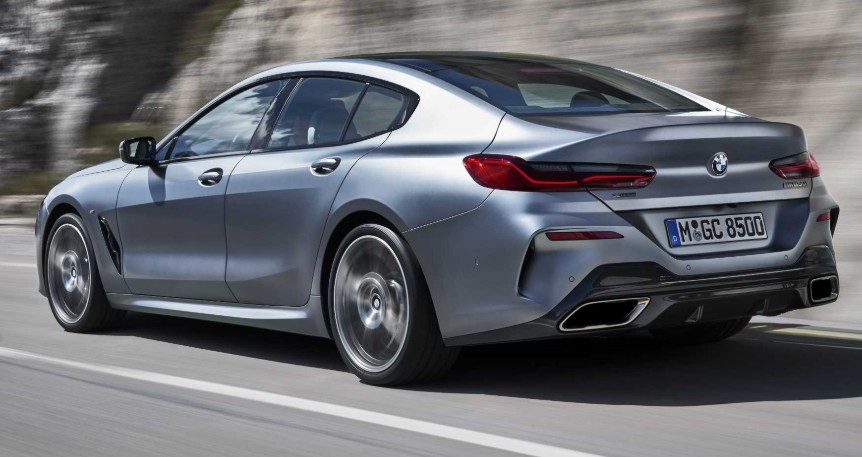
When we compare the BMW 8 Series vs Mercedes S-Class, we are not simply choosing between two expensive German cars. We are choosing between two very different interpretations of luxury.
The BMW 8 Series approaches the idea like a tailored sports jacket: elegant, expensive, and ready to move. The Mercedes-Benz S-Class feels more like a first-class lounge on wheels, designed to isolate us from noise, stress, bumps, and almost everything happening outside the windows.
Both carry prestigious badges. Both offer powerful engines, sophisticated technology, beautifully appointed cabins, and the kind of road presence that makes people look twice. Yet they appeal to surprisingly different drivers.
Do we want to enjoy every corner ourselves, or would we rather glide down the highway as though the road had suddenly turned into polished marble?
That question sits at the heart of this comparison.
We will examine the BMW 8 Series and Mercedes S-Class across design, comfort, performance, technology, practicality, ownership costs, driving character, and everyday usability to determine which luxury machine makes more sense for different buyers.
Content in this publication
- BMW 8 Series vs Mercedes S-Class at a Glance
- Design: Sports Elegance Meets Executive Luxury
- Interior Design: Two Very Different Luxury Experiences
- Front-Seat Comfort
- Rear-Seat Space: Mercedes Takes the Lead
- Performance: BMW Brings the Excitement
- Acceleration and Power Delivery
- Handling: BMW Wins for Drivers
- Ride Quality: Mercedes Strikes Back
- Noise Isolation
- Technology Comparison
- Driver Assistance and Safety Technology
- Practicality and Everyday Use
- Cargo Space
- Fuel Economy and Running Costs
- Reliability Considerations
- Ownership Experience
- BMW 8 Series vs Mercedes S-Class for Long Trips
- Which One Is Better for the Driver?
- Which One Is Better for Passengers?
- Which One Feels More Special?
- BMW 8 Series vs Mercedes S-Class for Daily Driving
- Depreciation and Used-Car Value
- Who Should Buy the BMW 8 Series?
- Who Should Buy the Mercedes S-Class?
- BMW 8 Series vs Mercedes S-Class: Strengths and Weaknesses
- BMW 8 Series vs Mercedes S-Class: Which Should We Buy?
- Final Verdict
- Frequently Asked Questions
BMW 8 Series vs Mercedes S-Class at a Glance
The easiest way to understand these two cars is to look at their personalities before diving into the details.
The BMW 8 Series is generally the more athletic choice. Its low seating position, sleek body, responsive steering, and performance-focused personality make it feel closer to a grand touring sports car.
The Mercedes S-Class, meanwhile, places luxury first. Its spacious cabin, emphasis on passenger comfort, smooth ride, and sophisticated technology make it one of the benchmark luxury sedans.
In simple terms:
- BMW 8 Series: sportier, lower, more driver-focused and dramatic.
- Mercedes S-Class: roomier, softer, more luxurious and passenger-focused.
- 8 Series advantage: driving engagement and coupe-like style.
- S-Class advantage: comfort, rear-seat space and limousine character.
- Best for enthusiasts: BMW.
- Best for executive luxury: Mercedes.
Neither philosophy is objectively better. They simply answer different questions.
Design: Sports Elegance Meets Executive Luxury
Park these cars beside each other and their intentions become immediately obvious.
The BMW 8 Series looks ready to attack the horizon. Its long hood, sweeping roofline, wide stance, and aggressive detailing create a shape that feels dramatic even when parked.
The Mercedes S-Class takes the opposite route. Rather than shouting, it whispers. Its proportions are formal and elegant, while smooth surfaces and restrained styling give it a stately presence.
BMW 8 Series Exterior Styling
The 8 Series embraces the traditional grand-touring formula.
It sits low and wide, with proportions designed to make it appear planted to the pavement. The long nose and pushed-back cabin give the car a muscular silhouette, while BMW's recognizable kidney grille provides visual drama at the front.
Depending on the body style, the personality changes slightly.
The Coupe is the most athletic.
The Convertible adds open-air drama.
The Gran Coupe mixes much of the 8 Series' aggressive styling with four-door practicality.
From almost every angle, though, the BMW appears designed around the driver.
Mercedes S-Class Exterior Styling
The S-Class follows a different recipe.
Rather than attempting to resemble a sports car, Mercedes allows the vehicle to look like what it is: a large luxury sedan.
The long wheelbase, substantial body, elegant lighting elements, and restrained chrome detailing create a sense of prestige rather than aggression.
There is something almost architectural about it. The S-Class does not need enormous spoilers or dramatic creases to communicate status.
It simply arrives.
Which One Looks Better?
That depends on what we want our luxury car to say.
Choose the BMW if we want something sporty, youthful, and dramatic.
Choose the Mercedes if we prefer understated authority.
Interior Design: Two Very Different Luxury Experiences
Opening the doors reveals an even larger philosophical difference.
BMW creates a cockpit.
Mercedes creates a lounge.
The BMW cabin wraps technology and controls around the driver, while the Mercedes places more emphasis on open space, large displays, ambient lighting, and passenger comfort.
Inside the BMW 8 Series
The 8 Series cockpit feels unmistakably BMW.
The dashboard angles subtly toward the driver, major controls sit within easy reach, and the seating position feels relatively low.
Material quality is appropriately premium. Leather upholstery, metal trim, carefully finished surfaces, and soft-touch materials remind us that this is not simply a larger version of an ordinary BMW sedan.
Yet the interior still maintains a sense of purpose.
Everything seems arranged around driving.
There is luxury here, certainly, but the cabin does not try to imitate a private jet.
Instead, it feels like the interior of an expensive grand tourer.
Inside the Mercedes S-Class
The Mercedes takes cabin theater to another level.
Large digital displays dominate the dashboard, while expansive surfaces and customizable ambient lighting create an atmosphere that can feel almost futuristic at night.
Luxury materials cover nearly every visible surface.
Depending on configuration, we may find beautifully finished leather, wood, metal accents, sophisticated seat controls, multiple screens, and advanced comfort features.
Where the BMW asks, Where shall we drive?
The Mercedes almost seems to ask, Would we like another pillow?
Front-Seat Comfort
Both vehicles can make long journeys exceptionally comfortable, but they achieve that comfort differently.
BMW's seats tend to feel supportive and structured. They hold us securely, particularly when the road begins to curve.
Mercedes seats emphasize relaxation.
Depending on equipment, passengers may receive extensive power adjustment, heating, ventilation, massage functions, and sophisticated comfort programs.
After several hours behind the wheel, both cars can leave us feeling surprisingly fresh.
However, the S-Class generally creates the stronger impression of effortless comfort.
Rear-Seat Space: Mercedes Takes the Lead
This category reveals one of the biggest differences in the entire BMW 8 Series vs Mercedes S-Class comparison.
The S-Class is designed with rear passengers firmly in mind.
The BMW 8 Series is not.
BMW 8 Series Rear Seats
Rear-seat usefulness depends heavily on the body style.
The Gran Coupe provides substantially more practical rear seating than the two-door versions and can accommodate adults reasonably well.
Nevertheless, the sloping roofline and performance-oriented proportions limit the sense of space.
The Coupe's rear seats are considerably more restricted and are better suited to occasional passengers.
Mercedes S-Class Rear Seats
The S-Class lives in another universe.
Rear passengers receive considerably more room to stretch out, particularly in long-wheelbase configurations.
Available rear-seat entertainment, comfort adjustments, reclining functions, climate controls, and luxury options can turn the back seat into something resembling a mobile business-class cabin.
For buyers who regularly employ a driver or transport executives, this distinction alone may settle the argument.
Performance: BMW Brings the Excitement
Luxury cars do not need to be sports cars.
BMW apparently never received that memo.
Even in a grand-tourer format, the 8 Series emphasizes acceleration, body control, steering response, and driver involvement.
Depending on engine and version, performance can range from effortlessly quick to genuinely ferocious.
BMW 8 Series Driving Character
Press the accelerator and the 8 Series responds with urgency.
The car feels eager rather than merely powerful.
Steering feels direct, the chassis stays composed through corners, and the low seating position creates the impression that we are sitting inside the vehicle rather than above it.
On a twisting road, the BMW feels surprisingly agile for such a substantial luxury machine.
It shrinks around the driver.
That may be its greatest trick.
Mercedes S-Class Driving Character
The S-Class can also be very quick, but speed rarely defines the experience.
Acceleration feels smooth and effortless rather than aggressive.
Instead of encouraging us to attack a series of corners, the Mercedes encourages relaxed progress.
It feels like the car is filtering the road before it reaches us.
That character makes it exceptionally pleasant during long highway trips.
Acceleration and Power Delivery
Both manufacturers offer sophisticated engines capable of moving these large vehicles rapidly.
The difference lies less in absolute speed and more in how that speed feels.
You may be interested in reading BMW 8 Series vs Mercedes S Class: Which Luxury Flagship Wins?
In the BMW, acceleration tends to feel exciting.
In the Mercedes, it tends to feel effortless.
Imagine two powerful boats.
One is a performance yacht carving through the water.
The other is a luxury liner moving so smoothly that we barely realize how quickly the shoreline is disappearing.
That is essentially the difference here.
Handling: BMW Wins for Drivers
When the road begins twisting, the BMW 8 Series shows its sporting roots.
Body movements are controlled, steering responses feel more immediate, and the chassis provides greater confidence when driving enthusiastically.
The S-Class is competent—remarkably competent considering its size—but its priorities are different.
The Mercedes isolates.
The BMW communicates.
For anyone who wakes up early on Sunday simply to drive an empty mountain road, the BMW will probably feel more natural.
Ride Quality: Mercedes Strikes Back
Smoothness is where the S-Class reminds us why it has served as a benchmark luxury sedan for decades.
Its suspension is engineered to reduce the impact of rough surfaces before those imperfections reach the cabin.
Small bumps become distant suggestions.
Larger road imperfections are absorbed with impressive composure.
BMW Ride Quality
The 8 Series remains comfortable, especially when configured appropriately, but we still feel more of the road underneath us.
That additional communication can be desirable when driving quickly.
It is less desirable when navigating broken urban pavement after a long day.
Comfort Winner
For pure ride comfort, the Mercedes S-Class takes the advantage.
Noise Isolation
A genuine luxury car should make the outside world disappear.
Both models perform impressively, but the Mercedes takes isolation particularly seriously.
Wind noise is heavily suppressed.
Road noise remains distant.
Engine sound enters the cabin mainly when appropriate.
At highway speed, conversation can remain calm and relaxed.
The BMW is also refined, yet sporty versions may allow a little more engine and road character into the cabin.
For enthusiasts, that can be a feature rather than a flaw.
Technology Comparison
Modern luxury cars are becoming rolling computers, and both manufacturers have invested heavily in digital interfaces.
BMW's technology generally emphasizes usability and driver interaction.
Mercedes focuses heavily on visual drama, connectivity, and digital luxury.
BMW Infotainment Experience
BMW's infotainment interface has traditionally combined touchscreen capability with other control methods, depending on model specification.
Menus are logically structured once we become familiar with them, and the system integrates navigation, smartphone connectivity, vehicle settings, entertainment, and driver information.
The driver display reinforces the cockpit atmosphere.
BMW wants technology to support driving rather than completely dominate the dashboard.
Mercedes Infotainment Experience
Mercedes takes a more screen-focused approach.
Large displays, detailed graphics, voice interaction, navigation functions, customizable layouts, and extensive vehicle menus create a digital environment that feels futuristic.
Some buyers will adore the technology-heavy experience.
Others may find themselves missing physical controls.
That becomes an important consideration because luxury should make our lives easier, not turn adjusting the climate control into a software tutorial.
Driver Assistance and Safety Technology
Both cars can offer extensive driver-assistance systems.
Depending on specification and market, features may include adaptive cruise control, lane assistance, parking technology, surround-view cameras, blind-spot monitoring, automated emergency braking, and other advanced systems.
The S-Class traditionally acts as a showcase for Mercedes' newest safety and assistance technologies.
BMW counters with sophisticated systems of its own.
For buyers placing maximum importance on cutting-edge executive-car technology, Mercedes often has the stronger reputation.
For drivers who still want technology to remain somewhat in the background, BMW may feel more natural.
Practicality and Everyday Use
This category is more complicated than it initially appears.
The Mercedes is larger and more spacious.
The BMW can be easier to place on certain roads.
Neither is exactly a compact city car.
BMW 8 Series Gran Coupe Practicality
Of the 8 Series body styles, the Gran Coupe offers the strongest everyday practicality.
Four doors make rear-seat access much easier, while usable trunk capacity allows the vehicle to serve as a genuine daily driver.
It can handle commuting, road trips, luggage, and occasional family duty without sacrificing the dramatic 8 Series silhouette.
Mercedes S-Class Practicality
The S-Class offers superior passenger accommodation, particularly in the rear.
Its larger dimensions, however, can become noticeable in narrow parking spaces, busy city streets, and older garages.
Parking cameras and assistance systems help considerably, but physics remains physics.
Sometimes a large luxury sedan simply feels large.
Cargo Space
Neither buyer is likely choosing these vehicles primarily for moving furniture, but luggage capacity still matters.
The BMW 8 Series provides enough space for weekend trips and regular travel, especially in Gran Coupe form.
The S-Class also offers a useful trunk, though its real practicality advantage comes from cabin space rather than outright cargo flexibility.
For golf clubs, suitcases, airport runs, and business travel, either can work well.
For IKEA furniture?
We might borrow an SUV.
Fuel Economy and Running Costs
Neither vehicle should be purchased under the illusion that it will provide economy-car ownership expenses.
These are complex luxury vehicles.
Large wheels, sophisticated engines, advanced suspension systems, premium electronics, powerful climate systems, and expensive replacement components can all contribute to substantial operating costs.
Fuel Consumption
Actual fuel economy varies greatly according to engine, drivetrain, driving style, traffic conditions, and market configuration.
Smaller engines and electrified versions can improve efficiency considerably compared with high-performance variants.
Drive an 8 Series aggressively, however, and fuel disappears quickly.
The same applies to powerful S-Class variants.
Maintenance Costs
Routine servicing is only part of the ownership equation.
We also need to consider:
- Premium tires
- Larger brakes
- Complex electronics
- Adaptive suspension components
- Insurance
- Depreciation
- Premium fuel requirements where applicable
- Luxury-brand labor rates
A used example with an attractive purchase price can therefore become deceptively expensive if maintenance has been neglected.
Reliability Considerations
Modern luxury vehicles contain enormous technological complexity.
That creates impressive capability, but complexity and simplicity rarely sit at the same dinner table.
Both BMW and Mercedes have produced highly sophisticated powertrains, suspension systems, electronics, infotainment platforms, and driver-assistance technology.
As these cars age, repair costs can become significant.
Service history matters tremendously.
A well-maintained vehicle with comprehensive records may be far preferable to a cheaper example with uncertain maintenance.
When buying used, a professional pre-purchase inspection is worth serious consideration.
You may be interested in readingBMW 8 Series vs Mercedes S Class: Which Luxury Flagship Wins?You may be interested in reading
BMW 8 Series vs 4 Series: Which BMW Coupe Is Right for You?Ownership Experience
BMW and Mercedes dealerships generally provide premium customer experiences, but local service quality varies considerably.
Ownership satisfaction can depend as much on the individual dealer as the badge on the hood.
Before purchasing, we should investigate:
- Local dealer reputation
- Warranty coverage
- Service package availability
- Parts availability
- Extended warranty options
- Insurance premiums
- Independent specialist availability
The purchase price opens the door.
Running costs decide whether we continue enjoying the room.
BMW 8 Series vs Mercedes S-Class for Long Trips
Both excel as long-distance machines, but the Mercedes has a slight philosophical advantage.
The S-Class seems designed specifically to make huge distances disappear.
Soft suspension, excellent noise isolation, supportive seats, large cabin space, and effortless power create an extraordinary highway experience.
The BMW is also superb for road trips, particularly when the route includes interesting roads.
If we are crossing an entire country on straight highways, choose the Mercedes.
If our journey winds through mountain passes, the BMW becomes increasingly tempting.
Which One Is Better for the Driver?
BMW.
This is the easiest category to answer.
The 8 Series provides the more engaging driving experience through its lower seating position, sharper responses, sportier chassis tuning, and stronger sense of connection.
The Mercedes can move astonishingly quickly, but it rarely encourages us to explore its limits.
The BMW does.
Which One Is Better for Passengers?
Mercedes.
Again, this is relatively straightforward.
Rear-seat space, ride comfort, isolation, available passenger technology, and limousine-like ambience place the S-Class ahead.
Anyone expecting to spend significant time in the rear seat should probably begin the shopping process at a Mercedes dealership.
Which One Feels More Special?
Now we enter subjective territory.
The S-Class feels special because of its technology, scale, comfort, and sense of occasion.
The BMW feels special because it looks and drives differently from most conventional luxury sedans.
Pull up to a restaurant in an S-Class and we look important.
Pull up in an 8 Series Coupe and we look like we chose the car because we wanted it.
Different messages.
Both compelling.
BMW 8 Series vs Mercedes S-Class for Daily Driving
Daily usability depends heavily on our environment.
The BMW's smaller footprint relative to a full-size flagship sedan can make it feel easier to maneuver.
The Gran Coupe adds useful practicality without giving up the 8 Series' sporty character.
The S-Class provides better cabin space and comfort but requires more attention in tight areas.
For dense city life, the BMW may feel less cumbersome.
For long commutes and highway travel, the Mercedes is difficult to beat.
Depreciation and Used-Car Value
Large luxury cars are famous for substantial depreciation.
That can be painful for new buyers but fascinating for used-car shoppers.
A vehicle that originally cost a substantial amount can become surprisingly affordable after several years.
But depreciation does not reduce repair prices at the same rate.
A used luxury flagship may become inexpensive to buy while remaining expensive to maintain.
That is why purchase price should never be our only calculation.
Buying a Used BMW 8 Series
A used 8 Series can offer serious performance and luxury for dramatically less than its original price.
Look carefully at maintenance records, tires, brakes, electronics, suspension condition, and previous ownership.
Higher-performance versions deserve particularly careful inspection.
Buying a Used Mercedes S-Class
Used S-Class models can appear incredibly tempting.
Few cars provide so much cabin luxury for the money once depreciation enters the equation.
However, complicated comfort systems, advanced suspension, electronics, and optional equipment can become expensive when repairs are required.
A cheap S-Class can occasionally become a very expensive S-Class surprisingly quickly.
Who Should Buy the BMW 8 Series?
The BMW makes the most sense for someone who sees driving as part of the luxury experience.
Choose it if we value:
- Athletic handling
- Dramatic styling
- Strong acceleration
- A driver-oriented cockpit
- Grand-touring personality
- Coupe or convertible body styles
- A balance between luxury and performance
The Gran Coupe is especially appealing because it adds everyday usefulness without completely abandoning the model's sporting character.
Who Should Buy the Mercedes S-Class?
The S-Class suits buyers who place comfort and refinement above athleticism.
Choose it if we value:
- Maximum rear-seat comfort
- Exceptional ride quality
- Quiet highway cruising
- Advanced luxury technology
- Formal executive styling
- Spacious passenger accommodation
- Chauffeur-friendly design
It is less a sports sedan and more a rolling sanctuary.
BMW 8 Series vs Mercedes S-Class: Strengths and Weaknesses
BMW 8 Series Strengths
The BMW delivers engaging handling, bold styling, powerful performance, a driver-focused interior, and several distinctive body configurations.
It manages to feel luxurious without losing its sports-car DNA.
BMW 8 Series Weaknesses
Rear-seat space is limited in some versions, ride quality can feel firmer than the S-Class, and ownership costs remain substantial.
Mercedes S-Class Strengths
The Mercedes provides exceptional comfort, outstanding rear-seat accommodation, sophisticated technology, excellent noise isolation, and a genuine flagship-luxury atmosphere.
Mercedes S-Class Weaknesses
Its dimensions make it less convenient in crowded environments, its driving experience is less engaging, and technological complexity may create significant long-term maintenance costs.
BMW 8 Series vs Mercedes S-Class: Which Should We Buy?
There is no universal winner because these cars serve different priorities.
The BMW 8 Series is the better choice if we want to drive.
The Mercedes S-Class is the better choice if we want to travel.
That may sound like a tiny distinction, but it explains almost everything.
BMW prioritizes steering, performance, body control, and visual drama.
Mercedes prioritizes comfort, spaciousness, isolation, and technology.
Think of the BMW as a luxury hotel built beside a racetrack.
Think of the Mercedes as a luxury hotel that happens to move.
Both are impressive.
We simply need to decide where we want to spend the night.
Final Verdict
In the BMW 8 Series vs Mercedes S-Class debate, our ideal choice depends on what luxury means to us.
If luxury means feeling a powerful engine respond beneath our right foot, enjoying a twisting road, sitting low inside a beautifully finished cockpit, and turning around to admire the car after parking it, the BMW 8 Series is difficult to resist.
It combines elegance with aggression in a way few large luxury cars manage.
If luxury means arriving relaxed after hours of driving, stretching out in a spacious cabin, floating over broken pavement, enjoying advanced technology, and barely hearing the outside world, the Mercedes S-Class remains one of the strongest choices available.
For enthusiastic drivers, we would choose the BMW 8 Series.
For passengers, executives, and comfort-focused buyers, we would choose the Mercedes S-Class.
Neither is simply transportation.
They are two different answers to the same luxurious question: How do we want the journey to feel?
Frequently Asked Questions
Is the BMW 8 Series better than the Mercedes S-Class?
The BMW 8 Series is better for buyers who prioritize sporty handling, driver engagement, dramatic styling, and grand-touring performance. The Mercedes S-Class is better for buyers who prioritize ride comfort, rear-seat space, luxury technology, and overall refinement.
Is the BMW 8 Series more sporty than the S-Class?
Yes. The 8 Series is generally more driver-focused, with sharper handling, a lower seating position, more responsive road manners, and a stronger grand-touring character. The S-Class emphasizes smoothness and comfort instead.
Which is more comfortable, BMW 8 Series or Mercedes S-Class?
The Mercedes S-Class typically offers the stronger comfort experience, particularly for rear passengers. Its spacious cabin, sophisticated suspension, excellent noise isolation, and comfort-focused seats make it especially suitable for long-distance travel.
Which is better for long-distance driving?
Both are excellent long-distance cars. The Mercedes S-Class is preferable for maximum comfort and quietness, while the BMW 8 Series is more enjoyable when the journey includes winding roads where its handling abilities can shine.
Should we buy a used BMW 8 Series or Mercedes S-Class?
Either can provide tremendous value after depreciation, but service history is crucial. Buyers should inspect maintenance records, suspension components, electronics, brakes, tires, and drivetrain condition carefully because repair costs on neglected luxury vehicles can be significant.
You may be interested in readingBMW 8 Series vs Mercedes S Class: Which Luxury Flagship Wins?You may be interested in reading
BMW 8 Series vs 4 Series: Which BMW Coupe Is Right for You?You may be interested in reading
BMW 8 Series vs 6 Series: Which Luxury BMW Is Better?If you want to know other articles similar to BMW 8 Series vs Mercedes S-Class: Which Luxury Car Is Better? you can visit the category Models.
Honda Passport vs Toyota 4Runner: Which SUV Is Better?
Honda Passport vs Ford Bronco: Which SUV Is Better?
Honda Passport vs Ford Explorer: Which SUV Is Better?
Honda Passport or Pilot: Which SUV Is Better?
Honda Passport vs Jeep Grand Cherokee: Which SUV Is Better?
Honda Passport vs Nissan Pathfinder: Which SUV Is Better?
Leave a Reply
More content of your interest