

Toyota Estima Tire Pressure: Complete PSI Guide for Every Generation

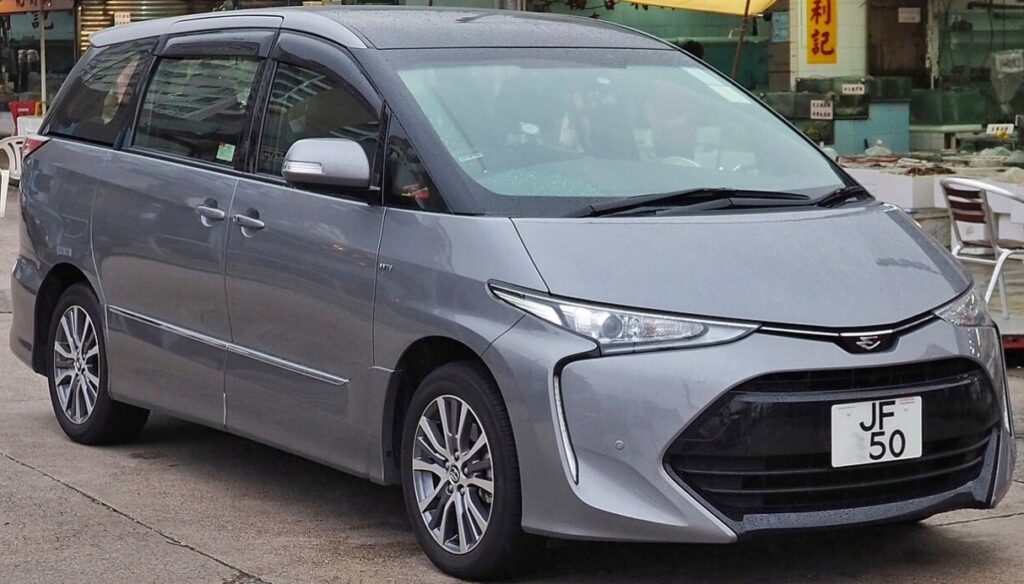
Getting the Toyota Estima tire pressure right sounds like one of those tiny maintenance jobs we can deal with whenever we remember. Yet those few pounds of air inside each tire have a surprisingly large influence on how an Estima rides, steers, brakes, consumes fuel, and wears its tires.
And there is a catch.
There is no single magic PSI figure that applies to every Toyota Estima ever produced.
The Estima has lived a long life, spanning several generations, different engines, hybrid versions, multiple wheel diameters, seven- and eight-seat configurations, and numerous Japanese domestic-market trims. A pressure that suits one Estima may therefore be wrong for another.
Toyota recommends checking the vehicle manufacturer's inflation specification rather than relying on the maximum number printed on the tire sidewall. The correct specification can normally be found on the vehicle tire-pressure label or in the owner's manual.
So what pressure should we actually use?
For many Estimas, roughly 32–36 PSI (220–250 kPa) is a useful reference range for normal road use, but the label fitted to our particular vehicle always takes priority. Some configurations specify values around 250 kPa, which converts to approximately 36 PSI.
Let's dig into it properly.
Content in this publication
- What Is the Correct Toyota Estima Tire Pressure?
- Toyota Estima Tire Pressure by Generation
- Toyota Estima Hybrid Tire Pressure
- Where Is the Toyota Estima Tire Pressure Sticker?
- Understanding Toyota Estima Tire Pressure in kPa
- Should Toyota Estima Tires Be 32 or 36 PSI?
- Do Front and Rear Estima Tires Use the Same Pressure?
- Toyota Estima Tire Pressure When Fully Loaded
- When Should We Check Toyota Estima Tire Pressure?
- Why Tire Pressure Changes After Driving
- Toyota Estima Tire Pressure and Fuel Economy
- Toyota Estima Tire Pressure and Ride Comfort
- What Happens if Toyota Estima Tire Pressure Is Too Low?
- What Happens if Toyota Estima Tire Pressure Is Too High?
- Toyota Estima Tire Sidewall Says 50 PSI—What Does It Mean?
- Toyota Estima Tire Pressure for 16-Inch Wheels
- Toyota Estima Tire Pressure for 17-Inch Wheels
- Toyota Estima Tire Pressure for 18-Inch Wheels
- What if Our Estima Has Aftermarket Wheels?
- Toyota Estima Spare Tire Pressure
- Does the Toyota Estima Have TPMS?
- Toyota Estima Tire Pressure Light Won't Go Out
- How to Check Toyota Estima Tire Pressure Correctly
- How Often Should Estima Tire Pressure Be Checked?
- Does Cold Weather Lower Toyota Estima Tire Pressure?
- Can We Use Nitrogen in Toyota Estima Tires?
- Toyota Estima Tire Wear and Pressure Diagnosis
- Best Tire Pressure for Toyota Estima Fuel Economy
- Toyota Estima Tire Pressure Checklist
- Final Thoughts on Toyota Estima Tire Pressure
- Frequently Asked Questions
What Is the Correct Toyota Estima Tire Pressure?
The correct Toyota Estima tire pressure depends primarily on:
- Model year and generation
- Tire size
- Wheel diameter
- Engine and drivetrain
- Petrol or hybrid configuration
- Passenger and luggage load
- Original versus aftermarket wheels and tires
If we simply need a general reference while checking an unfamiliar Estima, pressures in the low-to-mid 30 PSI range are commonly encountered. However, we should never use that range as a substitute for the pressure placard.
A useful starting reference looks like this:
| Pressure | kPa | Bar |
|---|---|---|
| 30 PSI | 207 kPa | 2.07 bar |
| 32 PSI | 221 kPa | 2.21 bar |
| 33 PSI | 228 kPa | 2.28 bar |
| 34 PSI | 234 kPa | 2.34 bar |
| 35 PSI | 241 kPa | 2.41 bar |
| 36 PSI | 248 kPa | 2.48 bar |
| 38 PSI | 262 kPa | 2.62 bar |
| 40 PSI | 276 kPa | 2.76 bar |
Japanese Estimas often display the recommendation in kPa rather than PSI, which can cause plenty of confusion after the vehicle has been exported.
For example, if the Japanese label says 250 kPa, we are looking at approximately 36 PSI or 2.5 bar.
Toyota Estima Tire Pressure Quick Answer
If we have just bought an imported Estima and cannot immediately translate the Japanese sticker, don't inflate the tires to whatever number is written on their sidewalls.
Instead, find the vehicle pressure label and convert its kPa value.
A figure such as:
220 kPa = about 32 PSI
230 kPa = about 33 PSI
240 kPa = about 35 PSI
250 kPa = about 36 PSI
Those conversions are far more useful than guessing.
Toyota Estima Tire Pressure by Generation
The Estima changed dramatically across its production run, and so did its tires.
Toyota introduced the original Estima in 1990. Later generations moved toward more conventional front-wheel-drive layouts, larger wheels, and eventually hybrid drivetrains. The third-generation model arrived in 2006, while Toyota's official historical information identifies AHR20W as the second-generation Estima Hybrid platform.
Because individual grades within one generation can carry different tires, the following information should be considered a practical orientation rather than a replacement for the vehicle label.
First-Generation Toyota Estima Tire Pressure
The first-generation Estima, commonly associated with the XR10/XR20 family, appeared during the 1990s.
These vans generally rode on smaller wheels and tires with taller sidewalls than later models.
For older Estimas, we commonly encounter cold pressures around the low-30-PSI area depending on tire specification.
A sensible procedure is:
- Locate the factory pressure label.
- Identify the original tire size.
- Compare it with the tires currently installed.
- Set the pressure while the tires are cold.
- Check tire wear over the following weeks.
Older imported vehicles present another complication: after several decades, wheels and tires may no longer match the original specification.
That makes the placard important—but tire load capability must also be considered if the vehicle has been modified.
Second-Generation Toyota Estima Tire Pressure
Second-generation models brought a much more modern layout and are still common as used Japanese imports.
Depending on specification, these vehicles may wear 15-, 16-, or larger wheels.
Pressures in approximately the 32–36 PSI region are common reference points, though we should verify the actual label rather than automatically choosing 34 PSI.
Why?
Because even two visually identical Estimas can carry different tire load indexes.
The van may look the same from across the parking lot, but underneath, the specification tells a different story.
Third-Generation Toyota Estima Tire Pressure
The third-generation Estima arrived in 2006 and became one of the versions most frequently encountered in export markets.
Toyota produced numerous variations across this generation, including 2.4-liter petrol, 3.5-liter V6, front-wheel-drive, all-wheel-drive, and hybrid configurations.
Available wheel sizes also vary significantly.
Third-party wheel fitment data, for example, lists third-generation Estima applications with sizes including 215/60R16, 215/55R17, 215/60R17, and 225/50R18, illustrating why one universal pressure recommendation would be misleading.
Some specifications are reported around 2.5 bar or 36 PSI, particularly with certain 17-inch applications.
Again, treat this as a reference—not a command.
What About Facelift Models?
Facelifts can complicate matters because Toyota changed wheel styles, tire sizes, equipment levels, and sometimes curb weight without replacing the entire vehicle generation.
So we should not assume:
“It's a 2015 Estima, therefore it needs exactly X PSI.”
The tire placard knows more about the van than the model year alone.
Toyota Estima Hybrid Tire Pressure
Hybrid Estimas deserve special attention because they carry additional hybrid-system components and can differ in mass from petrol-only versions.
Toyota's historical specifications show second-generation Estima Hybrid AHR20W variants with curb masses around 1,930–1,970 kg, depending on grade and seating configuration.
That is a substantial vehicle.
Correct inflation therefore matters not merely for economy but also for load carrying and tire durability.
What PSI Should an Estima Hybrid Use?
We may see Estima Hybrid recommendations somewhere around the mid-30-PSI area depending on wheel and tire specification.
One third-party fitment reference lists 2.5 bar / 36 PSI for an AHR20W application fitted with 215/60R17 tires.
But don't interpret that as “every Estima Hybrid needs 36 PSI.”
Some variants differ.
Our hierarchy should always be:
Vehicle placard → owner's manual → tire/load data if modified
That order keeps us out of trouble.
Where Is the Toyota Estima Tire Pressure Sticker?
For many owners, finding the number is harder than understanding it.
Because so many Estimas arrive as Japanese imports, the label may be written almost entirely in Japanese.
Check around:
Driver or Passenger Door Opening
Open the front doors and inspect:
- B-pillar
- Door jamb
- Lower door frame
- Areas close to the latch
Remember that placement may seem unusual if we are accustomed to locally sold cars.
Glove Box Area
Toyota notes that older-model pressure information may be found on the B-pillar, inside the glove box lid, or in the owner's manual.
Owner's Manual
Toyota maintains online Japanese manuals for later Estima production periods, including separate documentation for petrol and hybrid vehicles.
If our imported van still has its Japanese manual, look for:
タイヤ
That refers to “tire.”
The pressure specification normally uses kPa.
Understanding Toyota Estima Tire Pressure in kPa
This is where many imported Estima owners get stuck.
A label showing:
250
does not mean 250 PSI.
Thankfully.
It probably means 250 kPa.
Toyota Estima kPa to PSI Conversion
Here are the numbers worth saving:
| kPa | Approx. PSI | Bar |
| 200 | 29 | 2.0 |
| 210 | 30.5 | 2.1 |
| 220 | 32 | 2.2 |
| 230 | 33.4 | 2.3 |
| 240 | 34.8 | 2.4 |
| 250 | 36.3 | 2.5 |
| 260 | 37.7 | 2.6 |
| 270 | 39.2 | 2.7 |
Once we understand that conversion, the Japanese sticker suddenly stops looking like a secret code.
Should Toyota Estima Tires Be 32 or 36 PSI?
This is one of the most common dilemmas.
Both can potentially be correct.
Some Estima owners report running around 32 PSI with particular 215/60R16 configurations, while another documented discussion involving an Estima manual identified a 250-kPa specification—approximately 36 PSI.
That's exactly why internet answers sometimes appear contradictory.
They may be talking about different cars.
We need to match the pressure to our Estima's exact tire and vehicle specification.
Do Front and Rear Estima Tires Use the Same Pressure?
Sometimes.
Not always.
A manufacturer may recommend equal pressure front and rear, or different figures depending on axle load and tire specification.
Never assume that because the front says 35 PSI, the rear must also be 35.
Read both columns on the placard.
This becomes particularly important when we regularly carry six, seven, or eight occupants.
A nearly empty Estima and one packed with a family, suitcases, pushchairs, shopping bags, and half the house are doing very different jobs.
Toyota Estima Tire Pressure When Fully Loaded
Heavy loading increases the work demanded from the tires.
Some vehicles therefore have a higher-pressure recommendation for full-load operation.
If Toyota provides normal-load and full-load pressures on the placard, use the appropriate set.
Don't simply invent an extra 4 or 5 PSI because the boot is full.
Tire inflation is engineering, not seasoning. We don't sprinkle a little more on until it feels right.
Why Load Matters So Much
A heavily loaded tire running underinflated flexes excessively.
That creates heat.
Heat is the enemy of tire durability.
On long motorway journeys, especially in warm weather, that combination can become far more serious than slightly vague steering.
When Should We Check Toyota Estima Tire Pressure?
Check pressure when the tires are cold.
That generally means before a significant drive, after the vehicle has been parked long enough for the tires to return close to ambient temperature.
Toyota advises following the model-specific recommended pressure and checking tires routinely.
A useful maintenance rhythm is:
- Check at least monthly.
- Check before long journeys.
- Check before carrying heavy loads.
- Check after major temperature changes.
- Check whenever steering or ride suddenly feels different.
- Check after a tire repair.
It takes a few minutes.
Those minutes can save us from destroying a relatively expensive tire.
Why Tire Pressure Changes After Driving
Suppose we set an Estima to 35 PSI in the morning.
After an hour on the motorway, the gauge might show more.
Did something go wrong?
Usually not.
The tire warms as it rolls. Heat causes the internal air pressure to rise.
That is exactly why manufacturer specifications normally refer to cold tire pressure.
Should We Release Air From Hot Tires?
Normally, no.
If we correctly set the tires cold and they rise during driving, releasing air when hot can leave them underinflated once they cool again.
If pressure genuinely seems excessive, let the vehicle cool and recheck it.
Toyota Estima Tire Pressure and Fuel Economy
Underinflation increases rolling resistance.
Imagine trying to push a shopping trolley whose wheels are dragging instead of rolling freely. The engine experiences something similar when soft tires deform excessively.
The consequences may include:
- Increased fuel use
- Sluggish response
- Increased tire heat
- Faster shoulder wear
- Heavier steering
A correctly inflated Estima simply rolls more efficiently.
For the Estima Hybrid, that matters even more to owners trying to squeeze the best possible economy from the drivetrain.
Toyota Estima Tire Pressure and Ride Comfort
More pressure does not automatically mean better.
Too much pressure can make an Estima feel unnecessarily sharp over bumps.
Expansion joints start feeling like little hammer blows.
Potholes announce themselves rather enthusiastically.
Conversely, pressure that is too low can make the van feel soft, vague, and reluctant to respond.
The manufacturer's target attempts to balance:
comfort + handling + load capacity + fuel economy + tire wear
That's why chasing an arbitrary “comfortable PSI” isn't always wise.
What Happens if Toyota Estima Tire Pressure Is Too Low?
Low pressure changes the shape of the tire's contact patch and increases sidewall flex.
Possible symptoms include:
Heavy or Vague Steering
The Estima may feel reluctant to turn.
Outer-Shoulder Tire Wear
Both outer edges may wear faster than the center.
Higher Fuel Consumption
The engine must overcome additional rolling resistance.
Extra Heat
Continuous sidewall flex generates heat, particularly at motorway speeds.
Poorer Stability
An underinflated people mover carrying passengers is hardly the recipe we want for precise emergency handling.
What Happens if Toyota Estima Tire Pressure Is Too High?
Overinflation creates its own problems.
Potential effects include:
- Harsher ride
- Reduced impact compliance
- Faster center tread wear
- Nervous response on rough roads
- Less favorable tire contact under some conditions
And here's the mistake we see constantly:
Someone reads 50 PSI MAX on the sidewall and assumes the tire should be inflated to 50 PSI.
It shouldn't—unless the actual vehicle specification somehow calls for it.
The sidewall maximum is not the vehicle's normal recommended inflation pressure. Toyota and tire manufacturers instruct drivers to use the vehicle placard or owner's manual for original-equipment applications.
Toyota Estima Tire Sidewall Says 50 PSI—What Does It Mean?
It means the tire has a specified maximum inflation figure associated with its rated load conditions.
It does not mean:
“Please inflate me to 50 PSI every morning.”
This distinction came up in an Estima owner discussion where a driver questioned whether a tire marked 50 PSI should actually be inflated that high. Other users correctly pointed toward the vehicle manual and pressure placard instead.
Think of the number like an elevator's maximum capacity.
Seeing “1,000 kg maximum” doesn't mean we need to put 1,000 kg inside every time we use it.
Toyota Estima Tire Pressure for 16-Inch Wheels
Sixteen-inch wheels are common on many Estima configurations.
A commonly encountered size is:
215/60R16
Internet owner reports show some V6 Estimas running this size around 32 PSI, but again, that is an owner example rather than a universal Toyota specification.
For our own vehicle, confirm:
- Tire size
- Load index
- Door sticker
- Front/rear specification
Don't copy another owner's number purely because both vans have 16-inch wheels.
Toyota Estima Tire Pressure for 17-Inch Wheels
A common third-generation size is:
215/60R17
Some AHR20W fitment data lists 2.5 bar / 36 PSI with this configuration.
That provides a useful clue if we are trying to understand an imported Estima, especially where the Japanese documentation shows 250 kPa.
Still, check the car itself.
Toyota Estima Tire Pressure for 18-Inch Wheels
Higher-specification Estimas may use:
225/50R18
One documented ACR50 owner setup using 225/50R18 tires reports adjusting all four tires to 240 kPa, approximately 35 PSI.
That example demonstrates the sort of pressure we might encounter but should not override the manufacturer's label.
Lower-profile tires behave differently from tall-sidewall tires, so blindly transferring a 16-inch setup to an 18-inch setup makes little sense.
What if Our Estima Has Aftermarket Wheels?
Now things become more interesting.
If the Estima has wheels or tires that differ substantially from the original specification, blindly following either the original sticker or the tire's maximum pressure can be inappropriate.
The correct inflation should maintain adequate load-carrying capacity for the vehicle.
Toyo Tires specifically notes that load-and-inflation tables become relevant when optional tire sizes are fitted that are not listed on the vehicle placard or owner's manual.
In this situation, we should identify:
- Original tire size and load index.
- Original recommended pressure.
- New tire size.
- New load index.
- Required load capacity at the replacement pressure.
If we're unsure, a competent tire specialist can calculate the appropriate pressure.
Toyota Estima Spare Tire Pressure
Do not assume the spare uses the same pressure as the road tires.
Temporary spare tires frequently require much higher inflation pressures than full-size road tires.
For example, temporary spares on many Toyota applications use around 420 kPa / 60 PSI, although the Estima specification must still be checked individually.
A compact spare is tiny, stiff, and highly inflated for a reason.
Check the Spare Before You Need It
Most of us ignore the spare until we're standing beside the road in the rain.
Then we discover it contains about as much useful air as a birthday balloon from last Tuesday.
Check it periodically.
Does the Toyota Estima Have TPMS?
TPMS availability varies by market, production year, and specification.
Some imported Estimas may have tire-pressure monitoring equipment while others rely entirely on manual checks.
Even when TPMS is present, it should not replace a pressure gauge.
Toyota explains that TPMS is intended to alert drivers when pressure has fallen significantly; routine pressure inspection remains important.
A warning light is an emergency messenger, not our personal tire-maintenance assistant.
Toyota Estima Tire Pressure Light Won't Go Out
If an Estima equipped with TPMS continues showing a warning after the tires have been inflated correctly, possibilities include:
- One tire still being low
- Spare tire monitoring, where applicable
- Temperature change
- Sensor battery failure
- Damaged sensor
- Incorrect sensor programming
- System requiring initialization
- Aftermarket wheels without compatible sensors
Always verify actual pressures with a gauge before assuming the electronics are faulty.
How to Check Toyota Estima Tire Pressure Correctly
The process is wonderfully simple.
Step 1: Park the Estima
Ideally check the vehicle before driving.
Step 2: Find the Placard
Look around the front door jambs, pillar, glove compartment area, or consult the manual.
Step 3: Identify the Tire Size
Confirm that the installed tire size matches the one referenced by the pressure information.
Step 4: Remove the Valve Cap
Keep it somewhere safe.
Those tiny caps have a mysterious ability to disappear into alternate dimensions.
Step 5: Attach a Reliable Gauge
Press firmly enough to obtain a stable reading.
Step 6: Inflate or Deflate
Bring each tire to the specified cold pressure.
Step 7: Check All Four Tires
Don't stop after discovering one low tire.
Step 8: Inspect the Spare
If fitted, check it separately against its specification.
How Often Should Estima Tire Pressure Be Checked?
Once a month is a practical minimum for most owners.
We should check more often if:
- The van covers high mileage.
- Temperatures fluctuate dramatically.
- We regularly carry heavy loads.
- A tire has a slow leak.
- The wheels have recently been changed.
- The vehicle has been parked for an extended period.
Pressure naturally changes over time.
If one tire repeatedly loses significantly more air than the others, don't just keep topping it up.
Find the leak.
Does Cold Weather Lower Toyota Estima Tire Pressure?
Yes.
As ambient temperature drops, tire pressure usually falls.
That means an Estima set correctly during warm weather may suddenly appear low after a cold snap.
Likewise, pressure can increase as temperatures rise.
The solution isn't complicated: check the tires cold and restore them to the manufacturer's specified pressure.
Can We Use Nitrogen in Toyota Estima Tires?
Yes, assuming it is used correctly.
But nitrogen does not change the fundamental rule.
The tire still needs to be inflated to the specified pressure.
A tire needing 35 PSI doesn't suddenly require 42 PSI because the gas inside came from a nitrogen machine.
For normal road use, ordinary compressed air works perfectly well when pressure is maintained properly.
Toyota Estima Tire Wear and Pressure Diagnosis
Tire wear tells a story.
Sometimes it whispers.
Sometimes it practically sends us an invoice.
Both Shoulders Wearing Fast
Possible underinflation.
Center Wearing Faster
Possible overinflation.
One Edge Wearing
More likely alignment, suspension, or geometry related.
Patchy or Cupped Wear
Could point toward suspension, wheel balance, or damping problems.
Pressure is only one piece of the puzzle.
Best Tire Pressure for Toyota Estima Fuel Economy
The best pressure for economy isn't “the highest pressure we can tolerate.”
It's the manufacturer's appropriate recommendation for the vehicle, tire, and load.
Yes, increasing pressure can sometimes reduce rolling resistance slightly.
But if we sacrifice grip, ride, wear characteristics, or tire compliance to chase a tiny theoretical fuel saving, we've missed the bigger picture.
The smart target is correct pressure, not maximum pressure.
Toyota Estima Tire Pressure Checklist
Before heading onto the road, we can make the whole subject surprisingly simple:
- Find the pressure placard.
- Read the specified front pressure.
- Read the specified rear pressure.
- Convert kPa to PSI if necessary.
- Check pressure cold.
- Never use sidewall maximum pressure as the normal target.
- Account for heavy-load instructions.
- Inspect the tires for damage.
- Check pressure monthly.
- Recheck after major temperature changes.
- Use tire load data if fitting substantially different tire sizes.
That's really the heart of it.
Final Thoughts on Toyota Estima Tire Pressure
The Toyota Estima tire pressure question looks simple until we remember just how many Estimas Toyota built.
Different generations.
Different wheels.
Different engines.
Different drivetrain layouts.
Different seating configurations.
Hybrid and petrol versions.
Japanese-market specifications.
That's why we shouldn't crown one PSI figure as king of them all.
For many Estimas, figures in roughly the 32–36 PSI range appear frequently in real-world and fitment references. Certain applications are documented around 250 kPa, or approximately 36 PSI.
But the number that matters most is the one Toyota specified for our exact vehicle.
Check the door or pillar label. Check the owner's manual. Measure the tires cold.
Those three habits eliminate most of the confusion.
Tire pressure may be invisible, but we feel its effects every kilometer we drive. Get it right and the Estima simply behaves as it should—comfortable, stable, predictable, and ready to carry the family without making its tires work harder than necessary.
Frequently Asked Questions
1. What PSI Should Toyota Estima Tires Be?
Many Toyota Estimas operate somewhere around the low-to-mid 30 PSI range, with some configurations using approximately 36 PSI (250 kPa). However, exact pressure varies by model, tire size, and specification. Always use the vehicle pressure placard or owner's manual as the final authority.
2. Is 36 PSI Too High for a Toyota Estima?
Not necessarily. Some Estima applications specify or are documented around 250 kPa, which equals roughly 36 PSI. If your vehicle label specifies a lower figure, however, use the label rather than automatically choosing 36 PSI.
3. Where Can I Find the Toyota Estima Tire Pressure?
Check the front door jamb or B-pillar, glove box area, and owner's manual. Toyota advises owners to use the vehicle pressure label or model-specific manual for recommended inflation pressure.
4. Should I Inflate My Estima Tires to the Maximum PSI on the Sidewall?
No. The maximum pressure printed on the tire sidewall is not the normal vehicle inflation recommendation. Use Toyota's vehicle placard or owner's manual instead.
5. Should Toyota Estima Tire Pressure Be Checked Hot or Cold?
Cold. Tire pressure rises as tires warm during driving, so the manufacturer's normal specification should be checked before significant driving or once the tires have cooled. Avoid releasing air merely because a correctly inflated tire shows a higher reading after a journey.
If you want to know other articles similar to Toyota Estima Tire Pressure: Complete PSI Guide for Every Generation you can visit the category Service and Parts.
Kia Sorento Service Reset: How to Reset the Service Light
Kia Sorento Fuel Tank Capacity: Gallons, Litres and Model Differences
Kia Sorento Tyre Pressure: Recommended PSI, Bar and Complete Guide
Kia Sorento Boot Space: How Much Luggage Space Does It Really Have?
Kia Sorento Towing Capacity: How Much Can a Sorento Tow?

Honda Passport Payload Capacity: How Much Weight Can It Carry?
Leave a Reply
More content of your interest