

Toyota Estima 3.5 V6 Fuel Consumption: Real-World MPG Guide

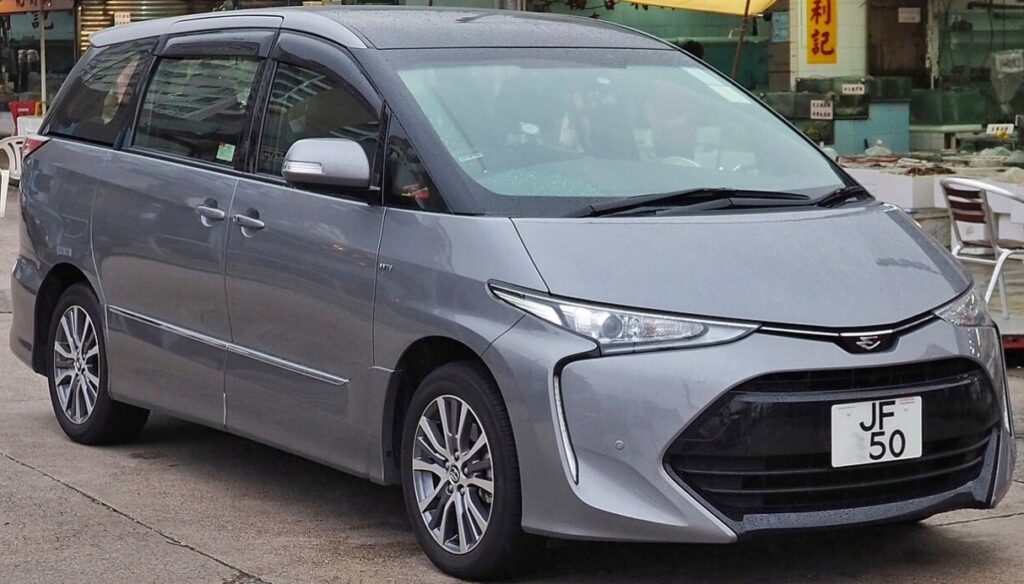
The Toyota Estima 3.5 V6 fuel consumption question usually comes up for one simple reason: this Japanese minivan looks wonderfully practical, drives remarkably smoothly, and packs considerably more performance than its family-friendly shape suggests. Then we notice the 3.5-liter badge and start wondering how frequently we will be visiting the petrol station.
The answer? The Estima 3.5 V6 is not an economy champion, but neither is it an uncontrollable fuel guzzler when driven sensibly.
Toyota introduced the third-generation Estima in 2006 with its 3,456 cc 2GR-FE V6, producing 206 kW, or 280 PS, and paired it with a six-speed automatic transmission. Toyota officially rated the original front-wheel-drive version at 9.8 km/L, while the four-wheel-drive version achieved 9.4 km/L under Japan's 10-15 test cycle.
Converted into figures that may look more familiar, that works out to approximately 10.2 L/100 km for FWD and 10.6 L/100 km for 4WD under the official test procedure.
Real roads, naturally, have traffic lights, hills, air conditioning, passengers, cold starts, aggressive drivers, and all the other ingredients missing from laboratory-style testing. That is where things become interesting.
Let's dig into what Estima 3.5 owners should realistically expect.
Content in this publication
- Toyota Estima 3.5 V6 Fuel Consumption at a Glance
- What Engine Does the Toyota Estima 3.5 Use?
- Toyota Estima 3.5 V6 Fuel Consumption in L/100 km
- Toyota Estima 3.5 V6 Fuel Consumption in MPG
- Toyota Estima 3.5 V6 City Fuel Consumption
- Toyota Estima 3.5 Highway Fuel Consumption
- FWD vs 4WD Toyota Estima 3.5 Fuel Consumption
- Why Does My Toyota Estima 3.5 Use So Much Fuel?
- How Driving Style Changes Estima 3.5 Fuel Economy
- Does Air Conditioning Increase Estima 3.5 Fuel Consumption?
- How Vehicle Load Affects the Estima V6
- Toyota Estima 3.5 vs 2.4 Fuel Consumption
- Toyota Estima 3.5 vs Estima Hybrid Fuel Economy
- How to Calculate Your Estima's Actual Fuel Consumption
- Can Maintenance Improve Toyota Estima 3.5 Fuel Economy?
- Is the Toyota Estima 3.5 V6 Economical?
- What Is Good Fuel Consumption for a Used Estima 3.5?
- How Far Can an Estima 3.5 Travel on One Tank?
- Should You Buy a Toyota Estima 3.5 V6 If Fuel Economy Matters?
- Ways to Reduce Toyota Estima 3.5 Fuel Consumption
- Toyota Estima 3.5 V6 Fuel Consumption: Final Verdict
- Frequently Asked Questions
Toyota Estima 3.5 V6 Fuel Consumption at a Glance
Before getting into the details, here is a useful baseline.
| Driving situation | Approximate consumption |
|---|---|
| Toyota official FWD rating | 9.8 km/L |
| Toyota official 4WD rating | 9.4 km/L |
| FWD official equivalent | 10.2 L/100 km |
| 4WD official equivalent | 10.6 L/100 km |
| Gentle highway driving | Around 8-10 L/100 km |
| Mixed everyday driving | Around 10-13 L/100 km |
| Heavy urban traffic | Around 13-17+ L/100 km |
The last three ranges are practical estimates rather than Toyota-certified figures. Actual consumption varies substantially depending on traffic, vehicle condition, tyres, load, weather, driving habits, and whether we have a front-wheel-drive or four-wheel-drive model.
The important point is that seeing 12 or even 14 L/100 km does not automatically indicate something is wrong with an Estima V6.
This is a large minivan weighing around 1.8 tonnes before we add passengers or luggage. Toyota's historical specifications list representative 3.5-liter versions at roughly 1,830-1,840 kg.
Give that van seven passengers, turn on the air conditioning and spend an afternoon crawling through traffic, and fuel economy can fall surprisingly quickly.
What Engine Does the Toyota Estima 3.5 Use?
The third-generation Toyota Estima 3.5 uses the famous 2GR-FE.
It is a naturally aspirated 3.5-liter V6 engine with a displacement of 3,456 cc. Toyota listed output at 206 kW (280 PS) at 6,200 rpm and peak torque of 344 Nm at 4,700 rpm when the redesigned Estima was launched.
Unlike the 2.4-liter four-cylinder Estima, which used a CVT, the 3.5 received a six-speed automatic transmission. Toyota offered the V6 in both front-wheel-drive and four-wheel-drive configurations.
Why the 2GR-FE Makes the Estima Feel Different
Press the accelerator in a 2.4 Estima and the experience is sensible.
Press it in the 3.5 V6 and the big minivan suddenly remembers it has 280 PS.
The engine delivers smooth, linear acceleration without needing a turbocharger. That makes overtaking and motorway merging easy, especially when the vehicle is carrying passengers.
It also explains why fuel consumption is higher.
Power has to come from somewhere.
The Estima 3.5 may wear the clothes of a family shuttle, but underneath that aerodynamic egg-shaped body sits a relatively powerful V6.
Toyota Estima 3.5 V6 Official Fuel Economy
Toyota's original published numbers are useful because they give us a consistent point of comparison.
For the third-generation 3.5-liter Estima, Toyota quoted:
Front-wheel drive: 9.8 km/L
Four-wheel drive: 9.4 km/L
Those results came from the Japanese 10-15 fuel-economy test cycle, so we should not treat them as guaranteed everyday consumption.
That distinction matters.
An official fuel economy figure is essentially a controlled benchmark. Real-world consumption resembles a moving target.
Toyota Estima 3.5 V6 Fuel Consumption in L/100 km
Drivers in Australia, New Zealand, Canada, the UK and many other markets often prefer liters per 100 kilometers rather than km/L.
Converted from Toyota's original figures, we get approximately:
9.8 km/L = 10.2 L/100 km
9.4 km/L = 10.6 L/100 km
Remember that L/100 km works in reverse from km/L.
Lower is better.
An Estima returning 9 L/100 km is using less fuel than one returning 14 L/100 km.
Is 10 L/100 km Realistic?
Yes, particularly on an open road.
But maintaining approximately 10 L/100 km across every type of driving would be optimistic.
A well-maintained FWD Estima cruising steadily on relatively flat highways can get close to—or occasionally better than—the original official equivalent.
Urban driving tells another story.
Toyota Estima 3.5 V6 Fuel Consumption in MPG
If we convert Toyota's official figures into miles per gallon, the FWD figure works out to approximately 23 mpg US, while the four-wheel-drive model is roughly 22 mpg US.
Using Imperial gallons, those numbers are around 27.7 mpg UK and 26.6 mpg UK, respectively.
This is why we always need to specify which gallon we mean.
Someone in Britain saying their Estima gets 27 mpg and someone in the United States saying theirs gets 23 mpg may actually be describing almost identical fuel consumption.
What MPG Should We Expect in Real Driving?
Depending on the route, an Estima 3.5 might deliver roughly low-to-mid 20s US mpg during relaxed highway use.
Mixed driving will usually reduce that figure.
Dense stop-start traffic can pull economy dramatically downward because accelerating a heavy minivan repeatedly requires far more energy than maintaining a steady cruising speed.
Toyota Estima 3.5 V6 City Fuel Consumption
City driving is where the 3.5 V6's thirst becomes most noticeable.
Imagine moving nearly two tonnes of vehicle from zero to 40 or 50 km/h.
Then stopping.
Then doing it again.
And again.
Every acceleration requires energy, while traditional friction brakes turn much of that energy into heat when we stop.
Unlike the Estima Hybrid, the conventional V6 cannot recover significant braking energy into a traction battery.
Realistic Urban Consumption
In moderate city conditions, approximately 12-15 L/100 km would not surprise us.
In genuinely heavy traffic, short trips or hilly environments, consumption could reach 15-17 L/100 km or more.
That does not mean every Estima will produce those numbers.
Rather, it demonstrates how dramatically operating conditions influence fuel usage.
A five-kilometer trip through congested streets can be far less efficient than a 100-kilometer motorway journey.
Short Trips Can Be Particularly Expensive
Engines generally operate less efficiently before reaching normal operating temperature.
If most journeys involve driving two or three kilometers to school, a supermarket or a nearby workplace, average consumption may look terrible even when the vehicle is mechanically healthy.
We should therefore evaluate fuel economy across an entire tank rather than judging it from one short journey.
Toyota Estima 3.5 Highway Fuel Consumption
This is where the V6 can redeem itself.
Once the Estima reaches cruising speed, it no longer needs to repeatedly accelerate its substantial mass.
Its aerodynamic body also helps.
At sensible highway speeds, a healthy Estima 3.5 could potentially operate around 8-10 L/100 km, depending on conditions.
Some journeys will be better.
Others will be worse.
Strong headwinds, mountainous terrain, roof boxes, heavy loads and high cruising speeds can push consumption upward quickly.
Speed Matters More Than We Sometimes Think
Cruising at 90 km/h and cruising at 130 km/h are not remotely identical from an aerodynamic perspective.
As speed rises, aerodynamic drag increases sharply.
That means the engine must work harder simply to push the Estima through the air.
The difference may not feel dramatic from behind the steering wheel, but it certainly appears when we calculate fuel used over several hundred kilometers.
FWD vs 4WD Toyota Estima 3.5 Fuel Consumption
Toyota's original specifications already show a small economy advantage for front-wheel drive.
FWD: 9.8 km/L
4WD: 9.4 km/L
Why?
Four-wheel-drive systems generally add mechanical components and weight. There are also additional drivetrain losses.
The difference does not look enormous on paper, but over thousands of kilometers it adds up.
Which Version Is Better for Fuel Economy?
If fuel economy is the priority and we do not genuinely need four-wheel-drive traction, the FWD Estima 3.5 makes more sense.
The 4WD model has advantages in conditions where additional traction matters, but those benefits come with a modest efficiency penalty.
Why Does My Toyota Estima 3.5 Use So Much Fuel?
Sometimes high consumption is perfectly normal.
Sometimes it is not.
The challenge is separating normal V6 behavior from a mechanical or maintenance problem.
One owner might average 10.5 L/100 km because most journeys involve long motorway runs.
Another may average 16 L/100 km because every trip consists of congested urban driving.
Neither number automatically proves anything is wrong.
Common Factors That Increase Estima Fuel Consumption
Several everyday factors can make a surprisingly large difference:
- Low tyre pressure increases rolling resistance.
- Aggressive acceleration forces the V6 to consume considerably more fuel.
- Heavy traffic keeps the vehicle operating inefficiently at low speeds.
- Short journeys prevent the drivetrain from spending much time at optimal operating temperature.
- Roof racks and cargo boxes increase aerodynamic drag.
- Carrying several passengers and luggage increases total vehicle weight.
- Incorrect wheel alignment can increase rolling resistance.
- Worn spark plugs or ignition problems may reduce combustion efficiency.
- Dirty airflow or fuel-system components can affect engine operation.
- Binding brakes can make the engine work harder.
- Excessive idling produces zero kilometers per liter because fuel is burned while the vehicle goes nowhere.
That final point is particularly important.
If we sit in traffic with the engine running for 20 minutes, fuel is being consumed while distance remains zero.
No clever engineering can turn that equation into good fuel economy.
How Driving Style Changes Estima 3.5 Fuel Economy
The accelerator pedal might be the biggest fuel-economy modification available—and conveniently, it costs nothing.
The 2GR-FE has plenty of power.
We do not need to access all of it whenever a traffic light turns green.
Smooth acceleration allows the automatic transmission to move through its gears progressively instead of holding lower gears while the engine races toward higher rpm.
Use the V6's Torque Rather Than Chasing RPM
The Estima 3.5 does not need to be driven like a small underpowered hatchback.
There is ample torque available.
Moderate throttle inputs usually provide enough acceleration for ordinary traffic.
Flooring the accelerator produces enjoyable V6 performance, but the fuel gauge may begin behaving like sand falling through an hourglass.
Anticipate Traffic
Looking farther down the road also helps.
If a traffic light 200 meters ahead has already turned red, continuing to accelerate before braking heavily accomplishes little.
Coasting early reduces unnecessary acceleration and braking.
Smooth driving is not only economical.
Passengers usually appreciate it too.
Does Air Conditioning Increase Estima 3.5 Fuel Consumption?
Yes.
The air-conditioning compressor requires energy, which ultimately comes from the engine.
The effect varies with temperature, cabin size and driving conditions.
And the Estima has a lot of cabin to cool.
On a hot summer afternoon, bringing a large seven- or eight-seat interior from oven temperature to something comfortable takes real energy.
That does not mean we should sit sweating to save a tiny quantity of petrol.
It simply explains why summertime consumption may differ from an identical journey made in mild weather.
How Vehicle Load Affects the Estima V6
The Estima was designed to carry people.
Naturally, carrying people adds weight.
Toyota's historical data places representative 3.5-liter third-generation versions around the 1,830-1,840 kg mark even before we fill the seats.
Add six adults at roughly 75 kg each and we have added approximately 450 kg.
Throw luggage into the equation and the drivetrain suddenly has considerably more mass to accelerate uphill and through stop-start traffic.
At steady motorway speed, weight has a smaller influence than during repeated acceleration.
In the city, however, it matters.
Toyota Estima 3.5 vs 2.4 Fuel Consumption
This is one of the most common buying decisions.
Do we choose the economical 2.4 or the powerful 3.5?
Toyota's original launch figures make the difference fairly obvious.
The 3.5 V6 FWD was rated at 9.8 km/L, while the 2.4-liter FWD reached 12.4 km/L under the same Japanese test framework. Four-wheel-drive ratings were 9.4 km/L for the V6 and 11.4 km/L for the 2.4.
The 2.4 therefore wins on fuel economy.
No surprise there.
Why Would Anyone Choose the V6?
Performance.
Smoothness.
Effortless acceleration.
A fully loaded minivan can make a modest engine feel like it is running uphill with a backpack.
The 3.5 V6 handles additional passengers far more confidently.
Drivers who frequently travel long distances, climb steep roads or simply appreciate strong acceleration may consider the additional fuel cost worthwhile.
Toyota Estima 3.5 vs Estima Hybrid Fuel Economy
If reducing petrol consumption is the main priority, the Estima Hybrid is the obvious alternative.
Toyota added a hybrid version to the third-generation lineup in 2006 using a 2.4-liter engine combined with Toyota's THS II hybrid system.
The hybrid particularly benefits urban environments because electric assistance and regenerative braking can improve efficiency where conventional petrol vehicles struggle.
The V6 takes the opposite approach.
Rather than prioritizing fuel savings, it prioritizes power, smoothness and traditional naturally aspirated performance.
Which One Should We Buy?
Choose based on how the vehicle will actually be used.
For frequent congested urban driving, the hybrid makes plenty of sense.
For buyers wanting simplicity of conventional petrol operation, effortless acceleration and V6 smoothness, the 3.5 remains extremely appealing.
We should also remember that many Estimas are now used vehicles.
Purchase price, battery condition, maintenance history and overall mechanical condition can matter more than a few kilometers per liter on paper.
How to Calculate Your Estima's Actual Fuel Consumption
Dashboard computers are convenient, but calculating consumption manually gives us an excellent reality check.
Fill the fuel tank completely.
Reset the trip meter.
Drive normally.
At the next fill, record the liters required and kilometers traveled.
Suppose we drive 500 km and refill with 60 liters.
The calculation is:
60 ÷ 500 × 100 = 12 L/100 km
For km/L:
500 ÷ 60 = 8.33 km/L
Repeating this over several tanks produces a much more meaningful average.
Why One Tank Is Not Enough
Fuel pumps stop at slightly different points.
Driving conditions change.
Weather changes.
Traffic changes.
One tank may include a long holiday motorway journey, while another consists almost entirely of school runs.
Three to five tanks provide a far better picture of normal consumption.
Can Maintenance Improve Toyota Estima 3.5 Fuel Economy?
Absolutely—particularly when something is already neglected.
Do not expect routine maintenance to magically transform a 3.5-liter minivan into a Prius.
However, returning the vehicle to correct mechanical condition can recover efficiency that has gradually disappeared.
Check the Tyres First
Tyre pressures are easy to overlook.
Underinflated tyres deform more while rolling, increasing resistance.
Check pressures when the tyres are cold and follow the vehicle's pressure label for the installed tyre specification.
Correct pressure benefits fuel economy, handling and tyre wear.
Make Sure the Engine Reaches Operating Temperature
A cooling-system problem such as a thermostat stuck open can cause an engine to run cooler than intended.
That may affect efficiency.
If the temperature gauge behaves strangely or cabin heating takes unusually long to become warm, further inspection may be worthwhile.
Pay Attention to Warning Lights
A check-engine light should not simply become part of the dashboard furniture.
Some faults can cause the engine management system to operate less efficiently.
Reading diagnostic trouble codes gives us a much better starting point than replacing random components and hoping the fuel consumption improves.
Is the Toyota Estima 3.5 V6 Economical?
Compared with a compact hybrid?
No.
Compared with what it actually is?
It is more reasonable.
We are talking about a spacious seven- or eight-seat minivan with a naturally aspirated 3.5-liter V6 producing around 280 PS.
Expecting economy-car numbers would be like buying hiking boots and complaining that they are heavier than sandals.
Different tools serve different purposes.
Toyota's original 9.8 km/L FWD and 9.4 km/L 4WD ratings show that the Estima was reasonably efficient for its combination of power, capacity and era, but today's buyers should budget for considerably worse figures when most driving occurs in traffic.
What Is Good Fuel Consumption for a Used Estima 3.5?
Context is everything.
If we are averaging approximately 9-11 L/100 km during long-distance driving, the vehicle is doing quite well.
Approximately 10-13 L/100 km across mixed driving can also be perfectly reasonable.
Around 13-17 L/100 km in urban conditions is not automatically alarming, particularly with congestion, short journeys or heavy loads.
But if the Estima consistently consumes 18-20+ L/100 km despite gentle driving on flowing roads, investigating its mechanical condition becomes sensible.
Compare like with like.
Do not compare a five-kilometer city commute with somebody else's 300-kilometer motorway trip.
How Far Can an Estima 3.5 Travel on One Tank?
Range depends on tank capacity, consumption and how much reserve we leave before refueling.
Rather than relying on a theoretical maximum, it is better to calculate range from our own measured economy.
For example, if a vehicle averages 12 L/100 km, every 60 liters of usable fuel represents approximately 500 km.
At 10 L/100 km, those same 60 liters provide around 600 km.
At 15 L/100 km, they provide only around 400 km.
That illustrates why city traffic makes the Estima's range appear to collapse.
The fuel tank has not changed.
The number of liters required to travel every 100 kilometers has.
Should You Buy a Toyota Estima 3.5 V6 If Fuel Economy Matters?
That depends on what "matters" means.
If fuel cost is your number-one priority, there are better choices—including the Estima Hybrid.
If fuel economy is merely one factor among comfort, passenger capacity, reliability, smoothness and performance, the V6 becomes much easier to justify.
The key is entering ownership with sensible expectations.
A buyer expecting 6 L/100 km will probably hate the vehicle.
Someone budgeting around 11-14 L/100 km for normal mixed use may find the consumption perfectly acceptable for what the Estima delivers.
The V6 Makes the Most Sense for Certain Drivers
We think the 3.5 particularly suits drivers who cover plenty of open-road kilometers, frequently carry passengers, encounter steep terrain or simply value effortless performance.
Constant inner-city commuters have a harder argument to make.
The V6's strengths become least useful precisely where its fuel consumption becomes worst.
Ways to Reduce Toyota Estima 3.5 Fuel Consumption
We cannot rewrite physics, but we can certainly avoid wasting fuel.
Keep tyre pressures correct, remove unnecessary heavy cargo, avoid carrying unused roof racks or boxes, accelerate progressively, maintain sensible highway speeds, minimize unnecessary idling and keep the engine properly serviced.
Most importantly, measure economy across several complete tanks before deciding something is wrong.
A dashboard average after 20 minutes of crawling through traffic tells us very little about the vehicle's overall efficiency.
Toyota Estima 3.5 V6 Fuel Consumption: Final Verdict
The Toyota Estima 3.5 V6 fuel consumption is reasonable when viewed in the context of a powerful, roughly 1.8-tonne Japanese minivan—but nobody should buy one expecting small-car economy.
Toyota originally rated the 3.5-liter model at 9.8 km/L for front-wheel drive and 9.4 km/L for four-wheel drive under Japan's 10-15 test cycle. That corresponds to approximately 10.2 and 10.6 L/100 km, respectively.
Real-world driving can be considerably different.
On a relaxed highway journey, something around 8-10 L/100 km can be achievable under favorable conditions. Mixed driving may sit closer to roughly 10-13 L/100 km, while dense city traffic can push consumption toward 13-17 L/100 km or beyond.
Ultimately, the Estima 3.5 is about balance.
It gives us the practicality of a large people mover with the smooth acceleration of Toyota's 2GR-FE V6. Its appetite for petrol is the price attached to that combination.
Drive it gently and maintain it properly, and the Estima can be surprisingly sensible.
Use all 280 horses at every opportunity, however, and those horses will expect to be fed.
Frequently Asked Questions
1. What is the Toyota Estima 3.5 V6 fuel consumption?
Toyota originally rated the third-generation 3.5 V6 at 9.8 km/L for front-wheel-drive versions and 9.4 km/L for four-wheel-drive versions under Japan's 10-15 test cycle. That equals roughly 10.2 and 10.6 L/100 km respectively. Real-world consumption is often higher, especially in city traffic.
2. How many km per liter does a Toyota Estima 3.5 get?
Toyota's official figure was up to 9.8 km/L for the FWD model. Everyday averages may fall closer to roughly 7-10 km/L depending on traffic, driving style, vehicle condition and route.
3. Is the Toyota Estima 3.5 V6 fuel efficient?
It is reasonably efficient considering its power, size and weight, but it is not an economical vehicle in absolute terms. Buyers primarily concerned with minimizing petrol costs will generally find the Estima Hybrid more suitable.
4. Why is my Toyota Estima using too much petrol?
Heavy traffic, short trips, low tyre pressure, aggressive acceleration, excessive idling, air-conditioning use, additional passengers and mechanical problems can all increase consumption. Calculate fuel economy across several full tanks before diagnosing a problem.
5. Is the Toyota Estima 2.4 more economical than the 3.5 V6?
Yes. Toyota's original test figures rated the FWD 2.4 at 12.4 km/L versus 9.8 km/L for the FWD 3.5 V6. The trade-off is performance: the V6 delivers considerably stronger and smoother acceleration.
If you want to know other articles similar to Toyota Estima 3.5 V6 Fuel Consumption: Real-World MPG Guide you can visit the category Driving.
Can Nissan Rogue Pull a Boat? Complete Towing Guide
Can Nissan Rogue Be Flat Towed? Complete Towing Guide
Are Nissan Rogue Good on Gas? MPG, Fuel Economy, and Real-World Costs
Can Nissan Rogue Drive in Snow? Complete Winter Driving Guide

Kia Sorento Diesel Fuel Consumption: MPG, Efficiency and Real-World Range
Haval Jolion Hybrid Fuel Consumption: How Efficient Is It Really?
Leave a Reply
More content of your interest