
BMW 8 Series vs Audi A7: Which Luxury Car Is Better?

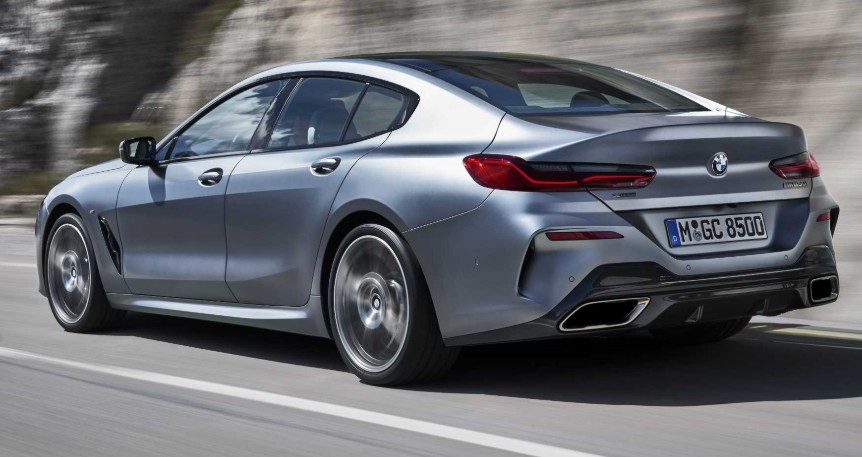
The BMW 8 Series vs Audi A7 comparison is an interesting one because these two German luxury cars approach the same basic mission from noticeably different directions. Both offer dramatic styling, strong performance, premium cabins, advanced technology, and enough comfort to cross countries without leaving us feeling as though we have spent six hours inside a washing machine.
Yet they do not really have identical personalities.
The Audi A7 has traditionally been the elegant all-rounder. It mixes the low roofline of a coupe with four doors and a genuinely useful rear hatch. The BMW 8 Series, particularly in Gran Coupe form, feels more like a grand tourer that accidentally discovered it could carry passengers in the back.
That difference matters.
If we want one luxury car capable of handling commuting, family duties, airport runs, and long road trips, the Audi makes an extremely persuasive argument. If driving enjoyment, visual drama, and effortless high-speed performance sit higher on our list, the 8 Series begins pulling us in another direction.
So, which one deserves our money?
Let's dig deeper.
Content in this publication
- BMW 8 Series vs Audi A7 at a Glance
- What Exactly Are We Comparing?
- Exterior Design: Which One Turns More Heads?
- Interior Quality and Cabin Design
- BMW 8 Series vs Audi A7 Technology
- Engine Performance
- Handling and Driving Experience
- Ride Comfort
- Rear-Seat Space
- Cargo Space and Practicality
- All-Wheel Drive and Bad-Weather Confidence
- Fuel Economy and Running Costs
- Reliability: BMW 8 Series or Audi A7?
- BMW 8 Series vs Audi A7 Maintenance Costs
- Safety and Driver Assistance
- Which Is Better for Long Road Trips?
- Which Is Better as a Daily Driver?
- BMW 8 Series vs Audi A7 for Families
- BMW 8 Series vs Audi A7 Performance Models
- Which Car Feels More Special?
- Which Has Better Resale Value?
- BMW 8 Series vs Audi A7: Pros and Cons
- Who Should Buy the BMW 8 Series?
- Who Should Buy the Audi A7?
- BMW 8 Series vs Audi A7: Which Is Better Used?
- BMW 8 Series vs Audi A7: Our Verdict
- Frequently Asked Questions
BMW 8 Series vs Audi A7 at a Glance
Before disappearing into engine specifications, screens, suspension systems, and luggage compartments, we can simplify the comparison.
The BMW 8 Series tends to suit buyers who prioritize:
- Stronger sporting character
- Rear-wheel-drive-influenced handling
- Powerful six- and eight-cylinder engines
- Grand-touring comfort
- A more exclusive appearance
- Driver-focused ergonomics
The Audi A7 tends to make more sense if we want:
- Excellent everyday practicality
- A large hatchback opening
- A spacious passenger compartment
- Standard or widely available quattro all-wheel drive
- Minimalist interior styling
- Comfortable long-distance cruising
Neither formula is objectively better.
Think of the BMW as an expensive tailored jacket and the Audi as an equally expensive technical overcoat. One feels more theatrical; the other may prove more useful when real life intervenes.
What Exactly Are We Comparing?
This comparison becomes slightly complicated because the BMW 8 Series has appeared as a Coupe, Convertible, and four-door Gran Coupe, while the Audi A7 is fundamentally a five-door Sportback.
For buyers comparing them directly, the BMW 8 Series Gran Coupe is the closest rival to the Audi A7 Sportback.
That is the version we primarily have in mind throughout this guide.
There is also an important market consideration. BMW USA now identifies the regular 8 Series as a model that has reached the end of production, although BMW introduced the limited 2026 M850i Edition M Heritage using a 523-hp 4.4-liter twin-turbo V8.
Audi, meanwhile, continues to list the A7 within its American model range in 2026.
That means many shoppers making this comparison today may actually be considering a new Audi A7 against a lightly used or remaining-stock BMW 8 Series, depending on their country.
BMW 8 Series Philosophy
BMW built the modern 8 Series as a flagship grand tourer rather than simply a bigger 5 Series.
Everything about it communicates that intention.
The seating position is low. The hood seems to stretch toward the horizon. The dashboard wraps subtly around the driver. Even the proportions make the car appear ready to launch forward while standing still.
Driving is central to the experience.
The 8 Series feels like a luxury car designed by engineers who kept asking, "Yes, but can we make it faster?"
Audi A7 Philosophy
Audi starts somewhere else.
The A7 asks whether a luxury sedan can be stylish without becoming impractical.
Its sweeping roofline creates the appearance of a coupe, yet the rear opens like a hatchback. Audi's published figures for the previous-generation A7 Sportback list a length of 4,969 mm, a 2,926-mm wheelbase, a width of 1,908 mm, and a height of only 1,422 mm, illustrating just how long, wide, and low the design is.
It looks elegant without sacrificing the basic usefulness expected from a large four-door car.
Which Concept Makes More Sense?
For most households, the A7's idea is probably easier to justify.
But luxury-car buying is rarely governed entirely by logic.
Nobody stands beside an 8 Series and says, "Excellent, this appears sufficiently rational."
Sometimes desire wins.
Exterior Design: Which One Turns More Heads?
Design is subjective, but these two cars create very different impressions.
The BMW looks muscular.
Its long hood, broad shoulders, low roof, and wide stance give it something approaching sports-car proportions, particularly in Coupe form. The Gran Coupe softens the formula slightly but remains dramatic for such a large four-door car.
The Audi looks cleaner.
Its fastback profile flows almost uninterrupted from windshield to tail. Instead of emphasizing aggression, the A7 relies on width, sharp lighting, crisp body lines, and beautifully controlled proportions.
BMW 8 Series: More Aggressive
The BMW generally has greater visual impact.
Park an 8 Series beside a conventional executive sedan and the BMW feels special almost immediately.
Large wheels fill the arches. The nose sits low. The roofline appears compressed over the body.
It is not subtle, particularly in M Sport specification.
That can be exactly what buyers at this level want.
Audi A7: More Understated
The A7 is the quieter design.
Not boring—far from it—but restrained.
It looks expensive without desperately reminding everybody that it is expensive. Its single-frame grille, narrow lamps, broad rear end, and continuous fastback roof produce a sophisticated silhouette.
Years after its introduction, the basic shape still looks contemporary.
Design Winner: BMW for Drama, Audi for Elegance
We would give the BMW the advantage if emotional appeal matters most.
The A7 wins if we prefer something discreet.
The distinction is almost like comparing an expensive mechanical watch with a beautifully designed minimalist one. Both communicate taste, just in different accents.
Interior Quality and Cabin Design
Open the doors and the personalities continue.
BMW creates a cockpit.
Audi creates an environment.
The distinction sounds like marketing language, but spend time inside both and it becomes obvious.
Inside the BMW 8 Series
The BMW's dashboard is angled slightly toward the driver.
Physical controls remain available for important functions, while the center console places the gear selector and infotainment controller close at hand.
Materials are appropriately luxurious.
Leather, metal trim, ambient lighting, premium switchgear, and available upscale finishes make the cabin feel expensive without turning it into a nightclub.
The driving position is one of its strongest qualities.
We sit low, surrounded by the car rather than perched above it.
Inside the Audi A7
Audi favors horizontal lines and a digital-heavy interface.
The dashboard visually stretches from door to door, emphasizing width. Depending on specification and model year, much of the climate and infotainment control is handled through touch-sensitive displays.
Visually, it looks spectacular.
At night, the screens and ambient lighting make the cabin resemble the bridge of a very tasteful spaceship.
Usability is more debatable.
Physical knobs can be easier to operate without taking our eyes off the road. Audi's interface becomes intuitive with familiarity, but drivers who prefer traditional controls may feel more immediately comfortable in the BMW.
Which Interior Feels More Luxurious?
This one is extremely close.
Audi arguably wins for architectural design.
BMW wins for the connection between driver and controls.
If luxury means visual sophistication, choose the Audi.
If luxury means everything falling naturally to hand while driving quickly, the BMW has the edge.
BMW 8 Series vs Audi A7 Technology
Technology matters enormously in this class.
Fortunately, neither car feels technologically deprived.
Both have offered digital instrument displays, smartphone integration, navigation, premium sound systems, surround-view cameras, configurable driving modes, sophisticated driver-assistance technology, and extensive connectivity.
The difference lies more in execution than features.
BMW iDrive Experience
BMW's iDrive system has historically been one of the easiest luxury infotainment systems to learn.
The controller on the center console is particularly useful while driving because we can operate menus without repeatedly reaching toward the dashboard.
Later systems also integrate touch and voice control.
It is a sensible combination.
Audi MMI Experience
Audi's MMI presentation feels more futuristic.
Its graphics are sharp, menus look sophisticated, and the integrated screens complement the cabin rather than appearing stuck on as an afterthought.
The downside is fingerprints.
After a few days, those beautiful glossy screens can begin displaying an archaeological record of everywhere our fingers have been.
Engine Performance
Here the BMW begins stretching its legs.
The 8 Series has traditionally offered an impressive range of six-cylinder and V8 engines, depending on country, trim, and model year.
At the upper end, performance becomes genuinely serious.
BMW's limited 2026 M850i Edition M Heritage, for example, uses a 4.4-liter twin-turbocharged V8 producing 523 hp and has an official 0–60 mph time of 3.7 seconds.
That is sports-car acceleration wrapped in a luxurious grand tourer.
Audi A7 Performance
The standard A7 focuses more heavily on smooth, effortless performance than outright brutality.
You may be interested in reading BMW 8 Series vs Mercedes S-Class: Which Luxury Car Is Better?
Depending on market and generation, buyers have encountered turbocharged gasoline engines, diesels, mild hybrids, and plug-in hybrids.
Audi's previous A7 50 TFSI e plug-in hybrid combined a turbocharged 2.0-liter engine with electrification, with Audi quoting 0–100 km/h in 5.7 seconds for that version.
Anyone wanting extreme Audi performance can move upward into S7 and RS 7 territory rather than the regular A7.
The 2026 RS 7 performance demonstrates how far the platform can go: Audi quotes 621 hp from its twin-turbocharged 4.0-liter V8 and a 0–60 mph time of 3.3 seconds.
But that is an RS model, with pricing and character to match.
Acceleration: BMW Has the Sporting Edge
Comparing equivalent mainstream versions, the BMW often feels more eager.
Throttle response is immediate, the transmission tends to cooperate beautifully, and the car seems happier when pushed.
The Audi is hardly slow.
It simply feels less interested in proving the point every time the traffic light turns green.
Handling and Driving Experience
This may be the biggest difference between the two.
BMW's reputation was built around driving dynamics, and the 8 Series follows that tradition despite its considerable size.
How the BMW 8 Series Drives
The steering is precise.
Body movements are well controlled.
The chassis feels balanced, and powerful versions deliver remarkable traction.
What impresses us most is the way the BMW seems to shrink around the driver once speeds rise.
A large luxury coupe should feel heavy.
The 8 Series frequently manages to disguise that weight.
On a winding road, it feels more playful than its dimensions suggest.
How the Audi A7 Drives
The Audi behaves differently.
Its strength is composure.
The A7 feels planted, secure, predictable, and almost impossible to fluster during normal driving.
Quattro all-wheel drive contributes to that feeling of stability in versions equipped with it.
Where the BMW encourages us to take the scenic road home, the Audi encourages us to arrive home relaxed regardless of the weather.
Handling Winner: BMW 8 Series
For drivers who genuinely enjoy driving, the BMW wins.
The Audi remains capable and confident, but the 8 Series communicates more personality through its chassis.
Ride Comfort
Sporty handling frequently comes with a price.
That price is sometimes paid directly through our spine.
Fortunately, neither car is brutally uncomfortable.
With sensible wheel sizes and adaptive suspension configurations, both can cover long distances very comfortably.
Audi Has a Slight Comfort Advantage
The A7 generally feels calmer over poor surfaces.
It isolates passengers effectively and maintains an impressive sense of refinement at highway speeds.
The BMW is comfortable too, but larger wheels and sportier suspension settings can make sharp imperfections more noticeable.
If our roads resemble the surface of the moon, wheel choice matters enormously on either car.
Huge wheels look fantastic in photographs.
Potholes do not care.
Rear-Seat Space
Four-door grand tourers always force some compromise between style and rear-seat comfort.
The BMW 8 Series Gran Coupe performs reasonably well here, but rear occupants remain aware that the car was designed around style and driving.
The Audi A7 feels more naturally suited to carrying four adults.
Its long wheelbase and hatchback body create a useful passenger compartment, although the sloping roofline inevitably compromises ultimate headroom compared with a taller traditional sedan.
Audi Is Better for Regular Rear Passengers
If we frequently transport adult passengers, the A7 is probably the smarter choice.
If the rear seats are mainly reserved for children, occasional passengers, or luggage wearing seat belts, the BMW's compromises matter less.
Cargo Space and Practicality
Here Audi lands a clean punch.
The A7's Sportback design gives it one of the most useful cargo areas among luxury cars with coupe-like styling.
Lift the rear hatch and a huge opening appears.
Suitcases, boxes, sports equipment, grocery bags, and bulky objects are much easier to load than they would be through a conventional sedan trunk opening.
Why the Audi A7 Hatchback Matters
Cargo capacity numbers tell only part of the story.
Shape matters too.
A wide hatch allows us to use the available volume more effectively.
That transforms the A7 from a glamorous executive car into something surprisingly practical.
BMW 8 Series Cargo Space
The 8 Series Gran Coupe still provides enough luggage capacity for normal touring duties.
Weekend bags?
Easy.
Airport luggage?
No problem.
A large awkward box from a furniture store?
Now the Audi owner starts smiling.
Practicality Winner: Audi A7
This category is not particularly close.
For buyers who need one luxury car to perform multiple jobs, the Audi's hatchback arrangement is a major advantage.
All-Wheel Drive and Bad-Weather Confidence
Audi has spent decades turning "quattro" into one of the most recognizable all-wheel-drive names in the industry.
That reputation helps the A7 enormously in markets with rain, snow, and slippery winters.
BMW's xDrive system is also highly capable, however.
There is no reason to assume a properly equipped 8 Series will struggle simply because the Audi badge says quattro.
The greater difference is philosophical.
Audi's setup often emphasizes security and neutral traction.
BMW generally tries to preserve a more rear-driven feeling even when all four wheels are contributing.
For enthusiasts, the BMW approach may feel more entertaining.
For drivers confronting snow-covered highways, the Audi's calm character is extremely reassuring.
Fuel Economy and Running Costs
Neither should be purchased because we are attempting to minimize transportation expenses.
These are large premium cars packed with sophisticated technology.
Tires are expensive.
Brakes are expensive.
Insurance can be expensive.
Electronic suspension components are not generally found in supermarket discount bins.
And powerful engines naturally consume more fuel when used enthusiastically.
Audi Can Be the More Sensible Choice
The A7's engine lineup has included smaller-displacement and electrified options in various markets.
That creates opportunities for lower fuel consumption, particularly for drivers who do large amounts of urban or mixed driving.
Plug-in-hybrid versions can make particular sense when owners can charge regularly.
BMW V8 Ownership Requires Commitment
The M850i provides wonderful performance.
It also carries the predictable costs associated with a twin-turbocharged luxury V8.
Fuel, tires, maintenance, and eventually repairs should be considered before purchasing a used example.
A suspiciously cheap luxury performance car can sometimes be the most expensive car we ever buy.
Reliability: BMW 8 Series or Audi A7?
Reliability cannot be reduced to one universal winner because condition, maintenance history, engine choice, model year, and previous ownership matter enormously.
Both cars are technologically complicated.
That complexity is wonderful when every system works.
It becomes less charming when a warning light appears five days after the warranty ends.
Used BMW 8 Series Buying Advice
On a used BMW, we would pay close attention to:
- Complete service history
- Cooling-system condition
- Oil or coolant leaks
- Suspension operation
- Electronics and infotainment
- Tire wear
- Brake condition
- Evidence of performance modifications
V8 examples deserve particularly careful inspection because deferred maintenance can become expensive quickly.
You may be interested in readingBMW 8 Series vs Mercedes S-Class: Which Luxury Car Is Better?You may be interested in reading
BMW 8 Series vs Mercedes S Class: Which Luxury Flagship Wins?Used Audi A7 Buying Advice
For a used A7, inspect:
- Service documentation
- Transmission behavior
- Cooling systems
- Electronics
- Suspension components
- Quattro drivetrain maintenance
- Hybrid components where applicable
- Interior screens and controls
The cheapest example online is rarely the benchmark we should chase.
Buying the best-maintained car usually matters more than saving a few thousand upfront.
BMW 8 Series vs Audi A7 Maintenance Costs
Both belong in the premium-car category, and their maintenance bills behave accordingly.
The BMW may become more expensive when comparing high-performance V8 variants against regular six-cylinder A7 models.
However, specification matters more than badge alone.
Large wheels mean costly tires.
Performance brakes mean costly replacement components.
Air or adaptive suspension can introduce additional long-term expenses.
Complex lighting systems, cameras, sensors, and driver-assistance hardware can make even seemingly minor accident repairs surprisingly costly.
Our preferred strategy?
Buy with service records, obtain a pre-purchase inspection, and keep money available beyond the purchase price.
Safety and Driver Assistance
Both manufacturers have offered substantial driver-assistance suites depending on trim and market.
Equipment may include adaptive cruise control, lane assistance, blind-spot monitoring, parking cameras, automatic emergency braking, traffic-sign recognition, and parking assistance.
The important word is may.
Luxury manufacturers often package options differently across countries and model years.
When purchasing used, never assume a car has a particular feature because another example online does.
Check the actual equipment fitted to the individual vehicle.
Which Is Better for Long Road Trips?
This is where both vehicles make a strong case.
The BMW's supportive seats, engine refinement, effortless overtaking power, and stable high-speed behavior make it an excellent grand tourer.
It almost seems designed around the idea of leaving one city after breakfast and arriving several countries away before dinner.
The Audi is equally convincing for different reasons.
Its softer personality, excellent stability, quieter demeanor, and superior luggage flexibility turn it into a superb road-trip companion.
Choose the BMW for the Journey
If the road itself is part of the entertainment, choose the 8 Series.
Choose the Audi for the Destination
If we primarily want to cover hundreds of kilometers calmly while carrying passengers and luggage, the A7 probably makes more sense.
Which Is Better as a Daily Driver?
The Audi wins this category for most people.
Its cargo versatility, comfortable ride, all-weather confidence, four-door accessibility, and understated character are easier to live with every day.
The BMW is perfectly capable of commuting.
It simply feels like more car than necessary for that assignment.
That excess is also part of its appeal.
Nobody buys a grand tourer because a compact hatchback was incapable of reaching the office.
BMW 8 Series vs Audi A7 for Families
Neither should be our first recommendation for a family with three toddlers, two enormous dogs, and enough vacation luggage to cross Antarctica.
SUVs exist for a reason.
But among stylish luxury cars, the Audi is the better family option.
Its hatch gives it a practical advantage that becomes noticeable every time we load a stroller, large suitcase, bicycle wheel, or bulky shopping item.
The BMW Gran Coupe works for smaller families but prioritizes design and driving pleasure.
BMW 8 Series vs Audi A7 Performance Models
The comparison becomes even more interesting when we move up the performance ladder.
BMW buyers can encounter the M850i and, depending on body style and market, the full M8.
Audi buyers can progress through the S7 toward the RS 7.
These machines operate on another level.
The current 2026 RS 7 performance officially delivers 621 hp and reaches 60 mph in a claimed 3.3 seconds.
BMW's limited 2026 M850i Edition M Heritage produces 523 hp and reaches 60 mph in a claimed 3.7 seconds.
Comparing the full high-performance derivatives would justify an article of its own, because at that point we are discussing vehicles capable of embarrassing genuine sports cars while carrying multiple passengers.
Which Car Feels More Special?
The BMW.
There is something about the 8 Series that separates it from BMW's ordinary sedan hierarchy.
The low roof, long nose, seating position, engine choices, and grand-tourer character make even a normal trip feel slightly ceremonial.
The Audi A7 is gorgeous, but its brilliance is partly rooted in how effortlessly it fits into normal life.
The BMW is less invisible.
Whether that is an advantage depends entirely on what we want.
Which Has Better Resale Value?
Luxury-car depreciation can be substantial, especially when the original sticker price climbs rapidly through optional equipment.
That creates opportunities for secondhand buyers.
A few years of depreciation can transform an extremely expensive flagship into something priced alongside a much newer mainstream premium vehicle.
But depreciation should never be confused with affordability.
A car that originally cost luxury-car money still tends to require luxury-car maintenance.
This is particularly important with used 8 Series models.
The purchase price may fall.
The complexity does not.
BMW 8 Series vs Audi A7: Pros and Cons
BMW 8 Series Pros
- More engaging handling
- Strong performance
- Excellent driving position
- Dramatic exterior styling
- Luxurious grand-touring character
- Powerful engine choices
- Feels particularly special
BMW 8 Series Cons
- Less practical than the A7
- Potentially higher operating costs
- Large dimensions
- Rear seating is secondary to design
- High-performance versions can become expensive to maintain
- Regular 8 Series availability now depends heavily on market and used inventory
Audi A7 Pros
- Excellent hatchback practicality
- Elegant fastback design
- Refined highway manners
- Strong all-weather capability
- Spacious and sophisticated cabin
- Better everyday versatility
- Comfortable ride
Audi A7 Cons
- Less engaging than the BMW
- Touchscreen-heavy controls may not suit everyone
- Complex technology can increase repair costs
- Sloping roof compromises some rear headroom
- Performance enthusiasts may quickly start looking toward the S7 or RS 7
Who Should Buy the BMW 8 Series?
Choose the BMW if driving still matters after the novelty of owning a luxury car wears off.
It makes particular sense for someone who:
- Regularly drives alone or with one passenger
- Enjoys winding roads
- Values strong acceleration
- Wants a low, sporty driving position
- Prioritizes emotional appeal
- Does not need maximum luggage flexibility
- Wants something less common than a conventional executive sedan
The 8 Series is a heart purchase with enough practicality to keep the brain from objecting too loudly.
Who Should Buy the Audi A7?
Choose the A7 if we need one luxury car to handle almost everything.
It works especially well for someone who:
- Frequently carries rear passengers
- Needs useful cargo space
- Drives in changing weather
- Prefers subtle design
- Values ride comfort
- Wants performance without an overtly sporting personality
- Uses the car every day
The Audi is the rational choice without feeling remotely boring.
BMW 8 Series vs Audi A7: Which Is Better Used?
The used market makes this comparison fascinating.
An 8 Series can lose enough value to look like an extraordinary bargain.
And in some ways it is.
We may acquire huge performance, beautiful materials, sophisticated technology, and flagship-car presence for dramatically less than the original owner paid.
But the A7 can be easier to justify long term, particularly with a sensible engine specification.
When shopping used, we would place condition above trim level.
A meticulously maintained lower-spec A7 is usually preferable to a neglected high-performance example.
The same applies to the BMW.
Maintenance history beats horsepower on the day money changes hands.
BMW 8 Series vs Audi A7: Our Verdict
The winner depends on what we expect our luxury car to accomplish.
For pure versatility, the Audi A7 wins.
Its elegant fastback body hides a genuinely practical hatchback. It carries people comfortably, swallows luggage easily, handles bad weather confidently, and cruises long distances with impressive refinement.
It is the luxury car we can recommend using our head.
But the BMW 8 Series is the one we might choose using our heart.
It feels more special from behind the wheel. Its proportions are more dramatic, its chassis is more engaging, and powerful versions possess the effortless speed expected from a proper grand tourer.
If we commute Monday through Friday, carry family members regularly, load bulky luggage, and want a car that fits effortlessly into everyday life, buy the Audi A7.
If Saturday morning arrives and we occasionally choose a longer road simply because it has better corners, the BMW 8 Series makes more sense.
There is no embarrassing choice here.
The Audi is the better all-rounder.
The BMW is the more memorable driver's car.
And sometimes the car we remember is the one we ultimately want parked in the garage.
Frequently Asked Questions
Is the BMW 8 Series better than the Audi A7?
The BMW 8 Series is better for drivers who prioritize performance, handling, dramatic styling, and a traditional grand-touring experience. The Audi A7 is generally better for everyday practicality, rear-passenger use, luggage capacity, and comfortable commuting. Neither is universally superior; they simply emphasize different priorities.
Is the Audi A7 more practical than the BMW 8 Series?
Yes. The Audi A7's Sportback body provides a large rear hatch rather than a conventional trunk opening, making bulky luggage considerably easier to load. Its passenger-focused layout also makes it a more natural everyday family car than the sportier 8 Series.
Which is faster, the BMW 8 Series or Audi A7?
Equivalent specifications vary by market and model year, but performance-oriented BMW 8 Series variants are generally substantially quicker than a regular Audi A7. Audi buyers wanting comparable extreme performance should consider the S7 or RS 7. The 2026 RS 7 performance, for example, is officially rated at 621 hp and 3.3 seconds from 0–60 mph.
You may be interested in readingBMW 8 Series vs Mercedes S-Class: Which Luxury Car Is Better?You may be interested in reading
BMW 8 Series vs Mercedes S Class: Which Luxury Flagship Wins?You may be interested in reading
BMW 8 Series vs 4 Series: Which BMW Coupe Is Right for You?Which is more comfortable, BMW 8 Series or Audi A7?
Both are excellent long-distance cars, but the Audi A7 generally places slightly more emphasis on ride comfort and isolation. The BMW 8 Series balances comfort with sharper handling, so suspension setup and wheel size can make it feel firmer over rough surfaces.
Should I buy a used BMW 8 Series or Audi A7?
Buy based primarily on condition, maintenance history, engine choice, and expected operating costs. The BMW is particularly attractive if performance and driving enjoyment matter most, while the Audi is usually the more practical used luxury car. A professional pre-purchase inspection is worthwhile for either because both contain sophisticated mechanical and electronic systems.
If you want to know other articles similar to BMW 8 Series vs Audi A7: Which Luxury Car Is Better? you can visit the category Models.
Nissan Rogue Dark Armor vs Platinum: Which Trim Is Better?

Kia Sorento Models: Complete Guide to Trims, Engines and Versions
BYD Shark 6 vs Ranger vs HiLux: Which Ute Makes the Most Sense in 2026?
BYD Shark 6 vs MG U9: Which Ute Makes More Sense in 2026?
BYD Shark 6 vs Ford Ranger Raptor: Which Performance Ute Is Better in 2026?
BYD Shark 6 vs Kia Tasman: Which Ute Is Better?
Leave a Reply
More content of your interest