

BMW 8 Series vs Mercedes S Class: Which Luxury Flagship Wins?

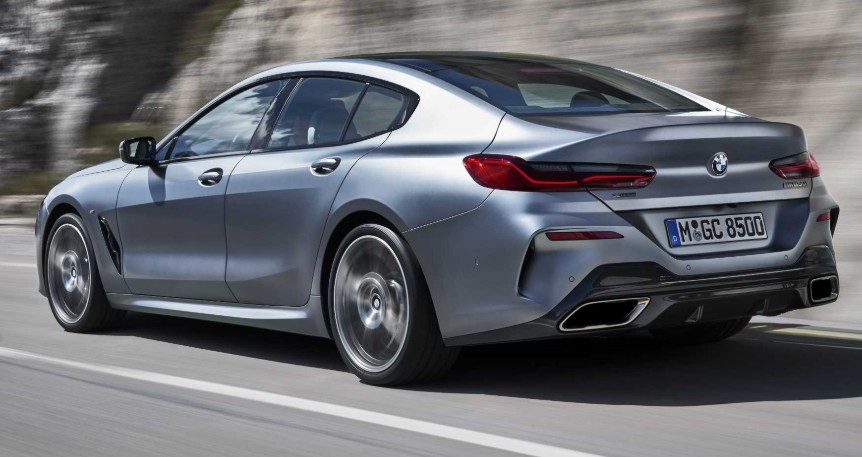
Choosing between the BMW 8 Series vs Mercedes S Class is a little like choosing between a tailored racing suit and a first-class lounge. Both are expensive, sophisticated, fast, and packed with technology, but they approach luxury from noticeably different directions.
The BMW 8 Series has always leaned toward the driver. It sits low, looks dramatic, and blends grand-touring comfort with the kind of handling that makes an empty country road suddenly seem very inviting. The Mercedes-Benz S-Class, meanwhile, practically wrote the rulebook for the modern luxury sedan. Its mission is less about attacking corners and more about making miles disappear beneath you.
There is another important point before we dive in. These aren't perfectly equivalent cars. The 8 Series has been offered as a Coupe, Convertible, and four-door Gran Coupe, while the S-Class is a large flagship sedan. BMW's more direct traditional rival for the S-Class would technically be the 7 Series.
Still, buyers looking around the six-figure luxury-car world frequently cross-shop cars based on experience rather than body style. And that's precisely where this comparison gets interesting.
So, which one deserves your driveway? Let's break it down.
Content in this publication
- BMW 8 Series vs Mercedes S Class at a Glance
- Exterior Design: Sports Car Drama vs Executive Presence
- Interior Quality: Two Different Definitions of Luxury
- BMW 8 Series Interior: Sporty Yet Upscale
- Front-Seat Comfort
- Rear-Seat Comfort: The S Class Pulls Away
- Performance: BMW Brings the Muscle
- BMW 8 Series vs Mercedes S Class Handling
- Ride Comfort: Mercedes Takes the Crown
- Highway Driving: Two Excellent Long-Distance Cars
- Technology and Infotainment
- Practicality and Everyday Use
- Fuel Economy and Running Costs
- BMW M850i vs Mercedes S Class V8
- BMW 8 Series vs Mercedes S Class Reliability
- Depreciation: Luxury Has a Price After Purchase
- Which Car Feels More Special?
- BMW 8 Series vs Mercedes S Class for Daily Driving
- Which One Is More Fun to Drive?
- Which One Is More Luxurious?
- BMW 8 Series vs Mercedes S Class: Pros and Cons
- BMW 8 Series vs Mercedes S Class: Which Should We Buy?
- Final Verdict
- Frequently Asked Questions
BMW 8 Series vs Mercedes S Class at a Glance
The easiest way to understand these cars is to forget the badges for a moment and think about their personalities.
The BMW says:
"Drive me."
The Mercedes says:
"Relax. I'll handle the journey."
The 8 Series prioritizes athleticism, styling, and a cockpit-like atmosphere. The S-Class prioritizes cabin isolation, passenger comfort, advanced luxury features, and effortless cruising.
BMW continued offering select 2026 8 Series Coupe, Convertible, and Gran Coupe variants in the U.S., including six-cylinder 840i models and V8-powered M850i versions. Mercedes-Benz, meanwhile, has already unveiled an extensively updated 2027 S-Class, illustrating just how actively its flagship continues to evolve.
That difference in product direction matters.
Who Should Consider the BMW 8 Series?
We'd look closely at the BMW if we wanted:
- A more sporting driving experience
- Sleek grand-tourer styling
- Strong acceleration
- A lower, more intimate seating position
- Coupe, convertible, or four-door Gran Coupe flexibility
- Luxury without feeling like we're being chauffeured
Who Should Consider the Mercedes S Class?
The S-Class makes more sense if our priorities include:
- Exceptional passenger comfort
- A spacious rear seat
- Quiet highway cruising
- Sophisticated suspension technology
- Flagship-level interior ambience
- Cutting-edge comfort and convenience features
- Being driven as often as driving ourselves
Exterior Design: Sports Car Drama vs Executive Presence
Few people will confuse these two cars in a parking lot.
The BMW 8 Series stretches itself across the road with a long hood, wide stance, shallow glasshouse, and flowing roofline. It looks like it's moving even while waiting at a red light.
The S-Class takes another route.
It's elegant rather than aggressive. The proportions are more formal, the cabin is larger, and the styling communicates authority rather than outright sportiness.
The BMW 8 Series Looks More Exotic
If curb appeal is high on our shopping list, the BMW has a strong argument.
Especially in Coupe form, the 8 Series resembles a traditional European grand tourer. Its long bonnet and low roof create proportions that simply aren't possible with a conventional flagship sedan.
The Gran Coupe retains much of that visual drama while adding rear doors.
It's the automotive equivalent of wearing a tuxedo with running shoes.
The Mercedes S Class Looks More Prestigious
The S-Class isn't trying to disguise its size.
Instead, Mercedes uses the car's substantial dimensions as part of the appeal. The long body and dignified profile make it look like something that should arrive outside a five-star hotel.
Some buyers will find the BMW prettier.
Others will find the Mercedes more commanding.
Neither reaction is wrong.
Which Has More Road Presence?
We'd give the S-Class the advantage in traditional prestige.
We'd give the 8 Series the edge for visual excitement.
Interior Quality: Two Different Definitions of Luxury
Open the doors and the philosophical divide becomes even clearer.
BMW surrounds the driver.
Mercedes surrounds everybody.
The 8 Series cabin feels relatively snug for such an expensive car, especially compared with the enormous interior of an S-Class. Controls and displays are arranged around the driver, and the low seating position reinforces its GT character.
The S-Class treats the cabin almost like a private suite.
Everything from ambient lighting to seat adjustment and suspension tuning seems designed around separating passengers from whatever chaos is occurring outside.
BMW 8 Series Interior: Sporty Yet Upscale
The BMW interior combines leather, premium trim, substantial switchgear, digital displays, and a wide center console.
We particularly like how the dashboard feels driver-focused without becoming unnecessarily theatrical.
The seating position matters too.
You sit in an 8 Series rather than simply sitting on its seats. The dashboard rises around you, the windshield feels relatively shallow, and the hood extends out ahead.
It creates a sense of occasion before the engine has even started.
Mercedes S Class Interior: The Luxury Benchmark Approach
The Mercedes experience is dramatically different.
The cabin emphasizes screens, ambient lighting, elegant materials, expansive seating, and comfort technology. The updated S-Class continues that technology-heavy philosophy with Mercedes' latest MBUX interface and advanced cabin features.
Whether you prefer this approach depends on what luxury means to you.
If luxury means feeling connected to a beautifully engineered machine, BMW makes a compelling case.
If luxury means temporarily forgetting that the outside world exists, the Mercedes is difficult to beat.
Front-Seat Comfort
Both cars can keep us comfortable for hours.
But they achieve it differently.
The BMW seats tend to hold occupants more firmly. Their shape suits spirited driving because they help keep the body positioned during cornering.
Mercedes seats emphasize relaxation.
In the S-Class, long-distance travel can feel less like driving and more like occupying an expensive reclining chair that happens to be moving at motorway speeds.
For someone covering hundreds of highway miles every week, that distinction matters.
Rear-Seat Comfort: The S Class Pulls Away
Here's one category where this comparison becomes decidedly one-sided.
The Mercedes S-Class is built with rear passengers in mind.
The BMW 8 Series isn't.
Yes, the Gran Coupe adds useful rear accommodation and makes the 8 Series substantially more practical than the Coupe, but the back seat remains secondary to the overall driving experience.
The S-Class turns the rear compartment into a major selling point.
Depending on configuration and market, buyers can find sophisticated rear seating, climate control, entertainment, comfort, and convenience equipment designed specifically for passengers.
If You Have a Chauffeur, Buy the Mercedes
This might sound obvious, but it's important.
If we expect to spend meaningful time sitting behind the driver rather than behind the steering wheel, the S-Class should be near the top of the list.
Buying an 8 Series primarily to ride in the back would be like buying a luxury speedboat and hiring someone else to enjoy the throttle.
Performance: BMW Brings the Muscle
Now the balance starts shifting back toward Munich.
Performance is central to the 8 Series identity.
Even the less extreme versions provide the smoothness and acceleration expected from an expensive grand tourer, while the V8-powered M850i moves into genuinely serious performance territory.
BMW's limited 2026 M850i Edition M Heritage, for example, uses a 4.4-liter twin-turbo V8 producing 523 horsepower, with BMW quoting a 3.7-second 0–60 mph time.
That's properly fast.
Not "fast for a luxury car."
Just fast.
Mercedes S Class Performance Is Effortless Rather Than Aggressive
Don't mistake comfort for slowness.
The S-Class can deliver substantial performance as well.
Mercedes' S 500 4MATIC combines a turbocharged 3.0-liter inline-six with mild-hybrid technology, while the S 580 uses a V8 powertrain. Mercedes also offers electrified and AMG derivatives for buyers seeking considerably more output.
The difference is how the performance arrives.
An 8 Series encourages us to notice acceleration.
An S-Class tries to make enormous speed feel entirely normal.
BMW 8 Series vs Mercedes S Class Handling
This is perhaps the easiest category to call.
The BMW wins.
You may be interested in reading BMW 8 Series vs 4 Series: Which BMW Coupe Is Right for You?
The 8 Series feels smaller from behind the wheel than its physical dimensions suggest. Steering response is quicker, body movement feels more controlled, and the car is happier being pushed along twisting roads.
You don't need to drive irresponsibly to notice the difference.
Even a highway interchange can reveal it.
BMW Feels Like a Grand Tourer
The best phrase for the 8 Series is probably high-speed confidence.
It isn't a tiny sports car dancing from corner to corner. There's considerable mass here.
But the chassis makes that mass surprisingly manageable.
Drive briskly and the BMW seems to tighten around you.
Mercedes Feels Like a Luxury Yacht
The S-Class is less interested in communicating every detail of the road.
That's deliberate.
Its job is to filter out imperfections, reduce disturbance, and create a sense of calm.
Where the BMW asks, "How fast can we take this corner?"
The Mercedes asks, "Did you even notice that corner?"
Ride Comfort: Mercedes Takes the Crown
If handling belongs to BMW, ride quality belongs to Mercedes-Benz.
The S-Class has long served as a showcase for the company's suspension engineering, and modern versions continue to emphasize adaptive damping and sophisticated air-suspension systems.
The result is a car that can smooth over surfaces that would make many sports-oriented luxury cars feel unsettled.
Is the BMW 8 Series Comfortable?
Absolutely.
We shouldn't confuse "sportier" with "uncomfortable."
The 8 Series makes an excellent long-distance cruiser. Its seats are supportive, highway stability is outstanding, and cabin insulation is appropriate for a luxury GT.
But large wheels, lower-profile tires, and firmer chassis tuning can transmit more information from broken pavement.
The Mercedes generally does a better impersonation of a flying carpet.
Highway Driving: Two Excellent Long-Distance Cars
Give either vehicle several hundred miles of open highway and it begins making sense.
These are cars designed for distance.
The BMW is the one we'd choose for a scenic European-style road trip where mountain passes occasionally interrupt the motorway.
The Mercedes is the one we'd choose for a 600-mile interstate journey where arriving fresh matters more than attacking each curve.
It's a subtle difference, but an important one.
Technology and Infotainment
Technology has become one of the defining battlegrounds for German luxury brands.
Both offer extensive digital displays, smartphone connectivity, navigation, driver-assistance systems, voice controls, configurable interfaces, cameras, and premium audio options.
Yet the execution remains different.
BMW Keeps the Driver at the Center
BMW's technology generally feels integrated around driving functions.
We can adjust vehicle settings, navigation, media, assistance features, and performance-related information without the cabin feeling like the dashboard belongs in an electronics store.
There is still a learning curve, of course.
Modern luxury cars practically require orientation sessions.
But BMW tends to retain a sense that we're operating a car first and a computer second.
Mercedes Pushes Harder Into Digital Luxury
Mercedes goes further with visual drama.
Displays, ambient illumination, graphics, digital instrumentation, and intelligent assistance become part of the luxury experience rather than merely tools.
The refreshed S-Class pushes this concept even further with the latest generation of MBUX technology and expanded driver-assistance capabilities.
Tech enthusiasts may love it.
Traditionalists may wonder what happened to beautifully machined buttons.
Practicality and Everyday Use
Nobody buys either car because they need the most practical transportation possible.
But practicality still matters when six figures are potentially involved.
BMW 8 Series Gran Coupe Is the Sensible 8 Series
If the BMW appeals to us but we regularly carry passengers, the Gran Coupe is the logical answer.
Four doors transform the ownership experience.
Friends don't need to fold themselves into the rear seats like carry-on luggage, and the longer roof makes back-seat access significantly easier than in the Coupe.
The Coupe remains the purist's choice.
The Convertible prioritizes open-air enjoyment.
The Gran Coupe is the all-rounder.
The S Class Is Naturally More Passenger Friendly
The Mercedes requires fewer compromises.
Its conventional sedan architecture means easier rear access, more generous passenger accommodation, and a cabin designed around carrying adults comfortably.
For executives, families, airport transfers, and frequent passenger duty, the advantage is obvious.
Fuel Economy and Running Costs
At this level, fuel consumption usually isn't the first concern.
But ownership costs can still become eye-opening.
Large wheels aren't cheap.
Performance tires aren't cheap.
Complex adaptive suspension components aren't cheap.
Premium servicing certainly isn't cheap.
Add insurance, depreciation, brakes, batteries, electronics, and potential repairs outside warranty, and the purchase price starts looking like the opening act rather than the whole show.
Six-Cylinder Versions Can Be the Sweet Spot
We don't automatically need the largest engine.
For many owners, an inline-six version of either car offers the best combination of refinement, performance, and relative efficiency.
The BMW 840i, in particular, has traditionally represented an appealing middle ground: plenty of performance for public roads without the additional thirst and cost associated with the V8 M850i.
Likewise, an S-Class six-cylinder powertrain can provide more than enough effortless performance for the car's luxury mission.
BMW M850i vs Mercedes S Class V8
Now things become more interesting.
If our heart is pulling us toward eight cylinders, the character gap grows rather than shrinks.
The M850i is unapologetically performance-focused.
Its V8 soundtrack, immediate acceleration, all-wheel-drive traction, and sportier chassis give it the personality of a continent-crossing express train.
The V8 S-Class takes that same basic recipe and wraps it in several additional layers of insulation.
One wants to entertain the driver.
The other wants to move everybody quickly without disturbing anyone's conversation.
Which V8 Experience Is Better?
We'd choose the M850i for driving pleasure.
We'd choose the S-Class V8 for refinement.
Simple.
BMW 8 Series vs Mercedes S Class Reliability
This is where we need realistic expectations.
Neither vehicle is mechanically simple.
Both can combine turbocharging, advanced suspension systems, extensive electronics, complicated climate systems, powered accessories, multiple control modules, advanced driver assistance, and luxury features that would have seemed like science fiction a couple of decades ago.
More technology means more potential repair complexity as the car ages.
Buying Used Changes the Equation
A used flagship can look dangerously tempting.
We might see a once-six-figure luxury car advertised for the price of a new mainstream sedan and think we've discovered a loophole in the universe.
You may be interested in readingBMW 8 Series vs 4 Series: Which BMW Coupe Is Right for You?You may be interested in reading
BMW 8 Series vs 6 Series: Which Luxury BMW Is Better?We haven't.
Depreciation lowers the purchase price.
It doesn't magically turn flagship parts into economy-car parts.
A thorough pre-purchase inspection, complete service history, and appropriate maintenance budget are far more important here than saving the last few thousand dollars on the purchase.
Don't Buy the Cheapest Example
This rule applies particularly strongly to aging luxury cars.
The cheapest 8 Series or S-Class on the market can quickly become the most expensive one to own.
Condition beats bargain pricing.
Depreciation: Luxury Has a Price After Purchase
Large luxury cars can depreciate significantly.
That sounds terrible for new-car buyers and wonderful for secondhand shoppers.
In reality, it's both.
Someone shopping new should consider how long they plan to keep the car. If we're swapping vehicles every few years, residual value can matter almost as much as the initial discount.
Used shoppers, meanwhile, can gain access to extraordinary engineering for much less money.
But again, cheap purchase price does not equal cheap ownership.
Which Car Feels More Special?
This category is almost entirely emotional.
And that's okay.
Luxury cars aren't purchased with spreadsheets alone.
The 8 Series feels special because its shape, seating position, performance, and rarity separate it from an ordinary executive sedan.
The S-Class feels special because almost everything around us seems designed with comfort and prestige in mind.
One feels like an occasion when we're driving.
The other feels like an occasion simply because we're inside it.
BMW 8 Series vs Mercedes S Class for Daily Driving
For daily commuting, we'd choose based largely on environment.
Driving mostly alone on good roads?
BMW.
Frequently carrying clients or family?
Mercedes.
Tight parking structures?
The BMW won't suddenly become a compact car, but the S-Class's sheer scale can require additional planning.
Long highway commute?
Mercedes.
Weekend back-road detours?
BMW.
City Driving
The S-Class can feel enormous in crowded urban streets, although modern cameras and parking systems help.
The BMW's lower seating position can reduce outward visibility compared with a conventional sedan, but its sportier character makes everyday driving feel a little less ceremonial.
Neither is ideal for someone who spends every afternoon hunting for tiny parallel-parking spaces.
Which One Is More Fun to Drive?
The BMW 8 Series.
We don't need several paragraphs to dodge the obvious conclusion.
Steering, seating position, chassis balance, acceleration, and overall personality all make the BMW the more involving driver's car.
The Mercedes can be astonishingly capable, especially in performance variants.
But capability isn't exactly the same as engagement.
BMW wants us participating.
Mercedes wants us arriving.
Which One Is More Luxurious?
The Mercedes S-Class.
Again, straightforward.
Luxury can mean many things, but measured by rear-seat space, ride isolation, flagship ambience, passenger-oriented features, and overall sense of occasion, Mercedes has the stronger argument.
That has effectively been the S-Class mission for generations.
BMW 8 Series vs Mercedes S Class: Pros and Cons
Here's the comparison distilled into everyday terms:
BMW 8 Series advantages
- More engaging handling
- Sportier seating position
- Sleeker grand-touring design
- Strong performance character
- Multiple body styles
- Better choice for enthusiastic drivers
- Gran Coupe offers useful four-door practicality
BMW 8 Series disadvantages
- Less rear-seat space
- Firmer ride
- Lower seating can make access harder
- Not as chauffeur-friendly
- Complex and potentially expensive to maintain
Mercedes S-Class advantages
- Outstanding ride comfort
- Spacious rear accommodation
- Exceptional highway refinement
- Strong prestige
- Extensive luxury technology
- Better passenger experience
- Ideal executive flagship
Mercedes S-Class disadvantages
- Large exterior dimensions
- Less playful on winding roads
- Sophisticated systems can mean expensive long-term repairs
- Technology-heavy cabin won't appeal to everyone
- Can feel more formal than exciting
BMW 8 Series vs Mercedes S Class: Which Should We Buy?
After all the technology, engines, leather, suspension systems, and digital wizardry, the decision comes down to one surprisingly simple question:
Where do we want the luxury to happen?
If we want luxury primarily through the act of driving, the BMW 8 Series is the stronger choice.
Its cabin revolves around the driver. Its styling feels more dramatic. Its chassis encourages participation. And when fitted with one of BMW's more powerful engines, it can deliver acceleration worthy of a genuine performance car.
If we want luxury primarily through comfort, isolation, space, and technology, the Mercedes S-Class wins.
It's more spacious, more passenger-oriented, and generally more relaxing. The S-Class isn't simply transportation; it attempts to make transportation disappear into the background.
Choose the BMW 8 Series If…
Buy the 8 Series if you turn around and look at your car after parking it.
Buy it if an empty winding road makes you smile.
Buy it if you want a luxury car that occasionally behaves like a sports car.
And definitely consider it if you rarely need a huge rear seat.
Choose the Mercedes S Class If…
Choose the S-Class if quietness matters more than cornering feel.
Choose it if passengers are important.
Choose it if long highway journeys dominate your driving.
And choose it if your definition of luxury includes arriving somewhere feeling as though the journey barely happened.
Final Verdict
There isn't a universal winner in the BMW 8 Series vs Mercedes S Class battle because they're chasing different versions of perfection.
The BMW 8 Series is the driver's choice.
It's lower, sportier, more emotional, and generally more rewarding when the road starts twisting. The Gran Coupe even manages to inject enough practicality to make the formula viable as an everyday luxury car.
The Mercedes S-Class is the luxury choice.
Its mission is comfort above almost everything else. Rear-seat accommodation, ride quality, technology, refinement, and sheer presence make it the stronger flagship sedan.
If we had to drive ourselves across an Alpine pass tomorrow morning, we'd reach for the BMW key.
If we had to cross an entire country and step out six hours later ready for an important meeting, we'd take the Mercedes.
Sometimes choosing the better car isn't about asking which one wins.
It's about asking which one understands us better.
Frequently Asked Questions
1. Is the BMW 8 Series Better Than the Mercedes S Class?
The BMW 8 Series is better for buyers who prioritize performance, handling, sporty styling, and driver involvement. The Mercedes S-Class is better for buyers who prioritize ride comfort, rear-seat space, passenger luxury, and flagship refinement. Neither is objectively superior in every category.
2. Is the BMW 8 Series as Luxurious as an S Class?
The 8 Series is unquestionably a luxury car, with high-quality materials, strong technology, comfortable seats, and excellent refinement. However, the S-Class takes a more comprehensive approach to luxury, particularly for rear passengers. The BMW feels more like a luxury grand tourer, while the Mercedes feels more like a rolling executive lounge.
3. Which Is Faster, the BMW 8 Series or Mercedes S Class?
It depends entirely on the specific versions being compared. The V8-powered BMW M850i delivers extremely strong acceleration, while high-performance Mercedes-AMG S-Class variants can produce even more dramatic performance. Standard models of both cars are already more than powerful enough for everyday road use.
You may be interested in readingBMW 8 Series vs 4 Series: Which BMW Coupe Is Right for You?You may be interested in reading
BMW 8 Series vs 6 Series: Which Luxury BMW Is Better?You may be interested in reading
 Nissan Frontier Generations: Complete History From 1998 to Today
4. Which Is Better for Long Trips, BMW 8 Series or S Class?
Both are excellent long-distance cars, but the S-Class gets our vote for pure highway comfort thanks to its spacious cabin, passenger-oriented design, sophisticated suspension, and emphasis on isolation. The BMW 8 Series is more appealing when a long trip involves entertaining roads and enthusiastic driving.
5. Should I Buy a Used BMW 8 Series or Used Mercedes S Class?
Either can represent tremendous value after depreciation, but condition and maintenance history should come before price. Both are complicated luxury vehicles capable of generating expensive repair bills. Before buying, we would obtain a specialist inspection, verify servicing, check all electronic features, examine the suspension carefully, and budget for maintenance beyond the initial purchase price.
If you want to know other articles similar to BMW 8 Series vs Mercedes S Class: Which Luxury Flagship Wins? you can visit the category Models.
Nissan Rogue Dark Armor vs Platinum: Which Trim Is Better?

Kia Sorento Models: Complete Guide to Trims, Engines and Versions
BYD Shark 6 vs Ranger vs HiLux: Which Ute Makes the Most Sense in 2026?
BYD Shark 6 vs MG U9: Which Ute Makes More Sense in 2026?
BYD Shark 6 vs Ford Ranger Raptor: Which Performance Ute Is Better in 2026?
BYD Shark 6 vs Kia Tasman: Which Ute Is Better?
Leave a Reply
More content of your interest