
BMW 8 Series vs 4 Series: Which BMW Coupe Is Right for You?

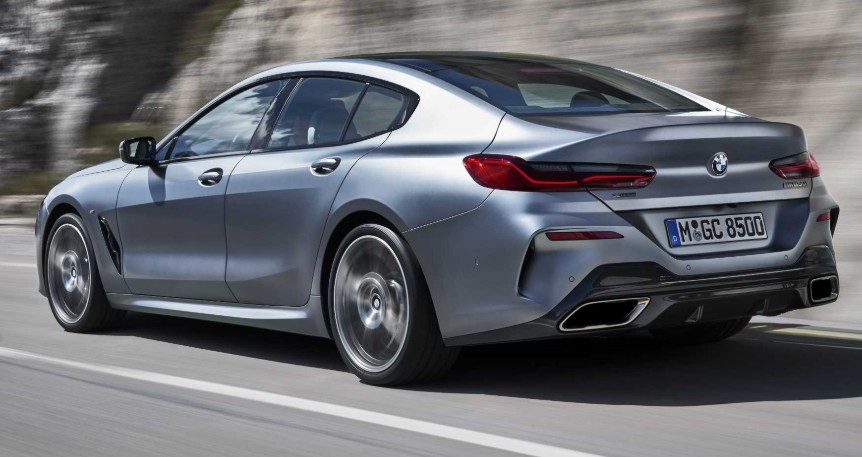
Comparing the BMW 8 Series vs 4 Series can feel a little strange at first. Both wear BMW badges, both offer striking coupe-inspired styling, and both can deliver the kind of performance that makes an empty highway look increasingly tempting. Yet they were created with very different priorities.
The BMW 4 Series is the energetic athlete of the family. It is smaller, easier to place on the road, generally more affordable, and designed to combine everyday usability with BMW's traditional sporting character. BMW describes the current 4 Series Coupe as a sporty luxury two-door and continues to offer Coupe, Convertible, Gran Coupe, and high-performance M variants within the broader family.
The 8 Series takes another path. It is less interested in being the lightweight boxer dancing around the ring and more interested in being the heavyweight arriving in a tailored suit. Its mission is grand touring: substantial performance wrapped in a larger, richer and more dramatic package.
So, should we spend more and climb into the 8 Series, or does the smaller 4 Series actually make more sense?
Let's put them side by side.
Content in this publication
- BMW 8 Series vs 4 Series at a Glance
- What Is the Main Difference Between the BMW 8 Series and 4 Series?
- BMW 8 Series vs 4 Series Exterior Design
- Size Comparison: The 8 Series Feels Like a Bigger Car
- BMW 8 Series vs 4 Series Interior
- BMW 4 Series Technology
- BMW 8 Series vs 4 Series Performance
- Which BMW Handles Better?
- Ride Comfort and Refinement
- BMW 8 Series vs 4 Series for Daily Driving
- Practicality and Rear Seats
- Cargo Space and Weekend Trips
- Fuel Economy and Running Costs
- BMW 8 Series vs 4 Series Reliability
- Used BMW 8 Series vs Newer 4 Series
- BMW 4 Series Gran Coupe vs 8 Series Gran Coupe
- BMW 8 Series vs M4: An Important Distinction
- Which Car Has More Road Presence?
- Which Is Better for Long Highway Trips?
- Which Is Better in the City?
- Price and Value
- Who Should Buy the BMW 4 Series?
- Who Should Buy the BMW 8 Series?
- BMW 8 Series vs 4 Series: Pros and Cons
- BMW 8 Series vs 4 Series: Which One Would We Choose?
- Conclusion: Two Different Versions of the BMW Experience
- Frequently Asked Questions
BMW 8 Series vs 4 Series at a Glance
Before digging into the details, here is the easiest way to understand these two BMWs.
| Category | BMW 4 Series | BMW 8 Series |
|---|---|---|
| Main character | Sporty luxury car | Luxury grand tourer |
| Size | Smaller | Significantly larger |
| Driving feel | Agile and playful | Stable and sophisticated |
| Everyday usability | Excellent | Good, but more cumbersome |
| Cabin atmosphere | Modern and sporty | More luxurious and substantial |
| Running costs | Lower | Higher |
| Performance potential | High | Very high |
| Best for | Daily driving and enthusiasts | Luxury touring and prestige |
| Parking | Easier | Requires more space |
| Value | Stronger | More exclusive |
The difference is almost like choosing between a premium sports jacket and a bespoke overcoat. Both can look fantastic, but they serve different occasions.
What Is the Main Difference Between the BMW 8 Series and 4 Series?
The biggest difference is not horsepower, technology or even price.
It is purpose.
The 4 Series was developed as a sporty premium model that we can realistically use every day. It feels appropriate commuting through traffic on Monday and attacking a twisting road on Saturday.
The 8 Series was conceived as something more indulgent. It blends performance with long-distance comfort and greater road presence. Think less "sports coupe that happens to be luxurious" and more "luxury GT that happens to be seriously quick."
That distinction affects almost everything else: dimensions, cabin design, ride quality, ownership costs and the way each car behaves behind the wheel.
BMW 8 Series vs 4 Series Exterior Design
Put the two cars next to each other and their family relationship is obvious, but so is the difference in attitude.
BMW 4 Series: Aggressive and Youthful
The 4 Series takes a relatively bold approach.
Its long hood, low roofline and prominent kidney grille create a visual identity that is difficult to mistake for anything else. BMW describes the current Coupe as having a powerful kidney grille combined with slim headlights and unmistakably sporty proportions.
Some drivers adore the aggressive front end. Others need a little time to warm up to it.
Either way, nobody can accuse it of disappearing into traffic.
The 4 Series generally looks tighter and more athletic than the 8 Series. Its body feels wrapped closely around the mechanical components, almost like a running shoe pulled firmly around your foot.
BMW 8 Series: Longer, Lower and More Dramatic
The 8 Series takes a more elegant route.
Its proportions emphasize length and width, creating that classic grand-tourer silhouette. It looks expensive even before we know what badge is attached to the trunk.
Where the 4 Series sometimes seems eager to shout about its performance credentials, the 8 Series tends to whisper them.
Which Design Ages Better?
This is subjective, but the 8 Series has an advantage if timelessness matters.
Its proportions are relatively traditional: long hood, low roof and broad stance.
The 4 Series takes more stylistic risks. That makes it exciting, but daring designs can divide opinion more strongly as the years pass.
Size Comparison: The 8 Series Feels Like a Bigger Car
The word "Series" can make BMW's lineup sound like a simple staircase. Four, five, seven, eight—it is tempting to imagine each model becoming slightly larger than the last.
Reality is more complicated, but the principle works reasonably well here.
The BMW 8 Series is noticeably larger and more substantial than the 4 Series.
That extra size provides advantages on long journeys. The larger BMW tends to feel planted, mature and reassuring at highway speeds.
However, physics sends an invoice eventually.
The 8 Series requires more attention in tight parking garages, narrow streets and crowded urban areas. The 4 Series feels more manageable in these situations.
If we spend most of our driving life navigating cities rather than crossing countries, smaller dimensions can be a luxury in themselves.
BMW 8 Series vs 4 Series Interior
Open the doors and the difference in philosophy becomes even clearer.
Inside the BMW 4 Series
The 4 Series cabin prioritizes the driver.
Controls, displays and seating position reinforce the impression that the person behind the steering wheel is the center of attention.
BMW's current 4 Series continues to combine its coupe layout with the company's modern digital interfaces and driver-oriented design.
The materials feel premium, particularly in better-equipped versions, but the overall mood is still sporty rather than limousine-like.
We would describe it as an expensive cockpit.
Inside the BMW 8 Series
The 8 Series feels richer and broader in character.
There is generally a stronger sense of occasion when we sit inside. The dashboard appears wider, the cabin feels more substantial and the driving position places us behind the wheel of something that clearly belongs higher in BMW's luxury hierarchy.
It is the difference between checking into a good business hotel and opening the door to a luxury suite.
Both work.
Only one feels like an event.
Does the 8 Series Feel Much More Luxurious?
Yes, but expectations matter.
Someone jumping from a mainstream car into a 4 Series will probably consider the cabin extremely luxurious.
Moving directly from a 4 Series into an 8 Series, however, reveals the additional refinement. The larger model feels more like a flagship grand tourer, while the 4 Series maintains a stronger connection with BMW's compact sport-sedan roots.
BMW 4 Series Technology
Technology is one area where spending dramatically more money does not necessarily create the dramatic gap we might expect.
BMW shares interface concepts and electronic features across much of its range. As generations and model years change, newer versions of less expensive BMWs can sometimes feel every bit as modern as older flagship models.
That matters particularly when shopping used.
A newer 4 Series may provide an infotainment experience that feels more contemporary than an older 8 Series.
So we should never assume the more expensive BMW automatically has the better technology.
Model year matters enormously.
BMW 8 Series vs 4 Series Performance
This is where the comparison gets entertaining.
Both families have offered engines capable of transforming calm German luxury cars into genuinely rapid machines.
But there is a philosophical difference again.
4 Series Performance: Lighter on Its Feet
The 4 Series tends to feel eager.
Even versions that are not full M cars can provide satisfying acceleration and responsive handling. Move into the M440i territory and the performance becomes seriously substantial, while the M4 occupies another level entirely.
BMW currently lists high-performance M4 Competition models producing more than 500 horsepower, demonstrating just how far the 4 Series platform can be pushed.
Yet horsepower tells only half the story.
The smaller dimensions help the 4 Series feel nimble. It changes direction with enthusiasm and encourages us to interact with the road.
8 Series Performance: Effortless Speed
The 8 Series does speed differently.
Rather than feeling frantic, it tends to make speed feel remarkably easy.
That is the grand-touring trick.
A powerful 8 Series can gather speed with the calm confidence of an aircraft accelerating down a runway. The sensation may be less playful, but the performance can be immense.
BMW's limited 2026 M850i Edition M Heritage, for example, used a 4.4-liter twin-turbo V8 producing 523 horsepower, showing the sort of power BMW associated with the upper end of the 8 Series range.
Which One Feels Faster?
The answer depends on the models compared.
A high-output 8 Series can obviously outrun a basic 4 Series. Likewise, an M4 is a completely different animal from an entry-level 8 Series.
Compare roughly similar performance levels, though, and an interesting pattern emerges.
The 8 Series tends to feel effortlessly fast.
The 4 Series tends to feel excitingly fast.
Those are not the same sensation.
Which BMW Handles Better?
For drivers who value agility above almost everything else, we would lean toward the 4 Series.
You may be interested in reading BMW 8 Series vs 6 Series: Which Luxury BMW Is Better?
It is generally smaller and feels more eager to rotate through corners. The car seems to shrink around us once the road starts twisting.
The 8 Series can still handle extremely well. BMW did not suddenly forget how suspension works simply because it added leather and luxury.
But there is more car around us.
That mass and size can actually become an advantage on sweeping, high-speed roads. The 8 Series feels composed and confidence inspiring.
On a narrow mountain road, give us the 4 Series.
On a fast European-style motorway, hand us the 8 Series keys.
Ride Comfort and Refinement
This round goes to the 8 Series.
That should not surprise anyone.
Grand tourers exist partly because drivers want to travel enormous distances quickly without arriving with their spine shaped like a question mark.
The 8 Series offers the sort of road manners that make long journeys feel shorter.
The 4 Series can still be comfortable, especially in less aggressive specifications, but its stronger sporting emphasis often means we feel more of the road beneath us.
Wheel size, tire choice and suspension configuration can change this significantly, though. A heavily optioned performance-oriented 4 Series may ride very differently from a more comfort-focused version.
BMW 8 Series vs 4 Series for Daily Driving
Here things swing back toward the 4 Series.
Why?
Because daily life is full of boring obstacles.
Parking spaces.
Traffic.
Fuel stations.
Narrow ramps.
Crowded garages.
Short errands.
The 4 Series handles these realities more naturally.
Its smaller footprint makes it easier to position, and its lower purchase and ownership costs reduce the psychological pain of using an expensive car for ordinary tasks.
The 8 Series can certainly be a daily driver, but using one exclusively for short urban journeys feels a bit like using a private jet to cross town.
Possible?
Sure.
Optimal?
Not really.
Practicality and Rear Seats
Neither traditional coupe should be confused with a family SUV.
That said, BMW expanded both model families beyond classic two-door configurations during their production lives.
The 4 Series, for example, includes the Gran Coupe body style. BMW describes the 4 Series Gran Coupe as a four-door coupe with a sweeping roofline, giving buyers easier rear-seat access without completely abandoning coupe styling.
The traditional two-door Coupe prioritizes front occupants.
Which Has Better Rear Seats?
A larger exterior does not automatically create limousine-like rear accommodations because both vehicles sacrifice some practicality for styling.
For occasional passengers, either may be acceptable depending on body style.
For adults regularly sitting in the rear, however, we would question whether either traditional coupe is the smartest BMW choice.
A sedan or SUV will generally make life easier.
Cargo Space and Weekend Trips
The 4 Series can handle normal shopping, luggage and weekend trips without much drama.
The 8 Series is designed with long-distance travel in mind, but its dramatic styling can still influence cargo packaging.
More important than raw measurements is how we intend to use the car.
Two people heading away for a weekend?
Either works beautifully.
Four people carrying large suitcases?
We may want to reconsider the entire coupe idea.
Fuel Economy and Running Costs
This is another easy victory for the 4 Series in broad terms.
Smaller vehicles with less extravagant powertrains usually cost less to operate than large luxury GTs, although the exact difference depends heavily on engine, drivetrain, model year and driving style.
And fuel is only part of the story.
What Makes the 8 Series More Expensive to Own?
Potential costs can include:
- More expensive tires
- Larger or higher-performance brakes
- Greater fuel consumption in powerful versions
- Higher insurance premiums in many circumstances
- More expensive replacement components
- Greater depreciation exposure
- More complicated luxury equipment
- Higher purchase price
A used 8 Series can therefore become dangerously tempting.
The purchase price may fall dramatically while the cost of maintaining what was originally an expensive luxury vehicle does not magically fall with it.
That sentence is worth remembering.
BMW 8 Series vs 4 Series Reliability
Reliability is difficult to judge purely by model name.
Engine choice, maintenance history, mileage and model year can matter more than whether the trunk says "430i" or "840i."
A carefully maintained example with complete records may be a much safer purchase than a neglected car that appears cheaper initially.
What Should We Check When Buying Used?
Before buying either model, we would pay attention to:
- Complete maintenance documentation
- Oil-change history
- Cooling-system condition
- Electronic functions
- Suspension noises
- Brake wear
- Tire condition and matching tire brands
- Accident history
- Warning lights
- Evidence of modifications or aggressive tuning
On higher-performance examples, inspection becomes even more important.
A car capable of producing huge horsepower may have spent part of its life being driven accordingly.
Used BMW 8 Series vs Newer 4 Series
This may be the most interesting version of the comparison.
Depreciation can bring used 8 Series examples into the same general shopping conversation as significantly newer 4 Series models.
Suddenly the decision becomes difficult.
Do we take the older flagship or the newer junior model?
Reasons to Choose the Used 8 Series
The temptation is obvious.
We get:
- More visual presence
- Greater luxury
- Strong grand-touring character
- Potentially spectacular performance
- A cabin that feels more special
- The appeal of owning a former top-tier BMW
It is a lot of car for the money.
Reasons to Choose the Newer 4 Series
The sensible argument fights back strongly.
A newer 4 Series may offer:
- Lower running costs
- Newer infotainment
- More warranty coverage
- Easier parking
- Better efficiency
- Lower repair exposure
- A more agile personality
The 8 Series may win our heart in the showroom.
The 4 Series may win our appreciation three years later.
BMW 4 Series Gran Coupe vs 8 Series Gran Coupe
Now things become more complicated.
BMW's use of the term Gran Coupe gives buyers four doors while maintaining a lower, coupe-inspired profile.
BMW currently offers the 4 Series Gran Coupe as a sporty four-door alternative, including 430i and M440i derivatives alongside the electric i4 family.
The concept is particularly clever because it solves one of the biggest compromises of traditional coupes: awkward rear access.
You may be interested in readingBMW 8 Series vs 6 Series: Which Luxury BMW Is Better?You may be interested in reading
 Nissan Frontier Generations: Complete History From 1998 to Today
Which Gran Coupe Makes More Sense?
For everyday life, we would choose the 4 Series Gran Coupe.
It strikes a strong balance between style, practicality, performance and cost.
The 8 Series Gran Coupe is more of an emotional purchase. It delivers more presence and luxury, but we pay considerably for those qualities.
If image and long-distance refinement dominate the decision, the 8 makes sense.
If we want one BMW to handle nearly everything, the 4 Series Gran Coupe is remarkably convincing.
BMW 8 Series vs M4: An Important Distinction
Shoppers sometimes assume the 8 Series must automatically outperform anything wearing a 4 Series badge because eight is a bigger number than four.
BMW naming does not work like a video-game upgrade system.
The M4 is a dedicated high-performance machine.
BMW's current M4 Competition lineup demonstrates the point with outputs above 500 horsepower and engineering specifically aimed at high-performance driving.
An 8 Series may be more luxurious and expensive, while an M4 can feel considerably more intense.
So if our priority is track-style performance, the M4 belongs in the conversation.
If our priority is crossing hundreds of miles quickly while remaining relaxed, the 8 Series fits better.
Which Car Has More Road Presence?
No contest.
The 8 Series.
Its width, length and low stance give it an expensive visual authority.
Pull up outside a hotel in an 8 Series and it looks entirely at home.
The 4 Series looks sporty and premium, but it does not carry quite the same flagship aura.
Whether that matters is another question.
Some buyers specifically prefer the 4 Series because it attracts less attention while still providing plenty of style.
Which Is Better for Long Highway Trips?
The 8 Series is almost built for this question.
Long highways allow its greatest strengths to emerge:
- Stable high-speed behavior
- Strong acceleration
- Comfortable seating
- Refined cabin
- Substantial road presence
- Grand-touring personality
Settle into a long journey and the larger BMW begins making sense.
The 4 Series is perfectly capable of covering huge distances, but it keeps a slightly stronger sporting edge.
Think of the 4 Series as a car that asks, "Where are the corners?"
The 8 Series asks, "How many countries are we crossing today?"
Which Is Better in the City?
The 4 Series.
Almost unquestionably.
Its smaller footprint means less stress when threading through tight streets or hunting for parking.
There is another advantage too: we simply worry less.
Every narrow garage entrance feels slightly more dramatic when we are steering a wide, expensive grand tourer through it.
A 4 Series provides much of the BMW experience in a package better suited to ordinary urban reality.
Price and Value
The 4 Series occupies the more attainable end of this comparison. BMW's current U.S. build-and-price page lists the 4 Series Coupe from roughly the mid-$50,000 range before options, reinforcing its position well below the former 8 Series hierarchy. Exact pricing varies by model year, country and configuration.
But price and value are not identical.
Which Offers Better Value for Money?
For most drivers, the 4 Series offers better value.
It provides much of what attracts us to BMW in the first place:
sporty handling, premium design, powerful engines, sophisticated technology and genuine prestige.
The 8 Series asks us to spend considerably more for refinement, exclusivity, stronger road presence and, depending on specification, enormous performance.
Those extras can absolutely be worth paying for.
But they are luxuries rather than necessities.
Who Should Buy the BMW 4 Series?
The 4 Series makes the most sense if we want a BMW that combines excitement with everyday realism.
It suits the driver who:
- Enjoys cornering and responsive handling
- Drives in cities regularly
- Wants lower ownership costs
- Values fuel efficiency
- Wants modern BMW technology
- Needs a car suitable for daily use
- Likes sporty styling
- Wants premium quality without flagship pricing
The 4 Series feels like a car we buy partly with our heart but can still defend with our head.
That is a powerful combination.
Who Should Buy the BMW 8 Series?
The 8 Series is for someone whose priorities are different.
Choose it if we care deeply about:
- Grand-touring comfort
- Highway refinement
- Strong road presence
- Luxury materials
- Exclusivity
- Powerful engines
- Dramatic styling
- Owning something less common
The 8 Series is not primarily about solving transportation.
It is about making transportation feel special.
And there is nothing wrong with that.
BMW 8 Series vs 4 Series: Pros and Cons
BMW 4 Series Pros
- More agile
- Easier to park
- Lower purchase cost
- Lower running costs
- Excellent performance options
- Better daily-driver proportions
- Available in multiple body styles
- Strong balance between luxury and sportiness
BMW 4 Series Cons
- Less exclusive
- Less luxurious than the 8 Series
- Rear-seat space remains compromised in coupe form
- Ride can become firm with performance-oriented equipment
- Styling can divide opinion
BMW 8 Series Pros
- More luxurious
- Excellent long-distance comfort
- Greater road presence
- Powerful performance options
- Elegant grand-tourer proportions
- More exclusive
- Feels genuinely special
BMW 8 Series Cons
- Higher ownership costs
- Bigger and harder to park
- Expensive tires and components
- Heavy compared with smaller BMW coupes
- Used examples can generate substantial repair bills
- Less playful than the 4 Series
BMW 8 Series vs 4 Series: Which One Would We Choose?
For most people, we would choose the BMW 4 Series.
Not because it is objectively better in every category—it isn't.
The 8 Series wins comfortably for luxury, exclusivity, highway refinement and visual drama.
But the 4 Series achieves something arguably more useful: balance.
It is fast enough to entertain us, luxurious enough to feel special, compact enough for everyday life and practical enough that owning it does not require constantly negotiating with its dimensions.
Move into an M440i or M4 and the performance argument becomes even stronger.
The 8 Series makes sense when we specifically want what it offers. Nobody accidentally needs a grand tourer. We choose one because long-distance comfort, dramatic styling and exclusivity matter enough to justify the additional expense.
And that may be the simplest way to settle the BMW 8 Series vs 4 Series debate.
The 4 Series is the smarter BMW.
The 8 Series is the more indulgent BMW.
Sometimes smart wins.
Sometimes we look at that long hood, wide stance and elegant roofline and decide being sensible can wait until tomorrow.
Conclusion: Two Different Versions of the BMW Experience
The BMW 8 Series vs 4 Series comparison ultimately reveals two interpretations of the same basic philosophy.
Both aim to blend performance with premium comfort.
The 4 Series concentrates that formula into a smaller, more agile and comparatively accessible package. It feels energetic, youthful and easy to live with.
The 8 Series stretches the formula—literally and figuratively. It adds more size, more luxury, more presence and a stronger sense of occasion. Its purpose is not simply to reach the destination quickly. It wants the journey itself to feel expensive.
If we want the best all-around choice, the BMW 4 Series is our winner.
If we already know practicality is not the deciding factor and want something luxurious, dramatic and memorable, the BMW 8 Series remains the more emotionally compelling machine.
Neither choice is wrong.
They simply answer different questions.
Frequently Asked Questions
Is the BMW 8 Series better than the 4 Series?
The BMW 8 Series is better for luxury, long-distance refinement, road presence and exclusivity, while the 4 Series is generally better for agility, everyday usability, efficiency and value. The better car depends on which qualities matter most to us.
Is the BMW 8 Series much bigger than the 4 Series?
Yes. The 8 Series occupies a substantially larger grand-touring class, and we notice that extra size both on highways and when parking. The 4 Series feels considerably more manageable in tight urban environments.
Which is faster, the BMW 4 Series or 8 Series?
It depends on the exact variants. High-performance versions of both families can be extremely fast. The M4, for example, is a dedicated performance model, while powerful M850i versions of the 8 Series combine V8 performance with grand-touring luxury.
You may be interested in readingBMW 8 Series vs 6 Series: Which Luxury BMW Is Better?You may be interested in reading
Nissan Frontier Generations: Complete History From 1998 to TodayYou may be interested in reading
Nissan Frontier Trim Levels: Complete 2026 GuideShould I buy a used BMW 8 Series or a newer 4 Series?
A newer 4 Series is generally the safer choice for drivers prioritizing lower operating costs, newer technology and everyday practicality. A used 8 Series can provide extraordinary luxury for the purchase price, but maintenance and repair costs should be carefully considered.
Which is better for daily driving, BMW 8 Series or 4 Series?
The BMW 4 Series is the better daily driver for most people. Its smaller dimensions, lower ownership costs and agile character make it easier to live with, particularly in cities. The 8 Series becomes more appealing for drivers who frequently cover long highway distances and value comfort above compact dimensions.
If you want to know other articles similar to BMW 8 Series vs 4 Series: Which BMW Coupe Is Right for You? you can visit the category Models.
Is Honda Passport Bigger Than CR-V? Full Size Comparison
Is Honda Passport Bigger Than Pilot? Full Size Comparison

Nissan Rogue Dark Armor vs Platinum: Which Trim Is Better?

Kia Sorento Models: Complete Guide to Trims, Engines and Versions
BYD Shark 6 vs Ranger vs HiLux: Which Ute Makes the Most Sense in 2026?
BYD Shark 6 vs MG U9: Which Ute Makes More Sense in 2026?
Leave a Reply
More content of your interest