
Is Honda Passport Bigger Than CR-V? Full Size Comparison

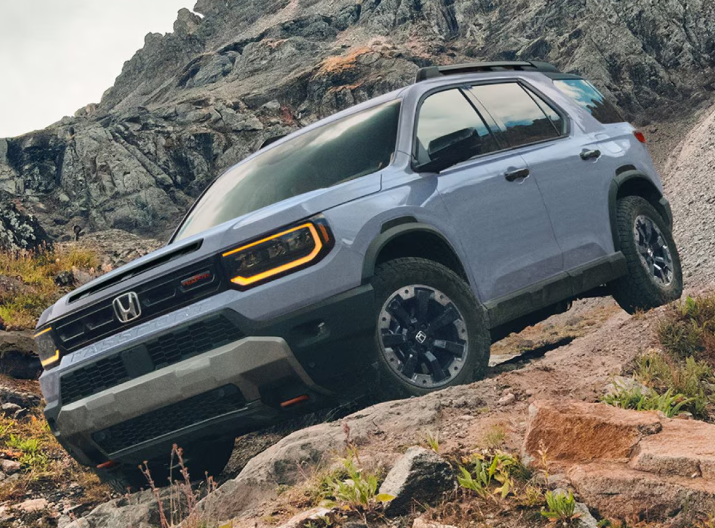
Yes, the Honda Passport is bigger than the Honda CR-V. In fact, the difference is noticeable in almost every important exterior measurement.
The Passport is longer, considerably wider, taller, and built on a longer wheelbase. It also provides more shoulder room, more overall passenger volume, and substantially more maximum cargo capacity.
However, there is an interesting twist.
The smaller Honda CR-V offers almost the same amount of legroom—and in some measurements slightly more—so passengers may not immediately feel that the CR-V is dramatically smaller when sitting inside.
That makes this comparison more interesting than simply saying, "Passport bigger, CR-V smaller."
If we're deciding between these two Honda SUVs, the better choice depends on whether we want maximum space and road presence or easier maneuverability and more compact dimensions.
Content in this publication
- Honda Passport vs CR-V Size at a Glance
- How Much Longer Is the Honda Passport Than the CR-V?
- Is the Honda Passport Wider Than the CR-V?
- Is the Honda Passport Taller Than the CR-V?
- Honda Passport vs CR-V Wheelbase
- Is the Honda Passport Bigger Inside Than the CR-V?
- Honda Passport vs CR-V Front Legroom
- Honda Passport vs CR-V Rear Legroom
- Honda Passport vs CR-V Shoulder Room
- Honda Passport vs CR-V Hip Room
- Is the Honda Passport Cargo Space Bigger Than the CR-V?
- Passport vs CR-V Maximum Cargo Space
- Which Honda Is Better for Families?
- Which One Feels Bigger While Driving?
- Is the CR-V Easier to Park?
- Which Is Better for City Driving?
- Which Is Better for Road Trips?
- Which Is Better for Tall Drivers?
- Is the Passport Just a Larger CR-V?
- Honda Passport vs CR-V for Five Passengers
- Honda Passport vs CR-V for Cargo
- Is the Passport Too Big Compared With the CR-V?
- Who Should Buy the Honda Passport?
- Who Should Buy the Honda CR-V?
- Honda Passport vs CR-V: Which Is Bigger Overall?
- Final Verdict: Is Honda Passport Bigger Than CR-V?
- Frequently Asked Questions
Honda Passport vs CR-V Size at a Glance
Here is the easiest way to see the difference.
| Dimension | Honda Passport | Honda CR-V | Bigger |
|---|---|---|---|
| Length | 191.5 in | 184.8 in | Passport |
| Width | 79.4 in | 73.5 in | Passport |
| Height | 73.1 in | Up to 66.5 in | Passport |
| Wheelbase | 113.6 in | 106.3 in | Passport |
| Front legroom | 41.1 in | 41.3 in | CR-V slightly |
| Rear legroom | 40.9 in | 41.0 in | CR-V slightly |
| Front shoulder room | 61.9 in | 57.9 in | Passport |
| Rear shoulder room | 61.7 in | 55.9 in | Passport |
| Cargo behind second row | 44.0 cu ft | Up to 39.3 cu ft | Passport |
| Maximum cargo space | Up to 104.6 cu ft | Up to 76.5 cu ft | Passport |
Current Honda specifications therefore make the Passport roughly 6.7 inches longer and 5.9 inches wider than the CR-V. Its wheelbase is also 7.3 inches longer.
That width difference is particularly significant. Six inches may not sound enormous on paper, but we definitely notice it when sitting three people across the rear seat, loading bulky cargo, driving through a narrow parking garage, or trying to fit the SUV into a tight parking space.
How Much Longer Is the Honda Passport Than the CR-V?
The Honda Passport measures approximately 191.5 inches long, while the current CR-V is about 184.8 inches long.
That's a difference of:
191.5 - 184.8 = 6.7 inches
So the Passport is almost seven inches longer.
That extra length contributes to the Passport's more substantial midsize-SUV proportions. It also helps create its larger cargo area and longer overall platform.
Seven inches can make a noticeable difference in everyday driving.
The CR-V should generally be easier to fit into smaller garages and city parking spaces. The Passport, meanwhile, sacrifices some compact maneuverability in exchange for more usable interior and cargo space.
Is the Honda Passport Wider Than the CR-V?
Yes, and this is actually one of the biggest differences between them.
The Honda Passport measures approximately 79.4 inches wide, compared with about 73.5 inches for the CR-V.
That gives us a difference of around 5.9 inches.
Nearly six inches of additional body width is substantial.
It explains why the Passport feels much more spacious across the cabin, particularly when we're carrying several adults.
Why Width Matters More Than We Might Think
Vehicle length usually gets most of the attention when comparing SUV size, but width can influence comfort even more.
A wider cabin can give us:
- More shoulder room for passengers
- More space between the driver and front passenger
- Better comfort when carrying three adults in the rear
- A wider cargo floor
- More room for bulky luggage and equipment
The downside is that the Passport's extra width can make narrow parking spaces, garages, and urban streets slightly more challenging.
Is the Honda Passport Taller Than the CR-V?
Yes.
The Passport stands approximately 73.1 inches tall, while the CR-V is roughly 66.2 to 66.5 inches tall, depending on drivetrain configuration.
We're therefore looking at a difference of roughly 6.6 to 6.9 inches.
Visually, that is significant.
Park a Passport next to a CR-V and the Passport has a more upright, rugged appearance. The CR-V looks more like a traditional compact crossover.
The taller body also contributes to the Passport's adventurous styling and spacious cabin.
Honda Passport vs CR-V Wheelbase
Wheelbase is another measurement where the Passport is considerably larger.
The Passport has a 113.6-inch wheelbase, compared with 106.3 inches in the CR-V.
That's a difference of 7.3 inches.
A longer wheelbase can contribute to a more substantial feel on the road and provides manufacturers with more room to package the passenger compartment.
The Passport's longer wheelbase is one reason it feels like a midsize SUV rather than an enlarged compact crossover.
Is the Honda Passport Bigger Inside Than the CR-V?
Overall, yes.
The Passport provides substantially greater passenger volume.
Depending on configuration, Honda lists the Passport with approximately 115.4 to 119.1 cubic feet of passenger volume. The CR-V provides around 103.5 to 106 cubic feet, depending on trim.
That is a meaningful difference.
However, total passenger volume doesn't tell the entire story.
The CR-V uses its smaller exterior dimensions extremely efficiently, particularly when we examine legroom.
Honda Passport vs CR-V Front Legroom
Surprisingly, the CR-V has a tiny advantage here.
Honda lists approximately:
Passport front legroom: 41.1 inches
CR-V front legroom: 41.3 inches
That means the CR-V technically provides around 0.2 inches more front legroom.
In practical terms, that difference is tiny. Most drivers probably won't notice it.
What it demonstrates is how effectively Honda packages the CR-V's cabin.
We shouldn't assume that a vehicle being significantly larger outside automatically means every interior measurement will also be larger.
Honda Passport vs CR-V Rear Legroom
The result is almost identical in the second row.
The Passport provides approximately 40.9 inches of rear legroom, while the CR-V offers around 41.0 inches.
Once again, the difference is practically irrelevant.
Both SUVs offer generous second-row legroom.
This is an important advantage for the CR-V because we're getting midsize-SUV-like legroom from a considerably smaller exterior footprint.
Honda Passport vs CR-V Shoulder Room
Here's where the Passport's extra width becomes obvious.
The Passport provides approximately 61.9 inches of front shoulder room and 61.7 inches in the second row.
You may be interested in reading Haval Jolion vs MG ZST: Which Small SUV Is Better?
The CR-V provides approximately 57.9 inches in front and 55.9 inches in the rear.
That's a major difference.
Front occupants get about four additional inches of combined shoulder room in the Passport.
The second row shows an even bigger advantage of approximately 5.8 inches.
For families who regularly carry several adults or older children, this can matter much more than an extra fraction of an inch of legroom.
Which Is Better for Three Adults in the Back?
We would choose the Passport.
Both vehicles technically seat five people, but the Passport's substantially wider second row should make three-across seating more comfortable.
The CR-V has impressive rear legroom, but passengers sit closer together.
This difference becomes particularly noticeable on longer trips.
Honda Passport vs CR-V Hip Room
The Passport wins again.
Honda lists Passport hip room at approximately 58.3 inches in front and 57.4 inches in the rear.
The CR-V provides approximately 55.6 inches in front and 52.6 inches in the second row.
That's another indication that the Passport is the roomier SUV horizontally.
If we're primarily concerned about carrying taller passengers, the CR-V performs remarkably well.
If we're concerned about carrying wider loads of passengers comfortably, the Passport makes better use of its larger body.
Is the Honda Passport Cargo Space Bigger Than the CR-V?
Yes.
Cargo capacity is one of the strongest reasons to choose the Passport.
Honda lists approximately 44 cubic feet of cargo capacity behind the Passport's second row.
The CR-V provides up to approximately 39.3 cubic feet in non-hybrid configurations, while hybrid versions generally provide less.
That means the Passport gives us roughly five additional cubic feet before we even fold the rear seats.
The difference becomes even larger when maximum cargo capacity is considered.
Passport vs CR-V Maximum Cargo Space
Depending on how Honda measures the available storage areas and configuration, the Passport offers up to approximately 104.6 cubic feet of maximum cargo volume.
The conventional CR-V offers up to approximately 76.5 cubic feet, while hybrid versions provide less.
For buyers who regularly transport large equipment, camping gear, luggage, dogs, bikes, home-improvement supplies, or outdoor equipment, this difference can be important.
The CR-V is already exceptionally practical for a compact SUV.
The Passport simply moves us into another category.
Which Honda Is Better for Families?
Both can work extremely well.
We wouldn't automatically recommend the Passport simply because it's larger.
For a family of four using the SUV primarily for school runs, commuting, groceries, and occasional vacations, the CR-V may provide all the room we actually need.
Its rear-seat legroom is excellent, and its cargo area is already large for the compact crossover class.
The Passport becomes more attractive when we regularly carry five occupants, take long road trips, travel with lots of luggage, carry outdoor equipment, or simply prefer a wider and more substantial vehicle.
Which One Feels Bigger While Driving?
Definitely the Passport.
Even without looking at the specifications, we can expect the Passport to feel like the larger vehicle because it is almost six inches wider and nearly seven inches taller than the CR-V.
Its longer wheelbase also contributes to the feeling that we're driving a larger SUV.
The CR-V feels more compact and manageable.
That's not necessarily a disadvantage.
Many drivers specifically choose a compact crossover because they want SUV practicality without the bulk of a traditional midsize SUV.
Is the CR-V Easier to Park?
Generally, yes.
This may be one of the CR-V's biggest advantages for people who don't actually need the Passport's extra space.
A vehicle that is:
6.7 inches shorter,
5.9 inches narrower,
and significantly lower
is naturally easier to place in tight environments.
The CR-V should therefore be more convenient for urban parking garages, narrow driveways, smaller home garages, crowded shopping-center parking lots, and city streets.
The Passport is by no means enormous compared with full-size SUVs, but we will notice its additional width.
Which Is Better for City Driving?
We'd generally favor the CR-V.
The smaller footprint simply makes everyday urban driving easier.
It gives us plenty of passenger room while avoiding some of the inconvenience associated with a larger SUV.
The Passport makes more sense when we want additional space badly enough to accept the bigger footprint.
This distinction is important because bigger isn't automatically better.
Sometimes carrying unused vehicle size around every day simply means harder parking and less maneuverability without providing much practical benefit.
Which Is Better for Road Trips?
Here we'd lean toward the Passport, especially for families.
The CR-V offers excellent passenger legroom, so four adults can travel comfortably.
But once we add luggage, coolers, backpacks, sports equipment, or several large suitcases, the Passport's extra cargo capacity starts becoming valuable.
Its additional cabin width is also useful during long drives because passengers have more personal space.
You may be interested in readingHaval Jolion vs MG ZST: Which Small SUV Is Better?You may be interested in reading
Haval Jolion vs BAIC X55: Which SUV Is Better?For two adults or a small family, the CR-V remains an excellent road-trip vehicle.
For five occupants with luggage, the Passport makes a stronger case.
Which Is Better for Tall Drivers?
This comparison is surprisingly close.
Tall drivers might assume that the larger Passport automatically provides substantially more legroom.
It doesn't.
The CR-V actually lists slightly more front legroom.
The Passport's advantage comes mainly from its greater width and overall passenger volume rather than dramatically more distance between the seat and pedals.
Anyone particularly tall should test both because driving position, seat shape, steering-wheel adjustment, dashboard design, and headroom can matter just as much as published legroom.
Is the Passport Just a Larger CR-V?
Not really.
While both are two-row Honda SUVs, they serve different buyers.
The CR-V is designed primarily as a compact crossover. Its strengths are space efficiency, maneuverability, everyday practicality, and the ability to provide substantial interior space without becoming excessively large outside.
The Passport occupies a larger midsize SUV position.
It emphasizes more substantial dimensions, greater width, more cargo capability, a rugged design, and additional capability for buyers who want something larger without stepping into a three-row SUV.
So we shouldn't think of the Passport simply as an oversized CR-V.
Their personalities and intended uses are different.
Honda Passport vs CR-V for Five Passengers
If we're regularly carrying five adults, the Passport is the better choice.
Rear legroom is almost identical, but rear-seat width isn't.
That additional shoulder and hip room can make a major difference when three passengers sit side by side.
If we usually carry four people or fewer, the CR-V's narrower cabin becomes much less of an issue.
In that situation, we may actually prefer the smaller exterior size.
Honda Passport vs CR-V for Cargo
For cargo, the Passport clearly wins.
The CR-V remains one of the more practical compact SUVs, but the Passport provides a broader and substantially larger storage area when the seats are folded.
We'd choose the Passport for activities such as camping trips, carrying bicycles or large recreational equipment, transporting multiple pets, long family vacations, or frequently moving bulky items.
For groceries, luggage, strollers, and normal family use, however, the CR-V already offers plenty of room.
Is the Passport Too Big Compared With the CR-V?
For some buyers, yes.
That's why this comparison shouldn't be reduced to which vehicle has the largest dimensions.
The Passport's additional space is valuable only if we're actually going to use it.
If our daily routine involves one or two occupants, commuting, city parking, and occasional luggage, the CR-V provides an impressive combination of passenger space and compact dimensions.
If we frequently use every seat and fill the cargo area, the Passport's additional size becomes much easier to justify.
Who Should Buy the Honda Passport?
The Passport makes the most sense when our priorities include maximum interior width, larger cargo capacity, frequent family road trips, carrying five passengers comfortably, outdoor equipment, and a more rugged midsize-SUV feel.
It's particularly appealing to buyers who want something bigger than a CR-V but don't necessarily need the third-row seating of a larger three-row SUV.
Who Should Buy the Honda CR-V?
The CR-V is probably the smarter choice if we value easy parking, city maneuverability, generous passenger space from a smaller vehicle, and enough cargo capacity for normal family use.
Its clever packaging is one of its strongest qualities.
Despite being substantially smaller outside than the Passport, it gives front and rear passengers almost identical legroom.
That means we don't necessarily sacrifice passenger comfort simply because we choose the smaller SUV.
Honda Passport vs CR-V: Which Is Bigger Overall?
There's no contest.
The Honda Passport is the bigger vehicle overall.
It is longer, wider, taller, and built on a longer wheelbase. It provides greater overall passenger volume, substantially more shoulder room, and more maximum cargo capacity.
The CR-V's main surprise is interior efficiency.
Despite its smaller dimensions, it manages to provide slightly more published front and rear legroom than the Passport in current specifications.
That's impressive.
So we can summarize the difference this way:
Passport = bigger vehicle and more overall space.
CR-V = smaller vehicle that uses its available space extremely efficiently.
Final Verdict: Is Honda Passport Bigger Than CR-V?
Yes, the Honda Passport is significantly bigger than the Honda CR-V.
The Passport is around 6.7 inches longer, 5.9 inches wider, up to roughly 6.9 inches taller, and has a wheelbase about 7.3 inches longer than the current CR-V.
It also offers more overall passenger volume, much more shoulder room, and substantially greater maximum cargo capacity.
But bigger doesn't automatically mean better.
The CR-V provides remarkably similar legroom from a much smaller exterior footprint, making it an excellent option if we want passenger comfort without driving a larger SUV.
We'd choose the Passport for maximum room, cargo capacity, road trips, and five-passenger comfort.
We'd choose the CR-V for city driving, easier parking, efficient use of space, and everyday family practicality.
For most shoppers, that distinction matters far more than the numbers alone.
Frequently Asked Questions
Is a Honda Passport much bigger than a CR-V?
Yes. The Passport is roughly 6.7 inches longer and 5.9 inches wider than the current CR-V, while also being considerably taller. The difference is especially noticeable in cabin width and maximum cargo capacity.
Which has more cargo space, Passport or CR-V?
The Honda Passport has more cargo space overall. Honda lists 44 cubic feet behind the Passport's second row and up to approximately 104.6 cubic feet under its maximum cargo measurement, while the CR-V offers up to 39.3 cubic feet behind the second row and up to around 76.5 cubic feet in conventional versions.
Does the Passport have more legroom than the CR-V?
Surprisingly, no. Current Honda specifications list 41.1 inches of front legroom and 40.9 inches in the rear for the Passport, versus approximately 41.3 inches front and 41.0 inches rear in the CR-V. The differences are tiny, but they show how efficiently the CR-V uses its smaller footprint.
Is the Honda Passport wider than the CR-V?
Yes. The Passport is approximately 79.4 inches wide compared with 73.5 inches for the CR-V. That difference contributes to substantially greater shoulder and hip room in the Passport.
You may be interested in readingHaval Jolion vs MG ZST: Which Small SUV Is Better?You may be interested in reading
Haval Jolion vs BAIC X55: Which SUV Is Better?You may be interested in reading
 Kia Sorento Years to Avoid: Worst Models and Best Years to Buy
Should I buy a Honda Passport or CR-V?
Choose the Passport if you prioritize cargo capacity, cabin width, five-passenger comfort, and a larger midsize-SUV feel. Choose the CR-V if you want excellent interior room while keeping the vehicle smaller, easier to park, and more convenient for everyday urban driving.
If you want to know other articles similar to Is Honda Passport Bigger Than CR-V? Full Size Comparison you can visit the category Models.
Haval Jolion vs Omoda C5: Which SUV Is Better?
Haval Jolion vs Chery Tiggo 4 Pro: Full Comparison
Haval Jolion vs H6: Which SUV Is Better in 2026?
Haval Jolion vs Toyota Corolla Cross: Which SUV Is Better?
Haval Jolion vs Jaecoo J5: Which SUV Is Better?
Volkswagen T-Cross vs Volkswagen T-Roc: Which Is Better?
Leave a Reply
More content of your interest