

Haval Jolion vs BAIC X55: Which SUV Is Better?

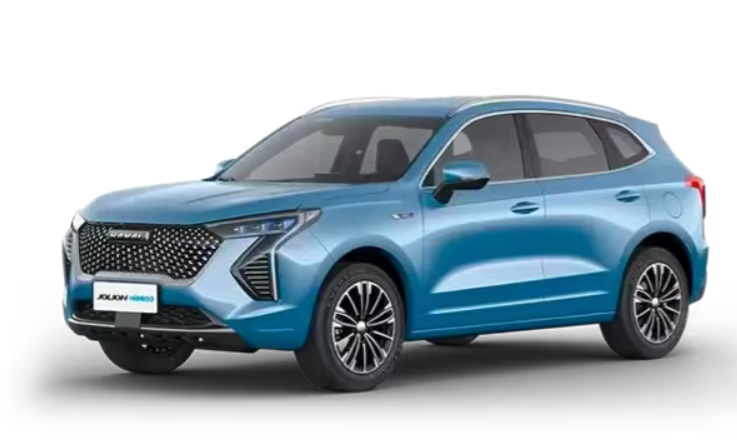
The Haval Jolion vs BAIC X55 comparison is becoming increasingly relevant as Chinese automakers continue to challenge established brands with SUVs that offer strong specifications, modern technology, and plenty of equipment for the money.
At first glance, these two compact SUVs appear to follow a similar formula. Both are five-seat crossovers, both can be purchased with turbocharged petrol engines in many markets, both offer dual-clutch automatic transmissions, and both focus heavily on technology and value.
Look a little closer, however, and there are some important differences.
The BAIC X55 is generally the sportier and more performance-focused option, offering strong torque, impressive acceleration, and a larger body. The Haval Jolion places greater emphasis on versatility, fuel efficiency and powertrain choice, particularly because a hybrid version is available in several markets.
So, which one should we buy?
In this detailed BAIC X55 vs Haval Jolion comparison, we'll examine their engines, dimensions, fuel consumption, boot space, interiors, technology, safety, practicality, driving characteristics, and overall value.
Quick verdict: We would choose the Haval Jolion for efficiency and everyday family use, particularly in Hybrid form. The BAIC X55 makes more sense for buyers who want stronger turbo-petrol performance, striking styling and a more performance-oriented feel.
Specifications and equipment vary substantially by country and trim level, so buyers should always check their local specifications before purchasing.
Content in this publication
- Haval Jolion vs BAIC X55 Specifications
- Haval Jolion vs BAIC X55 Engine
- BAIC X55 vs Haval Jolion Performance
- What About the Haval Jolion Hybrid?
- Haval Jolion vs BAIC X55 Fuel Consumption
- BAIC X55 vs Haval Jolion Dimensions
- Haval Jolion vs BAIC X55 Interior Space
- Haval Jolion vs BAIC X55 Boot Space
- Interior Quality and Design
- Haval Jolion vs BAIC X55 Technology
- Haval Jolion vs BAIC X55 Safety
- Which Is Better to Drive?
- Haval Jolion vs BAIC X55 for City Driving
- Which Is Better on the Highway?
- Haval Jolion vs BAIC X55 Styling
- Haval Jolion vs BAIC X55 Warranty
- Haval Jolion vs BAIC X55 Reliability
- Which Is Cheaper to Maintain?
- Haval Jolion vs BAIC X55 Resale Value
- Advantages of the Haval Jolion
- Advantages of the BAIC X55
- Haval Jolion vs BAIC X55 Pros and Cons
- Which Is Better for a Family?
- Which Is Better for Performance?
- Which Is Better for Fuel Economy?
- Haval Jolion vs BAIC X55: Which Should We Buy?
- Frequently Asked Questions
- Final Verdict
Haval Jolion vs BAIC X55 Specifications
Here is a useful overview of how the two SUVs compare.
| Specification | Haval Jolion | BAIC X55 |
|---|---|---|
| Body style | Compact SUV | Compact SUV |
| Seats | 5 | 5 |
| Petrol engine | 1.5L turbo | 1.5L turbo |
| Transmission | 7-speed DCT | 7-speed DCT |
| Drive | Front-wheel drive | Front-wheel drive |
| Power | Around 105-130 kW depending on version | Around 130 kW |
| Torque | Around 210-270 Nm depending on version | Around 305 Nm |
| Hybrid available | Yes, depending on market | Generally no |
| Hybrid combined output | Up to around 140 kW | N/A |
| Length | Around 4,470 mm | Around 4,620 mm |
| Wheelbase | Around 2,700 mm | Around 2,735 mm |
| Fuel tank | Around 55 L | Around 53 L |
| Seating capacity | 5 | 5 |
The Haval Jolion is available in several configurations depending on the market. Petrol models can produce roughly 105 kW and 210 Nm, while higher-output versions can reach approximately 130 kW and 270 Nm.
The Jolion Hybrid can produce approximately 140 kW combined power and 375 Nm combined torque, depending on the regional specification.
The BAIC X55 usually comes with a 1.5-liter turbocharged engine producing approximately 130 kW and 305 Nm, paired with a seven-speed dual-clutch transmission.
Haval Jolion vs BAIC X55 Engine
Haval Jolion Engine
The Haval Jolion is interesting because buyers can choose from different powertrain configurations.
Depending on the country and trim, the petrol versions may produce approximately:
- 105 kW
- 210 Nm
Higher-output petrol variants can increase performance to approximately:
- 130 kW
- 270 Nm
Most petrol versions use a seven-speed dual-clutch automatic transmission.
This means the exact Haval Jolion being compared matters considerably. An entry-level version is noticeably less powerful than the BAIC X55, while higher-output Jolions narrow the gap.
BAIC X55 Engine
The X55's engine is one of its strongest features.
Its 1.5-liter turbocharged four-cylinder engine develops roughly:
- 130 kW
- 305 Nm
Power is usually sent to the front wheels through a seven-speed dual-clutch automatic transmission.
The 305 Nm torque figure is particularly competitive for a compact SUV and gives the X55 good low- and mid-range performance.
BAIC X55 vs Haval Jolion Performance
If we're comparing the BAIC X55 against an entry-level petrol Haval Jolion, the X55 has the advantage.
BAIC X55
The BAIC X55 offers strong acceleration for an affordable compact SUV.
Depending on the specification, its 0-100 km/h time is approximately 7.8 seconds.
That makes it quick enough to feel genuinely responsive when overtaking, merging onto motorways, or driving on steep roads.
Haval Jolion
The standard petrol Jolion is more focused on comfortable everyday driving than outright performance.
Acceleration is adequate rather than exciting.
Higher-output versions improve considerably, with around 130 kW and 270 Nm, making the performance difference much smaller.
However, the BAIC still offers more torque.
Performance Winner: BAIC X55
For conventional petrol models, we'd give the performance advantage to the BAIC X55.
Its stronger torque output makes it feel more energetic in everyday driving.
What About the Haval Jolion Hybrid?
The comparison changes significantly when the Jolion Hybrid enters the picture.
In several markets, the Haval Jolion Hybrid produces approximately:
- 140 kW combined power
- 375 Nm combined torque
The system combines a 1.5-liter petrol engine with an electric motor and dedicated hybrid transmission.
The electric motor provides strong immediate response at lower speeds, particularly in urban driving.
This means the Jolion Hybrid isn't simply an economy-focused alternative. It can also feel more responsive than the regular petrol version.
When comparing the BAIC X55 vs Haval Jolion Hybrid, the difference in performance becomes much closer.
Haval Jolion vs BAIC X55 Fuel Consumption
Fuel economy is another important difference between these SUVs.
Haval Jolion Petrol Fuel Consumption
Depending on the specific version, petrol Jolions may return approximately:
- 6.5-7.5 L/100 km combined
Real-world fuel consumption will depend on traffic, driving style, vehicle load, climate and road conditions.
Haval Jolion Hybrid Fuel Consumption
The hybrid is considerably more economical.
Official combined fuel consumption can be approximately:
4.8 L/100 km
For drivers who spend a lot of time in urban traffic, that can translate into substantial fuel savings over several years.
BAIC X55 Fuel Consumption
The BAIC X55 is reasonably efficient considering its performance.
Depending on the market and testing cycle, combined fuel consumption can range from approximately:
6.0 to 8.0 L/100 km
Real-world figures may be higher, especially in heavy traffic.
Fuel Economy Winner: Haval Jolion Hybrid
If fuel efficiency is the priority, the Haval Jolion Hybrid is the clear winner.
Between petrol models, however, the difference is much smaller.
BAIC X55 vs Haval Jolion Dimensions
The BAIC X55 is the larger vehicle in several important measurements.
The X55 measures approximately:
- Length: 4,620 mm
- Width: 1,886 mm
- Height: 1,680 mm
- Wheelbase: 2,735 mm
The Haval Jolion measures approximately:
- Length: 4,470 mm
- Wheelbase: 2,700 mm
Exact width and height vary slightly depending on the version.
Which Is Bigger?
Overall, the BAIC X55 is bigger than the Haval Jolion.
It is roughly 150 mm longer and has a slightly longer wheelbase.
That gives the X55 a more substantial road presence.
However, exterior size doesn't necessarily determine which SUV has the better interior because cabin packaging also plays an important role.
Haval Jolion vs BAIC X55 Interior Space
Both SUVs are spacious enough for family use.
The Jolion is particularly impressive in the second row, where adults generally receive good legroom.
Its 2,700 mm wheelbase helps provide a roomy interior despite relatively compact exterior dimensions.
The BAIC X55 also offers generous passenger space, helped by its longer 2,735 mm wheelbase.
You may be interested in reading Kia Sorento Years to Avoid: Worst Models and Best Years to Buy
For families carrying adults or teenagers regularly, both vehicles should provide enough room for everyday use.
We recommend testing the rear seats personally because seat design, panoramic roofs and driving position can affect usable headroom and legroom.
Haval Jolion vs BAIC X55 Boot Space
Boot capacity varies depending on market and measurement standard.
The Haval Jolion can offer approximately 255 to 430 liters of luggage space depending on the specific version and measurement method.
The BAIC X55 commonly offers around 350 liters of cargo capacity.
This gives the X55 a competitive amount of standard luggage space.
However, boot usability is about more than liters.
We should also consider:
Boot Opening
A wide opening makes it easier to load suitcases, shopping bags, strollers and bulky items.
Loading Height
A lower loading lip can make heavy items easier to place inside.
Rear Seat Folding
If we regularly carry sports equipment, furniture or bicycles, the shape of the cargo area with the rear seats folded becomes very important.
Both SUVs are practical enough for normal family use.
Interior Quality and Design
Interior design is one of the most interesting parts of the Haval Jolion vs BAIC X55 comparison.
BAIC X55 Interior
The BAIC X55 has a modern, minimalist cabin.
It features a technology-focused dashboard, large displays and a relatively premium-looking design.
Depending on trim, equipment may include:
- Digital instrument cluster
- Large central touchscreen
- Panoramic sunroof
- Electrically adjustable seats
- Wireless charging
- 360-degree camera
- Ambient lighting
- Keyless entry and start
The interior makes a strong first impression.
Haval Jolion Interior
The Haval Jolion also offers a modern cabin.
Higher trims may include:
- 12.3-inch infotainment screen
- Digital instrument cluster
- Wireless Apple CarPlay
- Wireless Android Auto
- Wireless smartphone charging
- Heated seats
- Ventilated driver's seat
- Head-up display
- Panoramic sunroof
- 360-degree camera
The Jolion may not look quite as dramatic as the X55 inside, but it remains competitive in technology and equipment.
Haval Jolion vs BAIC X55 Technology
Both manufacturers have made technology an important selling point.
This is one of the biggest advantages these SUVs have over some similarly priced competitors.
The BAIC X55 focuses heavily on a futuristic cockpit design.
The Jolion offers a similarly comprehensive infotainment package, especially in higher trims.
Features may include:
- Apple CarPlay
- Android Auto
- Bluetooth
- Digital instrumentation
- Wireless charging
- Voice controls
- Surround-view cameras
- Multiple USB ports
- Advanced driver-assistance systems
The technology comparison is extremely close.
The better option will often depend on which trim is available at the buyer's budget.
Haval Jolion vs BAIC X55 Safety
Safety equipment should always be compared trim by trim.
Both SUVs may offer a wide range of driver-assistance technologies.
These can include:
- Autonomous emergency braking
- Adaptive cruise control
- Forward collision warning
- Lane departure warning
- Lane keeping assistance
- Blind-spot monitoring
- Rear cross-traffic alert
- Traffic sign recognition
- 360-degree camera
- Front parking sensors
- Rear parking sensors
Higher trims typically receive more advanced safety features than entry-level versions.
Before purchasing either SUV, we would confirm exactly which safety systems are included in the specific version being considered.
Which Is Better to Drive?
The answer depends on what kind of driving experience we're looking for.
BAIC X55 Driving Experience
The BAIC X55 feels like the sportier option.
Its 305 Nm of torque provides strong acceleration, particularly at low and medium speeds.
The seven-speed DCT keeps the turbo engine within its most useful power range.
The X55 also uses independent rear suspension on many versions, helping improve ride comfort and handling.
Drivers who want stronger performance are likely to prefer the BAIC.
Haval Jolion Driving Experience
The Jolion feels more oriented toward everyday family driving.
The standard petrol model is easy to drive in traffic and comfortable enough for longer journeys.
Higher-output versions provide better highway performance.
The Jolion Hybrid is arguably the most interesting option because the electric motor provides immediate response without sacrificing fuel economy.
We'd choose the X55 for sporty performance and the Jolion Hybrid for relaxed everyday driving.
Haval Jolion vs BAIC X55 for City Driving
For city driving, the Jolion has several advantages.
Its shorter body can make parking easier.
The Hybrid is particularly well suited to urban driving because its electric motor can assist at lower speeds and regenerative braking helps recover energy during deceleration.
Fuel savings are also more noticeable in heavy traffic.
The BAIC X55 is still easy enough to drive around town, but its slightly larger dimensions can make the Jolion more convenient in tight parking spaces.
City Driving Winner: Haval Jolion Hybrid
For commuters and urban families, we'd lean toward the Jolion Hybrid.
Which Is Better on the Highway?
On faster roads, the BAIC X55 becomes more appealing.
Its strong torque output makes overtaking easy and gives the SUV good performance when carrying passengers.
The longer wheelbase can also help provide a stable feel at highway speeds.
Higher-output Jolions remain competitive, but the entry-level petrol model does not have the same performance reserves.
Highway Winner: BAIC X55
For buyers prioritizing conventional turbocharged performance, we'd choose the BAIC X55.
Haval Jolion vs BAIC X55 Styling
Styling is subjective, but these SUVs clearly follow different approaches.
Haval Jolion
The Jolion has a relatively conventional SUV design.
Its proportions are balanced and should appeal to buyers who prefer a more traditional crossover appearance.
The design is modern without being overly aggressive.
BAIC X55
The X55 looks more dramatic.
Its sharp lighting elements, sculpted bodywork and coupe-inspired proportions make it stand out.
It looks futuristic compared with many similarly priced SUVs.
If visual impact is important, we'd probably choose the BAIC X55.
You may be interested in readingKia Sorento Years to Avoid: Worst Models and Best Years to BuyYou may be interested in reading
Kia Sorento Top of the Range: Ultimate 2026 GuideHaval Jolion vs BAIC X55 Warranty
Warranty coverage varies significantly by country.
Both manufacturers can offer competitive warranty packages depending on the market.
When comparing warranties, we recommend checking:
- Number of years
- Mileage limit
- Powertrain coverage
- Transmission coverage
- Hybrid battery warranty
- Roadside assistance
- Scheduled servicing packages
Dealer coverage is equally important.
A long warranty is less useful if the nearest authorised service centre is far away.
Haval Jolion vs BAIC X55 Reliability
Long-term reliability is more difficult to compare because both vehicles are relatively new compared with established models such as the Toyota RAV4, Honda CR-V or Mazda CX-5.
Haval has expanded significantly in many global markets, which has increased the number of vehicles on the road and improved parts availability in some regions.
BAIC is also growing internationally.
Before buying either vehicle, we would investigate:
- Local dealer reputation
- Parts availability
- Service costs
- Owner reviews
- Warranty claim experiences
- Availability of independent repair specialists
Local ownership conditions matter more than general assumptions about either brand.
Which Is Cheaper to Maintain?
Both petrol versions use small turbocharged engines and dual-clutch automatic transmissions.
Routine maintenance should include:
- Engine oil
- Oil filter
- Air filter
- Cabin filter
- Brake fluid
- Transmission inspection
- Coolant
- Spark plugs
- Brake pads
The Haval Jolion Hybrid has additional electrical components, but regenerative braking may reduce wear on conventional brakes.
For high-mileage city drivers, fuel savings could also help offset maintenance expenses.
Overall maintenance costs will depend heavily on local dealer pricing.
Haval Jolion vs BAIC X55 Resale Value
Resale value should be considered when buying either SUV.
Depreciation can represent one of the largest ownership costs.
Factors influencing resale value include:
- Brand recognition
- Reliability reputation
- Dealer network
- Parts availability
- Warranty coverage
- Used-car demand
- New-car pricing
Haval has become increasingly established in several international markets.
BAIC continues to expand as well, but resale performance can vary significantly by country.
We recommend comparing used examples that are two to four years old in your local market before buying.
Advantages of the Haval Jolion
The Jolion's biggest advantage is versatility.
Buyers may have access to both petrol and hybrid versions.
The Hybrid is especially attractive because it combines good performance with low fuel consumption.
Other advantages include:
- Spacious rear seats
- Compact exterior dimensions
- Hybrid availability
- Competitive technology
- Strong safety equipment
- Comfortable everyday driving
- Good fuel economy
For families focused on running costs, the Jolion Hybrid is difficult to ignore.
Advantages of the BAIC X55
The BAIC X55's strongest qualities are performance and design.
Its turbocharged engine provides strong torque, while the interior looks more premium than we might expect at this price level.
Other advantages include:
- Strong 1.5L turbo engine
- 305 Nm of torque
- Quick acceleration
- Larger exterior dimensions
- Modern cabin
- Bold styling
- Competitive equipment
- Independent rear suspension
For someone who wants an affordable SUV that feels quick and modern, the X55 has plenty of appeal.
Haval Jolion vs BAIC X55 Pros and Cons
Haval Jolion Pros
- Hybrid option available
- Excellent fuel economy in Hybrid form
- Spacious passenger compartment
- Good technology
- Multiple engine choices
- Compact dimensions
- Strong equipment levels
- Comfortable city driving
Haval Jolion Cons
- Entry-level petrol versions are less powerful than the X55
- Specifications vary considerably by market
- Some controls rely heavily on the touchscreen
- Hybrid versions may offer less boot space
BAIC X55 Pros
- Strong turbocharged engine
- 305 Nm of torque
- Quick acceleration
- Modern design
- Attractive interior
- Good technology
- Competitive standard equipment
- Slightly larger dimensions
BAIC X55 Cons
- No comparable full-hybrid option in many markets
- Potentially higher fuel consumption than the Jolion Hybrid
- Dealer coverage may vary
- Resale values can be difficult to predict in some markets
Which Is Better for a Family?
For most families, we'd choose the Haval Jolion, especially the Hybrid.
It provides good passenger space, useful technology, modern safety features and low fuel consumption.
Families who spend a lot of time doing school runs or commuting through urban traffic could benefit significantly from the Hybrid.
The BAIC X55 is still a very capable family SUV.
Its stronger engine and slightly larger dimensions may appeal to families who frequently travel on highways.
Which Is Better for Performance?
For petrol models, we'd choose the BAIC X55.
Its combination of approximately 130 kW and 305 Nm provides strong performance for this class.
Drivers who regularly travel with several passengers or drive through mountainous areas may appreciate the additional torque.
Higher-output Jolions narrow the gap, while the Jolion Hybrid offers even stronger combined torque.
Still, the X55 remains the sportier conventional petrol option.
Which Is Better for Fuel Economy?
The Haval Jolion Hybrid wins easily.
Fuel consumption of approximately 4.8 L/100 km is very competitive for a compact SUV.
For drivers covering 15,000 to 25,000 km per year, the fuel savings could become significant.
Petrol versions of the Jolion and X55 are much closer.
Haval Jolion vs BAIC X55: Which Should We Buy?
There isn't one winner for every buyer.
We'd choose the BAIC X55 if our priorities were:
- Strong turbo performance
- Fast acceleration
- Bold styling
- A modern premium-looking interior
- More torque
- Larger exterior dimensions
We'd choose the Haval Jolion petrol if we wanted:
- A comfortable family SUV
- Good technology
- Compact dimensions
- Competitive running costs
- A spacious second row
And we'd choose the Haval Jolion Hybrid if our priorities were:
- Fuel economy
- Urban driving
- Lower running costs
- Smooth low-speed performance
- Hybrid technology
Overall, the Haval Jolion is arguably the more versatile package because of its broader range of powertrains.
The BAIC X55, however, is the more exciting option among conventional petrol models.
Frequently Asked Questions
Is the BAIC X55 Better Than the Haval Jolion?
The BAIC X55 can be better for buyers prioritising performance. Its 1.5-liter turbo engine produces roughly 130 kW and 305 Nm, making it stronger than many petrol Jolion versions. The Haval Jolion is more attractive for buyers prioritising fuel efficiency and hybrid technology.
Which Is Faster, Haval Jolion or BAIC X55?
The BAIC X55 is generally faster than an entry-level petrol Jolion. Its 0-100 km/h time is around 7.8 seconds depending on the version. Higher-output Jolions are more competitive, while the Jolion Hybrid provides strong combined performance.
Which Is Bigger, BAIC X55 or Haval Jolion?
The BAIC X55 is bigger. It measures approximately 4,620 mm long compared with roughly 4,470 mm for the Jolion. The BAIC also has a slightly longer wheelbase.
Which Uses Less Fuel, BAIC X55 or Haval Jolion?
The Haval Jolion Hybrid uses considerably less fuel than the BAIC X55. Combined consumption can be around 4.8 L/100 km, while petrol versions of both SUVs typically consume more.
Is the Haval Jolion or BAIC X55 Better Value?
It depends on local prices. The BAIC X55 offers strong performance and generous equipment, while the Jolion adds the option of hybrid technology. Buyers should compare purchase price, fuel costs, servicing, warranty and resale value.
Final Verdict
The Haval Jolion vs BAIC X55 comparison is much closer than it might initially appear.
The BAIC X55 wins for turbo-petrol performance, torque, styling and road presence. Its 1.5-liter turbocharged engine provides strong acceleration, while its modern cabin gives it an upscale feel.
The Haval Jolion wins for overall versatility, particularly because buyers can choose between petrol and hybrid powertrains.
The Jolion Hybrid is especially appealing for urban drivers who want lower fuel consumption without giving up useful performance.
If we want the more exciting petrol SUV, we'd choose the BAIC X55.
If we want the more efficient and family-friendly all-rounder, we'd choose the Haval Jolion Hybrid.
For most buyers, the Jolion is probably the more balanced overall package, while the X55 remains an excellent choice for anyone who places performance, design and torque above maximum fuel efficiency.
You may be interested in readingKia Sorento Years to Avoid: Worst Models and Best Years to BuyYou may be interested in reading
Kia Sorento Top of the Range: Ultimate 2026 GuideYou may be interested in reading
 Test Drive Review: The Fiat 500 Abarth 0-60 Acceleration
If you want to know other articles similar to Haval Jolion vs BAIC X55: Which SUV Is Better? you can visit the category Models.
Kia Sorento Top of the Range: Ultimate 2026 Guide
Kia Sorento Years to Avoid: Worst Models and Best Years to Buy
Haval Jolion vs MG ZST: Which Small SUV Is Better?

Is Honda Passport Bigger Than CR-V? Full Size Comparison
Is Honda Passport Bigger Than Pilot? Full Size Comparison

Nissan Rogue Dark Armor vs Platinum: Which Trim Is Better?
Leave a Reply
More content of your interest