

Haval Jolion vs MG ZST: Which Small SUV Is Better?

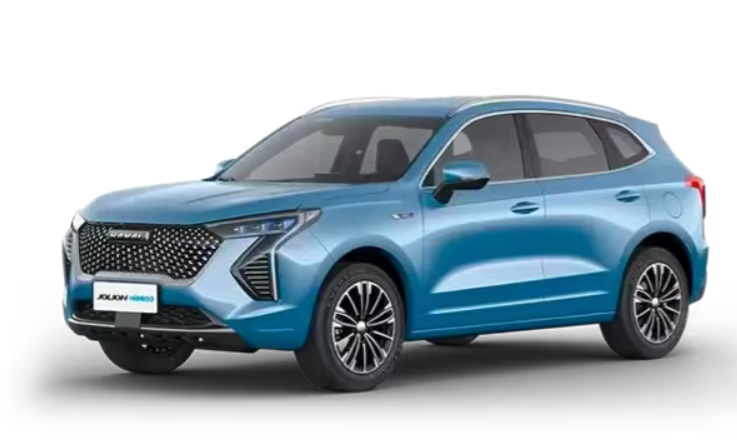
If we are comparing the Haval Jolion vs MG ZST, we are looking at two affordable Chinese-built small SUVs that became popular in Australia by offering a lot of equipment for considerably less money than many established Japanese and Korean alternatives.
However, there is one important difference in 2026. The Haval Jolion remains part of GWM Australia's current SUV range, while the MG ZST belongs to the outgoing generation of MG's small SUV and has effectively been replaced by the newer MG ZS.
That does not make the MG ZST irrelevant. Far from it. There are plenty of ZSTs on Australian roads and on the used-car market, and buyers may still find remaining dealer stock. It can therefore represent excellent value against a new or used Jolion.
Overall, though, the Haval Jolion is our winner. It is larger, more powerful in equivalent petrol form, available as an impressively efficient hybrid, has a stronger current ANCAP safety rating and generally provides more rear passenger space.
The MG ZST fights back with a compact footprint, useful boot, generous standard equipment and potentially very attractive used-car pricing.
Content in this publication
- Haval Jolion vs MG ZST at a Glance
- Which Is Bigger: Haval Jolion or MG ZST?
- Haval Jolion vs MG ZST Boot Space
- Haval Jolion vs MG ZST Engine Performance
- Haval Jolion Hybrid vs MG ZST
- Haval Jolion vs MG ZST Fuel Consumption
- Haval Jolion vs MG ZST Driving Experience
- Haval Jolion vs MG ZST Interior
- Which Has Better Technology?
- Haval Jolion vs MG ZST Safety
- Haval Jolion vs MG ZST Safety Features
- Haval Jolion vs MG ZST Towing Capacity
- Haval Jolion vs MG ZST Reliability
- Haval Jolion vs MG ZST Warranty
- Haval Jolion vs MG ZST Running Costs
- Haval Jolion vs MG ZST Value for Money
- Haval Jolion vs MG ZST for Families
- Haval Jolion vs MG ZST for City Driving
- Haval Jolion vs MG ZST: Pros and Cons
- Haval Jolion vs MG ZST: Which Should You Buy?
- What Replaced the MG ZST?
- Final Verdict
Haval Jolion vs MG ZST at a Glance
For the closest comparison, we can start with the naturally aspirated 1.5-litre MG ZST and the mainstream 1.5-litre turbo-petrol Jolion.
| Specification | Haval Jolion Petrol | MG ZST 1.5 |
|---|---|---|
| Engine | 1.5L turbo petrol | 1.5L petrol |
| Power | 105 kW | 84 kW |
| Torque | 210 Nm | 150 Nm |
| Transmission | 7-speed DCT | CVT |
| Drive | Front-wheel drive | Front-wheel drive |
| Combined fuel consumption | 6.7 L/100 km | 6.9 L/100 km |
| Length | 4,472 mm | 4,323 mm |
| Width | 1,874 mm | 1,809 mm |
| Wheelbase | 2,700 mm | 2,585 mm |
| Boot space | 337 litres | 359 litres |
| Fuel tank | 55 litres | 48 litres |
Current GWM documentation lists the Jolion Premium and Lux petrol models at 105kW and 210Nm, with claimed combined consumption of 6.7L/100km. The stronger Jolion Vanta increases output to 130kW and 270Nm, while the hybrid produces a combined 140kW and 375Nm.
The outgoing MG ZST 1.5 produces 84kW and 150Nm, with a claimed 6.9L/100km combined consumption figure.
Which Is Bigger: Haval Jolion or MG ZST?
The Haval Jolion is noticeably bigger than the MG ZST.
The mainstream petrol Jolion measures approximately 4,472mm long and 1,874mm wide, with a 2,700mm wheelbase. The MG ZST is approximately 4,323mm long, 1,809mm wide and has a 2,585mm wheelbase.
That means the Jolion is around 149mm longer and has approximately 115mm more wheelbase.
Those numbers matter because wheelbase is one of the factors affecting passenger space. The Jolion consequently feels more like a vehicle approaching the upper end of the small-SUV category, particularly from the second row.
Which Is Better for Rear Passengers?
We would choose the Jolion if rear-seat accommodation is important.
Its longer wheelbase allows for generous rear legroom, and GWM has clearly prioritised cabin space. The rear floor is also relatively accommodating for a middle passenger.
This makes the Jolion particularly appealing to families who regularly carry adults or growing children rather than simply using the rear seats occasionally.
The MG ZST is still perfectly usable as a five-seat compact SUV, but it feels more compact inside.
Haval Jolion vs MG ZST Boot Space
This is where the smaller MG produces a surprise.
The petrol Jolion Premium and Lux provide approximately 337 litres of luggage capacity with the rear seats upright.
The MG ZST offers approximately 359 litres.
That gives the ZST a small advantage despite its shorter exterior dimensions.
With the seats folded, the difference remains relatively close, with approximately 1,133 litres available in the petrol Jolion compared with around 1,187 litres in the ZST.
What About the Haval Jolion Hybrid Boot?
This deserves special attention.
The current Jolion Hybrid has considerably less cargo capacity than the regular petrol Jolion. GWM lists approximately 255 litres with the seats upright and 916 litres with them folded.
So if maximum luggage capacity is a priority, the MG ZST actually has an important practical advantage over the Jolion Hybrid.
Haval Jolion vs MG ZST Engine Performance
The Haval Jolion wins comfortably when we compare the entry-level engines.
Its 1.5-litre turbocharged four-cylinder petrol engine produces 105kW and 210Nm.
The MG ZST's naturally aspirated 1.5-litre four-cylinder produces 84kW and 150Nm.
The difference in torque is particularly noticeable.
The Jolion's turbo engine feels stronger when accelerating onto a motorway, overtaking or carrying several passengers. Drivers coming from larger vehicles are also likely to find it less strained.
Is the MG ZST Turbo Faster?
There was also a considerably more powerful ZST.
Higher MG ZST Excite and Essence versions were available with a 1.3-litre turbocharged three-cylinder engine producing around 115kW and 230Nm, paired with a conventional six-speed automatic transmission.
That changes the comparison significantly.
A turbo ZST feels much more energetic than the basic 1.5-litre ZST and is closer to the petrol Jolion in everyday performance.
However, GWM now offers an even stronger Jolion Vanta petrol with 130kW and 270Nm, so the Jolion range has continued moving forward.
Haval Jolion Hybrid vs MG ZST
There is no direct ZST hybrid competitor to the Jolion Hybrid.
The Jolion Hybrid combines a petrol engine and electric motor for a claimed combined 140kW and 375Nm.
That is substantially more than either of the traditional MG ZST petrol engines.
It also provides one of the most compelling reasons to choose the Haval.
GWM currently claims combined fuel consumption of approximately 4.8L/100km for the Jolion Hybrid.
For buyers doing plenty of urban driving, that difference can become meaningful over several years of ownership.
MG now has an answer, but it is technically a different vehicle: the newer-generation MG ZS Hybrid+, not the ZST. The current ZS Hybrid+ produces up to 158kW according to MG Australia.
Haval Jolion vs MG ZST Fuel Consumption
Fuel economy between the regular petrol versions is surprisingly close.
The current mainstream petrol Jolion is officially rated at approximately 6.7L/100km, while the 1.5-litre MG ZST is rated at approximately 6.9L/100km.
That gives the Jolion a slight advantage on paper despite its greater power and larger dimensions.
You may be interested in reading Haval Jolion vs BAIC X55: Which SUV Is Better?
The Jolion also has a larger 55-litre fuel tank compared with approximately 48 litres in the MG.
Which Is Better for Fuel Economy?
If we are comparing petrol against petrol, there is not enough difference for fuel economy alone to determine our decision.
If fuel consumption is a major priority, however, the Jolion Hybrid is easily the more attractive option because its claimed 4.8L/100km figure is significantly below either traditional ZST engine.
Haval Jolion vs MG ZST Driving Experience
These SUVs have quite different personalities.
The Jolion feels like the larger, more substantial vehicle. Its turbocharged engine offers stronger low- and mid-range performance, while the cabin gives the impression of a vehicle from the next size category.
The petrol Jolion uses a seven-speed dual-clutch transmission. It can feel responsive once moving, although dual-clutch transmissions do not always deliver the same low-speed smoothness as a conventional torque-converter automatic.
The base MG ZST uses a continuously variable transmission. Performance is more modest, but the powertrain is straightforward and generally well suited to urban commuting.
The turbocharged ZST's six-speed automatic and stronger engine make it considerably more enjoyable if performance matters.
Which Is Easier to Drive Around Town?
The MG ZST has an advantage in tight urban environments simply because it is smaller.
At 4.32 metres long, it is easier to position in restricted parking spaces than the 4.47-metre Jolion.
The Jolion remains very manageable by SUV standards, especially on grades equipped with surround-view cameras, but buyers wanting the smallest possible footprint may prefer the MG.
Haval Jolion vs MG ZST Interior
Both manufacturers have historically used generous equipment levels as a way of competing with more established brands.
Inside the Jolion, the design feels particularly modern. Depending on trim, current versions can offer a 10.25-inch or 12.3-inch infotainment display, digital instrumentation, wireless smartphone connectivity, wireless charging and comfort features such as heated or ventilated front seats.
The MG ZST also offered impressive equipment for its price.
Depending on version, equipment included a 10.1-inch touchscreen, Apple CarPlay and Android Auto, keyless entry, push-button start, 360-degree camera and adaptive cruise control. Higher specifications added leatherette trim, satellite navigation, heated seats, a panoramic sunroof and a digital instrument cluster.
Which Has Better Technology?
We give the advantage to the Haval Jolion, particularly when comparing current models against an older ZST.
The MG still offers plenty of technology, but the Jolion has benefited from continuous updates and now provides larger displays and newer connectivity features on selected variants.
The situation changes if we compare the Jolion with the new-generation MG ZS rather than the older ZST. The latest ZS can feature dual 12.3-inch displays, wireless Apple CarPlay and Android Auto and MG's iSMART connectivity system.
Haval Jolion vs MG ZST Safety
This is one of the strongest arguments in favour of the Jolion.
The GWM Haval Jolion has a five-star ANCAP safety rating from 2022, and ANCAP states that the rating applies to all petrol and hybrid variants. The rating currently expires in December 2028.
Its assessment included scores of 90% for adult occupant protection, 84% for child occupant protection and 92% for safety assist.
The MG ZST situation is more complicated.
The ZST itself was not separately crash-tested by ANCAP. The older MG ZS received a four-star rating under 2017 protocols, while the ZST included substantially more active-safety technology than that original ZS.
Because of that difference, we would avoid simply describing the ZST as a directly tested four-star vehicle.
Even so, if having a current and clearly applicable independent safety rating is important, the Jolion has the stronger case.
Haval Jolion vs MG ZST Safety Features
The two SUVs can both be very well equipped.
The Jolion's available safety technology includes autonomous emergency braking, lane-keep assistance, lane-departure warning, emergency lane keeping and advanced speed assistance. ANCAP also notes the presence of a centre airbag.
The ZST offered features including autonomous emergency braking, forward collision warning, blind-spot monitoring, lane-keep assistance, lane-departure warning, rear cross-traffic alert, adaptive cruise control and surround-view cameras.
For technology alone, the MG was impressive for its price. For the overall combination of equipment and independently verified crash performance, we prefer the Jolion.
Haval Jolion vs MG ZST Towing Capacity
If you occasionally tow a small trailer, the difference is substantial.
Current petrol Jolion variants are rated to tow up to approximately 1,500kg braked, while the Jolion Hybrid is rated at approximately 1,300kg braked.
The MG ZST's braked towing capacity is far lower, with specifications around 500kg for the 1.5-litre version.
Neither vehicle should be treated as a serious heavy-duty towing SUV, but the Jolion is clearly more versatile.
Haval Jolion vs MG ZST Reliability
Long-term reliability is more difficult to compare objectively than engine output or dimensions.
Both GWM and MG have expanded rapidly in Australia, and both offer lengthy warranty programs designed to reduce ownership risk.
The Jolion's mechanically simpler petrol versions may appeal to buyers planning to keep their vehicle for many years, although the dual-clutch transmission is more mechanically complex than a traditional automatic.
With a used MG ZST, we would pay particular attention to service history, infotainment operation, driver-assistance systems, transmission behaviour and evidence that scheduled maintenance has been completed.
The same principle applies to a used Jolion.
A well-maintained individual vehicle with documented servicing is usually a safer purchase than choosing purely according to the badge.
Haval Jolion vs MG ZST Warranty
GWM advertises a seven-year unlimited-kilometre warranty for eligible vehicles in Australia.
MG's warranty arrangements have changed over the years. Current Australian MG passenger vehicles receive a seven-year/unlimited-kilometre standard warranty, with eligible owners able to obtain service-activated coverage of up to 10 years or 250,000km when the applicable conditions are satisfied.
For a used ZST, however, we would not assume it automatically has the maximum current warranty.
The remaining warranty depends on factors including the vehicle's original registration date and the terms applying when it was purchased. Check the individual VIN, service records and warranty documentation before buying.
Haval Jolion vs MG ZST Running Costs
Neither vehicle is likely to be exceptionally expensive to operate by modern SUV standards.
You may be interested in readingHaval Jolion vs BAIC X55: Which SUV Is Better?You may be interested in reading
 Kia Sorento Years to Avoid: Worst Models and Best Years to Buy
The 1.5-litre ZST and petrol Jolion have similar official fuel-consumption figures, although the Jolion can use regular 91-octane unleaded according to current GWM specifications.
The biggest opportunity to reduce fuel expenditure comes from choosing the Jolion Hybrid.
Insurance, servicing and tyre costs will vary significantly according to trim, location, driver history and annual kilometres, so these expenses should be compared with actual quotes rather than assumed from the purchase price alone.
Haval Jolion vs MG ZST Value for Money
This category depends heavily on whether we are shopping new or used.
As a new vehicle in 2026, the Jolion makes more sense because it remains a current model with petrol and hybrid options, modern specifications and a current manufacturer network behind it.
As a used vehicle, the MG ZST becomes considerably more interesting.
Depreciation can result in well-equipped ZST Excite and Essence examples appearing at attractive prices. A clean turbocharged ZST with good service history could therefore offer a lot of SUV for relatively little money.
The question is not simply which car costs less.
We should ask what we are receiving for the money.
The Jolion gives us more passenger room, significantly greater towing capacity, stronger performance, hybrid availability and a five-star ANCAP rating.
The ZST offers compact dimensions, good standard features and potentially lower second-hand purchase prices.
Haval Jolion vs MG ZST for Families
For a family vehicle, we choose the Jolion.
Its longer 2,700mm wheelbase contributes to a spacious second row, while the stronger engine is useful when travelling with passengers and luggage.
The five-star ANCAP rating also provides additional reassurance.
There is one caveat: boot space.
The petrol Jolion's 337-litre luggage area is smaller than the MG ZST's approximately 359 litres, and the Jolion Hybrid drops to only 255 litres.
Families regularly carrying large prams or significant luggage should therefore test the cargo areas themselves instead of assuming that the physically larger SUV automatically has the larger boot.
Haval Jolion vs MG ZST for City Driving
For predominantly urban driving, the result is closer.
The ZST is approximately 15cm shorter and more than 6cm narrower than the standard petrol Jolion, which makes it easier to manoeuvre through narrow streets and crowded car parks.
If we live in a dense inner-city area and mostly drive alone or with one passenger, the ZST's smaller dimensions could actually be an advantage.
On the other hand, the Jolion Hybrid is exceptionally appealing for stop-start urban use because its electrified drivetrain can substantially reduce fuel consumption.
Therefore, we would choose the ZST for compact dimensions but the Jolion Hybrid for efficiency.
Haval Jolion vs MG ZST: Pros and Cons
| Haval Jolion | MG ZST | |
|---|---|---|
| Main advantage | Space, performance and hybrid option | Value and compact dimensions |
| Performance | Stronger | Base engine slower |
| Fuel economy | Excellent with hybrid | Reasonable |
| Rear space | Very good | Adequate |
| Boot | Average; small in Hybrid | Surprisingly practical |
| Safety rating | Five-star ANCAP | No separate ZST ANCAP test |
| Towing | Up to 1,500kg petrol | Much lower |
| City manoeuvrability | Good | Better |
| Used value | Competitive | Potentially excellent |
| Current model? | Yes | No; replaced by new ZS |
Haval Jolion vs MG ZST: Which Should You Buy?
For most buyers, we would choose the Haval Jolion.
It feels like more vehicle for the money. It has greater interior space, stronger performance, superior towing capacity and one of the major features the old MG ZST cannot offer: a hybrid powertrain.
Its five-star ANCAP rating is another important advantage.
The MG ZST still makes sense, especially if we find a well-maintained used example at a significant discount.
A turbo ZST Excite or Essence can be particularly attractive because it combines 115kW of power with plenty of equipment while remaining smaller and easier to park than the Jolion.
Our decision would therefore look like this:
| Buyer | Better Choice |
|---|---|
| Family | Haval Jolion |
| Hybrid buyer | Haval Jolion Hybrid |
| Cheapest used option | MG ZST |
| Rear passenger space | Haval Jolion |
| Boot space | MG ZST |
| Performance | Haval Jolion |
| Safety rating | Haval Jolion |
| Towing | Haval Jolion |
| Tight city parking | MG ZST |
| Overall winner | Haval Jolion |
What Replaced the MG ZST?
The MG ZST has effectively been superseded by the new-generation MG ZS in Australia.
The latest ZS is a substantially different proposition from the outgoing ZST.
Current Australian specifications include a 1.5-litre petrol engine producing 81kW, a turbocharged version producing up to 125kW and 275Nm, and an MG ZS Hybrid+ producing a combined 158kW. The latest model also provides a significantly larger claimed 443-litre boot.
This distinction is important when shopping.
If a dealer advertises a current MG ZS, we should not automatically assume its specifications are the same as the older MG ZST.
Final Verdict
The battle between the Haval Jolion vs MG ZST is closer than it first appears.
The MG ZST remains a clever budget SUV. It is compact, practical, reasonably economical and available with a surprising amount of technology. On the second-hand market, depreciation can make it even more attractive.
But the Jolion ultimately provides the more complete package.
It offers substantially more rear passenger space, stronger standard petrol performance, better towing ability and the option of an efficient hybrid powertrain. Its current five-star ANCAP safety rating further strengthens its case.
The MG wins narrowly for boot capacity and urban-friendly dimensions, while a discounted used ZST can offer exceptional value.
For a buyer choosing purely on overall capability, however, the Haval Jolion is the better SUV.
Is the Haval Jolion bigger than the MG ZST?
Yes. The Haval Jolion is approximately 4,472mm long compared with about 4,323mm for the MG ZST. It also has a considerably longer 2,700mm wheelbase compared with 2,585mm for the MG, giving the Jolion more generous rear-seat space.
Which is more fuel efficient, Haval Jolion or MG ZST?
The standard petrol models are relatively close, with the mainstream Jolion rated at around 6.7L/100km compared with approximately 6.9L/100km for the 1.5-litre MG ZST. The Jolion Hybrid is substantially more efficient, with an official combined figure of approximately 4.8L/100km.
Which has a bigger boot, Haval Jolion or MG ZST?
The MG ZST has the advantage over the regular petrol Jolion, offering approximately 359 litres compared with around 337 litres. The difference becomes greater against the Jolion Hybrid, which has approximately 255 litres of luggage capacity.
Is the Haval Jolion safer than the MG ZST?
The Jolion has the clearer independent safety credential because ANCAP awarded it five stars in 2022, with the rating applying to petrol and hybrid variants. The MG ZST was not independently crash-tested as a separate ZST model by ANCAP.
Is a Haval Jolion better than an MG ZST?
Overall, yes. We rate the Haval Jolion higher because it offers more passenger space, stronger performance, far greater towing capacity, a hybrid option and a current five-star ANCAP safety rating. The MG ZST remains worth considering if we want a cheaper used SUV, a slightly larger boot or smaller exterior dimensions for city driving.
You may be interested in readingHaval Jolion vs BAIC X55: Which SUV Is Better?You may be interested in reading
Kia Sorento Years to Avoid: Worst Models and Best Years to BuyYou may be interested in reading
Kia Sorento Top of the Range: Ultimate 2026 GuideIf you want to know other articles similar to Haval Jolion vs MG ZST: Which Small SUV Is Better? you can visit the category Models.
Kia Sorento Top of the Range: Ultimate 2026 Guide
Kia Sorento Years to Avoid: Worst Models and Best Years to Buy
Haval Jolion vs BAIC X55: Which SUV Is Better?

Is Honda Passport Bigger Than CR-V? Full Size Comparison
Is Honda Passport Bigger Than Pilot? Full Size Comparison

Nissan Rogue Dark Armor vs Platinum: Which Trim Is Better?
Leave a Reply
More content of your interest