

Nissan Frontier S vs SV: Which Trim Should You Buy?

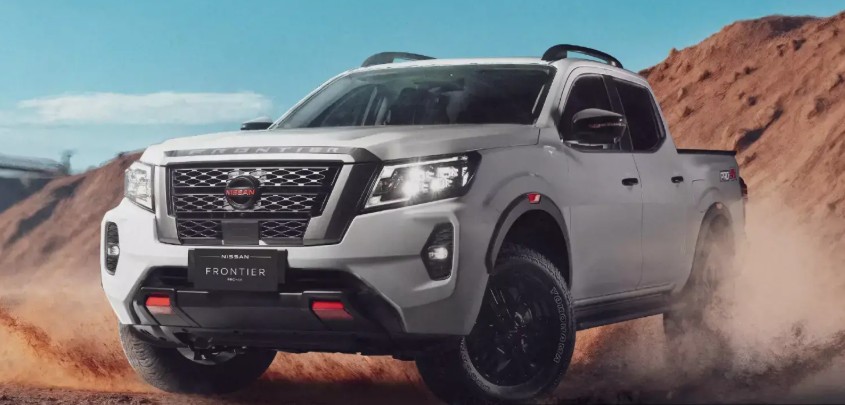
Shopping for a Nissan Frontier can look wonderfully simple until we reach the trim list. There sits the Frontier S, usually wearing the lowest price tag, and right beside it sits the Frontier SV, promising a little more comfort, equipment, and polish.
So, which one actually makes sense?
The short answer is that the Nissan Frontier S is generally the smarter choice for buyers who want a straightforward, capable truck at the lowest possible price, while the Frontier SV is usually the better all-around purchase for people who expect to use their truck every day.
But there is more to the Nissan Frontier S vs SV comparison than counting features.
Across the Frontier's long history, Nissan has changed engines, cab configurations, technology, safety equipment, styling, packages, towing hardware, and even the meaning of its trim names. An SV from one era may therefore look surprisingly basic beside a newer S.
We need to compare these trucks in context.
This guide covers the evolution of the Frontier, explains where S and SV fit into the lineup, and—most importantly—helps us decide which trim gives buyers the most value for their money.
Content in this publication
- Nissan Frontier S vs SV at a Glance
- Understanding the Frontier Trim Hierarchy
- Nissan Frontier Generations Explained
- Second-Generation Nissan Frontier: Where S vs SV Matters More
- The 2020–2021 Transition Deserves Special Attention
- Third-Generation Frontier: S vs SV Becomes a Modern Truck Comparison
- Nissan Frontier S vs SV Engine and Performance
- S vs SV Towing Capability
- Frontier S vs SV 4x2 and 4x4
- Exterior Differences Between Frontier S and SV
- Interior: Where the SV Starts Making Its Case
- Technology and Infotainment
- Safety: Newer S Can Beat Older SV
- Frontier S vs SV Comfort
- King Cab vs Crew Cab Can Matter More Than S vs SV
- Frontier S vs SV for Work
- Frontier S vs SV for Families
- Which Frontier Is Better for Off-Road Driving?
- Used Nissan Frontier S vs SV
- Condition Beats Trim on Older Frontiers
- Frontier S vs SV Resale Value
- Does the Frontier SV Justify the Extra Money?
- Nissan Frontier S vs SV: Which One Offers Better Value?
- Which Frontier Trim Should We Buy?
- The Biggest Mistake Buyers Make
- Final Verdict: Nissan Frontier S vs SV
- Frequently Asked Questions
Nissan Frontier S vs SV at a Glance
Think of the S as the Frontier in work boots and the SV as the same truck after putting on a decent jacket.
They generally share the truck's fundamental mechanical architecture within a given model year, but the SV typically builds on the S with convenience, appearance, and available-option upgrades.
A simplified comparison looks like this:
| Category | Nissan Frontier S | Nissan Frontier SV |
|---|---|---|
| Position | Entry-level trim | Mid-level trim |
| Purchase price | Lower | Higher |
| Basic capability | Strong | Strong |
| Comfort | Functional | Better equipped |
| Wheel treatment | Usually simpler | Usually upgraded |
| Available options | More limited | Broader |
| Daily-driver appeal | Good | Better |
| Work-truck value | Excellent | Good |
| Resale appeal | Good | Often stronger |
| Best buyer | Budget/work-focused | Everyday/mixed-use |
The important phrase here is within the same model year.
An older Frontier SV does not automatically have more technology than a much newer Frontier S. Advances in standard equipment have pushed features down the trim hierarchy over time.
Understanding the Frontier Trim Hierarchy
Modern Frontier lineups generally place the S near the bottom, followed by the SV, while off-road- or appearance-oriented models sit farther up the ladder.
That positioning tells us almost everything we need to know about Nissan's strategy.
The S answers:
"How much truck can we provide without adding expensive extras?"
The SV asks:
"How much more comfortable and desirable can we make that basic truck without moving into premium territory?"
That difference sounds subtle, yet it matters tremendously once we live with the truck.
What Does Nissan Frontier S Mean?
The Frontier S has typically been the value-oriented model.
It prioritizes essentials such as:
- Engine and drivetrain capability
- Basic infotainment
- Core safety equipment
- Durable interior materials
- Practical cab and bed configurations
- An affordable starting price
In newer Frontiers, "base" no longer means primitive.
For example, the current Frontier uses Nissan's 3.8-liter V6 across the lineup rather than reserving the stronger engine for expensive trims. For 2026, Nissan lists the V6 at 310 horsepower and 281 lb-ft of torque, paired with a nine-speed automatic transmission.
That means an S buyer isn't necessarily sacrificing the heart of the truck.
What Does Nissan Frontier SV Mean?
The SV sits one rung higher.
Historically, the formula has been straightforward: preserve most of the Frontier's rugged character while adding enough comfort and available equipment to make it easier to live with.
Depending on model year, that can mean differences involving things such as upgraded wheels, interior trim, seating materials, convenience features, exterior details, power equipment, optional packages, towing equipment, and driver-assistance technology.
The exact equipment changes from year to year, which is why buyers shopping used Frontiers should always compare specific VINs or window stickers, rather than assuming every SV has an identical feature list.
Nissan Frontier Generations Explained
Before deciding between S and SV, we should understand the truck's evolution.
The Frontier has changed dramatically since its American debut in the late 1990s.
First-Generation Frontier: The Early Years
The original Frontier belonged to a simpler era of compact pickups.
Early U.S. models weren't organized around today's familiar S-versus-SV structure. Names such as XE and SE were more relevant during parts of this period.
That matters because someone searching for a "1999 Frontier SV" or expecting modern trim relationships across the entire Frontier timeline may be comparing labels that simply weren't used consistently that way.
These early Frontiers were old-school machines: relatively compact dimensions, straightforward cabins, modest technology, and a mechanical character that now feels almost nostalgic.
What First-Generation Buyers Should Compare Instead
For these trucks, condition matters much more than trim hierarchy.
We would prioritize:
- Rust and structural condition
- Engine health
- Cooling system condition
- Transmission operation
- Maintenance records
- Suspension wear
- Previous accident or off-road damage
On a pickup approaching or exceeding two decades old, an immaculate lower-spec truck can easily be a better purchase than a neglected high-spec example.
Second-Generation Nissan Frontier: Where S vs SV Matters More
The second-generation Frontier arrived for the mid-2000s and enjoyed an extraordinarily long production run in North America.
This is where the Nissan Frontier S vs SV comparison becomes especially relevant to used-truck shoppers.
Throughout this era, Nissan adjusted trim names and standard equipment, so individual model years still deserve close inspection.
Yet the general philosophy remained recognizable.
The S served value-conscious buyers, while the SV offered more comfort and convenience without climbing all the way toward specialized or upscale trims.
Older Frontier S: The No-Nonsense Choice
Used second-generation S models often attract buyers looking for:
- A relatively inexpensive pickup
- A basic work vehicle
- A first truck
- A platform for modifications
- Something less complicated electronically
- A secondary vehicle for hauling or weekend jobs
That simplicity can actually be appealing.
A work truck doesn't necessarily need to feel like a rolling living room. Sometimes we want a key, a bed, a capable drivetrain, and fewer things distracting us.
Older Frontier SV: Better for Everyday Driving
An SV from this generation tends to make more sense when the truck must serve multiple roles.
Maybe it carries lumber on Saturday but commuters on Monday.
Maybe it pulls recreational equipment occasionally yet spends 90 percent of its life on pavement.
That's where upgraded convenience equipment starts earning its keep.
A tiny comfort difference feels irrelevant during a ten-minute test drive. Repeat that difference over five years of commuting and suddenly it matters.
The 2020–2021 Transition Deserves Special Attention
One of the most interesting points in Frontier history arrived before the body was completely redesigned.
For 2020, Nissan installed the newer 3.8-liter V6 and nine-speed automatic transmission into the outgoing body style. Nissan's 2020 material described it as the most powerful Frontier to that point and highlighted the new nine-speed transmission.
This created something of a bridge between generations.
We got the familiar older Frontier body combined with a substantially newer powertrain.
For used buyers, these transition trucks can be interesting because they combine old-school appearance and packaging with mechanical components that previewed the next generation.
S vs SV During the Transition Years
Here again, trim selection comes down less to horsepower and more to equipment.
If two trucks use the same core engine and transmission, spending more on the SV isn't primarily buying extra muscle.
We are paying for the things surrounding the mechanical package.
And for some buyers, that's exactly where the money should go.
Third-Generation Frontier: S vs SV Becomes a Modern Truck Comparison
The redesigned Frontier introduced for the 2022 model year changed the equation considerably.
The styling became bolder, the cabin looked far more contemporary, and the technology finally moved away from the previous truck's distinctly old-school environment.
Nissan's 2022 brochure offered S and SV configurations alongside PRO-X and PRO-4X models, with multiple cab and bed possibilities depending on configuration.
Now the S isn't simply a cheap old-fashioned pickup.
It is the entry point into a properly modern midsize truck.
Nissan Frontier S vs SV Engine and Performance
This is one of the easiest parts of the modern comparison.
Current Frontiers don't force us into an SV simply to get substantially more engine performance.
For 2026, Nissan lists the same 3.8-liter V6, 310 horsepower, and 281 lb-ft of torque across the Frontier specifications, with a nine-speed automatic transmission.
That's a major advantage for S buyers.
Does the Frontier SV Have More Horsepower Than the S?
On current models, no.
Both can deliver the same basic engine output.
So if someone says, "I only care about acceleration and pulling power," stepping from an S into an SV isn't automatically necessary.
We aren't moving from a four-cylinder economy engine into a muscular V6.
The underlying punch is already there.
Why Shared Powertrains Make the S Attractive
A base truck becomes extremely compelling when it inherits the expensive mechanical hardware.
Imagine ordering a plain hamburger and discovering the restaurant uses the exact same premium beef as its deluxe version.
That's essentially the S's appeal.
We save money mostly by removing toppings, not by replacing the steak underneath.
S vs SV Towing Capability
Towing deserves more nuance because maximum ratings depend on configuration—not merely the badge attached to the tailgate.
You may be interested in reading Nissan Frontier Years: Generations, Changes, and Best Eras Explained
Cab style, drivetrain, equipment, model year, hitch setup, payload, passenger weight, cargo, and trailer configuration can all affect real-world towing suitability.
Nissan advertises maximum current Frontier towing capability of up to 7,150 pounds, but "up to" is the critical wording.
We should never assume every S or every SV carries the maximum rating.
Which Frontier Trim Is Better for Towing?
If we're comparing properly equipped examples with compatible ratings, the SV doesn't necessarily tow better simply because it costs more.
However, the SV may offer packages or convenience equipment that make a towing-oriented build more appealing.
The correct buying procedure is simple: check the towing chart for the exact year, cab, drivetrain, bed, and equipment configuration.
Frontier S vs SV 4x2 and 4x4
One of the more important choices may have nothing to do with S versus SV.
It's whether we want two-wheel drive or four-wheel drive.
A 4x2 SV and 4x4 S serve surprisingly different buyers.
For someone who regularly travels on muddy roads, snow, loose terrain, job sites, or rough access roads, spending the budget on 4x4 capability before luxury features may be sensible.
In other words, if our money buys either:
SV 4x2
or
S 4x4
we shouldn't automatically take the higher trim.
Capability must follow how we actually use the truck.
Exterior Differences Between Frontier S and SV
The S normally looks intentionally utilitarian.
That's not necessarily a criticism.
Simple wheels and basic exterior details can reinforce the work-truck personality, while the SV typically adds visual touches that make the Frontier look less like a fleet purchase.
Current equipment changes by year, and Nissan's brochures show that S and SV differentiation can involve wheel designs, exterior finishes, packages, and body configurations. The 2026 S, for example, is listed with 16-inch styled steel wheels in Nissan's brochure.
Which Trim Looks Better?
Most private buyers will probably prefer the SV.
A wheel upgrade alone can change the truck's personality dramatically.
But here's the question we should ask: would we rather pay Nissan for cosmetic upgrades or choose our own aftermarket wheels later?
For modification enthusiasts, the plain S can actually be a blank canvas.
Interior: Where the SV Starts Making Its Case
Mechanical similarities favor the S.
Cabin differences favor the SV.
This is where the buying decision gets interesting.
An S might perform every truck-related task we require yet feel comparatively plain while we're driving to work, taking the family out, sitting in traffic, or crossing several states.
The SV is designed to soften that compromise.
Why Interior Features Matter More Than We Think
We interact with the interior constantly.
We touch the steering wheel thousands of times.
We adjust the seat.
We use the infotainment system.
We plug in phones.
We adjust climate settings.
We store drinks and tools.
We hear road noise.
That's why a $2,000 or $3,000 equipment difference can sometimes deliver more daily satisfaction than an accessory we thought we desperately needed.
Technology and Infotainment
Modern Frontier technology has improved dramatically compared with older models.
Current-generation models can offer smartphone integration and a range of connected features, while Nissan highlights Apple CarPlay, Android Auto, Bluetooth, available connectivity services, and other technology within the current Frontier ecosystem.
But equipment still varies by trim and model year.
That gives used buyers an important rule:
Never judge a Frontier's technology from the words S or SV alone.
Check the actual vehicle.
S Technology May Be Enough
The S works well for buyers who mainly need:
- Smartphone connectivity
- Audio
- Bluetooth
- Basic vehicle information
- Essential driver aids
There's something refreshing about that simplicity.
We get in, connect the phone, and drive.
SV Technology Can Improve Daily Life
The SV becomes more attractive when additional convenience, larger displays, upgraded packages, or other available features are important.
Individually, these upgrades can look trivial.
Together, they make a truck feel noticeably more complete.
Safety: Newer S Can Beat Older SV
This is one of the most important points in the entire article.
Don't assume a higher trim is automatically safer.
Safety technology evolves.
A newer Frontier S can have equipment that simply wasn't available—or wasn't standard—on an older Frontier SV.
For example, Nissan currently lists Automatic Emergency Braking with Pedestrian Detection among key Frontier features.
So when comparing used trucks from different years, we should prioritize the actual installed safety equipment over the trim badge.
Frontier S vs SV Comfort
If we're buying a Frontier purely for business, comfort may rank below purchase price, maintenance cost, and durability.
For everyone else, comfort deserves more attention.
The SV traditionally has the advantage because its purpose is to add everyday usability.
The Daily-Driver Test
Ask yourself these questions:
Do we commute every day?
Will passengers ride frequently?
Will we take road trips?
Will this be our only vehicle?
Will children spend time in the back?
Will we keep the truck five years or longer?
The more "yes" answers we give, the easier it becomes to justify an SV.
King Cab vs Crew Cab Can Matter More Than S vs SV
Trim isn't the only variable.
Depending on model year, Frontier buyers have encountered different cab and bed combinations, including King Cab and Crew Cab configurations. Recent brochures also demonstrate that configuration availability can vary across S and SV trims.
This can completely change the buying decision.
Choose King Cab When Utility Leads
A King Cab can make sense when we mostly carry one or two people and prioritize bed utility, price, or work use.
Choose Crew Cab When People Matter
The Crew Cab is usually more sensible for families, regular passengers, and anyone expecting the Frontier to substitute for an SUV.
Here's our priority order:
Correct cab first. Correct drivetrain second. Correct trim third.
Buying an SV with the wrong cab configuration makes less sense than buying an S perfectly suited to our lifestyle.
Frontier S vs SV for Work
For contractors, fleets, tradespeople, or owners who expect scratches, mud, tools, and hard use, the S makes a powerful argument.
Why pay extra for cosmetic or convenience equipment we barely appreciate?
Reasons to Choose the S for Work
The S can be especially attractive because it typically delivers:
You may be interested in readingNissan Frontier Years: Generations, Changes, and Best Eras ExplainedYou may be interested in reading
Nissan Frontier Reliability by Year: Best and Worst Years- Lower entry cost
- Core truck capability
- Less concern about damaging premium finishes
- Simpler appearance
- Strong value for fleet use
- More budget left for racks, liners, toolboxes, and accessories
A contractor might gain more from a $1,500 bed setup than from spending that same money on cabin luxuries.
That's the difference between buying a truck to impress us and buying a truck to earn money.
Frontier S vs SV for Families
Now flip the situation.
The truck is going to haul groceries.
Kids will climb aboard.
We will commute.
Weekend trips are part of the plan.
Maybe we tow a small camper twice per year.
Here, the SV usually feels more logical.
The additional comfort and convenience get used every day, while the S's lower price is enjoyed mainly once—when we sign the paperwork.
Which Frontier Is Better for Off-Road Driving?
Between S and SV, drivetrain and equipment matter more than the name.
A 4x4 S can be a clever starting point for someone building an off-road truck because we aren't paying for features we'll later replace.
Add tires, recovery gear, protection, and selected suspension modifications, and we have a purposeful machine.
However, serious off-road buyers should also compare Nissan's dedicated off-road trims rather than assuming S or SV is the ideal endpoint.
The current Frontier lineup includes PRO-4X alongside S and SV, and Nissan positions PRO-4X specifically around off-road capability.
Used Nissan Frontier S vs SV
Used shopping changes everything because depreciation compresses price differences.
When new, upgrading from S to SV might require enough extra cash to trigger a serious debate.
After several years, the difference between comparable used examples can become much smaller.
That makes the SV especially interesting.
When a Used SV Is the Better Deal
Suppose we find:
- Frontier S: $21,500
- Frontier SV: $22,700
Both have similar mileage, condition, drivetrain, cab, service history, and accident records.
At that point, paying another $1,200 for the SV could be easy to justify.
But if the SV has 40,000 additional miles or a questionable history, forget the badge.
Buy the better truck.
Condition Beats Trim on Older Frontiers
This deserves its own section because used buyers regularly get trapped by feature lists.
A well-maintained S is better than an abused SV.
Every time.
Give us:
Clean S + maintenance records + good inspection
over:
Loaded SV + neglect + mysterious noises
The first combination is boring in the best possible way.
What to Inspect Before Buying Either Trim
Have the truck inspected carefully, paying attention to:
- Service history
- Rust
- Frame condition
- Engine leaks
- Cooling system
- Transmission operation
- Differential and transfer-case condition
- Suspension wear
- Tires and brakes
- Signs of heavy towing
- Off-road damage
- Electrical accessories
- Accident repairs
Once a truck has accumulated years and miles, these factors can overwhelm the original S-versus-SV price difference.
Frontier S vs SV Resale Value
The SV may have an advantage with private buyers because mid-level trims often hit the sweet spot of affordability and desirable equipment.
However, resale depends on far more than trim.
Mileage, condition, region, drivetrain, cab style, service history, color, accident history, modifications, and market demand all matter.
A clean 4x4 S can easily be more desirable than an awkwardly configured or rough-condition SV.
So we wouldn't buy the SV solely because we expect some magical resale jackpot.
Buy the trim we actually want to own.
Does the Frontier SV Justify the Extra Money?
For the typical private buyer, yes—often it does.
The Frontier S gives us the essential truck.
The SV gives us the essential truck while making everyday ownership more pleasant.
That distinction becomes especially valuable because current models share their core V6 performance rather than making buyers climb the trim ladder for the stronger engine. Nissan continues to list the current Frontier's 3.8-liter V6 at 310 horsepower and 281 lb-ft of torque.
When the Extra Money Is Worth It
Choose SV if:
- The Frontier will be your daily driver
- You keep vehicles for many years
- Cabin comfort matters
- You regularly carry passengers
- You want more factory options
- You prefer a less utilitarian appearance
- The used-market price difference is small
When the Extra Money Is Not Worth It
Choose S if:
- Lowest purchase price matters
- The truck is primarily for work
- You plan extensive modifications
- You don't care about cosmetic upgrades
- You prefer simple equipment
- You can get 4x4 S instead of stretching for an SV
- You found an unusually clean used S
Nissan Frontier S vs SV: Which One Offers Better Value?
This depends entirely on how we define "value."
If value means maximum truck capability per dollar, the S is difficult to beat.
If value means the best combination of price, comfort, equipment, and long-term satisfaction, the SV usually wins.
That's why the SV is such an appealing middle ground.
It doesn't try to turn the Frontier into a luxury truck.
It simply sands down the rough edges.
Which Frontier Trim Should We Buy?
For a dedicated work truck, we'd lean toward the S.
For an affordable 4x4 build, we'd strongly consider the S 4x4.
For a daily driver, we'd lean toward the SV.
For a family truck, we'd choose an SV Crew Cab when the appropriate configuration is available.
For a used Frontier, we'd choose whichever example has the best condition, maintenance history, configuration, and price, even if that means taking an S over an SV.
For serious off-road use, we'd compare both against the appropriate PRO-4X rather than limiting the decision to S and SV.
The Biggest Mistake Buyers Make
The biggest mistake isn't buying the S.
It isn't buying the SV either.
It's buying features before buying the right truck.
We should decide in this order:
- Budget
- Model year
- Cab configuration
- Bed requirement
- 2WD or 4WD
- Towing and payload requirements
- Condition if used
- Trim
- Optional packages
- Cosmetic preferences
Do that, and the correct trim usually reveals itself.
Reverse the order and we may end up with beautiful wheels attached to a truck that doesn't fit our life.
Final Verdict: Nissan Frontier S vs SV
The Nissan Frontier S and SV are less like two different trucks and more like two interpretations of the same idea.
The Frontier S strips the equation down to fundamentals. It offers the capability buyers actually came for while keeping the price under control. For work use, fleets, budget buyers, and people who plan to modify the truck anyway, that simplicity is a genuine strength.
The Frontier SV adds the layer most private owners eventually appreciate: comfort and convenience.
And that's why, for the average person shopping for a Frontier as an everyday vehicle, we would choose the SV.
It usually occupies the sweet spot.
Not too bare.
Not unnecessarily extravagant.
Just enough truck, just enough comfort.
However, used buyers should throw trim snobbery out the window. A beautifully maintained S with the right cab and drivetrain deserves our money before a poorly maintained SV simply because the latter has a longer equipment list.
The ultimate answer is therefore wonderfully simple:
Buy the Frontier S when capability and price matter most. Buy the Frontier SV when you want the better all-around ownership experience.
Frequently Asked Questions
1. Is the Nissan Frontier SV better than the S?
For most daily drivers, yes. The SV generally adds comfort, convenience, appearance upgrades, or broader equipment availability while retaining the Frontier's fundamental truck capability. However, the S can provide better value for work-focused and budget-conscious buyers.
2. Does the Nissan Frontier SV have a bigger engine than the S?
Not on current U.S.-market Frontiers. Nissan lists the same 3.8-liter V6 across the current lineup, producing 310 horsepower and 281 lb-ft of torque. Older model years varied, so used buyers should verify the specifications of the exact year being considered.
3. Is a Frontier S 4x4 better than an SV 4x2?
It can be. If you regularly drive through snow, mud, loose terrain, rough job sites, or trails, the additional drivetrain capability of the S 4x4 may be more valuable than the SV's added convenience features. For mostly paved driving, an SV 4x2 may offer the better everyday experience.
You may be interested in readingNissan Frontier Years: Generations, Changes, and Best Eras ExplainedYou may be interested in reading
Nissan Frontier Reliability by Year: Best and Worst YearsYou may be interested in reading
 Is Toyota Estima the Same as Tarago? Complete Comparison
4. Should I buy a used Frontier S or SV?
Buy the truck in better overall condition first. When mileage, maintenance history, drivetrain, cab, bed, and condition are comparable, the SV may be worth paying extra for because of its additional equipment. On older trucks, condition should outrank trim level.
5. Is the Nissan Frontier S a good truck for daily driving?
Yes. Modern S models provide considerably more equipment and technology than entry-level pickups from decades ago, and the current Frontier shares its strong V6 powertrain across the lineup. Still, buyers spending significant time inside the truck may find the SV's added comfort and convenience worthwhile.
If you want to know other articles similar to Nissan Frontier S vs SV: Which Trim Should You Buy? you can visit the category Models.
Kia Sorento Models: Complete Guide to Trims, Engines and Versions
BYD Shark 6 vs Ranger vs HiLux: Which Ute Makes the Most Sense in 2026?
BYD Shark 6 vs MG U9: Which Ute Makes More Sense in 2026?
BYD Shark 6 vs Ford Ranger Raptor: Which Performance Ute Is Better in 2026?
BYD Shark 6 vs Kia Tasman: Which Ute Is Better?
BYD Shark 6 vs 7: What We Know So Far
Leave a Reply
More content of your interest