

BYD Shark 6 vs 7: What We Know So Far

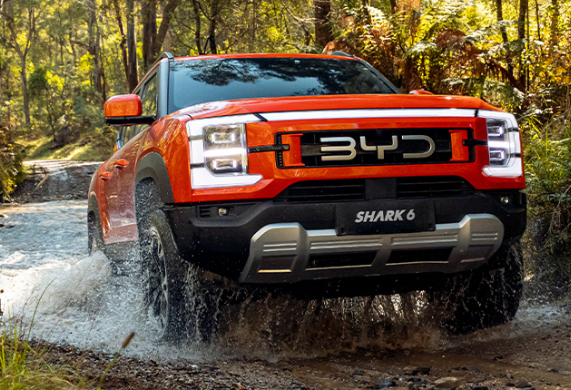
If you are searching for a BYD Shark 6 vs 7 comparison, there is one important detail we need to clear up immediately: the BYD Shark 6 is a real production pickup available in several markets, while the BYD Shark 7 has not yet been officially announced as a production model.
That does not mean the Shark 7 is completely fictional. The name has been discussed for some time as a possible designation for another member of BYD's growing pickup family. Depending on the report, the future model could be a fully electric version of the Shark, a more powerful ute, or even a larger pickup positioned above the Shark 6.
BYD itself has confirmed that the Shark 6 will not necessarily be the company's last pickup, but it has not formally announced a Shark 7 name, final specifications, pricing, or release date.
So, rather than inventing specifications, we're going to compare the confirmed BYD Shark 6 with what is actually known about the potential Shark 7 and explain whether it makes sense to buy the Shark 6 now or wait.
Content in this publication
- BYD Shark 6 vs Shark 7 at a Glance
- What Is the BYD Shark 6?
- What Is the BYD Shark 7?
- BYD Shark 6 vs 7 Powertrain
- BYD Shark 6 vs 7 Performance
- BYD Shark 6 vs 7 Towing Capacity
- Shark 6 vs Shark 7 Electric Range
- BYD Shark 6 vs 7 Charging
- BYD Shark 6 vs 7 Design
- BYD Shark 6 vs 7 Interior
- BYD Shark 6 vs 7 Off-Road Capability
- BYD Shark 6 vs 7 for Towing
- BYD Shark 6 vs 7 for Daily Driving
- Is the Shark 6 Performance Actually the Shark 7?
- BYD Shark 7 Release Date
- BYD Shark 7 Price
- Should We Buy the BYD Shark 6 or Wait for the Shark 7?
- BYD Shark 6 vs 7: Which One Has More Power?
- BYD Shark 6 vs 7: Which One Is Better for Long Trips?
- BYD Shark 6 vs 7: Which One Is Better for Work?
- Could BYD Launch More Than One New Shark?
- BYD Shark 6 vs 7: The Biggest Differences We Expect
- One Important Warning About BYD Shark 7 Information Online
- Final Thoughts on the BYD Shark 6 vs 7
- Frequently Asked Questions
BYD Shark 6 vs Shark 7 at a Glance
| Specification | BYD Shark 6 | BYD Shark 7 |
|---|---|---|
| Current status | Available | Not officially confirmed |
| Vehicle type | Dual-cab pickup/ute | Expected pickup/ute |
| Powertrain | Plug-in hybrid | Not confirmed |
| Drivetrain | AWD | Not confirmed |
| Maximum power | Up to 350 kW in Australian Performance model | Not confirmed |
| Maximum torque | Up to 700 Nm in Australian Performance model | Not confirmed |
| 0-100 km/h | As quick as 5.5 seconds | Not confirmed |
| Maximum towing | Up to 3,500 kg depending on variant | Not confirmed |
| Electric-only capability | Yes | Possibly fully electric, but unconfirmed |
| Battery | BYD Blade Battery | Not confirmed |
| Release date | Already available | Not announced |
| Price | Market dependent | Not announced |
The biggest takeaway is simple: there is currently no genuine specification sheet that allows us to make a conventional Shark 6 vs Shark 7 comparison.
Most Shark 7 specifications circulating online should therefore be treated as speculation unless BYD eventually confirms them.
What Is the BYD Shark 6?
The BYD Shark 6 is BYD's electrified answer to traditional dual-cab pickups such as the Toyota Hilux, Ford Ranger, Mitsubishi Triton and Isuzu D-Max.
Instead of relying exclusively on a diesel engine, the Shark uses BYD's DMO Super Hybrid off-road platform, combining a petrol engine, a Blade Battery and electric motors.
The result is a pickup that behaves quite differently from the traditional diesel ute.
Electric motors provide strong acceleration and immediate torque, while the petrol engine gives owners the flexibility to travel longer distances without depending completely on public charging infrastructure.
BYD Shark 6 Engine and Hybrid System
In its familiar configuration, the Shark 6 combines a turbocharged petrol engine with front and rear electric motors.
The Australian Shark 6 Premium uses a 1.5-liter turbocharged engine and produces a combined:
- 321 kW of power
- 650 Nm of torque
- AWD
- 0-100 km/h in approximately 5.7 seconds
- 2,500 kg braked towing capacity
BYD has since expanded the Australian range with the Shark 6 Performance, which uses a 2.0-liter turbocharged hybrid powertrain producing 350 kW and 700 Nm.
That version can accelerate from 0-100 km/h in approximately 5.5 seconds and increases maximum braked towing capacity to 3,500 kg.
That development is particularly important for anyone researching the Shark 7.
Some of the upgrades people previously expected from a potential Shark 7 have effectively arrived in a more capable Shark 6 Performance instead.
What Is the BYD Shark 7?
At the time of writing, BYD Shark 7 is not an officially confirmed production model name.
The term has mainly appeared in automotive reports discussing BYD's potential future pickup strategy.
One possibility frequently discussed is that Shark 7 could become the name of a fully electric version of the Shark 6.
That theory largely comes from BYD's naming strategy elsewhere in its lineup.
For example:
- BYD Sealion 6 is offered with plug-in hybrid technology in several markets.
- BYD Sealion 7 is an electric SUV.
Because of that relationship, some observers have speculated that BYD could follow a similar strategy with its pickups and use Shark 7 for a battery-electric model.
However, BYD has not confirmed that naming strategy.
Could the BYD Shark 7 Be Fully Electric?
It is possible, but we should distinguish possibility from confirmed information.
Industry discussion has repeatedly linked the Shark 7 name with a potential battery-electric ute. More recent Australian reporting still describes such a vehicle as hypothetical rather than a confirmed production model.
An electric Shark would make sense within BYD's product portfolio because the company already has extensive experience producing battery-electric vehicles, Blade batteries and high-output electric drive systems.
But until BYD announces the vehicle, we do not know:
- Battery capacity
- Electric range
- Charging speed
- Power output
- Torque
- Payload
- Towing capacity
- Dimensions
- Price
- Release date
Any website claiming precise Shark 7 figures should therefore be approached carefully.
BYD Shark 6 vs 7 Powertrain
This could ultimately become the biggest difference between the two vehicles.
The Shark 6 uses a PHEV system.
That gives us two energy sources:
- Electricity stored in the traction battery.
- Petrol for longer-distance driving.
For many pickup owners, that combination is attractive because we can commute electrically while still having petrol available for long trips, towing or journeys through areas with limited charging infrastructure.
The European-market BYD Shark introduced in 2026, for example, combines a 1.5-liter turbo engine with two electric motors for a total system output of 321 kW and 650 Nm. BYD quotes a 32.2-kWh Blade Battery and 90 km of WLTP electric range for that version.
If BYD eventually uses the Shark 7 name for a fully electric pickup, it would eliminate the petrol engine entirely.
In theory, that could mean:
- Quieter operation
- Zero tailpipe emissions
- Lower routine drivetrain maintenance
- Stronger electric performance
- A larger battery
- Faster charging technology
However, we cannot responsibly assign specific numbers to those features yet.
BYD Shark 6 vs 7 Performance
Performance is already one of the Shark 6's strongest characteristics.
Traditional dual-cab diesel utes generally prioritize towing, durability and low-speed torque rather than acceleration.
The Shark takes a different approach.
The 321 kW Shark 6 can reach 100 km/h in around 5.7 seconds.
The newer Australian Shark 6 Performance improves this to approximately 5.5 seconds, thanks to its 350 kW hybrid system.
Those are unusually quick figures for a large pickup.
Would the Shark 7 Be Faster?
Potentially.
A fully electric dual-motor pickup could deliver even stronger acceleration because electric motors can provide torque almost instantly.
However, that remains speculation.
Until BYD publishes actual Shark 7 specifications, we would not automatically assume that the future model will be faster than the Shark 6 Performance.
BYD could prioritize range, towing capacity or payload instead.
BYD Shark 6 vs 7 Towing Capacity
Towing is one of the most important considerations when comparing pickups.
The original Shark 6 specification attracted some criticism because its 2,500 kg braked towing capacity was below the 3,500 kg rating offered by several popular diesel rivals.
BYD has now addressed that issue with the Shark 6 Performance.
The Shark 6 Premium is rated to tow up to:
2,500 kg braked
That is sufficient for many:
- Small caravans
- Boats
- Utility trailers
- Camping trailers
- Recreational equipment
BYD Shark 6 Performance Towing Capacity
The Australian Shark 6 Performance raises that figure to:
3,500 kg braked
That places it much closer to mainstream heavy-duty dual-cab competitors.
BYD Shark 7 Towing Capacity
Nothing has been officially announced.
If BYD develops a larger or more powerful Shark model, we would expect towing to be a major consideration, but there is no confirmed rating yet.
Electric driving is one of the main benefits of the Shark 6's plug-in hybrid system.
However, electric-range figures vary depending on market and testing standard.
You may be interested in reading BYD Shark 6 vs Kia Tasman: Which Ute Is Better?
For example, the 2026 European BYD Shark uses a 32.2-kWh Blade Battery and has an official 90 km WLTP combined electric range.
Earlier Australian Shark 6 specifications quoted approximately 100 km under the NEDC testing procedure.
Because WLTP and NEDC testing methods are different, we should not compare those figures directly.
What Range Could the Shark 7 Have?
We simply do not know.
Some speculative articles have imagined a future Shark electric pickup with very long driving range and BYD's latest fast-charging technologies, but these figures are not confirmed Shark 7 specifications.
A production electric pickup would also face several challenges.
Large utes are heavy and have relatively poor aerodynamics, and towing can significantly increase energy consumption.
BYD would therefore need a sufficiently large battery to provide useful real-world range without making the vehicle excessively heavy or expensive.
BYD Shark 6 vs 7 Charging
The Shark 6 does not require drivers to depend entirely on charging stations because it is a plug-in hybrid.
That gives it an important advantage for buyers travelling through remote areas.
The European-market Shark launched in 2026 supports:
- Up to 11 kW AC charging
- Up to 55 kW DC charging
- 30-80% DC charging in approximately 21 minutes
- Vehicle-to-Load functionality up to 6 kW
Its battery capacity is listed at 32.2 kWh.
Those specifications can differ in other markets.
If the Shark 7 eventually becomes a pure EV, charging speed would become much more important.
A larger battery-electric pickup could potentially benefit from BYD's newer battery and charging technologies.
Again, though, there is no confirmed Shark 7 charging figure.
BYD Shark 6 vs 7 Design
We also cannot assume that pictures labelled "BYD Shark 7" online show a real production vehicle.
Concept renders, AI-generated vehicles and unofficial designs are increasingly common.
The current Shark 6 measures approximately:
- 5,457 mm long
- 1,971 mm wide
- 1,925 mm high
- 3,260 mm wheelbase
Those dimensions make it a substantial dual-cab pickup.
Will the Shark 7 Be Bigger?
Possibly.
BYD representatives have previously indicated that additional Shark-family pickups could be developed, including vehicles in larger segments. Reports have discussed everything from another electrified ute to a full-size pickup.
But that does not prove that a larger vehicle will specifically be called Shark 7.
BYD could use Shark 7, Shark 8, another number or a completely different name.
BYD Shark 6 vs 7 Interior
The Shark 6 already offers a much more technology-focused cabin than many conventional work-oriented pickups.
Depending on market and version, equipment can include:
- Large rotating infotainment display
- Digital instrument cluster
- Apple CarPlay
- Android Auto
- Voice commands
- Heated and ventilated front seats
- Vehicle-to-Load
- Multiple driver-assistance systems
The European SHARK introduced for 2026 includes a 15.6-inch touchscreen along with heated and ventilated front seats and a head-up display.
A future Shark 7 would probably continue BYD's technology-heavy approach, but its actual interior specification remains unknown.
BYD Shark 6 vs 7 Off-Road Capability
The Shark 6 is built on BYD's DMO Super Hybrid off-road architecture.
It uses a ladder-frame structure and independent double-wishbone suspension.
Depending on the version, selectable terrain modes include settings for conditions such as:
- Mud
- Sand
- Snow
The Shark 6 also combines its electric AWD system with electronic traction-management technology rather than relying entirely on the traditional mechanical systems found in some diesel 4x4 pickups.
Could the Shark 7 Be Better Off-Road?
BYD could potentially improve:
- Ground clearance
- Suspension travel
- Underbody protection
- Differential-locking capability
- Water-wading ability
- Torque control
But none of those upgrades have been officially connected with a production Shark 7.
BYD Shark 6 vs 7 for Towing
If we tow frequently, the current comparison strongly favors the known quantity.
The Shark 6 Performance has a confirmed 3,500 kg maximum braked towing rating in Australia.
The Shark 7 has none.
An electric Shark could eventually offer enormous torque, but towing an EV raises another issue: range.
Heavy trailers can substantially increase energy consumption, making charging infrastructure and battery size especially important.
For someone who regularly tows over long distances through remote regions, the Shark 6's PHEV configuration could remain attractive even after a battery-electric alternative arrives.
BYD Shark 6 vs 7 for Daily Driving
For everyday use, the Shark 6 offers an interesting compromise.
Short journeys can potentially be completed primarily using electric power, particularly when owners charge the vehicle regularly.
When we need to travel farther, the petrol engine removes most of the range anxiety associated with a full EV.
A Shark 7 BEV could potentially offer a smoother and simpler electric experience, but it would require us to think more carefully about:
- Home charging
- Public charging availability
- Long-distance routes
- Towing range
- Charging while carrying or towing equipment
The better solution would therefore depend heavily on how the vehicle is used.
Is the Shark 6 Performance Actually the Shark 7?
No.
This is an important distinction.
BYD's more powerful Australian pickup remains officially named the BYD Shark 6 Performance.
It uses a 2.0-liter turbocharged hybrid engine and produces 350 kW and 700 Nm, with 3,500 kg braked towing capacity.
Because early rumors suggested that a more capable Shark could receive another number, some people may assume this upgraded vehicle is the Shark 7.
It isn't.
At least for now, BYD has expanded the Shark 6 family rather than replacing it with a Shark 7.
BYD Shark 7 Release Date
There is currently no confirmed BYD Shark 7 release date.
Previous reports speculated that an electric Shark derivative could arrive after the Shark 6, but those predictions have not resulted in a confirmed Shark 7 launch.
As recently as 2026, Australian EV reporting continued to describe the Shark 7 as a hypothetical name for a possible battery-electric Shark rather than an announced production vehicle.
Therefore, searches such as:
- BYD Shark 7 release date
- BYD Shark 7 Australia
- BYD Shark 7 price
- BYD Shark 7 specs
currently have the same answer: BYD has not officially released those details.
BYD Shark 7 Price
There is no official Shark 7 price.
Pricing would depend heavily on what the vehicle eventually becomes.
A fully electric Shark with a large battery could cost more than a Shark 6 because battery capacity is one of the biggest contributors to EV manufacturing costs.
You may be interested in readingBYD Shark 6 vs Kia Tasman: Which Ute Is Better?You may be interested in reading
BYD Shark 6 vs Ford Ranger Raptor: Which Performance Ute Is Better in 2026?On the other hand, BYD has historically competed aggressively on price in global EV markets.
We will need an official announcement before making a meaningful price comparison.
Should We Buy the BYD Shark 6 or Wait for the Shark 7?
The answer mostly depends on whether we need a vehicle now.
Buy the Shark 6 If You Want a Pickup Now
The Shark 6 already gives us:
- Plug-in hybrid capability
- AWD
- Strong acceleration
- Electric commuting capability
- Petrol-powered long-distance flexibility
- Vehicle-to-Load functionality
- Modern interior technology
- Up to 3,500 kg towing in the Performance version
It is a real vehicle with published specifications.
Consider Waiting If You Specifically Want a Full EV Pickup
If our priority is buying a completely electric BYD ute, waiting may make more sense.
However, we should understand that we are waiting for a vehicle that has not yet been formally announced as the Shark 7.
There is no guaranteed launch date.
There is also no guarantee that BYD will use the Shark 7 name at all.
BYD Shark 6 vs 7: Which One Has More Power?
At present, we can only answer half of that question.
The most powerful confirmed Australian Shark 6 produces:
350 kW and 700 Nm
Those figures belong to the Shark 6 Performance.
The Shark 7's power output is unknown.
We should ignore unofficial specifications until BYD publishes a technical sheet.
BYD Shark 6 vs 7: Which One Is Better for Long Trips?
Based on what we know today, the Shark 6 has an obvious advantage because it actually exists and combines electric driving with petrol backup.
A full-electric pickup could potentially provide excellent range, but long-distance usability would depend heavily on:
- Battery size
- Real highway range
- Charging speed
- Charger availability
- Towing consumption
Until we know those details, it is impossible to fairly compare the two.
BYD Shark 6 vs 7: Which One Is Better for Work?
For buyers using their pickup professionally, payload, towing, downtime, charging and operating costs matter more than acceleration.
The current Shark 6 range offers several configurations, including the Australian Dynamic Cab Chassis, Premium pickup and Performance pickup.
The Performance model's 3,500 kg towing capacity makes the lineup considerably more competitive for heavier-duty use than the original 2,500 kg configuration.
The potential Shark 7 remains an unknown quantity.
A battery-electric ute could eventually offer low running costs for businesses with depot charging, but battery weight, payload and towing range will be crucial.
Could BYD Launch More Than One New Shark?
Yes, and this is something that makes the Shark 7 question particularly interesting.
BYD representatives have previously discussed broadening the company's ute range beyond the Shark 6.
Reports have referenced possible:
- Fully electric pickups
- Higher-performance pickups
- Larger full-size pickups
That means "Shark 7" may eventually describe only one part of a much broader pickup family.
We could eventually see BYD create a Shark lineup similar to the company's expanding Sealion family.
For now, however, that remains future product strategy rather than a confirmed model range.
BYD Shark 6 vs 7: The Biggest Differences We Expect
If the Shark 7 ultimately becomes the electric alternative that has been discussed, the biggest differences could look something like this.
Powertrain
Shark 6: Plug-in hybrid.
Potential Shark 7: Fully electric.
Long-Distance Driving
Shark 6: Battery plus petrol.
Potential Shark 7: Battery only.
Charging Dependency
Shark 6: Low, because petrol remains available.
Potential Shark 7: Higher, particularly on road trips.
Driving Experience
Both would likely emphasize electric propulsion, but a BEV Shark could provide an even quieter and smoother drivetrain.
Maintenance
A pure EV would eliminate components associated with the combustion engine, potentially simplifying routine maintenance.
Towing
Shark 6: up to 3,500 kg in the Australian Performance version.
Shark 7: unknown.
Purchase Price
Shark 6: known once we select our local market and version.
Shark 7: unknown.
One Important Warning About BYD Shark 7 Information Online
We should be particularly cautious with Shark 7 videos, images and specification tables.
Generative AI has made it extremely easy to create convincing pictures of vehicles that manufacturers have never produced.
A video thumbnail showing a futuristic BYD Shark 7 does not prove that the vehicle has been unveiled.
Likewise, figures claiming a specific:
- 700 km range
- 1,000 horsepower output
- 100-kWh battery
- 4,500 kg towing capacity
- 10-minute charging time
should not be treated as genuine BYD Shark 7 specifications unless they can be traced back to BYD.
For now, the safest description is:
The BYD Shark 7 is a potential future member of the Shark pickup family, but BYD has not officially released it.
Final Thoughts on the BYD Shark 6 vs 7
The BYD Shark 6 vs 7 comparison is unusual because only one side of the comparison currently exists as an officially specified vehicle.
The Shark 6 has already developed significantly.
In Australia, buyers can now choose a Shark 6 Performance producing 350 kW and 700 Nm while towing up to 3,500 kg. Other markets offer slightly different specifications, including the European SHARK with a 32.2-kWh Blade Battery, 90 km WLTP electric range and 321 kW of combined system power.
The Shark 7 is much less certain.
BYD has indicated that additional pickups could form part of its future strategy, and an electric Shark has frequently been discussed by automotive media. But the manufacturer has not officially confirmed a Shark 7 production model, release date, price or specifications.
That distinction is important.
If we need an electrified pickup today, the Shark 6 is the vehicle we can actually evaluate and buy.
If what we really want is a fully electric BYD pickup, it may be worth watching what BYD does next—but we should avoid treating rumored Shark 7 specifications as fact until the manufacturer makes an official announcement.
Frequently Asked Questions
Is the BYD Shark 7 real?
BYD has not officially launched a production vehicle called the Shark 7 as of September 2026. The name has been widely used by media and enthusiasts when discussing possible future BYD pickups, particularly a potential electric Shark.
Is the BYD Shark 7 fully electric?
It has frequently been speculated that a future Shark 7 could be fully electric, partly because BYD uses the Sealion 6 name for a PHEV SUV and Sealion 7 for an electric SUV. However, BYD has not confirmed that the same naming strategy will be applied to the Shark range.
What is the difference between BYD Shark 6 and Shark 7?
The Shark 6 is an existing plug-in hybrid pickup using BYD's DMO architecture. The Shark 7 has not officially been announced, so its powertrain, battery, performance, towing capacity and price remain unknown.
You may be interested in readingBYD Shark 6 vs Kia Tasman: Which Ute Is Better?You may be interested in reading
BYD Shark 6 vs Ford Ranger Raptor: Which Performance Ute Is Better in 2026?You may be interested in reading
BYD Shark 6 vs MG U9: Which Ute Makes More Sense in 2026?How much can the BYD Shark 6 tow?
Towing capacity depends on the version. The 1.5-liter Shark 6 Premium sold in Australia is rated for 2,500 kg braked towing, while the newer 2.0-liter Shark 6 Performance increases maximum braked towing capacity to 3,500 kg.
Should I wait for the BYD Shark 7?
If you specifically want a fully electric BYD pickup, waiting to see what BYD announces next could make sense. If you want an electrified ute now, the Shark 6 already offers AWD, plug-in hybrid technology, strong performance and up to 3,500 kg towing in the Performance variant. There is currently no confirmed Shark 7 release date.
If you want to know other articles similar to BYD Shark 6 vs 7: What We Know So Far you can visit the category Models.
Honda Passport vs Toyota 4Runner: Which SUV Is Better?
Honda Passport vs Ford Bronco: Which SUV Is Better?
Honda Passport vs Ford Explorer: Which SUV Is Better?
Honda Passport or Pilot: Which SUV Is Better?
Honda Passport vs Jeep Grand Cherokee: Which SUV Is Better?
Honda Passport vs Nissan Pathfinder: Which SUV Is Better?
Leave a Reply
More content of your interest