

Nissan Frontier Years: Generations, Changes, and Best Eras Explained

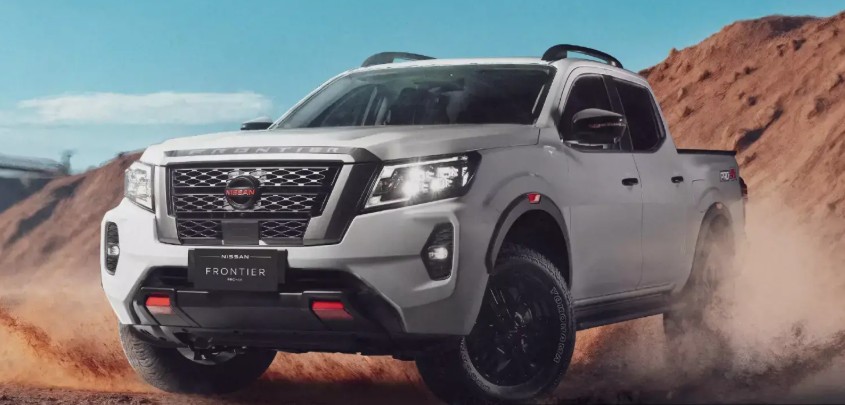
The Nissan Frontier years tell one of the more unusual stories in the midsize pickup world. Some trucks reinvent themselves every few years, piling on new screens, engines, gadgets, and styling tricks. The Frontier has traditionally taken another route. Nissan tends to find a formula it likes, tighten the bolts, and keep building it.
That approach created something unusual: a pickup whose second generation remained on sale for an extraordinarily long stretch.
The Frontier name entered the U.S. market for the 1998 model year, replacing the Nissan Hardbody. Nissan introduced a second-generation Frontier for 2005, while the modern third-generation truck arrived for 2022.
Yet the Frontier story doesn't really begin in 1998. Nissan and Datsun had already spent decades building compact trucks. Nissan traces its pickup heritage in America to 1959, and its broader truck ancestry goes back much further.
So which Nissan Frontier years matter most? Which generation should we choose? And why can two Frontiers separated by more than a decade sometimes feel remarkably similar?
Let's run through the timeline.
Content in this publication
- Nissan Frontier Years at a Glance
- Before the Frontier: Nissan's Long Pickup Heritage
- First-Generation Nissan Frontier Years: 1998–2004
- 1999 Frontier: A Surprisingly Important Year
- 2000–2004 Frontier: Refining the Original
- Second-Generation Nissan Frontier Years: 2005–2021
- Why the 2005–2021 Frontier Lasted So Long
- Early Second-Generation Frontier Years: 2005–2010
- Middle Second-Generation Years: 2011–2019
- 2020 Nissan Frontier: The Strange Transition Year
- 2021 Nissan Frontier: The Final Old-Body Model
- Third-Generation Nissan Frontier Years: 2022–Present
- 2022 Nissan Frontier: The Big Redesign
- PRO-X and PRO-4X Help Define the Modern Frontier
- 2023 Nissan Frontier: Settling Into the New Generation
- 2024 Nissan Frontier: Hardbody Heritage Returns
- 2025 Nissan Frontier: A Meaningful Refresh
- 2026 Nissan Frontier: The Current Evolution
- Which Nissan Frontier Generation Is Best?
- What Are the Most Important Nissan Frontier Years?
- Old Frontier vs New Frontier: How the Personality Changed
- How to Shop Used Nissan Frontier Years
- Should We Avoid the First Model Year of a Frontier Generation?
- What Is the Sweet Spot for a Used Frontier?
- Nissan Frontier Years Compared by Buyer Type
- Are Newer Nissan Frontier Years Always Better?
- How Long Has Nissan Made the Frontier?
- Conclusion: Every Frontier Era Has Its Own Character
- Frequently Asked Questions About Nissan Frontier Years
Nissan Frontier Years at a Glance
For U.S.-market shoppers, the basic Frontier family tree is refreshingly easy to understand.
| Generation | Model Years | What Defined It |
|---|---|---|
| First generation | 1998–2004 | Compact dimensions, simple truck character |
| Second generation | 2005–2021 | Larger midsize platform, long production run |
| Third generation | 2022–present | Modern styling, technology, safety and refinement |
There is one wrinkle worth remembering: 2020 and 2021 are transition years mechanically.
Although those trucks still used the older second-generation body, Nissan installed a new 3.8-liter V6 and nine-speed automatic transmission beginning with the 2020 model year. Nissan rated the engine at 310 horsepower. The same basic powertrain then carried into the redesigned 2022 Frontier.
That makes the Frontier timeline more interesting than a simple three-generation chart suggests.
Before the Frontier: Nissan's Long Pickup Heritage
If we want to understand the Frontier, we need to look beyond the badge.
Nissan's pickup lineage stretches back generations. Nissan's own Heritage Collection identifies the D22-era truck as part of a family whose roots reach into prewar Datsun commercial vehicles. In the United States, Datsun compact pickups began establishing the company's truck reputation decades before anyone had heard the Frontier name.
Datsun Pickups Built the Foundation
Nissan says a compact Datsun pickup reached the American market in 1959. Later trucks gradually introduced features that now seem completely ordinary.
One particularly important milestone came in 1977, when Datsun introduced its King Cab concept. Nissan describes it as the first extended-cab pickup.
Those early trucks helped establish a formula Nissan would keep revisiting: manageable exterior dimensions, useful beds, mechanical toughness, and enough everyday usability to make a pickup viable as more than a work vehicle.
The Nissan Hardbody Came Next
Before Frontier, many American buyers knew Nissan's compact truck simply as the Hardbody.
The nickname fit perfectly. Those square-edged pickups looked like someone carved them from a block of steel using a ruler.
They were unapologetically simple. And when Nissan replaced that truck for 1998, it didn't abandon the philosophy completely. Instead, the company gave its compact pickup a new name.
That name was Frontier.
First-Generation Nissan Frontier Years: 1998–2004
The original Frontier arrived for the 1998 model year.
Compared with today's truck, the first-generation Frontier feels small, narrow, mechanical, and refreshingly uncomplicated. That's precisely why some enthusiasts still like it.
There isn't much visual theater here. You get a pickup rather than a lifestyle statement.
1998: The Frontier Name Arrives
The 1998 Frontier represented the formal transition away from the Hardbody name in the United States.
Its mission remained familiar: provide an attainable compact pickup for owners who didn't necessarily need the bulk of a full-size truck.
Looking back, that's an important distinction. Modern midsize pickups have grown substantially. An early Frontier therefore offers a footprint that today's market barely provides.
If your idea of the perfect truck is something easy to park, easy to see out of, and straightforward to use, these older Frontier years have genuine appeal.
1999 Frontier: A Surprisingly Important Year
The 1999 Nissan Frontier deserves special attention because Nissan introduced the Frontier Crew Cab.
According to Nissan, this was the first compact pickup with four full-size doors.
That's a bigger deal than it might sound today.
Four-door pickups are now everywhere. For millions of drivers, the truck has replaced the family sedan, wagon, or SUV. But that wasn't always normal.
The Frontier Crew Cab helped push compact trucks toward the multipurpose vehicles we now take for granted.
Why the Crew Cab Changed the Formula
A pickup with useful rear doors could suddenly handle more than tools and weekend jobs.
It could carry:
- Children without requiring acrobatics
- Adult rear passengers
- Groceries inside the cab
- Work crews
- Camping gear
- Pets
- Everyday family cargo
In other words, Nissan was helping turn the compact pickup into something that could function as the household's main vehicle.
2000–2004 Frontier: Refining the Original
Through the early 2000s, the first-generation Frontier matured rather than radically reinventing itself.
That's an important pattern when studying Nissan Frontier years. Nissan often develops a truck through incremental revisions instead of throwing away the entire formula every few model years.
By the end of this generation, however, the pickup market was changing.
Competitors were growing. Buyers increasingly wanted stronger engines, larger cabins, better towing ability, and more comfort.
The Frontier needed to move up a weight class.
Second-Generation Nissan Frontier Years: 2005–2021
Then came 2005.
Nissan launched an all-new Frontier for that model year, describing it at the time as a midsize truck with a particularly powerful V6 for the segment.
And then something remarkable happened.
It stayed.
And stayed.
And stayed some more.
2005: Frontier Becomes a Proper Midsize Truck
The second-generation Frontier grew beyond the compact proportions of its predecessor.
This generation established the basic shape many people still picture when someone says "Nissan Frontier": upright grille, muscular fenders, relatively simple cabin, body-on-frame construction, King Cab and Crew Cab choices, and available serious off-road equipment.
Compared with the first generation, it felt substantially more substantial.
For buyers coming from older compact pickups, it was like replacing hiking boots with work boots: still functional, but noticeably heavier-duty.
Why the 2005–2021 Frontier Lasted So Long
Most vehicles would undergo multiple complete redesigns during a 17-model-year span.
The second-generation Frontier didn't.
Why?
Because its fundamentals remained useful.
Truck buyers often care about things such as a sturdy chassis, usable power, sensible dimensions, towing ability, four-wheel drive, bed utility, and manageable ownership costs. A pickup doesn't become useless simply because its dashboard lacks the latest fashion in touchscreens.
That helped the Frontier age differently from a luxury sedan or technology-heavy crossover.
Old-School Became Part of the Appeal
As rivals became increasingly sophisticated, the Frontier's simplicity became part of its personality.
Was the cabin dated near the end?
Absolutely.
Were newer competitors more modern inside?
Certainly.
But some buyers actively wanted fewer complications.
The second-generation Frontier became the automotive equivalent of an old hammer in a toolbox. Nobody admired it because it was new. They admired it because it continued doing the job.
Early Second-Generation Frontier Years: 2005–2010
The earliest years of this generation introduced the core formula that would remain recognizable for well over a decade.
These trucks can attract used buyers because they're now inexpensive relative to newer pickups.
However, age matters.
When shopping for any Frontier approaching or exceeding two decades old, the number on the odometer is only half the story.
We'd pay just as much attention to:
- Maintenance records
- Rust underneath the truck
- Cooling-system condition
- Suspension wear
- Evidence of off-road abuse
- Previous accident repairs
- Fluid leaks
- Four-wheel-drive operation
- Transmission behavior
- Tire wear patterns
A beautifully maintained older truck can be a smarter purchase than a neglected newer one.
Condition Beats Calendar Age
This is worth emphasizing.
When people search for the "best Nissan Frontier year," they often want one magic number.
Used pickups don't work that way.
A one-owner truck with meticulous service history, clean fluids, minimal corrosion, and gentle use can easily be preferable to a theoretically better model year that spent its life towing at maximum load and bouncing across trails.
Year matters.
History matters more.
Middle Second-Generation Years: 2011–2019
By the 2010s, the Frontier had become the veteran of the midsize pickup category.
You may be interested in reading Nissan Frontier Reliability by Year: Best and Worst Years
Its strengths were increasingly obvious precisely because its weaknesses were obvious too.
You weren't buying cutting-edge interior design.
You weren't buying the newest electronic architecture.
You were buying a comparatively traditional pickup.
For some drivers, that's a drawback. For others, it's the whole point.
Why These Years Still Attract Used-Truck Buyers
Middle-production Frontiers can occupy an appealing part of the used market.
They're newer than the earliest 2005-era examples but still belong to the simpler pre-2020 mechanical configuration.
Depending on condition and local pricing, they can make sense for drivers who primarily want:
- A second vehicle
- A work truck
- A camping pickup
- An affordable 4x4
- A truck for occasional towing
- Something less massive than a full-size pickup
They also have years of accumulated ownership experience behind them, which can make pre-purchase research easier.
2020 Nissan Frontier: The Strange Transition Year
If we had to nominate the most unusual year in Frontier history, 2020 would be near the top.
The exterior still belonged to the old generation.
Under the hood, however, Nissan made a dramatic change.
The 2020 Frontier received a new 3.8-liter direct-injection V6 producing 310 horsepower and a nine-speed automatic transmission. Nissan said the engine was developed for U.S. customers and represented a substantial redesign compared with the previous powertrain.
Old Body, New Heart
Imagine restoring a 15-year-old house but installing a brand-new heating system before replacing the exterior.
That's essentially what Nissan did.
The company introduced the powertrain that would serve the upcoming redesigned Frontier while keeping the established second-generation body for another two model years.
It's an unusual combination.
For certain shoppers, that's exactly what makes the 2020 Frontier interesting.
You get much of the old truck's familiar character combined with the newer engine and transmission.
2021 Nissan Frontier: The Final Old-Body Model
The 2021 Frontier repeated that transitional recipe.
Nissan's 2021 press material confirmed the use of the 3.8-liter V6 and nine-speed transmission introduced for 2020, with 310 horsepower and 281 lb-ft of torque.
This makes the 2020–2021 Frontier years their own little chapter.
They're technically second-generation trucks but mechanically connected to what came next.
Who Might Like a 2020 or 2021 Frontier?
These years can be intriguing if we want:
- Traditional Frontier styling
- The later 3.8-liter V6
- A nine-speed automatic
- Fewer years of age than earlier second-generation examples
- A truck without the completely redesigned third-generation cabin
They're not necessarily the automatic answer for every shopper, but they occupy a fascinating sweet spot in the Frontier timeline.
Third-Generation Nissan Frontier Years: 2022–Present
After years of waiting, Nissan finally gave the Frontier a complete visual and interior transformation for 2022.
Nissan officially called the 2022 truck "all-new." Production began in Canton, Mississippi, in 2021 before the truck reached dealerships for the 2022 model year.
The difference was immediate.
Suddenly the Frontier looked like it belonged in the modern midsize-truck battle again.
2022 Nissan Frontier: The Big Redesign
The 2022 Frontier brought tougher exterior styling, a substantially more contemporary interior, newer driver-assistance technology, and improved everyday refinement.
Yet Nissan didn't replace everything.
The 310-horsepower 3.8-liter V6 used in the redesigned truck had already debuted for 2020. Nissan paired it with the nine-speed automatic.
That's useful context because people sometimes assume 2022 introduced both an entirely new body and entirely new engine.
It didn't.
The powertrain got a two-year head start.
The Frontier Finally Felt Modern Again
The redesign corrected one of the old truck's clearest weaknesses: age.
The second-generation model had developed a loyal following, but there was no hiding the fact that its cabin came from another era.
The 2022 Frontier felt vastly fresher from the driver's seat.
The design was more squared-off and assertive, technology was easier to integrate into daily driving, and Nissan could compete with modern rivals without relying purely on value and simplicity.
PRO-X and PRO-4X Help Define the Modern Frontier
The redesigned Frontier lineup included both the rear-wheel-drive PRO-X and four-wheel-drive PRO-4X, in addition to more conventional trims. Nissan's 2022 launch materials highlighted off-road-oriented equipment for the PRO-4X, including an electronic locking rear differential, skid plates, and Bilstein dampers.
For many enthusiasts, PRO-4X represents the Frontier at its most recognizable.
It adds off-road credibility without turning the truck into a gigantic extreme-performance machine.
That's important because not everyone wants a pickup that feels six inches too wide for every trail and parking garage.
2023 Nissan Frontier: Settling Into the New Generation
The 2023 model year continued the basic third-generation recipe.
This is usually what we expect one year after a major redesign. Rather than reinventing the truck immediately, manufacturers refine production, adjust packages, and make smaller equipment changes.
For used buyers, second-year examples can be appealing simply because they're newer than the launch-year truck without necessarily commanding nearly-new pricing forever.
Still, condition, trim, drivetrain, mileage, location, and maintenance history should drive the decision more than the model-year number by itself.
2024 Nissan Frontier: Hardbody Heritage Returns
Nissan leaned heavily into nostalgia for 2024 with the Frontier Hardbody Edition, a visual tribute to its older pickup heritage.
The company used retro-inspired touches to recall the square-edged Nissan Hardbody trucks that preceded the Frontier name. Nissan's own heritage material explicitly ties the modern Hardbody-themed Frontier back to that historical lineage.
It's a clever idea.
Truck buyers are often sentimental. We remember the pickups our parents drove, the first truck we learned to drive, or the battered workhorse that somehow started every morning.
The Hardbody Edition taps directly into that memory.
2025 Nissan Frontier: A Meaningful Refresh
For 2025, Nissan refreshed the current Frontier rather than redesigning it again.
The updates included revised styling and equipment changes, while the familiar 3.8-liter V6 and nine-speed automatic remained. Nissan continued to rate the engine at 310 horsepower and 281 lb-ft of torque.
This is exactly what we'd expect midway through a modern vehicle generation: sharpen the design, address convenience details, expand configurations, and keep the underlying formula recognizable.
Why 2025 Matters
One particularly useful development was broader availability of the longer bed with Crew Cab configurations. The refresh also brought updated exterior details and convenience improvements.
For shoppers who liked the 2022 redesign but wanted Nissan to polish some edges, the refreshed version is an obvious model year to investigate.
2026 Nissan Frontier: The Current Evolution
As of the 2026 model year, the Frontier remains part of the current third generation.
Nissan continues to list the 3.8-liter V6 with 310 horsepower and a nine-speed automatic transmission, while emphasizing towing, four-wheel-drive capability, and the PRO-4X off-road trim.
That consistency is classic Frontier.
Nissan found a powertrain recipe it liked in 2020 and has continued developing the truck around it.
Rather than chasing the most complicated drivetrain possible, the Frontier still leans heavily into naturally aspirated V6 character.
Which Nissan Frontier Generation Is Best?
There isn't one answer because each generation appeals to a different buyer.
Choose a First-Generation Frontier If…
We'd consider a 1998–2004 truck primarily if we value compact dimensions and old-school simplicity.
These trucks can have charm that newer midsize pickups struggle to replicate.
However, age is now a major factor.
Even a relatively low-mileage first-generation Frontier will have decades of exposure to weather, rubber deterioration, corrosion, fluid aging, and previous owners.
Buy the condition, not the odometer.
Choose a 2005–2019 Frontier If…
This era makes sense for someone who wants a traditional midsize pickup without paying for modern technology they don't need.
There's a huge supply of model years within this generation, which gives us plenty of opportunities to compare condition and pricing.
A later, well-maintained example can be especially attractive for practical owners.
Choose a 2020–2021 Frontier If…
These are the oddballs—in a good way.
They're great candidates if the combination of the older body and newer 3.8-liter/nine-speed powertrain appeals to us.
Think of them as bridge models between Frontier eras.
Choose a 2022 or Newer Frontier If…
Go third-generation if daily comfort, modern styling, technology, cabin design, and driver-assistance features matter.
You may be interested in readingNissan Frontier Reliability by Year: Best and Worst YearsYou may be interested in reading
 Is Toyota Estima the Same as Tarago? Complete Comparison
These trucks still feel recognizably Frontier-like, but they no longer ask us to tolerate an interior that looks generations behind the competition.
For someone using a Frontier as an everyday family vehicle, this generation is usually the easiest one to live with.
What Are the Most Important Nissan Frontier Years?
If we're studying the model's history rather than simply shopping, five dates stand above the rest.
- 1998 — Frontier begins: The Frontier name replaces the Hardbody in the U.S. market.
- 1999 — Crew Cab milestone: Nissan introduces its four-full-size-door compact Frontier Crew Cab.
- 2005 — Second generation: The Frontier grows into its long-running midsize form.
- 2020 — New V6 and transmission: A 310-hp 3.8-liter V6 and nine-speed automatic arrive before the next-generation body.
- 2022 — Third generation: Nissan finally launches the fully redesigned modern Frontier.
Those five years explain most of the Frontier story.
Old Frontier vs New Frontier: How the Personality Changed
The original Frontier was essentially a compact pickup.
The second generation became a more muscular midsize truck.
The third generation turned that traditional midsize formula into a much more contemporary daily driver.
Yet there's a common thread.
The Frontier rarely feels as though it's trying too hard.
It isn't pretending to be a luxury sedan with a cargo bed. It isn't built around some wildly experimental identity. Its appeal has typically been simpler: V6 power, body-on-frame toughness, useful dimensions, straightforward controls, and enough capability for the kinds of things most owners actually do.
That Consistency Is the Frontier's Secret Weapon
Some buyers interpret a long-running formula as stagnation.
Others call it familiarity.
We think both interpretations can be true.
A vehicle can stay in production too long and become outdated, while simultaneously becoming attractive to buyers who dislike unnecessary change.
The second-generation Frontier is probably one of the clearest automotive examples of that contradiction.
How to Shop Used Nissan Frontier Years
A model-year guide should narrow the search, not make the purchase for us.
Before buying any used Frontier, inspect the individual truck carefully.
Start With the Frame and Undercarriage
Pickups often encounter harsher lives than cars.
They tow.
They carry weight.
They visit construction sites.
They drive through mud.
They get modified.
They sometimes live where road salt attacks metal every winter.
Get underneath the truck or pay someone who knows what to inspect.
Check How the Truck Was Used
A sparkling exterior doesn't tell us whether the truck spent years towing a heavy trailer.
Look for clues.
Trailer-brake controllers, worn hitch equipment, mismatched tires, damaged skid plates, aftermarket suspension components, and scraped underbody panels can tell a story.
None automatically means "walk away."
They simply tell us to investigate more carefully.
Service History Is Gold
Receipts can be more valuable than shiny paint.
Regular oil changes, scheduled maintenance, cooling-system work, brake servicing, differential-fluid changes, and documented repairs show that someone invested in the truck.
No paperwork doesn't automatically mean poor maintenance, but documentation lowers uncertainty.
Should We Avoid the First Model Year of a Frontier Generation?
You'll often hear generic advice telling buyers never to purchase the first year of a new generation.
That's too simplistic.
The first-generation rule can be useful because redesigns introduce more new components simultaneously. But that doesn't automatically make every launch-year vehicle unreliable.
The Frontier offers an especially interesting example.
Although 2022 introduced a redesigned truck, its V6 and nine-speed automatic had already been used in the Frontier beginning in 2020.
So we should evaluate actual reliability evidence for a particular vehicle rather than blindly treating "first year" as a warning label.
What Is the Sweet Spot for a Used Frontier?
For many buyers, the sweet spot will depend more on budget than generation.
If affordability is the priority, a well-kept later second-generation truck deserves attention.
If we specifically want the newer drivetrain but like the old truck, 2020–2021 is the fascinating middle ground.
If this will be our primary vehicle and we care about modern comfort and technology, 2022-and-newer examples make more sense.
And if nostalgia, compact dimensions, and mechanical simplicity matter more than convenience?
An original-generation Frontier might make us smile every time we climb aboard.
That's worth something too.
Nissan Frontier Years Compared by Buyer Type
| Buyer Type | Frontier Years Worth Considering |
| Old-school compact-truck fan | 1998–2004 |
| Budget midsize-truck shopper | Later 2005–2019 models |
| Wants old body + new powertrain | 2020–2021 |
| Modern daily-driver buyer | 2022–present |
| Off-road-oriented buyer | PRO-4X models across applicable years |
| Retro-style enthusiast | 2024 Hardbody Edition |
| Wants refreshed current design | 2025 and newer |
This isn't a reliability ranking. Think of it as a personality map.
The right Frontier depends on what we expect the truck to do.
Are Newer Nissan Frontier Years Always Better?
Technologically? Usually.
Automatically better for every owner? No.
A newer Frontier gives us benefits such as a more contemporary cabin, improved technology, modern driver-assistance equipment, newer materials, and fewer years of accumulated wear.
But an older Frontier can cost significantly less and may be easier to justify as a work vehicle, weekend truck, or second vehicle.
That's the beauty of the Frontier's long history.
There isn't just one kind of Frontier buyer.
How Long Has Nissan Made the Frontier?
The Frontier name has been part of Nissan's U.S. truck lineup since the 1998 model year.
But Nissan's compact-truck story in America stretches back much further. Nissan highlights more than six decades of U.S. compact and midsize truck experience, while its global heritage goes back to early Datsun commercial vehicles.
That's why looking only at the Frontier badge understates the truck's ancestry.
The Frontier didn't appear from nowhere.
It inherited decades of Nissan truck DNA.
Conclusion: Every Frontier Era Has Its Own Character
The Nissan Frontier years can be divided into three straightforward generations, but the story inside those generations is much richer.
The 1998–2004 Frontier carried Nissan's compact-pickup tradition into a new name.
The 2005–2021 generation transformed the Frontier into a proper midsize truck and then stubbornly stayed in production while the rest of the market raced forward.
The 2020 and 2021 trucks created an unusual bridge between eras by combining the older design with Nissan's newer 3.8-liter V6 and nine-speed transmission.
Then the 2022 Frontier finally brought a comprehensive redesign, giving the pickup the styling, interior, and technology required to feel contemporary again.
And that's what makes the Frontier interesting.
Its history isn't a straight line toward more complexity.
It's more like a sturdy dirt road: long stretches of familiar terrain interrupted by a few major turns.
For shoppers, that creates choice. We can buy simple and old-school, traditional but affordable, mechanically transitional, or thoroughly modern.
The best Nissan Frontier year isn't necessarily the newest one or the cheapest one.
It's the year that gives us the right combination of condition, equipment, capability, price, and personality.
Frequently Asked Questions About Nissan Frontier Years
1. What years are the Nissan Frontier generations?
For the U.S. market, the first-generation Nissan Frontier covers 1998–2004, the second generation covers 2005–2021, and the current third generation began with the 2022 model year. Nissan confirms the 1998 introduction, 2005 second-generation arrival, and 2022 redesign in its historical and product materials.
2. What year did the Nissan Frontier get the 3.8-liter V6?
The Frontier received its 3.8-liter direct-injection V6 for 2020. Nissan rated it at 310 horsepower and paired it with a new nine-speed automatic transmission. Importantly, this happened two model years before the redesigned 2022 Frontier arrived.
3. What year did the Nissan Frontier get redesigned?
The most recent full redesign arrived for 2022. Nissan described the 2022 Frontier as an all-new truck, although its 3.8-liter V6 and nine-speed automatic had already appeared in the previous-generation Frontier.
4. Are 2020 and 2021 Nissan Frontiers second generation or third generation?
They are generally considered second-generation Frontiers, but they're unusual transition models. They retain the older body while using the newer 3.8-liter V6 and nine-speed automatic that carried into the redesigned 2022 truck.
5. Which Nissan Frontier years should we buy used?
There isn't one universally best year. Buyers seeking simplicity may prefer later second-generation trucks, those interested in the old design with the newer drivetrain should investigate 2020–2021, while shoppers prioritizing modern comfort and technology will generally be better served by 2022-and-newer Frontiers. Whatever the year, maintenance history, rust, mileage, previous use, and overall condition should strongly influence the final decision.
You may be interested in readingNissan Frontier Reliability by Year: Best and Worst YearsYou may be interested in reading
Is Toyota Estima the Same as Tarago? Complete ComparisonYou may be interested in reading
 BMW iX2 vs iX1: Which Electric BMW SUV Is Better?
If you want to know other articles similar to Nissan Frontier Years: Generations, Changes, and Best Eras Explained you can visit the category Models.
Nissan Rogue Dark Armor vs Platinum: Which Trim Is Better?

Kia Sorento Models: Complete Guide to Trims, Engines and Versions
BYD Shark 6 vs Ranger vs HiLux: Which Ute Makes the Most Sense in 2026?
BYD Shark 6 vs MG U9: Which Ute Makes More Sense in 2026?
BYD Shark 6 vs Ford Ranger Raptor: Which Performance Ute Is Better in 2026?
BYD Shark 6 vs Kia Tasman: Which Ute Is Better?
Leave a Reply
More content of your interest