

Alfa Romeo MiTo Models: Complete Guide to Trims, Engines and Versions

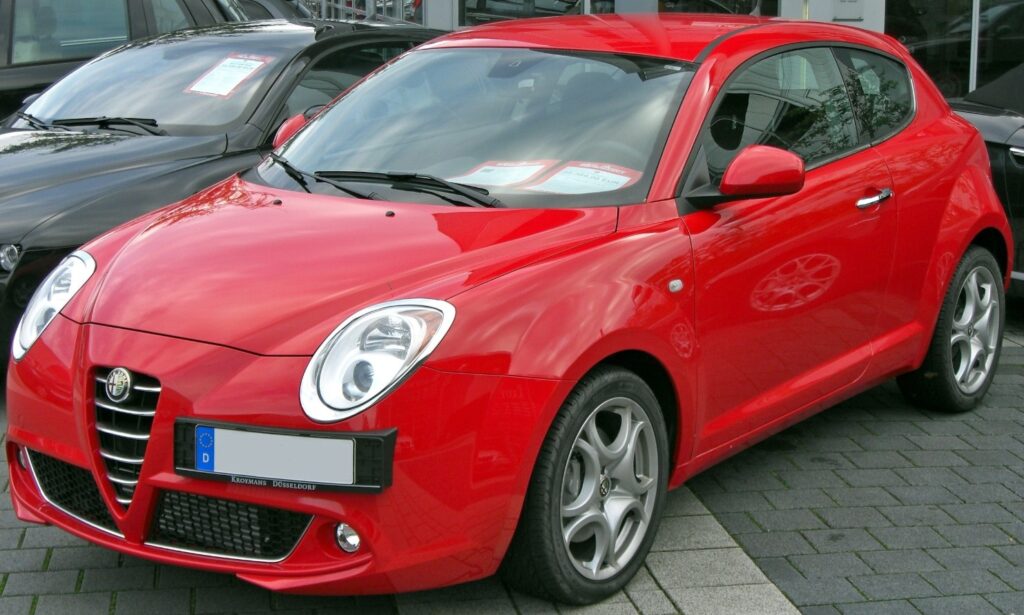
The Alfa Romeo MiTo has always been a slightly rebellious member of the small-car world. While many compact hatchbacks were designed primarily around practicality, low running costs, and sensible ownership, the MiTo arrived wearing Italian tailoring and carrying unmistakable Alfa Romeo attitude.
Produced from 2008 until 2018, the MiTo went through numerous trim levels, engine combinations, cosmetic revisions, and special editions. That means searching through Alfa Romeo MiTo models on the used market can feel surprisingly complicated. Two cars from the same year may look almost identical yet offer very different engines, equipment, suspension setups, and driving experiences.
So, which MiTo should we actually buy?
In this guide, we'll walk through the major Alfa Romeo MiTo models, explain how the range evolved, explore the engines and trim levels, and highlight the versions that make the most sense for different buyers.
Content in this publication
- Understanding the Alfa Romeo MiTo Model Range
- First-Generation Alfa Romeo MiTo Models
- Alfa Romeo MiTo Turismo
- Alfa Romeo MiTo Lusso
- Alfa Romeo MiTo Veloce
- Alfa Romeo MiTo Quadrifoglio Verde
- Alfa Romeo MiTo QV vs Standard MiTo
- Alfa Romeo MiTo Sprint
- Alfa Romeo MiTo Distinctive
- Alfa Romeo MiTo Progression
- Alfa Romeo MiTo Super
- Alfa Romeo MiTo Speciale
- Alfa Romeo MiTo Junior
- Alfa Romeo MiTo Collezione
- 2014 Alfa Romeo MiTo Updates
- 2016 Alfa Romeo MiTo Facelift
- Alfa Romeo MiTo Engine Options
- Alfa Romeo MiTo TwinAir Models
- Alfa Romeo MiTo MultiAir Models
- MiTo Manual vs TCT Automatic
- Alfa DNA Driving Modes Explained
- Which Alfa Romeo MiTo Model Is Fastest?
- Which Alfa Romeo MiTo Model Is Most Economical?
- Best Alfa Romeo MiTo Models for New Drivers
- Best Alfa Romeo MiTo Models for Enthusiasts
- Best MiTo Models for Everyday Driving
- Alfa Romeo MiTo Special Editions
- How to Identify Your Alfa Romeo MiTo Model
- What Changed Between Early and Late MiTo Models?
- What to Check Before Buying Any MiTo Model
- Are Alfa Romeo MiTo Models Reliable?
- Which Alfa Romeo MiTo Model Should We Buy?
- Does the MiTo Still Feel Special Today?
- Alfa Romeo MiTo Models Compared at a Glance
- Why the MiTo Model You Choose Matters
- Are Later Alfa Romeo MiTo Models Better?
- Is the Alfa Romeo MiTo Becoming a Modern Classic?
- The Character That Connects Every MiTo
- Conclusion: Finding the Best Alfa Romeo MiTo Model
- Frequently Asked Questions
Understanding the Alfa Romeo MiTo Model Range
Before comparing specific versions, it helps to understand what the MiTo was trying to achieve.
Alfa Romeo introduced the MiTo as a premium three-door supermini aimed at buyers who wanted something more characterful than an ordinary small hatchback. Its name combines Milano and Torino, referencing Milan, where Alfa Romeo was born, and Turin, where the car was developed and built.
Even the name suggested that this wasn't supposed to be another anonymous city car.
The MiTo shared some mechanical architecture with other small Fiat-group cars, but Alfa gave it distinctive styling, different suspension tuning, unique interiors, and its well-known DNA driving-mode system on many versions.
How Many Alfa Romeo MiTo Models Were There?
There isn't one universal answer because trim names varied depending on year and country.
During the MiTo's decade-long production run, buyers encountered names such as:
- MiTo Progression
- MiTo Distinctive
- MiTo Turismo
- MiTo Lusso
- MiTo Sprint
- MiTo Super
- MiTo Veloce
- MiTo Quadrifoglio Verde
- MiTo Junior
- MiTo Collezione
- MiTo Speciale
There were also numerous limited editions and market-specific packages.
Rather than thinking of the MiTo range as one fixed ladder, we should picture it as a wardrobe that Alfa kept rearranging. The basic clothes remained familiar, but the labels, fabrics, and accessories changed.
First-Generation Alfa Romeo MiTo Models
Technically, the MiTo remained one generation throughout its production life. However, Alfa Romeo updated it several times.
The earliest cars arrived in 2008 and established the basic formula: three doors, compact dimensions, sporty styling, and a mixture of economical and performance-focused engines.
Early MiTo Entry-Level Models
Lower-specification early cars concentrated on affordability while retaining the styling that made the MiTo attractive.
Depending on the market, entry trims included versions such as Turismo or Progression.
These cars typically provided the basic features most owners expected without piling on luxury equipment.
They could include:
- Electric windows
- Central locking
- Air conditioning on many versions
- Alloy wheels depending on specification
- CD or multimedia audio systems
- Alfa DNA driving modes on compatible versions
- Stability and traction-control systems
An entry-level MiTo may not have the visual drama of a Quadrifoglio Verde, but it often makes more sense for everyday driving.
Who Should Consider a Basic MiTo?
Drivers who primarily want the Alfa styling experience without expensive performance hardware should give these cars serious consideration.
A modest petrol engine paired with a straightforward specification can also mean fewer expensive components to worry about as the car ages.
Alfa Romeo MiTo Turismo
The Turismo badge appeared prominently in several markets, particularly during the earlier years.
It was generally positioned toward the affordable end of the range.
The Turismo wasn't designed to overwhelm us with technology. Instead, it delivered the fundamentals wrapped in that unmistakable MiTo silhouette.
Imagine buying an Italian suit without ordering every optional silk lining. The basic shape is still there.
MiTo Turismo Equipment
Exact equipment depends heavily on model year, but Turismo versions could feature essentials such as electric windows, central locking, basic climate controls, and comparatively modest wheels.
That simplicity can now be a strength.
Used cars loaded with aging electrical gadgets aren't always desirable. Sometimes fewer toys mean fewer potential headaches.
Alfa Romeo MiTo Lusso
Move higher through many early MiTo ranges and we encounter the Lusso.
As the Italian word suggests, Lusso versions leaned more toward comfort and style.
Depending on year and market, we may find upgrades including better interior trim, larger alloy wheels, improved climate control, upgraded upholstery, and additional convenience features.
Is the MiTo Lusso Worth Buying?
For everyday use, it can be one of the more appealing older MiTo specifications.
We get much of the visual appeal and a nicer cabin without automatically stepping into the running costs associated with the hottest performance versions.
That makes the Lusso something of a sweet spot.
Alfa Romeo MiTo Veloce
The word Veloce means "fast" in Italian, and Alfa Romeo has used the badge on various sporty models throughout its history.
On the MiTo, Veloce versions generally offered a sportier appearance and stronger specifications than ordinary trims.
Depending on production year, equipment could include sports seats, distinctive wheels, exterior styling upgrades, and more powerful engine choices.
MiTo Veloce Driving Character
A Veloce tends to make sense for drivers who want the MiTo to feel genuinely sporty without necessarily buying the most extreme version available.
Think of it as the middle ground between stylish commuter and miniature hot hatch.
It looks the part, but it doesn't always demand the compromises of the flagship performance car.
Alfa Romeo MiTo Quadrifoglio Verde
Now we reach one of the most interesting Alfa Romeo MiTo models: the Quadrifoglio Verde.
Quadrifoglio Verde translates to "Green Cloverleaf," a badge historically associated with Alfa Romeo performance cars.
The MiTo Quadrifoglio Verde brought that performance branding into the small-hatchback segment.
What Makes the MiTo Quadrifoglio Verde Special?
These cars were typically fitted with a 1.4-litre turbocharged MultiAir petrol engine producing around 170 PS, although specification details can vary by market and production year.
That power in a relatively compact hatchback transformed the MiTo's personality.
Acceleration became much stronger, overtaking felt effortless by supermini standards, and the car had considerably more character than lower-powered models.
Quadrifoglio Verde Performance Features
Depending on year, features could include:
- 1.4-litre turbo MultiAir engine
- Approximately 170 PS
- Sport-oriented suspension
- Larger alloy wheels
- Upgraded brakes
- Performance-themed interior details
- Alfa DNA driving selector
- More aggressive exterior styling
Some later versions were offered with Alfa's TCT dual-clutch automatic transmission.
For enthusiasts, the Quadrifoglio Verde is usually one of the first MiTo versions worth investigating.
Alfa Romeo MiTo QV vs Standard MiTo
Is the Quadrifoglio Verde automatically the best MiTo?
Not necessarily.
A QV is faster, more distinctive, and more desirable to many enthusiasts, but there are trade-offs.
Expect potentially higher expenses for:
- Insurance
- Tyres
- Brakes
- Fuel
- Suspension components
- Performance-specific parts
Meanwhile, a less powerful MiTo can still feel lively on a winding road.
The best car isn't always the quickest one. Sometimes the car we can enjoy without constantly watching the fuel gauge wins.
Alfa Romeo MiTo Sprint
The Sprint badge appeared during later periods of MiTo production and gave the car a stronger sporting flavour without necessarily moving all the way to flagship performance territory.
Sprint models commonly combined attractive equipment with sporty visual details.
What Does the MiTo Sprint Offer?
Specification varies, but buyers could encounter features such as:
- Sportier alloy wheels
- Rear privacy glass
- Sports-style upholstery
- Dark exterior details
- Upgraded infotainment
- Sport-focused interior trim
For used-car buyers, Sprint versions can be particularly attractive because they often look more expensive than they actually are.
Alfa Romeo MiTo Distinctive
The Distinctive trim appeared in several European MiTo ranges and usually sat above basic versions.
It generally combined comfort, design, and convenience rather than concentrating purely on performance.
We might think of Distinctive as the sensible buyer's stylish choice.
You aren't shouting across the car park, but you're definitely not disappearing into it either.
Typical Distinctive Features
Depending on model year, equipment could include upgraded alloy wheels, automatic climate features, steering-wheel controls, better interior materials, and enhanced infotainment.
Because Alfa frequently altered equipment lists, buyers should always verify the exact specification of an individual car rather than relying entirely on its badge.
Alfa Romeo MiTo Progression
Progression versions generally occupied an accessible position in later European lineups.
They offered relatively modest specification while keeping the essential MiTo identity intact.
For buyers interested primarily in economical transport, the Progression can be worth considering.
It's especially appealing when paired with one of the smaller TwinAir or MultiAir engines.
Alfa Romeo MiTo Super
Later in the MiTo's life, Alfa introduced the Super designation.
The name may sound dramatic, but the Super was primarily designed as a well-equipped mainstream version rather than an outright performance model.
Why the MiTo Super Is Interesting
Later MiTo Super cars can provide a good balance between equipment, age, and affordability.
By this stage, Alfa had refined the interior, updated infotainment systems, and refreshed exterior details.
As a result, later Super models often feel more contemporary than early MiTos without becoming excessively expensive.
Alfa Romeo MiTo Speciale
Speciale versions typically added appearance and equipment upgrades designed to make the car feel more exclusive.
These cars are particularly worth examining individually because specifications could differ substantially between markets.
A Speciale may include upgraded wheels, sports styling, premium interior materials, or technology packages.
The badge tells us the car is different. The equipment list tells us how different.
Alfa Romeo MiTo Junior
Alfa revived the Junior name for certain MiTo editions.
The Junior generally played on the youthful personality of the car, combining visual upgrades and attractive equipment with relatively accessible engines.
For someone buying their first Alfa Romeo, it can be an appealing route into the brand.
Is the MiTo Junior a Performance Model?
Not necessarily.
That's an important distinction.
A sporty badge or body kit doesn't automatically mean a high-output engine sits underneath.
When shopping for any MiTo, we should always confirm the engine code, power output, gearbox, and specification separately.
Alfa Romeo MiTo Collezione
The Collezione designation usually emphasised style and premium presentation.
You may be interested in reading What Year Nissan Frontier Is Best? The Smart Buyer’s Guide
Depending on market and year, these cars could feature distinctive upholstery, wheels, trim finishes, and exterior colours.
They are less about lap times and more about making a statement.
And let's be fair—that approach suits the MiTo perfectly.
This has always been a car people often buy with their eyes first.
2014 Alfa Romeo MiTo Updates
The MiTo received several changes during its production life rather than one giant redesign.
Around the middle of the decade, Alfa revised styling details, engines, equipment, and interior technology.
The familiar shield grille remained, but small changes helped keep the car looking fresh.
Interior and Technology Improvements
Updated models gained newer infotainment systems in many specifications, including touchscreen units depending on model and market.
Cabin materials and trim combinations also evolved.
These changes matter when buying used because a later MiTo can feel noticeably more modern than an early example even though the fundamental body design barely changed.
2016 Alfa Romeo MiTo Facelift
Another important update arrived around 2016.
Alfa refreshed the MiTo to align its styling more closely with newer models such as the Giulia.
The changes weren't revolutionary, but they sharpened the appearance.
Changes to Later MiTo Models
Updates included revisions to the front grille, trim details, badging, wheel designs, interior finishes, and model structure.
The company also simplified or reorganised trim levels in several markets.
Later examples therefore tend to be among the easiest MiTos to recommend for buyers who value modern appearance over historical originality.
Alfa Romeo MiTo Engine Options
Understanding MiTo models requires understanding their engines because two visually similar cars can behave very differently.
Across its lifespan, the MiTo was offered with several petrol and diesel engines.
MiTo Petrol Engines
Petrol options included variations of:
- 0.9-litre TwinAir
- 1.4-litre naturally aspirated petrol
- 1.4-litre turbo petrol
- 1.4-litre MultiAir turbo
Power output varied considerably.
At one end, we have economical engines designed for city driving. At the other sits the roughly 170 PS Quadrifoglio Verde.
MiTo Diesel Engines
Diesel choices included versions of Alfa and Fiat's MultiJet technology, particularly 1.3-litre and 1.6-litre engines in various power outputs.
Diesel MiTos appealed to drivers covering higher annual mileage because of their stronger low-speed torque and fuel economy.
For modern short-distance urban use, though, diesel isn't automatically the obvious choice.
Should We Buy a Diesel MiTo Today?
If we drive long motorway journeys regularly, perhaps.
If the car spends its life making five-minute trips to shops and cafés, petrol is usually easier to justify.
Diesel particulate-filter systems generally prefer sustained journeys that allow proper regeneration.
Alfa Romeo MiTo TwinAir Models
The 0.9-litre TwinAir engine is one of the most distinctive powerplants offered in the MiTo.
With only two cylinders, it has an unusual soundtrack and plenty of personality.
On paper, that tiny displacement sounds almost comical.
Then the turbo wakes up.
TwinAir Advantages
The TwinAir is compact, relatively light, and entertaining when driven properly.
Its advantages include:
- Distinctive character
- Reasonable performance in turbocharged form
- Small engine capacity
- Potentially good fuel efficiency
- Lively urban driving
Real-world fuel economy, however, depends heavily on driving style. Push the engine hard and the promised economy can disappear surprisingly quickly.
Alfa Romeo MiTo MultiAir Models
MultiAir technology became an important part of the MiTo petrol range.
These engines use sophisticated control of intake valves to improve efficiency, response, and performance.
They can feel significantly stronger than their capacity suggests.
Why MultiAir MiTos Are Popular
A turbocharged 1.4 MultiAir engine suits the MiTo exceptionally well.
It provides enough torque to make the car entertaining while keeping the whole package compact.
Still, proper maintenance matters enormously. Service history is more valuable than shiny paint when buying a used example.
MiTo Manual vs TCT Automatic
Most MiTos were associated with manual gearboxes, but Alfa also offered its TCT dual-clutch automatic transmission on selected versions.
TCT stands for Twin Clutch Transmission.
Which Gearbox Is Better?
A manual usually gives the MiTo a more traditional hot-hatch feel.
We shift gears ourselves, stay involved, and make the little Alfa dance.
The TCT appeals more to drivers dealing with traffic or wanting automatic convenience.
Neither choice is universally superior.
Condition and maintenance history should influence the decision more than ideology.
Alfa DNA Driving Modes Explained
Many MiTo models feature Alfa Romeo's DNA system.
The initials represent three driving settings:
- Dynamic
- Natural
- All Weather
The system adjusts characteristics such as throttle response, steering assistance, and electronic stability systems depending on configuration.
Dynamic Mode
Dynamic mode sharpens the car's responses.
This is where the MiTo starts loosening its tie.
Throttle response becomes more immediate, and compatible turbo engines can feel noticeably more eager.
Natural Mode
Natural is intended for everyday driving.
It's the setting most owners will use most of the time.
All Weather Mode
All Weather adjusts electronic systems to provide greater security in slippery conditions.
It's useful in rain, snow, or other low-grip situations.
The DNA selector gives even ordinary MiTo models a little theatrical flair—and what would an Alfa be without theatre?
Which Alfa Romeo MiTo Model Is Fastest?
For most mainstream production versions, the approximately 170 PS Quadrifoglio Verde sits at the top of the performance hierarchy.
It offers the strongest acceleration and the most overtly sporting character.
Later performance-oriented versions continued that idea even when naming conventions changed in some markets.
But outright speed shouldn't be our only consideration.
A lighter-powered MiTo driven near its limits can sometimes be more enjoyable on ordinary roads than a faster model barely stretching its legs.
Which Alfa Romeo MiTo Model Is Most Economical?
Economy varies with engine, gearbox, driving conditions, and maintenance.
Smaller TwinAir petrol models and MultiJet diesels were marketed strongly around efficiency.
For long-distance drivers, diesel versions traditionally offered particularly attractive consumption.
For shorter journeys, smaller petrol cars may provide the better ownership compromise.
There is no magical trim badge that guarantees low running costs. Engine choice matters far more.
Best Alfa Romeo MiTo Models for New Drivers
If we're buying a MiTo as a first car, insurance and maintenance costs may matter more than raw performance.
Lower-powered petrol versions are usually the logical place to start.
Look for:
- Modest engine output
- Strong maintenance history
- Standard wheel sizes
- Unmodified suspension
- Good tyres
- Clean insurance history
- Evidence of regular servicing
A huge set of wheels and an aggressive exhaust may look exciting, but insurance companies don't always share our enthusiasm.
Best Alfa Romeo MiTo Models for Enthusiasts
Enthusiasts will naturally gravitate toward the Quadrifoglio Verde or more powerful turbo MultiAir versions.
These cars capture the MiTo's personality at its most concentrated.
They combine compact dimensions with turbocharged performance and distinctive Italian styling.
However, a cheaper turbo MiTo with good maintenance may be a smarter purchase than a neglected QV wearing a prestigious badge.
Condition beats specification.
Almost every time.
Best MiTo Models for Everyday Driving
For ordinary commuting and occasional longer journeys, mid-range models such as Super, Distinctive, Lusso, Sprint, or similar market-specific equivalents can offer an excellent balance.
We get better equipment than entry-level cars without automatically paying the running-cost penalty associated with the strongest engines.
A sensible 1.4 petrol or well-maintained smaller turbo engine can make an especially pleasant everyday package.
Alfa Romeo MiTo Special Editions
Like many stylish European hatchbacks, the MiTo accumulated numerous special editions throughout its life.
Some were national-market exclusives, while others were created around particular styling themes.
Special editions could introduce unique:
- Paint colours
- Alloy wheels
- Interior trim
- Badging
- Upholstery
- Technology packages
- Exterior styling details
We shouldn't assume a special edition is mechanically superior.
Sometimes the difference is mostly lipstick.
You may be interested in readingWhat Year Nissan Frontier Is Best? The Smart Buyer’s GuideYou may be interested in reading
 Toyota Estima vs Vellfire: Which Toyota MPV Is Better?
But on a car as design-focused as the MiTo, lipstick can matter.
How to Identify Your Alfa Romeo MiTo Model
Used-car advertisements are not always accurate.
Sellers sometimes confuse trim levels, engine outputs, or special-edition names.
If we're trying to identify a particular MiTo, we should inspect multiple sources of information.
Check the VIN and Registration Data
Vehicle identification records can help confirm engine specification and production details.
Check Original Equipment
Compare wheels, seats, badges, infotainment, steering-wheel design, climate-control layout, and exterior trim against period specifications.
Check the Engine
Never rely solely on badges.
Cars can acquire replacement badges remarkably easily during ten or fifteen years on the road.
Check the Service Documentation
Invoices and original handbooks sometimes reveal the precise engine and trim designation.
What Changed Between Early and Late MiTo Models?
Park a 2009 MiTo beside a 2018 example and they clearly belong to the same family.
Yet the later car feels more polished.
Over time Alfa updated infotainment, trim materials, engines, exterior details, wheels, model names, and available equipment.
The overall engineering concept remained recognisable, but the edges became smoother.
Early MiTo Advantages
Early cars can offer:
- Lower purchase prices
- Simpler equipment
- Original styling details
- Strong value for enthusiasts on a budget
Later MiTo Advantages
Later cars may provide:
- Fresher styling
- Newer infotainment
- Younger components
- Improved equipment
- Updated engines
- More contemporary interiors
Age alone doesn't decide which is better.
A meticulously maintained 2010 MiTo can be a far smarter purchase than an abused 2017 car.
What to Check Before Buying Any MiTo Model
This deserves attention because the MiTo is now exclusively a used-car proposition.
Its condition matters far more than the brochure specification it had when new.
Before buying, examine service records carefully and look for warning lights, unusual engine noise, gearbox behaviour, suspension knocks, uneven tyre wear, electrical glitches, and evidence of neglected maintenance.
A Practical MiTo Buying Checklist
Pay particular attention to:
- Complete or convincing service history
- Correct engine oil specification
- Timing-belt history where applicable
- Battery condition
- Suspension noises
- Steering operation
- Turbo performance on turbocharged versions
- Warning lights
- Air-conditioning operation
- Clutch condition
- TCT gearbox behaviour where fitted
- Tyre quality and matching brands
- Signs of crash repairs
- Evidence of poor modifications
On MultiAir-equipped cars, maintenance quality deserves special attention.
Skipping servicing to save a little money is like refusing to replace the oil in a fine espresso machine and then wondering why breakfast becomes expensive.
Are Alfa Romeo MiTo Models Reliable?
The answer depends enormously on maintenance.
The MiTo isn't a car we should buy purely by mileage and colour.
Engine type, previous ownership, servicing, modifications, and driving history all matter.
Well-maintained examples can provide years of enjoyable service. Neglected cars can quickly become frustrating.
That's true of most aging European cars, but perhaps particularly relevant when sophisticated turbo engines and electronic systems are involved.
Which Alfa Romeo MiTo Model Should We Buy?
Let's simplify the decision.
For inexpensive everyday driving, start with a lower-powered petrol model.
For equipment and comfort, consider mid-level trims such as Lusso, Distinctive, Super, Sprint, or equivalent versions from your market.
For long-distance economy, a well-maintained MultiJet diesel may still make sense.
For driving enjoyment, turbocharged MultiAir versions are particularly appealing.
For maximum performance and collector interest, look toward the Quadrifoglio Verde.
The badge isn't everything, though.
A carefully maintained ordinary MiTo is usually better than a neglected flagship.
Does the MiTo Still Feel Special Today?
Yes—and arguably more so now.
Modern small cars increasingly share similar proportions, touchscreen-heavy interiors, and efficiency-focused personalities.
The MiTo comes from a slightly different era.
It has three doors. It has dramatic headlights. Its grille looks like nothing else in the supermarket car park.
Even a decade later, you rarely mistake it for something ordinary.
And that's perhaps why the MiTo continues to attract owners.
It isn't perfect.
It never needed to be.
Alfa Romeo MiTo Models Compared at a Glance
Although specifications vary by country and year, we can broadly categorise the range like this:
| MiTo Type | Main Appeal | Typical Buyer |
|---|---|---|
| Entry-level trims | Low purchase cost | First-time buyers |
| Turismo/Progression | Simple everyday use | Budget-conscious drivers |
| Lusso/Distinctive | Comfort and equipment | Daily drivers |
| Sprint | Sporty styling | Style-focused buyers |
| Super | Balanced later specification | All-round buyers |
| Junior/Speciale | Distinctive appearance | Buyers wanting individuality |
| Veloce | Sportier character | Enthusiastic drivers |
| Quadrifoglio Verde | Maximum performance | Hot-hatch enthusiasts |
| MultiJet diesel | Fuel economy | High-mileage drivers |
| TwinAir | Character and efficiency | Urban drivers |
This isn't a rigid hierarchy because Alfa changed specifications repeatedly.
Treat it as a map rather than a rulebook.
Why the MiTo Model You Choose Matters
At first glance, MiTos can appear surprisingly similar.
Same triangular grille.
Same rounded rear lights.
Same compact three-door body.
Underneath, however, the personalities can be completely different.
A low-output petrol car is an economical urban companion. A diesel is a motorway commuter. A 170 PS Quadrifoglio Verde is a miniature performance car.
That's why we should never shop for "a MiTo" without narrowing down the engine and trim.
We're effectively choosing between several characters wearing the same Italian jacket.
Are Later Alfa Romeo MiTo Models Better?
Later isn't automatically better, but newer cars naturally benefit from fewer years of aging.
Later MiTos can also have more modern infotainment and subtly refreshed styling.
On the other hand, earlier cars may provide better value and occasionally simpler equipment.
The smartest strategy is to compare condition rather than registration year alone.
If two cars cost the same and one has excellent service records while the newer example has almost nothing, we'd take the documented car.
Paperwork isn't glamorous.
Neither is an unexpected repair bill.
Is the Alfa Romeo MiTo Becoming a Modern Classic?
Certain versions certainly have ingredients that could make them increasingly interesting to enthusiasts.
The MiTo was Alfa Romeo's distinctive take on the premium supermini, and production ended without a direct replacement.
Performance versions such as the Quadrifoglio Verde are naturally the most obvious candidates for enthusiast attention.
Originality will likely matter increasingly.
Unmodified cars with excellent history, desirable colours, and factory specifications tend to stand out as used examples age.
Nobody can guarantee future collectability, of course.
Buy one because you enjoy it first.
If values rise later, consider that the espresso after dinner.
The Character That Connects Every MiTo
From humble entry-level versions to the Quadrifoglio Verde, every MiTo shares something important: identity.
The car was never trying to win purely through boot volume or rear-seat access.
It wanted us to turn around and look at it after parking.
That may sound irrational.
Car enthusiasts are rarely completely rational.
A MiTo trades some practicality for personality, and for the right owner that's exactly the point.
Conclusion: Finding the Best Alfa Romeo MiTo Model
The enormous variety of Alfa Romeo MiTo models can initially make the used-car market seem confusing, but the range becomes much easier to understand once we separate trim level from engine choice.
Entry-level versions focus on affordability. Lusso, Distinctive, Super, and similar mid-level trims add comfort and equipment. Sprint and Veloce bring stronger sporting flavour, while the Quadrifoglio Verde sits at the performance end of the spectrum. TwinAir models emphasise character and efficiency, while MultiJet diesels suit higher-mileage driving.
But one principle matters more than any badge on the boot: buy the best-maintained MiTo you can find.
These cars are old enough that history now matters more than brochure statistics. A properly serviced, original, carefully owned MiTo can be a wonderfully distinctive small car. A neglected example can turn Italian romance into Italian drama remarkably quickly.
Choose carefully, inspect properly, and don't become obsessed with chasing the highest specification.
Sometimes the best Alfa isn't the fastest one.
It's the one waiting outside that still makes us smile before we've even opened the door.
Frequently Asked Questions
1. What are the main Alfa Romeo MiTo models?
The MiTo was sold in numerous trims depending on year and country, including Turismo, Lusso, Progression, Distinctive, Sprint, Super, Veloce, Junior, Speciale, Collezione, and Quadrifoglio Verde. Exact model structures varied between markets.
2. Which Alfa Romeo MiTo model is the fastest?
The Quadrifoglio Verde is generally regarded as the flagship performance MiTo. Popular versions used a turbocharged 1.4-litre MultiAir engine producing around 170 PS, giving the small hatchback considerably stronger acceleration than mainstream versions.
3. Which Alfa Romeo MiTo model is best to buy used?
For most drivers, a well-maintained mid-range petrol MiTo offers the best balance of cost, equipment, and usability. Enthusiasts may prefer a turbo MultiAir or Quadrifoglio Verde. Maintenance history should always matter more than trim level alone.
You may be interested in readingWhat Year Nissan Frontier Is Best? The Smart Buyer’s GuideYou may be interested in reading
Toyota Estima vs Vellfire: Which Toyota MPV Is Better?You may be interested in reading
Toyota Estima vs Kia Carnival: Which MPV Is Better?4. What is the difference between MiTo Sprint and Quadrifoglio Verde?
Sprint versions generally focus on sporty styling and upgraded equipment, while the Quadrifoglio Verde is a genuine high-performance version with a significantly more powerful engine and performance-oriented mechanical upgrades. Specifications vary by year and market.
5. Did Alfa Romeo make different generations of the MiTo?
The MiTo remained fundamentally one generation between 2008 and 2018, but Alfa Romeo introduced several updates and facelifts during that period. Later cars received refreshed styling, revised model structures, updated engines, and improved infotainment.
If you want to know other articles similar to Alfa Romeo MiTo Models: Complete Guide to Trims, Engines and Versions you can visit the category Models.
Volkswagen T-Cross vs Volkswagen T-Roc: Which Is Better?

Hyundai Tucson Weight: Complete Guide to Curb, Gross, and Payload Specs

Honda Passport vs Toyota 4Runner: Which SUV Is Better?
Honda Passport vs Ford Bronco: Which SUV Is Better?
Honda Passport vs Ford Explorer: Which SUV Is Better?
Honda Passport or Pilot: Which SUV Is Better?
Leave a Reply
More content of your interest