
Alfa Romeo MiTo Weight: Complete Guide by Engine and Model

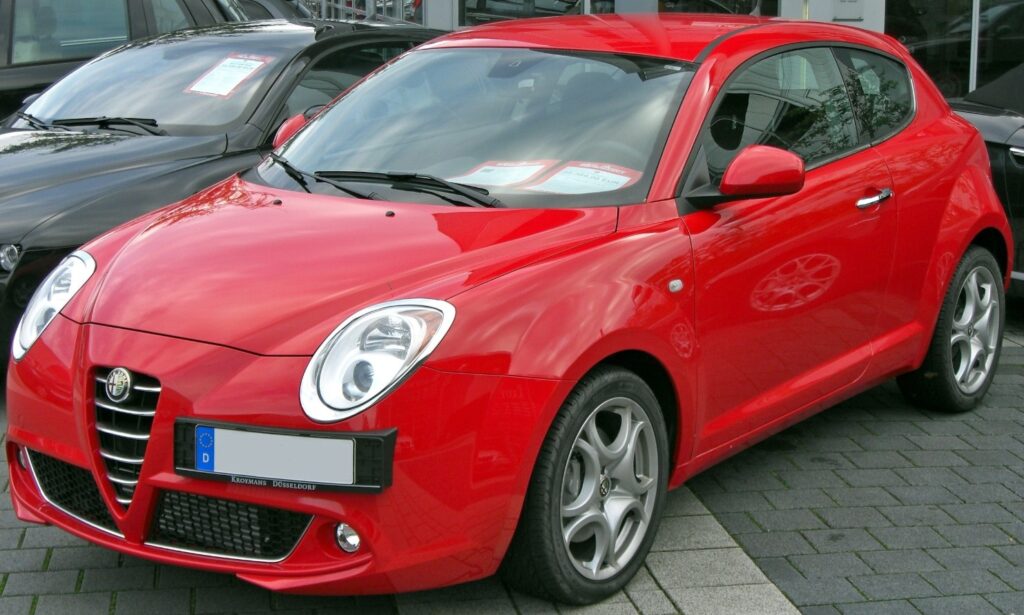
The Alfa Romeo MiTo weight is one of those specifications that seems simple until we start comparing different versions of the car. Search for the figure online and we might see 1,070 kg on one page, 1,145 kg somewhere else, and more than 1,200 kg for another model. So which number is correct?
Potentially, all of them.
The Alfa Romeo MiTo was sold with several petrol and diesel engines, different transmissions, equipment packages, and performance versions. That means there isn't one universal MiTo weight. Depending on configuration, official DIN kerb-weight figures published for the model have ranged from roughly 1,070 kg to 1,205 kg.
For such a stylish little hatchback, those are pleasantly modest numbers. The MiTo is not featherweight in the old-school sense, but compared with many modern cars packed with hybrid systems, giant wheels, batteries, cameras, and layers of safety technology, it feels refreshingly lean.
In this guide, we'll break down the Alfa Romeo MiTo weight, explain why different versions weigh more than others, convert the figures into pounds, and look at how weight affects performance, handling, fuel economy, braking, and everyday usability.
Content in this publication
- How Much Does an Alfa Romeo MiTo Weigh?
- Alfa Romeo MiTo Kerb Weight Explained
- Alfa Romeo MiTo Weight in KG
- Alfa Romeo MiTo Weight in Pounds
- Alfa Romeo MiTo Weight by Engine
- Alfa Romeo MiTo QV Weight
- Does the Alfa Romeo MiTo TCT Weigh More?
- Why Is the Alfa Romeo MiTo Relatively Light?
- How Alfa Romeo MiTo Weight Affects Performance
- How Weight Influences MiTo Handling
- Does MiTo Weight Affect Fuel Economy?
- What Happens When We Add Passengers?
- Alfa Romeo MiTo Gross Vehicle Weight
- Does Wheel Size Change the MiTo's Weight?
- How MiTo Weight Affects Braking
- Is the Alfa Romeo MiTo Heavy for a Small Car?
- Does a Lighter MiTo Mean Faster Acceleration?
- Alfa Romeo MiTo Weight and Driving Feel
- Does Weight Affect MiTo Suspension Wear?
- How to Find the Exact Weight of Your Alfa Romeo MiTo
- Why MiTo Weight Matters When Buying Used
- What Is the Best MiTo Weight for Performance?
- Why the MiTo's Weight Still Feels Refreshing Today
- Alfa Romeo MiTo Weight: Key Takeaways
- Conclusion: Is the Alfa Romeo MiTo a Lightweight Car?
- Frequently Asked Questions About Alfa Romeo MiTo Weight
How Much Does an Alfa Romeo MiTo Weigh?
Most Alfa Romeo MiTo versions sit somewhere around 1,070 to 1,205 kg in DIN kerb weight, depending on the engine and specification. That translates to approximately 2,359 to 2,657 pounds.
One period Alfa Romeo brochure listed DIN kerb weights of 1,080, 1,090, 1,135, 1,145, 1,150, 1,170 and 1,205 kg across different powertrains.
A later UK brochure showed figures around 1,070 kg and 1,130 kg for selected versions, further illustrating how specification changes altered the number during the MiTo's production life.
So, as a quick reference:
| Alfa Romeo MiTo weight measure | Approximate figure |
|---|---|
| Light MiTo versions | 1,070–1,100 kg |
| Typical petrol versions | 1,080–1,150 kg |
| Heavier turbo/diesel versions | 1,140–1,205 kg |
| Approximate weight in pounds | 2,359–2,657 lb |
| Body style | 3-door hatchback |
These aren't interchangeable figures for every MiTo. Engine, gearbox, trim and manufacturing year matter.
Why You'll Find Different MiTo Weight Figures Online
This is where things become slightly messy.
Manufacturers and automotive databases don't always use precisely the same definition of vehicle weight. One source might publish DIN kerb weight, another might use an EU figure including an allowance for the driver, while another could list a model with different equipment.
Even apparently identical cars can therefore show slightly different figures.
Think of it like asking someone how much their suitcase weighs. Are we weighing the empty suitcase, the packed suitcase, or the packed suitcase with someone's backpack sitting on top?
The terminology matters.
Alfa Romeo MiTo Kerb Weight Explained
Kerb weight generally describes a vehicle ready to drive with its normal operating fluids and necessary equipment but without its full passenger or cargo load.
However, standards differ.
A DIN kerb-weight figure isn't necessarily identical to an EU kerb-weight figure. Some published European measurements can incorporate an assumed driver and luggage allowance, while DIN figures may not.
That explains why we should be cautious when comparing a MiTo weight from one website with a rival car listed by another source.
DIN Weight vs EU Weight
When checking specifications, look for terms such as:
- DIN kerb weight
- EU kerb weight
- Curb weight
- Unladen weight
- Gross vehicle weight
- Maximum permissible weight
They're related, but they don't necessarily describe exactly the same thing.
For an accurate comparison between two cars, we want measurements calculated using the same standard.
Alfa Romeo MiTo Weight in KG
The easiest way to understand the MiTo is to think of it as roughly a 1.1-tonne hatchback.
At the lighter end of the range, some versions come in at approximately 1,070–1,080 kg. More powerful and mechanically heavier models can creep toward 1,200 kg.
A typical 1.4-litre turbo MiTo, for example, may weigh around the mid-1,100-kg region depending on its exact configuration. One published specification for an earlier 1.4 Turbo lists a curb weight of 1,145 kg.
That's a useful benchmark because it shows where many of the MiTo's sportier versions sit.
Alfa Romeo MiTo Weight in Pounds
For readers more comfortable with pounds, the MiTo weighs approximately 2,359 to 2,657 lb across much of the range.
Some useful conversions are:
- 1,070 kg = approximately 2,359 lb
- 1,080 kg = approximately 2,381 lb
- 1,100 kg = approximately 2,425 lb
- 1,145 kg = approximately 2,524 lb
- 1,170 kg = approximately 2,579 lb
- 1,205 kg = approximately 2,657 lb
Suddenly the MiTo sounds heavier when we say "two and a half thousand pounds," doesn't it?
Yet in automotive terms, that's still relatively compact.
Alfa Romeo MiTo Weight by Engine
Engine choice makes a meaningful difference to vehicle weight.
A small naturally aspirated petrol engine is generally lighter than a larger diesel installation carrying heavier internal components and associated hardware. Turbochargers, intercoolers, transmission choices and emissions equipment can also add kilograms.
That's why two MiTos parked beside each other can look virtually identical while having noticeably different kerb weights.
0.9 TwinAir MiTo Weight
The 0.9-litre TwinAir represents the lightweight philosophy rather nicely.
Its tiny two-cylinder engine occupies less space and carries less mass than many larger four-cylinder powerplants. Depending on year and specification, TwinAir-equipped MiTos tend to sit toward the lighter side of the range.
That contributes to the car's lively character.
A tiny engine producing modest power doesn't sound particularly exciting on paper. Put that engine inside a relatively lightweight hatchback, though, and the equation becomes much more interesting.
Why Lightweight Matters With the TwinAir
Power alone doesn't determine how energetic a car feels.
What matters is how much mass each horsepower has to move.
Imagine two people climbing the same hill. Give both the same strength, but hand one a heavy suitcase. We know who's reaching the top first.
Cars work under similar principles.
A lighter MiTo places less demand on its engine during acceleration, braking and direction changes.
1.4-Litre Petrol MiTo Weight
The 1.4-litre engine appeared in several forms throughout the MiTo's life, including naturally aspirated and turbocharged derivatives.
As a result, there isn't one single "1.4 MiTo weight."
Equipment and engine hardware changed dramatically across variants.
A published specification for an early 1.4 Turbo gives a curb weight of approximately 1,145 kg, equivalent to about 2,524 lb.
Meanwhile, figures for other 1.4 configurations can differ depending on model year and trim.
Alfa Romeo MiTo MultiAir Weight
MultiAir versions add another interesting piece to the puzzle.
Alfa Romeo's MultiAir technology allowed the company to extract stronger performance from the 1.4-litre engine without moving to a much larger powerplant.
This matters because performance cars often gain weight as manufacturers chase more power.
The MiTo took a more compact approach.
Instead of installing a huge engine under that small bonnet, Alfa kept displacement relatively modest and relied on turbocharging and advanced valve control.
The result? Strong performance without turning the car into a heavyweight.
Alfa Romeo MiTo Diesel Weight
Diesel versions generally sit toward the heavier end of the MiTo family.
Why?
Diesel engines normally require stronger internal components because they operate at higher compression pressures. Add turbocharging hardware, emissions systems and, depending on version, a larger engine block, and the scales begin moving upward.
The difference might only be a few dozen kilograms, but that's enough to slightly change the car's balance and driving character.
Does the Extra Diesel Weight Matter?
In everyday driving, probably less than we'd imagine.
The diesel engines compensate with strong torque, particularly at lower engine speeds. So although there's more mass to move, there's also a healthy shove available without needing to rev the engine aggressively.
Where we may notice the difference is through the front end.
More weight over the nose can influence steering response and cornering behaviour, especially if we're jumping directly from a lighter petrol MiTo into a heavier diesel.
Alfa Romeo MiTo QV Weight
The Quadrifoglio Verde—or QV—is the performance-focused MiTo most enthusiasts naturally gravitate toward.
With a more powerful turbocharged engine and additional performance hardware, we'd expect it to weigh substantially more.
But that isn't really the story.
The MiTo QV remained a relatively lightweight hot hatch, which is one reason its power-to-weight relationship was attractive.
A car doesn't need 300 horsepower to feel fast when it isn't dragging around two tonnes of metal.
And this is where the MiTo's philosophy really shines.
Rather than acting like a miniature grand tourer, it behaves more like a compact athlete: small footprint, decent power and enough weight to feel planted without becoming cumbersome.
Does the Alfa Romeo MiTo TCT Weigh More?
Generally, an automatic or dual-clutch transmission adds some mass compared with a simple manual gearbox.
Alfa's TCT dual-clutch transmission includes additional mechanical and electronic components, so TCT-equipped MiTos can carry extra weight compared with a broadly equivalent manual car.
Will we notice 20 or 30 extra kilograms during the school run?
Probably not.
But during spirited driving, every kilogram affects acceleration, braking, suspension response and tyre workload.
That's exactly why performance-car engineers obsess over weight in places ordinary drivers rarely think about.
Why Is the Alfa Romeo MiTo Relatively Light?
Look at the dimensions and the answer begins revealing itself.
The MiTo measures roughly 4.06 metres long, with a wheelbase of about 2.51 metres, meaning we're dealing with a genuinely compact three-door hatchback rather than a modern crossover masquerading as a small car.
The compact body naturally reduces the amount of material required.
There are also only three doors, relatively modest engines, and none of the huge battery packs associated with plug-in hybrids and electric cars.
Small Body, Big Advantage
Weight reduction produces benefits everywhere.
Less mass means:
- The engine works less during acceleration.
- Brakes have less kinetic energy to manage.
- Tyres experience lower loads.
- Suspension has less mass to control.
- Fuel consumption can improve.
- Direction changes can feel sharper.
- Smaller engines become more viable.
It's almost like giving several parts of the car an upgrade without physically changing them.
Lose unnecessary vehicle mass and the engine effectively feels stronger, brakes feel more capable, and the chassis becomes more responsive.
How Alfa Romeo MiTo Weight Affects Performance
Let's imagine two cars with exactly the same horsepower.
Car A weighs 1,100 kg.
Car B weighs 1,500 kg.
Which one needs more effort to accelerate?
Obviously Car B.
That's why we shouldn't judge the MiTo solely from horsepower figures.
Even the less powerful versions benefit from having relatively modest mass to move. The more powerful turbo models amplify that advantage.
Power-to-Weight Ratio Matters More Than People Think
Power-to-weight ratio tells us how much vehicle mass each unit of engine power needs to move.
Reducing weight has a similar effect to increasing available power.
That's why lightweight sports cars can embarrass far more powerful machines on winding roads.
The MiTo isn't an exotic sports car, of course, but the same physics applies.
A compact car weighing a little over a tonne doesn't need extraordinary horsepower to feel eager.
How Weight Influences MiTo Handling
Here's where things become fun.
The MiTo's relatively modest weight contributes to the agile personality many drivers expect from a compact Alfa.
When we turn into a bend, the tyres and suspension must redirect the entire mass of the car.
More mass means more inertia.
Less mass means the chassis can react more quickly.
That doesn't automatically mean lighter equals better—suspension design, tyre quality, wheel alignment and weight distribution are enormously important—but modest mass gives engineers a strong foundation.
The MiTo Feels Smaller Because It Is Smaller
Modern hatchbacks have gradually grown in almost every direction.
The MiTo comes from an era when a sporty supermini could still feel genuinely compact.
On narrow roads, that matters.
We're not constantly wondering where the passenger-side wheel is or squeezing a wide body through gaps designed decades ago.
Its physical dimensions and weight work together to make the car feel manageable.
Does MiTo Weight Affect Fuel Economy?
Absolutely.
Every time the car accelerates, the engine needs energy to move its mass.
More weight requires more energy.
If we're repeatedly accelerating and braking in city traffic, additional mass becomes especially relevant.
This is one reason lightweight vehicles can perform surprisingly well for fuel consumption despite using relatively conventional powertrains.
Weight Matters Most in Stop-Start Driving
On a steady motorway cruise, aerodynamic drag becomes increasingly important.
In urban driving, however, mass plays a bigger role because the vehicle is constantly accelerating.
Think about pushing a supermarket trolley.
An empty trolley takes almost no effort.
Fill it with bottles of water and suddenly every restart requires a harder shove.
The engine experiences essentially the same problem.
What Happens When We Add Passengers?
This is easy to underestimate.
Suppose our MiTo weighs around 1,100 kg.
Add four adults averaging 75 kg each and we've added roughly 300 kg.
That's more than a 27% increase in moving mass before adding luggage.
Suddenly the car we're driving is significantly heavier than the specification sheet suggests.
Performance drops.
Braking distances can increase.
Suspension works harder.
Fuel consumption may rise.
The car may also feel less eager when overtaking or climbing steep roads.
Passenger Weight Can Matter More Than Trim Weight
Drivers sometimes obsess over whether one specification weighs 20 kg more than another while regularly carrying 150 kg of passengers and luggage.
Perspective matters.
Yes, factory weight differences affect performance.
But what we put inside the car can make a considerably larger difference.
Alfa Romeo MiTo Gross Vehicle Weight
Kerb weight shouldn't be confused with gross vehicle weight.
Gross vehicle weight represents the maximum permitted total mass of the vehicle when loaded.
That includes the car itself plus occupants, luggage and other permitted payload.
Published databases show that gross-weight figures vary by configuration just as kerb weight does.
Owners should therefore check their specific vehicle documentation rather than relying on a generic number when maximum loading genuinely matters.
Why Gross Weight Matters
Gross weight becomes particularly important when:
- Carrying several passengers
- Loading heavy luggage
- Using approved towing equipment
- Preparing for a long road trip
- Calculating legal vehicle limits
- Transporting heavy items
Exceeding permitted vehicle limits isn't simply bad for performance.
It can affect braking, tyre loading, suspension durability and overall safety.
Does Wheel Size Change the MiTo's Weight?
Technically, yes.
Larger wheels can weigh more than smaller ones, although the exact difference depends on wheel construction.
This matters slightly more than simply adding the same mass somewhere inside the cabin because wheels form part of the car's unsprung and rotating mass.
Engineers care deeply about this.
A heavier wheel must both rotate and move vertically with the suspension.
That can influence ride quality, steering feel and acceleration.
Bigger Wheels Aren't Automatically Better
Large alloys look fantastic on the MiTo.
Few cars wear sporty wheels quite as naturally.
But there's always a trade-off.
A larger wheel with a lower-profile tyre can sharpen appearance while reducing ride comfort. If the wheel is significantly heavier, it can also add rotational mass.
So those enormous alloys might make the car look ready for an Italian fashion shoot, but the smallest suitable performance wheel can sometimes be the sweeter engineering choice.
How MiTo Weight Affects Braking
Stopping a vehicle means removing kinetic energy.
The heavier the vehicle, the greater the amount of energy its brakes and tyres must manage at a given speed.
That's one reason performance versions usually receive upgraded braking hardware.
It's also why adding passengers and luggage can subtly change the way a familiar car stops.
A fully loaded MiTo won't suddenly feel like a truck, but the brake system is unquestionably working harder.
Tyres Become Even More Important
We can have excellent brakes and still experience poor stopping performance if the tyres can't generate enough grip.
The tyre is the final contact point between the car and the road.
Weight, brakes, ABS, suspension—everything ultimately funnels through four relatively small contact patches.
Good tyres therefore matter enormously, particularly on a lightweight, responsive hatchback where we're likely to enjoy the handling.
Is the Alfa Romeo MiTo Heavy for a Small Car?
By contemporary standards, no.
The MiTo's approximate 1.07-to-1.20-tonne kerb-weight range is reasonably modest.
Whether we call it "light" depends on what we're comparing it with.
Compared with older minimalist hatchbacks from the 1980s and 1990s, the MiTo isn't extraordinarily light.
Compared with many newer cars burdened by larger bodies and increasingly complex equipment, it can feel positively trim.
And remember: the MiTo still includes modern conveniences and safety systems.
That's the balancing act.
We want enough structure and equipment to make the car safe and comfortable without giving it the mass of a small planet.
Does a Lighter MiTo Mean Faster Acceleration?
All else being equal, yes.
But all else is rarely equal.
The lightest MiTo isn't necessarily the fastest because engine power varies enormously between versions.
A 1,080 kg model with modest horsepower can still be slower than a 1,170 kg version with a powerful turbo engine.
That's why we need to combine weight and horsepower rather than looking at either figure in isolation.
Weight-to-Power Is the Better Comparison
Suppose a lighter version saves 70 kg but produces considerably less power.
The weight saving won't compensate entirely for the horsepower difference.
On the other hand, compare two models with similar power and the lighter one often has an advantage in acceleration and responsiveness.
This is especially noticeable when pulling away, changing direction and accelerating out of slow corners.
Alfa Romeo MiTo Weight and Driving Feel
Numbers tell us one story.
The steering wheel tells another.
A compact hatchback weighing around 1.1 tonnes tends to feel fundamentally different from a modern SUV weighing 1.7 tonnes or more.
There's less physical mass changing direction beneath us.
Responses can feel more immediate.
Braking can feel more natural.
Narrow roads become less intimidating.
And modest engines can still deliver entertaining performance.
That's arguably one of the MiTo's greatest charms.
It reminds us that fun doesn't necessarily require enormous power.
Sometimes, carrying less is just as valuable as producing more.
Does Weight Affect MiTo Suspension Wear?
Vehicle mass influences the workload experienced by suspension components, but the factory suspension is obviously engineered for the car's intended operating weight.
Problems arise when we consistently overload the vehicle, drive aggressively over damaged roads or fit unsuitable wheels and suspension components.
Bushings, dampers, springs, tyres and wheel bearings all deal with forces created by the vehicle's movement.
Adding weight increases those forces.
Repeatedly carrying excessive loads is therefore unlikely to do the car any favours.
Modified MiTos Need Extra Thought
If we're modifying a MiTo, weight deserves consideration.
Performance enthusiasts often focus on horsepower first:
"How much boost can we run?"
"Can we fit a bigger intercooler?"
"Should we remap it?"
Those are understandable questions.
But improving performance doesn't always require adding power.
Reducing unnecessary mass can sharpen acceleration, braking and cornering simultaneously.
That said, removing essential safety equipment to save a few kilograms is a terrible trade.
Smart lightweighting is about appropriate components—not stripping away protection simply to chase a number.
How to Find the Exact Weight of Your Alfa Romeo MiTo
If we need the exact figure for a specific car rather than an approximate model-range figure, generic internet tables aren't enough.
Check:
- The vehicle's official documentation.
- The VIN-specific specifications where available.
- The owner's handbook or homologation documentation.
- The vehicle identification plate.
- Official Alfa Romeo literature covering the exact model year and engine.
- A certified weighbridge if actual present-day weight matters.
Remember that real vehicle weight can change after production.
Accessories, replacement wheels, audio equipment, towing hardware and items permanently carried inside the car can all add mass.
A 15-year-old MiTo may therefore weigh slightly differently from the pristine brochure example Alfa Romeo measured when new.
Why MiTo Weight Matters When Buying Used
Would we reject a MiTo simply because one version weighs 40 kg more?
Probably not.
Weight should be part of the decision rather than the entire decision.
Engine condition, MultiAir maintenance, gearbox operation, suspension health, tyres, service history and previous ownership matter much more when we're standing beside an actual used car.
Still, weight helps us understand how each version might feel.
A lighter small-engine MiTo can make an excellent urban car.
A turbocharged petrol combines modest mass with stronger performance.
A diesel adds some weight but delivers useful torque and potentially appealing long-distance characteristics.
Each represents a slightly different flavour of the same recipe.
What Is the Best MiTo Weight for Performance?
There isn't a magical number.
We want the best balance of low mass, sufficient power, appropriate suspension and usable equipment.
The lightest possible MiTo isn't automatically the best MiTo.
Remove air conditioning, sound insulation and comfortable seats and we'd save weight—but we might also create a car we'd hate driving every morning.
Good road cars balance performance with everyday usability.
The MiTo generally handles that compromise rather well.
Why the MiTo's Weight Still Feels Refreshing Today
Cars have become bigger, heavier and more complicated.
Some of that development is beneficial. Safety technology has improved dramatically, refinement has increased, and electrification offers major advantages.
Yet there's something satisfying about a relatively compact machine.
The MiTo doesn't need absurd output figures to entertain us.
Its modest mass helps ordinary speeds feel engaging.
We can enjoy the sensation of acceleration, cornering and braking without requiring supercar numbers.
That's something specification sheets often fail to communicate.
A car's character isn't created only by horsepower.
Weight is one of the invisible ingredients.
And like salt in a good Italian meal, we notice when there's too much of it.
Alfa Romeo MiTo Weight: Key Takeaways
If we want the short version, here's what matters:
- Alfa Romeo MiTo kerb weight varies substantially by engine, gearbox and production year.
- Official brochure figures across different versions sit roughly between 1,070 and 1,205 kg.
- That's approximately 2,359 to 2,657 lb.
- Smaller petrol versions generally sit toward the lighter side of the spectrum.
- Larger diesel and performance configurations can weigh more.
- Automatic/TCT hardware can add mass compared with some manual versions.
- Kerb weight and gross vehicle weight aren't the same thing.
- Passengers and luggage can alter the car's actual operating weight dramatically.
- Lower mass helps acceleration, braking, handling and fuel consumption.
- For an exact figure, check documentation relating to the specific model, engine and year.
Conclusion: Is the Alfa Romeo MiTo a Lightweight Car?
The Alfa Romeo MiTo weight is one of the ingredients that gives this little Italian hatchback its distinctive personality.
Depending on specification, we're generally dealing with roughly 1.07 to 1.20 tonnes of kerb weight, rather than one single figure applying to every car. Different engines, transmissions and equipment packages explain much of the variation.
And those kilograms matter.
The MiTo demonstrates why we shouldn't obsess over horsepower alone. Keeping a car reasonably light improves almost everything we interact with as drivers. Acceleration becomes easier. Brakes have less work to do. Direction changes feel quicker. Smaller engines suddenly make more sense.
Sure, we'd never call every MiTo a stripped-out lightweight special. It still has the comfort, equipment and structure expected of a modern road car from its era.
But that's precisely what makes the balance interesting.
It's small without feeling toy-like, substantial without becoming cumbersome, and light enough for its modest dimensions and punchy engines to create genuine character.
Sometimes a good car isn't about adding more.
Sometimes it's about knowing when we've added enough.
Frequently Asked Questions About Alfa Romeo MiTo Weight
1. How much does an Alfa Romeo MiTo weigh?
Depending on the specific version, official DIN kerb weights for the Alfa Romeo MiTo span roughly 1,070 to 1,205 kg, or approximately 2,359 to 2,657 pounds. The exact figure varies according to engine, transmission, trim and production year.
2. What is the Alfa Romeo MiTo weight in pounds?
Most versions weigh approximately 2,359 to 2,657 lb based on the broad 1,070-to-1,205-kg range found across different specifications. Always check the exact variant because MiTo models don't all weigh the same.
3. Why do different websites show different Alfa Romeo MiTo weights?
Different engines and equipment packages genuinely have different weights, but measurement standards can also vary. One source may quote DIN kerb weight while another uses a different curb-weight convention. Comparing like-for-like measurements is essential.
4. Is the Alfa Romeo MiTo considered a light car?
It is relatively lightweight compared with many contemporary vehicles. At approximately 1.1 tonnes for many versions, the MiTo carries significantly less mass than most modern crossovers and SUVs, helping give it its responsive driving character.
5. Does the Alfa Romeo MiTo diesel weigh more than the petrol version?
Many diesel configurations are heavier than lighter petrol versions because diesel engines and their supporting components tend to add mass. However, exact differences depend on engine, trim, gearbox and model year, so comparing specific variants is more useful than applying one universal figure.
If you want to know other articles similar to Alfa Romeo MiTo Weight: Complete Guide by Engine and Model you can visit the category Service and Parts.
Vauxhall Mokka Tyre Pressure Reset: Complete Guide
How to Reset the Tire Pressure System on Your Hyundai Tucson

Hyundai Kona Tire Pressure: Complete PSI Guide
Vauxhall Corsa Timing Belt Replacement Cost UK 2026
Mazda CX-5 Tire Size Chart: 2013–2026 Guide
How to Reset a Honda Civic: Complete Step-by-Step Guide
Leave a Reply
More content of your interest