
Toyota Estima vs Vellfire: Which Toyota MPV Is Better?

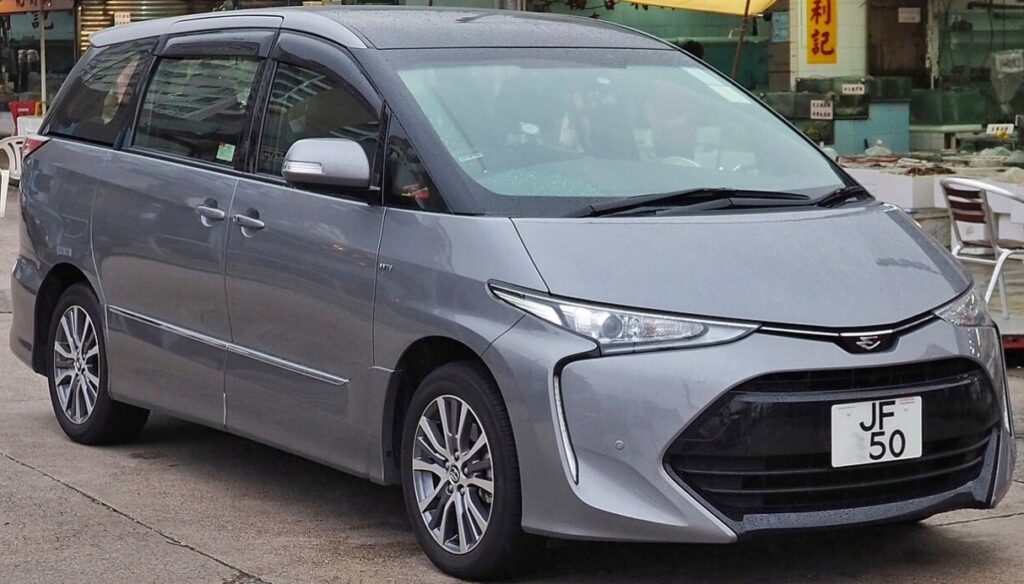
Choosing between the Toyota Estima and Toyota Vellfire can feel like choosing between two different interpretations of the same idea. Both are spacious Toyota MPVs built around family practicality, sliding doors, flexible seating, and long-distance comfort. Yet once we spend some time with them, their personalities move in very different directions.
The Estima is the sleeker, lighter-footed choice. It feels more like a large family car that happens to have enormous interior space. The Vellfire, by contrast, behaves more like a private lounge on wheels. It is taller, more imposing, more luxurious, and generally designed to make passengers feel as important as the driver.
Toyota positioned both within its broad Japanese minivan range, and both were offered with hybrid powertrains during portions of their lives. The third-generation Estima ran from 2006 until 2019, while the Vellfire arrived in 2008 as a closely related sibling to the Alphard.
So, Toyota Estima vs Vellfire: which one should we buy?
For many buyers, the Estima wins on value, maneuverability, and everyday usability. The Vellfire takes the crown for luxury, passenger comfort, road presence, and VIP-style accommodation. But that simple answer barely scratches the surface.
Let's dig into the differences that actually matter.
Content in this publication
- Toyota Estima vs Vellfire at a Glance
- Understanding the Toyota Estima
- Understanding the Toyota Vellfire
- Toyota Estima vs Vellfire Exterior Design
- Toyota Estima vs Vellfire Interior Space
- Second-Row Comfort: Where the Vellfire Shines
- Third-Row Seating Comparison
- Cargo Space and Family Practicality
- Toyota Estima vs Vellfire Engine Options
- Toyota Estima Hybrid vs Vellfire Hybrid
- Driving Experience: Estima Feels More Car-Like
- Parking and Urban Driving
- Ride Comfort and Refinement
- Toyota Estima vs Vellfire Fuel Economy
- Reliability: Which Is the Safer Bet?
- Maintenance Costs
- Which Is Better for Large Families?
- Which Is Better for Road Trips?
- Which One Is Better for Children?
- Toyota Estima vs Vellfire Used Prices
- Parts Availability and Imported-Vehicle Considerations
- Which Toyota MPV Holds Its Appeal Better?
- Toyota Estima vs Vellfire: Pros and Cons
- Toyota Estima vs Vellfire: Which Is Better Overall?
- Final Verdict
- Frequently Asked Questions
Toyota Estima vs Vellfire at a Glance
Before getting buried in trim levels, engines, seats, and hybrid batteries, it helps to understand their basic philosophies.
The Estima—known as the Previa in some overseas markets and as the Tarago in Australia during parts of its history—was Toyota's streamlined people mover. The Vellfire was conceived as a more dramatic luxury MPV alongside the Alphard.
In simple terms:
| Category | Toyota Estima | Toyota Vellfire |
|---|---|---|
| Character | Family-focused MPV | Luxury MPV |
| Driving feel | More car-like | More substantial |
| Interior | Practical and spacious | Plush and premium |
| Exterior | Sleek and rounded | Tall and imposing |
| Parking | Generally easier | More cumbersome |
| Passenger comfort | Very good | Excellent |
| Running costs | Usually lower | Usually higher |
| Hybrid availability | Yes | Yes |
| Best suited to | Families, everyday use | Luxury travel, large families |
| Used-market appeal | Strong value | Premium experience |
The difference is rather like comparing a comfortable business-class seat with a private airport lounge. Both are pleasant places to spend time, but one clearly takes indulgence further.
Understanding the Toyota Estima
The Estima has a long history. Toyota launched the first generation in Japan in 1990, and the model eventually evolved through three generations. The third-generation XR50 arrived in 2006 and remained in production until 2019.
Its distinctive shape is part of the attraction. Instead of the upright, squared-off silhouette traditionally associated with MPVs, Toyota gave the Estima a low nose, heavily swept windscreen, rounded roofline, and almost futuristic profile.
Even today, a tidy late-model Estima can look surprisingly modern.
Why the Estima Became Popular
The clever part is how effectively Toyota combined space with relatively manageable dimensions.
We get sliding rear doors, multiple seating configurations, generous passenger space, good visibility, and the ability to carry a large family without driving something that feels like a commercial van.
That formula made the Estima particularly attractive to buyers who wanted seven-seat practicality without surrendering completely to the box-on-wheels school of design.
Toyota also expanded its appeal through hybrid technology. Earlier generations introduced an electrified version, while the third-generation Estima Hybrid moved to a full-hybrid arrangement with electric assistance to both axles.
Understanding the Toyota Vellfire
The Vellfire follows a different recipe.
Introduced in 2008 as a twin model to the Alphard, it pushed Toyota's people-mover concept into much more luxurious territory. Toyota Auto Body's history identifies the Vellfire as an Alphard twin introduced after the development of Toyota's premium van family.
Where the Estima tries to visually disguise its bulk, the Vellfire celebrates it.
It is tall.
It is square.
It is unmistakably substantial.
Depending on generation and trim, we find large grilles, elaborate lighting, powered doors, premium upholstery, reclining captain's chairs, extensive convenience equipment, and interiors that resemble executive transport more than conventional family cars.
The Vellfire's Luxury-MPV Philosophy
The easiest way to understand the Vellfire is to imagine that rear passengers were invited to the design meeting before the driver.
Instead of asking only, "How can we fit seven or eight people inside?" Toyota effectively asked, "How comfortable can those people become?"
That distinction changes nearly everything.
The tall roof improves the sense of space. Large sliding doors make access easy. Higher specifications can deliver impressive second-row accommodation, and passengers generally experience a more lounge-like environment than they do in an Estima.
Toyota Estima vs Vellfire Exterior Design
Put the two vehicles side by side and nobody is going to confuse them.
The Estima looks smooth and aerodynamic. Its windscreen flows into the hood like a visor. The roof forms a clean arch toward the rear.
The Vellfire stands upright like a luxury hotel moving down the motorway.
Neither approach is inherently better.
Estima: Sleeker and More Discreet
Some of us simply don't want our MPV to look enormous.
That's where the Estima works beautifully. It appears lower and less intimidating, making it easier to imagine using every day for commuting, school runs, shopping trips, or holidays.
Its shape also helps hide its age surprisingly well.
Vellfire: Bigger Road Presence
The Vellfire makes almost the opposite statement.
Its vertical proportions, large body, and often elaborate front-end styling give it substantial road presence.
If visual impact matters, the Vellfire has the stronger personality.
For wedding transport, hotel transfers, executive use, chauffeur duties, or simply arriving somewhere with a little ceremony, the Vellfire feels more appropriate.
Which Design Ages Better?
This becomes subjective.
The Estima's flowing lines are relatively restrained, while certain Vellfire generations embrace aggressive detailing. Buyers who enjoy bold Japanese styling may adore the Vellfire. Those who prefer subtle design may find the Estima easier to live with over the long term.
Toyota Estima vs Vellfire Interior Space
Now we reach the reason most people buy either vehicle: space.
Both offer far more cabin versatility than a conventional five-seat SUV.
But the Vellfire feels noticeably more oriented toward maximum passenger accommodation.
Passenger Room in the Estima
The Estima makes clever use of its footprint.
Front passengers enjoy plenty of room, the second row can be extremely comfortable, and the third row makes the vehicle genuinely useful for larger households.
Depending on configuration, seating arrangements vary, so anyone buying a used Japanese import should verify the exact vehicle rather than assuming every Estima has identical seats.
This matters because optional equipment can radically change how useful an individual example is.
Passenger Room in the Vellfire
The Vellfire's taller, boxier construction pays dividends inside.
There's a stronger sense of openness, particularly around headroom and second-row accommodation. Rather than merely fitting passengers, the cabin encourages them to stretch out.
That's the fundamental difference.
The Estima gives us plenty of room.
The Vellfire gives us room to indulge.
Second-Row Comfort: Where the Vellfire Shines
If we regularly transport adults in the second row, this category deserves serious attention.
Certain Vellfire configurations use individual captain's chairs with extensive adjustment. Depending on trim and generation, buyers may find powered functions, armrests, ottoman-style leg supports, premium upholstery, and additional comfort equipment.
This can transform a long trip.
Imagine driving several hours with grandparents, business clients, or adult children in the back. The Vellfire makes that journey feel less like transportation and more like accommodation.
The Estima remains comfortable, but its mission is broader. It balances passenger comfort with packaging efficiency and everyday practicality.
Best Choice for Chauffeur Use
For chauffeured transportation, we would choose the Vellfire without much hesitation.
Its proportions, easier access, passenger-first cabin, and premium atmosphere suit that role beautifully.
The Estima feels like a family MPV.
The Vellfire can feel like a limousine wearing minivan clothes.
Third-Row Seating Comparison
Third-row seats often expose supposedly spacious vehicles.
Some seven-seat SUVs provide a third row that seems designed primarily for people who have lost an argument.
These Toyotas generally do better.
The Estima's third row is useful, especially for children and occasional adult use, while the Vellfire's larger cabin provides a stronger foundation for frequent seven- or eight-passenger travel.
Still, trim and seating layout matter enormously.
If you need the third row every single day, physically test the exact vehicle you are considering. Sit in every seat. Move the second row forward and backward. Check how passengers enter.
Those ten minutes can tell us more than fifty specification sheets.
You may be interested in reading Toyota Estima vs Kia Carnival: Which MPV Is Better?
Cargo Space and Family Practicality
A people mover doesn't only carry people.
There are suitcases.
Pushchairs.
Shopping bags.
Sports gear.
School bags.
The mysterious collection of objects children somehow accumulate during a 20-minute drive.
Both vehicles are built with this reality in mind, although available luggage space changes significantly depending on how the seats are positioned.
Estima for Everyday Family Use
The Estima strikes an excellent balance.
When the third row isn't required, we can create much more carrying space. That makes it useful for airport runs, road trips, furniture shopping, or transporting bulky equipment.
It also feels less overwhelming in daily urban use.
Vellfire for Passenger-First Versatility
The Vellfire has enormous practical potential, but premium captain's-chair layouts sometimes emphasize passenger luxury rather than maximum cargo flexibility.
That's not necessarily a weakness.
It simply means buyers should identify their priority.
If carrying seven people comfortably matters most, the Vellfire makes enormous sense.
If switching constantly between passengers and cargo matters more, an Estima may prove easier and more economical.
Toyota Estima vs Vellfire Engine Options
Powertrain availability varies significantly by model year, market, and generation, particularly because many vehicles outside Japan are used imports.
The third-generation Estima included four-cylinder petrol, V6 petrol, and hybrid configurations during its production life. Toyota's historical information records the XR50 generation arriving with updated petrol engines and a full-hybrid version.
The Vellfire has likewise appeared with conventional petrol and hybrid drivetrains across its generations, and Toyota's historical product lineup explicitly lists hybrid versions within the Alphard/Vellfire family.
Four-Cylinder Petrol Engines
A four-cylinder petrol version can make sense for buyers prioritizing acquisition cost and mechanical simplicity.
Performance won't necessarily feel exciting in a large MPV—especially when loaded with passengers—but nobody buys an Estima or Vellfire expecting sports-car acceleration.
What matters more is smooth progress and predictable operating costs.
V6 Performance
Older higher-output versions can offer considerably stronger acceleration.
This is particularly noticeable when overtaking, joining fast traffic, climbing hills, or carrying a full passenger load.
The trade-off?
Fuel.
A large petrol V6 moving a heavy MPV is never going to sip fuel like a small hybrid hatchback.
Who Should Consider the V6?
Drivers covering relatively modest annual mileage may appreciate the effortless performance enough to accept the fuel bill.
Anyone driving long urban distances every week should think more carefully.
Toyota Estima Hybrid vs Vellfire Hybrid
Now things become particularly interesting.
Toyota has extensive history with hybrid powertrains, and both nameplates benefited from electrified versions. Toyota's historical vehicle lineup includes the Estima Hybrid and confirms hybrid availability within the Vellfire family.
Hybrid versions can be extremely attractive for urban family transportation because MPVs spend plenty of time moving slowly, stopping, restarting, and idling around towns.
That's exactly where hybridization can shine.
Advantages of Choosing a Hybrid
Potential advantages include quieter low-speed driving, reduced fuel consumption in favorable conditions, smoother urban operation, and electric assistance during acceleration.
But an older hybrid introduces another consideration: battery condition.
When buying used, especially with imported vehicles, service history matters enormously. A bargain price can rapidly lose its charm if expensive neglected components require attention immediately after purchase.
Driving Experience: Estima Feels More Car-Like
This is one of the most important differences.
The Estima sits lower and feels closer to a traditional large passenger car than the Vellfire does.
We still know we're driving an MPV, of course. Physics has not resigned.
But the Estima usually feels less intimidating when maneuvering through narrow streets or entering crowded car parks.
Its proportions create a lighter visual and dynamic impression.
Vellfire Prioritizes Isolation
The Vellfire's appeal is different.
Rather than pretending to be smaller, it embraces comfort.
We sit higher. The cabin feels larger. The vehicle seems more substantial around us.
When cruising smoothly along a motorway, that can be wonderful. The Vellfire feels planted and relaxing—more luxury shuttle than family hatchback.
Push into tight city streets and its size becomes harder to ignore.
Parking and Urban Driving
This category could decide the entire comparison for some owners.
Picture your normal week.
Do you park in an apartment garage?
Navigate narrow streets?
Use older multistorey car parks?
Squeeze into school pickup zones?
If so, dimensions matter far more than brochures suggest.
The Estima generally feels like the friendlier everyday companion because of its sleeker proportions.
The Vellfire requires more awareness.
Cameras and parking sensors can help, but technology cannot make the body physically smaller.
Ride Comfort and Refinement
Both vehicles are designed around passenger comfort rather than aggressive handling.
Still, the Vellfire normally possesses the more luxurious atmosphere.
Its tall cabin, generous seating, substantial body, and luxury-focused trim help isolate passengers from the sensation that they are simply commuting.
The Estima remains pleasant, but there's a slightly more conventional family-car character underneath.
Think of it this way:
The Estima wants everyone to arrive comfortably.
The Vellfire wants everyone to forget they're travelling.
Toyota Estima vs Vellfire Fuel Economy
Fuel consumption depends heavily on engine, drivetrain, hybrid system, traffic, passenger load, climate, tyre pressure, and driving style.
For that reason, quoting one universal figure for either nameplate would be misleading.
Broadly, four-cylinder and hybrid models are likely to appeal more to economy-conscious buyers than large petrol-engine versions.
But we should also remember vehicle condition.
A poorly maintained hybrid with tired components, incorrect tyres, dragging brakes, or neglected fluids may disappoint regardless of what its original test-cycle figure promised.
Don't Buy on Fuel Economy Alone
This is particularly important with older imports.
You may be interested in readingToyota Estima vs Kia Carnival: Which MPV Is Better?You may be interested in reading
Toyota Estima vs Wish: Which Toyota MPV Makes More Sense?Saving a modest amount of fuel each month means little if we deliberately choose a more complicated vehicle in poor condition.
Condition beats configuration.
A well-maintained petrol Estima can be a smarter purchase than a neglected hybrid bought simply because "hybrid" sounds economical.
Reliability: Which Is the Safer Bet?
Toyota's reputation naturally attracts buyers to both vehicles, but we should resist the dangerous assumption that every Toyota is automatically trouble-free.
Age changes the equation.
Many Estimas and earlier Vellfires are now well-established used vehicles. Maintenance history, previous ownership, mileage, corrosion, suspension condition, drivetrain servicing, electronics, powered doors, and hybrid-system health can matter more than the badge on the bonnet.
What to Inspect Before Buying
A careful used-car inspection should include:
- Hybrid battery health on electrified versions
- Engine oil leaks or abnormal consumption
- Cooling-system condition
- Transmission or CVT behavior
- Suspension knocks and worn bushes
- Brake condition
- Power sliding-door operation
- Air-conditioning performance
- Electrical accessories
- Warning lights
- Underbody corrosion
- Tyre condition and matching tyre specifications
- Service records
- Accident-repair evidence
- Import documentation where applicable
Never assume a low odometer reading tells the whole story.
A meticulously maintained higher-mileage Toyota can be far more attractive than a neglected low-mileage example.
Maintenance Costs
The Estima has an important advantage here: simplicity of mission.
While high-spec Estimas can certainly contain plenty of electronics, premium Vellfires may include considerably more luxury equipment.
Every electric motor, powered seat, sliding mechanism, entertainment component, camera, sensor, and powered door is lovely when functioning correctly.
As the vehicle ages, however, every extra feature becomes another component that could eventually need repair.
That's simply the nature of luxury vehicles.
Vellfire Ownership Requires a Larger Safety Margin
We wouldn't necessarily call a Vellfire expensive to own in every situation.
But we'd budget more generously for one.
Tyres may cost more. Luxury equipment creates additional repair possibilities. Larger or more powerful engine configurations can consume more fuel. Certain imported components may be harder to source depending on where you live.
The initial purchase price is only the admission ticket.
Which Is Better for Large Families?
This isn't as obvious as it sounds.
For a family of five that occasionally carries grandparents or friends, an Estima may be nearly perfect.
It is spacious without feeling excessive.
For a household frequently transporting six or seven people, particularly adults, the Vellfire's greater emphasis on passenger accommodation becomes compelling.
Choose the Estima When
The Estima makes more sense when we value easy everyday driving, lower purchase costs, practicality, seven-seat capability, less conspicuous styling, and a more car-like feel.
Choose the Vellfire When
The Vellfire becomes the stronger choice when second-row comfort, luxury, interior presence, premium equipment, frequent long-distance passenger travel, or chauffeur-style transportation matter most.
Which Is Better for Road Trips?
For four or five occupants, we'd happily travel long distances in either.
The Estima has the advantage of feeling manageable once we arrive somewhere unfamiliar.
The Vellfire has the advantage during the journey itself.
Passengers can spread out more comfortably, especially in premium seating configurations.
If we're travelling six hours with adults in the second row, that extra luxury stops feeling frivolous very quickly.
A reclining captain's chair suddenly seems like one of humanity's finest inventions.
Which One Is Better for Children?
Both work brilliantly as family vehicles.
Sliding doors alone can transform school-run life.
Children can enter in confined parking spaces without swinging a large conventional door into the neighboring vehicle. Parents can reach rear seats more easily, and the open cabin simplifies fitting child seats or helping smaller passengers.
The Estima's manageable proportions give it a slight advantage for urban family life.
The Vellfire wins if we simply want maximum cabin space.
Toyota Estima vs Vellfire Used Prices
Prices vary enormously between countries, years, trim levels, drivetrains, mileage, condition, and import status.
Instead of focusing solely on headline purchase price, compare total value.
An inexpensive Estima with excellent records may be far better value than a suspiciously cheap Vellfire.
Likewise, paying more for a clean Vellfire with documented maintenance can make sense if luxury is genuinely important to us.
The dangerous purchase is usually the cheapest example of an expensive specification.
There is often a reason it is cheap.
Parts Availability and Imported-Vehicle Considerations
Outside Japan and certain Asian-Pacific markets, many Estimas and Vellfires arrive through used-import channels rather than having been officially sold locally.
That means parts availability deserves attention before purchase.
Routine service components may be straightforward to obtain, but model-specific trim, electronics, body panels, control modules, or hybrid components can be more difficult in some countries.
Check local specialist support first.
A knowledgeable Toyota/JDM workshop nearby can dramatically change the ownership experience.
Which Toyota MPV Holds Its Appeal Better?
The Vellfire arguably has the stronger aspirational identity.
It isn't merely transportation. Buyers seek it specifically because they want the luxury-MPV experience.
The Estima's attraction is more rational: clever packaging, Toyota engineering, hybrid availability, and family practicality.
That can make the Vellfire especially desirable in markets where large Japanese luxury MPVs command strong demand.
But resale depends heavily on local preferences, vehicle condition, specification, and import rules.
Toyota Estima vs Vellfire: Pros and Cons
Toyota Estima Pros
- Sleeker styling
- Easier urban maneuverability
- Strong family practicality
- Seven-seat usefulness
- Hybrid versions available
- Generally more understated
- Often better value on the used market
- More car-like driving character
Toyota Estima Cons
- Less luxurious than a Vellfire
- Third-row and passenger accommodation can feel less generous
- Older examples require careful inspection
- Certain parts can be difficult to source outside major import markets
Toyota Vellfire Pros
- Outstanding passenger comfort
- Spacious, airy cabin
- Excellent second-row accommodation
- Premium road presence
- High equipment levels
- Strong chauffeur or executive-transport credentials
- Hybrid variants available
- Excellent long-distance passenger vehicle
Toyota Vellfire Cons
- Larger and harder to park
- Higher purchase price in many markets
- Potentially higher running costs
- More luxury equipment means more systems to maintain
- Fuel consumption can be significant with larger petrol engines
Toyota Estima vs Vellfire: Which Is Better Overall?
There isn't one universal winner because Toyota built these vehicles for subtly different priorities.
If we strip away the leather seats, chrome, screens, engines, and badges, the decision becomes simple.
The Toyota Estima is the more rational family MPV.
It delivers the space most families need while remaining reasonably easy to drive. It's practical, distinctive, versatile, and available with fascinating hybrid technology.
The Toyota Vellfire is the better luxury MPV.
It takes the basic people-mover formula and turns the volume up. More presence. More cabin grandeur. More passenger focus. More of that wonderful feeling that second-row passengers might refuse to get out when the journey ends.
Final Verdict
The Toyota Estima vs Vellfire comparison isn't really about discovering which vehicle is objectively superior.
It's about deciding what kind of ownership experience we want.
Choose the Toyota Estima if you want a spacious Toyota MPV that still feels manageable enough for normal family life. It offers a compelling blend of practicality, comfort, distinctive styling, and potentially attractive used-car value.
Choose the Toyota Vellfire if passenger comfort matters more than compact dimensions. It is the stronger choice for luxury travel, long family journeys, executive transport, or anyone who believes the second row deserves first-class treatment.
For our money, the Estima represents the sweeter balance for the average family.
But if space, prestige, and passenger comfort sit at the top of the shopping list, the Vellfire is difficult to resist.
Sometimes practicality gets us where we're going.
Luxury makes us wish the journey were longer.
Frequently Asked Questions
Is the Toyota Vellfire bigger than the Toyota Estima?
Generally, the Vellfire delivers a taller, more substantial luxury-MPV experience, while the Estima uses a lower and sleeker body concept. Exact dimensions vary by generation and specification, so buyers comparing individual used vehicles should check the specifications for those specific model years.
Is the Toyota Estima cheaper to run than the Vellfire?
It often can be, particularly when comparing simpler Estima configurations against highly equipped or larger-engine Vellfires. However, fuel economy and maintenance costs depend heavily on engine choice, hybrid system, condition, driving style, mileage, and local parts availability.
Which is better for a family, Estima or Vellfire?
For most families, the Estima offers an excellent balance between space and everyday maneuverability. Families regularly carrying six or seven passengers may prefer the Vellfire because its larger, more luxury-oriented cabin puts greater emphasis on passenger comfort.
Do the Toyota Estima and Vellfire come as hybrids?
Yes. Toyota produced an Estima Hybrid, and hybrid versions have also been available within the Vellfire family. Toyota's historical lineup documents both the Estima Hybrid and hybrid Alphard/Vellfire models.
You may be interested in readingToyota Estima vs Kia Carnival: Which MPV Is Better?You may be interested in reading
Toyota Estima vs Wish: Which Toyota MPV Makes More Sense?You may be interested in reading
Toyota Estima vs Sienna: Which Toyota MPV Is Better?Which should I buy used: Toyota Estima or Vellfire?
Buy the Estima if practicality, value, and easier everyday driving are your priorities. Buy the Vellfire if you are willing to accept a larger vehicle and potentially higher ownership costs in exchange for superior passenger luxury. Whichever you choose, condition and maintenance history should outweigh trim level or mileage alone.
If you want to know other articles similar to Toyota Estima vs Vellfire: Which Toyota MPV Is Better? you can visit the category Models.
Nissan Rogue Dark Armor vs Platinum: Which Trim Is Better?
Kia Sorento Models: Complete Guide to Trims, Engines and Versions
BYD Shark 6 vs Ranger vs HiLux: Which Ute Makes the Most Sense in 2026?
BYD Shark 6 vs MG U9: Which Ute Makes More Sense in 2026?
BYD Shark 6 vs Ford Ranger Raptor: Which Performance Ute Is Better in 2026?
BYD Shark 6 vs Kia Tasman: Which Ute Is Better?
Leave a Reply
More content of your interest