
Toyota Estima vs Wish: Which Toyota MPV Makes More Sense?

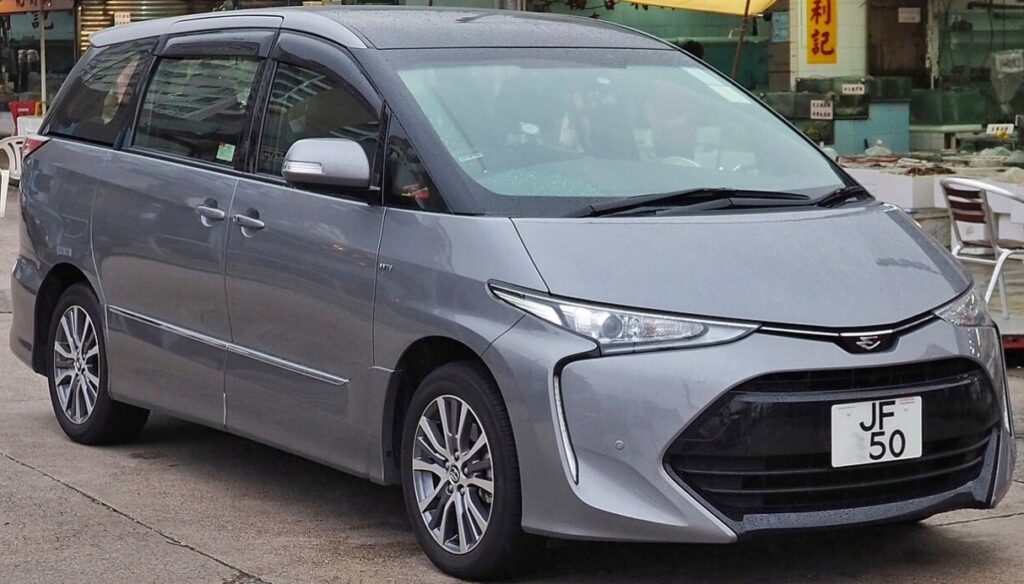
Choosing between the Toyota Estima vs Wish is a little like deciding between a comfortable lounge and a clever multipurpose room. Both come from Toyota, both are designed around family practicality, and both can carry more people than a conventional sedan. Yet once we live with them, their personalities feel surprisingly different.
The Toyota Estima is the larger, more luxurious people mover. It leans toward comfort, cabin space, effortless cruising, and the sort of flexibility families appreciate when passengers and luggage arrive together. The Toyota Wish, meanwhile, is smaller, lighter, simpler, and much easier to treat like an everyday car.
So which one should we buy?
That depends less on which vehicle is "better" and more on what we actually need. A family regularly moving six or seven adults may adore the Estima. Someone wanting occasional seven-seat capability without driving a full-size MPV may find the Wish far more sensible.
In this Toyota Estima vs Wish comparison, we'll examine size, engines, fuel economy, comfort, practicality, reliability, maintenance, driving feel, ownership costs, and the situations where each Toyota makes the strongest case.
Content in this publication
- Toyota Estima vs Wish at a Glance
- Toyota Estima Size and Road Presence
- Interior Space: Estima Wins Comfortably
- Third-Row Seats: Estima or Wish?
- Sliding Doors Give the Estima a Huge Practical Advantage
- Toyota Estima vs Wish Engine Options
- Toyota Wish Performance
- Toyota Estima vs Wish Fuel Economy
- Ride Comfort: Estima Takes the Lead
- Handling: Wish Feels More Like a Car
- Boot Space and Cargo Flexibility
- Interior Quality and Features
- Toyota Estima vs Wish Reliability
- Maintenance Costs: Wish Usually Wins
- Estima vs Wish for Families With Young Children
- Estima vs Wish for Long Road Trips
- Estima vs Wish for Daily Commuting
- Which Toyota Offers Better Value?
- Toyota Estima vs Wish for Used-Car Buyers
- Toyota Estima Advantages
- Toyota Wish Advantages
- Toyota Estima vs Wish: Which One Should We Buy?
- Final Verdict: Estima for Space, Wish for Simplicity
- Frequently Asked Questions
Toyota Estima vs Wish at a Glance
The biggest distinction is straightforward: the Estima is a genuine MPV, while the Wish sits closer to the compact MPV or tall wagon category.
That difference shapes almost everything else.
The Estima offers more shoulder room, more passenger space, a taller cabin, and easier access. Many versions feature sliding rear doors, which become incredibly useful in narrow parking spaces. Depending on model and generation, buyers may also find electrically operated doors, reclining second-row seats, climate-control features, and hybrid powertrains.
The Wish feels far more car-like. Its lower roofline and narrower body make it easier to maneuver, park, and thread through crowded streets. It still provides three rows of seating in many configurations, but those seats are packaged into a significantly smaller footprint.
In simple terms, the Estima prioritizes passengers. The Wish prioritizes efficiency.
Quick Differences Between the Estima and Wish
Here's the easiest way to separate them:
- Toyota Estima: Larger MPV, roomier cabin, sliding doors, stronger long-distance comfort, available hybrid versions, more useful third row.
- Toyota Wish: Compact MPV, lighter body, conventional doors, easier parking, generally better fuel economy, more car-like handling.
- Best Estima buyer: Larger families, airport-transfer users, frequent seven-seat drivers, or anyone prioritizing comfort.
- Best Wish buyer: Smaller families wanting occasional extra seats without the size and running costs of a traditional minivan.
Neither approach is wrong. They're simply solving different versions of the same family-transport problem.
Toyota Estima Size and Road Presence
Park an Estima beside a Wish and the distinction becomes obvious immediately.
The Estima looks substantially larger. It has the upright proportions we expect from a true people carrier, with a tall roof, broad body, and relatively long cabin.
That footprint provides genuine advantages once we're inside. Passengers have more breathing room, the aisles feel less cramped, and climbing into the rear seats is usually easier.
But size has consequences.
Driving through congested urban neighborhoods can require more attention. Older parking garages may suddenly feel tighter than expected. A small supermarket parking space can become a geometry lesson.
Still, for buyers who regularly use every seat, the Estima's dimensions feel less like a disadvantage and more like necessary architecture.
Toyota Wish Dimensions Feel More Manageable
The Wish takes a different approach.
Instead of building a large box around seven occupants, Toyota essentially stretched the idea of a passenger car into a compact three-row vehicle.
That makes the Wish easier to place on the road.
Its lower body feels less intimidating in narrow streets, while parking is generally closer to what we'd expect from a conventional family car.
Drivers upgrading from a hatchback or sedan often adapt quickly.
Which Is Easier in the City?
For dense urban driving, we'd choose the Wish.
For suburban life, long trips, school runs, and frequent passenger duty, the Estima's extra bulk becomes easier to justify.
Interior Space: Estima Wins Comfortably
Interior space is where this comparison starts leaning heavily toward the Estima.
Toyota designed the Estima around passenger movement rather than simply squeezing extra seats into the back. Depending on configuration, second-row passengers can enjoy generous legroom, wide seats, armrests, and significantly more personal space.
The cabin also feels more open.
Large windows and a tall roof help prevent that boxed-in sensation passengers sometimes experience in smaller seven-seat vehicles.
With children, the difference may appear modest. Put adults in all three rows, however, and the Estima quickly establishes why larger MPVs exist.
Toyota Wish Interior Space
The Wish performs impressively considering its exterior dimensions.
Its cabin packaging is clever, and the first two rows generally provide comfortable space for typical family use.
The compromise is the third row.
It's there when needed, but we'd describe it as occasional adult seating rather than the ideal place for a three-hour motorway journey.
Children and smaller teenagers will usually find it perfectly acceptable. Taller adults may start negotiating seat positions with whoever is sitting in front.
And that's the recurring theme with the Wish: it gives us plenty, but it occasionally reminds us that physics still exists.
Third-Row Seats: Estima or Wish?
If third-row practicality is central to our buying decision, the Estima is the stronger vehicle.
Access is easier, space is more generous, and the taller roofline improves headroom.
The Estima behaves like a seven-seater designed from the beginning to carry seven people.
The Wish behaves more like a five-seater that happens to have two bonus seats.
That distinction sounds harsh, but it isn't really criticism. Compact packaging requires compromise, and Toyota used the Wish's dimensions very effectively.
Who Should Choose the Wish's Third Row?
The Wish makes sense when those rear seats are used occasionally.
Imagine school pickups, visiting relatives, children's friends, or short journeys where we suddenly need six or seven seats.
Perfect.
But if seven people climb aboard every morning, we'd rather own the Estima.
Sliding Doors Give the Estima a Huge Practical Advantage
One feature can completely alter how a family vehicle feels in daily life: sliding doors.
Many Estima models use rear sliding doors, and once we become accustomed to them, returning to conventional doors can feel surprisingly inconvenient.
Think about loading a child into a car seat while parked beside another vehicle. With a conventional hinged door, we're constantly worrying about clearance.
With a sliding door, the opening remains wide without swinging outward.
It sounds like a small detail. With children, groceries, elderly passengers, or tight parking spaces, it can become one of the vehicle's most appreciated features.
The Wish Uses Conventional Rear Doors
The Wish's standard hinged doors are perfectly normal and help keep the vehicle lighter and mechanically simpler.
But they cannot match the access advantages of the Estima.
If passengers frequently climb into the third row, we'd consider the Estima's door arrangement a meaningful benefit rather than merely a luxury feature.
Toyota Estima vs Wish Engine Options
Engine availability varies considerably by generation and market, particularly because both vehicles were popular Japanese domestic-market models and are commonly purchased today as used imports.
Broadly speaking, the Estima was offered with larger engines because it had significantly more vehicle to move.
Common versions have used four-cylinder petrol engines, while some generations also offered more powerful V6 options. Hybrid Estimas combine petrol-electric technology with the spacious MPV format.
The Wish generally uses smaller four-cylinder engines, commonly around the 1.8- to 2.0-liter range depending on model year.
That difference reflects their missions perfectly.
The Estima needs torque and refinement.
The Wish needs reasonable performance while keeping fuel and ownership costs under control.
Estima Performance
Even with a standard four-cylinder petrol engine, the Estima is usually adequate for normal family driving.
However, once passengers and luggage fill every available space, acceleration naturally feels less enthusiastic.
More powerful versions solve that issue nicely, especially for highway overtaking.
The downside is obvious: greater fuel consumption.
Toyota Estima Hybrid Changes the Equation
The Estima Hybrid is particularly interesting because it attempts to combine large-MPV practicality with lower fuel consumption.
For urban and mixed driving, the hybrid system can make the Estima much less thirsty than its dimensions suggest.
Still, used hybrid vehicles deserve careful inspection. Battery condition, cooling systems, electronics, and maintenance history matter significantly as vehicles age.
A cheap hybrid with poor history can stop feeling cheap very quickly.
Toyota Wish Performance
The Wish feels noticeably lighter on its feet.
It isn't a sports car, and nobody should expect it to behave like one. But compared with the Estima, steering response feels more immediate, body movements are smaller, and the whole vehicle seems easier to place.
You may be interested in reading Toyota Estima vs Sienna: Which Toyota MPV Is Better?
The relatively modest engines also have less mass to move.
For commuting and routine family driving, performance is generally sufficient.
When fully loaded, though, the Wish may need more patience during overtaking or steep climbs.
Toyota Estima vs Wish Fuel Economy
Fuel economy is one of the strongest arguments for choosing the Wish.
Its smaller engines, lower weight, and more compact body typically allow it to use less fuel than a conventional petrol Estima.
For drivers covering significant annual mileage, that difference can become meaningful.
A few extra liters of fuel every week may not sound dramatic. Multiply them across several years and suddenly the ownership equation changes.
Does the Estima Hybrid Beat the Wish?
This becomes more complicated when we compare the Wish with an Estima Hybrid.
Hybrid technology can dramatically reduce the Estima's disadvantage, particularly in traffic where regenerative braking and electric assistance work effectively.
However, fuel consumption depends heavily on driving conditions, vehicle condition, tires, battery health, and driver behavior.
The Wish remains mechanically simpler and lighter.
The Estima Hybrid compensates through technology.
So the winner isn't quite as obvious as "small car equals better economy."
Ride Comfort: Estima Takes the Lead
The Estima's greatest talent may simply be how relaxed it feels.
Its longer wheelbase and larger body suit gentle, comfortable cruising. On highways, it behaves like a living room travelling at 100 km/h.
That's precisely what many MPV buyers want.
We aren't searching for steering feedback through every corner. We want children to fall asleep, grandparents to remain comfortable, and everyone to arrive without feeling exhausted.
The Estima does that remarkably well.
Toyota Wish Ride Quality
The Wish is still comfortable, but the experience feels closer to a normal passenger car.
Its smaller dimensions make it more responsive, although rough roads can feel more noticeable than they do in the heavier Estima.
For urban driving, this compromise works well.
For endless motorway journeys, the Estima feels more composed.
Handling: Wish Feels More Like a Car
Here the smaller Toyota fights back.
A lower center of gravity and reduced bulk help the Wish feel more natural around bends.
Drivers accustomed to regular hatchbacks or sedans may prefer its steering and predictable body movements.
The Estima doesn't handle badly. It's simply impossible to disguise the fact that we're driving a large MPV.
Push it enthusiastically through corners and the body reminds us politely that this was never the engineering brief.
Which Is Better for New Drivers?
The Wish is easier to recommend.
Its manageable dimensions reduce stress, particularly when reversing, navigating tight streets, or parking.
The Estima becomes intuitive after some familiarity, but its physical size demands greater awareness.
Boot Space and Cargo Flexibility
Cargo space becomes complicated with any three-row vehicle.
Use every seat and luggage space inevitably shrinks.
The Estima handles this challenge better simply because there's more vehicle available.
Depending on seating configuration and generation, owners can fold or adjust rear seats to create a substantial load area.
That versatility makes it suitable for airport luggage, shopping trips, pushchairs, camping gear, sports equipment, and family holidays.
Toyota Wish Cargo Space
The Wish can become surprisingly practical once the third row is folded.
In that configuration, it works almost like a spacious wagon.
That's arguably the best way to use one: treat it as a practical five-seater most of the time, then unfold the extra seats only when they're actually needed.
Trying to transport seven passengers plus seven large suitcases, however, is where optimism collides with available cubic volume.
Interior Quality and Features
Toyota rarely designed either vehicle to feel extravagant, but the Estima generally offers the more premium environment.
Higher-spec examples can feature sophisticated climate systems, electric doors, multiple storage areas, upgraded seats, entertainment systems, and other comfort-focused touches.
The dashboard also tends to emphasize the Estima's MPV character rather than copying a conventional sedan layout.
The Wish's interior is usually simpler.
That isn't necessarily a weakness.
Simple controls age well. Fewer luxury mechanisms can also mean fewer expensive components waiting to fail.
Used Japanese Imports Can Have Unusual Equipment
If we're buying either model outside Japan, equipment levels deserve careful checking.
Two apparently identical cars may contain completely different specifications.
Some may have factory navigation systems designed primarily for Japan. Others may include parking cameras, electric doors, unusual audio equipment, or driver-assistance features depending on generation.
We should evaluate the individual vehicle rather than assuming every Estima or Wish follows the same specification sheet.
Toyota Estima vs Wish Reliability
Toyota's reputation for durability is one reason both models remain popular years after production.
But reliability isn't magically guaranteed by the badge on the bonnet.
Age, maintenance history, mileage, previous ownership, accident repairs, and import quality matter enormously.
A properly serviced Wish with 150,000 km may be a better purchase than an Estima showing half that mileage but carrying no maintenance records.
Estima Reliability Considerations
With the Estima, we'd pay attention to systems linked to its added complexity.
Power sliding doors, hybrid components where fitted, larger engines, air-conditioning systems, suspension wear, electrical accessories, and transmission condition all deserve careful inspection.
The more features a vehicle contains, the more possible failure points exist.
That doesn't make the Estima unreliable.
It simply makes pre-purchase inspection more important.
Wish Reliability Considerations
The Wish's simpler design can help reduce ownership anxiety.
Smaller engines and fewer luxury mechanisms mean there's often less expensive hardware involved.
Still, age-related issues can affect any vehicle.
Suspension bushings, wheel bearings, ignition components, cooling systems, transmissions, air-conditioning equipment, and electronic sensors all deserve attention on older examples.
Service History Matters More Than Mileage Alone
This point deserves emphasis.
We shouldn't reject a car merely because its odometer looks high.
Regular servicing, correct fluids, sensible driving, and preventative maintenance can preserve a Toyota remarkably well.
Conversely, low mileage does not rescue a neglected vehicle.
Maintenance Costs: Wish Usually Wins
All else being equal, the Wish should usually cost less to maintain.
Smaller tires, smaller engines, reduced weight, simpler equipment, and easier fuel consumption all work in its favor.
Parts availability will depend on where we live, particularly because these models weren't sold under the same names everywhere.
The Estima can still be perfectly reasonable to maintain, but more complex versions—especially hybrids and highly equipped trims—have greater potential for expensive repairs.
You may be interested in readingToyota Estima vs Sienna: Which Toyota MPV Is Better?You may be interested in reading
Toyota Estima vs Voxy: Which Toyota Minivan Is Better?Think Beyond the Purchase Price
This is important in the used-car market.
A cheap Estima may look incredibly tempting because we're receiving a huge amount of vehicle for the money.
But the purchase price is only the opening chapter.
Fuel, tires, insurance, servicing, suspension components, electrical repairs, and unexpected maintenance determine whether the bargain remains a bargain.
The Wish generally carries less financial risk because there is simply less vehicle to feed and maintain.
Estima vs Wish for Families With Young Children
For families with babies or small children, we'd lean toward the Estima.
Sliding doors alone can justify the decision.
Add the greater cabin height, easier access, broader seating arrangements, and extra storage space, and the Estima begins behaving like a purpose-built family tool.
Car seats are easier to manage when we aren't folding ourselves into uncomfortable angles.
The Wish can absolutely handle family duty, but it demands more compromise.
Wish Works Brilliantly for Smaller Families
A couple with one or two children may find the Estima unnecessarily large.
Why carry around the footprint of a full MPV when the third row will remain folded 95% of the time?
That's when the Wish becomes extremely compelling.
It's easier to park, cheaper to run, and still flexible enough for visiting relatives or occasional extra passengers.
Estima vs Wish for Long Road Trips
For long journeys, the Estima wins.
More passenger room means people can reposition themselves rather than sitting shoulder-to-shoulder.
That matters enormously after several hours.
The softer ride and stronger highway comfort also help reduce fatigue.
If our idea of family motoring involves weekend road trips, holidays, or long-distance touring, we'd gladly accept the Estima's greater fuel consumption in exchange for comfort.
Can the Wish Handle Road Trips?
Absolutely.
With four or five occupants, the Wish can be an excellent road-trip vehicle.
The problem only appears when every seat is occupied and everyone brings luggage.
Then cabin space becomes a puzzle.
Estima vs Wish for Daily Commuting
Daily commuting flips the result.
The Wish is easier to recommend if we're mostly transporting ourselves or a small family.
Smaller dimensions improve maneuverability. Lower fuel consumption saves money. Parking becomes simpler.
Driving a large Estima alone through heavy traffic can feel like using a moving van to deliver a sandwich.
It works, but we aren't necessarily using the vehicle's strengths.
Which Toyota Offers Better Value?
Value depends entirely on usage.
The Estima offers extraordinary space for the money in many used markets. Buyers who genuinely need those dimensions receive enormous practical value.
The Wish's value comes from balance.
It offers seven-seat versatility without forcing us into the fuel consumption, parking difficulty, and running costs associated with a larger MPV.
Neither wins universally.
Value appears when the vehicle's abilities match our routine.
Toyota Estima vs Wish for Used-Car Buyers
Buying used changes the decision dramatically because condition becomes more important than model reputation.
We'd rather buy the best-maintained version of our second choice than the worst example of our first choice.
A comprehensive inspection should look at engine condition, transmission behavior, cooling systems, suspension, tires, electrical equipment, air conditioning, accident repairs, fluid leaks, warning lights, and service records.
For hybrids, battery condition becomes another major consideration.
Japanese-import documentation can also reveal useful information about mileage history and previous condition when available.
Beware of Buying Solely on Appearance
Fresh paint and polished headlights can make an old MPV look young again.
Mechanical condition is harder to disguise.
A beautiful Estima with failing suspension and neglected fluids can become expensive quickly.
A slightly scruffy Wish with perfect maintenance records might be the smarter purchase.
Cars are a little like people—we shouldn't judge the entire story from the photograph.
Toyota Estima Advantages
The Estima makes its strongest case through space and passenger comfort.
Its third row is more useful, sliding doors improve family practicality, and the cabin feels substantially more relaxed during long journeys.
It also offers more premium equipment in many versions and gives buyers the option of hybrid drivetrains in certain generations.
If we consistently transport many passengers, its advantages aren't theoretical. We experience them every day.
Toyota Wish Advantages
The Wish wins through efficiency and simplicity.
It consumes less road space, feels easier to drive, usually costs less to run, and works brilliantly when we mostly need five seats with occasional seven-seat capability.
It's essentially the Swiss Army knife approach to family transport.
Not huge. Not luxurious. Not extravagant.
Just impressively useful.
Toyota Estima vs Wish: Which One Should We Buy?
If we regularly transport six or seven people, the Toyota Estima is the stronger choice.
Its larger cabin, genuine third-row usability, sliding doors, better long-distance comfort, and flexible interior justify its extra size.
If we mostly carry four or five people and only occasionally need extra seats, the Toyota Wish is arguably the smarter purchase.
It provides much of the Estima's versatility while remaining closer to a normal car in fuel consumption, parking convenience, and driving feel.
Our decision can therefore be simplified to one question:
Do we need a seven-seat vehicle every day, or do we merely need the ability to carry seven people occasionally?
Answer that question honestly and the choice usually becomes obvious.
Final Verdict: Estima for Space, Wish for Simplicity
The Toyota Estima vs Wish comparison doesn't produce one universal winner because these vehicles occupy different points on the family-car spectrum.
The Estima is the better people mover. It's spacious, comfortable, versatile, and built around passengers first. If we're transporting a large family, elderly relatives, groups of friends, or lots of luggage, the extra room is worth having.
The Wish is the better all-rounder. It sacrifices some third-row comfort and cargo capacity but compensates with easier parking, lighter road manners, lower running costs, and excellent everyday usability.
We'd choose the Estima for frequent seven-seat family use and long-distance comfort.
We'd choose the Wish for city driving, smaller families, lower running costs, and occasional seven-seat flexibility.
Neither Toyota needs to beat the other at everything.
The real winner is the one that fits our life without making us pay every day for capability we rarely use.
Frequently Asked Questions
Is the Toyota Estima bigger than the Toyota Wish?
Yes. The Toyota Estima is a substantially larger MPV with more cabin volume, greater passenger space, and generally better third-row accommodation. The Toyota Wish is a compact MPV that feels much closer to a conventional car in size.
Which is more fuel-efficient, Toyota Estima or Wish?
A conventional petrol Toyota Wish will generally use less fuel because it's smaller and lighter. However, an Estima Hybrid can narrow the difference considerably, especially in urban driving.
Is the Toyota Wish a proper seven-seater?
The Wish can seat seven in many configurations, but its third row is best suited to children, smaller passengers, or occasional use. The Estima is the better choice if adults regularly occupy all three rows.
You may be interested in readingToyota Estima vs Sienna: Which Toyota MPV Is Better?You may be interested in reading
Toyota Estima vs Voxy: Which Toyota Minivan Is Better?You may be interested in reading
 Volvo XC90 Year Models: Complete Generation and Buying Guide
Is the Toyota Estima more expensive to maintain than the Wish?
Potentially, yes. The Estima is larger and can contain more complex equipment, including electric sliding doors and hybrid components on certain models. The Wish's simpler design and smaller mechanical components can make routine ownership less expensive.
Which is better for a family, Toyota Estima or Toyota Wish?
For large families or frequent seven-seat use, we'd choose the Toyota Estima. For smaller families wanting better fuel economy and occasional extra seating, the Toyota Wish is usually the more practical everyday option.
If you want to know other articles similar to Toyota Estima vs Wish: Which Toyota MPV Makes More Sense? you can visit the category Models.
Haval Jolion vs Omoda C5: Which SUV Is Better?
Haval Jolion vs Chery Tiggo 4 Pro: Full Comparison
Haval Jolion vs H6: Which SUV Is Better in 2026?
Haval Jolion vs Toyota Corolla Cross: Which SUV Is Better?
Haval Jolion vs Jaecoo J5: Which SUV Is Better?
Volkswagen T-Cross vs Volkswagen T-Roc: Which Is Better?
Leave a Reply
More content of your interest