

Volvo XC90 Year Models: Complete Generation and Buying Guide

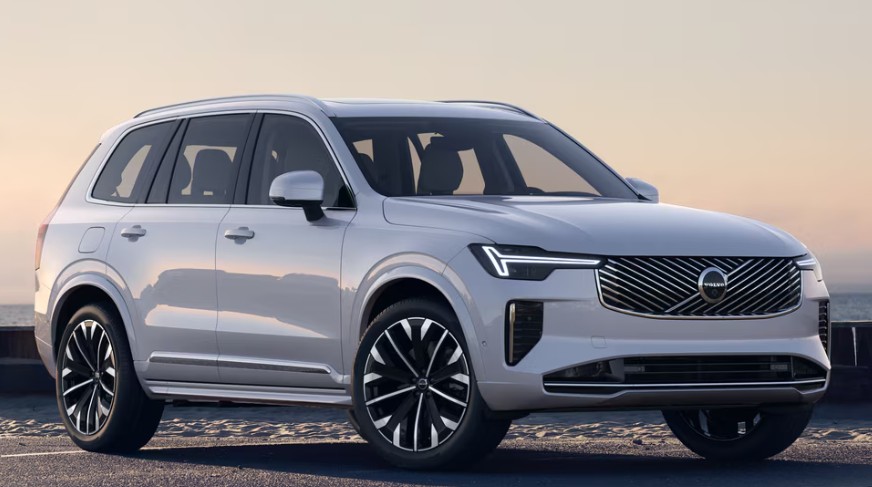
Few luxury SUVs have aged quite like the Volvo XC90. Some vehicles reinvent themselves every few years, chasing fashion like someone replacing their wardrobe every season. The XC90 took a different path. Volvo built two major generations, refined them steadily, and allowed the SUV's core personality—safety, practicality, Scandinavian design, and understated luxury—to mature rather than constantly starting over.
If we're researching Volvo XC90 year models, though, that long production history can become confusing. Is a 2014 XC90 similar to a 2016? What changed around 2020? Why do some XC90s carry T5, T6, or T8 badges while newer ones use B5, B6, and plug-in hybrid terminology? And which model years make the most sense if we're shopping used?
That's exactly what we'll untangle here.
The XC90 has been produced since 2002 and remains in its second generation. Volvo introduced the original SUV for the early 2000s, while the completely redesigned second generation arrived during the middle of the following decade.
Rather than simply listing years, we'll look at the XC90's evolution, major redesigns, engines, technology, interior changes, and which periods deserve the most attention.
Content in this publication
- Volvo XC90 Year Models at a Glance
- First-Generation Volvo XC90: 2002 to Mid-2010s
- Why the First XC90 Lasted So Long
- Second-Generation Volvo XC90: The Big Reinvention
- 2015-2016 XC90: The New Era Arrives
- XC90 T5, T6, and T8 Explained
- 2017-2019 Volvo XC90 Models
- 2020 Volvo XC90: The First Major Refresh
- 2021 Volvo XC90
- 2022 Volvo XC90
- XC90 B5 and B6 Models
- 2023-2024 Volvo XC90 Models
- 2025 Volvo XC90: Another Major Evolution
- 2026 Volvo XC90 Models
- Volvo XC90 Generation Timeline
- Which Volvo XC90 Year Models Look the Best?
- Which XC90 Years Offer the Best Value?
- Should We Buy an XC90 Plug-In Hybrid?
- Should We Avoid the First Model Year of a Generation?
- Mileage or Model Year: Which Matters More?
- Service History Is Critical With Any XC90
- What Should We Check Before Buying a Used XC90?
- Volvo XC90 vs EX90: Are They the Same?
- Why the XC90 Has Survived for So Many Years
- Best Volvo XC90 Year Models by Type of Buyer
- Conclusion: Understanding Volvo XC90 Year Models
- Frequently Asked Questions
Volvo XC90 Year Models at a Glance
At the broadest level, the XC90 story is refreshingly simple.
There are two main Volvo XC90 generations:
- First generation: launched in 2002 and sold through the mid-2010s, depending on market.
- Second generation: unveiled in 2014 and reaching customers from 2015, with subsequent updates and facelifts continuing into current production.
Volvo itself describes the second-generation XC90 as the model that introduced a new design language, technologies, and the company's Scalable Product Architecture, commonly called SPA.
That sounds straightforward, but model-year labeling varies by country. For instance, a vehicle introduced during one calendar year may be marketed as the following model year in North America.
So when comparing XC90s, we should pay more attention to generation, specification, engine, equipment, and production period than the registration year alone.
First-Generation Volvo XC90: 2002 to Mid-2010s
The original XC90 was a major departure for Volvo.
Before it arrived, Volvo was primarily associated with sedans, wagons, durability, and safety. The XC90 translated that DNA into a premium SUV at exactly the moment SUVs were becoming increasingly important.
Instead of building something that felt like a truck wearing expensive leather, Volvo made the XC90 feel distinctly Volvo.
It offered family practicality, three-row seating in many configurations, strong safety credentials, and a cabin that prioritized comfort over theatrics.
Early Volvo XC90 Models: 2002-2006
The earliest XC90 years established the formula.
These vehicles now represent the cheapest doorway into XC90 ownership, but age matters more than almost anything else. We're talking about vehicles that may have accumulated decades of use.
Depending on the country and year, first-generation XC90 engine choices included gasoline and diesel powertrains, with four-, five-, six-, and even eight-cylinder configurations appearing during its life.
Buying one today should therefore be less about finding a particular badge and more about finding the best-maintained individual example.
A pristine older XC90 with complete service records can be preferable to a newer-looking vehicle with a mysterious history.
What Matters Most on an Early XC90?
If we're inspecting one, we should focus on:
- Service history
- Automatic transmission behavior
- Suspension condition
- AWD operation where equipped
- Engine oil or coolant leaks
- Timing-belt maintenance on engines that use one
- Electrical equipment
- Air-conditioning operation
- Warning lights
- Evidence of accident repairs
- Condition of the third-row and folding mechanisms
Age turns maintenance history into king. Mileage is merely one member of the royal court.
2007-2010 Volvo XC90 Models
As the first generation matured, Volvo continued updating styling, equipment, engines, and cabin technology.
These middle-period models can be appealing because they retain the simpler architecture of the original XC90 while generally feeling more polished than the earliest examples.
They're still unmistakably first generation, though. Sit inside one after spending time in a second-generation XC90 and the difference feels like switching from an older premium home stereo to a modern smart system.
The older vehicle can still be comfortable and charming, but the technology gap is obvious.
2011-2014 Volvo XC90 Models
Late first-generation XC90s are especially interesting on the used market.
By this stage, Volvo had years to refine the platform. The design was aging gracefully rather than dramatically changing, and many buyers still appreciated its upright profile and conventional controls.
Volvo has identified the 2014 model year as the final year of the original XC90 in the United States, while the replacement generation followed immediately afterward.
If we love the old-school XC90 but want one of the newest possible examples, these later first-generation vehicles are the logical place to look.
Why the First XC90 Lasted So Long
Automotive generations often survive six or seven years.
The original XC90 lasted much longer.
Why?
Because Volvo got the basic recipe surprisingly right.
The SUV offered three important things families repeatedly ask for: space, security, and comfort. Its styling also avoided exaggerated trends, allowing it to age more gracefully than many early-2000s SUVs.
Imagine a well-designed leather jacket. It might eventually look old, but it rarely looks ridiculous.
That's the first-generation XC90.
Second-Generation Volvo XC90: The Big Reinvention
The second-generation XC90 wasn't merely an updated first-generation model.
It represented a fundamental reboot.
Volvo officially unveiled the all-new XC90 in August 2014, with customer deliveries expected to start in 2015. The vehicle introduced Volvo's new visual identity and SPA platform.
This is where the modern XC90 begins.
The proportions became cleaner, the cabin turned dramatically more minimalist, the touchscreen became central to the experience, and Volvo transitioned toward four-cylinder engines combined with turbocharging, supercharging on certain versions, electrification, or some combination of those technologies.
2015-2016 XC90: The New Era Arrives
Depending on market conventions, shoppers will frequently encounter the redesigned SUV listed as a 2015 or 2016 model.
Volvo's U.S. materials refer to the second-generation XC90 as arriving for model year 2016, while its global introduction and customer deliveries began earlier.
That's worth remembering when reading online discussions.
Two owners can seemingly disagree about when the second generation started while both are describing legitimate market-specific timelines.
What Changed With the Second Generation?
Almost everything.
We gained:
A completely different platform.
The XC90 became the first major showcase for Volvo's SPA architecture.
A new design language.
The distinctive "Thor's Hammer" LED lighting theme became part of modern Volvo identity.
A dramatically modernized cabin.
Large physical-button arrays gave way to a cleaner dashboard centered around a portrait-oriented touchscreen.
More sophisticated driver assistance.
The second generation arrived during Volvo's accelerating push toward advanced collision-avoidance and driver-support technologies.
Electrified powertrains.
The T8 plug-in hybrid became one of the XC90 range's defining models.
The transformation was less facelift and more caterpillar-to-butterfly.
XC90 T5, T6, and T8 Explained
Anyone browsing second-generation XC90 listings will quickly encounter these badges.
They can look like engine displacement labels, but they aren't that simple.
XC90 T5
The T5 generally represented the less powerful gasoline configuration in earlier second-generation lineups.
It was intended for buyers who wanted XC90 practicality and luxury without necessarily needing the strongest available performance.
XC90 T6
The T6 typically offered more power.
Earlier versions combined turbocharging and supercharging with Volvo's 2.0-liter four-cylinder architecture, producing performance that seemed almost improbable from such a small displacement in a large SUV.
XC90 T8
The T8 added plug-in hybrid capability.
It paired gasoline power with an electric drive system, giving the XC90 stronger performance while allowing limited electric-only driving.
Today's XC90 plug-in hybrid continues that basic philosophy, although the technology and electric capability have evolved substantially. The current U.S.-market plug-in hybrid is rated at up to 455 horsepower and up to 32 miles of electric range under Volvo's published specifications.
2017-2019 Volvo XC90 Models
Once the all-new SUV's launch period passed, Volvo entered a phase of incremental development.
These XC90 years retained the same fundamental architecture and styling but benefited from ongoing equipment, software, and specification changes.
For a used buyer, this period can be particularly attractive.
Why?
Because depreciation has already done plenty of work, yet the vehicle still looks surprisingly contemporary.
Park a clean 2018 XC90 beside many newer SUVs and it hardly seems like an old car.
That's one of the second generation's greatest strengths.
Its restrained styling has aged extremely well.
Is a 2017-2019 XC90 Still Modern Inside?
Visually, yes.
Technologically, mostly—but expectations matter.
The vertical touchscreen still gives the interior a modern appearance, and the minimalist Scandinavian theme remains attractive. However, newer XC90s have benefited from revised infotainment software, improved connectivity, and later hardware changes.
Someone upgrading from a ten-year-old conventional SUV may find a 2018 XC90 futuristic.
Someone stepping out of a brand-new EV may notice its age.
Both reactions can be correct.
2020 Volvo XC90: The First Major Refresh
The 2020 model year is one of the most important milestones in second-generation XC90 history.
You may be interested in reading What Year Hyundai Santa Fe to Avoid? The Complete Used-Buyer Guide
Volvo described model year 2020 as the first full refresh of the second-generation vehicle. Updates included a redesigned concave grille, altered front and rear bumper styling, new wheel designs, and other equipment changes.
This means 2020 acts as a useful dividing line for used shoppers.
If our budget stretches beyond the earliest SPA-generation XC90s, starting the search around the refreshed period can make sense.
Why 2020 Matters to Used Buyers
A refreshed model often provides the sweet spot in a vehicle's lifecycle.
The manufacturer has already had several years to refine production, software, equipment, and customer feedback.
Meanwhile, the styling receives enough changes to keep the vehicle looking fresh.
That's exactly why the 2020 XC90 deserves attention.
2021 Volvo XC90
The 2021 XC90 continued the refreshed formula.
For many shoppers, differences between adjacent XC90 model years during this period are less important than differences in trim, engine, optional equipment, mileage, and maintenance history.
This is an important point.
We shouldn't automatically pay thousands more simply because one XC90 is a year newer.
A well-optioned, carefully maintained older vehicle can easily be the more desirable purchase.
Equipment Can Matter More Than Year
An XC90 equipped with premium audio, upgraded seating, advanced driver-assistance features, air suspension, larger wheels, or additional luxury packages may feel substantially different from a basic example of the same year.
So whenever we're comparing two used XC90s, we should decode their actual specification.
The model year is only the headline.
The options list tells the rest of the story.
2022 Volvo XC90
By the early 2020s, Volvo's electrification strategy was becoming increasingly visible.
The XC90 lineup began transitioning toward mild-hybrid naming and revised powertrain terminology in various markets.
This period also marks a gradual shift away from the traditional T5/T6 language that many used buyers recognize.
The fundamental XC90 design remained familiar, but beneath the surface the SUV was evolving.
XC90 B5 and B6 Models
Later XC90 gasoline-powered models use badges such as B5 and B6.
The "B" designation signals Volvo's mild-hybrid architecture.
The current XC90 mild hybrid combines a gasoline engine with a 48-volt electrical system that can assist the combustion engine and recover energy during braking.
B5 vs B6
In simple terms:
B5 is the lower-output option.
B6 delivers stronger performance.
For current U.S.-market XC90 specifications, both use all-wheel drive and automatic transmissions. Volvo lists the B5 at 24 mpg combined and the B6 at 23 mpg combined, although real-world consumption naturally varies.
For family driving, a B5 can be perfectly adequate.
If we're frequently carrying passengers, climbing mountains, merging aggressively, or simply enjoy effortless acceleration, the stronger B6 may be worth considering.
2023-2024 Volvo XC90 Models
By this stage, the second-generation XC90 had become something unusual: an aging platform that still looked convincingly premium.
Rather than replacing it outright, Volvo continued modernizing the vehicle.
These model years can therefore appeal to shoppers who want a relatively recent XC90 while avoiding the price of a brand-new one.
Google Built-In Changes the Experience
One significant technological evolution in newer Volvos has been the adoption of Google-based infotainment.
Later XC90 models offer Google built-in functionality, integrating navigation, apps, voice assistance, and connected services more deeply into the vehicle.
Current XC90 specifications include an 11.2-inch center display and 12.3-inch driver display.
That makes infotainment generation an important consideration when comparing seemingly similar XC90s.
If technology matters heavily to us, we shouldn't shop by exterior appearance alone.
2025 Volvo XC90: Another Major Evolution
The XC90 received another substantial update late in its second-generation life.
Rather than introducing a totally separate generation, Volvo refreshed the existing formula again, bringing its styling and interface more closely in line with the company's latest products.
This demonstrates just how flexible the second-generation platform has proven.
The basic architecture has lasted for years, but continuous updates keep moving the experience forward.
Why the Updated XC90 Is Important
Think of the newest refresh as a renovation rather than a demolition.
Volvo kept the bones of a successful house but remodeled the kitchen, updated the lighting, improved the electronics, and changed the furniture.
For buyers who already like how the XC90 drives and feels, that can be preferable to an entirely new design.
2026 Volvo XC90 Models
As of the 2026 model year, the XC90 remains available rather than disappearing in favor of the fully electric EX90.
That's important because many people initially expected the electric SUV to simply replace it.
Instead, the XC90 continues serving buyers who prefer gasoline mild-hybrid or plug-in hybrid propulsion.
In the United States, Volvo currently offers XC90 B5 and B6 mild-hybrid configurations, while the XC90 plug-in hybrid remains available separately. The standard XC90 is offered with six- or seven-seat configurations, all-wheel drive, and automatic transmission.
The plug-in hybrid version remains the performance and electrification flagship, with Volvo currently publishing up to 455 horsepower.
Volvo XC90 Generation Timeline
When we boil the history down, here's the easiest way to understand it:
2002-2006: The Original XC90 Takes Shape
These are the early first-generation vehicles.
They're inexpensive today but should be purchased primarily on condition and maintenance history.
2007-2010: Mature Early-Generation Models
Styling and equipment evolved while the original platform remained intact.
These can appeal to buyers seeking an affordable, traditional-feeling XC90.
2011-2014: Final First-Generation Years
These represent the most developed form of the original XC90.
The 2014 model year marked the end of first-generation U.S. production before the redesigned model arrived.
2015/2016-2019: Second Generation Begins
This period introduces the SPA platform, modern Volvo design, four-cylinder powertrains, advanced technology, and the T8 plug-in hybrid.
2020-2021: First Major Second-Generation Refresh
The 2020 refresh updated exterior styling, wheel designs, and equipment while retaining the underlying SPA architecture.
2022-2024: Mild-Hybrid and Technology Evolution
Newer powertrain branding, increasing electrification, and infotainment changes characterize this period.
2025-2026: Latest Refreshed XC90
The second-generation XC90 receives another modernization rather than being immediately retired.
Current versions combine the familiar XC90 formula with updated technology and either mild-hybrid or plug-in hybrid propulsion.
Which Volvo XC90 Year Models Look the Best?
Beauty is subjective, obviously.
Still, the second-generation XC90 has become one of Volvo's defining designs.
The earliest examples already look elegant, while the refreshed versions sharpen the details without changing the SUV's essential proportions.
If we prefer traditional, chunky SUV styling, a late first-generation XC90 has considerable charm.
If we want something that still looks at home outside a modern luxury hotel, virtually any second-generation XC90 works.
That's impressive considering how long the basic design has existed.
Which XC90 Years Offer the Best Value?
For pure value, we would generally look toward post-launch second-generation models that have already absorbed substantial depreciation.
The 2017-2019 period deserves attention when budget matters.
A 2020-or-newer example becomes attractive if we want the first significant styling refresh.
And newer mild-hybrid models make more sense for shoppers prioritizing updated connectivity and the latest powertrain strategy.
But there is no magical "best year" for everyone.
The right year depends on what we're optimizing.
Buy an Older First Generation If...
We want:
- A low purchase price
- Traditional Volvo character
- Simpler-feeling controls
- An SUV we don't mind maintaining as an older vehicle
Buy a 2017-2019 Second Generation If...
We want:
- Modern XC90 styling
- Strong depreciation value
- Premium interior design
- A large upgrade over the first generation without paying late-model prices
Buy a 2020-2021 XC90 If...
We want:
- The first major second-generation refresh
- A slightly fresher appearance
- A well-developed version of the SPA-era XC90
Buy a 2022-2024 Model If...
We want:
You may be interested in readingWhat Year Hyundai Santa Fe to Avoid? The Complete Used-Buyer GuideYou may be interested in reading
 Which Volvo XC90 to Avoid: Years, Engines, and Buyer Guide
- Newer infotainment and connectivity
- Mild-hybrid-era powertrains
- Less age and potentially more remaining warranty coverage depending on location and purchase conditions
Buy a 2025-2026 XC90 If...
We want:
- The newest interpretation of the XC90
- Latest cabin technology
- Current styling
- Mild-hybrid or contemporary plug-in hybrid powertrains
- A new-car purchase rather than bargain hunting
Should We Buy an XC90 Plug-In Hybrid?
The answer depends heavily on how we drive.
A plug-in hybrid works brilliantly when we can recharge regularly and many journeys fall within its electric capability.
In that situation, short daily trips may involve little gasoline use, while the combustion engine remains available for long journeys.
The current U.S.-market XC90 plug-in hybrid offers up to 32 miles of published electric range.
But buying an older plug-in hybrid requires more diligence than buying a simple gasoline vehicle.
We should investigate battery condition, charging behavior, hybrid-system operation, service history, and whether relevant software updates have been completed.
The added technology delivers benefits, but complexity isn't imaginary.
Should We Avoid the First Model Year of a Generation?
There's an old automotive rule that says, "Never buy the first year."
It isn't always fair.
But there's logic behind it.
A completely new platform introduces thousands of components, software systems, suppliers, and manufacturing processes simultaneously.
Later years can benefit from production improvements and accumulated field experience.
That doesn't automatically make an early second-generation XC90 a bad purchase. It simply means we should inspect early examples carefully and evaluate their maintenance history.
The same principle applies to almost every modern luxury vehicle.
Mileage or Model Year: Which Matters More?
Neither should be considered alone.
Suppose we're choosing between:
A low-mileage 2018 XC90 that spent years sitting outdoors with inconsistent servicing.
And:
A higher-mileage 2020 XC90 with complete maintenance records, mostly highway driving, and careful ownership.
Which is better?
We can't answer from mileage alone.
Condition, service history, usage, environment, specification, and mechanical inspection matter enormously.
Mileage tells us how far the SUV traveled.
It doesn't tell us how it was treated along the way.
Service History Is Critical With Any XC90
Luxury vehicles can become cheap to buy without becoming cheap to maintain.
That's the trap.
A heavily depreciated XC90 may seem like an extraordinary bargain until neglected tires, suspension, brakes, cooling-system repairs, electronic faults, or overdue maintenance enter the equation.
Volvo itself emphasizes that service history helps owners track maintenance and preserve vehicle value.
So before buying any year, ask for documentation.
Receipts beat promises.
What Should We Check Before Buying a Used XC90?
A proper pre-purchase inspection is one of the smartest investments we can make.
At minimum, we'd inspect the following:
- Cold-start behavior: Listen for unusual rattles, hesitation, or warning messages.
- Transmission operation: Shifts should feel smooth and predictable.
- Cooling system: Check coolant level, leaks, hoses, radiator condition, and evidence of overheating.
- Suspension: Listen for knocking and check for uneven tire wear.
- Electronics: Test every screen, camera, seat function, climate-control zone, window, sensor, and driver-assistance feature.
- AWD system: Confirm there are no driveline warnings or unusual noises.
- Hybrid system: On T8 or later plug-in hybrids, verify charging and electric operation.
- Service records: Confirm scheduled maintenance rather than trusting a seller's memory.
- Tires: Large premium-SUV tires aren't cheap.
- Diagnostic scan: Modern Volvos can store fault codes even when no warning light currently appears.
A beautiful XC90 can hide expensive neglect beneath polished paint.
Volvo XC90 vs EX90: Are They the Same?
No.
The names are similar, but the vehicles serve different powertrain strategies.
The XC90 continues as Volvo's large SUV with combustion-based mild-hybrid and plug-in hybrid choices, while the EX90 represents Volvo's fully electric large-SUV direction.
This is why the XC90 hasn't simply vanished.
For many families, long-distance convenience, charging availability, climate, towing needs, and personal preference still make hybrid solutions attractive.
Why the XC90 Has Survived for So Many Years
The answer may be simpler than we expect.
The formula still works.
Seven-seat practicality?
Check.
Luxury cabin?
Check.
Distinctive styling?
Check.
Family-friendly safety focus?
Absolutely.
Electrification?
Increasingly so.
Rather than constantly reinventing the SUV, Volvo has repeatedly polished it.
The XC90 is a bit like a Scandinavian living room that keeps getting new technology behind the walls. The furniture changes, the lighting improves, yet the calm atmosphere remains.
Best Volvo XC90 Year Models by Type of Buyer
If we're choosing based on priorities rather than chasing one supposedly perfect year, the decision becomes easier.
Budget buyer: Late first-generation XC90 or an earlier second-generation example with excellent service history.
Best balance of modern design and depreciation: Roughly 2017-2019 second-generation models.
Refresh-era value: 2020-2021 XC90.
Technology-focused buyer: Later 2022-2024 examples.
Newest traditional hybrid XC90 experience: 2025-2026.
Performance and electric commuting: T8 or newer XC90 plug-in hybrid.
Again, condition can override year.
A neglected "better year" is still a neglected vehicle.
Conclusion: Understanding Volvo XC90 Year Models
The Volvo XC90 year models become much easier to understand once we stop thinking of every year as a completely different vehicle.
There are really two big chapters.
The first-generation XC90 introduced Volvo's vision of the premium family SUV and remained in production for more than a decade. It now offers tremendous affordability, but age and maintenance history deserve serious attention.
The second generation transformed the XC90 into the sleek, technology-heavy luxury SUV we recognize today. Volvo unveiled it in 2014, customer deliveries followed in 2015, and the redesigned SUV was marketed as a 2016 model in North America.
From there, the story becomes one of refinement.
The 2020 model brought the second generation's first full refresh. Later vehicles transitioned toward mild-hybrid B5 and B6 powertrains and increasingly sophisticated infotainment. The newest XC90 continues alongside Volvo's electric offerings, with current models still available in both mild-hybrid and plug-in hybrid form.
So which XC90 year should we buy?
Don't chase the number on the registration document alone.
Choose the generation we want, decide which powertrain fits our lifestyle, identify the technology we care about, and then hunt for the best-maintained example our budget allows.
That's usually where the smartest XC90 purchase is hiding.
Frequently Asked Questions
1. What years are the Volvo XC90 generations?
There are two primary XC90 generations. The original generation began in 2002 and continued into the mid-2010s, while the second-generation XC90 was unveiled in 2014 and entered customer production shortly afterward. It remains the foundation of today's XC90.
2. What year did the Volvo XC90 change body style?
The major redesign occurred when Volvo replaced the original XC90 with the second-generation SPA-based model. Volvo unveiled it in August 2014, with customer deliveries scheduled from May 2015. In the United States, Volvo describes the redesigned vehicle as having arrived for model year 2016.
3. What is a good used Volvo XC90 year to buy?
For buyers balancing price and modern design, later-2010s second-generation XC90s can offer compelling value. The 2020-and-newer models are also worth considering because model year 2020 introduced the generation's first full refresh. Individual condition and service history should ultimately carry more weight than year alone.
4. What is the difference between XC90 T6 and B6 models?
T6 belongs to Volvo's earlier second-generation powertrain naming system, while B6 represents the later mild-hybrid era. Current B-series XC90s incorporate 48-volt mild-hybrid technology designed to assist the gasoline engine and recover energy during braking.
5. Is the Volvo XC90 still being made?
Yes. The XC90 remains available for the 2026 model year. Volvo currently offers mild-hybrid XC90 models as well as a separate XC90 plug-in hybrid, meaning buyers can still choose the XC90 even as Volvo expands its fully electric SUV range.
You may be interested in readingWhat Year Hyundai Santa Fe to Avoid? The Complete Used-Buyer GuideYou may be interested in reading
Which Volvo XC90 to Avoid: Years, Engines, and Buyer GuideYou may be interested in reading
Which Volvo XC90 to Buy: The Complete Buyer’s GuideIf you want to know other articles similar to Volvo XC90 Year Models: Complete Generation and Buying Guide you can visit the category Models.
Honda Passport vs Toyota 4Runner: Which SUV Is Better?
Honda Passport vs Ford Bronco: Which SUV Is Better?
Honda Passport vs Ford Explorer: Which SUV Is Better?
Honda Passport or Pilot: Which SUV Is Better?
Honda Passport vs Jeep Grand Cherokee: Which SUV Is Better?
Honda Passport vs Nissan Pathfinder: Which SUV Is Better?
Leave a Reply
More content of your interest