

Are Volvo XC90 Good Off Road? A Complete Capability Guide

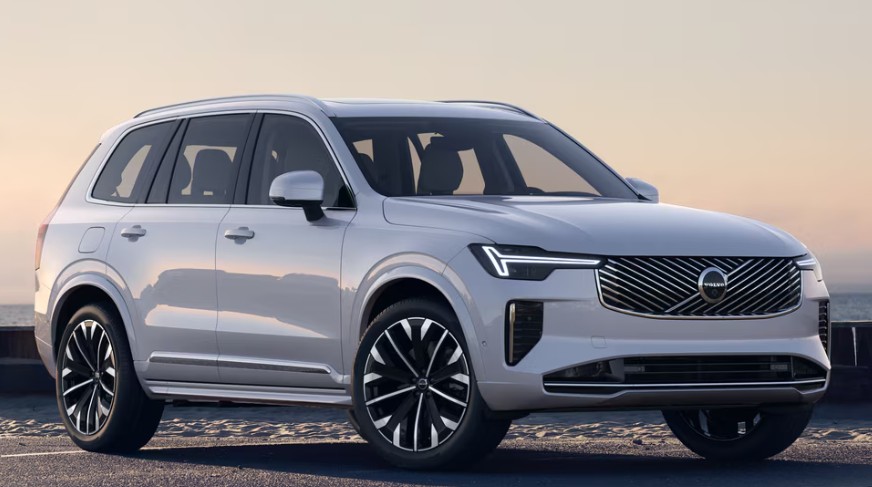
The Volvo XC90 looks more at home outside a modern hotel than crawling across a rocky trail, but appearances can be deceptive. Under that polished Scandinavian bodywork sits an SUV with all-wheel-drive capability, useful ground clearance, sophisticated traction management, and—in some versions—air suspension that can make surprisingly light work of rough terrain.
So, are Volvo XC90 good off road? Yes, within reason. The XC90 is a capable soft-roader that handles gravel tracks, muddy lanes, snow, wet grass, forest roads, campsites, and moderately uneven trails with confidence. What it is not is a dedicated rock crawler built to chase Jeep Wranglers or Toyota Land Cruisers through extreme terrain.
Think of the XC90 as a pair of expensive hiking boots rather than mountaineering crampons. It can get muddy, climb hills, cross rough ground, and take us far beyond the pavement, but it still prefers adventure with a touch of civilization.
In this guide, we'll explore what the Volvo XC90 can really do away from sealed roads, where its limitations appear, which features matter most, and whether it makes sense for drivers who occasionally want to leave the highway behind.
Content in this publication
- Is the Volvo XC90 Actually an Off-Road SUV?
- How Good Is the Volvo XC90 Off Road?
- Volvo XC90 AWD: The Foundation of Its Off-Road Ability
- Volvo XC90 Off-Road Mode Explained
- Ground Clearance: Does the XC90 Sit High Enough?
- Air Suspension Makes a Big Difference
- How Does the XC90 Handle Mud?
- Is the Volvo XC90 Good in Snow?
- Can a Volvo XC90 Drive on Sand?
- What About Rocky Terrain?
- Approach, Breakover, and Departure Angles
- Does the XC90 Have Low-Range Gearing?
- Hill Descent Control and Steep Terrain
- How Comfortable Is the XC90 on Rough Roads?
- Is the XC90 Good for Camping?
- Can the Volvo XC90 Go Through Water?
- How Does the XC90 Compare With a Jeep Wrangler Off Road?
- XC90 vs Land Rover Discovery Off Road
- XC90 vs Toyota Land Cruiser Off Road
- What Are the XC90's Biggest Off-Road Weaknesses?
- What Makes the XC90 Better Off Road Than a Normal Crossover?
- How Can We Improve Volvo XC90 Off-Road Capability?
- Does Tire Pressure Affect XC90 Off-Road Performance?
- Is the Plug-In Hybrid XC90 Good Off Road?
- Which Volvo XC90 Is Best for Off-Road Driving?
- Can an Older Volvo XC90 Be Good Off Road?
- Should We Take an XC90 on Serious Trails?
- Who Should Buy an XC90 for Off-Road Use?
- Are Volvo XC90 Good Off Road for Everyday Adventurers?
- Final Verdict: Are Volvo XC90 Good Off Road?
- Frequently Asked Questions
Is the Volvo XC90 Actually an Off-Road SUV?
The XC90 is primarily a luxury family SUV rather than a purpose-built off-roader.
That distinction matters.
Traditional off-road vehicles tend to prioritize rugged construction, low-range gearing, aggressive approach and departure angles, locking differentials, underbody protection, and large-profile tires. The XC90 takes another route. Volvo designed it to deliver comfort, safety, refinement, and predictable performance in difficult weather while retaining enough capability to deal with rough surfaces.
For most owners, that approach makes perfect sense.
How many of us actually spend every weekend climbing boulders? Probably very few. We are far more likely to encounter gravel roads, muddy fields, snow-covered driveways, poorly maintained rural tracks, or a campsite where the access road looks slightly more adventurous than expected.
Those are precisely the conditions where the XC90 starts to shine.
How Good Is the Volvo XC90 Off Road?
On mild and moderate terrain, the XC90 can feel impressively sure-footed.
Its strength comes from combining all-wheel drive, electronic traction systems, good ride quality, and relatively generous ride height. Instead of asking the driver to manually manage multiple mechanical systems, the XC90 generally relies on electronics to determine where grip is available.
That makes off-road driving remarkably straightforward.
We can often simply select the appropriate driving mode, maintain sensible throttle input, and allow the vehicle to figure out how to distribute its available traction.
However, difficulty changes everything.
Deep ruts, large rocks, severe articulation, heavy mud, and steep technical climbs quickly expose the XC90's road-oriented design.
Where the XC90 Performs Best
The Volvo XC90 is particularly comfortable tackling:
- Gravel and dirt roads
- Snow-covered roads
- Wet grass
- Muddy campsites
- Farm tracks
- Forest access roads
- Moderate inclines
- Shallow ruts
- Loose surfaces
- Light sandy terrain
- Poorly maintained country roads
Put it on those surfaces and the XC90 rarely feels out of place.
Ask it to crawl through axle-deep mud with oversized rocks on either side, though, and we've moved far beyond its natural habitat.
Volvo XC90 AWD: The Foundation of Its Off-Road Ability
All-wheel drive is one of the biggest reasons certain XC90 versions can perform well away from asphalt.
Depending on model year, market, engine, and drivetrain configuration, Volvo has offered different AWD systems. Their details vary, but the goal remains broadly similar: deliver power to the wheels capable of using it most effectively.
During ordinary highway cruising, grip may seem almost unlimited. Off road, however, traction changes constantly.
One tire could be sitting on dry gravel while another is slipping in wet mud. A third might briefly lose meaningful contact with the ground altogether.
That's when intelligent AWD becomes valuable.
How AWD Helps on Loose Terrain
Imagine accelerating uphill on a wet gravel road.
In a conventional two-wheel-drive vehicle, the driven tires could begin spinning before enough momentum is built. An AWD system can use additional traction from the other axle to keep the vehicle moving.
It isn't magic, of course.
If every tire has zero grip, no drivetrain can create traction out of thin air. But AWD gives us more opportunities to find usable grip.
That's especially reassuring when conditions deteriorate unexpectedly.
Volvo XC90 Off-Road Mode Explained
Some XC90 configurations feature an Off Road driving mode designed to optimize the vehicle for low-speed travel across challenging surfaces.
Depending on generation and specification, activating it may alter several systems, including throttle behavior, transmission strategy, steering characteristics, traction control, and suspension settings.
The overall purpose is simple: make the SUV easier to control when precise, slow-speed progress matters more than quick acceleration.
Why Throttle Response Matters Off Road
A sensitive accelerator can be annoying in rough terrain.
Suppose we're inching through mud and accidentally give the engine too much throttle. Instead of moving smoothly forward, the tires spin, dig deeper, and reduce available traction.
A calmer throttle response makes it easier to meter power.
It's the automotive equivalent of walking carefully across ice rather than sprinting across it.
When Should We Use Off-Road Mode?
Off-road mode can be useful when travelling through:
- Deep gravel
- Uneven trails
- Slippery inclines
- Mud
- Rough campsite entrances
- Snowy access roads
- Grass fields
- Slow-speed rural tracks
We shouldn't treat the button as an invitation to tackle extreme terrain. It simply helps the XC90 make better use of the capability it already has.
Ground Clearance: Does the XC90 Sit High Enough?
Ground clearance is one of the biggest considerations when we leave paved roads.
An SUV can have brilliant traction but still get stuck if its underside repeatedly contacts rocks or the center of a deeply rutted track.
The XC90 generally offers enough clearance for normal soft-road driving. Exact measurements differ between generations, suspension types, wheel-and-tire packages, and operating settings.
Models equipped with adjustable air suspension can be particularly useful because the body can be raised in suitable conditions.
Why Extra Ground Clearance Helps
More space beneath the vehicle provides greater freedom when:
- Driving over uneven ground
- Crossing shallow ruts
- Passing over rocks
- Entering steep tracks
- Navigating snow accumulation
- Crossing rough transitions
That said, ground clearance isn't the only number that matters.
A long wheelbase can cause the middle of the vehicle to contact the ground when passing over sharp crests. That's called breakover limitation, and large three-row SUVs naturally have more of it than short-wheelbase off-roaders.
Air Suspension Makes a Big Difference
If we're interested in occasional off-road driving, an XC90 equipped with air suspension can be particularly attractive.
Air suspension allows the vehicle's ride height to change according to conditions.
On smooth highways, the XC90 can prioritize aerodynamics and stability. On rough surfaces, the suspension can provide additional clearance where operating conditions permit.
It's like changing from dress shoes to hiking boots without leaving the driver's seat.
Air Suspension Isn't Invincibility
There is an important distinction between increasing ground clearance and turning a luxury SUV into a dedicated off-road machine.
Raising the suspension doesn't change:
- Tire construction
- Body dimensions
- Wheelbase
- Underbody vulnerability
- Approach angle
- Departure angle
- Absence of heavy-duty locking hardware
So while air suspension expands the XC90's usable terrain, it doesn't eliminate its fundamental limitations.
How Does the XC90 Handle Mud?
Moderate mud is usually manageable if the vehicle has suitable tires and momentum is controlled.
The AWD and traction-management systems can react to wheelspin and redirect power where grip exists.
The biggest variable, surprisingly, often isn't the vehicle itself.
It's the tires.
Road-oriented tires can become packed with mud, transforming their tread blocks into something resembling racing slicks. Once that happens, even an expensive AWD system has little to work with.
Tires Matter More Than Many Drivers Realize
If we're planning regular trips through muddy tracks, fitting quality all-season or suitable all-terrain tires can dramatically improve usable traction.
But there is a trade-off.
Aggressive tires may increase road noise, affect ride comfort, and alter fuel consumption. Since most XC90s spend the vast majority of their lives on pavement, choosing the right compromise matters.
Avoid Going Too Aggressive
We don't necessarily need giant knobby tires.
A capable all-season tire with strong wet, snow, and loose-surface performance can be a better match for the XC90's luxury character.
Is the Volvo XC90 Good in Snow?
This is arguably where the XC90's all-weather ability becomes most convincing.
Volvo's Scandinavian heritage feels particularly relevant when winter arrives. AWD, stability management, sophisticated traction control, and suitable winter tires can make the XC90 feel composed on snowy roads.
Again, tires deserve emphasis.
AWD helps us accelerate, but it doesn't magically shorten braking distance.
Four-wheel traction can get us moving confidently enough that we forget we're driving on snow—until it's time to stop.
Winter Tires Transform the Vehicle
For drivers regularly facing serious winter conditions, dedicated winter tires can make a larger practical difference than almost any electronic driving mode.
They improve:
- Braking
- Steering response
- Acceleration traction
- Lateral grip
- Performance at low temperatures
Combine good winter tires with AWD and the XC90 becomes a reassuring winter family vehicle.
Can a Volvo XC90 Drive on Sand?
Light sand and firm beaches may be manageable under suitable conditions, but deep, loose sand demands caution.
Sand creates rolling resistance. A heavy SUV can sink quickly, particularly when fitted with wide road tires operating at unsuitable pressures.
Momentum matters, but excessive wheelspin makes things worse.
You may be interested in reading Is Volvo XC90 a Good Car? A Complete Look at the Luxury SUV
Once the tires start digging, the vehicle can bury itself surprisingly fast.
Weight Becomes a Disadvantage
The XC90 is a substantial vehicle.
That mass helps it feel stable and luxurious on the motorway. In soft sand, however, every kilogram is asking the tires to float on a surface that would rather swallow them.
For occasional firm sand, the XC90 can cope.
For remote dune driving, we'd choose something more specialized.
What About Rocky Terrain?
Rocky roads require us to distinguish between two very different situations.
A rough gravel road scattered with small rocks? No major issue.
Technical rock crawling with large ledges, sharp drops, and wheels hanging in the air? That's not what the XC90 was designed to do.
Its bodywork, wheels, tires, suspension geometry, and underbody systems are simply too road-focused.
Large Wheels Can Be a Liability
Luxury XC90 models may come fitted with large-diameter wheels and relatively low-profile tires.
They look fantastic outside a restaurant.
On a rock-strewn trail, perhaps not so much.
Less tire sidewall means less cushioning between the wheel and sharp edges. That increases the risk of:
- Tire damage
- Bent wheels
- Harsh impacts
- Reduced ability to conform to rough terrain
For mixed road and trail use, a smaller wheel with a taller tire sidewall can make far more practical sense.
Approach, Breakover, and Departure Angles
Dedicated off-road enthusiasts spend plenty of time discussing angles, and for good reason.
The approach angle determines how steep an obstacle we can drive toward before the front bumper touches.
The departure angle performs the same role at the rear.
The breakover angle influences whether the middle of the SUV contacts the ground when crossing a crest.
The XC90's proportions prioritize interior space and road comfort rather than extreme obstacle clearance.
That means we should be careful around sharp dips, steep embankments, and abrupt transitions.
Does the XC90 Have Low-Range Gearing?
Traditional off-roaders often use a low-range transfer case.
Low range allows a vehicle to crawl slowly while multiplying torque, making difficult climbs and descents easier to control.
The XC90 generally doesn't follow that traditional mechanical formula.
Instead, it relies heavily on transmission calibration, electronic traction management, AWD technology, braking intervention, and other driver-assistance systems.
For light trails, that's perfectly adequate.
For heavy rock crawling, it's a major distinction.
Hill Descent Control and Steep Terrain
Depending on model and equipment, the XC90 can use electronic systems to help control speed on steep descents.
This is particularly useful when travelling down loose or slippery slopes.
Rather than repeatedly stabbing the brakes and risking a skid, the system can manage vehicle speed more smoothly.
We still need to choose a sensible line and remain aware of obstacles, but electronic assistance reduces workload.
Electronics Can Make Beginners Look Experienced
Modern off-road systems are fascinating because they quietly handle tasks that once required considerable driver skill.
The driver may simply point the vehicle downhill while the electronics manage individual wheel braking.
But electronics don't change physics.
A steep enough slope, slippery enough surface, or poorly chosen line can still cause trouble.
How Comfortable Is the XC90 on Rough Roads?
Comfort is one area where the XC90 often feels more sophisticated than traditional rugged 4x4 vehicles.
Long stretches of washboard gravel, broken pavement, and mildly rough tracks can be absorbed with impressive refinement, particularly when the SUV is fitted with an appropriate wheel-and-tire package.
This is a key part of its appeal.
A hardcore off-roader may be better in difficult terrain but less polished during the 300-mile highway journey required to reach it.
The XC90 reverses that equation.
It gives us excellent road manners while retaining enough dirt-road competence for the final few miles.
Is the XC90 Good for Camping?
For family camping trips, the XC90 makes a lot of sense.
We get a large cabin, generous luggage capability, available three-row seating, AWD on appropriate versions, and enough rough-road ability to reach many remote campsites.
Throw in comfortable seats and long-distance refinement, and it's easy to understand why the combination works.
We can load the kids, tent, cooler, sleeping bags, hiking equipment, and probably far too many snacks without turning the journey into an endurance test.
The Perfect Type of XC90 Adventure
Picture this:
We leave the city on Friday afternoon, cruise comfortably for a few hours, turn onto a gravel mountain road, cross a muddy patch after rainfall, climb a rough track to the campsite, and wake up surrounded by trees.
That's XC90 territory.
Crossing a river followed by two hours of technical rock crawling?
Different vehicle.
Can the Volvo XC90 Go Through Water?
Any water crossing demands caution, regardless of vehicle.
Water depth, current speed, hidden obstacles, intake location, electrical components, and road surface all matter.
We shouldn't assume that because the XC90 is an SUV, it can safely plunge into deep water.
Even apparently shallow floodwater can hide damaged roads or strong currents.
Floodwater Is Different From Off-Road Water
Crossing a known shallow trail stream under controlled circumstances is very different from driving through a flooded road.
Moving floodwater can shift a vehicle with surprisingly little depth.
If the route is uncertain, turning around is usually the smartest decision.
How Does the XC90 Compare With a Jeep Wrangler Off Road?
This comparison highlights exactly what the XC90 is—and isn't.
A Jeep Wrangler is designed around off-road capability. The Volvo is designed around luxury, safety, family practicality, and everyday usability.
The Jeep offers better capability when terrain becomes seriously difficult.
The Volvo offers vastly different priorities on the motorway and in daily family use.
Asking which is better without defining the job is like asking whether hiking boots are better than running shoes.
Better for what?
If we're crossing rocky trails every weekend, the Wrangler makes more sense.
If we're commuting Monday through Friday and exploring forest roads on Sunday, the XC90 may be the more balanced companion.
XC90 vs Land Rover Discovery Off Road
A Land Rover Discovery is traditionally more off-road-focused than the XC90, with systems and geometry designed around a wider range of terrain.
The XC90 usually takes a more road-biased approach.
For drivers who frequently tackle demanding trails, the Discovery-style philosophy offers advantages.
For those prioritizing Scandinavian design, comfort, safety, and occasional trail use, the Volvo remains compelling.
XC90 vs Toyota Land Cruiser Off Road
A Land Cruiser operates in another category when conditions become truly hostile.
Its reputation is built around durability and serious off-road travel in environments where mechanical strength and extreme traction matter.
The XC90 is more refined and urban-focused.
Would we take a Land Cruiser across a remote desert or mountain expedition before an XC90?
Yes.
You may be interested in readingIs Volvo XC90 a Good Car? A Complete Look at the Luxury SUVYou may be interested in reading
 Is Alfa Romeo MiTo a Good First Car? A Complete First-Time Buyer’s Guide
Would we necessarily prefer the Land Cruiser for everyday commuting, luxury-focused family trips, or city driving?
Not automatically.
Different tools, different jobs.
What Are the XC90's Biggest Off-Road Weaknesses?
Understanding limitations is just as important as appreciating capability.
The XC90's main off-road disadvantages include:
- Road-oriented tires on many versions.
- Large wheels that may reduce tire sidewall.
- Long wheelbase, limiting breakover performance.
- Luxury bodywork that we probably don't want scraping against rocks.
- No traditional low-range gearing on most configurations.
- Limited extreme suspension articulation compared with specialized 4x4s.
- Heavy vehicle weight, particularly relevant in soft terrain.
- Expensive components that make trail damage painful to the wallet.
These aren't flaws in normal use.
They simply reveal Volvo's design priorities.
What Makes the XC90 Better Off Road Than a Normal Crossover?
Compared with many road-focused crossovers, the XC90 can bring several useful advantages.
Available AWD gives it stronger traction potential. Ground clearance is more useful than that of a conventional passenger car. Off-road-focused software can help manage slippery surfaces, and air suspension on compatible versions can further improve clearance.
The result is a vehicle that's considerably more versatile than its luxury styling suggests.
It Encourages Confidence Without Feeling Agricultural
This might be the XC90's secret weapon.
It doesn't constantly remind us that we're driving an off-road-capable vehicle.
There is no need to tolerate crude steering, noisy tires, or truck-like handling every day simply because we occasionally explore unpaved roads.
The XC90 remains quiet and comfortable until the pavement ends.
Then it quietly gets on with the job.
How Can We Improve Volvo XC90 Off-Road Capability?
We don't need to rebuild the XC90 into a Scandinavian monster truck.
A few sensible changes can improve real-world capability considerably.
Choose Better Tires
This is the most important upgrade for many drivers.
A good all-season tire with strong loose-surface performance may suit occasional adventure, while mild all-terrain tires can help drivers who regularly travel on gravel, mud, or rough tracks.
Consider a Smaller Wheel Diameter
Where compatible with the vehicle and braking system, smaller wheels paired with taller tires can improve comfort and reduce the risk of wheel damage.
Always ensure any wheel-and-tire combination meets the vehicle manufacturer's load, clearance, and specification requirements.
Carry Basic Recovery Equipment
For remote trips, practical equipment can matter more than another electronic feature.
Useful items may include a properly rated recovery strap, traction boards, shovel, tire inflator, pressure gauge, flashlight, gloves, and basic emergency supplies.
Know How to Use Recovery Gear
Equipment without knowledge isn't much help.
Incorrect vehicle recovery can be dangerous, so we should understand rated recovery points and proper procedures before heading into genuinely difficult terrain.
Does Tire Pressure Affect XC90 Off-Road Performance?
Absolutely.
Tire pressure affects how the tire contacts the surface.
In some off-road conditions, experienced drivers may adjust pressure to improve traction and ride comfort. However, lowering pressure too far can damage tires, cause overheating, reduce load capacity, or allow the tire to separate from the wheel.
For normal road use, we should follow Volvo's recommended pressures for the specific vehicle, tire, load, and driving conditions.
Any pressure adjustments for specialized off-road use should be approached cautiously, followed by reinflation before normal-speed road driving.
Is the Plug-In Hybrid XC90 Good Off Road?
Plug-in hybrid versions can still offer useful all-weather and light off-road capability, although drivetrain operation differs from conventional AWD setups depending on model year.
Their additional battery hardware also contributes to vehicle mass.
For typical gravel, snow, wet fields, and moderate tracks, that doesn't automatically make them unsuitable.
In fact, electric torque can feel smooth and controllable.
However, if our priority is repeated remote off-road use rather than efficiency and daily-road refinement, drivetrain complexity and vehicle weight become worth considering.
Which Volvo XC90 Is Best for Off-Road Driving?
There isn't one universally perfect answer because specifications have changed substantially across generations and markets.
Generally, we'd look for an XC90 with:
- AWD
- Sensible wheel sizes
- Taller-profile tires
- Air suspension where available and desirable
- Appropriate drive modes
- A strong maintenance history
- No damaged underbody components
- Tires suited to the terrain we actually expect to encounter
Notice what isn't first on that list?
Huge wheels.
They might look impressive, but rough roads don't care about fashion.
Can an Older Volvo XC90 Be Good Off Road?
Yes, and in some ways an older XC90 can make an appealing adventure vehicle.
Older vehicles may be less intimidating to take down narrow tracks where branches can scratch paint. Some also use wheel-and-tire combinations with more sidewall than modern luxury-focused specifications.
However, maintenance condition becomes crucial.
Before using an older XC90 in remote areas, we'd want to inspect:
- AWD operation
- Suspension components
- Wheel bearings
- Tires
- Cooling system
- Battery
- Brakes
- Fluid leaks
- Underbody damage
A neglected AWD system isn't much help when we're stuck miles from pavement.
Should We Take an XC90 on Serious Trails?
That depends on what we call serious.
If the trail requires spotting every wheel over large rocks, deep-water crossings, extreme articulation, winching, or repeated underbody impacts, we'd choose something designed for that environment.
If "serious" means a long gravel mountain road with mud, snow, potholes, loose climbs, and uneven surfaces, the XC90 may surprise us.
The key is knowing the difference.
Confidence is useful.
Overconfidence is expensive.
Who Should Buy an XC90 for Off-Road Use?
The XC90 makes the most sense for drivers whose lifestyle is roughly 80–95% pavement and 5–20% adventure.
It suits families who enjoy:
- Camping
- Ski trips
- Hiking
- Mountain cabins
- Rural properties
- Forest roads
- Snowy destinations
- Gravel-road touring
- Light overlanding
It isn't the first choice for dedicated off-road enthusiasts whose weekends revolve around mud pits, rock crawling, and extreme trails.
Are Volvo XC90 Good Off Road for Everyday Adventurers?
Yes—and that's probably the fairest conclusion.
The Volvo XC90 doesn't need to dominate an off-road course to be a genuinely capable adventure SUV.
Its talent lies in versatility.
During the week, it can behave like a refined luxury vehicle. On Saturday, we can load the family and head toward the mountains. When the road turns to gravel, then mud, then snow, the XC90 doesn't suddenly become helpless.
It simply keeps going.
That combination is more valuable to most owners than extreme capability they'll rarely use.
Final Verdict: Are Volvo XC90 Good Off Road?
The Volvo XC90 is good off road when we define off road realistically.
It's excellent for gravel roads, snowy routes, muddy fields, forest tracks, camping access roads, and moderate trails. AWD versions offer reassuring traction, while available off-road driving modes and air suspension can increase confidence when surfaces become difficult.
What the XC90 isn't is a hardcore 4x4.
Its road-biased tires, luxury-oriented bodywork, long wheelbase, large wheels on some trims, and lack of traditional low-range hardware limit what it can safely tackle.
But perhaps that misses the point.
Most families don't need an SUV capable of climbing a mountain-sized pile of rocks. We need something comfortable on Monday, safe in winter, spacious on holiday, and capable of reaching a secluded campsite when the asphalt disappears.
For that mission, the XC90 can be an impressively well-rounded machine.
It's less like a tank and more like a luxury hiking backpack: elegant enough for everyday life, tough enough to get dirty, and surprisingly comfortable when the path becomes rough.
Frequently Asked Questions
1. Are Volvo XC90 good off road in mud?
Yes, an AWD Volvo XC90 can handle moderate mud reasonably well, especially with suitable tires. Deep mud is more challenging because the XC90's weight and road-focused tires can reduce traction. Drivers who frequently encounter muddy tracks should prioritize tires with stronger loose-surface capability.
2. Is the Volvo XC90 good in snow?
The XC90 can be very capable in snow when equipped with AWD and appropriate winter tires. Its traction and stability systems help manage slippery roads, while winter tires improve braking, steering, and acceleration. AWD should never be considered a replacement for proper winter tires.
3. Does the Volvo XC90 have an off-road mode?
Certain XC90 versions and model years offer an Off Road driving mode. It may adjust drivetrain, throttle, traction, transmission, steering, and suspension behavior to make slow-speed driving across rough or slippery surfaces easier. Features vary by year and specification.
4. Can a Volvo XC90 go on forest roads and camping trails?
Yes. Forest roads, gravel tracks, muddy campsite entrances, and moderately uneven access roads are exactly the sort of environments where an AWD XC90 performs well. Drivers should still avoid routes with extreme rocks, deep ruts, severe water crossings, or obstacles likely to damage the underside.
5. Is the Volvo XC90 better off road than a Jeep Wrangler?
No, not when terrain becomes genuinely difficult. The Jeep Wrangler is engineered specifically for serious off-road driving and generally offers superior geometry, articulation, and specialized 4x4 hardware. The XC90 is the stronger choice for drivers who value luxury, family comfort, road manners, and occasional moderate off-road capability in one package.
You may be interested in readingIs Volvo XC90 a Good Car? A Complete Look at the Luxury SUVYou may be interested in reading
Is Alfa Romeo MiTo a Good First Car? A Complete First-Time Buyer’s GuideYou may be interested in reading
Is a Volvo XC90 a Good Used Car? What Buyers Should KnowIf you want to know other articles similar to Are Volvo XC90 Good Off Road? A Complete Capability Guide you can visit the category Blog.
Is Vauxhall Agila a Good Car? Reliability, Problems and Buying Guide

Honda Passport Life Expectancy: How Many Miles Can It Last?
Honda Passport Depreciation: How Well Does It Hold Its Value?

Nissan Rogue Reliability Rating: How Reliable Is the Rogue?
Nissan Rogue Life Expectancy: How Long Does It Last?
Vauxhall Agila Reliability: Common Problems, Best Engines and What to Check
Leave a Reply
More content of your interest