

Is a Volvo XC90 a Good Used Car? What Buyers Should Know

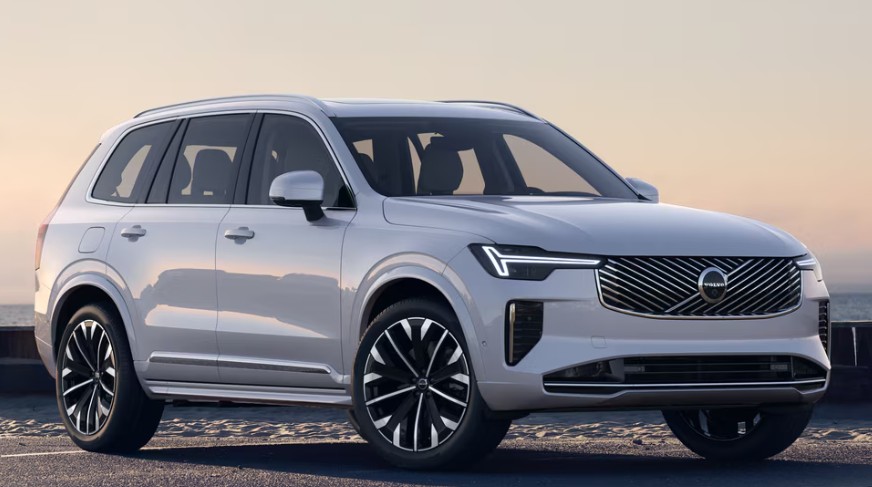
If we’re shopping for a used luxury SUV, the Volvo XC90 has a way of sneaking onto the shortlist. It looks expensive without shouting about it, offers genuine family-friendly practicality, and has built much of its reputation around safety and understated Scandinavian design.
But there’s a rather important difference between asking whether an XC90 is a good car and asking whether a Volvo XC90 is a good used car.
Used luxury vehicles can be deceptive. The purchase price may fall dramatically after a few years, yet the complexity underneath the bonnet doesn’t depreciate with it. A five-year-old premium SUV still has premium electronics, sophisticated engines, expensive suspension components, and plenty of technology waiting to age.
So, is a Volvo XC90 a good used car?
Yes, it can be an excellent used SUV—provided we buy the right example. A properly maintained XC90 combines comfort, safety, practicality, quality, and sophisticated road manners exceptionally well. However, neglected examples can become expensive remarkably quickly.
The XC90 therefore rewards careful buyers far more than bargain hunters.
Let’s dig into what we should know before putting one in the driveway.
Content in this publication
- Why the Volvo XC90 Makes Such an Attractive Used SUV
- Is a Used Volvo XC90 Reliable?
- Which Generation of Volvo XC90 Is Best Used?
- Second-Generation XC90: The Sweet Spot for Most Buyers
- What Engines Are Available in a Used Volvo XC90?
- What Common Problems Should We Check on a Used XC90?
- Is the Volvo XC90 Safe as a Used Car?
- What Is a Used XC90 Like to Drive?
- Is a Volvo XC90 Practical for Families?
- What Does a Used Volvo XC90 Cost to Maintain?
- Should We Buy an XC90 With High Mileage?
- Should We Get a Pre-Purchase Inspection?
- Dealer or Private Seller: Where Should We Buy?
- Who Should Buy a Used Volvo XC90?
- Who Should Avoid a Used XC90?
- Used Volvo XC90 Buying Checklist
- Is a Volvo XC90 Better Used Than New?
- So, Is a Volvo XC90 a Good Used Car?
- Frequently Asked Questions About Buying a Used Volvo XC90
- Closing Thoughts
Why the Volvo XC90 Makes Such an Attractive Used SUV
There’s something unusually mature about the XC90.
Many premium SUVs seem designed to remind everyone around us how much they cost. The Volvo takes another route. Its styling is clean, its cabin is restrained, and its personality is more comfortable wool sweater than designer tracksuit.
That understated approach has aged well.
The modern second-generation XC90 arrived for the 2016 model year, bringing a completely redesigned platform, cabin, engine range, and electronics architecture. Even older examples of this generation can therefore still look surprisingly contemporary.
Inside, we typically find a beautifully minimalist dashboard, comfortable seating, strong visibility, plenty of useful storage, and an available third row.
That combination makes the XC90 especially tempting for families who want something more upscale than a mainstream SUV but don’t necessarily want the personality of a BMW X5, Mercedes-Benz GLE, or Audi Q7.
It Still Feels Like a Luxury Vehicle
This matters more than it sounds.
Some premium cars age like smartphones. Five years later, their screens, interfaces, materials, and styling can make them feel noticeably old.
The XC90 has resisted that effect fairly well.
Soft-touch materials, clean dashboard architecture, excellent seat design, restrained trim, and relatively timeless exterior proportions mean a carefully kept example can still feel special long after its first owner has traded it in.
That makes depreciation work nicely in our favour.
Someone else absorbs a large portion of the original purchase price while we inherit much of the luxury experience.
Of course, we inherit the maintenance responsibilities too.
And that’s where the story gets more interesting.
Is a Used Volvo XC90 Reliable?
The answer is more nuanced than a simple yes or no.
A well-maintained XC90 can deliver many years of useful service, but this isn’t a simple, low-tech SUV where virtually any mechanic with a socket set can keep everything alive indefinitely.
Modern XC90s contain sophisticated electronics, turbocharged engines, numerous driver-assistance systems, complex climate systems, electronically controlled components, and—in plug-in hybrid versions—an additional electric propulsion system and high-voltage battery.
Volvo itself stresses that following the prescribed service programme contributes to operational reliability.
That makes maintenance history extraordinarily important.
We’d rather buy an XC90 with 70,000 miles and a thick stack of service records than one showing 45,000 miles with mysterious gaps in its history.
Maintenance History Matters More Than Mileage Alone
Mileage is easy to understand, which is why buyers tend to obsess over it.
But mileage doesn’t tell the whole story.
Imagine two identical XC90s.
The first has travelled 60,000 miles, received scheduled servicing, had fluids and wear items addressed promptly, and spent its life with an owner who fixed little problems before they became large ones.
The second has travelled 40,000 miles but endured missed services, cheap replacement tyres, ignored warning messages, and years of short urban journeys.
Which would we rather own?
Probably the first.
A used XC90 should be purchased on condition, maintenance history, specification, mileage, and price together, not mileage alone.
Which Generation of Volvo XC90 Is Best Used?
There are two major XC90 generations most used-car shoppers will encounter.
The first generation stretches back to the early 2000s. These vehicles can now be remarkably inexpensive, but age becomes the dominant factor. Even a mechanically robust older SUV can need suspension bushings, hoses, seals, sensors, air-conditioning repairs, electrical components, and other age-related work.
The second generation began with the 2016 model year. This is the XC90 most shoppers imagine today.
First-Generation XC90: Cheap Entry, Greater Age Risk
The original XC90 can make sense if our budget is limited and we find an exceptionally well-maintained example.
Its biggest attraction is value. We can sometimes buy a lot of vehicle for relatively little money.
But buying an old luxury SUV purely because it is cheap is rather like buying a huge old house because the asking price looks attractive. The purchase is only the entrance fee.
Age can bring problems involving:
- Suspension and steering components
- Electrical equipment
- Cooling-system parts
- Air conditioning
- Engine seals and hoses
- Transmission or driveline components
- Interior electronics
- Corrosion in harsh climates
That doesn’t mean every old XC90 is troublesome. It means we need an inspection and realistic repair budget.
Should We Buy a High-Mileage First-Generation XC90?
Possibly—but only with excellent history.
At that age, the question is less “How many miles has it travelled?” and more “What has already been replaced?”
An older vehicle with documented suspension, cooling-system, timing-related, brake, and driveline maintenance may actually be more appealing than a lower-mileage example sitting on original aging components.
Second-Generation XC90: The Sweet Spot for Most Buyers
For most shoppers asking whether an XC90 is a good used car, this is the generation we’d concentrate on.
The 2016 redesign transformed the XC90 and established the design language that continues to make it look modern today.
We gain substantially more sophisticated safety technology, a more modern cabin, newer infotainment, stronger efficiency, and a driving experience that feels much closer to a current luxury SUV.
But early production vehicles deserve more scrutiny.
Why Early Second-Generation Cars Need Careful Inspection
Any all-new vehicle introduces large numbers of new components simultaneously.
The XC90 was no exception.
Owner-complaint data compiled by CarComplaints currently identifies 2016 as the XC90 model year with the most notable complaint record in its database, with electrical issues listed as the model’s worst problem category overall.
That doesn’t mean every 2016 XC90 is bad—or that later years are automatically problem-free. Complaint databases are useful signals, not laboratory reliability studies.
Still, when two otherwise similar used vehicles cost nearly the same, we’d generally favour a later, well-maintained example over an early redesign-year car unless the older vehicle has exceptional history and value.
What Engines Are Available in a Used Volvo XC90?
Engine availability varies according to market and model year, but second-generation XC90s have appeared with several powertrain configurations, including turbocharged petrol engines, earlier turbocharged-and-supercharged variants, diesels in some markets, mild hybrids, and plug-in hybrids.
For used-car buyers, complexity matters nearly as much as performance.
More technology can deliver better acceleration, efficiency, or refinement, but it also means there are more components to diagnose if something eventually goes wrong.
Are Petrol XC90 Models Good Used Buys?
They can be.
A conventional petrol-powered XC90 removes the high-voltage hybrid system from the equation, which some long-term owners may appreciate.
Turbocharging, electronics, emissions systems, and sophisticated engine management still mean this isn’t an old-fashioned mechanical powertrain, though.
Regular servicing and the correct fluids matter.
Listen carefully during a cold start. Watch for warning lights. Check for abnormal smoke, rough running, hesitation, coolant loss, oil leaks, or unusual mechanical noises.
You may be interested in reading Used Volvo XC90 Things to Check Before You Buy
A fifteen-minute test drive after the seller has warmed the engine before we arrive is far less informative than seeing the vehicle genuinely cold.
What About a Used XC90 Plug-In Hybrid?
The plug-in hybrid can be brilliant for the right owner.
We get electric-assisted driving, strong performance, and the ability to complete some shorter journeys without relying entirely on the petrol engine.
But the used-car equation becomes more complicated.
Now we’re evaluating not only a combustion engine and transmission but also charging hardware, electric propulsion components, software, and a high-voltage battery.
Certain 2020–2022 Volvo plug-in hybrids, including XC90s, were included in a U.S. recall involving specific high-voltage battery modules, illustrating why checking recall history by VIN is essential when buying any used PHEV.
A plug-in hybrid isn’t automatically something to avoid. We simply need better due diligence.
Check the Hybrid System Before Buying
If considering an XC90 plug-in hybrid, we should verify that it charges correctly, operates smoothly in electric mode, transitions normally between propulsion modes, and shows no propulsion-system warnings.
A diagnostic scan and specialist inspection become especially valuable.
For an approved used vehicle, warranty coverage may offer additional reassurance. Volvo’s UK Selekt programme, for example, advertises comprehensive inspections, service-history requirements, updated software, and warranty coverage, although exact benefits differ by country.
What Common Problems Should We Check on a Used XC90?
No used-car guide should frighten us with a catalogue of every failure ever reported on the internet.
Any vehicle produced in large numbers will accumulate complaints.
Instead, we want to identify areas worth checking before purchase.
Electrical and Infotainment Problems
Modern Volvos rely heavily on electronics, so electrical glitches deserve attention.
Check every function we can think of.
That includes the touchscreen, reversing camera, parking sensors, power seats, seat heating, steering-wheel controls, climate control, powered tailgate, mirrors, windows, instrument display, keyless entry, driver-assistance systems, and audio equipment.
Do not accept “it probably just needs a reset” as a diagnosis.
Maybe it does.
Maybe it doesn’t.
An intermittent electronic fault can be the automotive equivalent of a dripping ceiling—sometimes trivial, sometimes a clue to something much more annoying.
Modern cars need healthy 12-volt electrical systems.
A weak battery can trigger strange warning messages and make sophisticated electronics behave unpredictably.
If an XC90 has been parked for long periods, ask how old the battery is and whether it has recently needed charging or replacement.
Suspension Wear
An XC90 is a substantial SUV, so suspension components work hard.
During the road test, listen for clunks, knocking sounds, squeaks, or rattles over broken surfaces.
The vehicle should track cleanly without wandering, vibration, or obvious uneven tyre wear.
If fitted with more sophisticated suspension hardware, ensure everything operates correctly. Premium suspension can provide premium comfort—but replacement costs can also have a premium flavour.
Brakes and Tyres
Heavy luxury SUVs consume tyres and brakes more quickly than lightweight economy cars.
Inspect tread depth and, equally important, tread consistency across each tyre.
Four quality matching tyres suggest an owner who spent money where it mattered.
Four mismatched bargain tyres tell a different story.
Likewise, vibration under braking may indicate worn or distorted brake components.
Is the Volvo XC90 Safe as a Used Car?
Safety is one of the strongest arguments in the XC90’s favour.
The second-generation model has performed strongly in IIHS testing. For example, IIHS gives the 2022 XC90 a “Good” overall evaluation in the moderate-overlap frontal test, while 2021–2022 XC90 models earned Top Safety Pick+ recognition under the criteria applicable at the time.
That heritage matters, especially if we’re shopping for a family SUV.
However, safety technology evolves.
A newer XC90 may have newer driver-assistance features or revisions that an older model lacks, so we shouldn’t assume every model year has identical equipment.
Always Check for Outstanding Recalls
Before buying any used XC90, run the VIN through the official recall database applicable to our country.
This matters more than simply searching “XC90 recalls” because recalls often affect specific production periods, engines, or equipment configurations rather than every vehicle from an entire model year.
Recent U.S. recall actions have included certain Volvo vehicles affected by software, camera, braking-related, or plug-in-hybrid battery issues.
A recall is not automatically a reason to reject a vehicle.
An unresolved recall is something we should investigate before completing the purchase.
What Is a Used XC90 Like to Drive?
The XC90 isn’t trying to impersonate a sports car.
That’s a compliment.
Its strengths are stability, comfort, refinement, easy motorway cruising, and the kind of relaxed character we want on a four-hour family journey.
The steering generally feels composed rather than hyperactive, while the high seating position makes the vehicle easy to place in traffic despite its dimensions.
Ride quality depends partly on wheel size and suspension specification.
And that brings us to a useful used-car tip.
Smaller Wheels May Be the Smarter Used-Car Choice
Huge alloy wheels look fantastic in advertisements.
Reality sometimes has potholes.
Larger wheels typically mean lower-profile tyres, which can increase replacement cost and make impacts more noticeable.
If we value comfort and affordable running costs over showroom drama, an XC90 sitting on a more moderate wheel size may be the better long-term companion.
Is a Volvo XC90 Practical for Families?
Very.
This is one of the main reasons used XC90s remain attractive.
We get a large cabin, comfortable seating, useful luggage capacity, and—in many configurations—seven seats.
The third row is particularly valuable when we occasionally need to carry extra passengers without moving into a van-sized vehicle.
Fold the rear seats and the XC90 becomes useful for luggage, pushchairs, sports equipment, furniture boxes, pets, and the endless collection of objects family life mysteriously generates.
Is the Third Row Suitable for Adults?
For occasional journeys, it can be useful.
But like most three-row SUVs, the second row is where adults will prefer to spend longer trips.
Families with young children may find the seven-seat layout considerably more useful than buyers intending to transport seven adults every weekend.
What Does a Used Volvo XC90 Cost to Maintain?
This is where expectations need calibration.
A used XC90 can become affordable to purchase without becoming cheap to maintain.
Parts, tyres, specialist labour, electronics, sophisticated suspension, and premium-grade components can cost more than equivalents on mainstream SUVs.
You may be interested in readingUsed Volvo XC90 Things to Check Before You BuyYou may be interested in reading
 Toyota Sequoia Reliability: How Dependable Is Toyota’s Full-Size SUV?
That’s normal.
If an XC90 once competed as a premium SUV, depreciation doesn’t magically turn its engineering into that of an economy hatchback.
Budget Beyond the Purchase Price
Before buying, we’d keep money aside for initial maintenance.
Depending on the vehicle, that could include:
- Engine oil and filters
- Brake fluid
- Transmission or driveline servicing where applicable
- Tyres
- Brake pads and discs
- Battery replacement
- Suspension components
- Air-conditioning maintenance
- Scheduled major-service items
The cheapest XC90 for sale is rarely the cheapest XC90 to own.
That sentence is worth remembering.
Should We Buy an XC90 With High Mileage?
High mileage alone shouldn’t scare us.
Poor maintenance should.
Motorway miles accumulated by a careful owner can be easier on a vehicle than years of short journeys, potholes, cold starts, and stop-and-go traffic.
A higher-mileage XC90 with comprehensive invoices may therefore be considerably more appealing than a suspiciously cheap low-mileage example with no evidence of maintenance.
How Much Mileage Is Too Much?
There isn’t one magic number.
Instead, evaluate whether the asking price reflects the mileage and whether expensive age- or mileage-related maintenance has already been performed.
As kilometres or miles accumulate, we should expect more wear-related spending. Suspension, engine mounts, wheel bearings, cooling components, seals, drivetrain hardware, and electrical accessories don’t last forever.
A high-mileage XC90 can make sense when we buy it cheaply enough to leave room for those repairs.
Should We Get a Pre-Purchase Inspection?
Absolutely.
If we take only one piece of advice from this guide, make it this one.
A professional pre-purchase inspection can identify problems we won’t notice while admiring the leather seats.
For a modern XC90, ideally use a Volvo specialist or workshop familiar with the platform.
Ask for both a physical inspection and diagnostic scan.
What Should the Mechanic Check?
We want attention paid to the engine, cooling system, transmission, suspension, brakes, tyres, fluid leaks, battery condition, underbody, electronic fault codes, climate control, driver-assistance functions, and service history.
For a plug-in hybrid, add the charging and hybrid systems to the list.
Never Skip the Diagnostic Scan
Modern vehicles can store fault information even when no warning light is currently illuminated.
A scan cannot predict the future, but it gives us another window into the vehicle’s condition.
That’s far more useful than relying on the seller saying, “It’s never given me any trouble.”
Dealer or Private Seller: Where Should We Buy?
Both routes have advantages.
A private seller may offer a better price and can sometimes give us a more detailed history of the vehicle.
A reputable dealer may provide statutory protections, financing options, preparation, or warranty coverage depending on the market.
Certified or manufacturer-backed used programmes can be particularly appealing to buyers who want additional reassurance.
The trade-off is usually price.
We’re paying extra to reduce uncertainty.
Who Should Buy a Used Volvo XC90?
The XC90 makes plenty of sense if we want a premium family SUV but don’t want to pay new-car money.
It particularly suits buyers who value comfort, understated design, safety engineering, seven-seat flexibility, and a high-quality cabin.
It’s also a good fit for someone willing to maintain a vehicle properly rather than searching endlessly for the lowest possible annual running cost.
Who Should Avoid a Used XC90?
We’d think twice if our number-one priority is rock-bottom maintenance expense.
A large European luxury SUV probably isn’t the natural answer to that question.
Likewise, buyers stretching every available dollar simply to afford the purchase price may want something less complicated.
Cars are much more enjoyable when an unexpected repair is irritating rather than financially catastrophic.
Used Volvo XC90 Buying Checklist
Before committing to one, we’d check these points:
- Confirm the service history. Look for invoices rather than relying solely on stamps.
- Run the VIN for outstanding recalls.
- Start the engine completely cold.
- Test every electrical feature.
- Check the touchscreen and cameras carefully.
- Inspect all four tyres for matching brands and even wear.
- Listen for suspension noises.
- Check for fluid leaks.
- Test the climate-control system.
- Look for warning messages during the entire drive.
- Check the body for accident repairs or inconsistent paint.
- Test the transmission from cold and warm.
- Inspect plug-in hybrid functionality where applicable.
- Obtain an independent diagnostic scan.
- Get a pre-purchase inspection before paying.
A seller who refuses an independent inspection has saved us some time.
We can simply inspect another car.
Is a Volvo XC90 Better Used Than New?
For value-conscious buyers, the used XC90 can make a compelling argument.
Luxury vehicles typically lose a substantial amount of their original value during their early years. Buying after that initial depreciation allows us to access equipment, comfort, performance, and cabin quality that might otherwise sit outside our budget.
The trick is finding the point where depreciation has worked in our favour without age and neglect beginning to work against us.
That sweet spot differs from vehicle to vehicle.
A slightly newer XC90 with full history often represents better value than a considerably cheaper example requiring tyres, brakes, suspension work, overdue servicing, and electrical repairs immediately after purchase.
So, Is a Volvo XC90 a Good Used Car?
Yes—the Volvo XC90 can be a very good used car, particularly for families wanting a comfortable, refined, safe, and genuinely premium three-row SUV.
Its strengths are easy to appreciate. The second-generation design has aged gracefully, the cabin remains inviting, practicality is excellent, and its crash-safety record is a major attraction. IIHS results across numerous second-generation model years reinforce the XC90’s strong safety credentials.
But an XC90 isn’t the vehicle to buy blindly.
Complex electronics, sophisticated powertrains, premium components, and potentially expensive maintenance mean condition matters enormously. Early second-generation examples deserve especially careful scrutiny, and plug-in hybrids require additional checks.
Think of the XC90 like a beautifully designed Scandinavian house.
Buy one that has been cared for, and it can be a wonderful place to spend time.
Buy the cheapest neglected example because the photographs look nice, and suddenly we’re learning far more about repair invoices than Scandinavian design.
Our ideal used XC90 would therefore be a well-maintained example with comprehensive records, no unresolved warning lights, a clean diagnostic scan, sensible mileage, completed recalls, good tyres, and a successful independent inspection.
If those boxes are ticked, there’s plenty to like.
Frequently Asked Questions About Buying a Used Volvo XC90
1. Is a used Volvo XC90 expensive to maintain?
It can cost more to maintain than a mainstream SUV because the XC90 is a premium vehicle with sophisticated electronics, turbocharged powertrains, driver-assistance systems, and expensive wear components. Regular servicing and preventative maintenance are important. The best way to control costs is to buy a well-maintained vehicle rather than an unusually cheap neglected one.
2. What should I look for when buying a used Volvo XC90?
Focus on service history, warning lights, electronic functions, tyres, suspension noises, brakes, fluid leaks, cooling-system condition, transmission behaviour, recall status, and evidence of accident damage. A Volvo-specialist pre-purchase inspection and diagnostic scan are strongly recommended.
3. Are high-mileage Volvo XC90s worth buying?
They can be. Mileage is only one part of the equation. A higher-mileage XC90 with documented servicing and careful ownership may be a much safer purchase than a lower-mileage vehicle with missing history. Allow additional budget for age- and mileage-related wear.
4. Is a used XC90 plug-in hybrid a good buy?
Yes, particularly if we can regularly charge it and want its combination of performance and electrified driving. However, the hybrid and charging systems add complexity. Have them inspected, confirm correct charging operation, check recall history by VIN, and investigate any remaining battery or vehicle warranty coverage before purchasing.
5. How long can a Volvo XC90 last?
There’s no universal lifespan because maintenance, climate, road conditions, engine choice, driving style, and previous ownership all matter. A properly serviced XC90 can remain useful well into high mileage, but older vehicles inevitably require more wear-related repairs. Maintenance records and current mechanical condition are better buying indicators than an arbitrary mileage limit.
Closing Thoughts
The question “is a Volvo XC90 a good used car?” deserves something better than a yes-or-no answer.
It is a good used car when we buy a good XC90.
That distinction matters.
Choose patiently, inspect carefully, avoid vehicles with questionable histories, and budget for premium-car maintenance. Do that, and the XC90 offers an appealing combination of luxury, safety, space, comfort, and understated character that relatively few used three-row SUVs manage to match.
You may be interested in readingUsed Volvo XC90 Things to Check Before You BuyYou may be interested in reading
Toyota Sequoia Reliability: How Dependable Is Toyota’s Full-Size SUV?You may be interested in reading
 Is Holden Colorado a Good Car? A Complete Used-Buyer Guide
Skip the inspection because one is suspiciously cheap?
That bargain can melt faster than snow on a Swedish bonnet.
If you want to know other articles similar to Is a Volvo XC90 a Good Used Car? What Buyers Should Know you can visit the category Blog.
Volvo S90 Reliability: Problems, Costs & Best Years
Is Haval Jolion a Good Car? Honest Review, Reliability, Pros and Cons
How to Start Haval Jolion With Spare Key: Complete Guide
How to Calculate Per Diem on an Auto Loan

How to Calculate the Residual Value of a Car

Is the Honda Passport Selling Well? Sales Numbers Tell the Story
Leave a Reply
More content of your interest