

Toyota Sequoia Reliability: How Dependable Is Toyota’s Full-Size SUV?

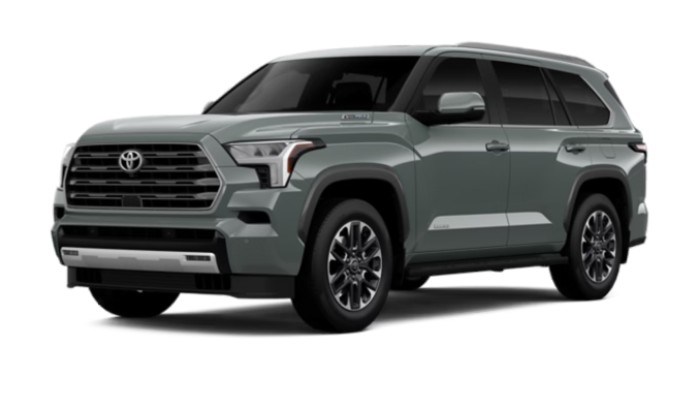
The Toyota Sequoia has always occupied an interesting corner of the SUV world. It is enormous, thirsty, capable, and built with the sort of heavy-duty mechanical attitude we normally associate with pickup trucks. Yet underneath all that size is a Toyota badge, and naturally that raises one big question: how good is Toyota Sequoia reliability?
For many buyers, reliability is actually the main reason to consider a Sequoia instead of another full-size SUV. Chevrolet, Ford, GMC, Nissan, and Jeep all offer compelling alternatives, but Toyota has spent decades building a reputation for vehicles that simply keep going.
That doesn't mean every Sequoia is bulletproof. No SUV weighing several thousand pounds and packed with four-wheel-drive hardware, electronics, suspension components, and increasingly complex powertrains can escape wear forever.
What makes the Sequoia interesting is how well many examples survive once the odometer starts climbing.
In this guide, we're going to look at Toyota Sequoia reliability from every useful angle: engines, transmissions, generations, common problems, maintenance costs, longevity, high-mileage ownership, and whether buying one used still makes sense.
Content in this publication
- Is the Toyota Sequoia Reliable?
- How Long Does a Toyota Sequoia Last?
- Toyota Sequoia Reliability by Generation
- First-Generation Toyota Sequoia Reliability
- Second-Generation Toyota Sequoia Reliability
- Third-Generation Toyota Sequoia Reliability
- Toyota Sequoia Engine Reliability
- Toyota Sequoia Transmission Reliability
- Common Toyota Sequoia Reliability Problems
- Rust and Frame Condition
- Suspension Wear
- Braking Components
- Cooling-System Maintenance
- Toyota Sequoia 4WD Reliability
- Is a High-Mileage Toyota Sequoia Reliable?
- Toyota Sequoia Reliability vs Toyota Land Cruiser
- Toyota Sequoia Reliability vs Chevrolet Tahoe
- Toyota Sequoia Reliability vs Ford Expedition
- How Expensive Is a Toyota Sequoia to Maintain?
- Does the Toyota Sequoia Hold Up Well for Towing?
- Does Fuel Economy Affect Reliability?
- Best Toyota Sequoia for Reliability
- Toyota Sequoia Reliability After 100,000 Miles
- Toyota Sequoia Reliability After 200,000 Miles
- How to Make a Toyota Sequoia Last Longer
- Should You Buy an Older Toyota Sequoia?
- Is the New Toyota Sequoia Reliable?
- Is Toyota Sequoia Reliability Better Than Average?
- Who Should Buy a Toyota Sequoia?
- Toyota Sequoia Reliability: Final Verdict
- Frequently Asked Questions About Toyota Sequoia Reliability
Is the Toyota Sequoia Reliable?
Yes, the Toyota Sequoia is generally considered a reliable full-size SUV, particularly when we're talking about well-maintained first- and second-generation models.
Its strongest advantage has traditionally been mechanical durability.
Older Sequoias used relatively straightforward naturally aspirated V8 engines paired with conventional automatic transmissions. These powertrains weren't designed to chase spectacular fuel economy figures or squeeze enormous horsepower from small displacement engines.
Instead, they tended to operate like old work boots: heavy, unfashionable perhaps, but difficult to wear out.
That's a big reason we still see older Sequoias driving around with surprisingly high mileage.
The catch is that reliability and cheap ownership aren't the same thing.
A Sequoia can have an extremely durable engine while still needing expensive suspension work, brakes, wheel bearings, cooling-system repairs, or four-wheel-drive maintenance as it ages.
Toyota Sequoia Reliability at a Glance
For buyers comparing large SUVs, we'd summarize the Sequoia like this:
- Engine durability is traditionally one of its strongest qualities.
- Automatic transmissions generally hold up well when serviced correctly.
- Older examples can accumulate very high mileage.
- Rust can be more concerning than drivetrain failure on certain older vehicles.
- Large tires, brakes, suspension parts, and fuel consumption make ownership expensive.
- Newer Sequoias are technologically more complicated than older V8 models.
- Maintenance history becomes increasingly important beyond 100,000 miles.
That combination creates an unusual vehicle: the Sequoia may be mechanically dependable while still costing plenty to keep on the road.
How Long Does a Toyota Sequoia Last?
A properly maintained Toyota Sequoia can realistically remain usable beyond 200,000 miles, and exceptionally well-kept examples can go considerably farther.
We shouldn't interpret that as a guarantee that every Sequoia will casually reach enormous mileage without repairs.
Vehicles don't age like digital clocks where one day they simply stop working.
They age piece by piece.
A Sequoia's engine might remain healthy while rubber bushings deteriorate. The transmission might still shift beautifully while an alternator fails. The chassis could feel solid while air-conditioning components or electronics require attention.
That's why mileage alone doesn't tell the entire story.
Can a Toyota Sequoia Reach 300,000 Miles?
It can.
The older naturally aspirated Toyota V8 powertrains have developed a reputation for surviving extreme mileage when maintenance is consistent.
But once we're discussing a 300,000-mile SUV, maintenance history matters far more than the badge on the grille.
At that mileage, we'd expect owners to have replaced or repaired various wear items along the journey, potentially including:
- Water pumps
- Alternators
- Starters
- Radiators or cooling hoses
- Suspension bushings
- Shock absorbers
- Wheel bearings
- Engine mounts
- Steering components
- Brake hardware
Think of it like keeping an old house standing. The foundation can remain excellent while roofs, pipes, doors, and appliances get replaced along the way.
Toyota Sequoia Reliability by Generation
The Sequoia hasn't gone through endless redesigns, which actually makes understanding its reliability history easier.
Broadly speaking, we can divide it into three generations.
First-Generation Toyota Sequoia Reliability
The original Sequoia arrived for the early 2000s and established the personality that would define the vehicle for years: truck-based construction, substantial towing capability, a roomy cabin, and V8 power.
These SUVs are old now, so buying one requires a different mindset.
Why First-Generation Sequoias Can Still Be Worth Buying
The mechanical formula was relatively simple.
There wasn't a complicated hybrid system. Turbochargers weren't part of the equation. Infotainment systems were basic compared with today's enormous digital dashboards.
That simplicity helps.
A properly maintained first-generation Sequoia can therefore remain remarkably functional decades after leaving the showroom.
Age Matters More Than Mileage
This is where shoppers can make mistakes.
Suppose we're comparing two vehicles:
One has 140,000 miles but has spent years exposed to road salt with little maintenance.
The other has 210,000 miles, extensive service records, clean fluids, and a solid chassis.
Which would we rather own?
Quite possibly the higher-mileage vehicle.
Rust, neglected timing-related maintenance, cooling problems, deteriorated suspension components, and poor repair history can matter more than what the odometer says.
Second-Generation Toyota Sequoia Reliability
The second-generation Sequoia became bigger, more refined, and considerably more modern while retaining the basic formula that made the original attractive.
For many used-SUV shoppers, this generation represents the sweet spot.
Why?
Because we get newer safety equipment and improved comfort without abandoning the naturally aspirated V8 formula that helped create the Sequoia's dependable reputation.
The 5.7-Liter V8 Reputation
The 5.7-liter V8 became one of the defining features of this generation.
It offers substantial power and generally strong durability, particularly when owners stay disciplined about oil changes and cooling-system maintenance.
Fuel economy?
That's another story.
Driving a V8 Sequoia around town can feel like watching the fuel gauge develop a personal grudge against your wallet.
But we're discussing reliability here, and from that perspective, the big naturally aspirated V8 remains one of the reasons many used buyers actively seek second-generation models.
Why Second-Generation Sequoias Are Popular Used
They strike a compelling balance between:
- Mechanical simplicity
- Modern comfort
- Proven powertrain design
- Strong towing capability
- Spacious interiors
- Established aftermarket support
A late second-generation Sequoia with detailed maintenance records may therefore appeal to reliability-focused shoppers who don't necessarily want the added complexity of the newest powertrain.
Third-Generation Toyota Sequoia Reliability
The newest Sequoia represents a major mechanical change.
Toyota moved away from the traditional naturally aspirated V8 and adopted a twin-turbocharged V6 hybrid powertrain.
From a performance and efficiency standpoint, this is a substantial evolution.
From a long-term reliability standpoint, however, we have to be more careful.
Why Newer Sequoia Reliability Is Harder to Predict
Time is the greatest reliability test.
An engine can perform beautifully for 50,000 miles, but durability enthusiasts usually want to know what happens after 150,000, 200,000, or even 250,000 miles.
Older Sequoia powertrains have already traveled that road.
The current turbo-hybrid setup introduces additional systems that earlier Sequoias simply didn't have, including:
- Turbochargers
- Hybrid components
- Additional cooling requirements
- More complex engine management
- More electronic control systems
Complexity does not automatically mean unreliability.
Modern engineering can be exceptionally durable.
But every additional component introduces another potential failure point, so shoppers planning extremely long ownership periods may naturally view the older V8 Sequoia as the more proven option.
Toyota Sequoia Engine Reliability
Historically, the engine has been one of the Sequoia's strongest areas.
Toyota's earlier V8 engines were designed around durability rather than extreme specific output.
That matters because high-performance engines typically experience more heat and stress.
A large naturally aspirated engine producing moderate output per liter operates under relatively relaxed conditions.
Importance of Regular Oil Changes
Even an excellent Toyota engine can become troublesome when oil changes are repeatedly delayed.
Fresh engine oil does several jobs at once:
It lubricates internal components, carries heat away from critical surfaces, traps contaminants, and keeps narrow oil passages cleaner.
We'd rather buy a 180,000-mile Sequoia with documented oil changes than a 90,000-mile example whose owner vaguely says, "I changed it whenever the light came on."
Service records tell a story.
Pay attention to them.
Toyota Sequoia Transmission Reliability
The automatic transmissions fitted to older Sequoias generally have a solid reputation.
Again, however, maintenance plays a major role.
Transmission fluid doesn't last forever.
Heat gradually breaks it down, and towing heavy trailers makes the transmission work even harder.
Signs of Transmission Trouble
During a test drive, we'd watch for:
- Delayed engagement when selecting Drive or Reverse
- Harsh gear changes
- Engine revving between shifts
- Shuddering under acceleration
- Clunks when changing direction
- Transmission warning lights
- Fluid leaks underneath the vehicle
One strange shift doesn't automatically mean the transmission is dying.
But several symptoms together should make us cautious.
A transmission replacement on a full-size SUV isn't the type of bill anyone wants to discover immediately after buying.
Common Toyota Sequoia Reliability Problems
No reliability discussion is useful unless we talk about weak points.
The Sequoia may be dependable overall, but certain age-related problems deserve attention.
Rust and Frame Condition
On older truck-based SUVs, corrosion can become one of the biggest threats.
Surface rust and structural rust are very different things.
A little discoloration on exposed metal may be harmless.
Severe corrosion around the frame, suspension mounting points, or structural areas is another matter entirely.
Why Rust Should Never Be Ignored
Mechanical components can often be replaced.
A severely compromised frame is much harder to justify repairing.
You may be interested in reading Is Holden Colorado a Good Car? A Complete Used-Buyer Guide
If we're shopping for an older Sequoia in an area where winter roads are heavily salted, a professional underbody inspection is one of the smartest investments we can make.
Suspension Wear
Remember what we're dealing with.
The Sequoia is heavy.
Every pothole asks suspension components to control a considerable amount of mass.
Over time, bushings, ball joints, shocks, and other components inevitably wear.
Possible symptoms include:
- Clunking over bumps
- Uneven tire wear
- Loose steering feel
- Excessive bouncing
- Vehicle pulling to one side
- Steering-wheel vibration
None of these automatically makes a used Sequoia a bad purchase.
They simply need to be factored into the price.
Braking Components
Big SUVs need big brakes.
Pads and rotors are wear items, and the Sequoia's substantial weight means brake condition deserves attention during a used-vehicle inspection.
A steering wheel that shakes under braking could indicate warped or unevenly worn brake components.
A soft brake pedal deserves immediate investigation.
Cooling-System Maintenance
Cooling systems quietly determine the lifespan of engines.
Old coolant, deteriorating hoses, weak radiators, worn water pumps, or leaks can eventually lead to overheating.
And overheating is one of those problems where a relatively small repair can quickly turn into catastrophic engine damage.
So when inspecting a Sequoia, don't just stare at the engine oil.
Check the coolant too.
Toyota Sequoia 4WD Reliability
Four-wheel-drive systems add capability, but they also add components.
Transfer cases, actuators, differentials, driveshafts, and electronic controls all need to work together.
Many Sequoias spend most of their lives on pavement, meaning owners rarely engage certain four-wheel-drive functions.
Ironically, systems that aren't exercised periodically can sometimes develop issues.
Before buying a 4WD Sequoia, we'd test every selectable drive mode according to the proper operating procedure.
Is a High-Mileage Toyota Sequoia Reliable?
Potentially, yes.
This is one of the Sequoia's strongest selling points.
But buying a high-mileage vehicle requires us to judge condition rather than reputation.
A Toyota badge isn't a magic force field.
What to Check Above 150,000 Miles
When considering a high-mileage Sequoia, we'd pay especially close attention to:
- Service documentation
- Oil leaks
- Coolant condition
- Transmission operation
- Frame corrosion
- Suspension noise
- Steering play
- Differential and transfer-case leaks
- Brake condition
- Tire wear patterns
- Electrical accessories
- Air-conditioning performance
At this stage of a vehicle's life, seemingly minor faults can accumulate.
One $300 repair is manageable.
Five $300 repairs arriving in the same month suddenly feel very different.
Toyota Sequoia Reliability vs Toyota Land Cruiser
The Land Cruiser has one of the strongest durability reputations in the automotive world, so naturally the comparison comes up.
The Sequoia and Land Cruiser historically approach the problem from slightly different directions.
The Sequoia has generally prioritized North American family use, towing, interior space, and full-size comfort.
The Land Cruiser has traditionally placed more emphasis on global durability and demanding off-road environments.
For ordinary family ownership, though, a well-maintained Sequoia can deliver the kind of long-term dependability most buyers actually need.
Toyota Sequoia Reliability vs Chevrolet Tahoe
The Chevrolet Tahoe is one of the Sequoia's most obvious rivals.
The Tahoe offers an enormous dealer network, broad parts availability, strong towing capability, and numerous powertrain choices.
The Sequoia's attraction is different.
Many buyers choose it because they value Toyota's historical approach to long-term mechanical durability.
That doesn't mean every Sequoia will outlast every Tahoe.
Individual vehicle condition still wins.
But someone specifically prioritizing long-term ownership may find the Sequoia particularly attractive.
Toyota Sequoia Reliability vs Ford Expedition
The Ford Expedition has long provided excellent passenger space and strong turbocharged performance.
Toyota traditionally countered with simpler naturally aspirated V8 powertrains.
That distinction has become less pronounced now that newer Sequoias also use turbocharging.
For used buyers focused primarily on drivetrain simplicity, older V8-powered Sequoias retain a particularly clear appeal.
How Expensive Is a Toyota Sequoia to Maintain?
Here's where we need to separate reliable from inexpensive.
The Sequoia is not a small Corolla.
Everything is bigger.
More oil.
Larger tires.
Bigger brakes.
Heavier suspension components.
More fuel.
And sometimes considerably more labor.
Routine maintenance itself isn't necessarily outrageous, but replacing multiple wear components on an aging Sequoia can add up quickly.
Reliability Doesn't Mean Zero Repairs
This distinction matters.
Suppose a 15-year-old Sequoia needs new shocks, brakes, tires, an alternator, and a battery within two years.
Was it unreliable?
Not necessarily.
Those are predictable aging components.
True reliability problems are usually repeated failures, major engine or transmission breakdowns, persistent electronics issues, or defects that leave the vehicle unusable unexpectedly.
Wear and tear is simply the entrance fee for owning an older machine.
Does the Toyota Sequoia Hold Up Well for Towing?
The Sequoia was designed with substantial towing capability, but frequent towing places additional stress on several systems.
Transmission temperature rises.
Brakes work harder.
Cooling systems experience heavier loads.
Rear suspension components carry more weight.
If we're buying a used Sequoia that has regularly pulled a large trailer, we'd want particularly good maintenance documentation.
Heavy Towing Makes Maintenance More Important
A truck or SUV that tows isn't automatically abused.
Some of the best-maintained vehicles belong to owners who tow frequently because those owners understand exactly how much mechanical stress they're creating.
The problem is neglected towing.
A Sequoia that spent years pulling heavy loads while receiving minimal maintenance deserves much more scrutiny.
Does Fuel Economy Affect Reliability?
Not directly, but it affects ownership satisfaction.
Older Sequoias are notorious for consuming substantial amounts of fuel compared with smaller SUVs.
That can influence maintenance indirectly.
How?
Owners struggling with fuel costs may postpone other expenses.
Tires get stretched another year.
Fluid services get delayed.
Warning lights get ignored.
So when shopping for one, we should make sure our budget comfortably supports the entire vehicle—not just the purchase price.
Best Toyota Sequoia for Reliability
For buyers prioritizing a proven drivetrain and relatively straightforward mechanical design, a carefully maintained V8-powered second-generation model can be particularly appealing.
But we'd choose condition over year almost every time.
A neglected "good year" is still neglected.
A meticulously maintained example from a supposedly less desirable year may actually be the safer purchase.
What Makes a Good Used Sequoia?
The ideal used example has:
- Consistent service history
- Clean engine oil
- Proper coolant condition
- Smooth transmission operation
- Minimal frame corrosion
- Matching quality tires
- No suspicious warning lights
- Quiet suspension
- Working four-wheel-drive system
- Clean interior showing careful ownership
- Evidence that scheduled maintenance wasn't ignored
Sometimes the cabin tells us more than the engine bay.
If every interior panel is broken, the seats are destroyed, warning lights glow like a Christmas tree, and maintenance records don't exist, we probably shouldn't expect the previous owner to have treated the drivetrain lovingly.
You may be interested in readingIs Holden Colorado a Good Car? A Complete Used-Buyer GuideYou may be interested in reading
What Year Holden Colorado to Avoid? A Complete Used-Buyer GuideToyota Sequoia Reliability After 100,000 Miles
Reaching 100,000 miles should not automatically scare us away from a Sequoia.
For a properly maintained example, that's often closer to middle age than the finish line.
What changes is the type of maintenance we should expect.
Rubber components age.
Fluids require attention.
Suspension parts begin showing wear.
Cooling-system components become increasingly important.
The smartest approach is to set aside a repair reserve rather than assuming Toyota reliability means nothing will ever fail.
Toyota Sequoia Reliability After 200,000 Miles
At 200,000 miles, buying becomes less about the model and more about the individual vehicle.
Two identical Sequoias can have completely different futures.
One may have spent its life cruising highways with regular dealership servicing.
Another may have spent years towing, off-roading, overheating, and surviving on questionable maintenance.
Same odometer.
Different story.
A pre-purchase inspection becomes essential at this mileage.
How to Make a Toyota Sequoia Last Longer
Long-lasting vehicles rarely survive by accident.
Owners create longevity.
Follow a Sensible Maintenance Routine
The basics matter more than exotic tricks.
Keep engine oil fresh.
Maintain coolant.
Service transmission and drivetrain fluids appropriately.
Replace worn brakes.
Fix leaks before they worsen.
Keep the tires aligned.
Don't ignore warning lights.
Watch Temperatures Carefully
Heat destroys mechanical components.
An engine that consistently stays within its intended temperature range may run for an extremely long time.
An engine driven while overheating can suffer severe damage in minutes.
Never normalize overheating.
Don't Ignore Small Noises
Cars whisper before they scream.
A faint wheel-bearing hum, occasional suspension clunk, or minor fluid leak may be inexpensive today and much more expensive six months later.
Early repairs frequently prevent cascading damage.
Should You Buy an Older Toyota Sequoia?
If you need a genuinely large SUV and understand the running costs, an older Sequoia can make tremendous sense.
Its strengths are compelling:
Huge interior space.
Substantial towing capability.
Strong mechanical durability.
Proven V8 engines.
And the ability to accumulate mileage that would make some crossovers beg for retirement.
But we wouldn't recommend buying one simply because someone said Toyotas last forever.
That slogan is useful marketing shorthand, not a substitute for inspection.
Buy the maintenance history.
Buy the condition.
Buy the previous owner's care.
The badge comes afterward.
Is the New Toyota Sequoia Reliable?
The latest-generation Sequoia looks promising from an engineering standpoint, but we should distinguish expected reliability from proven long-term durability.
The earlier V8 models have had years—sometimes decades—to demonstrate what happens at extreme mileage.
The newer turbocharged hybrid architecture hasn't had the same amount of real-world aging.
That doesn't make it unreliable.
It simply means we have less long-term evidence.
Buyers planning to keep their SUV for five or six years may not care much about that distinction.
Someone specifically planning to reach 250,000 miles might.
Is Toyota Sequoia Reliability Better Than Average?
Historically, we'd consider the Sequoia's reputation stronger than average among traditional full-size SUVs, particularly when discussing drivetrain longevity.
Large SUVs naturally experience substantial mechanical loads.
They're heavy.
They tow.
They carry families and luggage.
Some spend their lives in extreme climates.
So durability in this class deserves more credit than durability in a lightweight commuter car.
The Sequoia's ability to remain desirable even at high mileage says quite a lot about how buyers perceive its long-term durability.
Who Should Buy a Toyota Sequoia?
The Sequoia makes the most sense for drivers who genuinely need what it provides.
Large families.
Frequent road-trippers.
People towing boats or trailers.
Drivers who prefer body-on-frame SUVs.
Buyers planning long ownership periods.
People willing to trade fuel economy for space and durability.
It makes less sense if most of your driving involves navigating tight city streets alone.
Driving a Sequoia to carry one laptop bag across downtown is a little like using a cargo ship to deliver a sandwich.
Possible?
Absolutely.
Efficient?
Not particularly.
Toyota Sequoia Reliability: Final Verdict
The Toyota Sequoia has earned a strong reputation for durability, and older V8-powered models remain especially attractive to buyers searching for a full-size SUV capable of surviving very high mileage.
Its biggest strengths traditionally include durable engines, robust automatic transmissions, truck-based construction, and the ability to age gracefully when maintenance is taken seriously.
Still, we shouldn't confuse reliability with immunity.
Older Sequoias can suffer from corrosion, suspension wear, cooling-system issues, drivetrain maintenance needs, and the ordinary deterioration that accompanies years of hauling around several thousand pounds of SUV.
The newest generation introduces more advanced technology, turbocharging, and hybrid hardware. That gives the Sequoia better performance and a much more modern personality, although its extreme long-term durability will naturally require more time to establish itself.
If we're shopping used, maintenance history matters more than almost anything else.
Find one with clean records, a solid frame, a smooth drivetrain, and an owner who clearly cared for it, and a Toyota Sequoia can be one of those rare vehicles that seems perfectly comfortable watching the odometer roll past numbers that frighten other SUVs.
That's ultimately the Sequoia's charm.
It's not delicate.
It's not small.
And it certainly isn't shy about visiting gas stations.
But when properly maintained, it can be remarkably difficult to wear out.
Frequently Asked Questions About Toyota Sequoia Reliability
1. Is the Toyota Sequoia a reliable SUV?
Yes. The Toyota Sequoia has historically enjoyed a strong reliability reputation, especially among older V8-powered models. Engines and transmissions can last a long time with regular maintenance, although suspension components, brakes, cooling-system parts, and other wear items still require attention as mileage increases.
2. How many miles will a Toyota Sequoia last?
A well-maintained Sequoia can realistically exceed 200,000 miles. Some properly cared-for examples can reach or surpass 300,000 miles, although owners should expect normal age-related repairs along the way.
3. Is a Toyota Sequoia reliable after 200,000 miles?
It can be, but condition becomes extremely important. At 200,000 miles, service records, rust, transmission condition, cooling-system health, suspension wear, and previous towing use matter more than the vehicle's reputation alone.
4. Are newer Toyota Sequoias as reliable as the old V8 models?
It is too early to judge their extreme long-term durability with the same confidence. Newer Sequoias use a more complicated turbocharged hybrid powertrain, while older V8 models have already demonstrated their durability over many years and hundreds of thousands of miles.
You may be interested in readingIs Holden Colorado a Good Car? A Complete Used-Buyer GuideYou may be interested in reading
What Year Holden Colorado to Avoid? A Complete Used-Buyer GuideYou may be interested in reading
How Long Does a Holden Colorado Last? Lifespan, Mileage, and Reliability Guide5. What should I check before buying a used Toyota Sequoia?
Inspect the frame for corrosion, verify the maintenance history, test the transmission and four-wheel-drive system, check for leaks, examine the cooling system, listen for suspension noises, and have an independent mechanic perform a pre-purchase inspection whenever possible.
If you want to know other articles similar to Toyota Sequoia Reliability: How Dependable Is Toyota’s Full-Size SUV? you can visit the category Blog.
Volvo S90 Reliability: Problems, Costs & Best Years
Is Haval Jolion a Good Car? Honest Review, Reliability, Pros and Cons
How to Start Haval Jolion With Spare Key: Complete Guide
How to Calculate Per Diem on an Auto Loan

How to Calculate the Residual Value of a Car

Is the Honda Passport Selling Well? Sales Numbers Tell the Story
Leave a Reply
More content of your interest