

Is Alfa Romeo MiTo a Good First Car? A Complete First-Time Buyer’s Guide

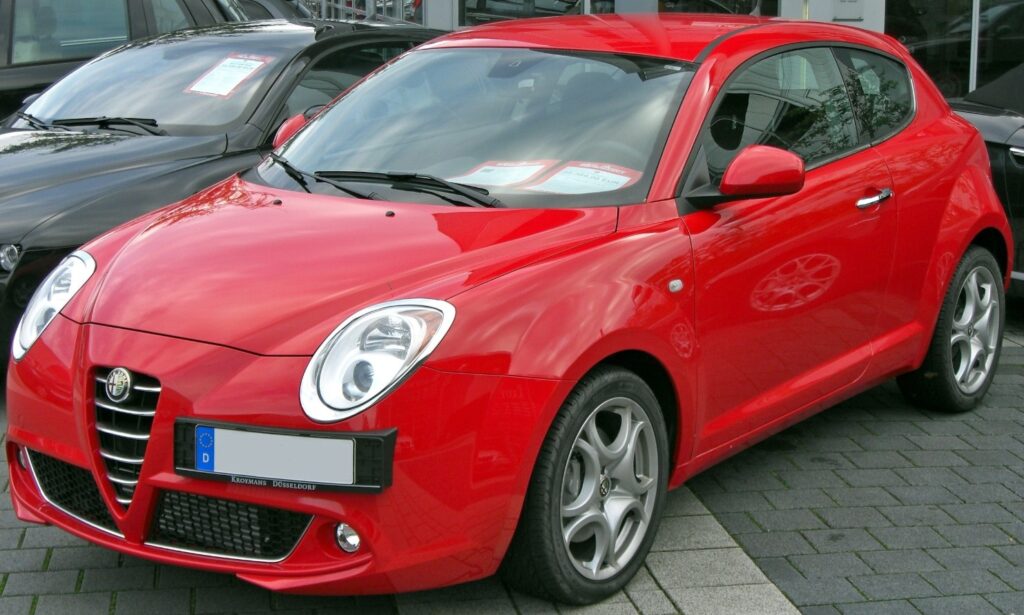
Buying a first car is a strangely emotional decision. On one side, we have the sensible voice telling us to buy something cheap, economical, slow, and almost aggressively practical. On the other, there is the part of us that looks at an Alfa Romeo MiTo and thinks, why should our first car be boring?
That is exactly why the MiTo attracts younger drivers. It is compact enough for city streets, distinctive enough to stand out in a college or workplace car park, and far more interesting to look at than many conventional first cars.
So, is Alfa Romeo MiTo a good first car?
Yes, the Alfa Romeo MiTo can be a very good first car, particularly if we choose one of the less powerful petrol models, find an example with a strong maintenance history, and obtain an insurance quote before buying. It offers compact dimensions, plenty of personality, respectable safety for its era, and enjoyable handling. However, it is not necessarily the cheapest or simplest small car to own, and neglected examples can quickly turn a tempting bargain into an expensive headache.
In other words, the MiTo is a first car for someone who wants a little character with their practicality.
Let's look at whether it deserves a place on our driveway.
Content in this publication
- What Is the Alfa Romeo MiTo?
- Why the MiTo Appeals to First-Time Drivers
- Is an Alfa Romeo MiTo Easy to Drive?
- Is the Alfa Romeo MiTo Safe for a First Car?
- Which Alfa Romeo MiTo Engine Is Best for a First Car?
- Should a New Driver Avoid the Powerful MiTo Models?
- Is an Alfa Romeo MiTo Cheap to Insure?
- Is the Alfa Romeo MiTo Reliable?
- Common Alfa Romeo MiTo Problems to Look For
- Why Service History Matters More Than Mileage
- What Is the MiTo Like Around Town?
- Is the Alfa Romeo MiTo Practical?
- Is the MiTo Economical to Run?
- Is the MiTo Fun to Drive?
- Is an Alfa Romeo MiTo Too Fast for a Beginner?
- Manual or Automatic MiTo for a First Car?
- How Much Should We Budget for Maintenance?
- What Should We Check Before Buying a Used MiTo?
- Advantages of an Alfa Romeo MiTo as a First Car
- Disadvantages of an Alfa Romeo MiTo as a First Car
- Alfa Romeo MiTo vs Typical First Cars
- Who Should Buy a MiTo as Their First Car?
- Who Should Probably Choose Something Else?
- Is an Older Alfa Romeo MiTo Worth Buying in 2026?
- So, Is Alfa Romeo MiTo a Good First Car?
- Final Verdict
- Frequently Asked Questions
What Is the Alfa Romeo MiTo?
The Alfa Romeo MiTo is a small three-door hatchback originally introduced in Europe in 2008. Alfa positioned it as a stylish premium supermini, competing less with purely budget-focused hatchbacks and more with fashionable alternatives such as the MINI.
Production lasted until around 2018, meaning virtually every MiTo we encounter today will be a used car. That matters because when buying one as a first car, condition and maintenance history are now arguably more important than the number written on the registration plate.
The MiTo was offered with numerous petrol and diesel engines over its life. Depending on model year and market, these included 1.4-litre petrol engines, turbocharged MultiAir versions, a characterful 0.9-litre TwinAir petrol engine, and 1.3- and 1.6-litre diesels. Alfa also produced much quicker versions with outputs reaching around 170 hp, so two cars wearing MiTo badges can provide very different experiences.
For a first-time driver, that distinction is crucial.
Why the MiTo Appeals to First-Time Drivers
The first thing the MiTo has going for it is simple: it doesn't look like the stereotypical first car.
Most affordable small hatchbacks are designed like kitchen appliances. Nothing offensive, nothing exciting. The MiTo took a different route.
Its rounded headlights, triangular Alfa grille, frameless-looking side windows, muscular rear arches, and distinctive rear lights give it a personality that many similarly priced used cars struggle to match.
And when we're 17, 18, 20, or simply buying our first car later in life, personality matters.
We don't just want transportation. We want something that feels like our car.
It Feels More Special Than Its Price Suggests
Used MiTos can often look significantly more expensive than they actually are. That gives them a certain first-car magic.
Park one beside a generic small hatchback of similar age and the Alfa may look like the more exotic machine, even though both could occupy roughly the same corner of the used-car market.
Naturally, buying purely because a car looks good is a dangerous strategy.
Fortunately, the MiTo has more than styling in its favour.
Is an Alfa Romeo MiTo Easy to Drive?
For the most part, yes.
Its small footprint makes it well suited to towns and cities, where new drivers often find themselves dealing with narrow streets, crowded parking spaces, roundabouts, and cars seemingly appearing from every direction.
A smaller car reduces some of that intimidation.
The steering is relatively light, while the controls generally don't require much muscle. Once we've spent a little time behind the wheel, the MiTo feels manageable rather than intimidating.
The Alfa DNA System Adds Some Personality
Many MiTos feature Alfa Romeo's DNA driving-mode selector.
The letters traditionally refer to Dynamic, Natural, and All Weather modes. Depending on the version, changing modes can alter characteristics such as throttle response and steering feel.
For normal first-car duties, we can simply leave the car in its everyday setting.
Dynamic mode makes certain versions feel noticeably sharper, which can be entertaining after we've gained confidence behind the wheel.
A first car doesn't need driving modes, of course.
But neither does coffee need foam on top. Sometimes the little extras make ownership more enjoyable.
Is the Alfa Romeo MiTo Safe for a First Car?
Safety is one of the MiTo's more reassuring characteristics, although its age needs to be considered.
When the model was tested under the Euro NCAP procedures of its era, it achieved a five-star rating. Alfa Romeo's original announcement highlighted the maximum five-star result when the MiTo was launched.
ANCAP information for the model also lists safety equipment including front, side, and curtain airbags, anti-lock braking, electronic brake-force distribution, and electronic stability control on the tested specification.
That's encouraging for an older small car.
But We Shouldn't Compare Old Safety Stars Directly With New Cars
There is an important catch.
Euro NCAP testing standards have evolved significantly. A five-star result achieved by a car tested in 2008 should not be interpreted as meaning that it offers the same overall crash avoidance and protection technology as a five-star car launched in 2026.
Modern cars can offer technologies such as sophisticated autonomous emergency braking, lane assistance, advanced pedestrian detection, and more elaborate driver-monitoring systems.
The MiTo comes from an earlier generation.
So we would describe its safety as good for its period, rather than cutting-edge by today's standards.
Which Alfa Romeo MiTo Engine Is Best for a First Car?
Here's where we need to resist temptation.
The MiTo range includes some genuinely quick versions. Those models can be brilliant fun, but "brilliant fun" and "ideal first-car insurance quote" don't always belong in the same sentence.
For many inexperienced drivers, the sensible place to start is with one of the lower-powered petrol engines.
1.4-Litre Non-Turbo Petrol
A lower-output 1.4 petrol MiTo can make a particularly logical first car.
Why?
Its performance is modest enough to be manageable, its mechanical layout is comparatively straightforward, and we don't have to chase huge horsepower figures that provide little practical benefit to someone still building road experience.
It isn't going to pin us into the seat.
That's perfectly fine.
When we're learning anticipation, positioning, clutch control, motorway driving, and parking, 0–60 mph bragging rights are fairly low on the priority list.
0.9 TwinAir MiTo
Then we have the tiny 0.9-litre TwinAir.
Don't let its displacement fool you. It is turbocharged and has a very distinctive two-cylinder character.
Alfa offered the TwinAir in versions including approximately 85 hp and, later, 105 hp. Alfa's 2013 model-year information quoted 105 hp for the updated version, alongside an official combined economy figure of 67.3 mpg under the testing system used at the time.
The TwinAir can feel lively and entertaining, but real-world fuel economy may not match those optimistic historical laboratory figures, especially if we regularly exploit its turbocharged character. Contemporary road testing made the same observation.
Still, it is one of the more interesting small engines fitted to any supermini of its era.
1.3 Diesel MiTo
A 1.3-litre diesel might appeal to drivers covering substantial mileage.
Historically, official consumption figures were extremely attractive. What Car? noted that the diesel offered the strongest claimed economy in the MiTo range.
But for a first car doing short urban journeys, we'd generally lean towards petrol.
Older diesels make more sense when they're regularly driven long enough to reach operating temperature and suit the emissions systems for which they were designed.
If our daily routine consists of four miles to work, five miles to university, and a supermarket run on Sunday, petrol is usually the easier recommendation.
Should a New Driver Avoid the Powerful MiTo Models?
Probably.
The 135 hp, 155 hp, and especially 170 hp variants are much quicker machines.
Alfa introduced MultiAir MiTo versions at 105, 135, and 170 hp, demonstrating just how wide the performance range became.
A 170 hp MiTo sounds fantastic when we're browsing classified ads at midnight.
Then the insurance quote arrives like a bucket of cold water.
Even where insurance isn't prohibitively expensive, additional performance can increase fuel consumption, tyre costs, brake wear, and the likelihood that a previous owner has driven the car enthusiastically.
Our Sweet Spot
For many first-time buyers, we'd focus on:
- A lower-powered 1.4 petrol for simplicity and manageable performance.
- A 0.9 TwinAir if we want more character and can verify good maintenance.
- A 1.3 diesel only if our mileage pattern genuinely suits diesel.
- Powerful MultiAir/QV-style versions later, when insurance and driving experience make them more sensible.
The cheapest MiTo to purchase is not always the cheapest MiTo to own.
Is an Alfa Romeo MiTo Cheap to Insure?
This is perhaps the biggest question for young drivers.
Insurance pricing can vary dramatically according to age, postcode or region, occupation, driving history, annual mileage, parking arrangements, exact engine, trim, modifications, and insurer.
What Car? has historically described insurance groups across the MiTo range as relatively reasonable, but that does not guarantee an inexpensive policy for a newly qualified driver.
The difference between individual versions can also be substantial.
That's why we should never buy the car first and check insurance afterward.
Get Quotes Before Paying a Deposit
This should be part of our buying process:
- Find the actual MiTo we're interested in.
- Note its registration number or exact specification.
- Request several insurance quotes.
- Compare those quotes with alternative first cars.
- Only then decide whether the MiTo makes financial sense.
A £3,000 car that costs £3,500 a year to insure might suddenly look less appealing than a £4,000 car with dramatically cheaper cover.
First-car shopping is full of these little traps.
Is the Alfa Romeo MiTo Reliable?
This is where the conversation gets more complicated.
Alfa Romeo's older reputation for reliability can cause buyers to panic before they've even opened the bonnet. The reality with the MiTo is more nuanced.
A properly maintained MiTo can provide perfectly satisfactory service. A neglected one, however, can become expensive because some versions have more complicated engines and electronics than the most basic first-car alternatives.
You may be interested in reading Is a Volvo XC90 a Good Used Car? What Buyers Should Know
MotorEasy-derived data published by The Car Expert gave the MiTo an average reliability score of 60% as of April 2025 and reported an average repair cost a little above £400 within the dataset used.
That doesn't mean every MiTo will fail, nor does it mean every repair will cost £400.
It simply reinforces something we should already know when shopping for an ageing used Alfa:
maintenance history matters enormously.
Common Alfa Romeo MiTo Problems to Look For
We don't need to fear every noise, but we should inspect carefully.
Older MiTos can experience problems involving suspension components, electrical equipment, batteries, door mechanisms, steering-related systems, and—in certain engines—more complicated engine management or MultiAir-related faults.
No used car should be judged purely by model reputation, however.
A meticulously maintained 12-year-old MiTo may be a much smarter purchase than a supposedly "more reliable" rival that has spent the past five years surviving on cheap oil and optimism.
Check the Dashboard Carefully
Before starting the car, switch the ignition on and make sure warning lights illuminate normally.
Once the engine starts, watch for warning messages or lights that remain active.
We should pay particular attention to:
- Engine management warnings
- Steering warnings
- Airbag warnings
- ABS or stability-control warnings
- Start/Stop errors
- Unusual electrical messages
Never accept "they all do that" as a diagnosis.
Maybe they do.
Maybe they don't.
Either way, we want to know exactly what we're buying.
Listen During a Cold Start
Ask to see the car when the engine is cold whenever possible.
A seller who has conveniently warmed it up before every viewing may simply be courteous—but we'd rather hear the first start of the day.
Listen for excessive rattling, rough running, persistent knocking, or strange mechanical noises.
Let the engine idle and watch for warning lights.
Then drive it properly.
Why Service History Matters More Than Mileage
Imagine two MiTos.
One has travelled 65,000 miles but has almost no paperwork.
The other has travelled 90,000 miles and comes with invoices showing consistent servicing, recent brakes, fresh tyres, and documented maintenance.
Which one would we rather own?
In many cases, the second.
Mileage is easy to understand, which is why buyers obsess over it. But maintenance tells us how those miles were accumulated and how seriously previous owners treated the car.
With an Alfa, we'd rather see a thick folder of receipts than an impressively low odometer reading accompanied by mysterious silence.
What Is the MiTo Like Around Town?
This is where the car feels at home.
Its compact body works nicely in congested areas, and it doesn't require an aircraft hangar to park.
For learners transitioning to independent driving, that matters.
The car is also narrow enough by modern standards that country lanes and older city streets don't feel as intimidating as they can in a large crossover.
Parking Isn't Perfect, Though
The MiTo's styling introduces a compromise.
Rearward visibility is not its strongest characteristic.
The rising window line and compact rear glass can make judging the back corners less intuitive than in a boxier hatchback. Owners have also highlighted rear visibility as a consideration for inexperienced drivers.
If the car has parking sensors, we'd consider them a worthwhile bonus.
Without sensors, it isn't difficult to park once we're familiar with it, but there are easier cars for absolute beginners.
Is the Alfa Romeo MiTo Practical?
It depends on what we expect.
The MiTo is a three-door hatchback, which immediately tells us something about its priorities.
Front-seat access is straightforward.
Rear-seat access?
Well, that's where passengers start doing gymnastics.
If we're regularly transporting friends, children, grandparents, or anyone who dislikes folding themselves through a small doorway, a five-door hatchback will be considerably more convenient.
The Rear Seats Are Better for Occasional Use
The back is usable for shorter journeys, but this is not the first car we'd choose for regularly transporting four adults.
For one or two people most of the time, though, the MiTo works perfectly well.
Fold the rear seats when necessary and its cargo-carrying ability becomes considerably more useful.
A first car rarely needs to transport wardrobes.
For backpacks, shopping, gym equipment, and weekend luggage, the MiTo can manage everyday life reasonably well.
Is the MiTo Economical to Run?
Potentially, yes—but engine choice and driving style matter.
The smaller petrol and diesel engines were designed with efficiency in mind, and historical official figures for versions such as the TwinAir were impressive.
However, official economy figures from this era were produced under older laboratory testing procedures and can be difficult to reproduce in ordinary driving.
Turbocharged engines are particularly sensitive to how much we enjoy pressing the accelerator.
Drive gently and they can be economical.
Drive as though every traffic light is qualifying for Monza and the fuel gauge will respond accordingly.
Tyres and Brakes Matter Too
A modestly powered MiTo on smaller wheels will generally be friendlier to our wallet than a sporty version wearing larger tyres.
This sounds obvious, yet it's easily forgotten.
We see the sporty wheels.
We fall in love.
Six months later, we're discovering how much four branded replacement tyres cost.
For a first car, smaller wheels can actually be an advantage: replacement tyres may cost less, ride comfort can improve, and accidental kerb encounters are less financially traumatic.
Is the MiTo Fun to Drive?
Yes, and this is one of the strongest reasons to buy one.
There are more practical first cars.
There are cheaper first cars.
There are cars with stronger reliability reputations.
But few inexpensive first cars have quite the same sense of occasion.
The MiTo's driving position, styling, steering response, and turbocharged engine options create a little spark that we don't always find in economy-focused hatchbacks.
It's like choosing trainers.
Plenty of pairs will get us from A to B, but every now and then we find a pair we actually look forward to wearing.
The MiTo can have that effect.
Is an Alfa Romeo MiTo Too Fast for a Beginner?
Not necessarily.
This depends entirely on the version.
A lower-powered MiTo offers very manageable performance. It has enough pace for normal traffic without encouraging us to believe we've accidentally joined the Alfa Romeo Formula 1 team.
The faster turbo models are another story.
New drivers don't require a powerful car to develop good driving skills.
In fact, learning to maintain momentum, anticipate traffic, read road conditions, and drive smoothly in a modestly powered vehicle can produce excellent habits.
There will be plenty of time for horsepower later.
Manual or Automatic MiTo for a First Car?
Most affordable used MiTos we encounter are likely to be manuals, and that can be a good thing if our licence and driving preferences suit one.
You may be interested in readingIs a Volvo XC90 a Good Used Car? What Buyers Should KnowYou may be interested in reading
Used Volvo XC90 Things to Check Before You BuyA manual MiTo can be engaging without being excessively demanding.
Alfa also offered its TCT dual-clutch transmission with certain engines, including higher-output 1.4-litre turbo versions.
For first-car buyers, we'd judge an automatic more carefully because transmission problems can be more expensive than replacing a conventional clutch.
A smooth, well-maintained automatic can be perfectly enjoyable.
A suspicious one that jerks, hesitates, displays warning messages, or has questionable servicing should be left where we found it.
How Much Should We Budget for Maintenance?
We shouldn't spend our entire car budget on the purchase price.
If we have £5,000 available, buying a £5,000 MiTo and leaving £0 for repairs is risky.
We'd rather buy the right £4,000 car and keep some money aside.
An older used vehicle can need tyres, brakes, a battery, suspension components, servicing, or an unexpected sensor regardless of badge.
With a MiTo, a sensible emergency fund makes ownership considerably less stressful.
Think of it as a financial airbag.
Hopefully we never need it.
But we'll be glad it's there when an unexpected warning light appears on Tuesday morning.
What Should We Check Before Buying a Used MiTo?
A proper inspection is essential.
If we're unfamiliar with cars, paying an independent mechanic to inspect a promising example can be money very well spent.
Our MiTo First-Car Buying Checklist
Before committing, we would check:
- Complete or convincing service history
- Correct engine oil servicing for the specific engine
- Timing-belt history where applicable
- No unexplained dashboard warning lights
- Smooth clutch operation
- Clean gear changes
- No strange steering noises or warning messages
- Suspension free from obvious knocking
- Air conditioning functioning correctly
- Windows, locks, mirrors, and infotainment working
- Matching, roadworthy tyres with healthy tread
- No obvious accident-repair inconsistencies
- No suspicious smoke from the exhaust
- Engine starts properly from cold
- Insurance quote obtained before purchase
- Vehicle history checked where such services are available
A shiny exterior shouldn't distract us from mechanical neglect.
Paint can be polished in an afternoon.
An abused engine is a different conversation.
Advantages of an Alfa Romeo MiTo as a First Car
When we put everything together, the MiTo has several genuine strengths.
Distinctive styling is perhaps the obvious one. It gives us something more interesting than the conventional first-car formula.
Compact dimensions make it appropriate for city driving and parking.
Reasonable performance in smaller-engined versions means inexperienced drivers don't have to manage excessive power.
Good safety credentials for its era provide reassurance, including its original five-star Euro NCAP result.
Enjoyable driving characteristics mean we may actually look forward to driving it.
And perhaps most importantly, used examples can offer a lot of character for the money.
Disadvantages of an Alfa Romeo MiTo as a First Car
We shouldn't fall in love without acknowledging the awkward bits.
Reliability isn't class-leading across every version, and older cars can require repairs. Recent aggregated reliability data confirms that ownership is not entirely trouble-free.
The three-door layout is inconvenient if we regularly carry passengers.
Rearward visibility isn't particularly generous.
Some engines are considerably more complicated than basic naturally aspirated rivals.
Insurance can become expensive on powerful versions, particularly for younger or newly qualified drivers.
And because production ended years ago, the cheapest cars are now old enough that condition varies enormously.
Two MiTos that look almost identical in an advertisement can be worlds apart mechanically.
Alfa Romeo MiTo vs Typical First Cars
Suppose we're comparing a MiTo with conventional small cars such as a Ford Fiesta, Vauxhall Corsa/Opel Corsa, Volkswagen Polo, Toyota Yaris, Hyundai i10, Kia Picanto, or similar superminis.
The Alfa's biggest advantage is personality.
The others may counter with easier rear-seat access, greater dealer familiarity, potentially cheaper parts in some markets, or stronger reliability reputations depending on model and engine.
So the choice comes down to priorities.
If we simply want the easiest and least emotionally complicated transportation possible, the MiTo might not top our list.
If we want a compact first car that makes us glance back at it after parking, the Alfa becomes far more compelling.
Who Should Buy a MiTo as Their First Car?
We think it works particularly well for someone who:
- Mostly drives alone or with one passenger.
- Wants something more stylish than a typical budget hatchback.
- Is prepared to maintain the car properly.
- Can afford the insurance on the exact version considered.
- Finds a car with documented servicing.
- Values driving enjoyment.
- Doesn't need five doors.
- Is willing to walk away from neglected bargain examples.
That last point is crucial.
The MiTo rewards patience when buying.
Who Should Probably Choose Something Else?
The MiTo may not be ideal if our number-one goal is rock-bottom ownership costs.
Likewise, if we constantly carry rear passengers, a five-door hatchback makes far more sense.
Someone who ignores servicing until a warning light appears may also be happier with the simplest possible car.
And if insurance on the particular MiTo we're considering costs significantly more than competing cars, sentiment shouldn't overrule mathematics.
Our first car is supposed to give us freedom.
It shouldn't consume every spare pound, dollar, or euro we earn.
Is an Older Alfa Romeo MiTo Worth Buying in 2026?
It can be, but age now deserves serious consideration.
Because the MiTo is no longer a new model, even the youngest examples have accumulated years of wear. Rubber components age. Batteries deteriorate. Suspension parts wear. Service history gets lost as cars change hands.
That doesn't make the MiTo a bad purchase.
It simply changes how we should shop.
At this stage in the model's life, we'd buy the condition rather than the registration year.
A well-maintained older MiTo owned by someone who kept receipts could be far more desirable than a newer-looking example that has bounced between owners with minimal servicing.
So, Is Alfa Romeo MiTo a Good First Car?
Yes—with conditions.
The Alfa Romeo MiTo can be an excellent first car for someone who wants compact dimensions, stylish Italian design, enjoyable driving characteristics, and something more memorable than the usual small hatchback.
We'd particularly favour a modestly powered petrol version with clear service records and a clean mechanical inspection.
But this isn't a car we should purchase blindly.
Check insurance first. Inspect its history. Avoid poorly maintained examples. Don't automatically assume the most powerful version is the best one. And keep some money aside for maintenance.
Do those things, and the MiTo can turn the first-car experience into something surprisingly special.
After all, we're only going to have one first car.
There is nothing wrong with choosing one that has a little soul.
Final Verdict
If we were grading the Alfa Romeo MiTo purely as transportation, there are safer bets in the used-car market.
But first cars are rarely purely rational.
The MiTo combines enough practicality to handle everyday life with enough Italian personality to make driving feel like more than a chore. Its original safety performance was strong for its generation, smaller engines provide sensible first-car performance, and used prices can make it accessible.
Its weaknesses—age, three-door practicality, patchier reliability than some rivals, and potentially costly high-performance versions—mean we need to shop carefully.
Our verdict: the Alfa Romeo MiTo is a good first car for the right buyer, and a lower-powered, well-maintained petrol MiTo is usually the version we'd put near the top of the shortlist.
Buy the cheapest neglected example and it might test our patience.
Buy a good one and our first car may have something many sensible alternatives lack:
character.
Frequently Asked Questions
1. Is the Alfa Romeo MiTo reliable for a first car?
A well-maintained MiTo can be dependable enough for everyday use, but reliability varies by engine, age, servicing, and previous ownership. Aggregated repair data suggests the model is not among the strongest performers for reliability, so maintenance history should be a major factor when buying.
2. Which Alfa Romeo MiTo is best for a new driver?
For many new drivers, a lower-powered petrol model is the most sensible choice. A basic 1.4 petrol provides manageable performance, while the 0.9 TwinAir offers additional character and potentially good economy. More powerful 135 hp, 155 hp, and 170 hp models are usually less attractive when insurance and running costs are considered.
3. Is the Alfa Romeo MiTo expensive to insure for a 17-year-old?
It can be. Insurance depends heavily on location, driver profile, engine, trim, mileage, security, and insurer. Lower-powered models tend to make more sense than performance versions, but we should obtain quotes for the exact car before purchasing it.
4. Is the Alfa Romeo MiTo safe for young drivers?
It performed strongly when new, earning a five-star Euro NCAP rating under the testing standards used at its launch. However, safety-testing requirements have become considerably stricter since 2008, and modern cars can offer driver-assistance systems that the MiTo does not have.
5. Should I buy an Alfa Romeo MiTo or a more conventional first car?
Choose the MiTo if styling, character, and driving enjoyment matter and you're prepared to shop carefully for a maintained example. Choose a more conventional small hatchback if low running costs, five-door practicality, or the simplest possible ownership experience are your highest priorities.
You may be interested in readingIs a Volvo XC90 a Good Used Car? What Buyers Should KnowYou may be interested in reading
Used Volvo XC90 Things to Check Before You BuyYou may be interested in reading
 Toyota Sequoia Reliability: How Dependable Is Toyota’s Full-Size SUV?
If you want to know other articles similar to Is Alfa Romeo MiTo a Good First Car? A Complete First-Time Buyer’s Guide you can visit the category Blog.
Is Nissan Rogue a Good Car? Reliability, Pros, Cons & What to Know
Nissan Rogue Not Starting? Common Causes and How to Fix It
Is Vauxhall Agila a Good Car? Reliability, Problems and Buying Guide

Honda Passport Life Expectancy: How Many Miles Can It Last?
Honda Passport Depreciation: How Well Does It Hold Its Value?
Nissan Rogue Reliability Rating: How Reliable Is the Rogue?
Leave a Reply
More content of your interest